
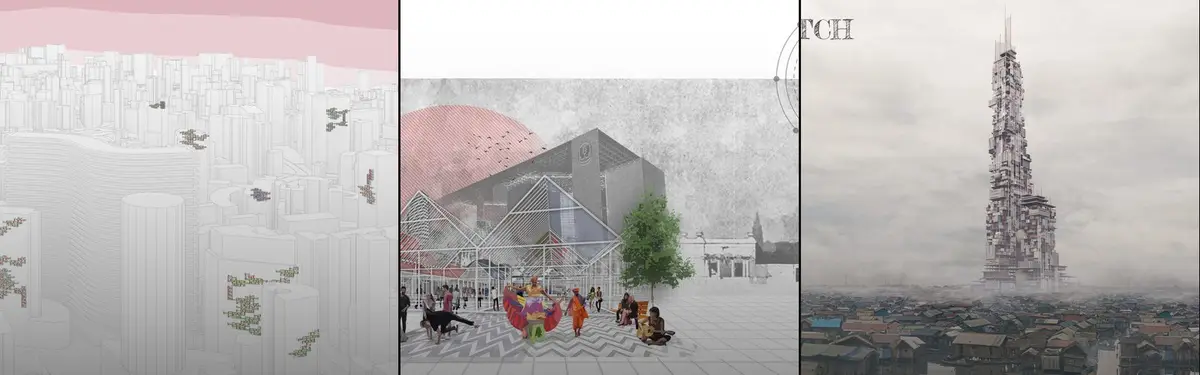


Urban Morphology
Study of how cities form, evolve, and reorganize through design, infrastructure, and natural systems.
Urban morphology examines the physical structure and spatial organization of cities. It investigates how urban forms develop over time and how design interventions can reshape the relationship between built environments, natural systems, and human activity.
The community explores modular city frameworks, vertical integration of food systems, productive landscapes that blur boundaries between architecture and nature, and strategies for restructuring urban peripheries through sustainable design. Work ranges from theoretical models of urban growth to site-specific interventions that dissolve conventional distinctions between city and landscape.


Popular projects
View all 59 projects


Latest journals
View all 53 journals
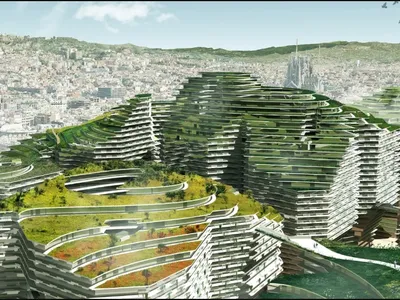
Manzana Morphosis: Stretching Barcelona's Grid into a Living Landscape for 2050
A radical reworking of the Eixample manzana turns density into a tool for generous public space, vertical ecology, and environmental performance.

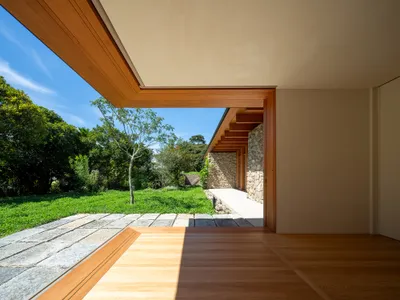
Teitakusubako and Yusuke Igarashi Architects Dissolve a House into the Forest Edge in Zushi
A 215 m² residence on a generous Tokyo-suburban plot uses stone, timber, and fragmented volumes to blur the line between dwelling and woodland.
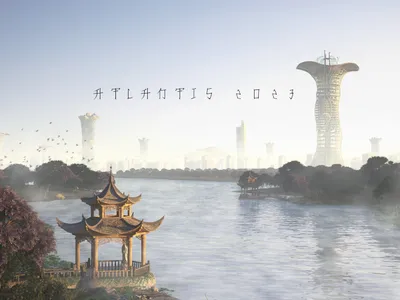
Atlantis 2023: Vertical Farm Towers That Turn a City's Waste Into Its Own Food Supply
Jakub Sokólski proposes a network of timber farming towers where organic waste, water and energy circulate in a closed loop inside the dense city.

Terrain Anamorphosis: Erosion as a Design Tool for Regenerating Athens' Kifisos River
A proposal for Athens' Kifisos River that lets controlled water carve terraces, basins and fragments into the ground around an abandoned power station.


