
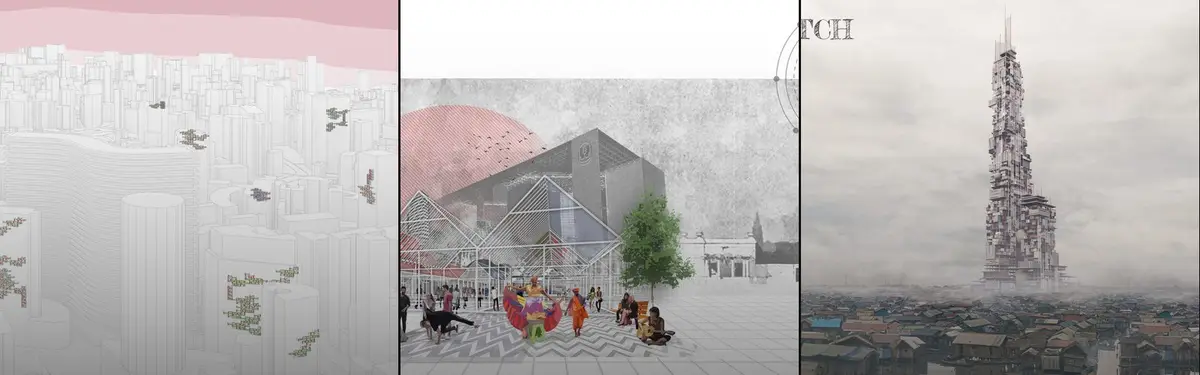


Urban Morphology
Study of how cities form, evolve, and reorganize through design, infrastructure, and natural systems.

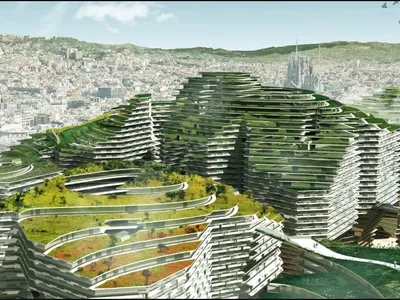
Manzana Morphosis: Stretching Barcelona's Grid into a Living Landscape for 2050
A radical reworking of the Eixample manzana turns density into a tool for generous public space, vertical ecology, and environmental performance.

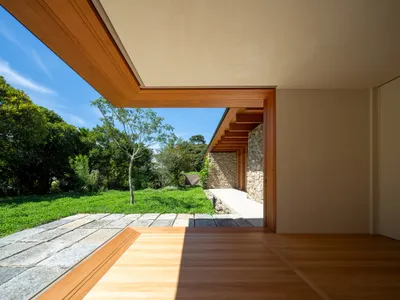
Teitakusubako and Yusuke Igarashi Architects Dissolve a House into the Forest Edge in Zushi
A 215 m² residence on a generous Tokyo-suburban plot uses stone, timber, and fragmented volumes to blur the line between dwelling and woodland.
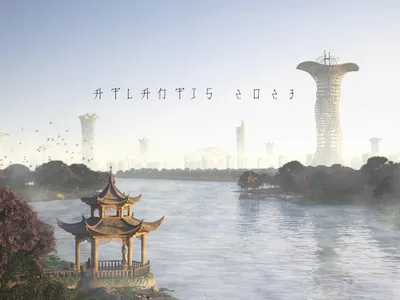
Atlantis 2023: Vertical Farm Towers That Turn a City's Waste Into Its Own Food Supply
Jakub Sokólski proposes a network of timber farming towers where organic waste, water and energy circulate in a closed loop inside the dense city.

Terrain Anamorphosis: Erosion as a Design Tool for Regenerating Athens' Kifisos River
A proposal for Athens' Kifisos River that lets controlled water carve terraces, basins and fragments into the ground around an abandoned power station.
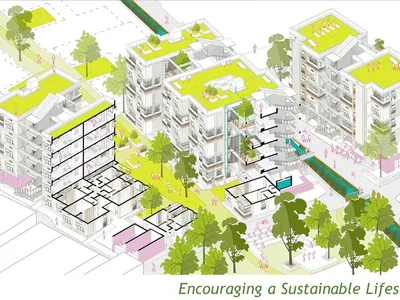
Productive Organism: A Mumbai Thesis That Treats Peripheral Housing as a Tool for Ecological Repair
Amod Nargund's thesis for Marve, Malvani layers mangrove ecology, adaptive housing and water cycles into a habitat that works like a living organism.
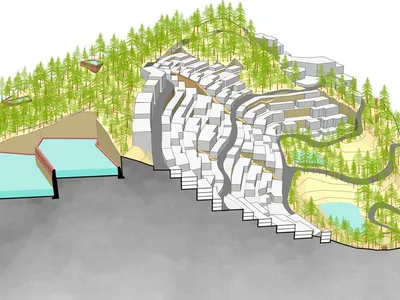
Structuring the Urban Form with Natural Systems: Letting Water Plan Shimla's Next Growth
Rohit Raj's thesis maps catchments, slopes and runoff near Shimla, then places urban functions by water demand so gravity does the work of pumps.

M.A.U Museum of Urban Art: A Rome Museum That Sinks Into the Park and Hands Its Walls to Street Art
Caterina Di Giorgio embeds a museum in the Serpentara slope, letting the park flow over its roof while murals claim its interior walls.

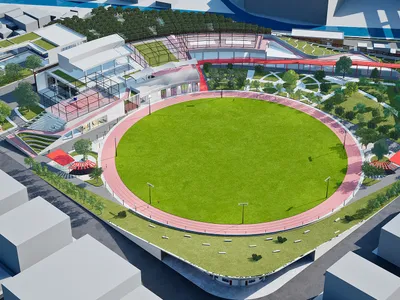
From Vibrancy to Vacancy: Addressing the Decline of Urban Structures
“When the ‘Heart’ weeps for what it has lost, The ‘Spirit’ laughs for what it has found”

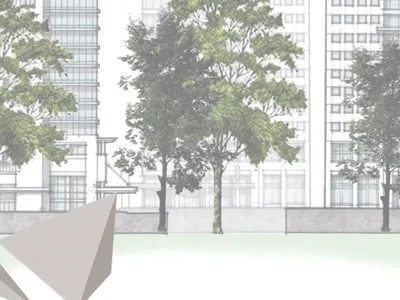
Trilogy Tetrahedrons: Public Furniture That Decays, Regrows, and Persists
Murrill Oakes designs triangular timber structures that evolve through three lifecycle phases, merging reclaimed wood with natural growth.
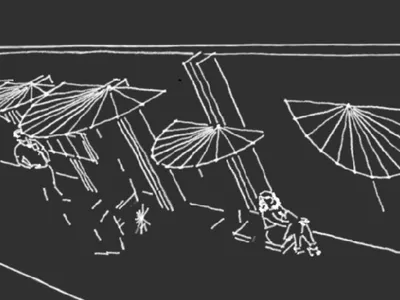
City Umbrella: Turning Dead Infrastructure into Bioclimatic Public Space
Modular canopy installations reclaim neglected urban pockets beneath flyovers and along boundary walls, offering shade, comfort, and social life.
Urban Meal Mill: Architecture as Ecosystem on the Thames
A London project integrates water harvesting, vertical farming, and solar energy within sawtooth-roofed volumes to reimagine urban resilience.

Urban Seed: Rooting Cities in Ecological Balance Through Agricultural Infrastructure
A conceptual framework that treats farms as urban roots, markets as branches, and open spaces as the canopy where communities gather and thrive.


