
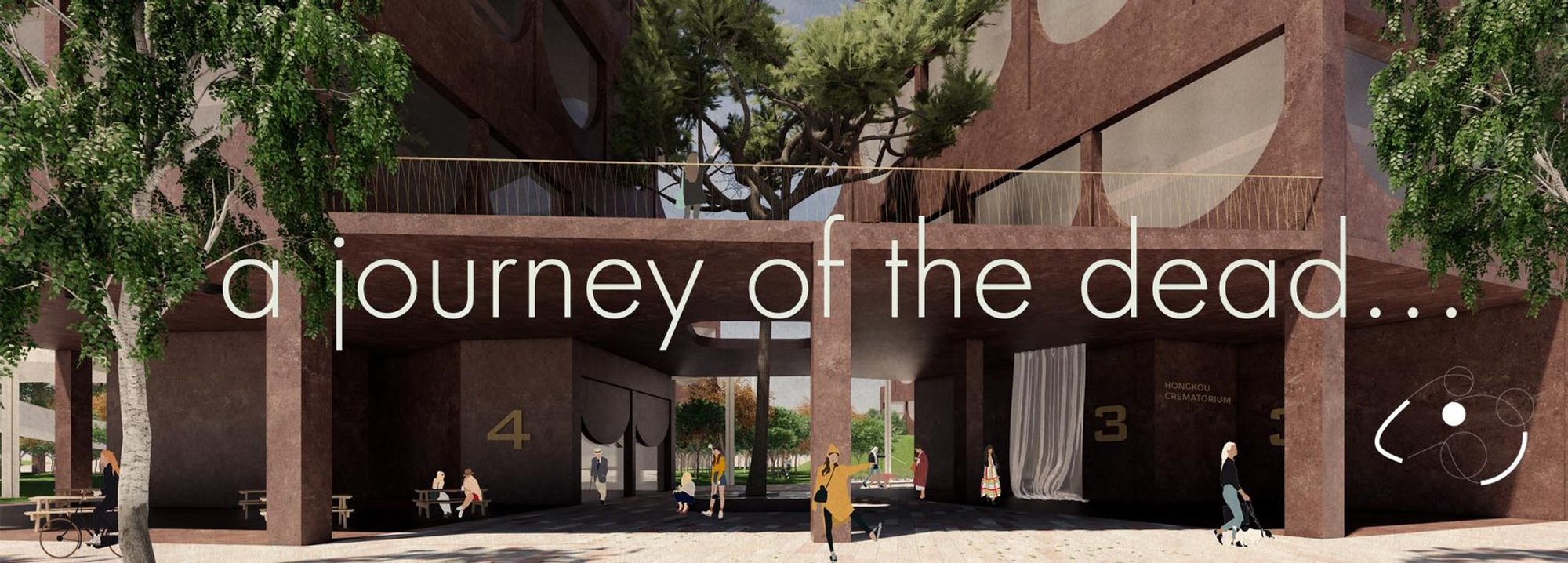
A Journey of the Dead: Rethinking Vertical Cemetery Architecture as Civic Space
Reimagining vertical cemetery architecture as a civic, sustainable, and inclusive space for ritual, mourning, and community life.

Project by Alice Meyer, Amarilnto GKIOSA, and Victoria Peal
Shortlisted entry of Circle of Life
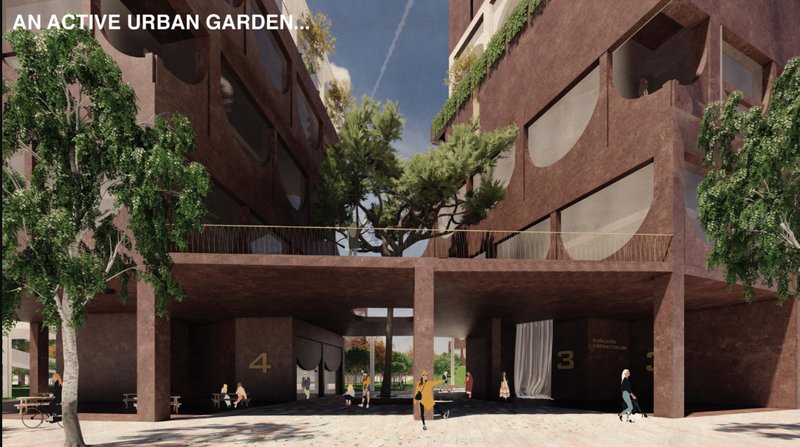
This proposal "A JOURNEY OF THE DEAD" challenges traditional burial design by reimagining a cemetery not as a hidden or segregated site but as an active part of the urban experience. Anchored in the principles of vertical cemetery architecture, the project integrates rituals, green public spaces, and communal infrastructure within a dense, flexible, and sustainable design framework.
Reimagining Cemeteries for the Urban Future
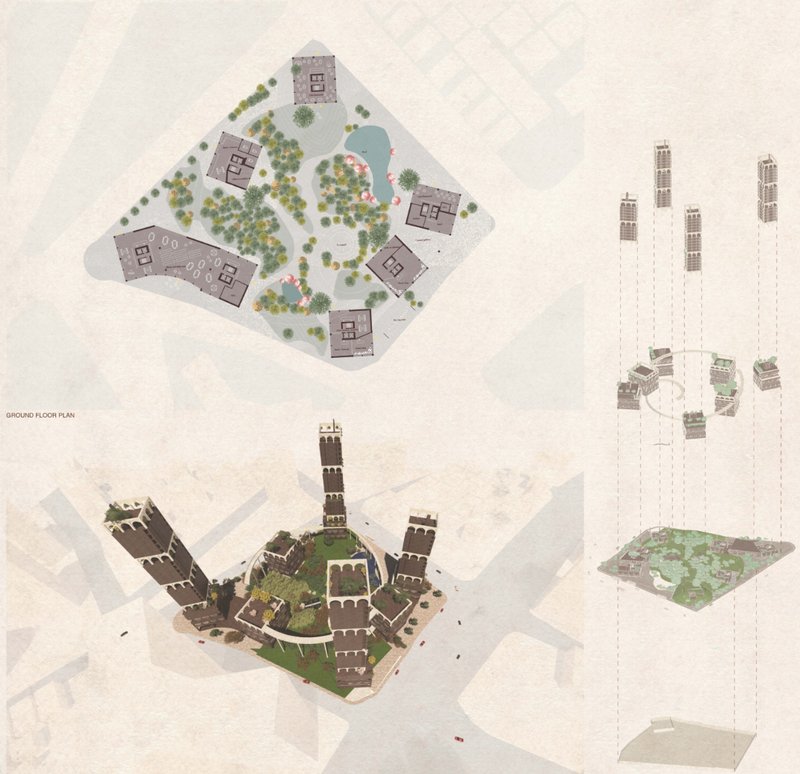
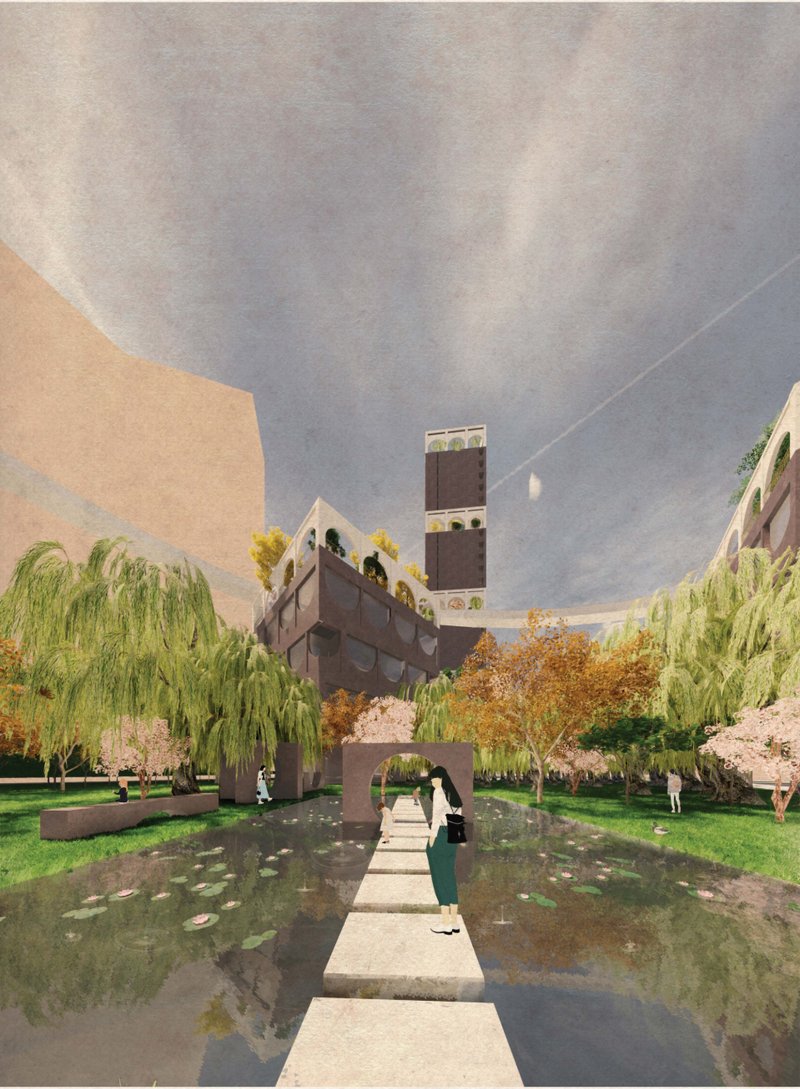
In most cities, cemeteries are isolated from daily life—spaces of silence, contemplation, and mourning, distanced from the energy of public interaction. This project redefines that boundary by embedding a cemetery into the very core of urban activity. Set within a high-density cityscape, the proposed vertical cemetery introduces a new spatial typology that allows life and death to co-exist within a public park setting.
Instead of occupying sprawling ground space, burial functions are lifted vertically, freeing up valuable land for communal activities. This elevated typology allows columbaria, cremation rooms, and ritual spaces to exist alongside urban gardens, libraries, chapels, and walkways. It transforms the cemetery from a place of finality into one of connection and continuity.
A Civic Typology Rooted in Ritual
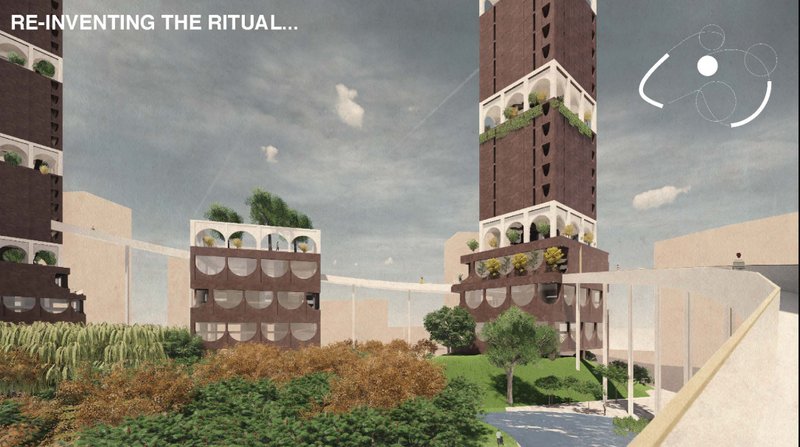
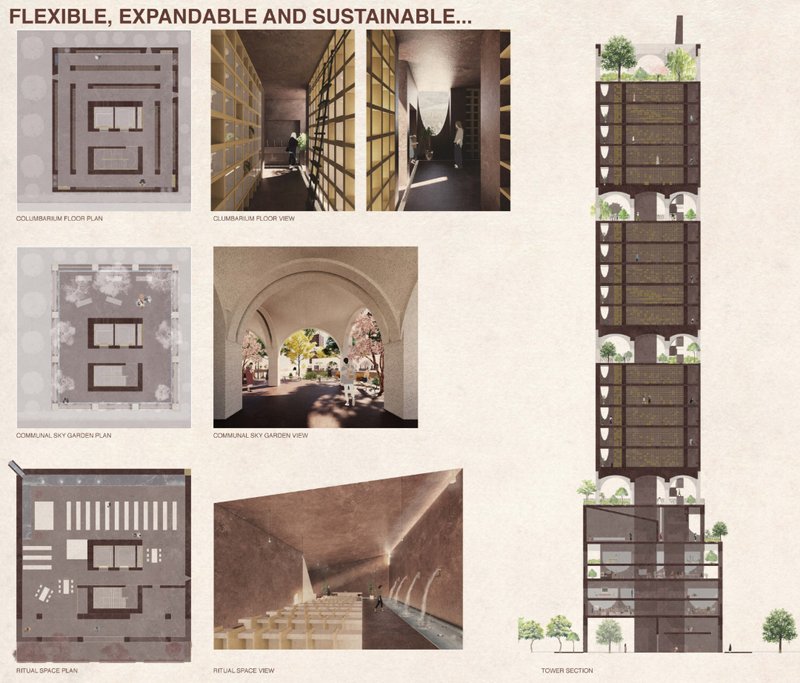
The cemetery tower modules are designed in groups that frame a central park, with each tower consisting of up to 26 stories. These modules alternate between functional and reflective spaces—ritual terraces, communal sky gardens, and contemplative paths—allowing for flexible arrangements that cater to different cultural and spiritual rituals.
Each cluster forms a civic island: a space that serves not just mourners but also students, families, and pedestrians who encounter it as part of their daily lives. This strategy encourages the normalization of death as part of the urban condition, rather than something distant or avoided.
Sustainability, Modularity, and Adaptability
At the heart of this proposal is the integration of vertical cemetery architecture with sustainable design. Green terraces appear every five levels, functioning as sky parks, rainwater absorbers, and oxygen generators. The proposal allows for modular vertical expansion using prefabricated systems, enabling the cemetery to grow incrementally without disrupting its environment.
This design allows up to 138,600 burial units, with the capacity to expand to 300,000—making it scalable for the long term. Cremation areas and burial zones are supported by thoughtful circulation, ensuring that mourners can experience moments of privacy while still remaining connected to the civic life around them.
Ritual Meets Public Space
One of the project's most radical gestures is the elevated walkway called the "Journey of Death" that spirals through the complex. This path leads individuals across terraces, gardens, and ceremonial spaces, offering a spatial metaphor for mourning as a transition, not an end. It is a deliberate architectural expression of passage, designed to bring people into communion with death without severing them from the life around them.
From ground-level urban gardens to rooftop columbaria, the architecture supports multiple forms of engagement. Visitors may come to grieve, to reflect, to walk, or simply to participate in the ecosystem of public life.
Reclaiming Deathcare as an Urban Right
In proposing this new model, the project calls on city planners and architects to reconsider how urban deathcare architecture can serve broader civic functions. By treating the cemetery as essential public infrastructure, rather than residual space, the design empowers a more inclusive and open-minded engagement with end-of-life practices.
In a world of shrinking land, rising populations, and shifting cultural attitudes toward death, this vertical cemetery architecture proposes a timely and necessary response—one that makes space for the dead without denying the vitality of the living.



Popular Articles
Popular articles from the community

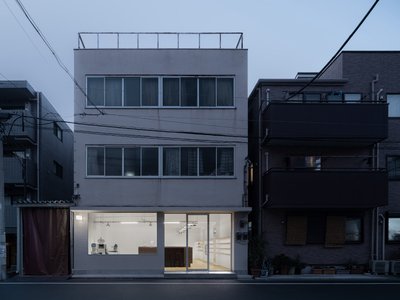
Atelier Macri Concept Store Interior Design by CASE-REAL
Atelier Macri store features a "ko" counter, walnut wood details, cork displays, blending retail, gallery, and seamless customer experiences.

Solar Steam: A Climate-Responsive Architecture That Redefines the Monument
A climate-responsive memorial architecture that transforms heat, decay, and time into a living system reflecting humanity’s ecological impact.
Fifth NRE Jazz Club – De Bever Architecten: Eindhoven’s Revitalized Cultural Hub
Historic gas factory transformed into Fifth NRE Jazz Club blending modern sustainability, jazz culture, dining, and heritage architecture seamlessly.
Gads Hill Early Learning Center by JGMA: Adaptive Reuse Shaping Community-Focused Educational Architecture
Adaptive reuse transforms fragmented structure into vibrant early learning center with playful façade, natural light, and community-focused sustainable design.

Similar Reads
You might also enjoy these articles


The Ken Roberts Memorial Delineation Competition (Krob)
As the most senior architectural drawing competition currently in operation anywhere in the world, it draws hundreds of entries each year, awarding the very best submissions in a series of medium-based categories.

Waterfront Redevelopment and Urban Revitalization in Mumbai: Forging a New Dawn for Darukhana
A transformative waterfront redevelopment project reimagining Darukhana’s shipbreaking heritage into an inclusive urban future.
OUT-OF-MAP: A Call for Postcards on Feminist Narratives of Public Space
Rhizoma Design and Research Lab invites artists, designers, architects, researchers, and students to reflect on how feminist perspectives can reshape public space. Selected works will be exhibited in Barcelona, October 2026. Submissions open until 15 April 2026.

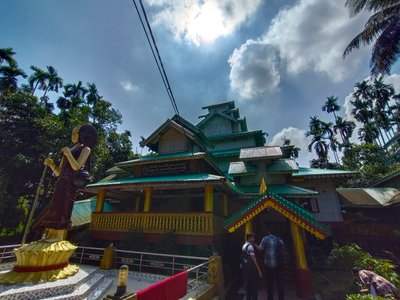
Documentation Work on Buddhist Wooden Temple
Architectural syncretism and cultural hybridity: A comparative study of the Buddhist temples in Chattogram Hill tracks

Explore Urban Planning Competitions
Discover active competitions in this discipline




The Global Benchmark for Architecture Dissertation Awards

Challenge to design locus for the upliftment of human rights


Challenge to design a learning and healing center


Challenge to re-imagine a department store in present times
Comments (0)
Please login or sign up to add comments
No comments yet. Be the first to comment!