

Autism-Friendly School Architecture Design: Niddrie Autistic School by Guymer Bailey Architects
The Niddrie Autistic School by Guymer Bailey Architects is a pioneering example of autism-friendly educational design, blending adaptability with inclusivity.

Redefining Learning Spaces for ASD Students
The Niddrie Autistic School, designed by Guymer Bailey Architects, is a transformative educational facility in Niddrie, Australia. Originally a mainstream school with aging infrastructure, the site has been redeveloped to create a supportive and adaptive environment tailored for students with autism spectrum disorder (ASD). This 4,950-square-meter project exemplifies how architecture can cater to the unique needs of neurodivergent students, fostering confidence, independence, and inclusivity.


Context and Challenges
The original campus was ill-suited to the specific requirements of ASD students, with outdated classrooms and inadequate amenities. The redevelopment aimed to align the school with modern pedagogical principles, creating spaces that enhance learning autonomy and social interaction. By reclaiming natural landscapes and designing versatile, interconnected spaces, the architects addressed both environmental and educational challenges.


Design Philosophy: The Child at the Heart
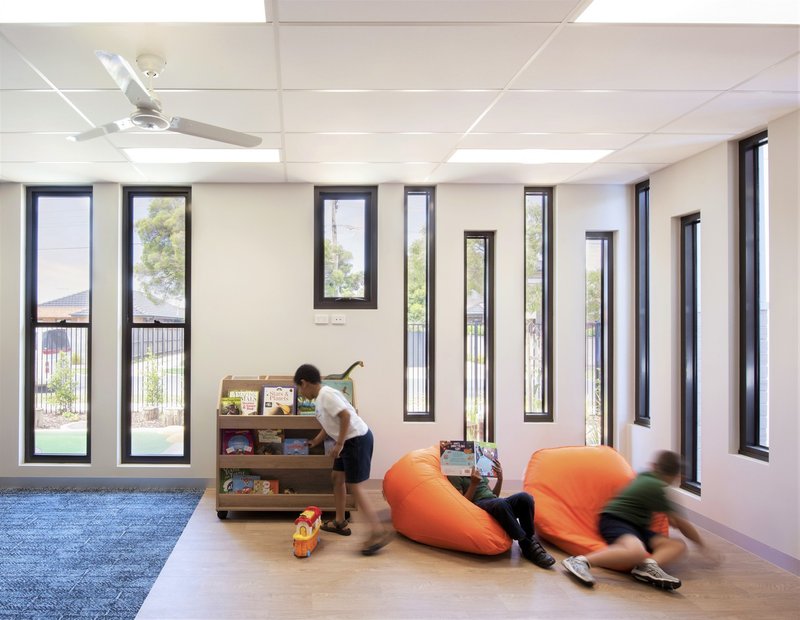
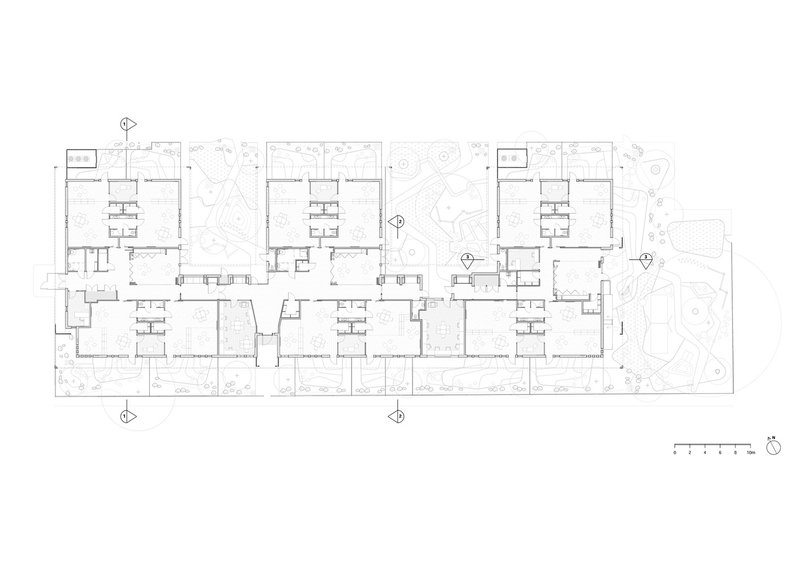
The guiding principle of the project was the school’s ideology: “The child is at the heart of their work.” This philosophy influenced the design to prioritize adaptability, inclusivity, and functionality. The built form was divided into interconnected spaces that cater to primary, shared, and community needs, enabling seamless transitions between individual and group activities.


Key Features of Autism-Friendly Design
Adaptive Learning Spaces
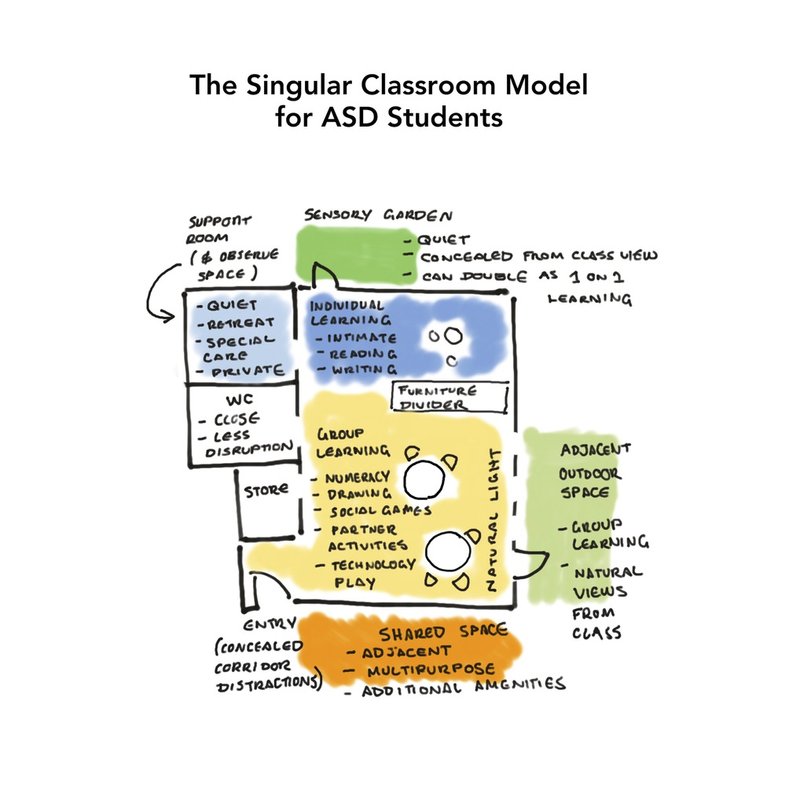
The design balances individual teaching spaces with collaborative environments, ensuring both focused learning and social engagement. Classrooms open to private sensory gardens and outdoor common areas, providing a spectrum of environments to suit varying student needs. These spaces are designed to foster confidence and coping mechanisms, preparing students for potential transitions to mainstream schools.

Integration of Indoor and Outdoor Learning
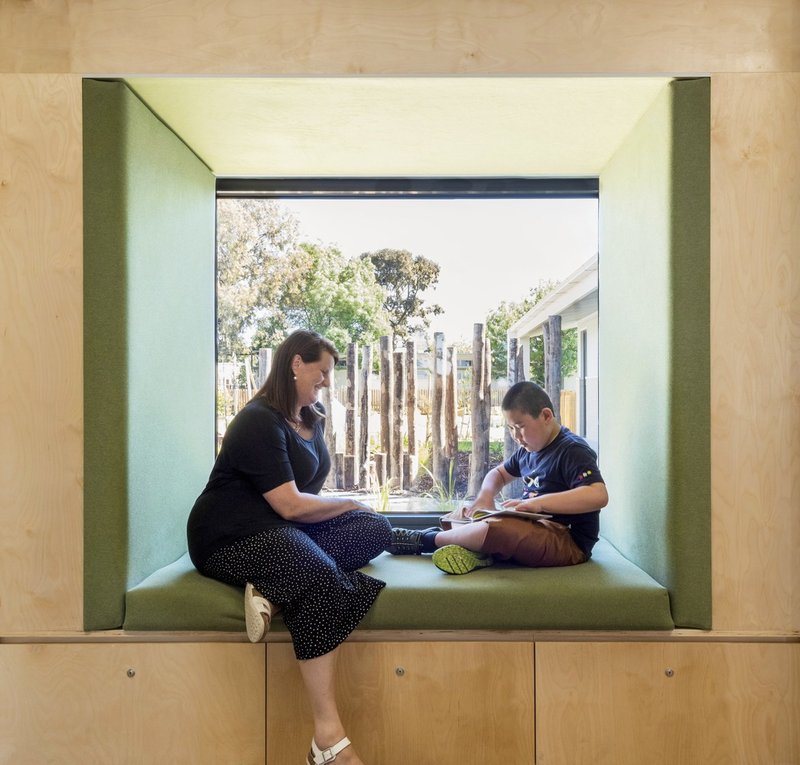
Centralized courtyards and activity spaces around the site’s historical trees connect students with nature. Outdoor areas are integral to the learning process, supporting physical, cognitive, and social development. The layout encourages movement between indoor and outdoor environments, enhancing student engagement and promoting a holistic approach to education.



Sensory and Privacy Considerations
Recognizing the sensory sensitivities of ASD students, the design incorporates private retreat zones alongside group learning areas. Observation nodes enable passive oversight by staff, ensuring attentive care without disrupting students’ focus. Sensory gardens offer a calming space for individual exploration and relaxation.


Visual Wayfinding
To address navigation challenges for younger students and those with reading difficulties, the architects replaced traditional signage with pictorial murals. These wayfinding tools use native species and vibrant colors, turning navigation into an intuitive and engaging activity. This passive visual aid enhances memory and spatial orientation while encouraging curiosity about the local environment.


Sustainability and Inclusivity
The project embraces sustainability by reclaiming natural landscapes and integrating green spaces throughout the campus. Courtyards and sensory gardens reduce heat absorption, improve air quality, and create a calming atmosphere. The design respects the site’s history by preserving its oldest trees, blending historical and modern elements.


A Benchmark for Autism-Friendly School Design
The Niddrie Autistic School demonstrates how architecture can support neurodivergent learners by creating adaptable, inclusive, and sensory-sensitive spaces. Guymer Bailey Architects have set a new standard in autism-friendly educational design, proving that thoughtful architecture can transform the learning experience. The project is a testament to how the built environment can nurture growth, confidence, and independence in ASD students.

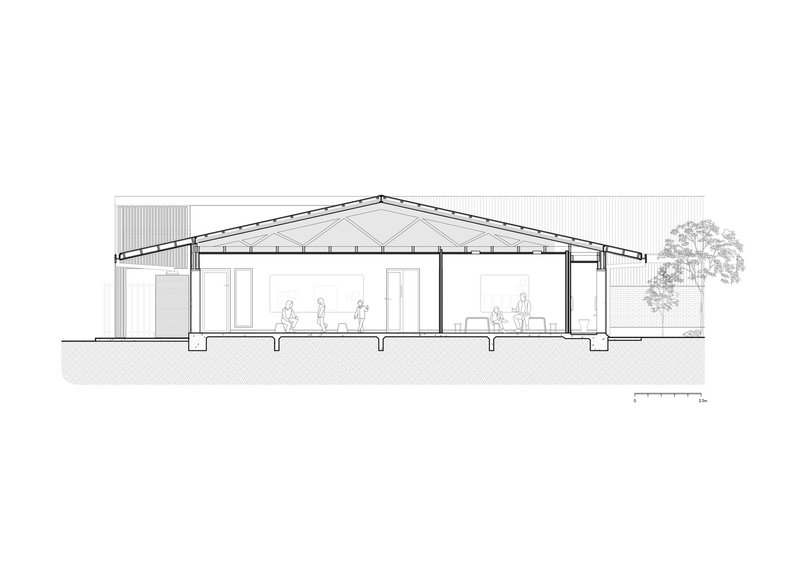

All Photographs are work of Ian Ten Seldam Photography



Popular Articles
Popular articles from the community


Non Architecture's Horrible Houses Competition Asks AI to Design the Ugliest Home Possible
A free global competition invited participants to use AI image generators to produce the most hideous house they could imagine.
Cro&Co Architecture Builds a 150-Meter Tower on Top of a Seven-Lane Highway in La Défense
Trinity Tower reimagines the office high-rise as a bioclimatic organism threaded with terraces, trees, and public ground in Paris's business district.
Noue Studio Organizes a Swiss Restaurant Around a Single Concrete Wall
In Granges-Paccot, Switzerland, a 216-square-meter renovation turns raw materials and a central spine into a legible dining experience.
Inside a Timeless Mumbai Residence by Aether Studio
Aether Studio's 2,250 sq ft apartment in Malad, Mumbai uses marble, brass, boucle, and disciplined restraint to build a quiet retreat from the city.


Similar Reads
You might also enjoy these articles

Bamboo Housing Challenge 2026: Design Affordable, Sustainable Homes Using Bamboo
An international design competition by Bamboo U and IBUKU inviting architects and designers to reimagine affordable housing using bamboo — with the winning design built full-scale in Bali.

Computational Design & Education: Beegraphy Design Awards Introduces 7th Category (Featuring Jiyun's Innovative Approach)
Dive into Beegraphy’s 7th Design Awards category, where computational design meets education to create immersive, interactive learning tools, inspired by Jiyun’s work.

From Parametric Lighting to Urban Furniture: Join the 2nd Workshop in Beegraphy’s Computational Design Series
Dive into Cutting-Edge Design Techniques and Practical Applications with Industry Experts

Introducing Sphere by UNI: Pioneering a New Era in AEC Industry
Unlocking Global Potential with BIM and Agile Management


Explore Architecture Competitions
Discover active competitions in this discipline




The International Standard for Design Portfolios


The Global Benchmark for Architecture Dissertation Awards


The Global Benchmark for Graduation Excellence


Challenge to reimagine the Iron Throne
Comments (0)
Please login or sign up to add comments
No comments yet. Be the first to comment!