
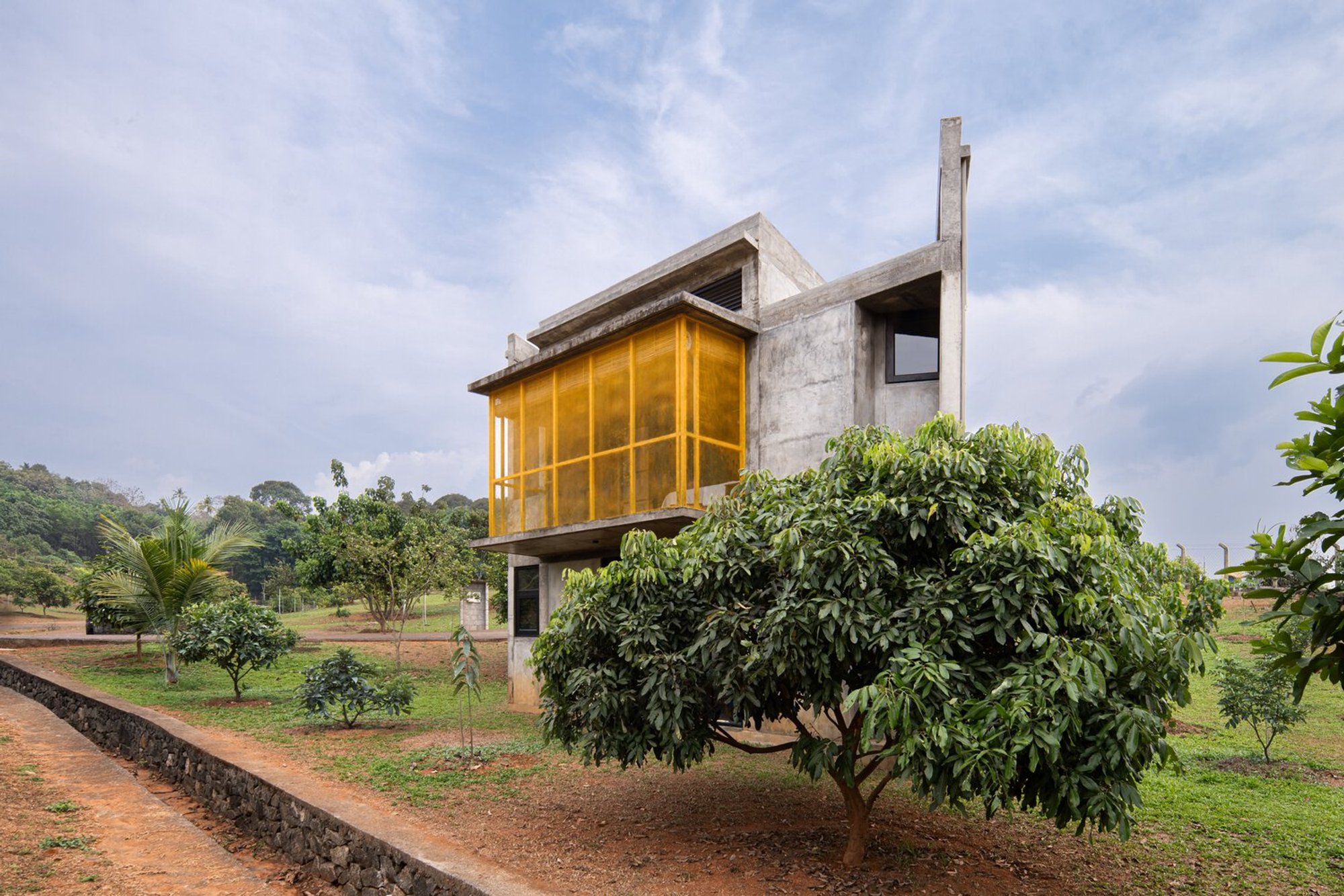
Bhavati House: A Landmark in Budget Sustainable House Design in India
A minimalist, passive solar house in Kerala redefines budget sustainable house design through site-sensitive architecture and raw materials.

Architecture Rooted in Ecology and Affordability
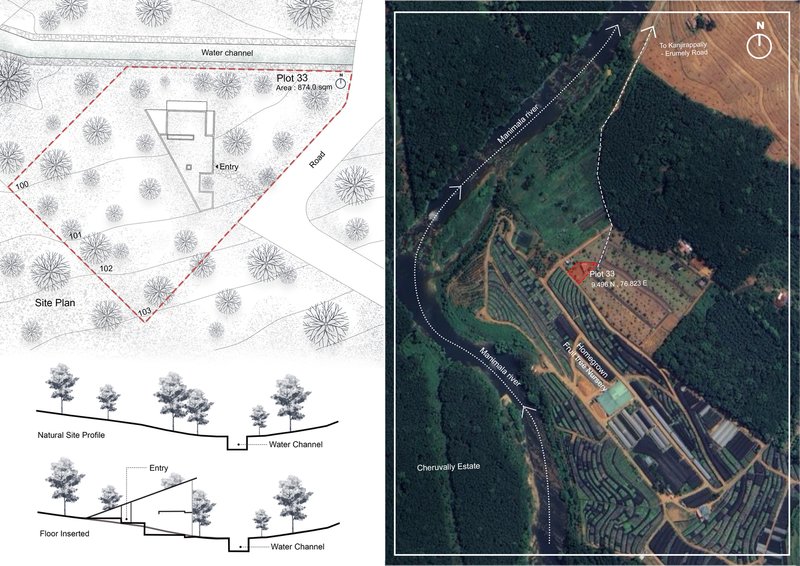
Located in Erumeli, Kerala, Bhavati House by Dhrumam Architects exemplifies an emerging trend in budget sustainable house design in India. Built on a compact 1000 ft² footprint, the house is part of a larger orchard community development that intentionally avoids fences and preserves the lush green landscape of fruit-bearing trees. Conceived as an ecological dwelling, Bhavati House embodies low-cost innovation, passive climate responsiveness, and architectural sensitivity to its sloping terrain and tropical environment.
Site-Responsive Design Anchored in Natural Topography
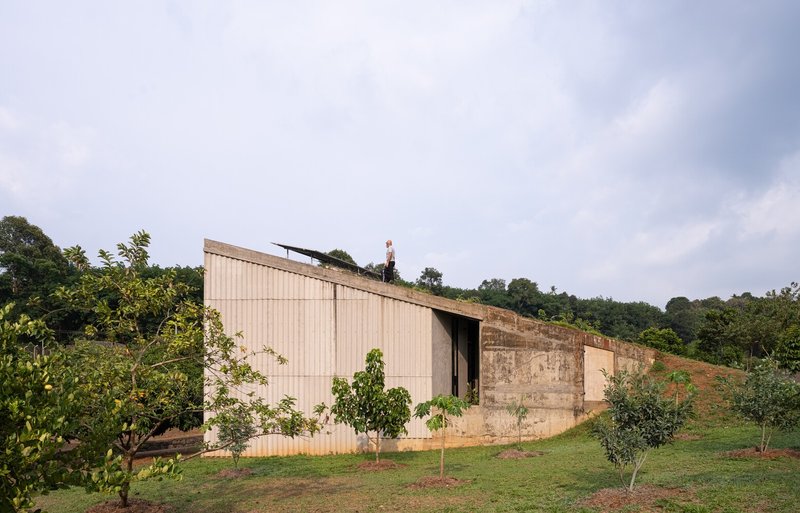
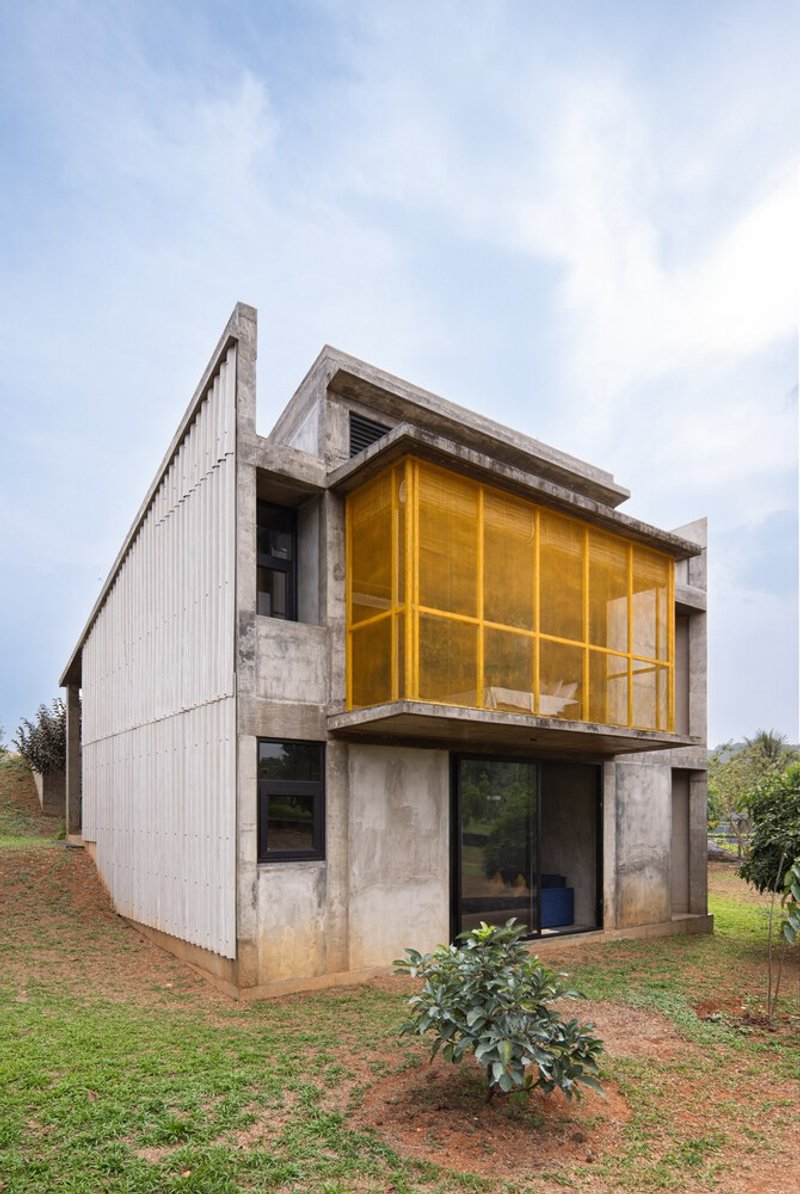
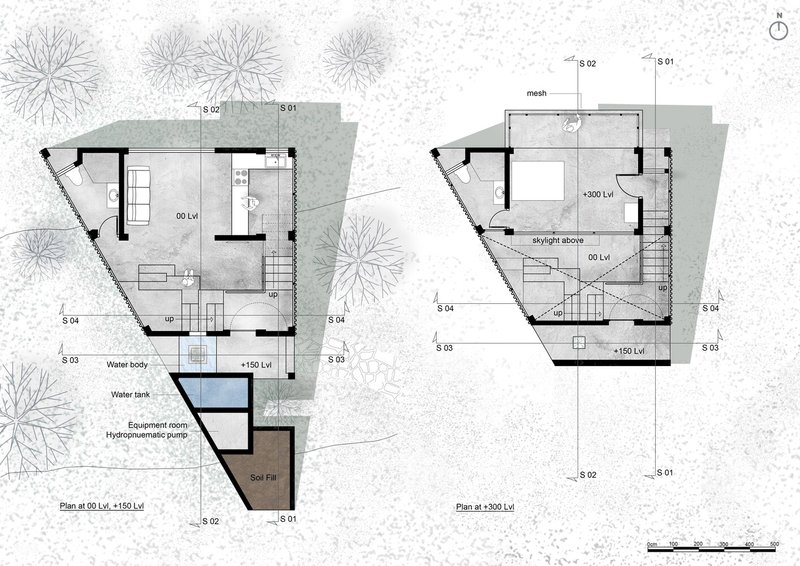
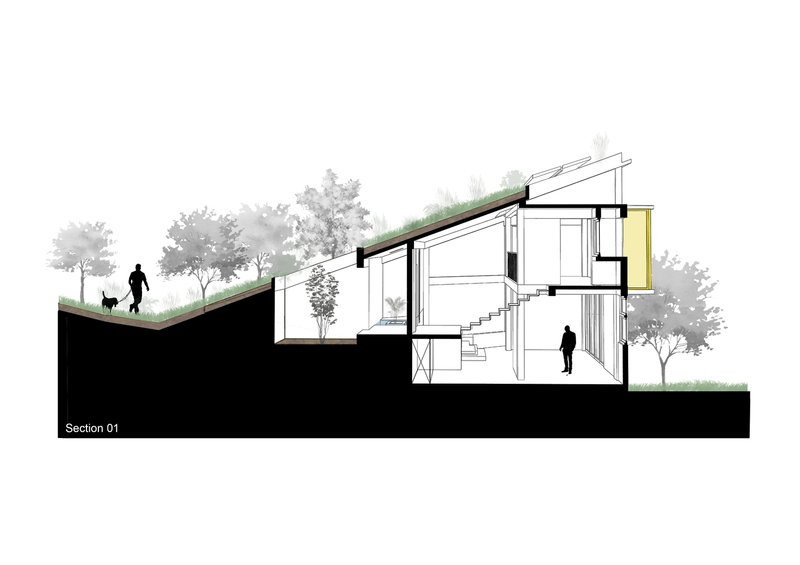
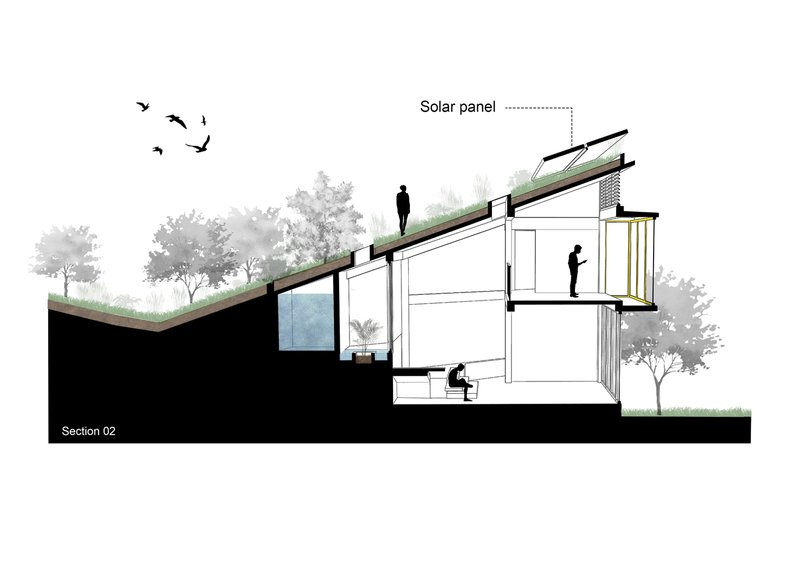
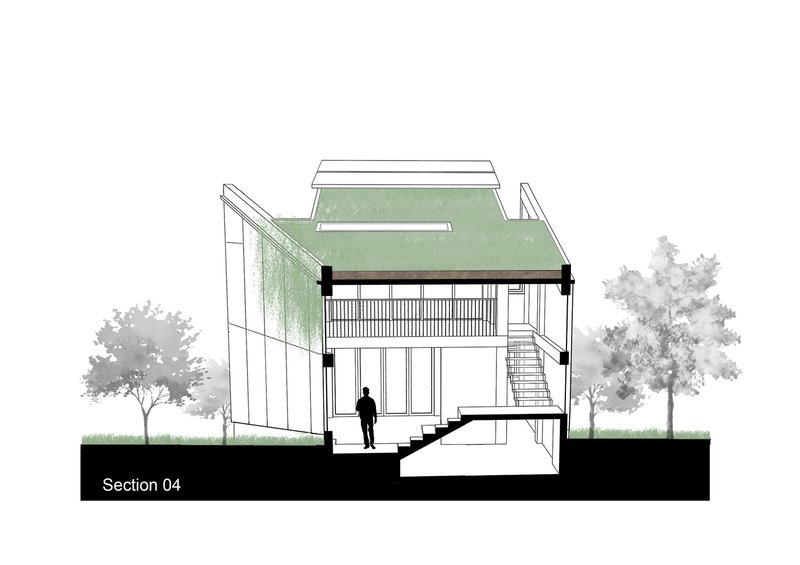
Plot No.33, situated on the lowest part of the orchard, slopes gently from south to north. Instead of leveling the land, the architects embraced the natural slope to inform the layout of the house. The structure cascades in split levels, creating a sequence of interconnected volumes. Entry occurs at mid-level—where the road meets the site—while general living areas are placed on the lower level. The upper level is reserved for resting and sleeping, offering calm seclusion and elevated views of the surrounding hills.
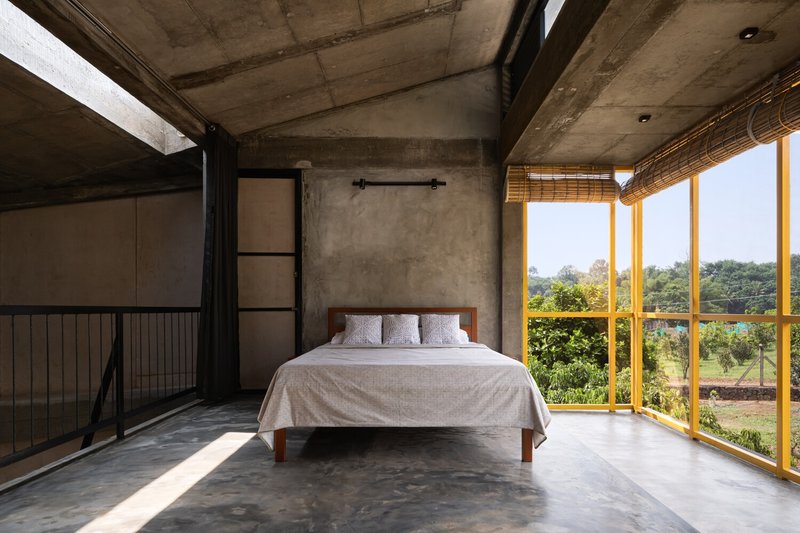
This spatial fluidity creates a dynamic living environment that blurs boundaries between indoors and outdoors, architecture and landscape. The northern elevation opens entirely to the landscape, while the western and eastern flanks are carefully shielded to protect from excessive sun exposure.
Climatic Strategies and Passive Cooling Techniques
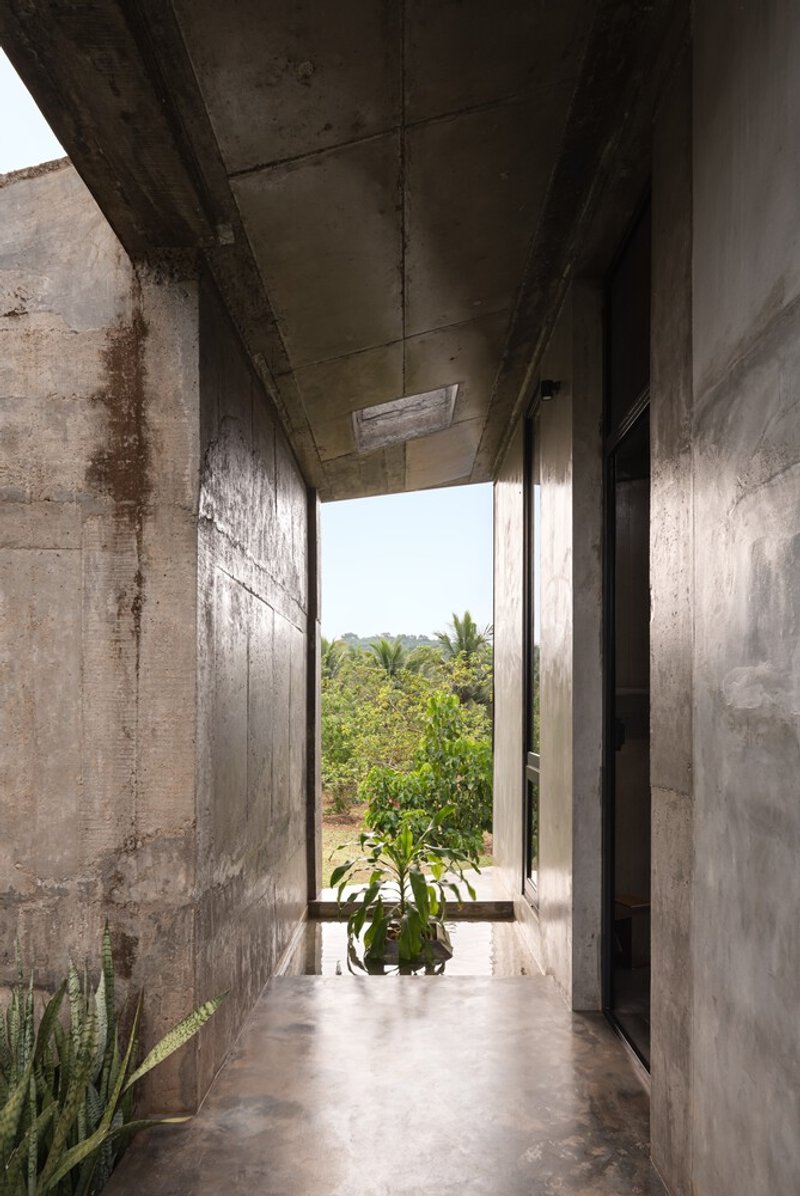
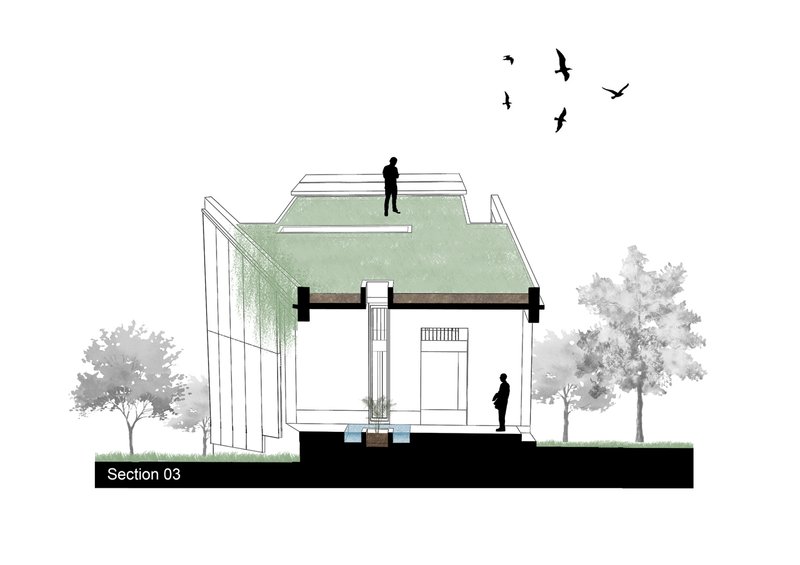
Bhavati House uses vernacular wisdom and passive design strategies to cool and ventilate naturally. The entry sequence is designed as a wind tunnel, encouraging cross-ventilation and air movement throughout the space. Toilets on the west and a kitchen on the east serve as thermal buffers, mitigating heat transfer to living areas. The roof, covered with earth and grass, further insulates the home and houses solar panels for energy generation.
The south-facing RCC slab, often vulnerable to heat in tropical climates, is insulated with green cover, minimizing thermal gain. The result is a house that responds intelligently to Kerala’s intense summer conditions without relying on artificial cooling systems.
Minimalist Interiors with Raw Materiality
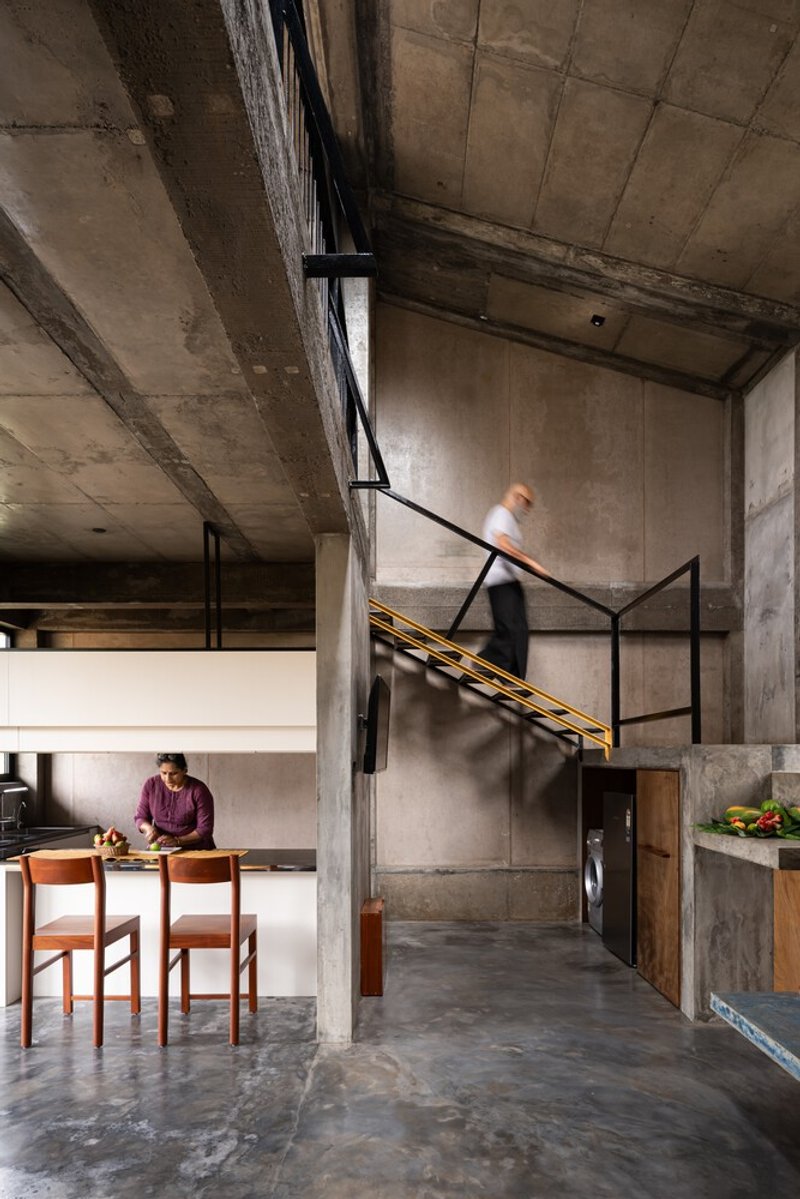
Internally, Bhavati House is designed with restraint. The palette is raw, authentic, and cost-effective. Cement finishes define the flooring, while walls are crafted from corrugated cement sheets externally and smooth cement boards internally. The intention is not just aesthetic, but functional—these materials require minimal maintenance and will, over time, become hosts for cascading greenery from the roof, enhancing insulation and blending the structure into its verdant setting.
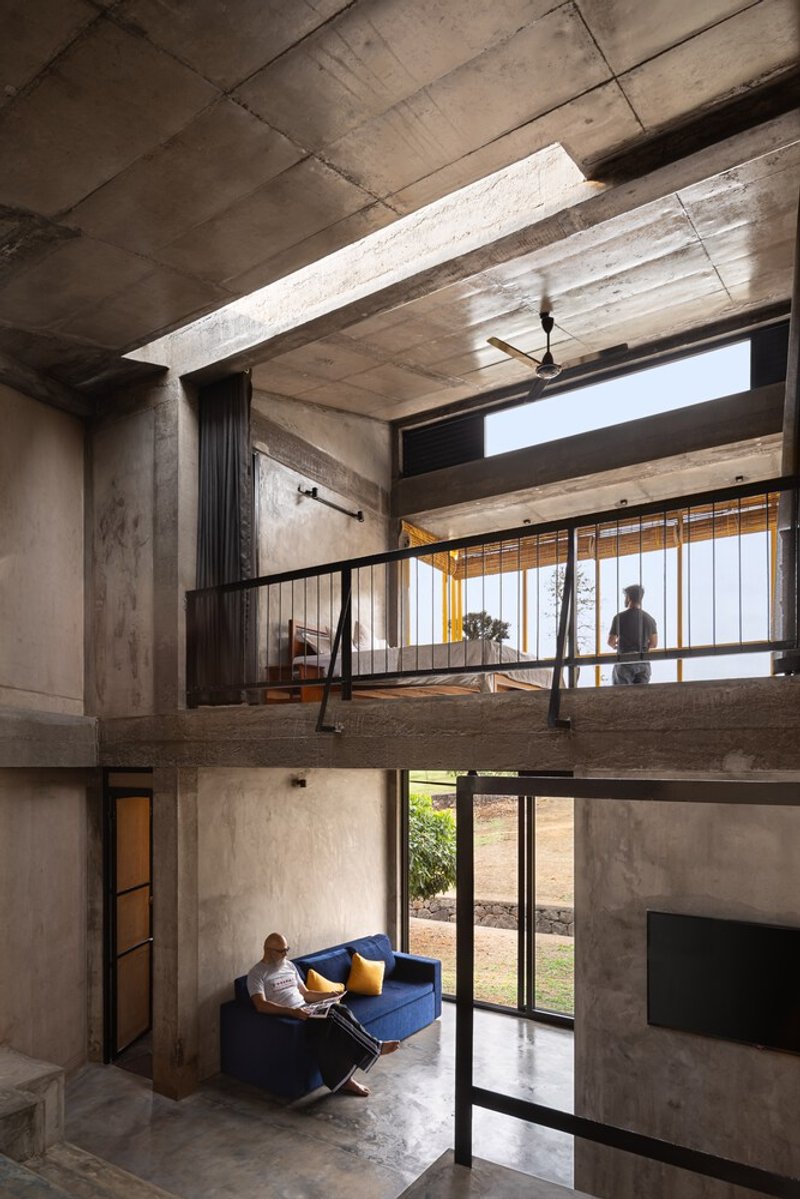
The interiors are purposefully dimmer, evoking the shaded ambience of traditional Kerala homes that offer refuge from the heat. Built-in stairs double as seating, merging architecture with furniture in a seamless expression of multifunctionality.
Community Integration and Landscape Synergy
Bhavati House is not a stand-alone structure but part of a wider ecological and communal vision. The 4.5-acre land is designed as a shared orchard, with homes confined to modest 600 sq. ft footprints and no fencing between plots. This strategy encourages shared ownership of landscape, wildlife corridors, and communal interaction.
The walkable roof not only extends the usable space but integrates with the orchard’s green expanse. It also provides direct access to solar panels and elevated vistas of the terrain. A sunken slab with mesh fencing on the northern side adds another layer of semi-outdoor engagement while maintaining security and privacy.
Recognition and Purposeful Simplicity
In 2023, Bhavati House was awarded the Indian Institute of Architects National Award for Excellence in Architecture under the Residential Budget House category for projects up to 1500 sq. ft. The accolade acknowledges the project’s design integrity, economic feasibility, and environmental consciousness.
The vision behind Bhavati is profound in its simplicity. It is a home that integrates into the land instead of dominating it. One that prioritizes sustainability over ornamentation, thermal comfort over mechanical systems, and slow living over excess. It redefines what it means to build well on a budget in India.
As the architects state, Bhavati is not just a house—it is a refuge. A place designed to be adaptable, open to future evolution, and rooted in the rhythms of the land.
All Photographs are works of Justin Sebastian Photography, Ar. Joseph K.T.




Popular Articles
Popular articles from the community

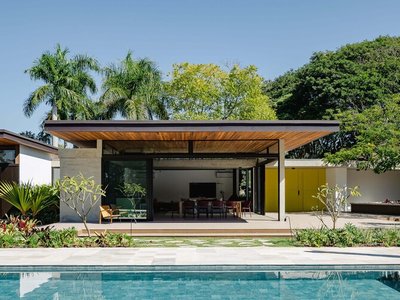
Flamboyant House by Juliana Camargo + Prumo Projetos
Modern Brazilian house integrating existing tree, pool, and volumes with glass, wood, and transitional spaces blending interior, exterior, and landscape seamlessly.
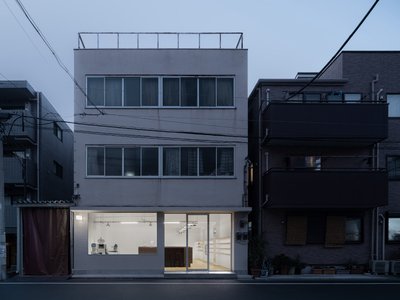
Atelier Macri Concept Store Interior Design by CASE-REAL
Atelier Macri store features a "ko" counter, walnut wood details, cork displays, blending retail, gallery, and seamless customer experiences.
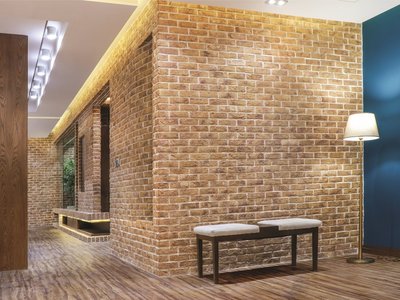
A Contemporary Take on Iranian Residential Architecture
A modern interior design in Mashhad that reinterprets brick, light, and spatial flow to create a warm, contemporary residential architecture.
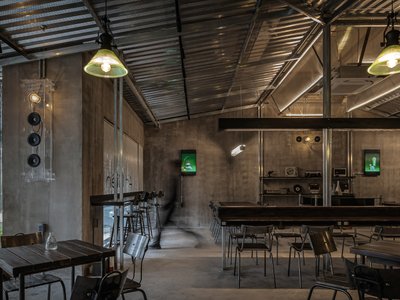
An Miên Lumière Cafe by xưởng xép, Ho Chi Minh City, Vietnam
An industrial-inspired café where layered steel and warm light create a dynamic, immersive environment shaped by reflection, depth, and perception.


Similar Reads
You might also enjoy these articles


Bamboo Housing Challenge 2026: Design Affordable, Sustainable Homes Using Bamboo
An international design competition by Bamboo U and IBUKU inviting architects and designers to reimagine affordable housing using bamboo — with the winning design built full-scale in Bali.

Computational Design & Education: Beegraphy Design Awards Introduces 7th Category (Featuring Jiyun's Innovative Approach)
Dive into Beegraphy’s 7th Design Awards category, where computational design meets education to create immersive, interactive learning tools, inspired by Jiyun’s work.

From Parametric Lighting to Urban Furniture: Join the 2nd Workshop in Beegraphy’s Computational Design Series
Dive into Cutting-Edge Design Techniques and Practical Applications with Industry Experts

Introducing Sphere by UNI: Pioneering a New Era in AEC Industry
Unlocking Global Potential with BIM and Agile Management


Explore Architecture Competitions
Discover active competitions in this discipline




The International Standard for Design Portfolios


The Global Benchmark for Architecture Dissertation Awards


The Global Benchmark for Graduation Excellence


Challenge to reimagine the Iron Throne
Comments (0)
Please login or sign up to add comments
No comments yet. Be the first to comment!