
Cobot Hub by 3XN: A Landmark Modular Timber Office Building in Denmark
Cobot Hub by 3XN is a modular timber office building uniting robotics innovation with flexible, sustainable architectural design.

Rethinking Workspaces with Modular Timber Architecture
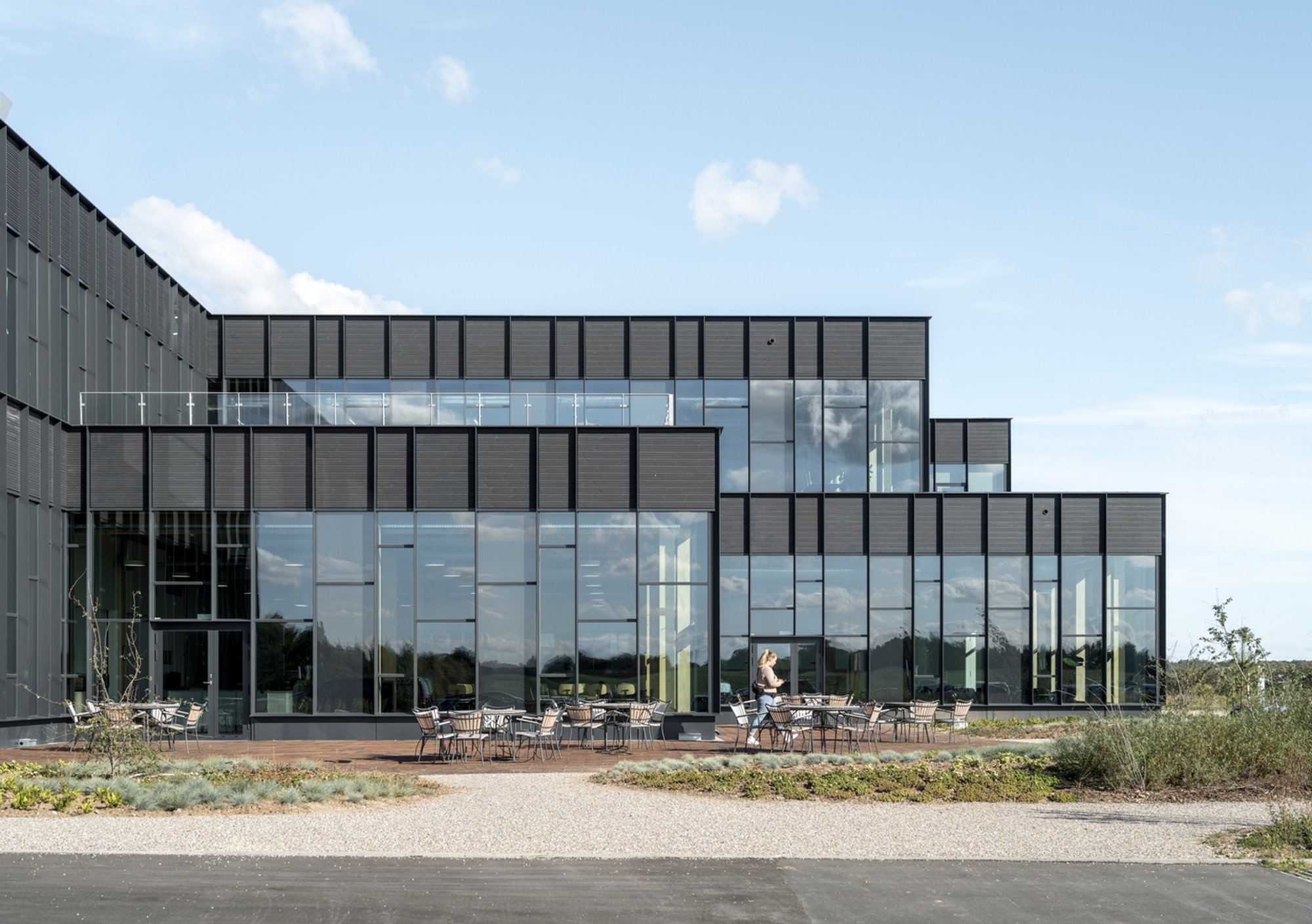
In the rolling landscape just outside Odense, Denmark, Cobot Hub emerges as a visionary modular timber office building designed by the renowned architectural firm 3XN. This 20,000-square-meter facility is more than a corporate headquarters—it’s the world’s largest hub for collaborative robots, or cobots, and a living prototype of sustainable, adaptable design. By combining robotics, natural materials, and spatial fluidity, the Cobot Hub offers a fresh blueprint for future-forward workplaces.
Designing for Flexibility in a Changing Business Landscape
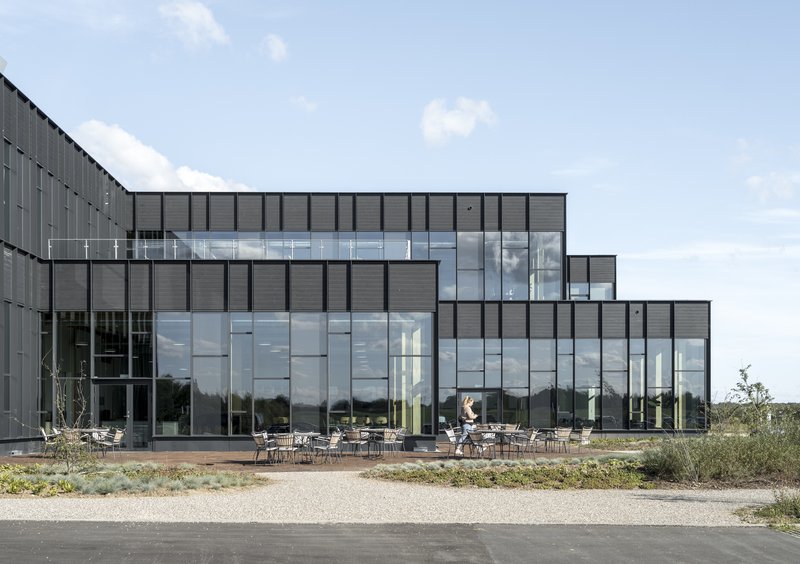
The world of business and technology is in a state of constant evolution, and Cobot Hub reflects this dynamism through a flexible, modular framework. Designed around a 5.8-meter timber grid, the architecture allows for seamless expansion, transformation, or disassembly as business needs evolve. Rather than being bound by the rigid typology of traditional office buildings, Cobot Hub embraces long-term adaptability.
This approach is ideal for its tenants, Universal Robots (UR) and Mobile Industrial Robots (MiR), both of which are at the forefront of cobot innovation. The space has been carefully calibrated to allow research, collaboration, and experimentation to thrive without structural constraints.
A Building That Grows with Its Occupants
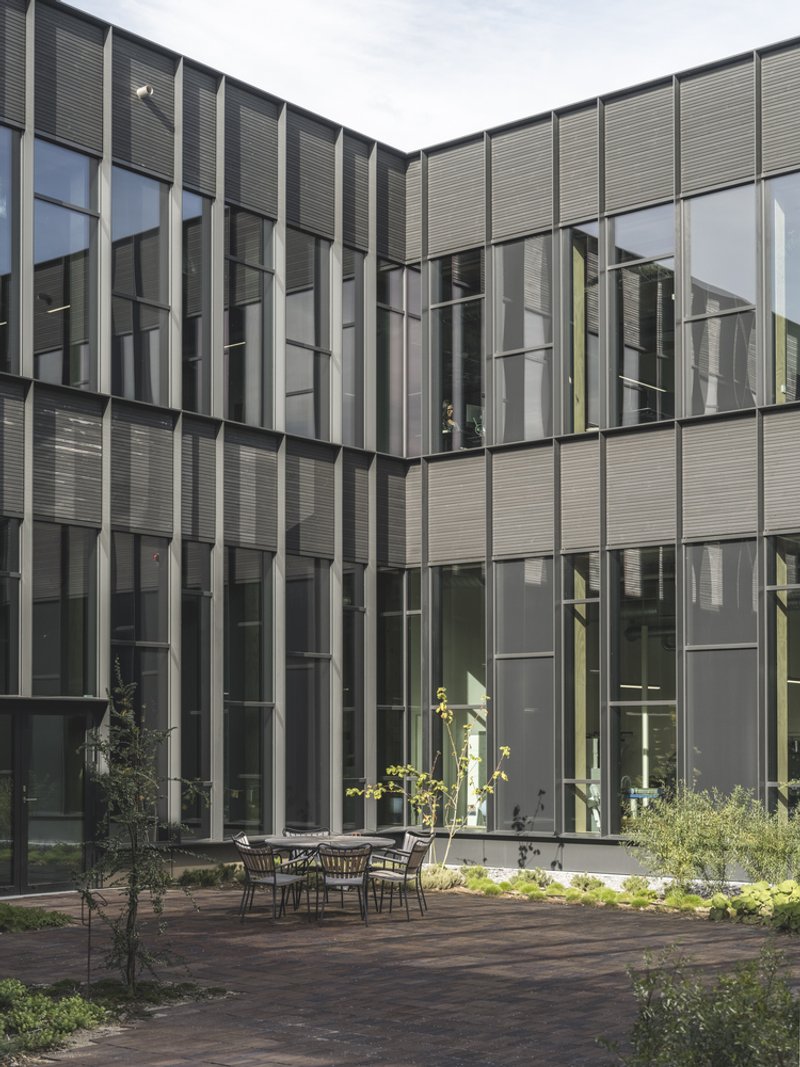
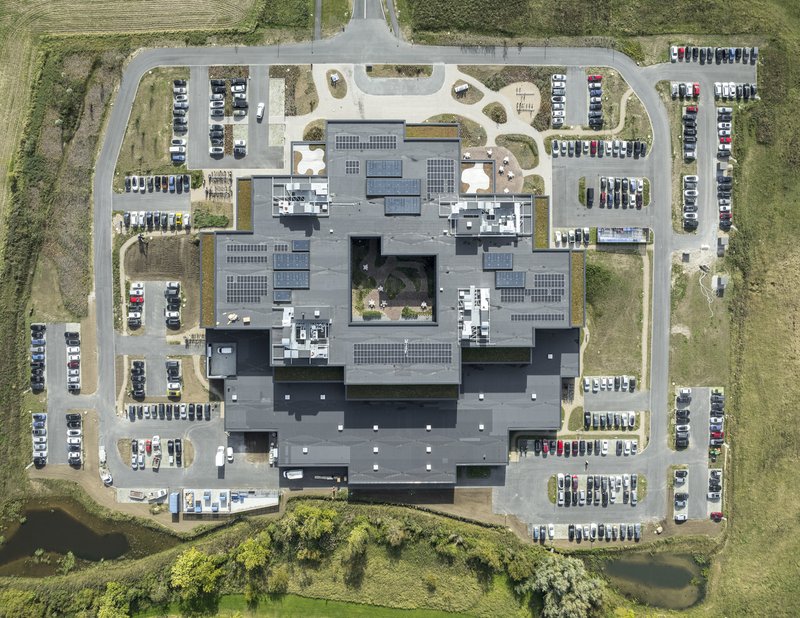
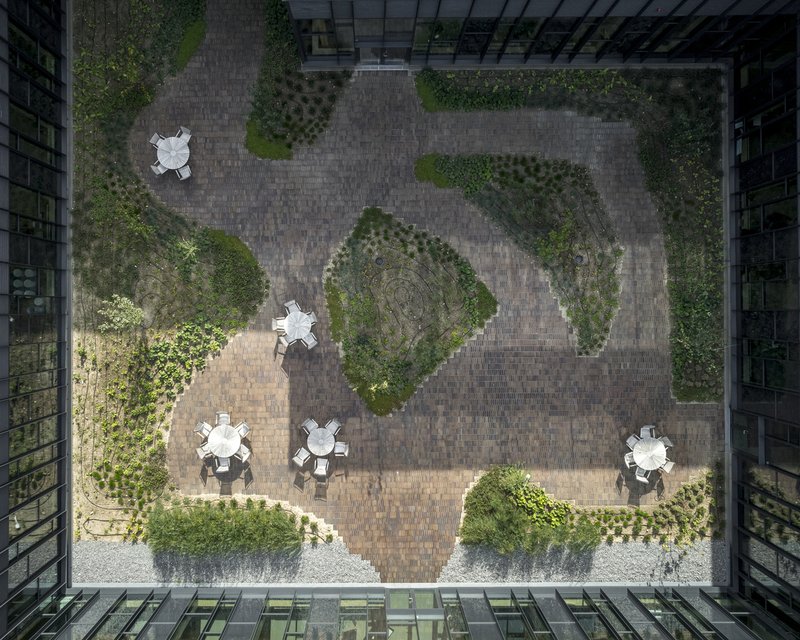
At the heart of the design is a stepped, terraced layout that adapts to the topography of the site. The three-tiered form wraps around a lush, central courtyard, creating a campus-like environment. The building’s volumes are compact and dynamic, avoiding the bulkiness often associated with corporate headquarters.
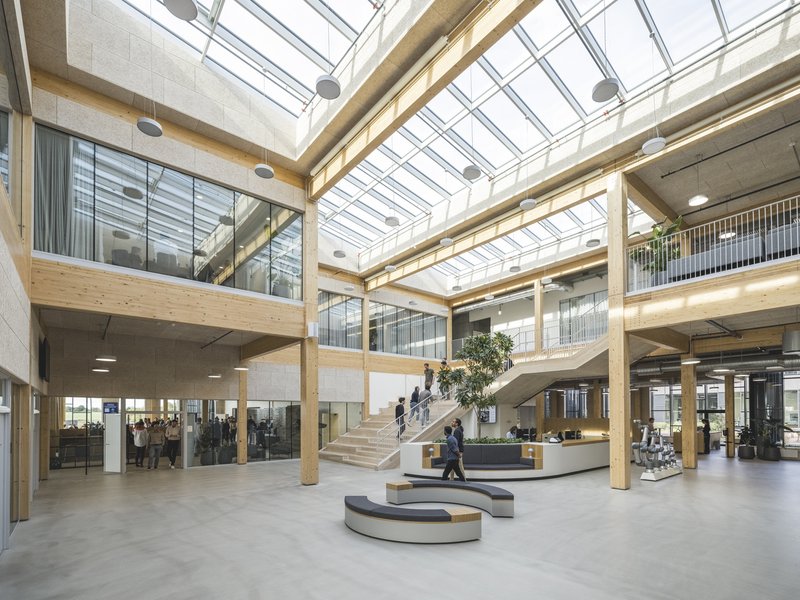
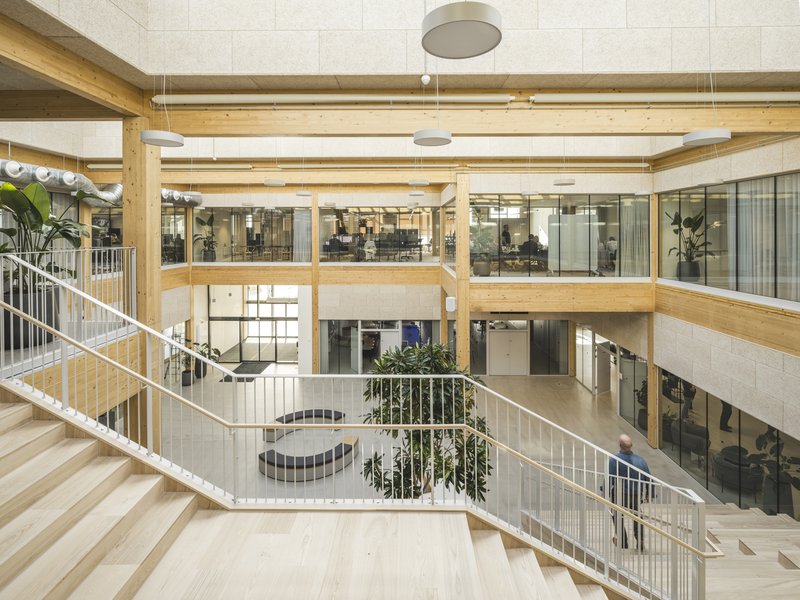
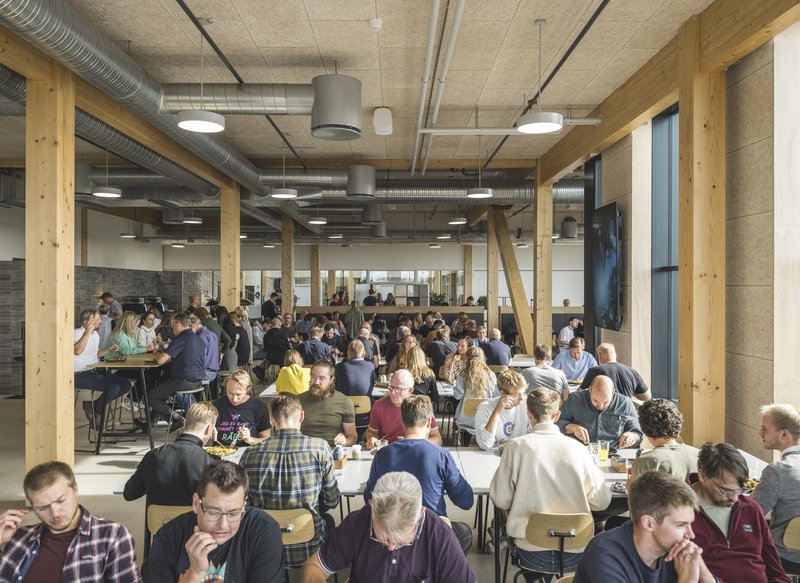
Inside, the open-plan workspaces of UR and MiR are punctuated by shared lounges, meeting zones, and double-height atria that encourage cross-company interaction. The spatial strategy, inspired by the concept of "neighbourhood choice environments," empowers employees to select between social and solitary work settings—an architectural move that nurtures autonomy and well-being.
Timber as a Structural and Ethical Statement
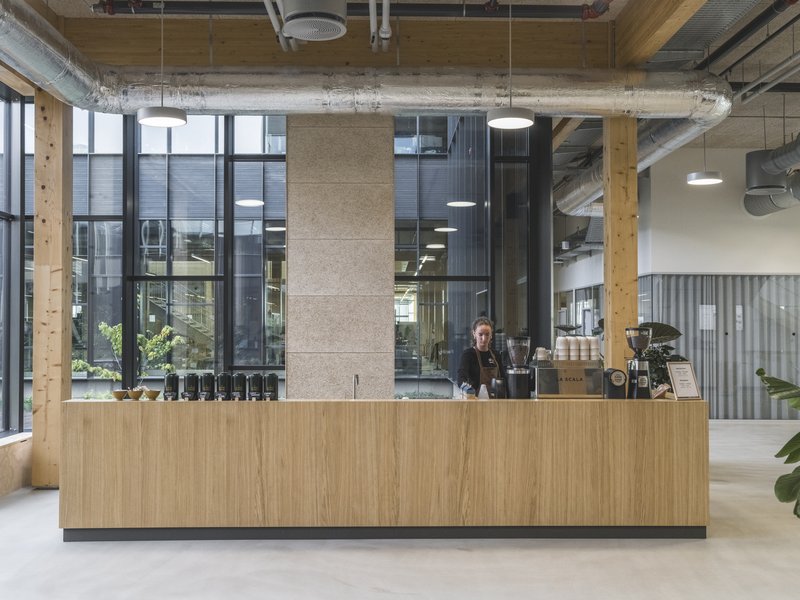
The structural clarity of the Cobot Hub lies in its honest use of materials. Timber columns and beams are left exposed, creating a tactile, transparent environment where the building’s bones are on full display. This timber-first construction is not just aesthetic—it is also environmentally conscious, promoting disassembly and reuse for a circular design life cycle.
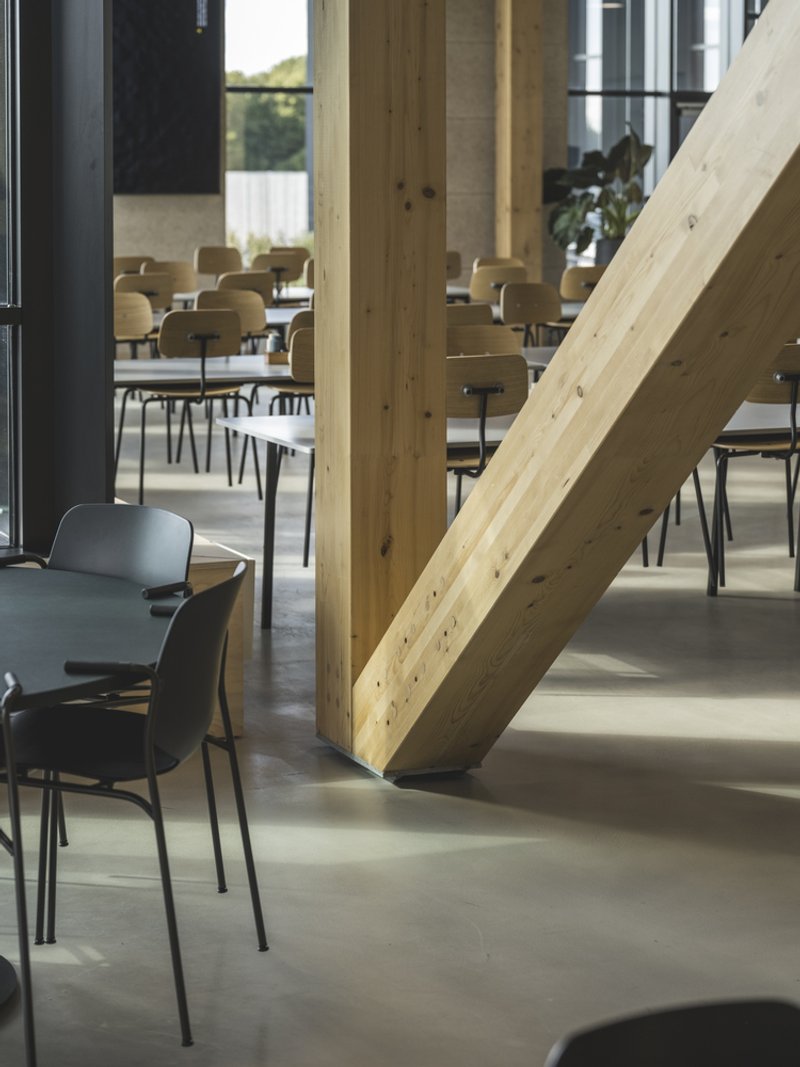
The use of standardized, off-the-shelf materials speaks to the project's accessibility and sustainability goals. Rather than elevating high-end finishes, 3XN celebrates every element—whether utilitarian or refined—as a valuable component of the whole. This philosophy instills the building with a welcoming and egalitarian character.
A Campus of Innovation, Nature, and Community
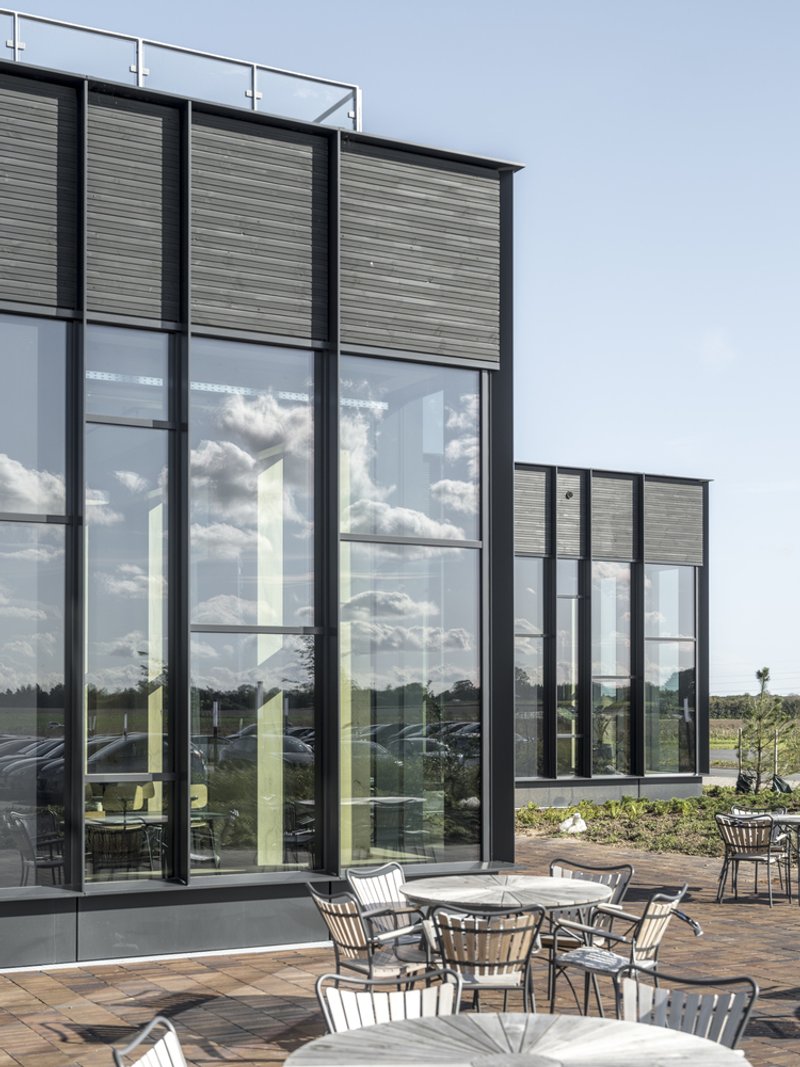
Beyond function and flexibility, the Cobot Hub is a place of connection. Floor-to-ceiling windows flood the interiors with daylight and offer panoramic views of the surrounding greenery. Outdoor terraces and the expansive central courtyard act as social anchors, allowing employees to relax, meet, and recharge under open skies.
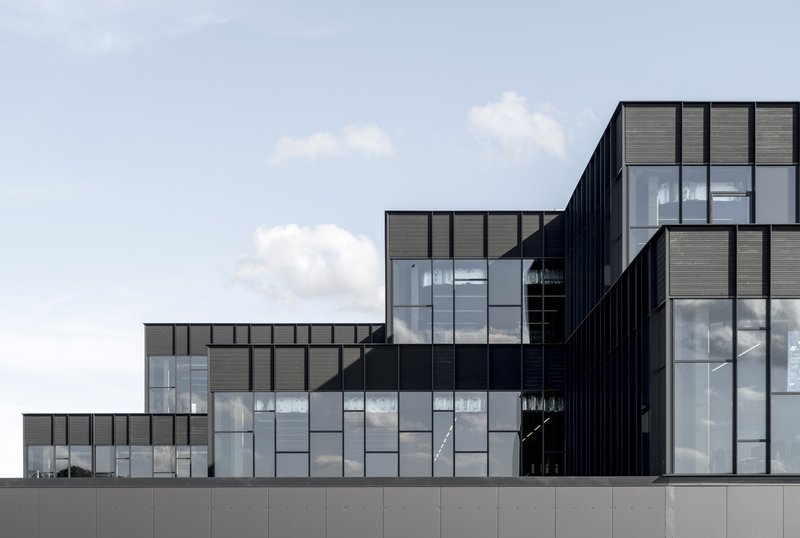
The overall result is a harmonious fusion of architecture, technology, and nature. By supporting the workflow of robotics companies while prioritizing human-centered design, Cobot Hub is not just an office—it is a prototype for future modular timber office buildings.
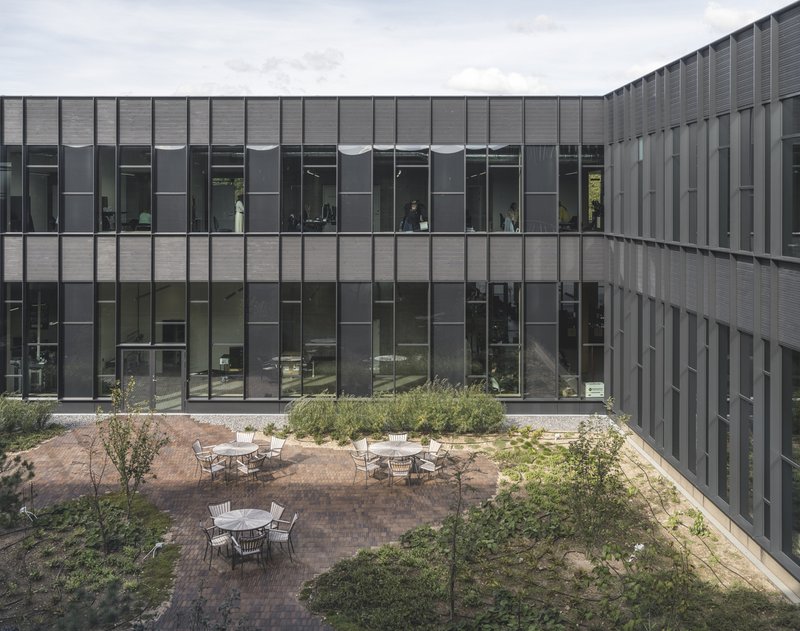
All Photographs are works of Rasmus Hjortshøj



Popular Articles
Popular articles from the community

Split House: A Compact Urban Home Blending Privacy, Light, and Flexible Living in Japan
Compact Japanese home featuring DOMA space, flexible café potential, passive lighting, privacy zoning, and sustainable urban living design.
Solar Steam: A Climate-Responsive Architecture That Redefines the Monument
A climate-responsive memorial architecture that transforms heat, decay, and time into a living system reflecting humanity’s ecological impact.
Fifth NRE Jazz Club – De Bever Architecten: Eindhoven’s Revitalized Cultural Hub
Historic gas factory transformed into Fifth NRE Jazz Club blending modern sustainability, jazz culture, dining, and heritage architecture seamlessly.
Gads Hill Early Learning Center by JGMA: Adaptive Reuse Shaping Community-Focused Educational Architecture
Adaptive reuse transforms fragmented structure into vibrant early learning center with playful façade, natural light, and community-focused sustainable design.


Similar Reads
You might also enjoy these articles

Free Architecture Competitions You Can Enter Right Now
No entry fees, real prizes. Here are the best free architecture competitions open for submissions in 2026.
Top 15 Architecture Competitions to Enter in 2026
From student-friendly idea competitions to prestigious international awards, here are the best architecture competitions open for entries in 2026. Updated regularly.

DIY & Engineering in Computational Design : Enter the BeeGraphy Design Awards
Showcase Your Creativity with Computational Design and Open Source Projects
Innovative Design Solutions: Award-Winning Projects from Recent Architecture Competitions
Exploring award-winning architectural projects shaping the future of design, sustainability, and community.


Explore Architecture Competitions
Discover active competitions in this discipline




The International Standard for Design Portfolios


The Global Benchmark for Architecture Dissertation Awards


The Global Benchmark for Graduation Excellence


Challenge to reimagine the Iron Throne
Comments (0)
Please login or sign up to add comments
No comments yet. Be the first to comment!