
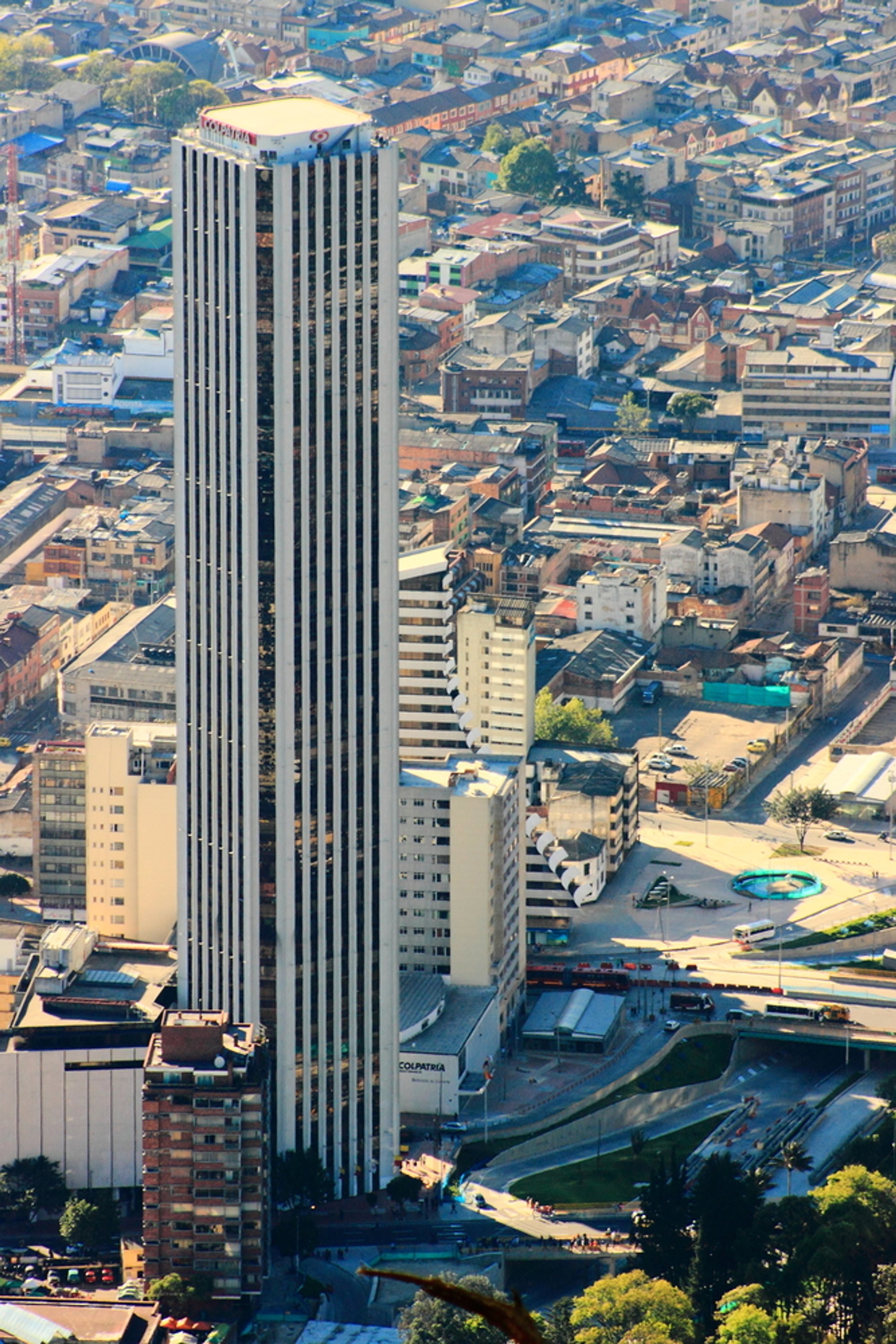
Colpatria Tower: A Modernist Icon of Bogotá’s Urban Skyline
Colpatria Tower is a modernist Bogotá icon, featuring innovative structural design, textured façades, and urban integration since 1973.

Obregón y Valenzuela & Cía. Ltda.
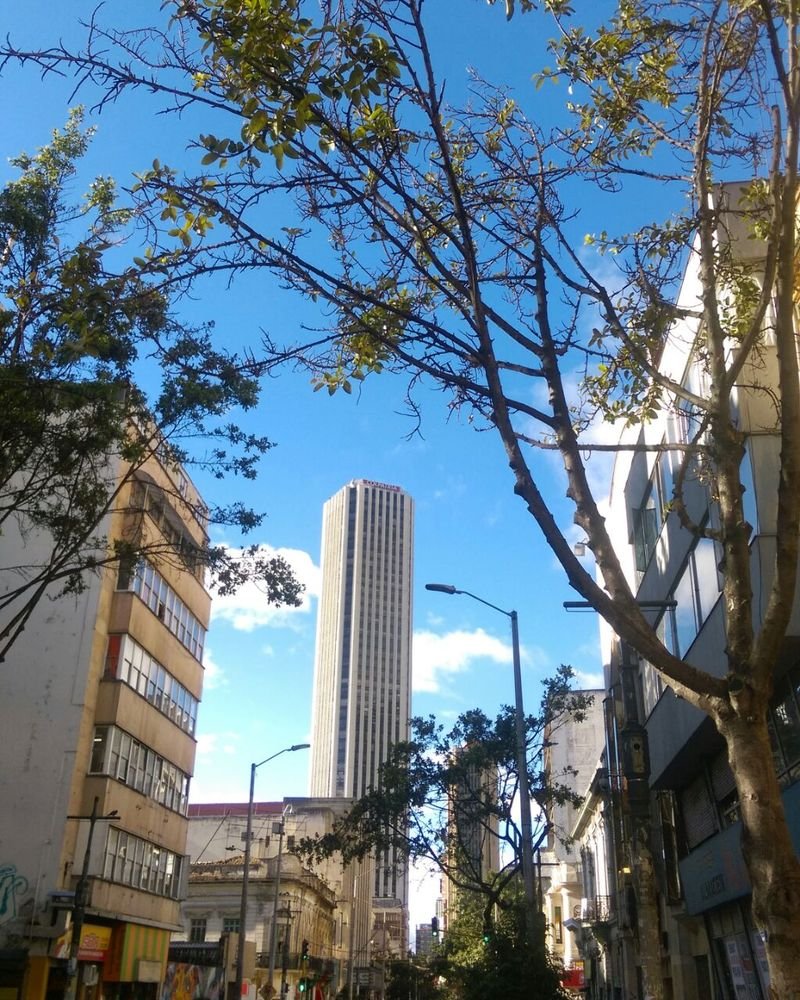
Standing as a defining symbol of Colombian modernism, the Colpatria Tower (Torre Colpatria) in Bogotá represents a major milestone in the architectural and structural evolution of Latin America. Designed by Obregón y Valenzuela & Cía. Ltda., this 50-story skyscraper was completed in 1978 and dominated the Bogotá skyline as the tallest building in Colombia for 36 years.
Located in the San Diego sector of the International Center of Bogotá, at the crucial junction of Carrera Séptima and Avenida El Dorado (Calle 26), the tower became a pivotal urban landmark. It reflects the aspirations of a city embracing modernity through bold architectural gestures, advanced construction techniques, and strategic urban integration.
Design and Structural Innovation
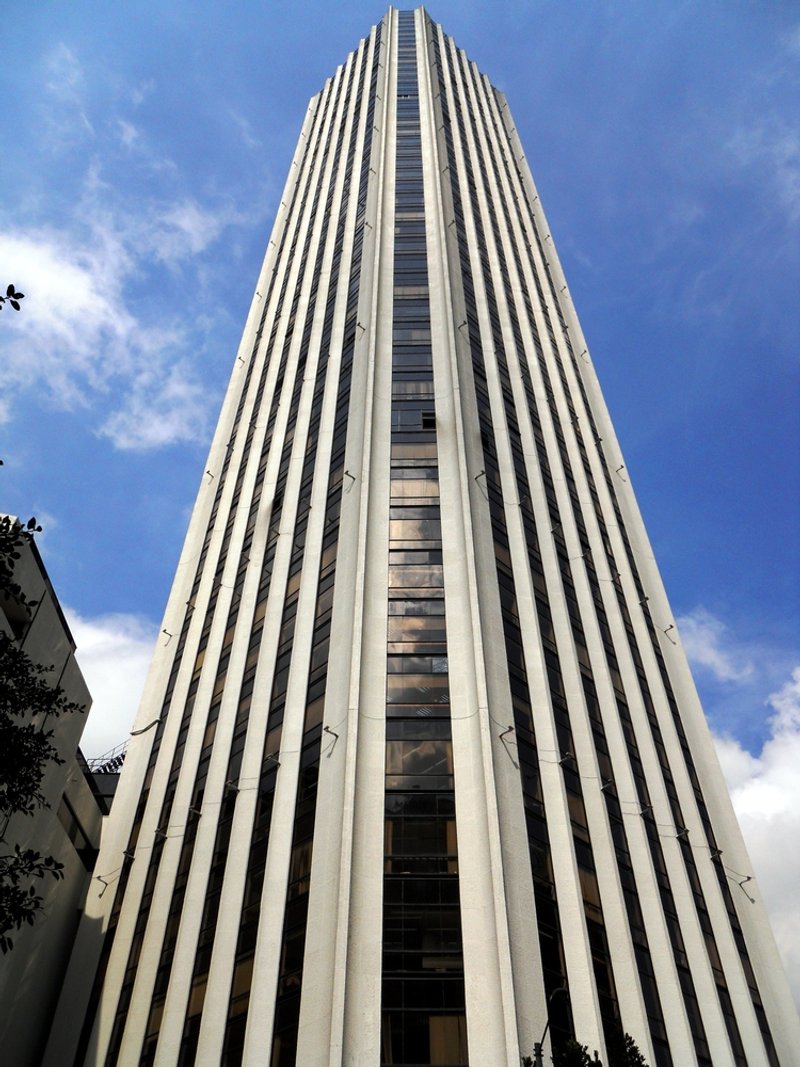
At 196 meters high, Colpatria Tower was an emblem of architectural innovation. Its clean, rationalist design signaled a departure from ornamentation and a commitment to functional modernism. The project’s strategic placement—set diagonally to maximize views toward Parque de la Independencia—created a dialogue between the structure and the city.
The tower comprises a slender vertical mass flanked by a 10-story podium, housing commercial areas and offices. Yet, unlike typical skyscrapers with dominating bases, the podium remains visually secondary, allowing the vertical form to connect directly with the street level.
One of the most defining engineering aspects of the Colpatria Tower is its "tube-in-tube" structural system, developed to withstand seismic activity. This system features an external frame tube and a central core which share the load, offering both stability and flexibility—crucial in Bogotá’s seismic zone. Precedent for this method comes from North American skyscrapers of the 1960s, but its adaptation here was groundbreaking in the regional context.
Engineering Groundwork and Structural Detailing
Given its placement on sandy soil, the Colpatria Tower required an in-depth geotechnical study and a formidable foundation system. Designed by Antonio Paez and Pablo Sáenz, the structure rests on 24 caisson foundation piles, some plunging to depths of 50 meters. This innovative use of deep foundation techniques set a national precedent and required over 6,000 tons of concrete and 3,000 tons of steel—a massive undertaking at the time.
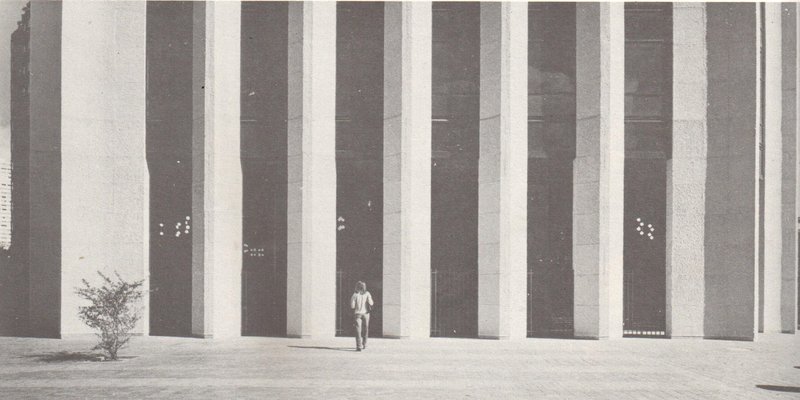
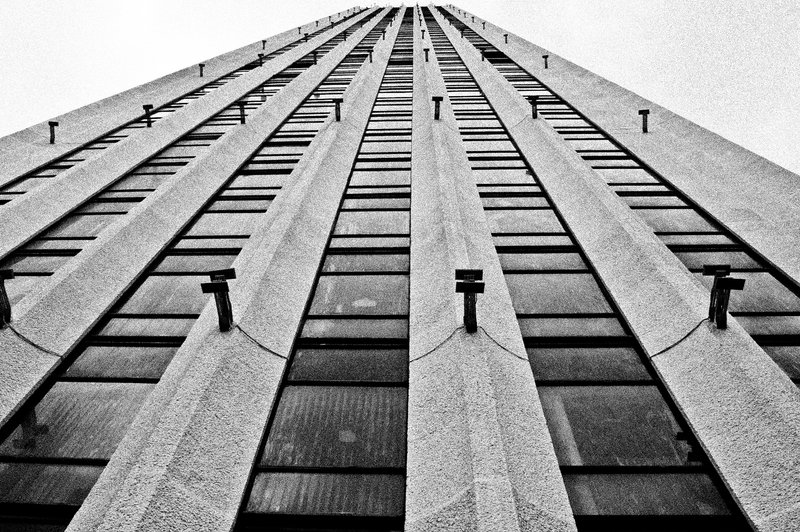
Structurally, the outer frame features pilasters and beams meticulously dimensioned for strength and rhythm. Precast concrete facade pilasters with rough-textured marble created a lattice-like pattern, simultaneously aesthetic and load-bearing. Inside, joists and columns are spaced with surgical precision, optimizing both spatial efficiency and material use.
Urban Context: Part of Bogotá’s Modern Vision
The tower was a product of visionary urban planning. Inspired by Le Corbusier’s Plan Piloto, the development of Carrera Séptima and Décima as primary axes catalyzed large-scale architectural interventions in Bogotá. These corridors were intended not just for vehicular flow but to encourage mixed-use urban blocks—merging residential, cultural, and commercial life.
The International Center of Bogotá, within which the Colpatria Tower sits, won the National Architecture Award in 1966. It was conceived as a collaborative effort among leading architectural firms and planners aiming to bring formality, density, and structure to the rapidly modernizing city.
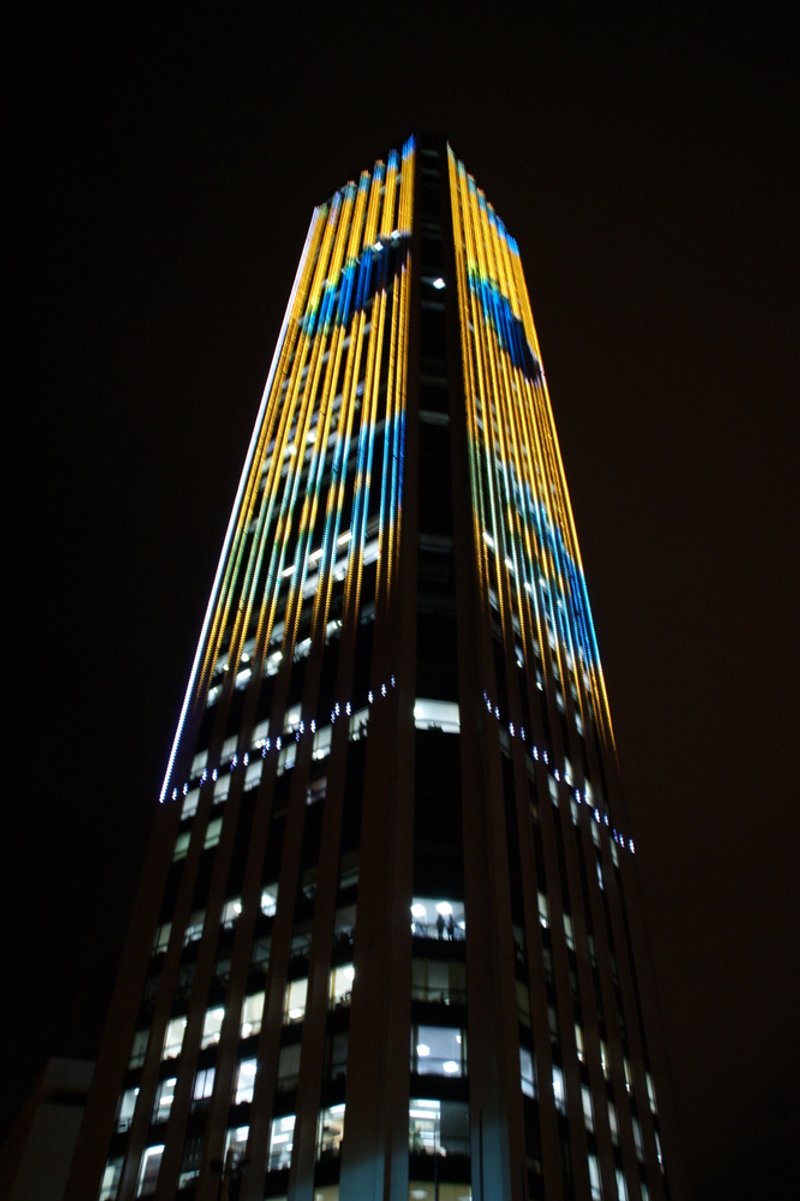
Lighting as Urban Art
A key moment in the tower’s evolution came in 1998, when 36 xenon lights were installed on its facade in celebration of Bogotá’s anniversary. In 2012, these were replaced by an advanced LED lighting system designed by Philips. Spanning from the 12th to 46th floors, this system allows for dynamic, full-color visual projections across all four facades, further cementing the tower’s role as a cultural and visual anchor in the city.

Legacy and Modern Impact
Until the construction of BD Bacatá in 2016, the Colpatria Tower reigned as the tallest building in the nation and remained among the top structures in South America and Latin America. Even after being surpassed in height, it holds an enduring legacy as one of the first skyscrapers to shape Bogotá’s modern identity.
Obregón y Valenzuela & Cía. Ltda.’s design reflects not only a mastery of structural detail but a deep understanding of urban context and architectural symbolism. Through this tower, the firm helped define a new vertical language for a city emerging into global relevance.




Popular Articles
Popular articles from the community


Solar Steam: A Climate-Responsive Architecture That Redefines the Monument
A climate-responsive memorial architecture that transforms heat, decay, and time into a living system reflecting humanity’s ecological impact.
Split House: A Compact Urban Home Blending Privacy, Light, and Flexible Living in Japan
Compact Japanese home featuring DOMA space, flexible café potential, passive lighting, privacy zoning, and sustainable urban living design.

Free Architecture Competitions You Can Enter Right Now
No entry fees, real prizes. Here are the best free architecture competitions open for submissions in 2026.




Similar Reads
You might also enjoy these articles


The Ken Roberts Memorial Delineation Competition (Krob)
As the most senior architectural drawing competition currently in operation anywhere in the world, it draws hundreds of entries each year, awarding the very best submissions in a series of medium-based categories.
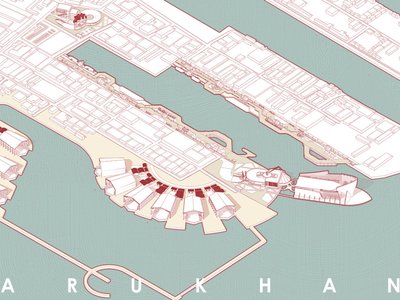
Waterfront Redevelopment and Urban Revitalization in Mumbai: Forging a New Dawn for Darukhana
A transformative waterfront redevelopment project reimagining Darukhana’s shipbreaking heritage into an inclusive urban future.

OUT-OF-MAP: A Call for Postcards on Feminist Narratives of Public Space
Rhizoma Design and Research Lab invites artists, designers, architects, researchers, and students to reflect on how feminist perspectives can reshape public space. Selected works will be exhibited in Barcelona, October 2026. Submissions open until 15 April 2026.


Documentation Work on Buddhist Wooden Temple
Architectural syncretism and cultural hybridity: A comparative study of the Buddhist temples in Chattogram Hill tracks


Explore Architecture Competitions
Discover active competitions in this discipline




The International Standard for Design Portfolios


The Global Benchmark for Architecture Dissertation Awards


The Global Benchmark for Graduation Excellence


Challenge to reimagine the Iron Throne
Comments (0)
Please login or sign up to add comments
No comments yet. Be the first to comment!