
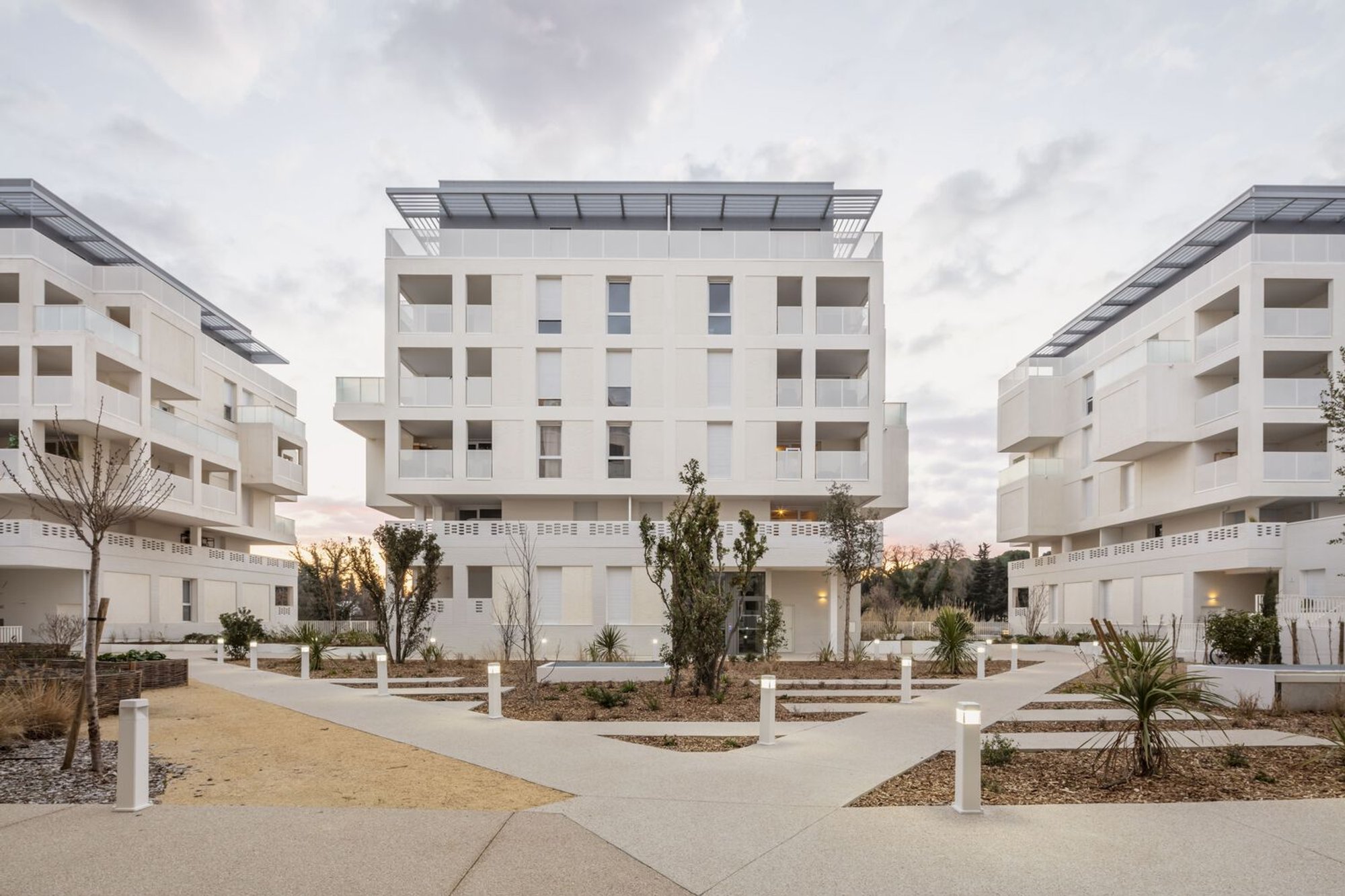
Cosmopoly Apartments: Integrating Landscape, Community, and Architecture in Castelnau-le-Lez
Cosmopoly Apartments blends sustainable architecture, landscape integration, and community living along Montpellier’s urban-rural edge with ecological sensitivity.

A Residential Project in Dialogue with Nature and the City
Set within the expanding urban limits of the Montpellier Métropole, Cosmopoly Apartments is a sustainable, landscape-oriented residential complex that redefines the threshold between built environment and natural terrain. Situated at the edge of Lironde Park, this housing development responds to the environmental and architectural ambitions of the Eureka Urban Development Plan, which seeks to restore ecological corridors and support biodiversity along the riparian zones of the Lironde stream.
Landscape-Led Urban Design and Ecological Integration
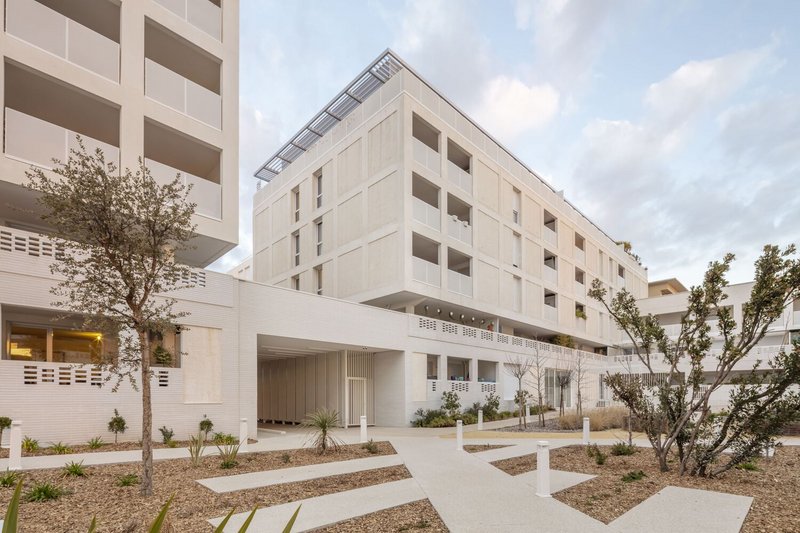
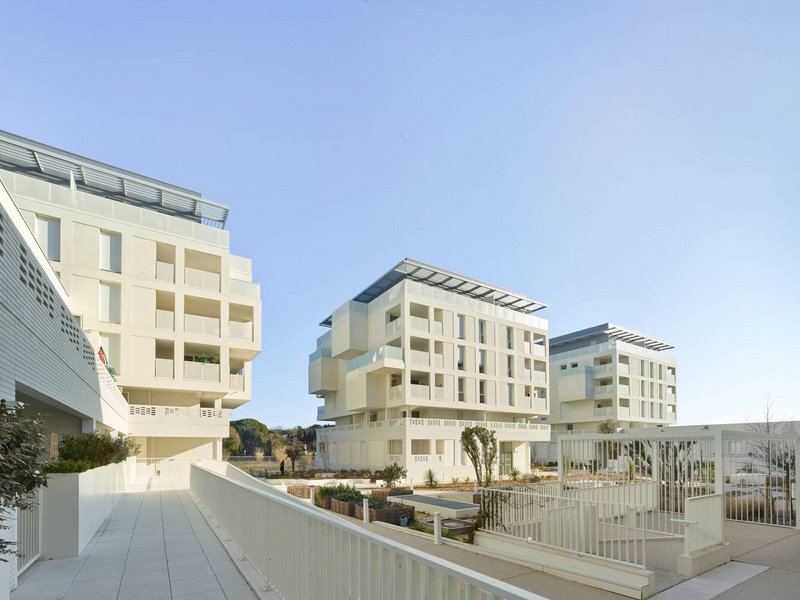
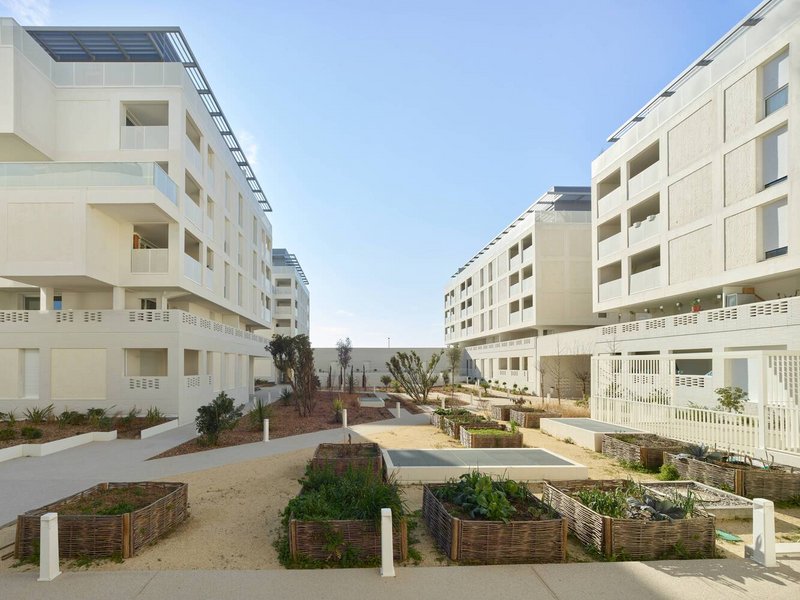
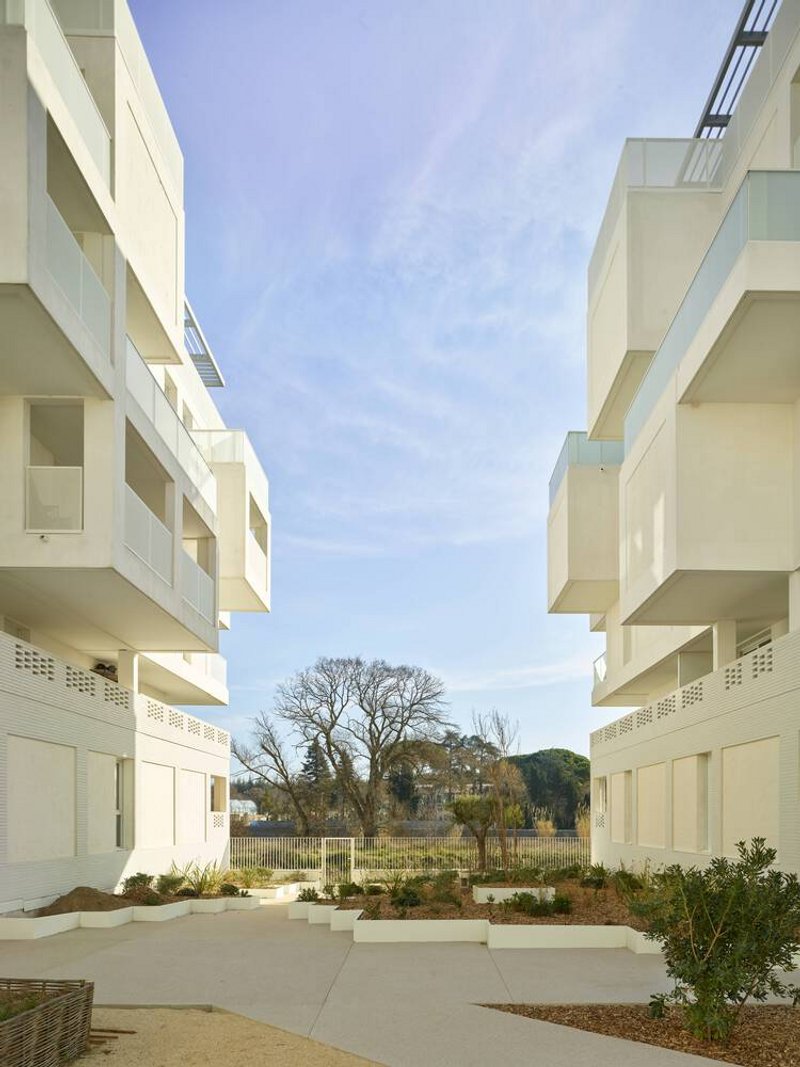
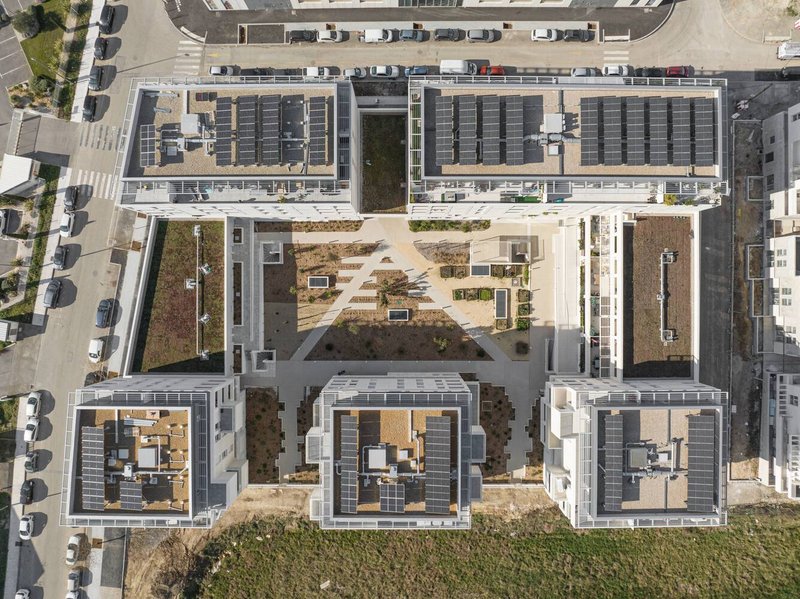
Located on Lot 20, a pivotal plot bridging urban infrastructure and preserved green zones, the project integrates landscape and architecture through a central courtyard that merges seamlessly with the park. This courtyard is designed as a multifunctional green space—hosting vegetable gardens, fruit trees, meadows, and social zones. The planting scheme is layered and responsive, using height gradients and species variety to support local ecology and human activity.
The renaturing of the Lironde River influences every aspect of the site plan. Open green strips, planted walkways, and ecological buffer zones create a seamless extension of the adjacent park into the heart of the apartment block, promoting environmental continuity and visual permeability.
Architecture of Light, Openness, and Modularity
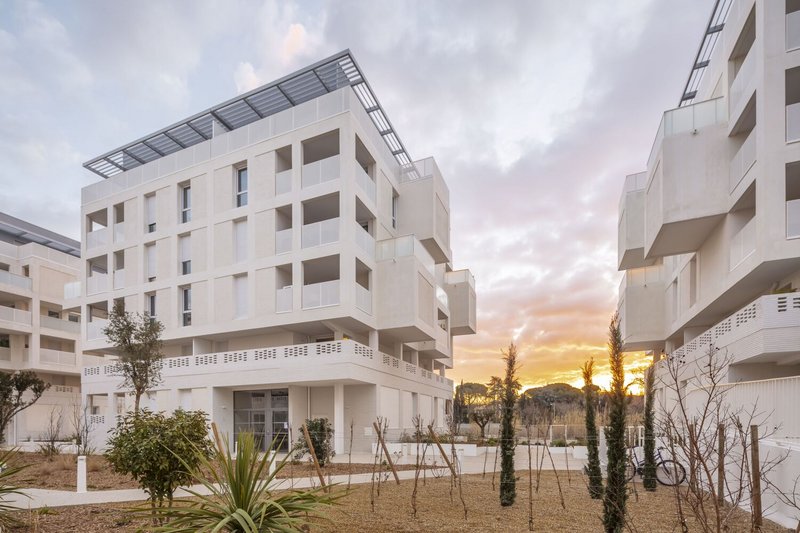
The buildings are arranged to maximize solar access, preserve views, and frame open sightlines between the city and the park. Taillandier Architectes Associés simplified the original masterplan’s L-shaped volumes, allowing sunlight to penetrate the inner courtyard and creating a more articulated urban rhythm.
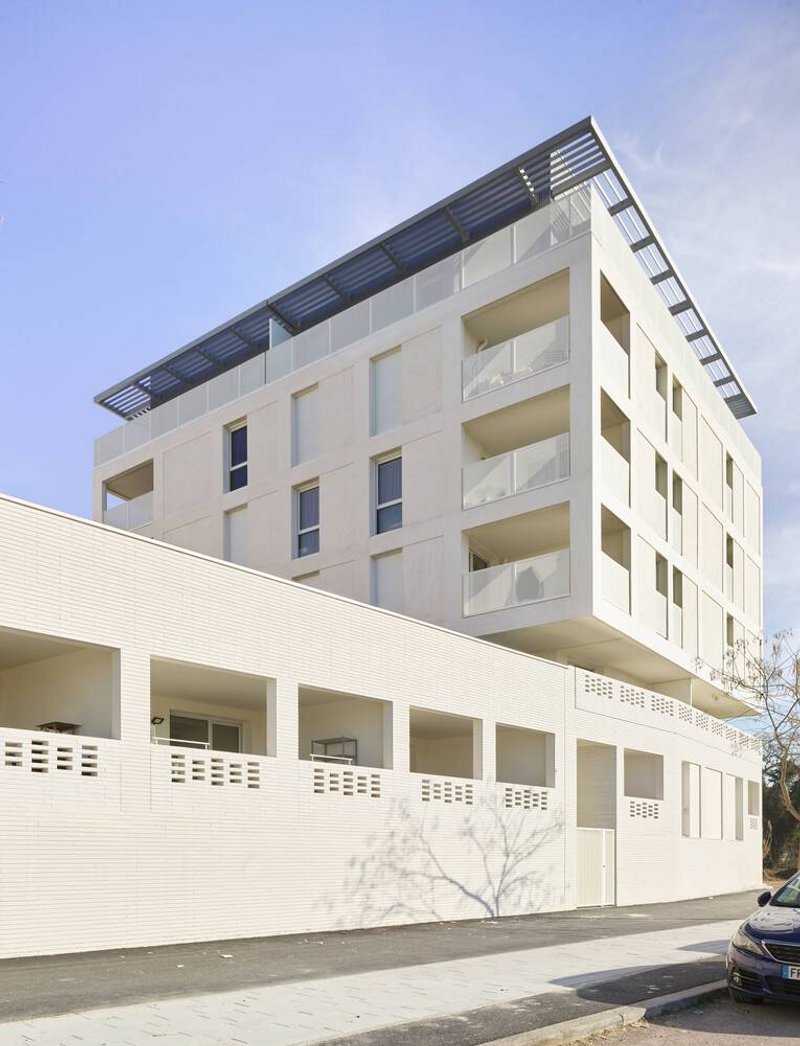
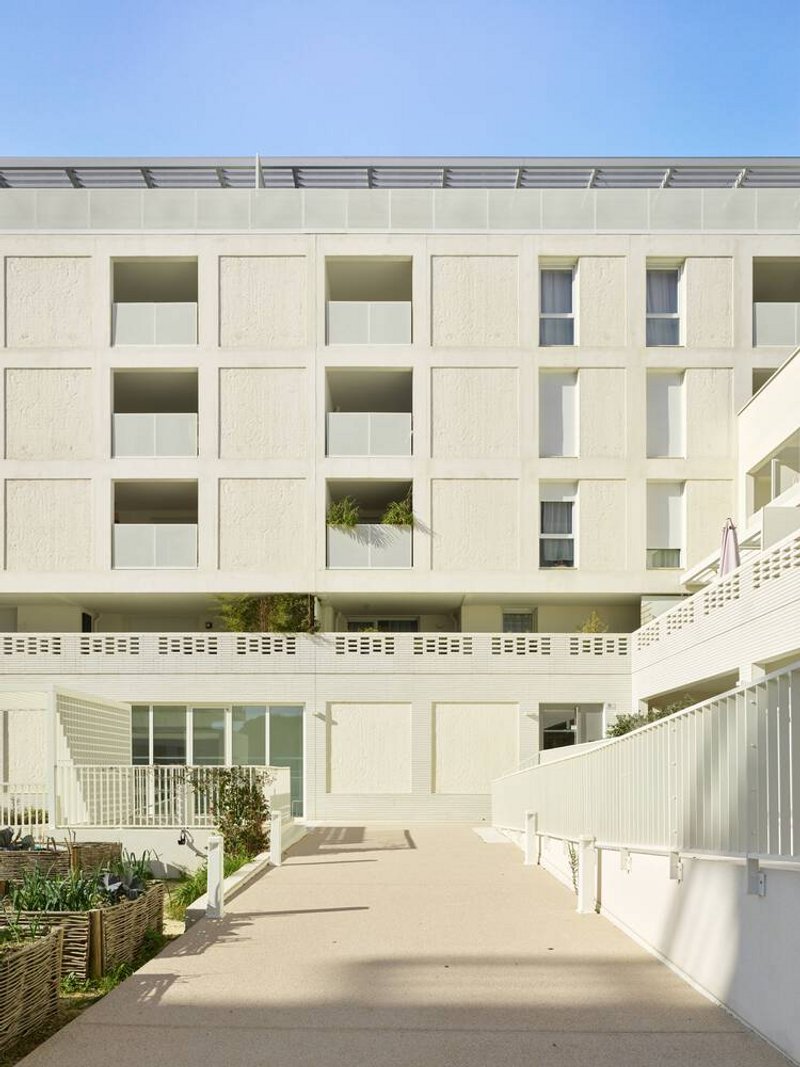
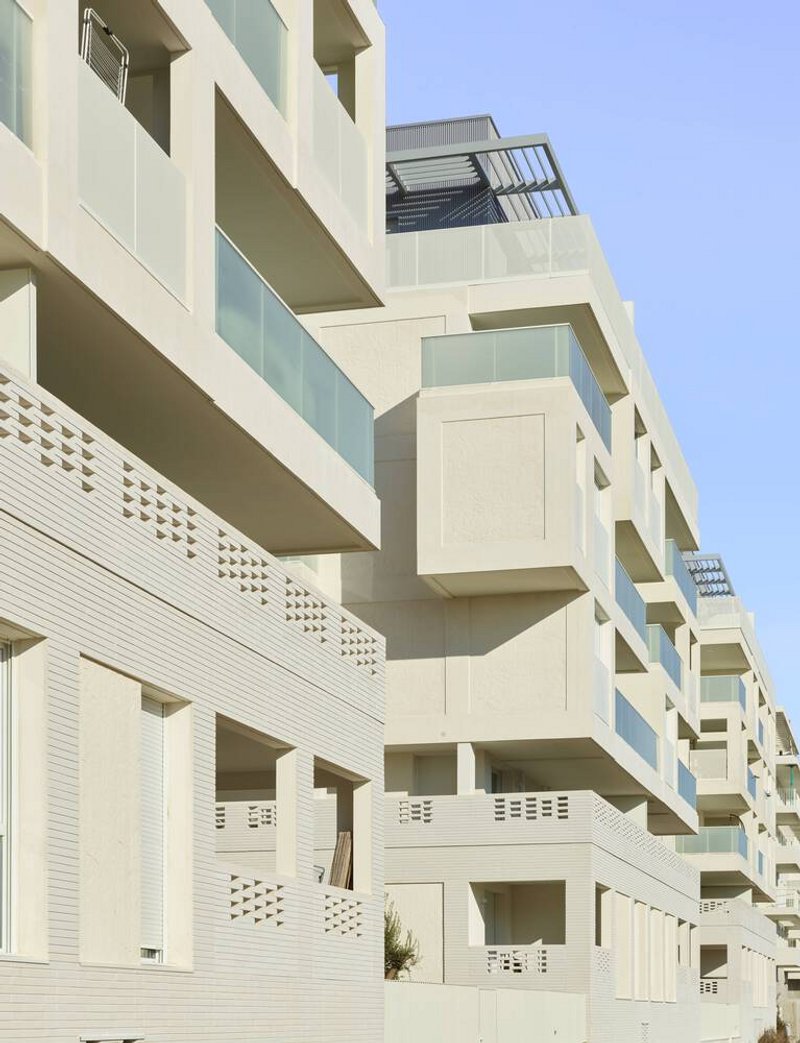
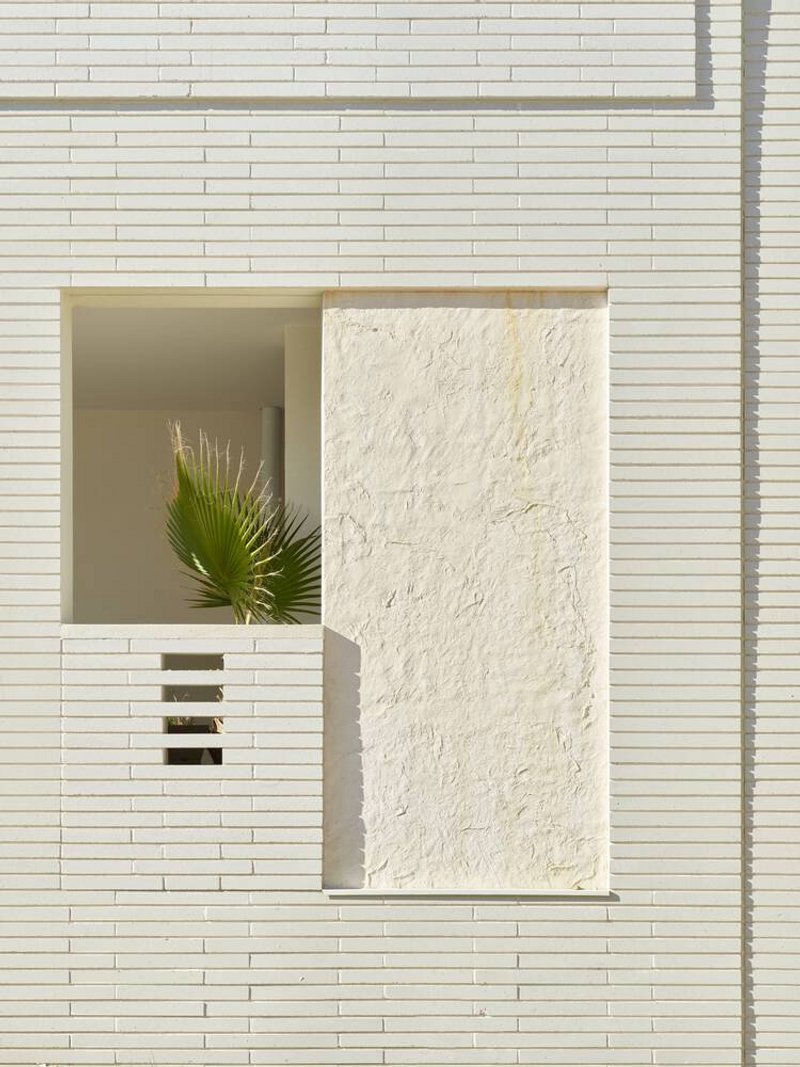
The architectural language is defined by a modular structural grid that adapts across the façades. These grids alternate between recessed loggias, projecting balconies, and opal-glass-wrapped volumes, giving the facades dynamic depth. Textured white concrete and perforated metal railings create a balance of transparency and privacy, echoing the minimalist elegance of Montpellier’s architectural heritage and referencing the playful forms of the “Folies montpelliéraines.”
Community-Centered Living and Passive Design Strategies
A strong emphasis is placed on communal living and social connectivity. The shared courtyard is not only a visual asset but an active community hub. It is complemented by a multi-use common room that opens directly onto the garden, encouraging interaction and fostering a sense of belonging among residents.
The apartment units include generous loggias, climate-responsive facades, and integrated outdoor storage to enhance comfort and usability. Passive solar orientation, natural ventilation, and layered façade treatments contribute to sustainable living while respecting privacy.
Material Palette and Nighttime Presence
The project uses a restrained material palette:
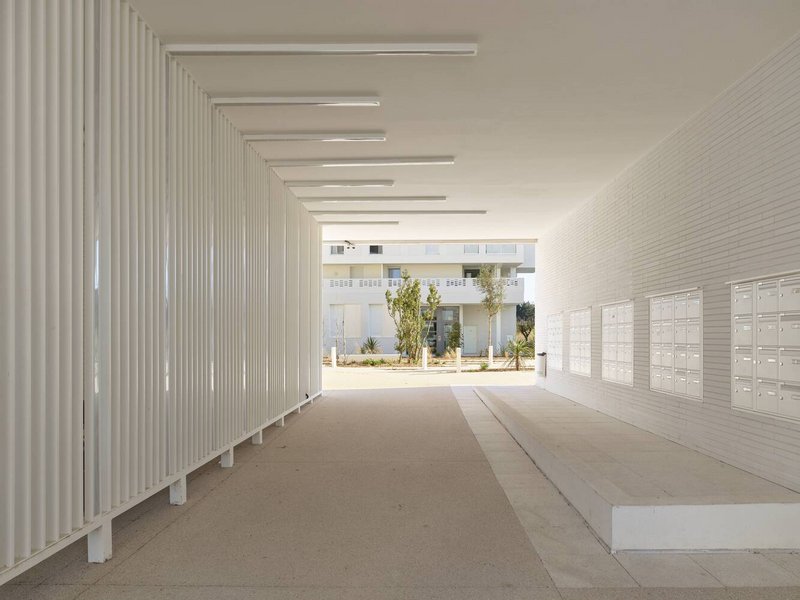
- White concrete bricks and openwork screens on the base level
- Powder-coated metal railings on upper levels
- Aluminum cladding with squared waves on the attic floor
- Opal glass and climbing plants for additional shading and aesthetics
Lighting is intentionally subtle, with low bollards, integrated path lights, and kiosk illumination ensuring safety without excessive light pollution. This lighting strategy preserves the nocturnal identity of the complex while guiding movement and emphasizing architectural volumes.
A New Model for Eco-Conscious Urban Housing
The Cosmopoly Apartments exemplify how architecture can bridge ecological restoration with human-centric urban living. Through thoughtful design, collaborative planning, and a deep respect for natural systems, the project creates a high-quality residential experience that fosters sustainability, community, and well-being.
All Photographs are works of Julien Thomazo, Roland Halbe




Popular Articles
Popular articles from the community

Indiesalon Carves a Plywood Cave into a Seoul Bistro's Second Floor
Munhwa Bistro's second Seongsu branch wraps diners in a laminated timber vault laced with colored light and mirror illusions.
BAUEN Builds Two Rammed Earth Volumes in Paraguay Inspired by the Ovenbird's Nest
In San Bernardino, a house of compacted earth channels the instinct of a constructive bird to shelter life from the Paraguayan summer.
gru.a Builds a 70 m² Timber Shelter That Opens Like a Farm Door in Brazil's Valley of the Vines
In the mountainous region near Rio de Janeiro, a compact retreat uses plywood panels and deep eaves to blur the line between inside and out.
OMCM arquitectos Builds a Summer House in Paraguay from Quarry Waste Blocks and Three Sacred Trees
In the young hillside neighborhood of Altos, a 696-square-meter concrete volume hovers on six pillars around three preserved native Yvyraju trees.


Similar Reads
You might also enjoy these articles

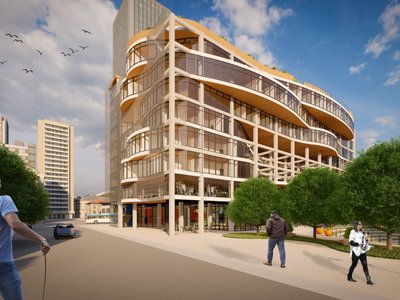
Olio Towers: A Mid-Rise for Performers That Fuses Housing, Rehearsal, and Stage
Located blocks from Houston's Theater District, this modular tower stacks living units around a central performance atrium.
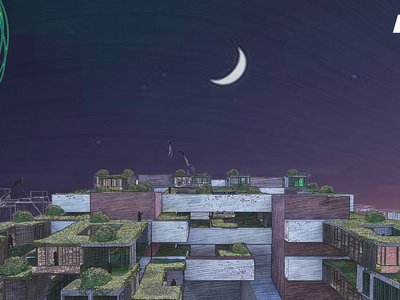
Oasis: Modular Green Housing Carved into Dhaka's Urban Fabric
A shortlisted Plugin Housing entry reclaims unauthorized settlements in Dhaka with stepped concrete volumes, green roofs, and ventilation-driven design.

Black Hole: A Floating Megastructure for the Post-Physical Era
Emiliano Mazzarotto envisions a spherical, self-scaling arena where e-sports, digital hotels, and holographic stadiums replace traditional public space.
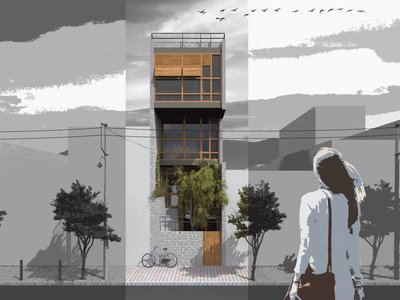
Compact & Sustainable Living in Piraeus: A Four-Level Family Home Built Around Light and Air
A narrow townhouse in one of Greece's densest port cities uses a central atrium and passive strategies to house three generations under one roof.


Explore Architecture Competitions
Discover active competitions in this discipline




The International Standard for Design Portfolios


The Global Benchmark for Architecture Dissertation Awards


The Global Benchmark for Graduation Excellence


Challenge to reimagine the Iron Throne
Comments (0)
Please login or sign up to add comments
No comments yet. Be the first to comment!