
Courtyard House Design: Hug House by FIGR Architecture & Design
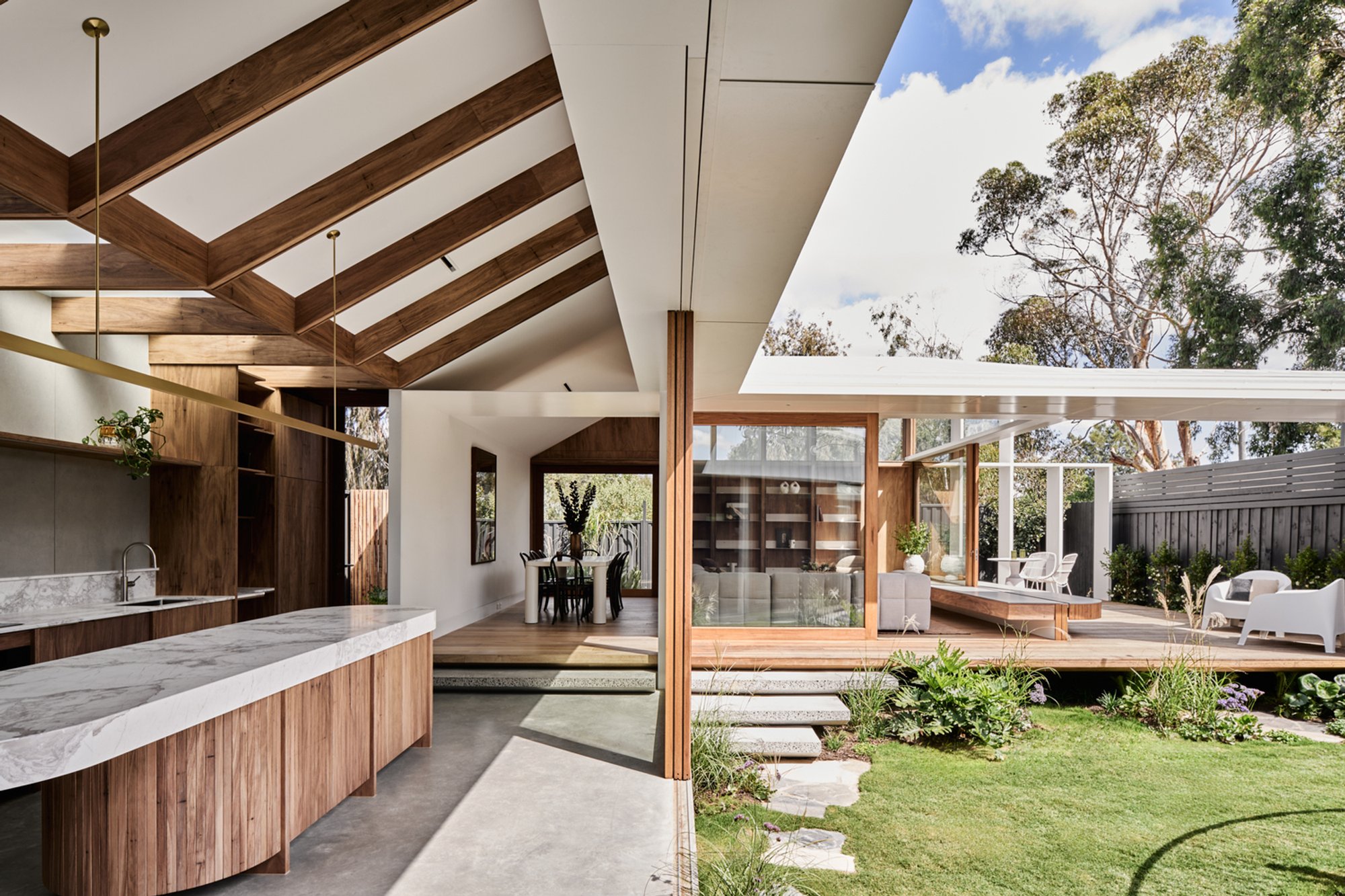
Hug House by FIGR Architecture & Design exemplifies courtyard house design, seamlessly blending heritage restoration, modern architecture, and indoor-outdoor living.

Courtyard house design has long been a hallmark of residential architecture, offering seamless indoor-outdoor integration, natural ventilation, and privacy within urban settings. Hug House by FIGR Architecture & Design embodies this philosophy, creating a home that balances heritage restoration with modern living. Nestled within an Australian suburban landscape, the project showcases a refined interplay of spatial layering, material richness, and nature-driven design principles.
Heritage Restoration and Contemporary Adaptation
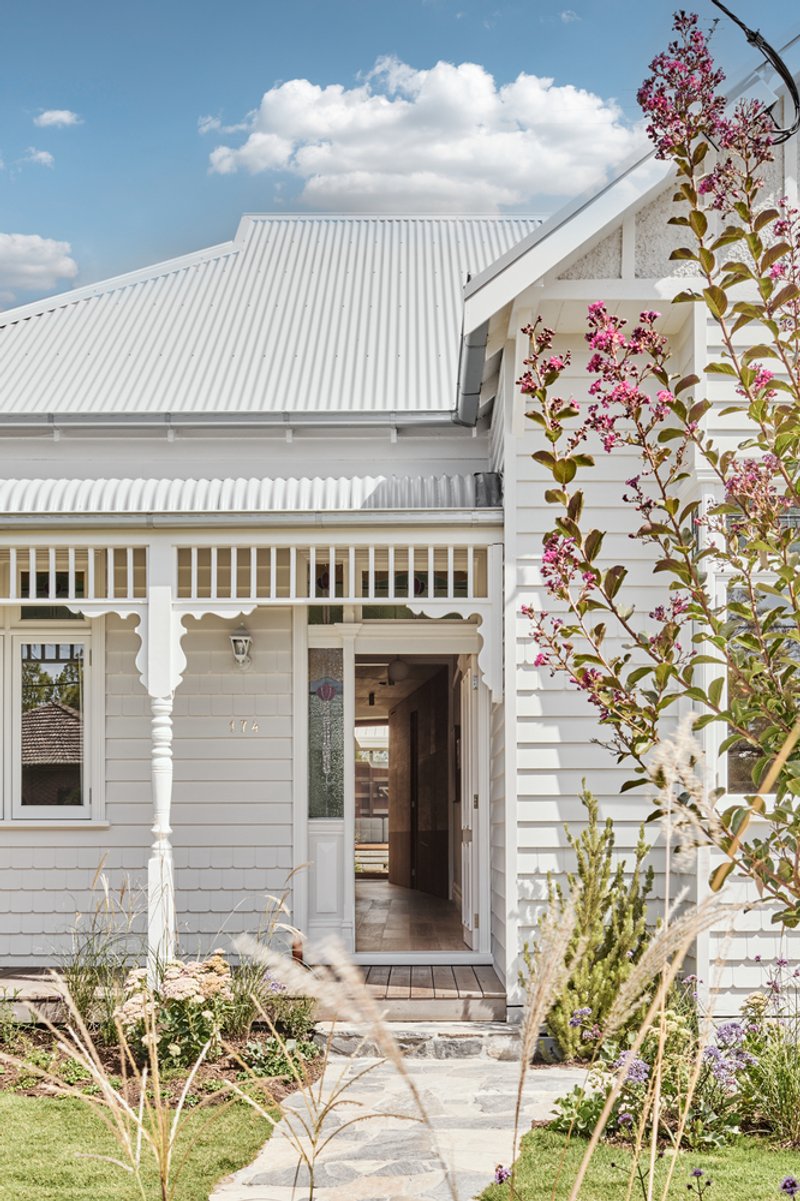
The design of Hug House respects the past while embracing the future. The front section of the home retains its original heritage character, carefully restored to preserve its pitched rooflines and traditional aesthetic. This area accommodates essential living spaces, including three bedrooms, a bathroom, an ensuite, a laundry, a mudroom, and a powder room. By maintaining the historical essence while subtly enhancing functionality, the design ensures a seamless transition between old and new.
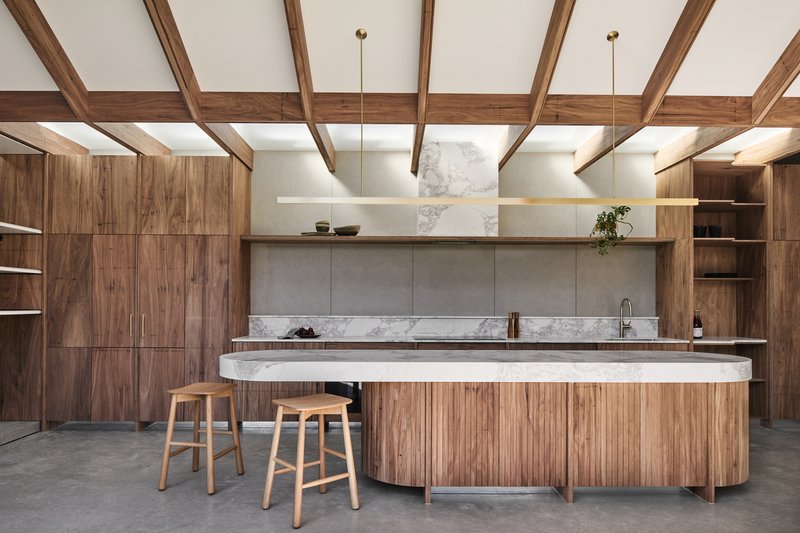
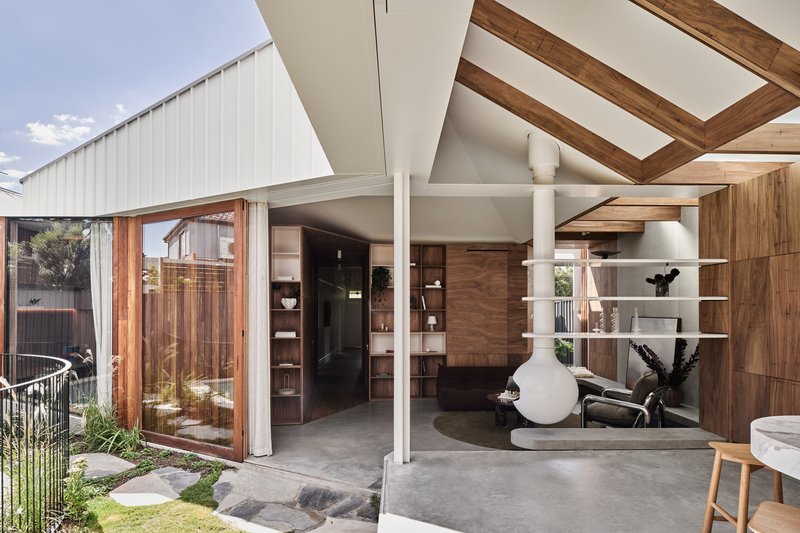
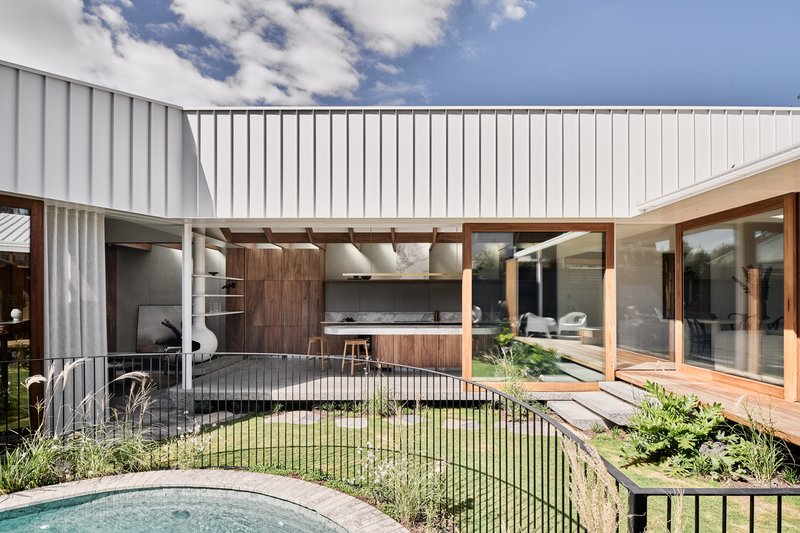
At the rear, the architectural language shifts, introducing a contemporary extension that reinterprets the existing rooflines with a modern sensibility. This addition embraces open-plan living, prioritizing connectivity and fluidity between indoor and outdoor spaces. The new volume establishes a dialogue with the heritage portion, ensuring continuity while allowing the architecture to evolve.
The Courtyard as a Central Element
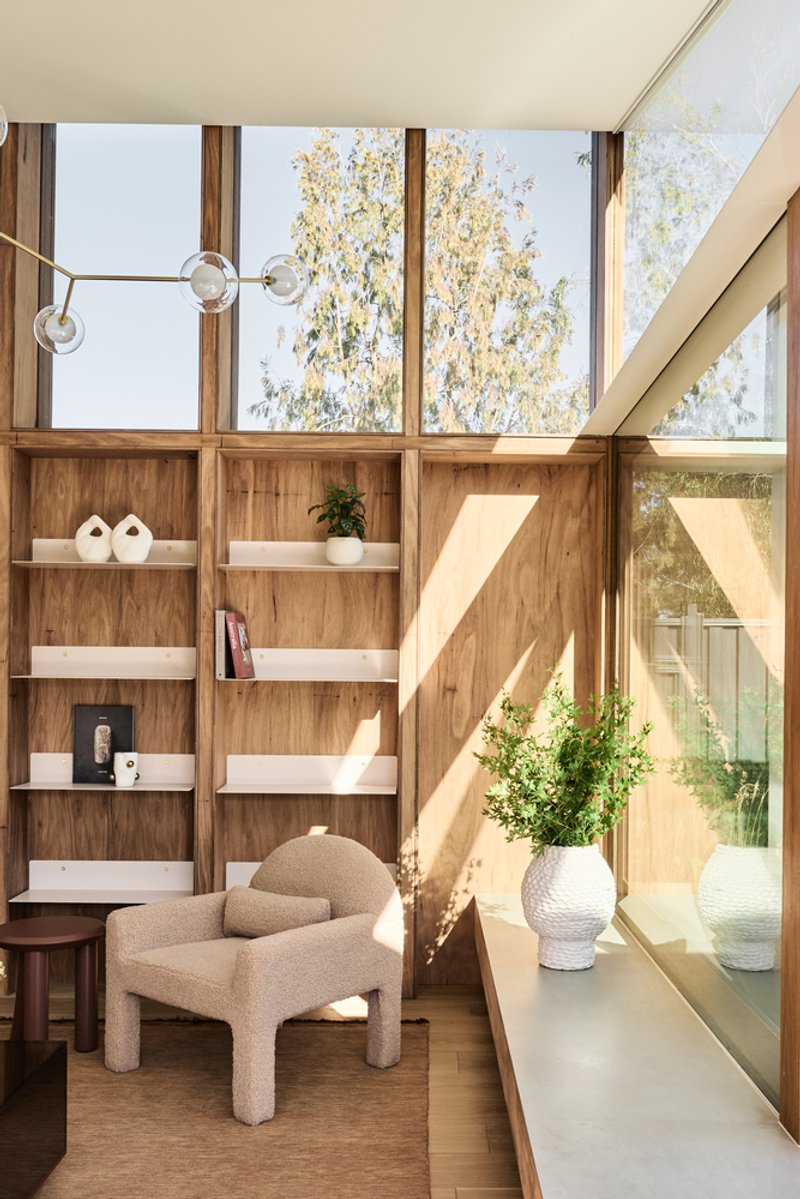
At the heart of Hug House lies a beautifully integrated courtyard, serving as both a visual and functional anchor. More than an aesthetic feature, this central green space fosters a sense of retreat, offering a private oasis shielded from the surrounding suburban context. The courtyard's positioning maximizes northern light penetration, while high windows frame views of towering eucalyptus canopies, filtering daylight and enhancing the home's biophilic qualities.
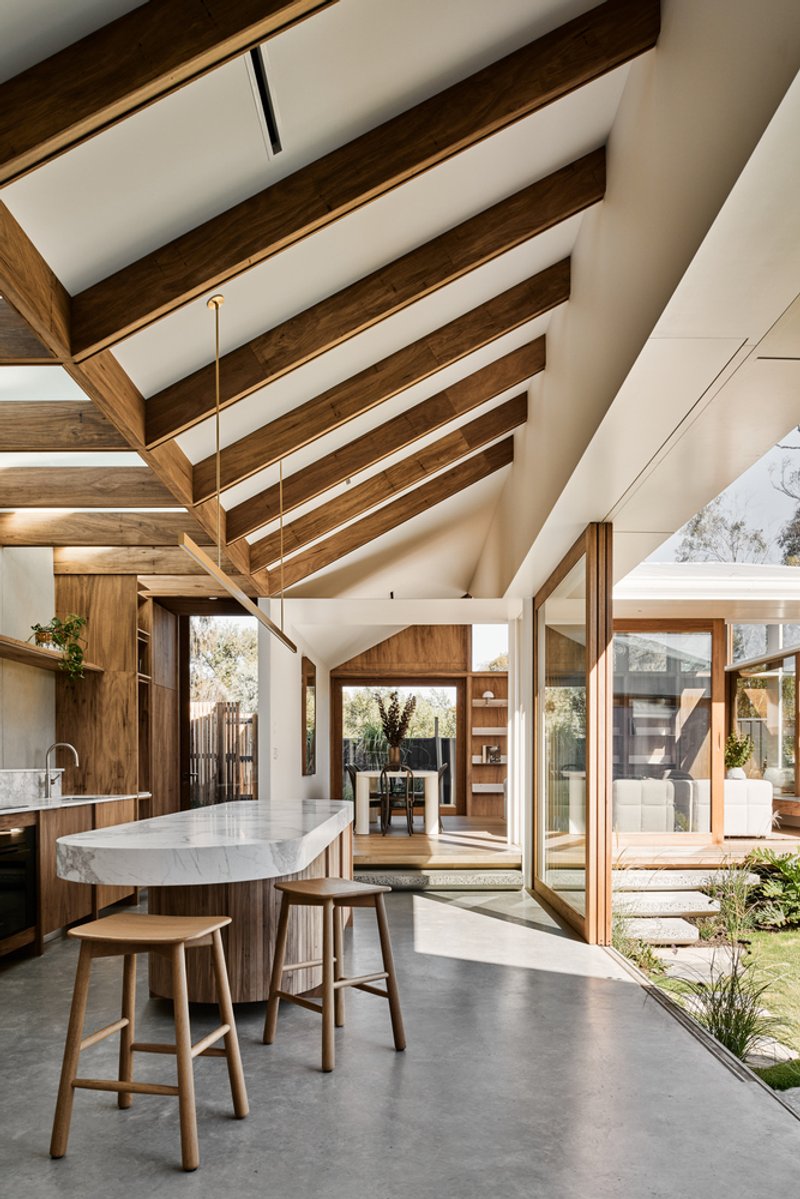
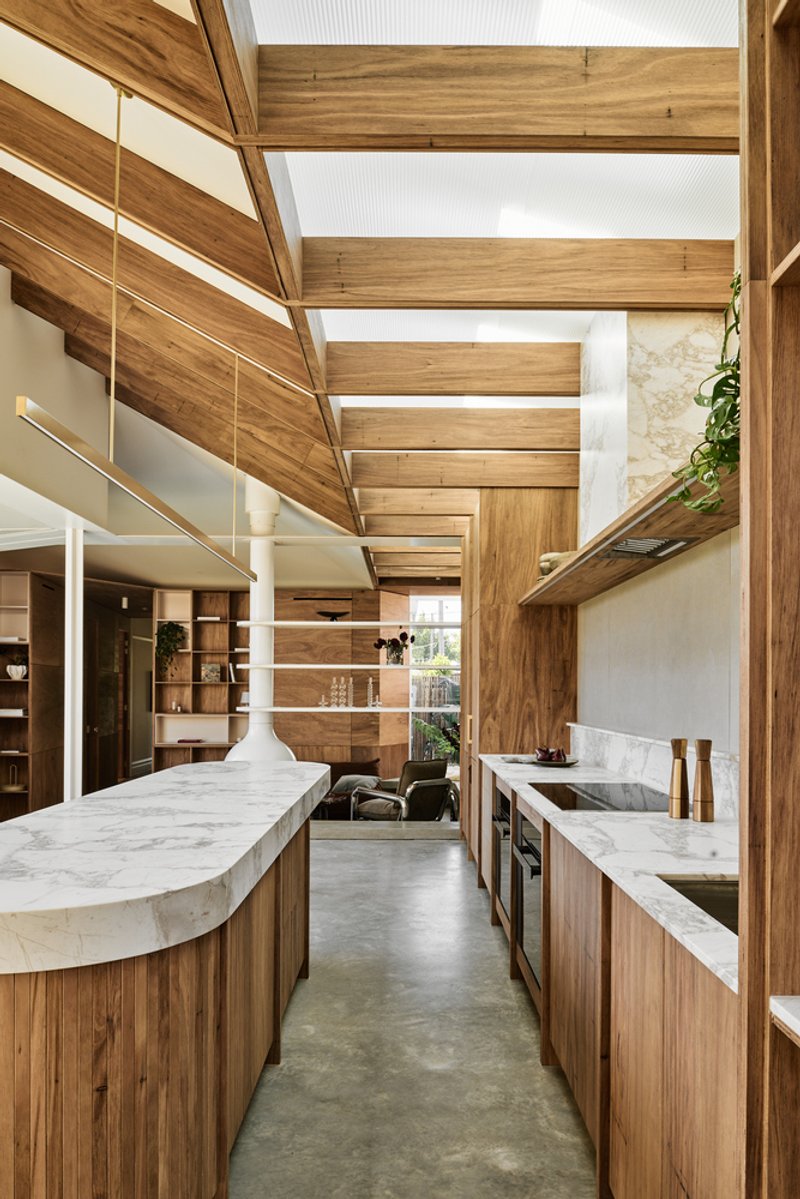
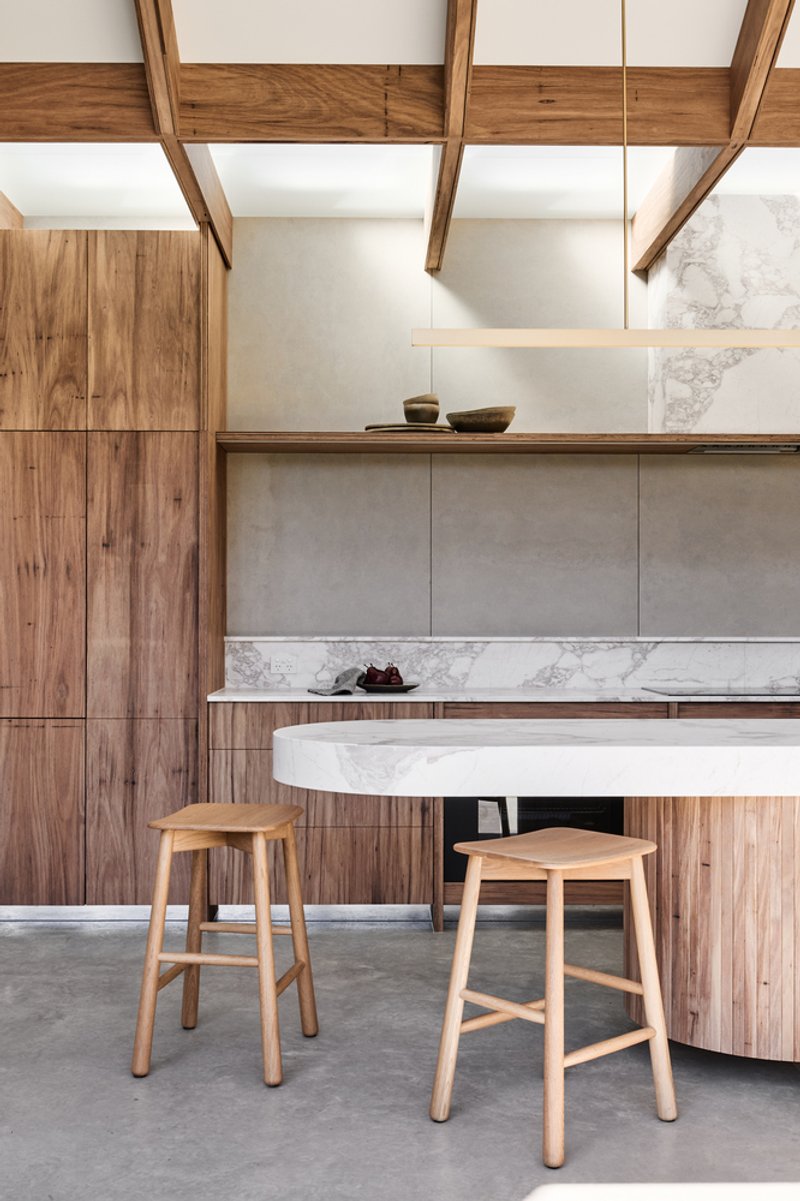
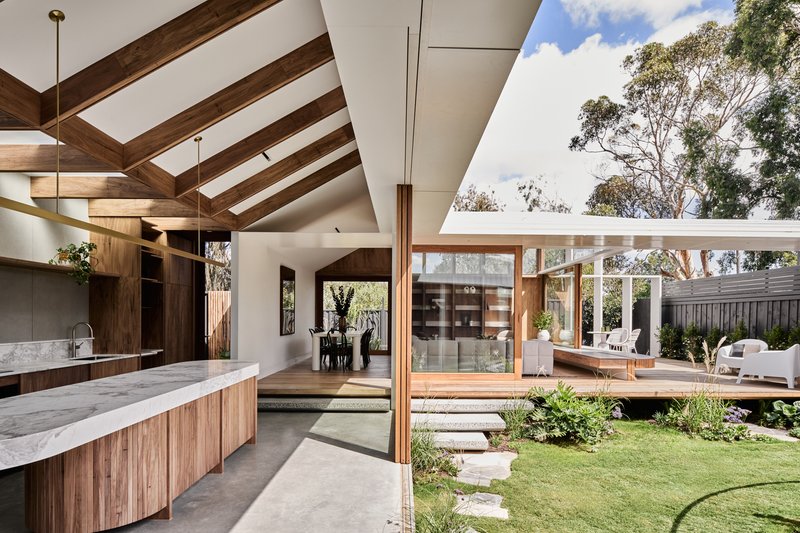
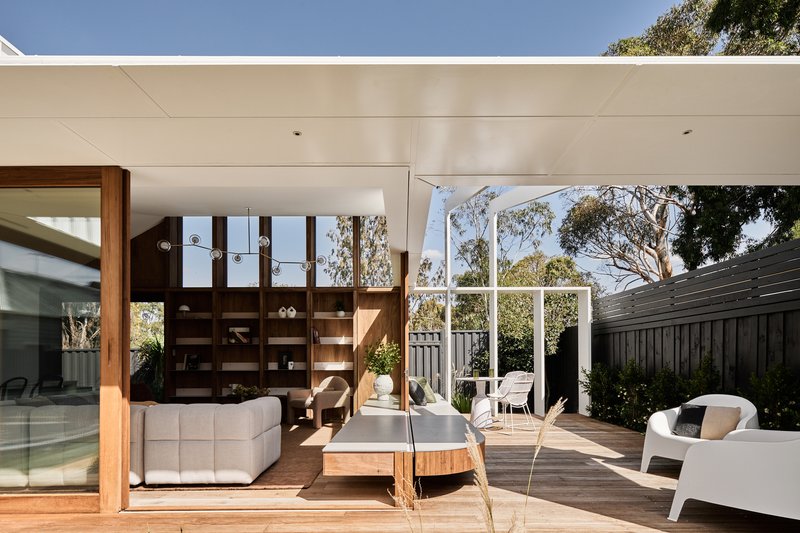
The seamless transition between interior and exterior is emphasized through large sliding doors that dissolve traditional spatial boundaries. The living, kitchen, and dining areas flow effortlessly into the courtyard, creating an environment where architecture breathes. This design approach not only enhances the spatial experience but also promotes passive cooling and natural ventilation, reducing reliance on mechanical systems.
Elevated Deck and Sculptural Threshold
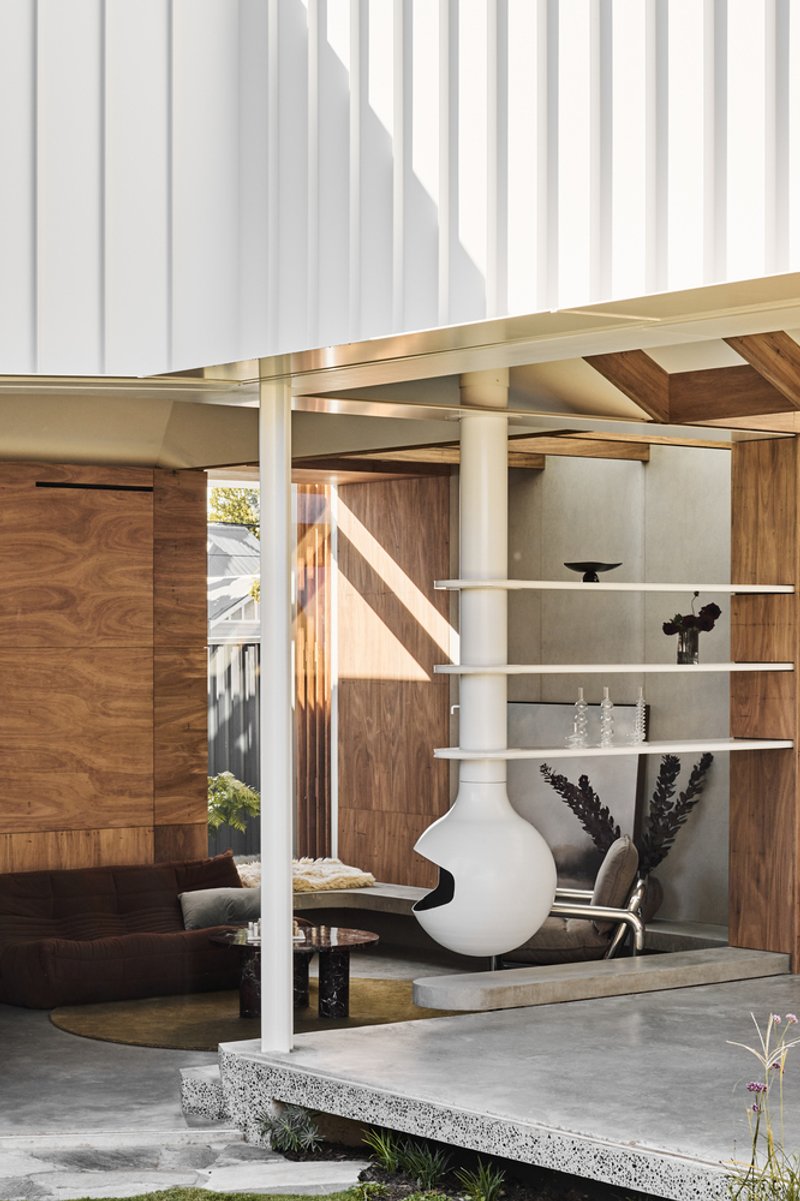
The rear extension features an elevated deck that extends the living spaces into the landscape. Floating above the terrain, this platform elongates the home's elevation while defining a sculptural edge that functions as both seating and a threshold. This design choice reinforces the connection between built form and nature, allowing residents to engage with the outdoor environment in a relaxed yet intentional manner.
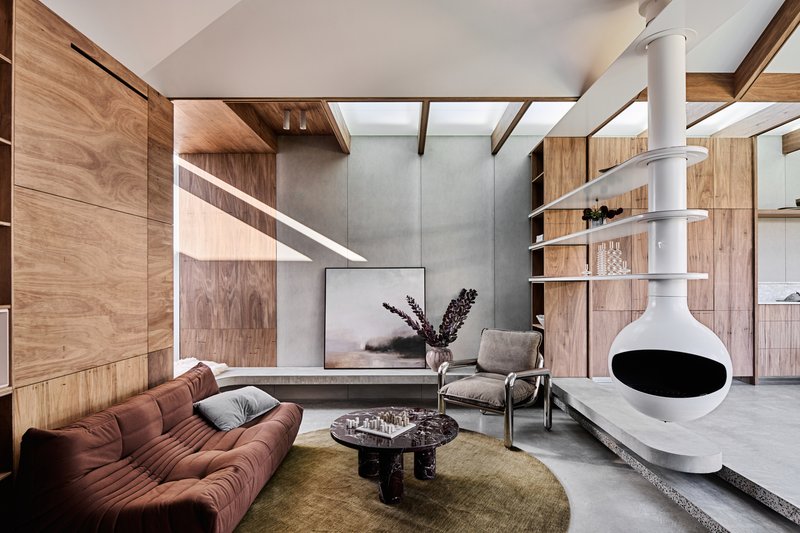
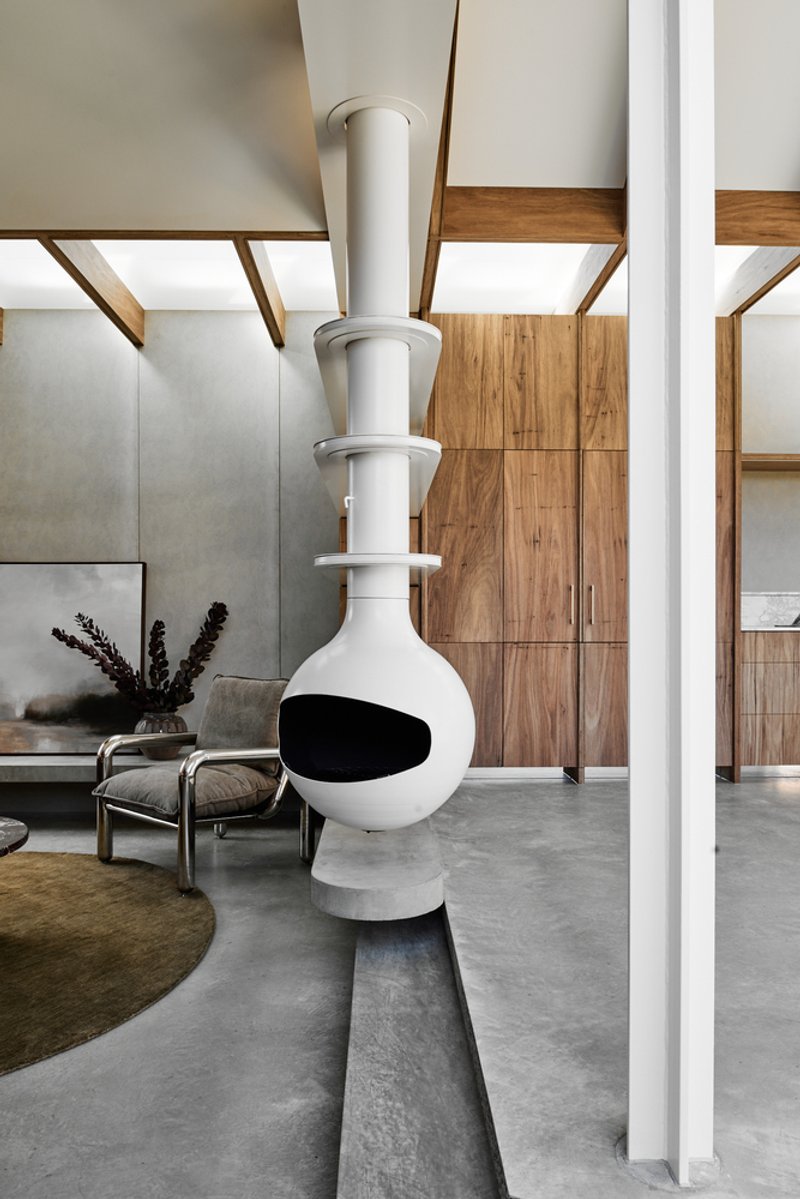
The interplay of solid and void further enriches the spatial composition. Strategic level changes subtly define each interior zone, ensuring a sense of openness without compromising intimacy. By blurring distinctions between indoor and outdoor spaces, the design fosters a fluid living experience where nature and architecture coexist harmoniously.
Material Palette and Tactile Warmth
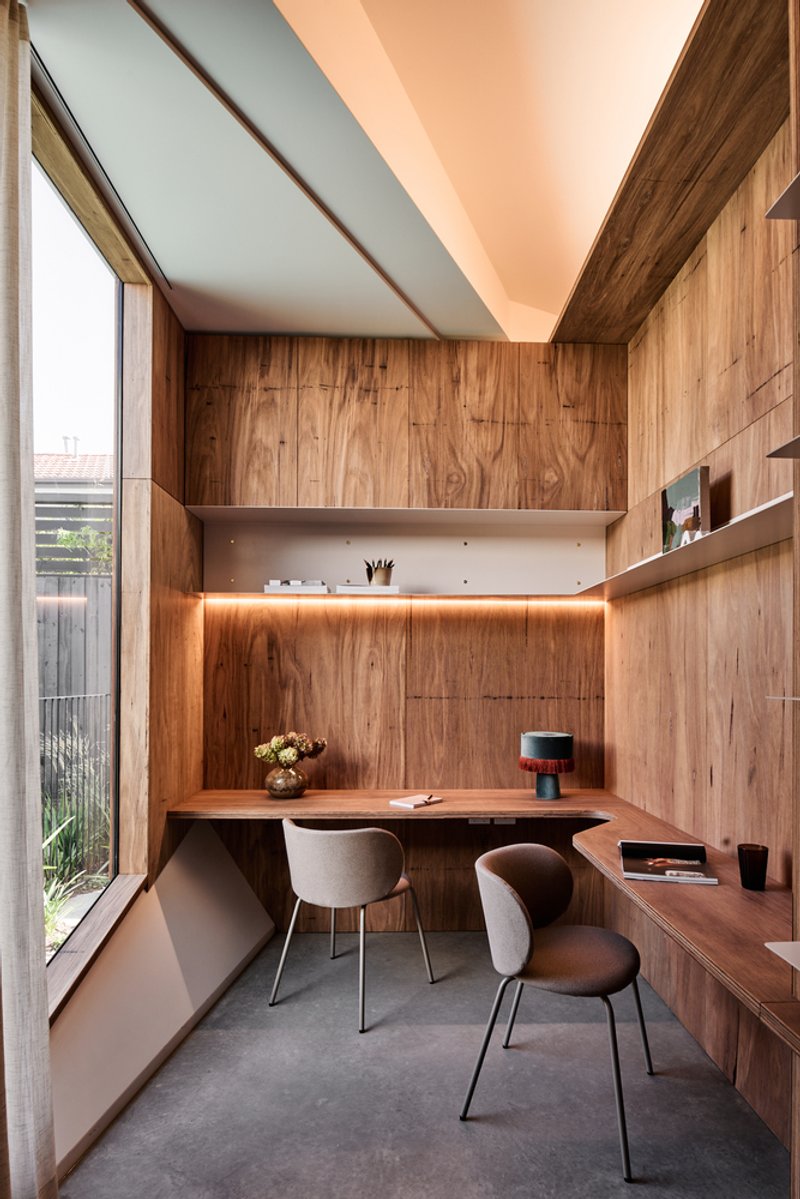
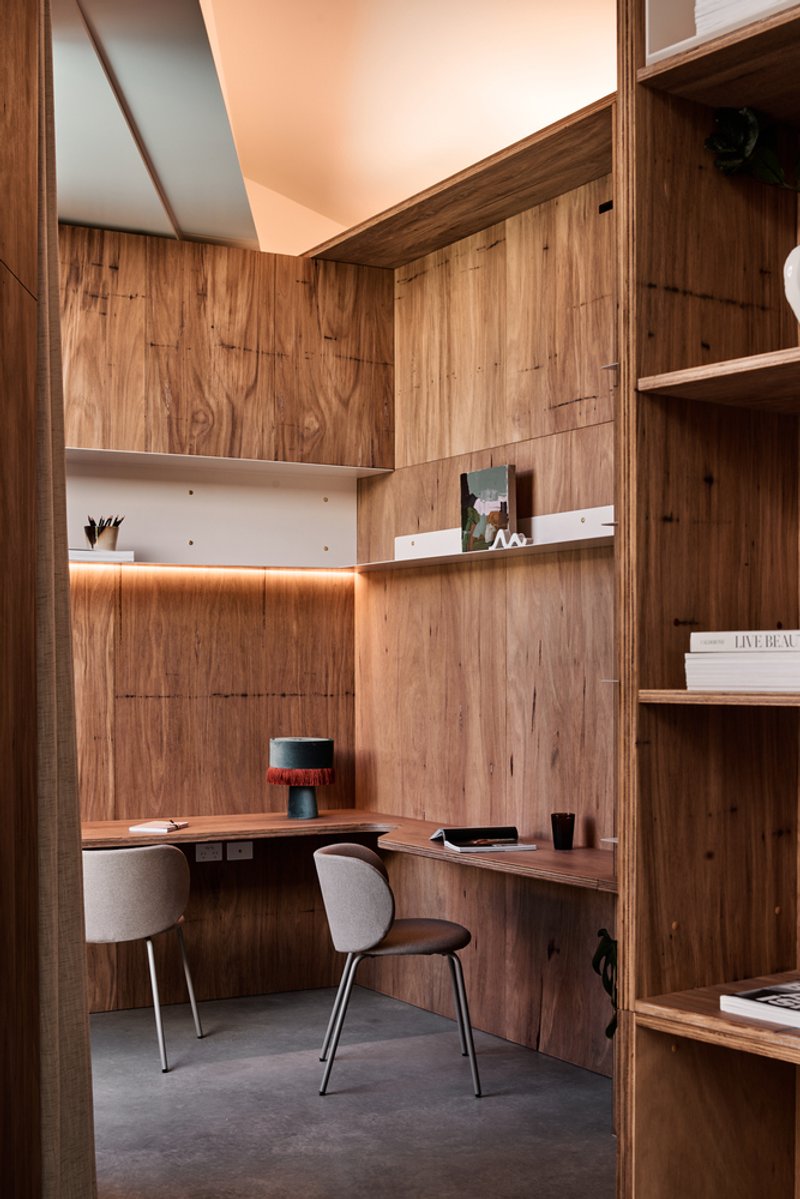
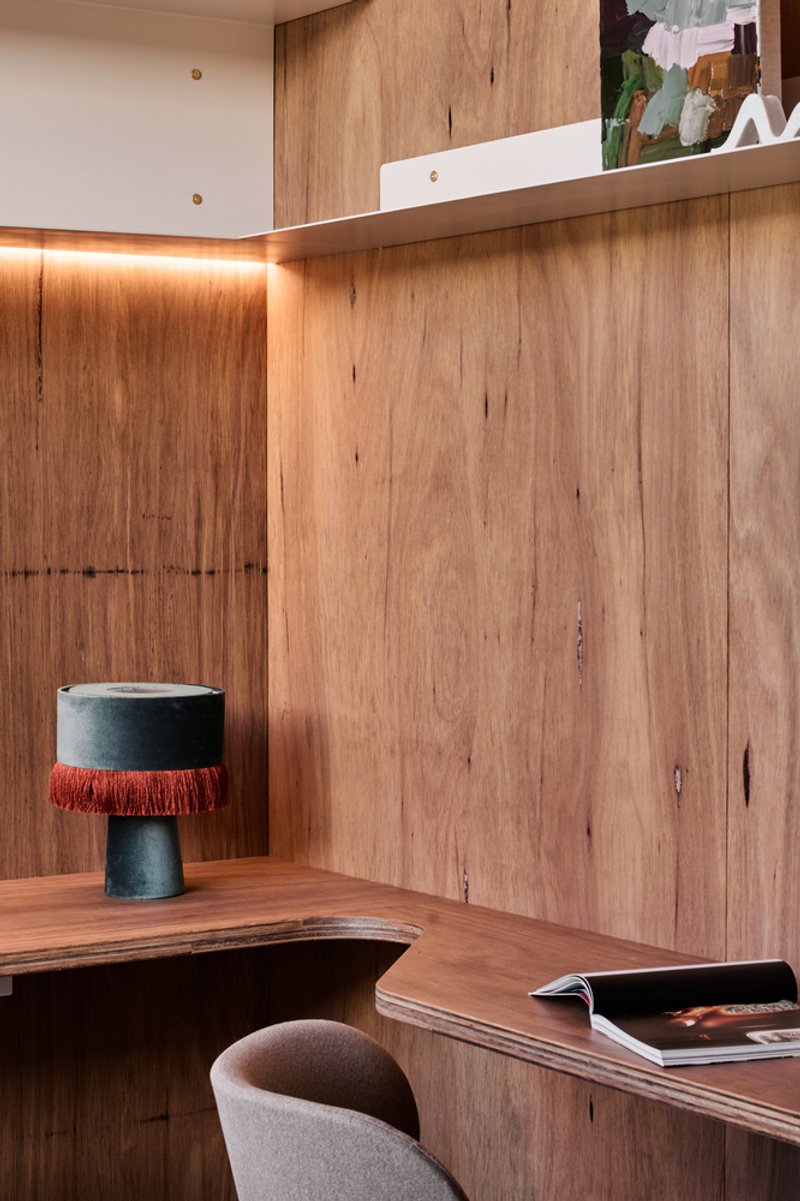
Materiality plays a crucial role in grounding the home within its natural surroundings. The solidity of concrete flooring provides a strong foundation, softened by the warmth of hardwood blackbutt plywood. This natural timber is expressed in vaulted ceiling beams, bespoke joinery, and a transitional tunnel that mediates between old and new.
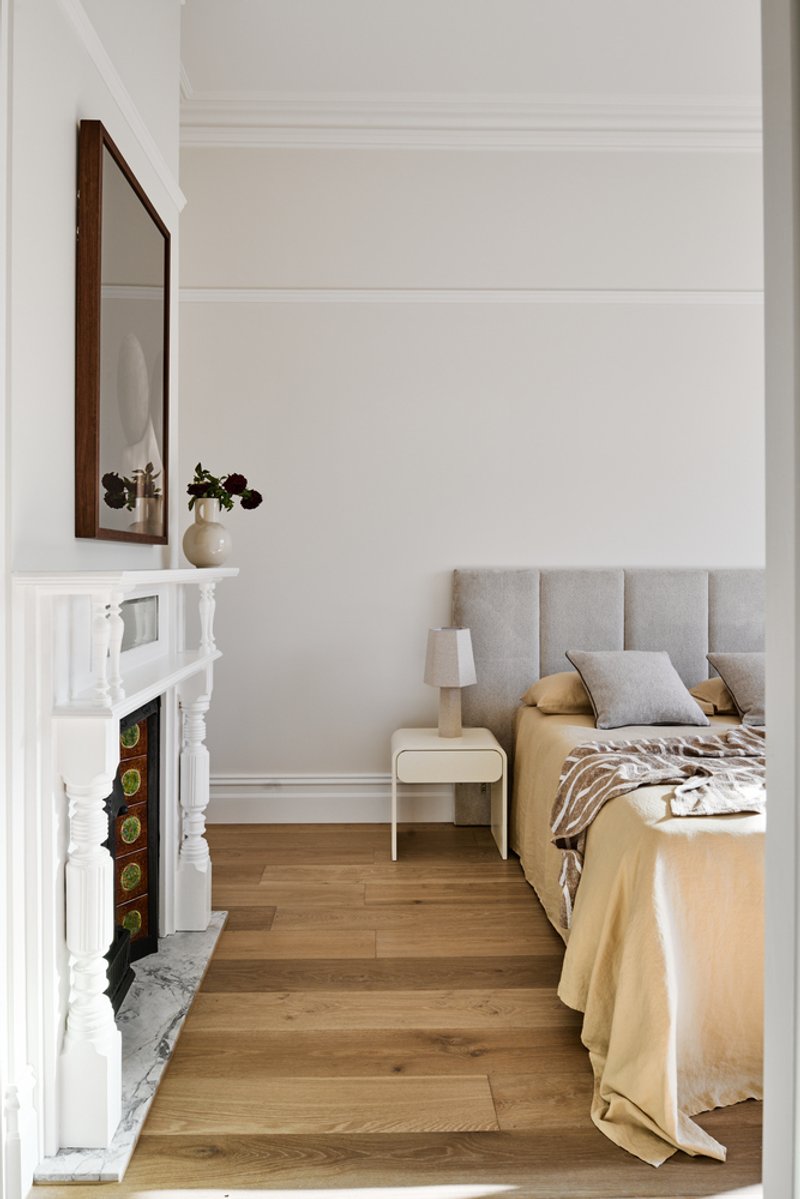
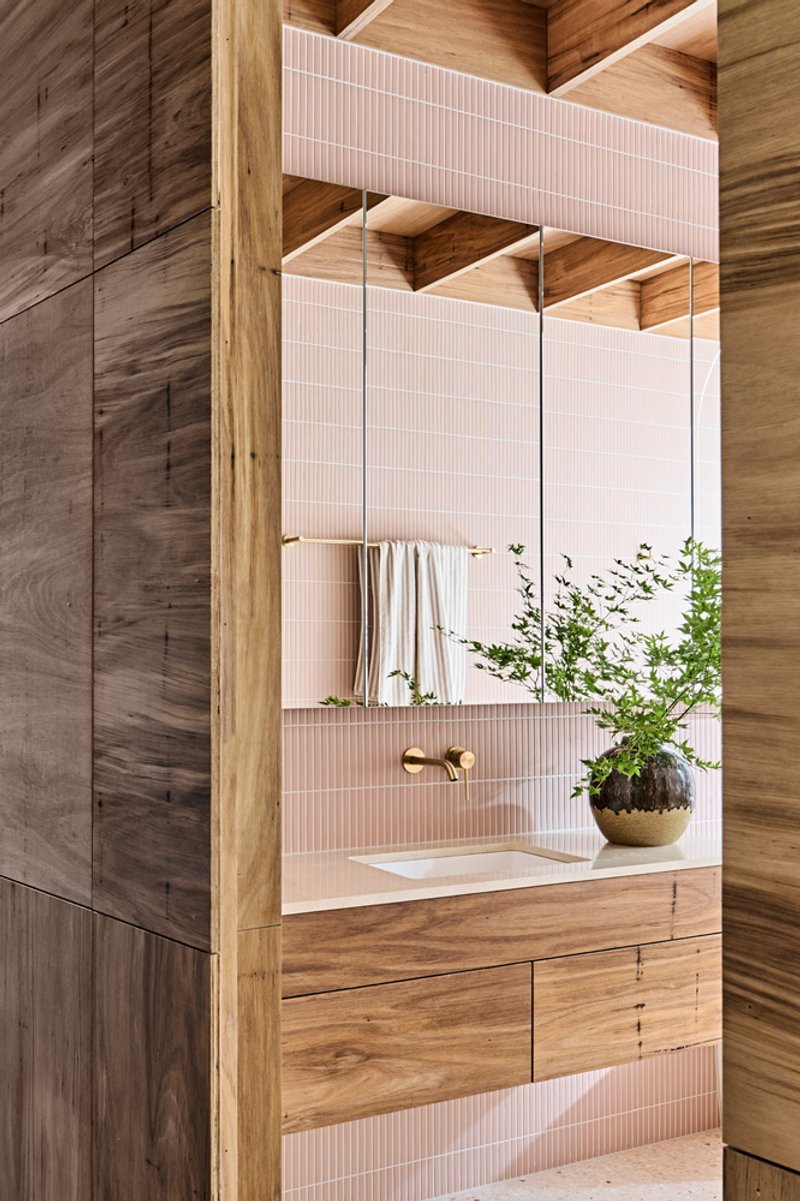
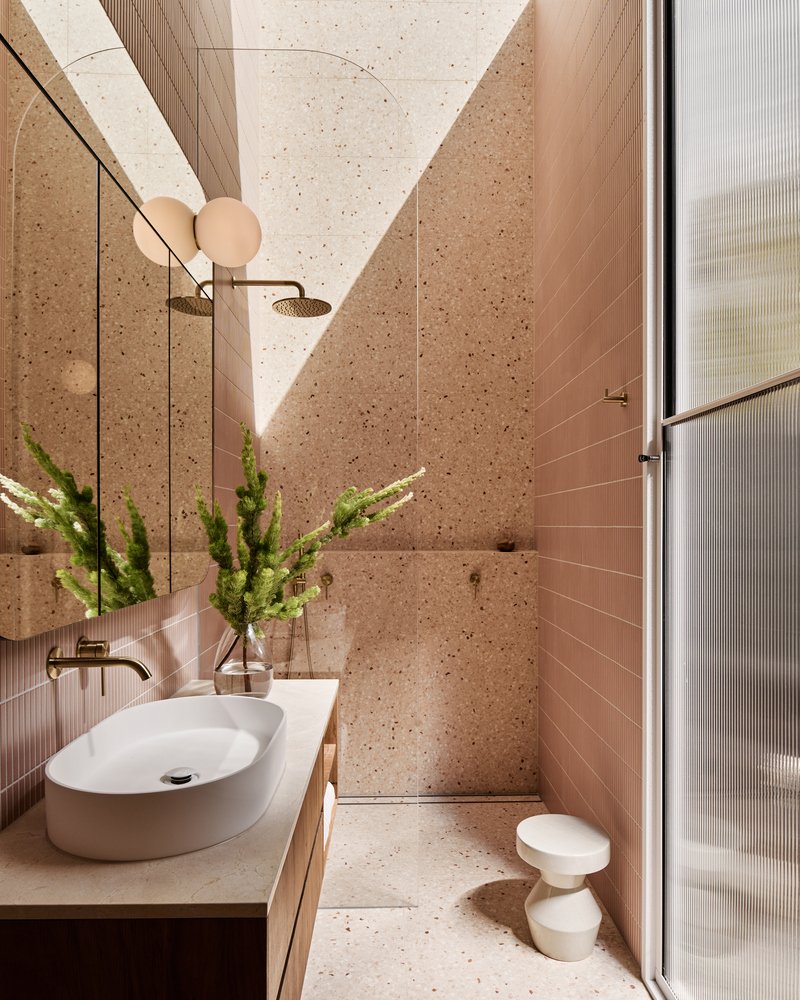
This careful material selection enhances the tactile quality of the home, creating an atmosphere of warmth and comfort. The integration of natural elements, from timber surfaces to lush courtyard greenery, reinforces the home's biophilic character, fostering a deep connection to the landscape.
Privacy, Orientation, and Environmental Responsiveness
The careful siting of Hug House ensures privacy without compromising openness. The southern boundary, adjacent to a neighboring dwelling, is discreetly concealed through strategic courtyard placement. This orientation maximizes inward-facing views while shielding the interiors from external distractions.
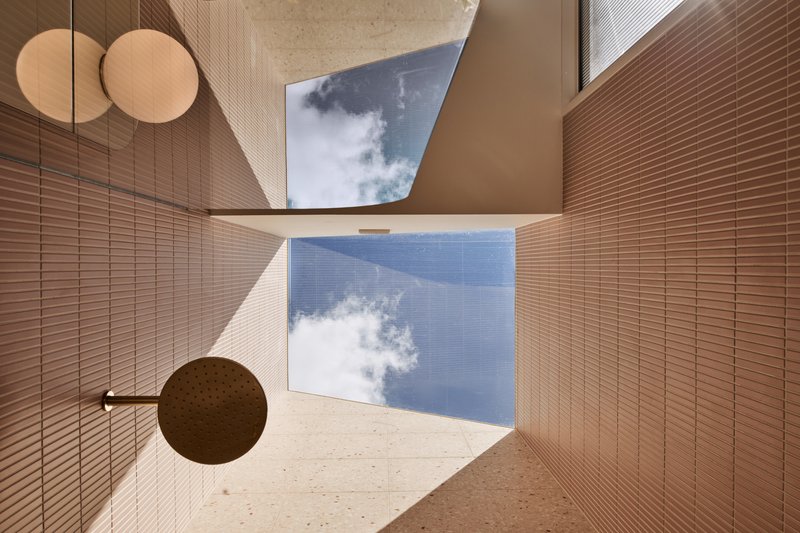
Within the living spaces, high clerestory windows frame treetop vistas, drawing in natural light while maintaining enclosure. This design strategy enhances the home's thermal performance, reducing heat gain and improving cross-ventilation. The result is a residence that feels both private and expansive, offering a sanctuary-like retreat within an urban environment.
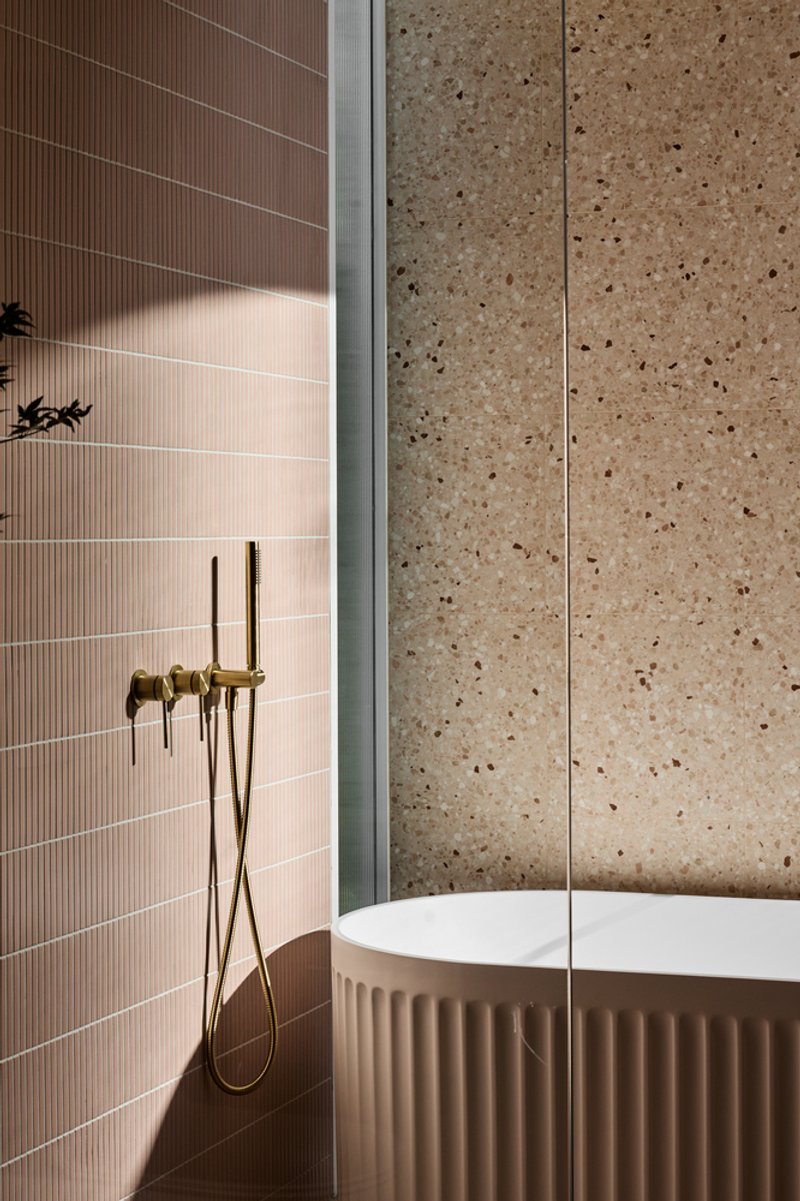
All Photographs are works of Tom Blachford




Popular Articles
Popular articles from the community

Inverted Architecture Installation by Studio Link-Arc: Exploring the Intersection of Architecture and Living Organisms
Inverted Architecture Installation by Studio Link-Arc blends mycelium, sustainability, inverted design, ecological cycles, and urban adaptive architecture in Shenzhen.

Solar Steam: A Climate-Responsive Architecture That Redefines the Monument
A climate-responsive memorial architecture that transforms heat, decay, and time into a living system reflecting humanity’s ecological impact.
Flamboyant House by Juliana Camargo + Prumo Projetos
Modern Brazilian house integrating existing tree, pool, and volumes with glass, wood, and transitional spaces blending interior, exterior, and landscape seamlessly.
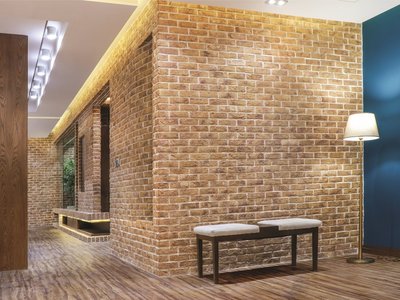
A Contemporary Take on Iranian Residential Architecture
A modern interior design in Mashhad that reinterprets brick, light, and spatial flow to create a warm, contemporary residential architecture.


Similar Reads
You might also enjoy these articles


The Ken Roberts Memorial Delineation Competition (Krob)
As the most senior architectural drawing competition currently in operation anywhere in the world, it draws hundreds of entries each year, awarding the very best submissions in a series of medium-based categories.


Waterfront Redevelopment and Urban Revitalization in Mumbai: Forging a New Dawn for Darukhana
A transformative waterfront redevelopment project reimagining Darukhana’s shipbreaking heritage into an inclusive urban future.

OUT-OF-MAP: A Call for Postcards on Feminist Narratives of Public Space
Rhizoma Design and Research Lab invites artists, designers, architects, researchers, and students to reflect on how feminist perspectives can reshape public space. Selected works will be exhibited in Barcelona, October 2026. Submissions open until 15 April 2026.


Documentation Work on Buddhist Wooden Temple
Architectural syncretism and cultural hybridity: A comparative study of the Buddhist temples in Chattogram Hill tracks

Explore Architecture Competitions
Discover active competitions in this discipline




The International Standard for Design Portfolios


The Global Benchmark for Architecture Dissertation Awards


The Global Benchmark for Graduation Excellence


Challenge to reimagine the Iron Throne
Comments (0)
Please login or sign up to add comments
No comments yet. Be the first to comment!