
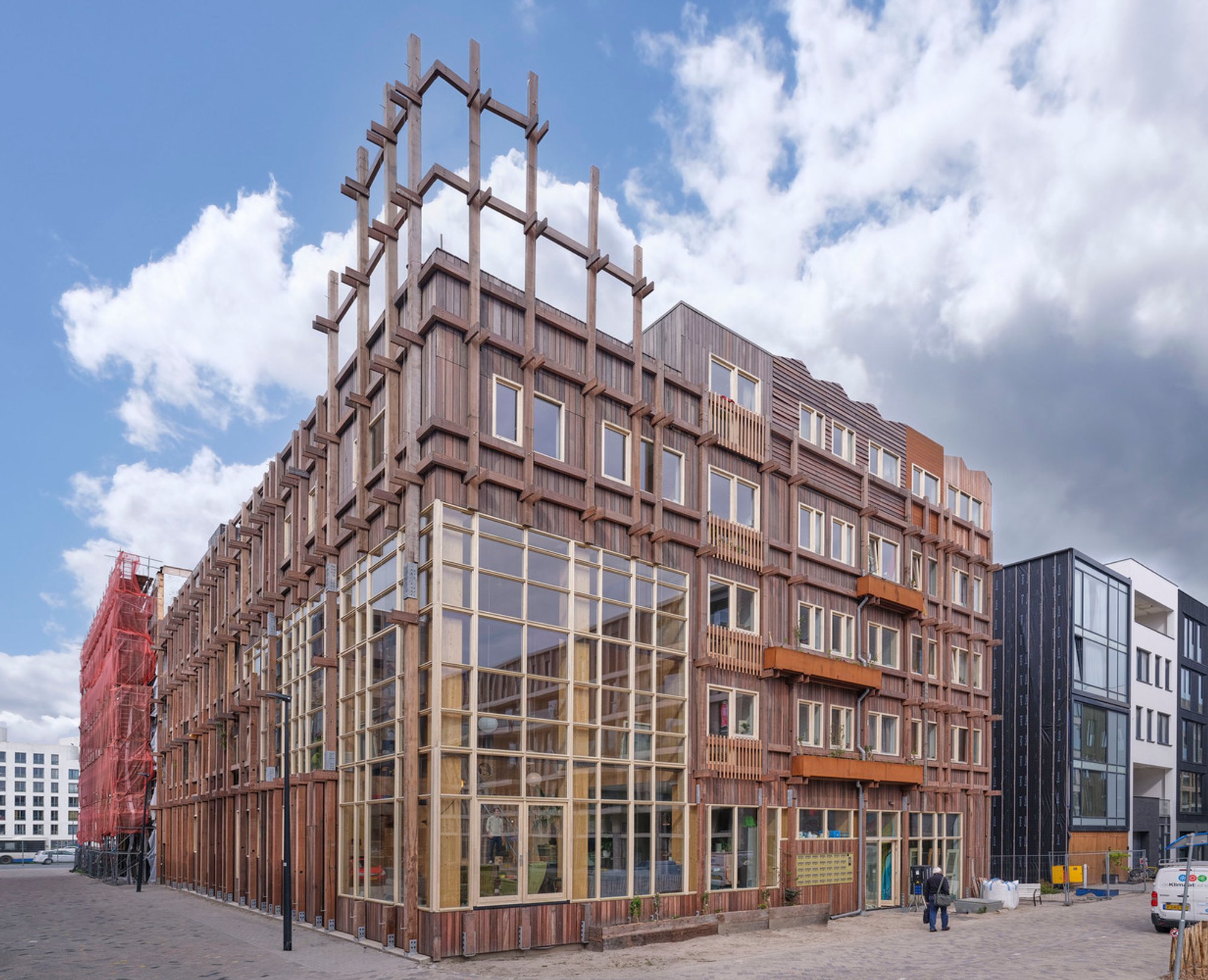
De Warren Cooperative Housing by Natrufied Architecture
De Warren is Amsterdam’s first self-build housing cooperative, combining sustainable timber construction, collective living spaces, and energy-positive design.

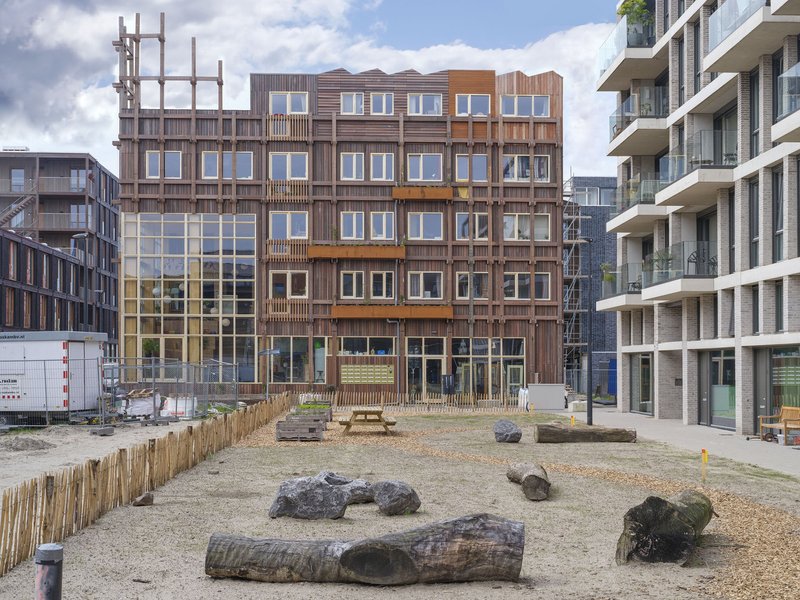
Located on Centrumeiland in Amsterdam, De Warren is a pioneering example of collective, sustainable, and affordable urban living. Designed by Natrufied Architecture, this self-built cooperative housing complex introduces a new paradigm for social and ecological housing in the Netherlands.
A Model for Sustainable Urban Communities
Completed in 2023, De Warren spans 3,070 m² and accommodates 36 affordable and social rental apartments. It is the first self-initiated cooperative housing project in Amsterdam, designed and realized by its own residents in collaboration with the architects. More than just a housing solution, De Warren is a community-driven, energy-positive building with an impressive EPC of -0.16, representing a shift toward net-positive urban development.
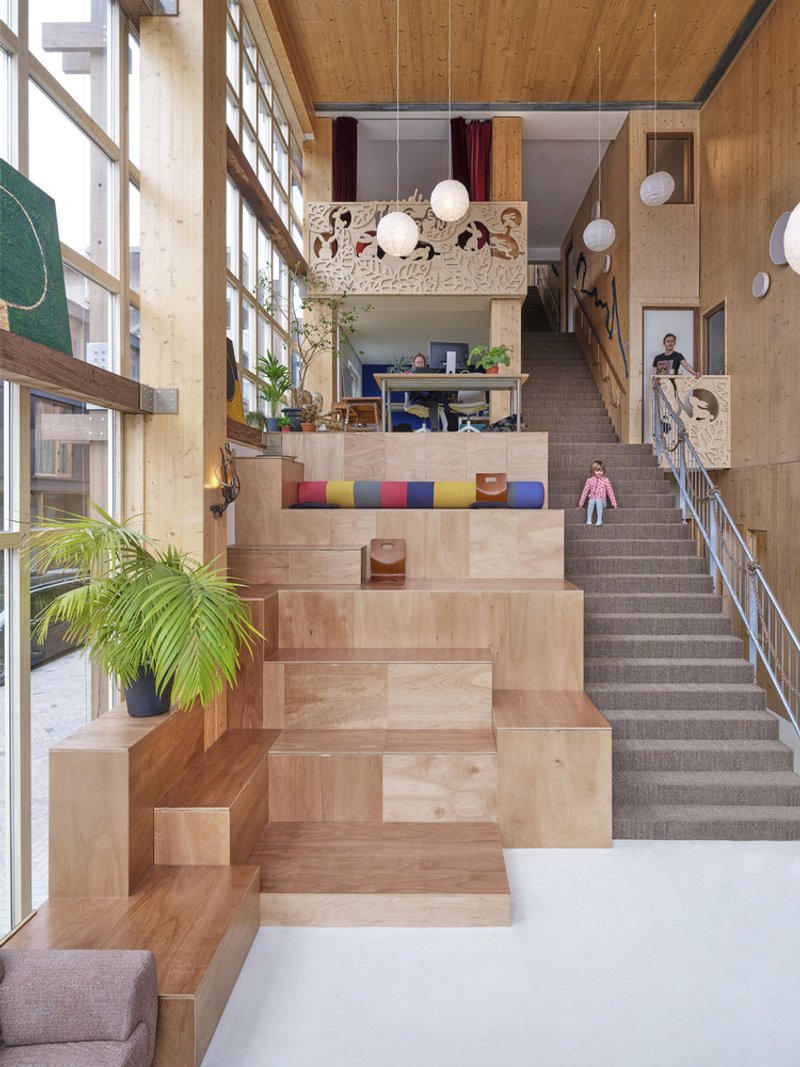
Designing for Collectivity and Shared Living
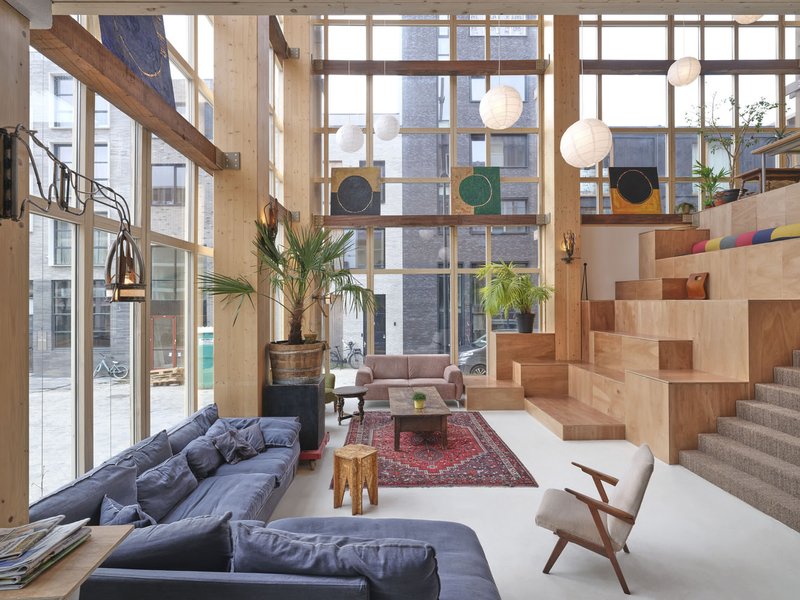
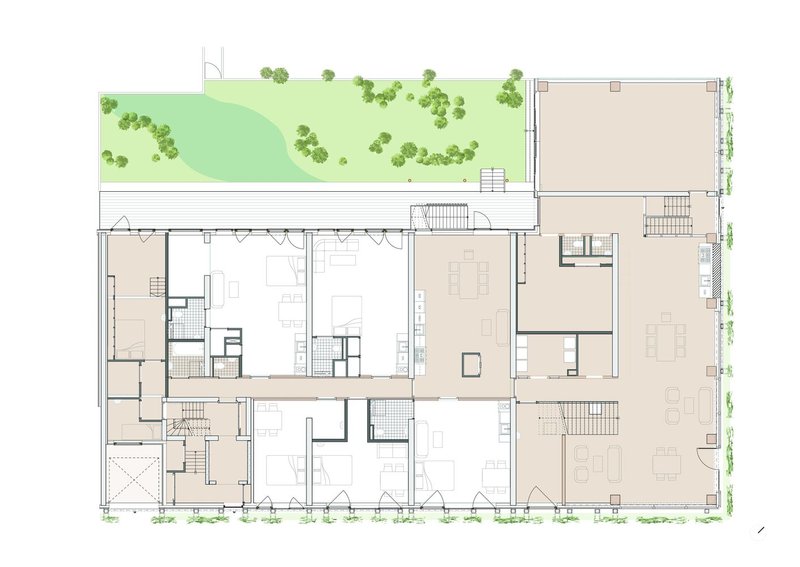
The heart of De Warren lies in its commitment to collective living. Around 30% of the building—approximately 800 m²—is dedicated to shared spaces, fostering interaction, collaboration, and a sense of belonging among residents. These communal functions include:
- A large auditorium
- Multifunctional hall
- Co-working zones
- A music studio
- Children’s playroom
- Greenhouse and meditation room
- Shared kitchens and living spaces
- A rooftop terrace
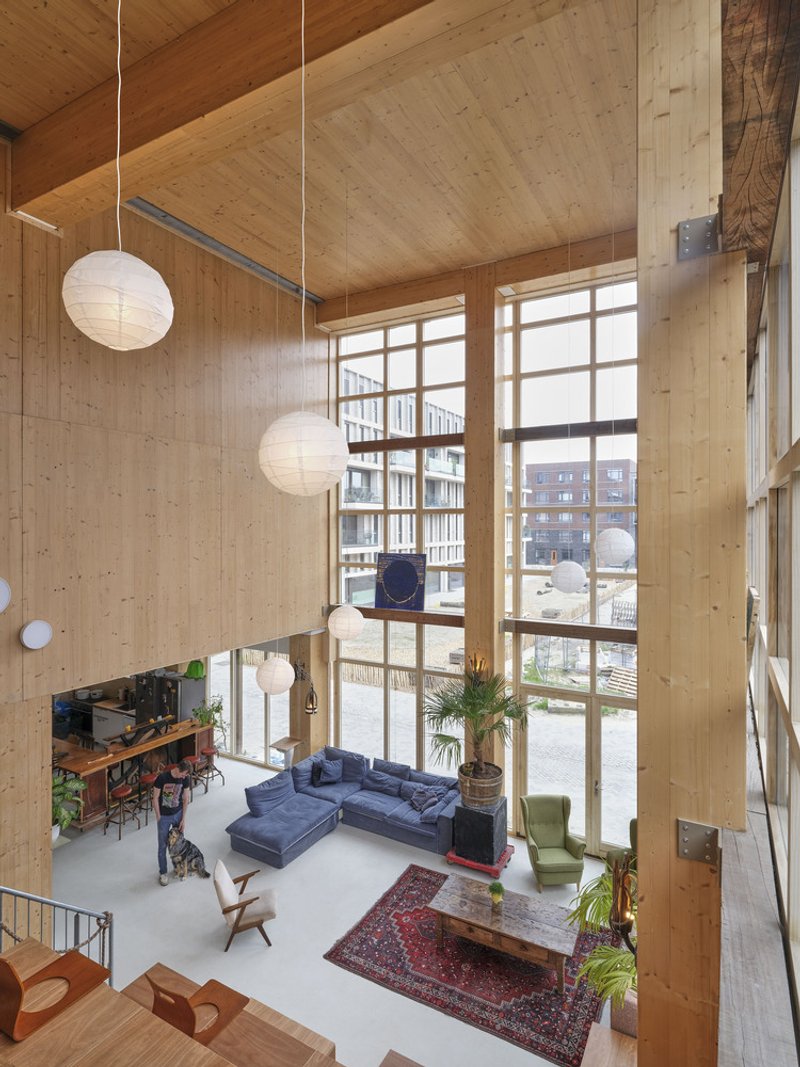
These spaces are organized around the iconic ‘Machu Picchu’ staircase, which physically and socially connects all floors, making community interaction an integral part of daily life.
Reuse, Wood Construction, and Circular Materials
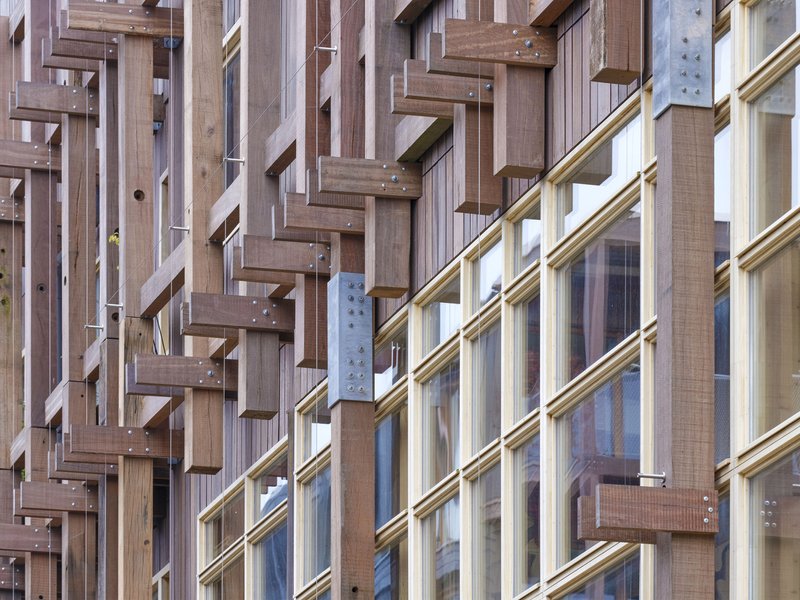
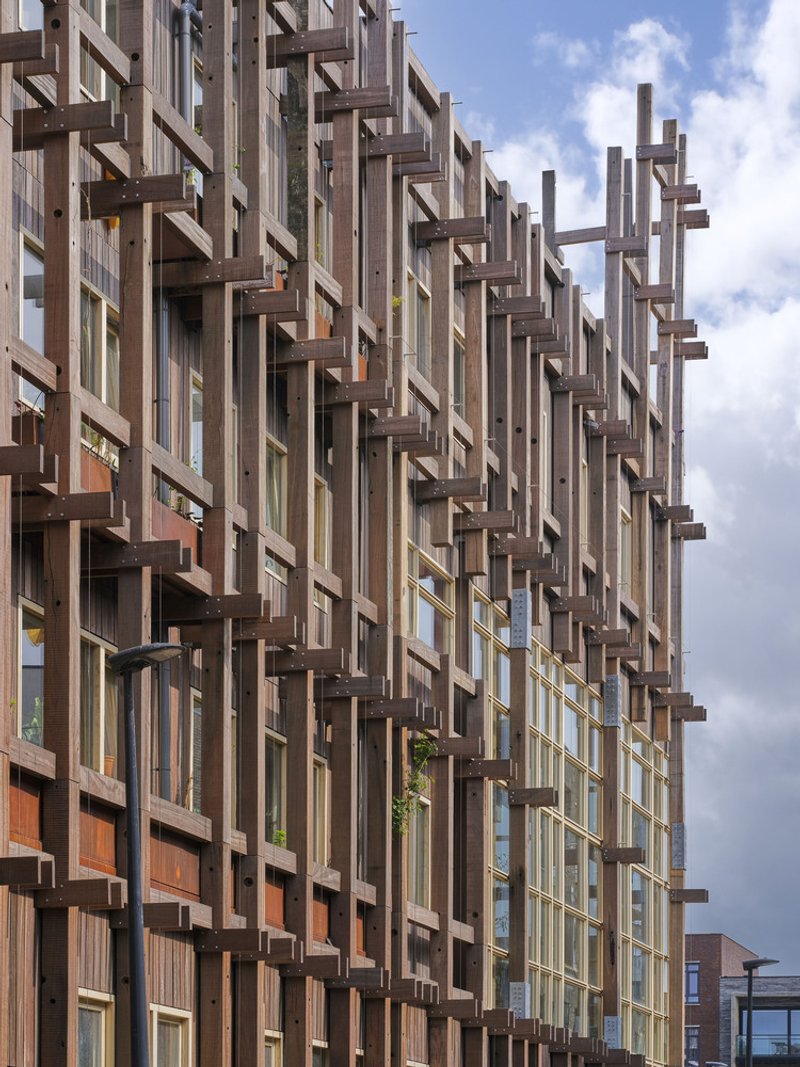
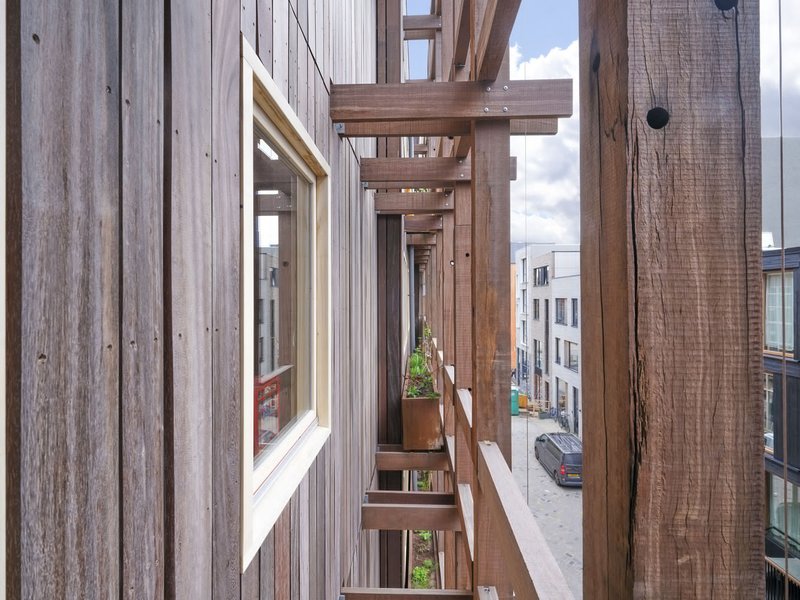
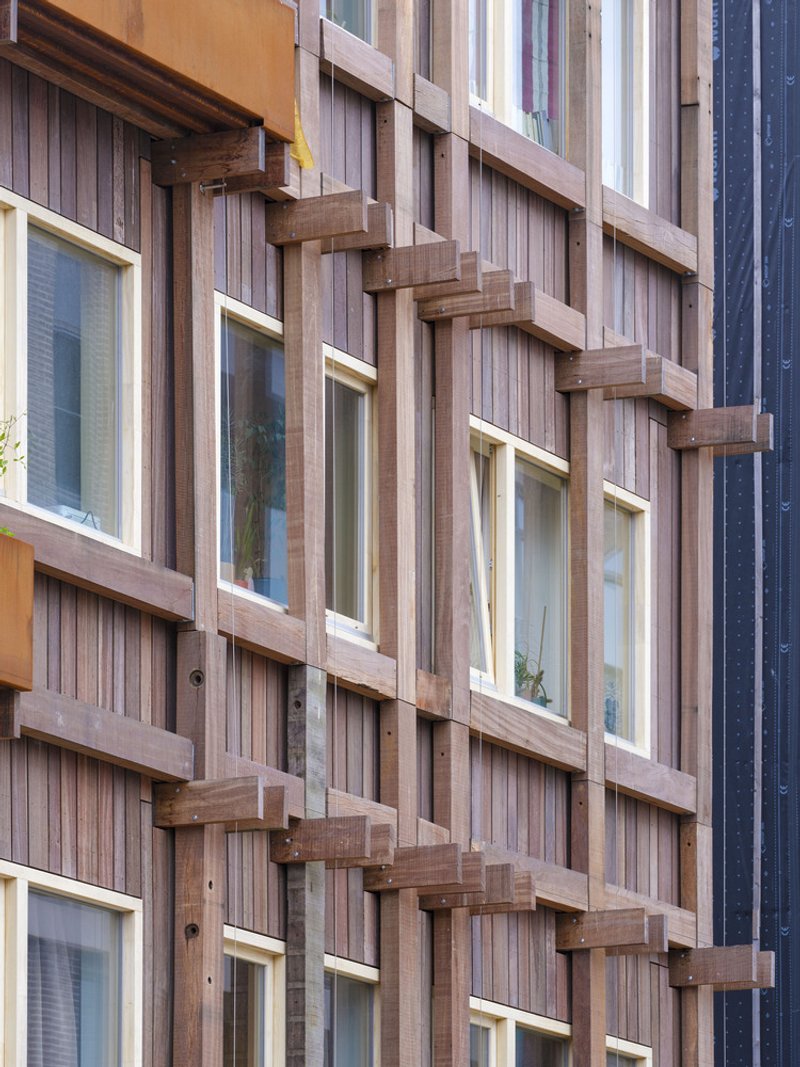
Sustainability is embedded in every material choice. The facade is clad in recycled Azobe wood, sourced from former retaining walls, while balcony screens use recycled Basralocus bollards. The structure is primarily composed of wooden columns and beams, and the façade, interior walls, and finishes altogether utilized 330 m³ of timber, storing over 300 tons of CO₂—the equivalent of two centuries of emissions from an average Dutch car.
Rainwater from the polder roof is reused to irrigate nature-inclusive planters, supporting biodiversity. The facade’s rough, untreated surfaces express both durability and environmental consciousness, eliminating the need for chemical treatments or regular maintenance.
Energy Innovation and Independence
Rejecting conventional energy grids, De Warren employs a closed-loop geothermal system. Due to soft soil conditions, deep 30-meter foundation piles were required—these were ingeniously converted into energy piles, acting as a geothermal heat source. Coupled with heat pumps and PV panels, the system provides year-round heating and cooling, making the building largely energy self-sufficient.
Designed for Longevity and Flexibility
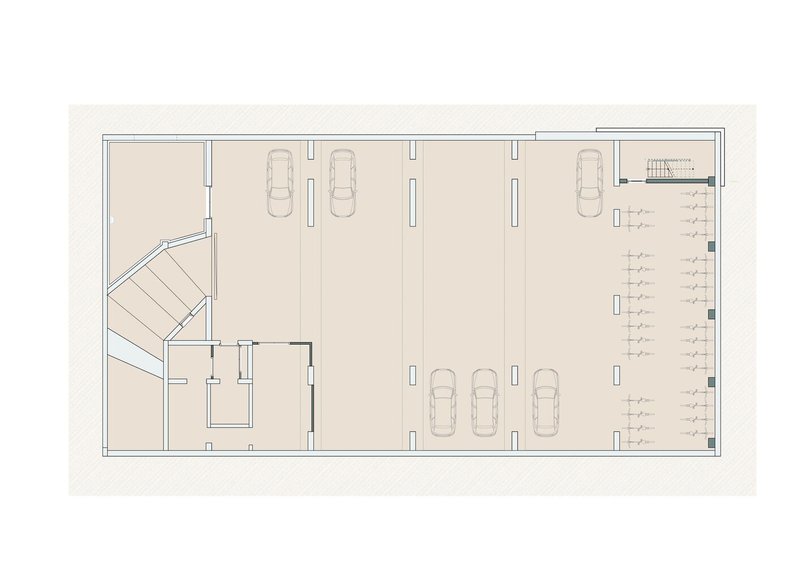
The internal structure emphasizes long-term adaptability. Built with a modular wood frame system, the floor plans can be easily reconfigured over time. Each grid bay includes at least one services shaft, allowing for decentralized ventilation and flexible MEP layouts, ensuring that the building remains resilient to future spatial and technological needs.
De Warren exemplifies a sustainable, socially inclusive architecture rooted in cooperation, self-organization, and ecological intelligence. It is not just a housing project, but a blueprint for future-proof urban living.



Popular Articles
Popular articles from the community

Treehouse Apartment: A Warm Timber Interior Blending Craft, Play, and Contemporary Living
Warm timber apartment with integrated treehouse, combining natural materials, craftsmanship, and playful design to create a flexible, family-oriented living environment.

Solar Steam: A Climate-Responsive Architecture That Redefines the Monument
A climate-responsive memorial architecture that transforms heat, decay, and time into a living system reflecting humanity’s ecological impact.
Inverted Architecture Installation by Studio Link-Arc: Exploring the Intersection of Architecture and Living Organisms
Inverted Architecture Installation by Studio Link-Arc blends mycelium, sustainability, inverted design, ecological cycles, and urban adaptive architecture in Shenzhen.


The Ken Roberts Memorial Delineation Competition (Krob)
As the most senior architectural drawing competition currently in operation anywhere in the world, it draws hundreds of entries each year, awarding the very best submissions in a series of medium-based categories.

Similar Reads
You might also enjoy these articles
The Ken Roberts Memorial Delineation Competition (Krob)
As the most senior architectural drawing competition currently in operation anywhere in the world, it draws hundreds of entries each year, awarding the very best submissions in a series of medium-based categories.

Waterfront Redevelopment and Urban Revitalization in Mumbai: Forging a New Dawn for Darukhana
A transformative waterfront redevelopment project reimagining Darukhana’s shipbreaking heritage into an inclusive urban future.

OUT-OF-MAP: A Call for Postcards on Feminist Narratives of Public Space
Rhizoma Design and Research Lab invites artists, designers, architects, researchers, and students to reflect on how feminist perspectives can reshape public space. Selected works will be exhibited in Barcelona, October 2026. Submissions open until 15 April 2026.


Documentation Work on Buddhist Wooden Temple
Architectural syncretism and cultural hybridity: A comparative study of the Buddhist temples in Chattogram Hill tracks


Explore Architecture Competitions
Discover active competitions in this discipline




The International Standard for Design Portfolios


The Global Benchmark for Architecture Dissertation Awards


The Global Benchmark for Graduation Excellence


Challenge to reimagine the Iron Throne
Comments (0)
Please login or sign up to add comments
No comments yet. Be the first to comment!