
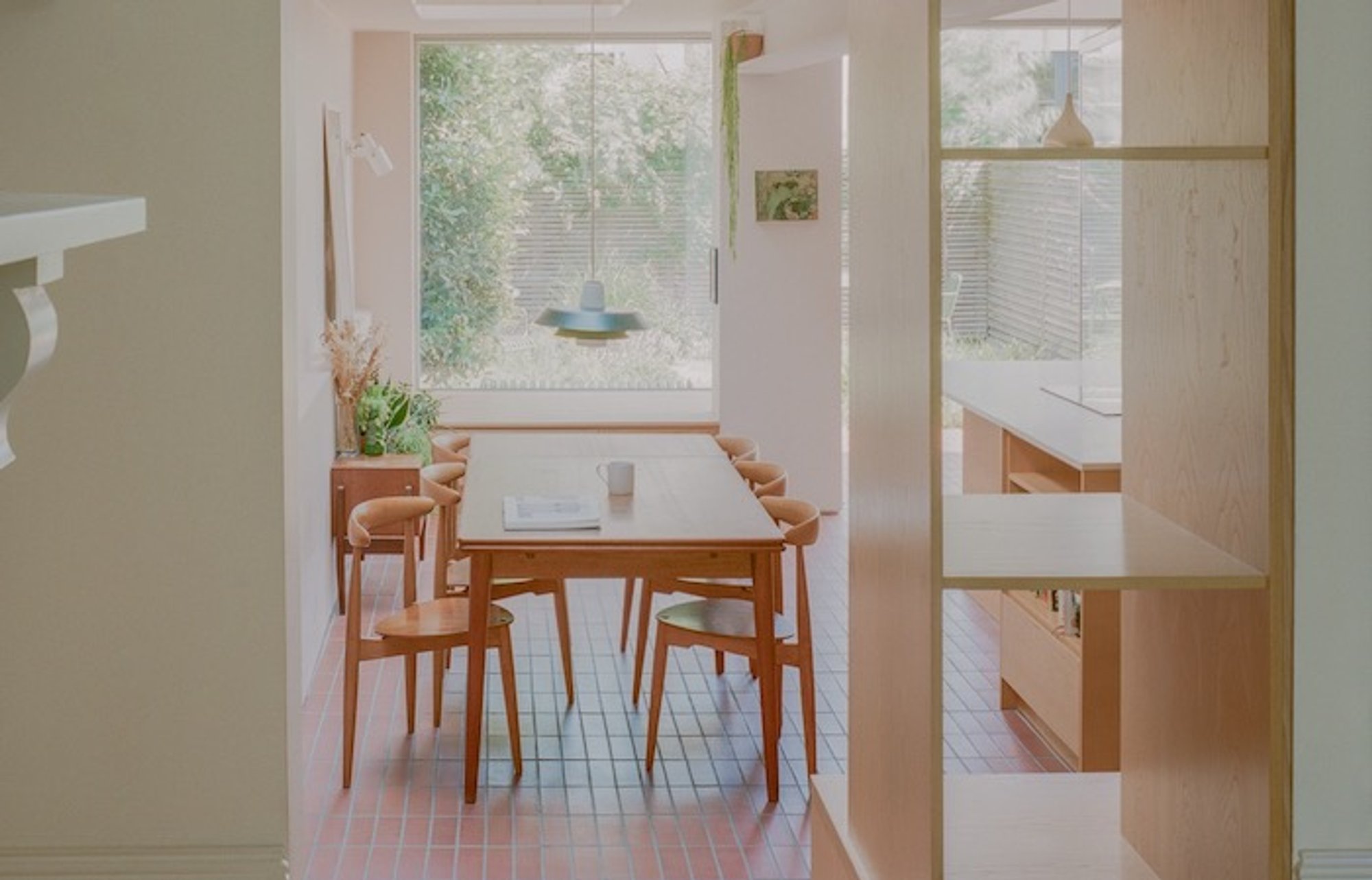
Denmark Hill by TYPE
A Victorian terrace in South London transformed through tactile materials, garden-focused extension, and light-filled loft conversion into a warm family home.

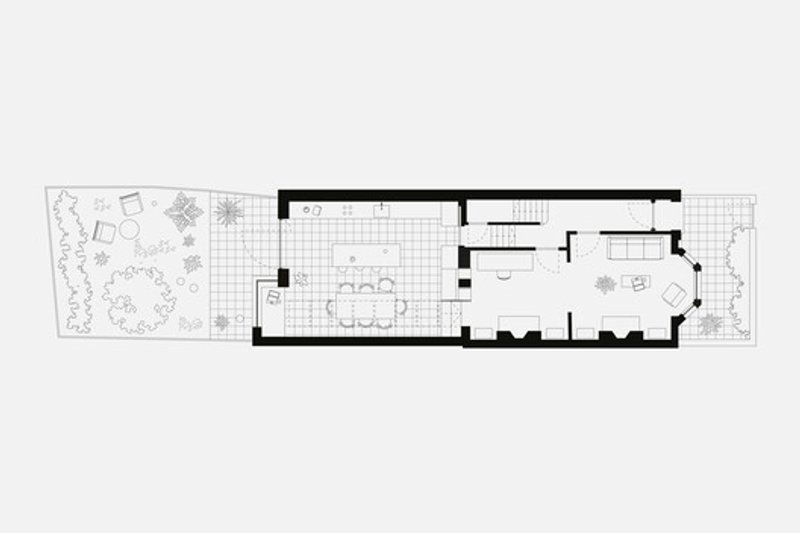
Located in South London, Denmark Hill is a sensitive renovation and extension of a Victorian terraced house by architecture studio TYPE. Designed for a young family, the project transforms a once dark and fragmented home into a warm, tactile, and light-filled living environment through carefully crafted additions, material honesty, and strong connections to the garden.
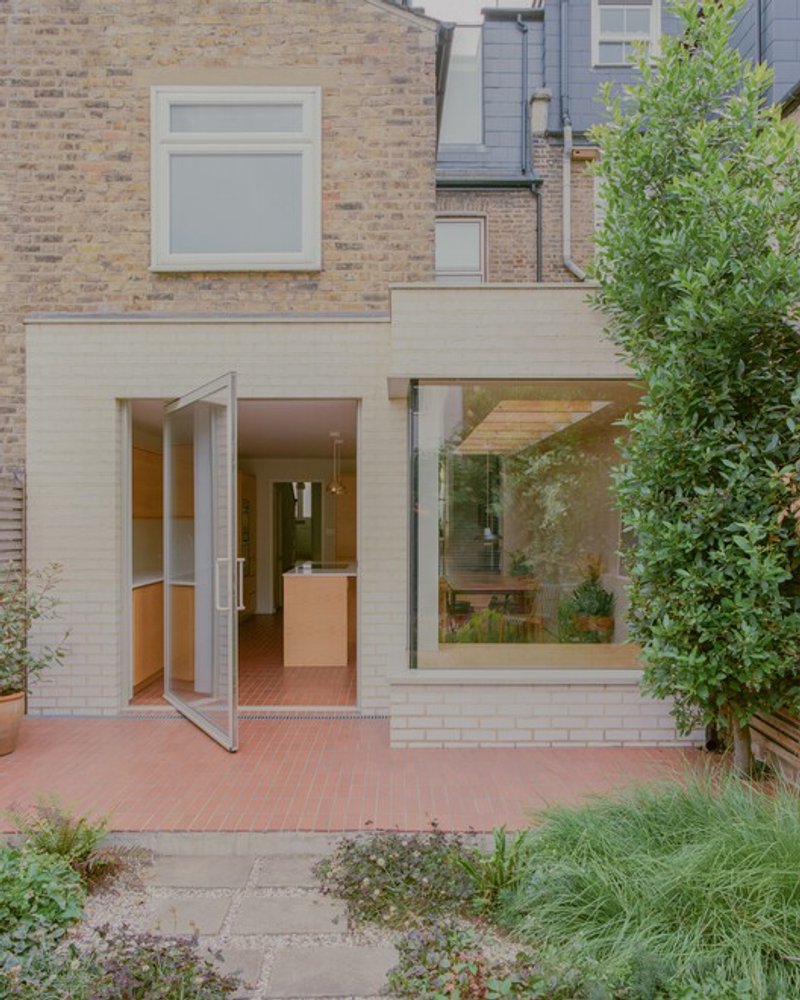
Rather than pursuing dramatic formal gestures, the design focuses on everyday comfort, adaptability, and long-term durability—reaffirming the enduring value of the London terrace as a flexible domestic typology.
Reworking a Constrained Victorian Home
Prior to renovation, the house suffered from typical limitations of many Victorian terraces: a narrow, poorly lit kitchen, limited dining space, weak connections to the garden, and underused roof volume. The rear garden itself was overgrown and disconnected from daily life.
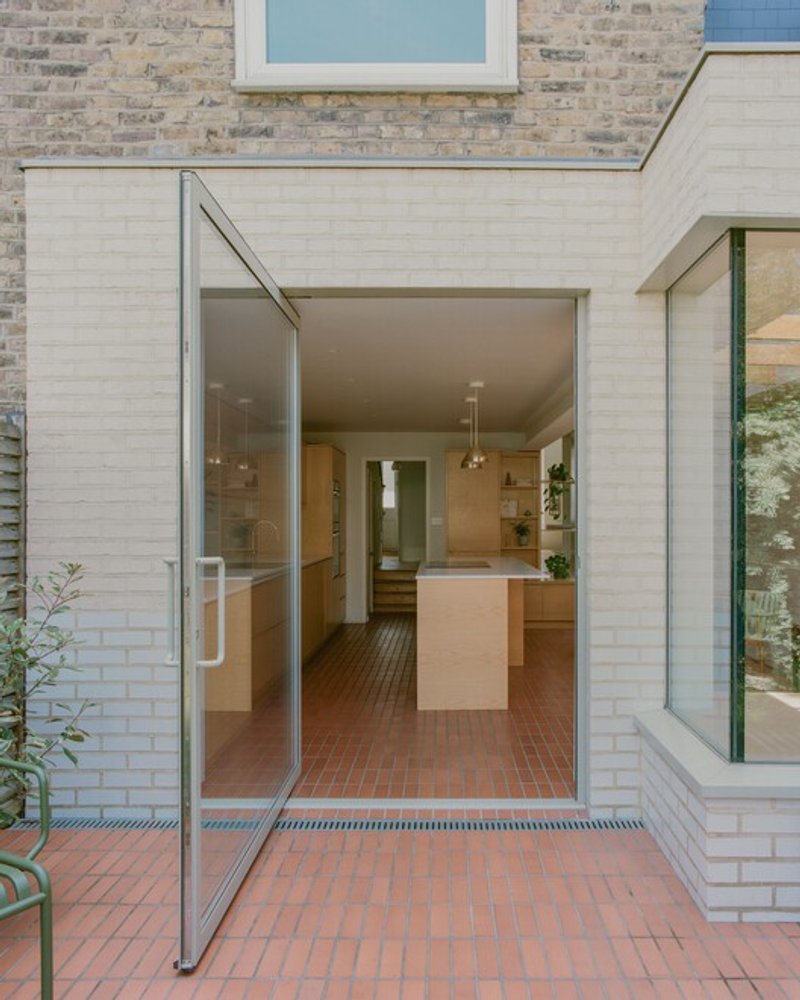
TYPE approached the project as an opportunity to unlock latent spatial potential while respecting the original structure. Their strategy combined a ground-floor extension, full interior refurbishment, and loft conversion to create a coherent and generous family home.
Tactility and Craft as Design Drivers
At the core of the project is a commitment to tactility, craftsmanship, and warmth. Material choices were guided by affordability, durability, and sensory quality, rather than decorative excess.
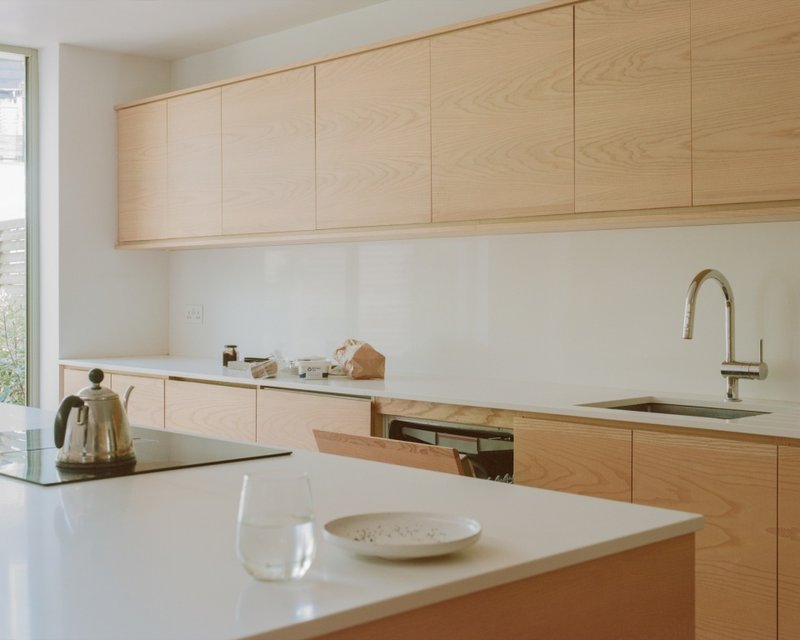
Key materials include:
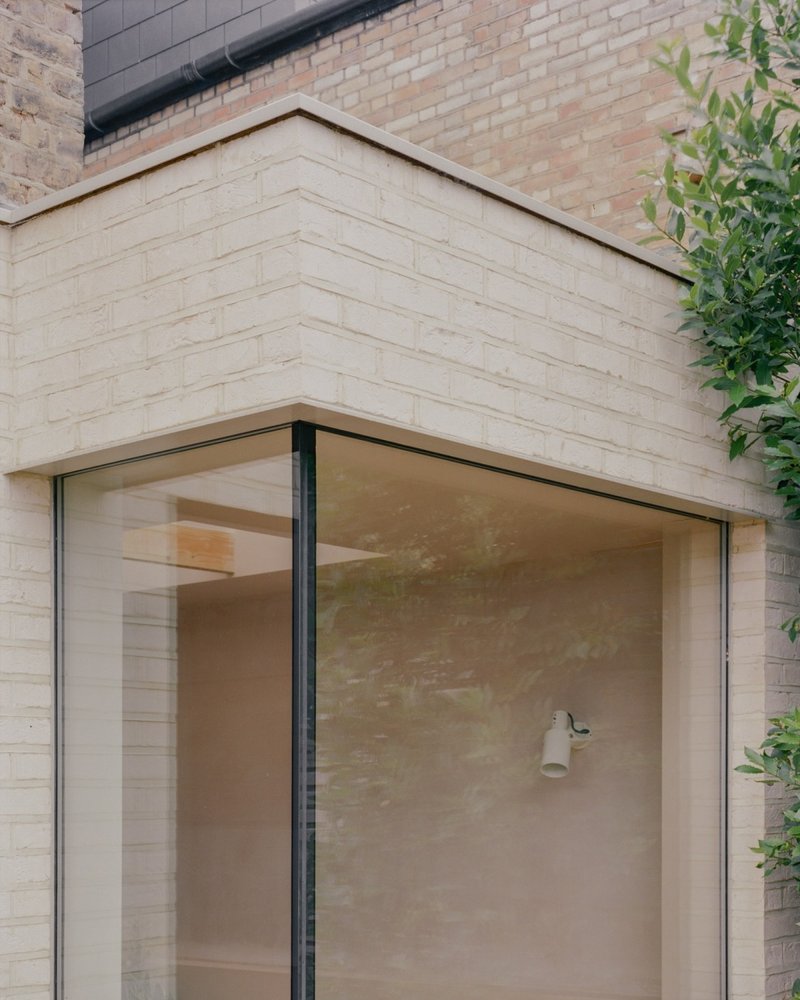
- Hand-moulded bricks in a subtle two-tone pattern
- Clay-fired terracotta floor tiles
- Cork flooring
- Unpainted plaster finishes
- Bespoke ash timber joinery
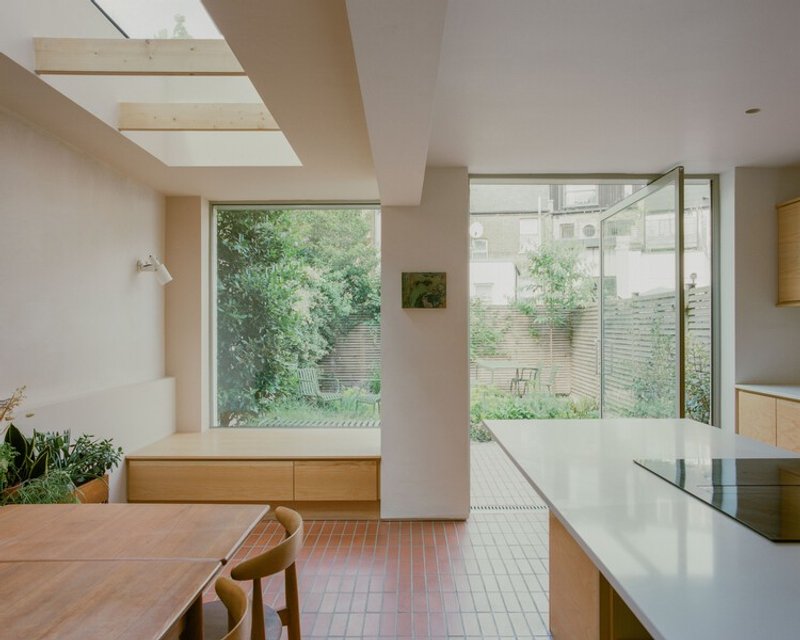
These elements reference the historic construction of the original house while giving the extension a contemporary identity. Their natural textures soften the architecture and encourage everyday interaction.
A Garden-Oriented Living Space
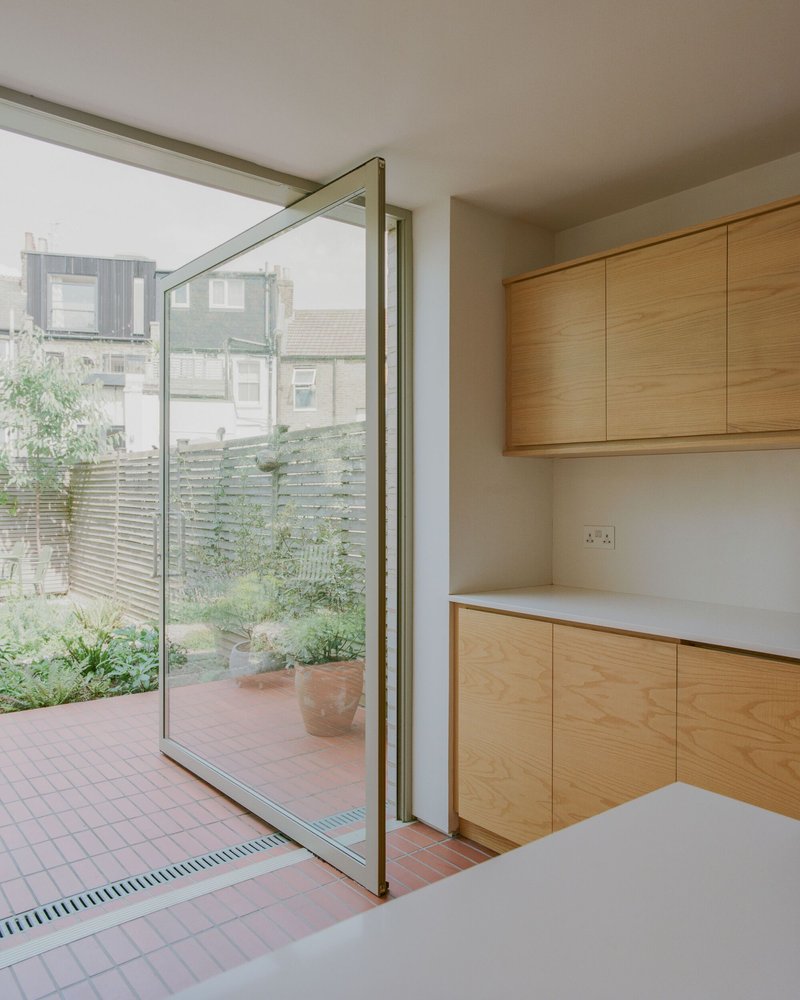
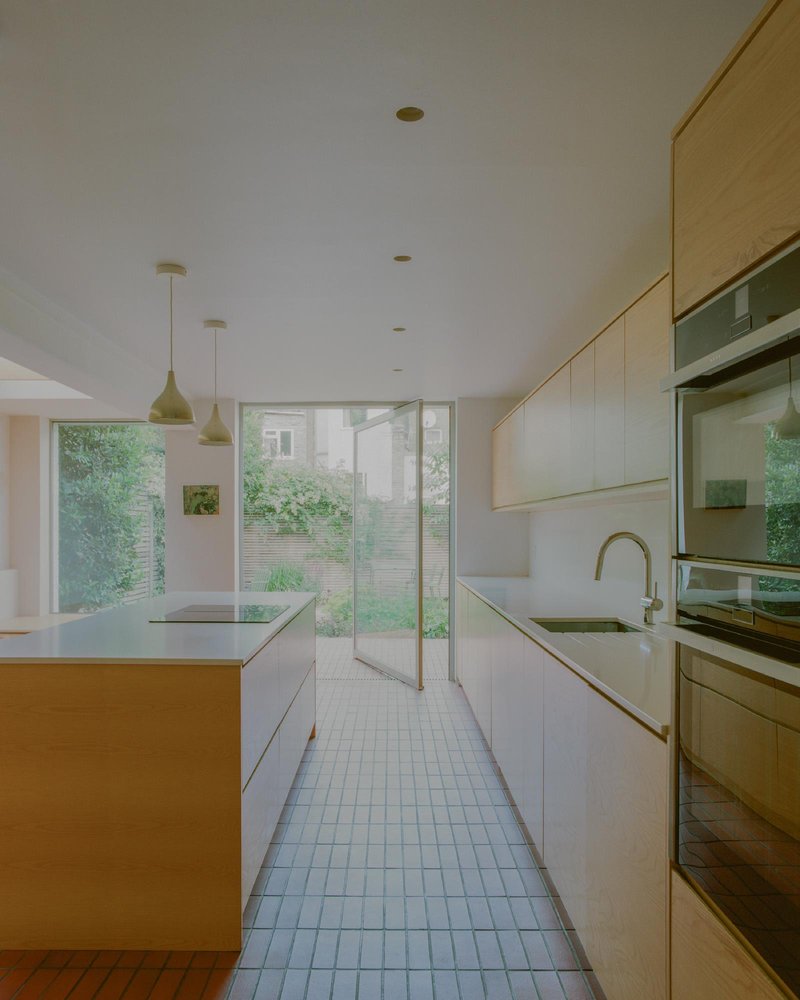
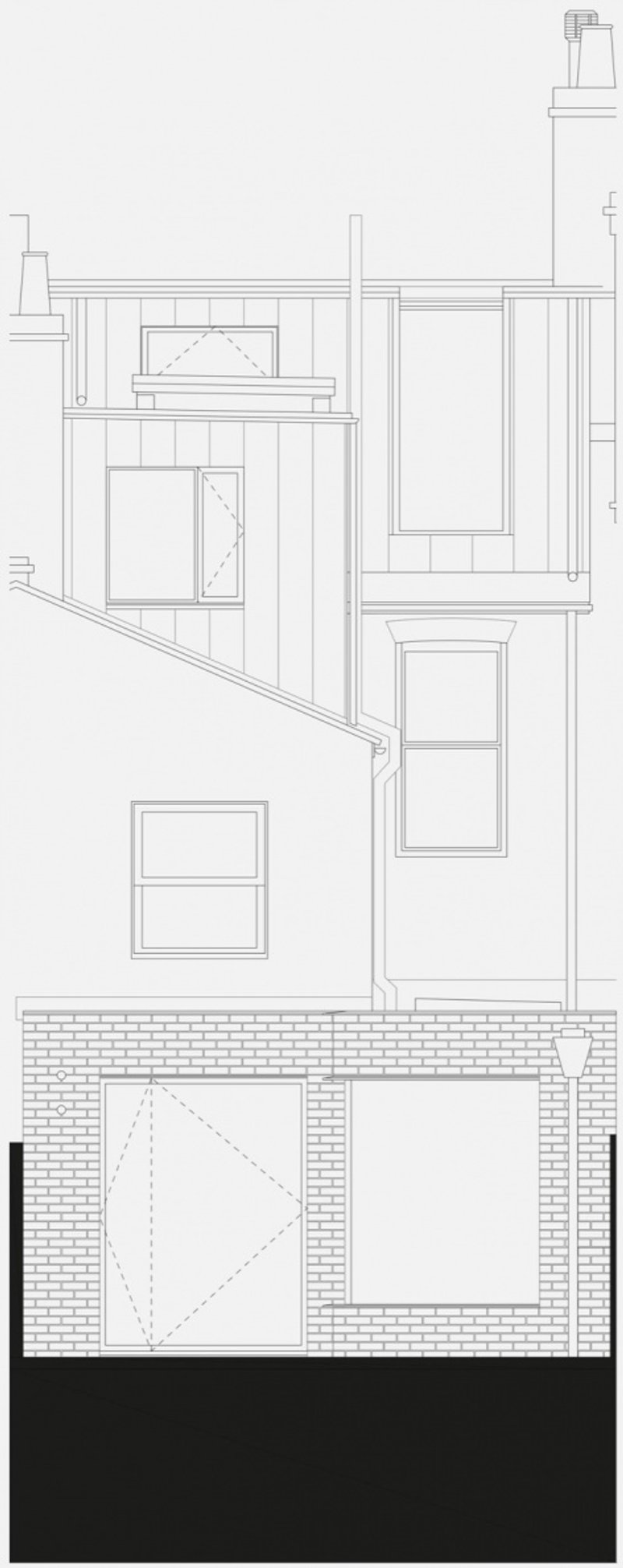
The ground-floor extension forms the new social heart of the house, accommodating the kitchen and dining area. It replaces a cramped, dark kitchen with an open, light-filled environment oriented toward the garden.
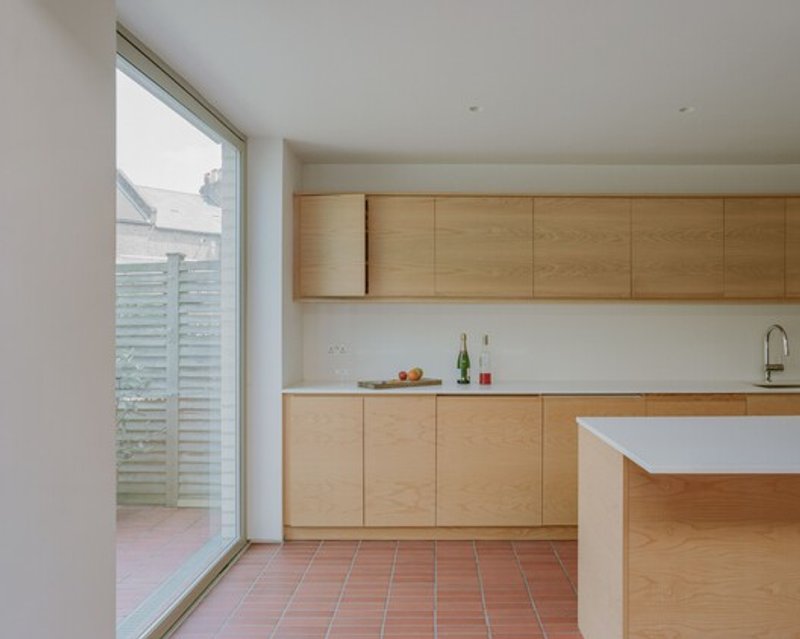
Several architectural devices strengthen this connection:
- A frameless corner window dissolves visual boundaries
- A built-in bench seat encourages informal use
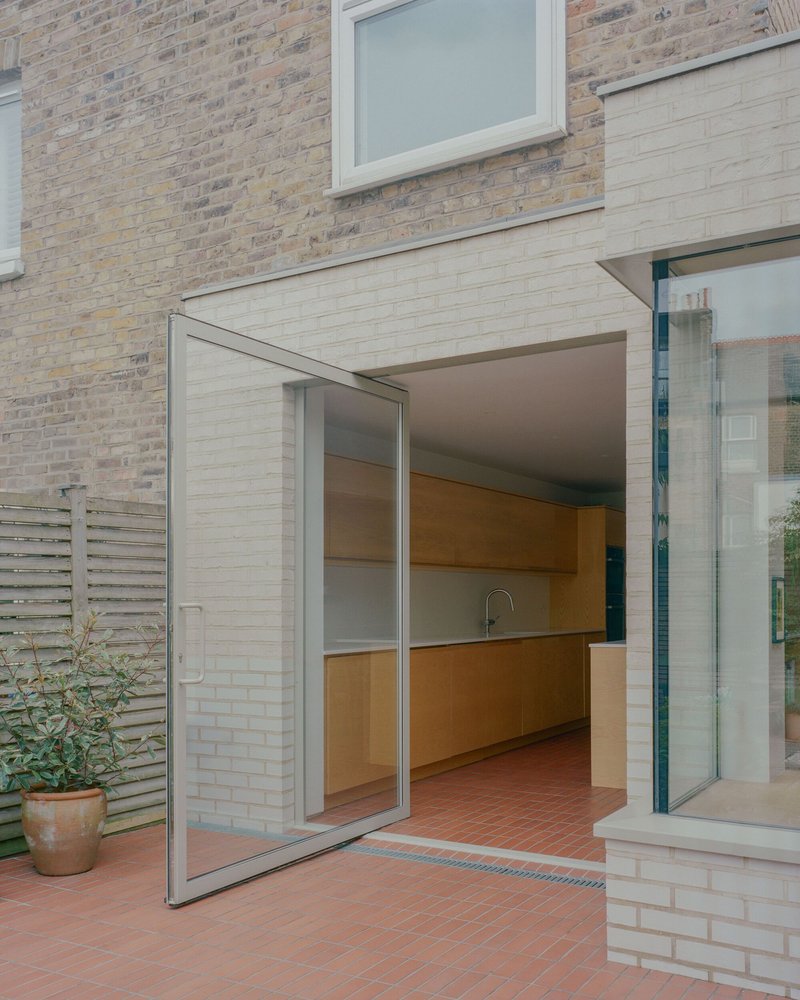
- A large pivot door opens the interior fully outdoors
- A generous rooflight brings daylight deep into the plan
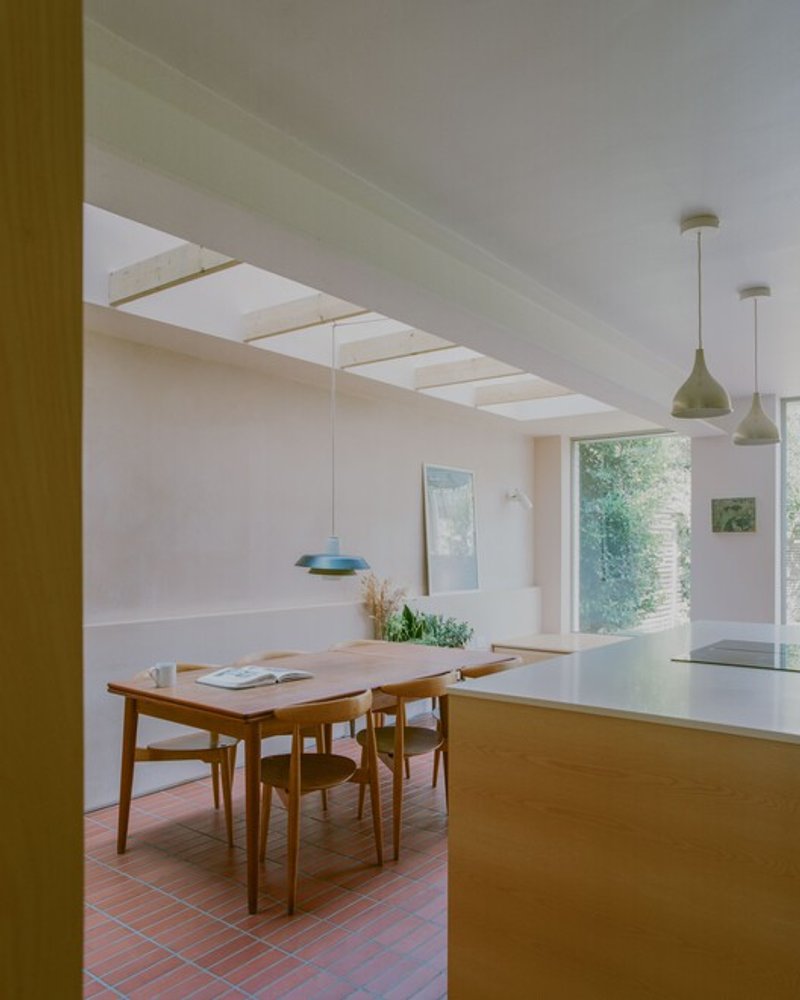
Together, these elements transform the extension into a fluid indoor–outdoor living space suitable for family life and social gatherings.
Light, Levels, and Spatial Definition
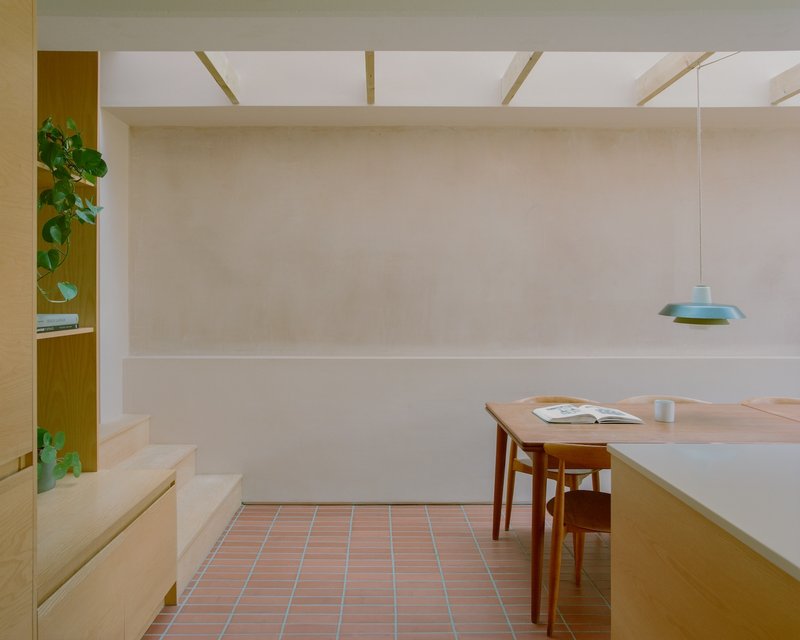
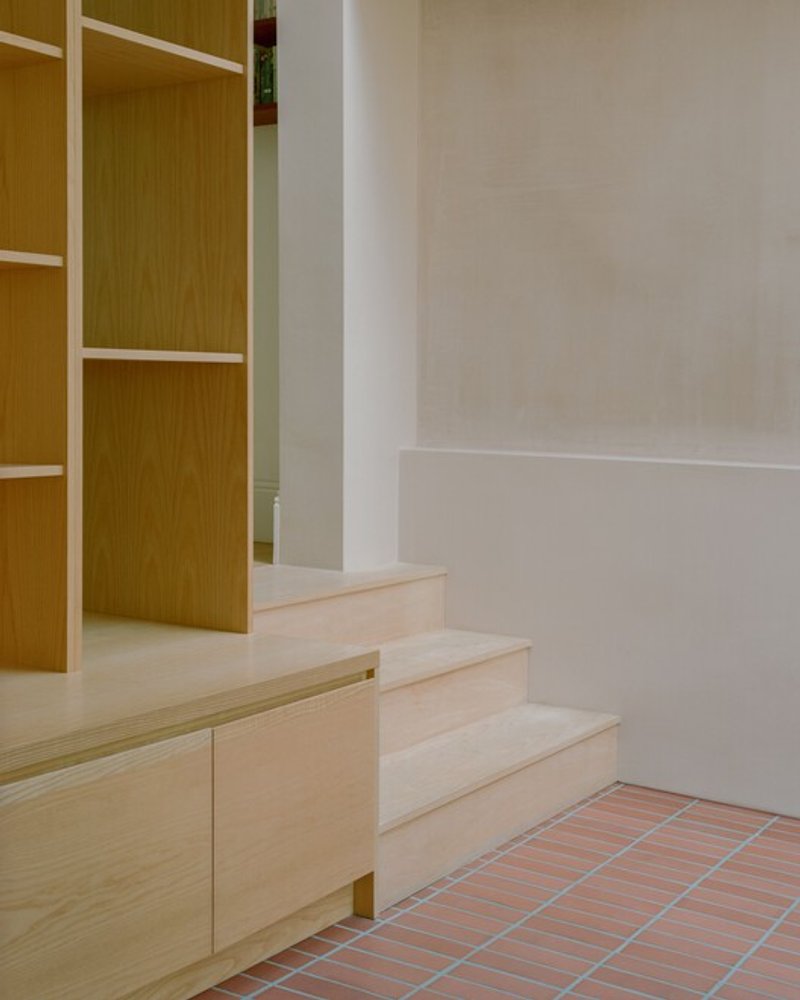
Rather than relying on walls to divide spaces, TYPE uses subtle shifts in level and open shelving to organize the ground floor. The change in floor height gently separates the dining area from the living spaces while maintaining visual continuity.
The rooflight above the dining table acts as a spatial anchor, defining the room through light rather than enclosure. This strategy allows daylight to penetrate deep into the existing plan, improving environmental quality throughout the house.
Revitalising the Garden
Alongside architectural interventions, the garden was completely redesigned. Previously neglected and overgrown, it now functions as an extension of the living space.
New landscaping, planting, and paved areas complement the brick and timber palette of the extension, creating a cohesive domestic landscape. The garden is no longer a peripheral space but an active part of daily routines.
Loft Conversion: Living Above the Roofline
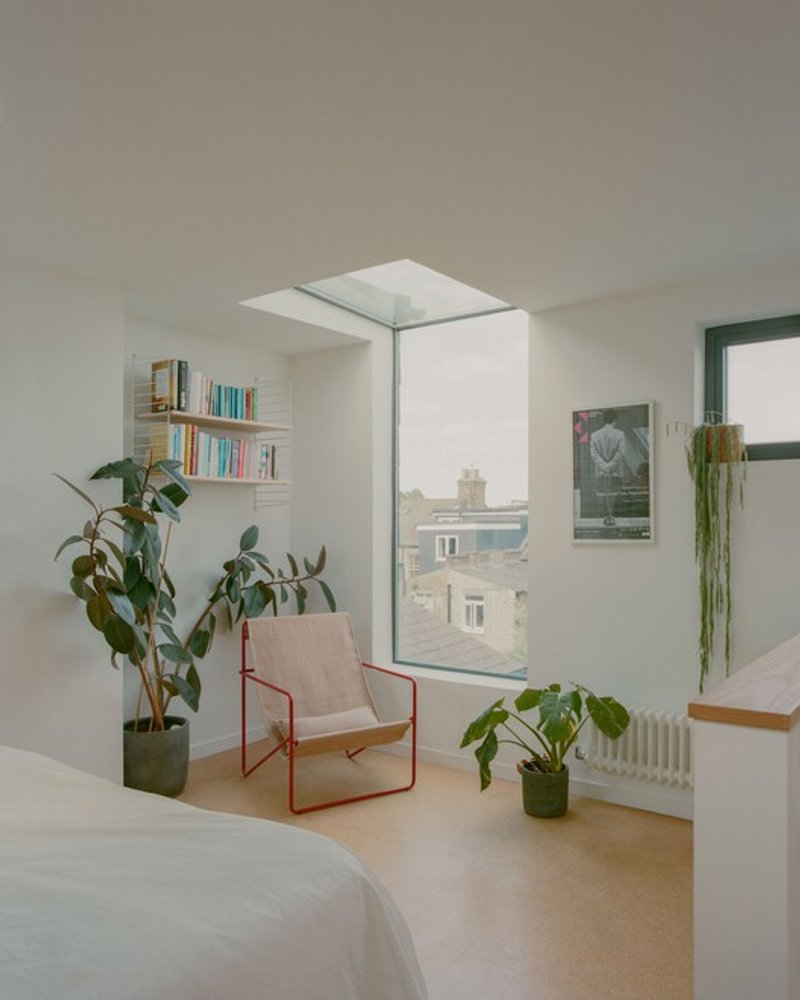
The project also includes a carefully conceived loft conversion that adds a bedroom, shared bathroom, and home office.
Unlike many restrictive attic spaces, this new floor is designed to feel expansive and open. TYPE achieved this by:
- Maximising head height
- Introducing a large vertical panoramic window
- Incorporating rooflights in key areas
The bedroom window frames long views of the city and sky, reinforcing a sense of elevation and openness. In the bathroom, a rooflight above the shower creates a striking connection to the outdoors, giving the sensation of bathing beneath the sky.
A Cohesive Domestic Atmosphere
Across all levels, bespoke joinery and consistent material detailing create visual and tactile continuity. Storage, shelving, and furniture are integrated into the architecture, reducing clutter and enhancing spatial clarity.
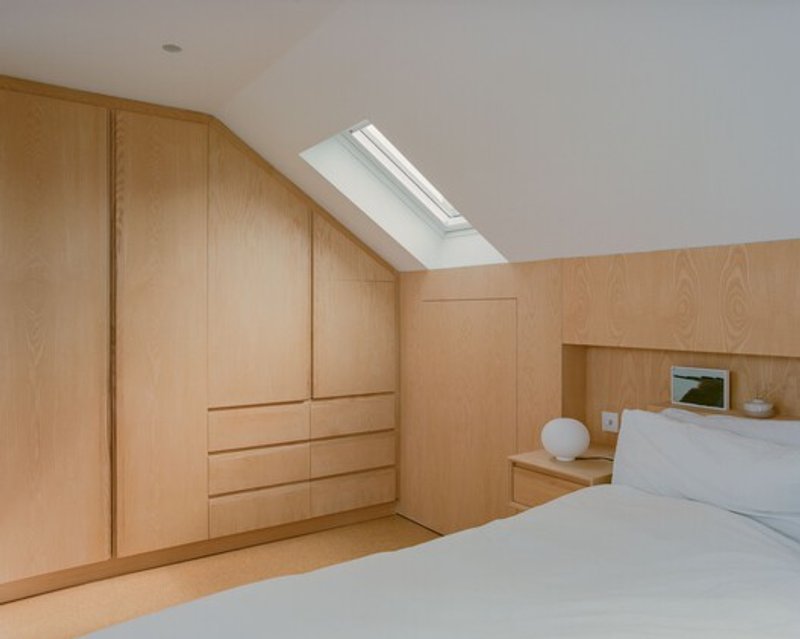
Lighting is designed to complement natural materials, reinforcing warmth and depth in the evenings. The interiors balance restraint with richness, offering calm spaces that remain engaging through texture and craft.
Terraced Houses as Adaptable Infrastructure
Denmark Hill forms part of TYPE’s ongoing research into the adaptability of terraced housing—a typology known for its longevity, efficiency, and capacity for transformation.
Built with economical means, Victorian terraces can be endlessly reconfigured to suit contemporary lifestyles. This project demonstrates how modest interventions, when carefully executed, can extend the life and relevance of existing housing stock.
Rather than demolishing and rebuilding, TYPE shows how incremental renewal can deliver sustainable and socially responsible urban development.
Sustainability Through Longevity
While the project does not rely on overt technological systems, its sustainability lies in material durability, adaptability, and long-term use.
Natural materials such as brick, cork, timber, and clay age gracefully and require minimal replacement. The improved daylighting and ventilation reduce reliance on artificial systems, while spatial flexibility allows the house to evolve with changing family needs.
All the Photographs are works of Lorenzo Zandri




Popular Articles
Popular articles from the community

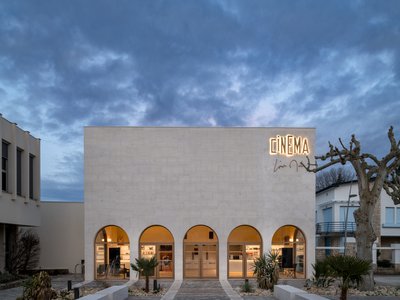
Louis Malle Cinema: A Limestone Cultural Landmark Revitalizing Community Life in Prayssac
Limestone cinema extension with public forecourt, blending heritage and modern design to create flexible cultural spaces and strengthen community interaction.
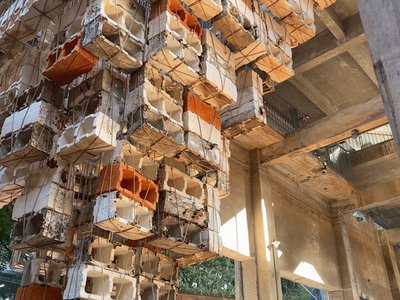
Inverted Architecture Installation by Studio Link-Arc: Exploring the Intersection of Architecture and Living Organisms
Inverted Architecture Installation by Studio Link-Arc blends mycelium, sustainability, inverted design, ecological cycles, and urban adaptive architecture in Shenzhen.
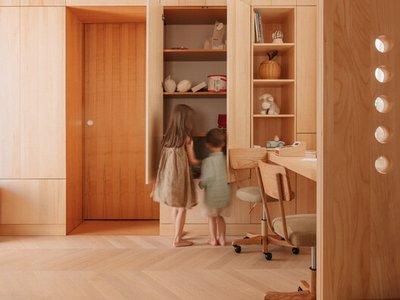
Treehouse Apartment: A Warm Timber Interior Blending Craft, Play, and Contemporary Living
Warm timber apartment with integrated treehouse, combining natural materials, craftsmanship, and playful design to create a flexible, family-oriented living environment.


The Ken Roberts Memorial Delineation Competition (Krob)
As the most senior architectural drawing competition currently in operation anywhere in the world, it draws hundreds of entries each year, awarding the very best submissions in a series of medium-based categories.


Similar Reads
You might also enjoy these articles
The Ken Roberts Memorial Delineation Competition (Krob)
As the most senior architectural drawing competition currently in operation anywhere in the world, it draws hundreds of entries each year, awarding the very best submissions in a series of medium-based categories.

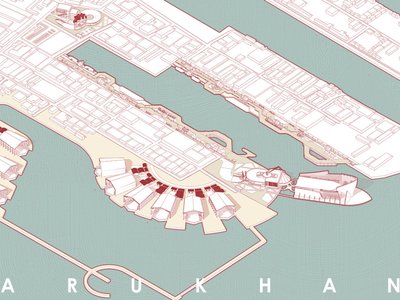
Waterfront Redevelopment and Urban Revitalization in Mumbai: Forging a New Dawn for Darukhana
A transformative waterfront redevelopment project reimagining Darukhana’s shipbreaking heritage into an inclusive urban future.

OUT-OF-MAP: A Call for Postcards on Feminist Narratives of Public Space
Rhizoma Design and Research Lab invites artists, designers, architects, researchers, and students to reflect on how feminist perspectives can reshape public space. Selected works will be exhibited in Barcelona, October 2026. Submissions open until 15 April 2026.

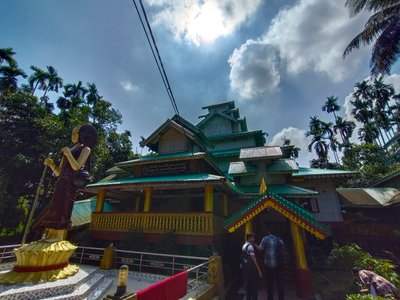
Documentation Work on Buddhist Wooden Temple
Architectural syncretism and cultural hybridity: A comparative study of the Buddhist temples in Chattogram Hill tracks

Explore Architecture Competitions
Discover active competitions in this discipline




The International Standard for Design Portfolios


The Global Benchmark for Architecture Dissertation Awards


The Global Benchmark for Graduation Excellence


Challenge to reimagine the Iron Throne
Comments (0)
Please login or sign up to add comments
No comments yet. Be the first to comment!