
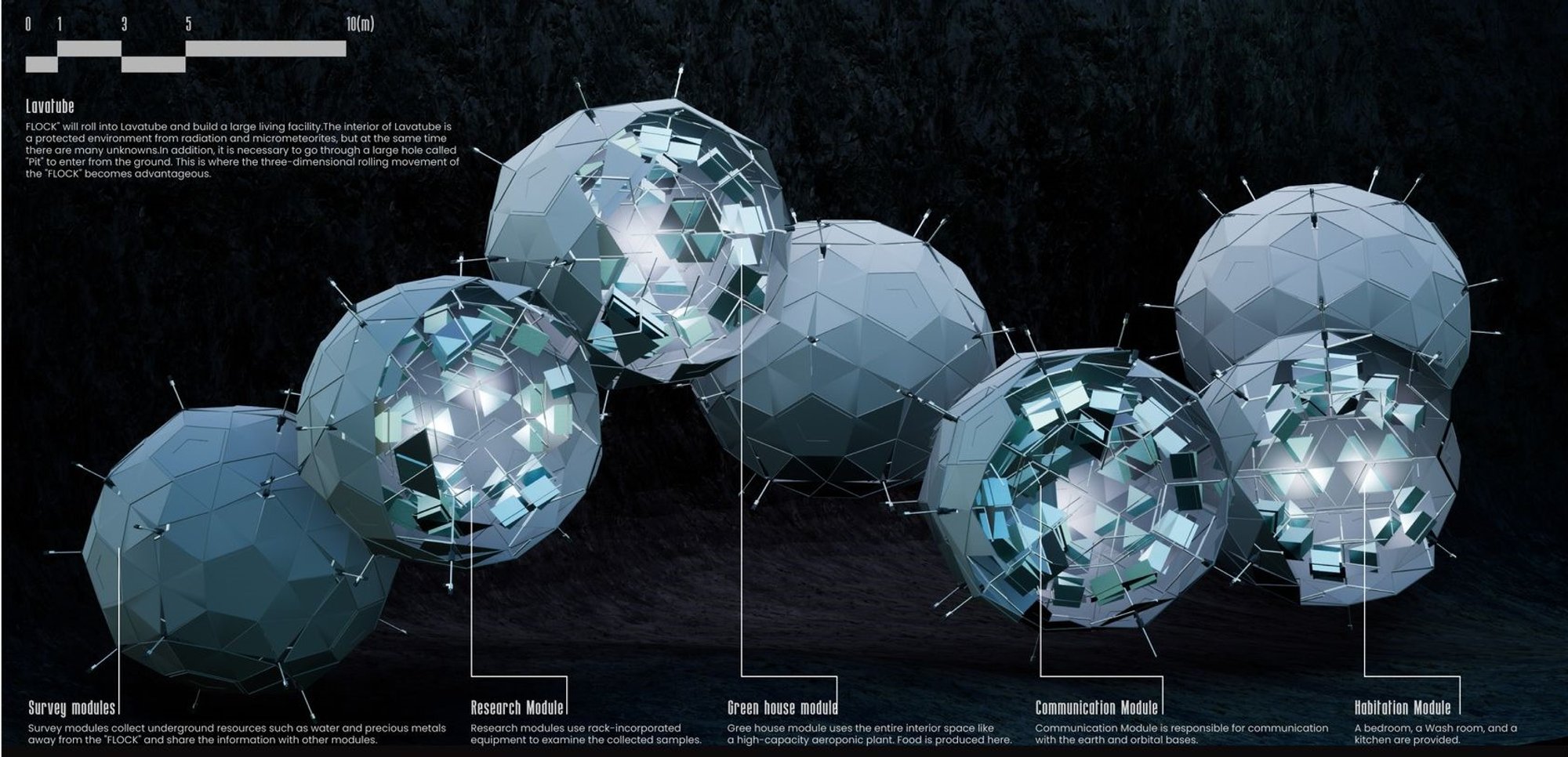
Exploring the Future of Lunar Architecture: The FLOCK Project
The innovative FLOCK lunar habitat project, revolutionizing lunar architecture with modular, adaptive construction methods.

The FLOCK (Fully Lunar Operational Construction Kinematics) project, created by Mizuguchi Takashi, stands as a groundbreaking concept in the field of lunar architecture. This innovative proposal was shortlisted entry in the prestigious Moon Base 2124 competition, showcasing its potential to revolutionize the way humans might live and work on the Moon. Utilizing advanced geometric shapes and cutting-edge technologies, FLOCK aims to provide a sustainable and adaptable habitat for future lunar explorers. In this article, we delve into the intricate details of the FLOCK project, exploring its design, deployment, and the technologies that make it a viable solution for lunar habitation.
The Concept of FLOCK
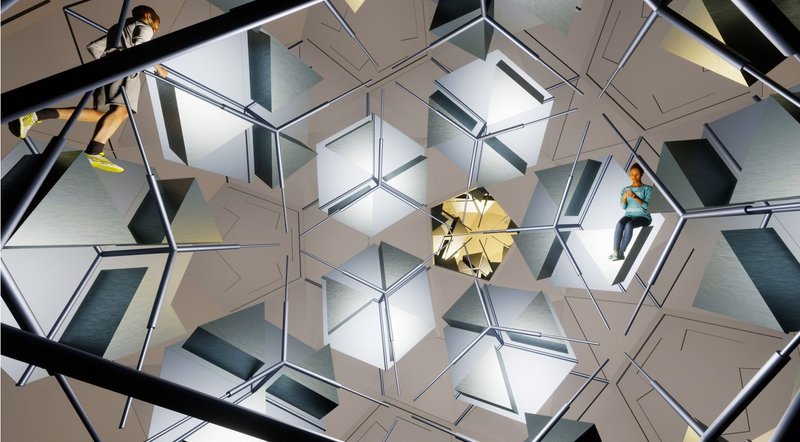
Multi-Directional Architecture
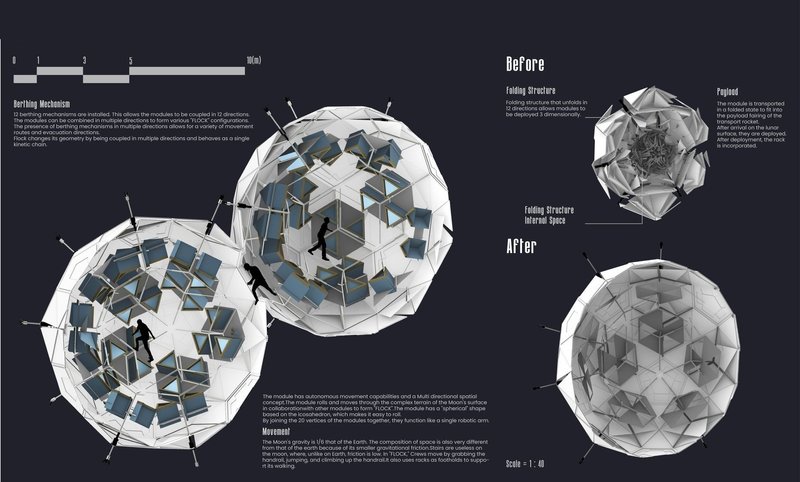
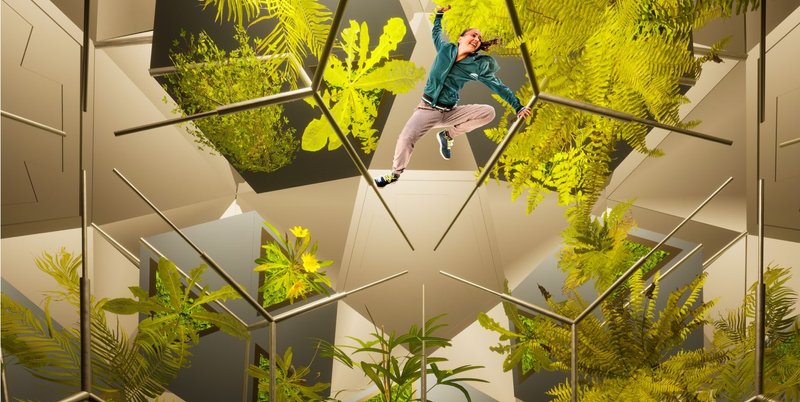
The core concept of FLOCK is its multi-directional architecture, which is crucial in the low-gravity environment of the Moon. The Moon's gravity, which is only one-sixth that of Earth's, significantly impacts how structures and movement are conceived. Traditional architectural elements like stairs and floors become impractical due to reduced frictional force against human movement. Instead, FLOCK proposes a system where movement is facilitated by skipping, climbing walls, and utilizing handrails placed along the pressurized walls of the habitat. This unique approach ensures that inhabitants can move efficiently within the habitat, leveraging the Moon's low gravity.
Kinematic Architecture
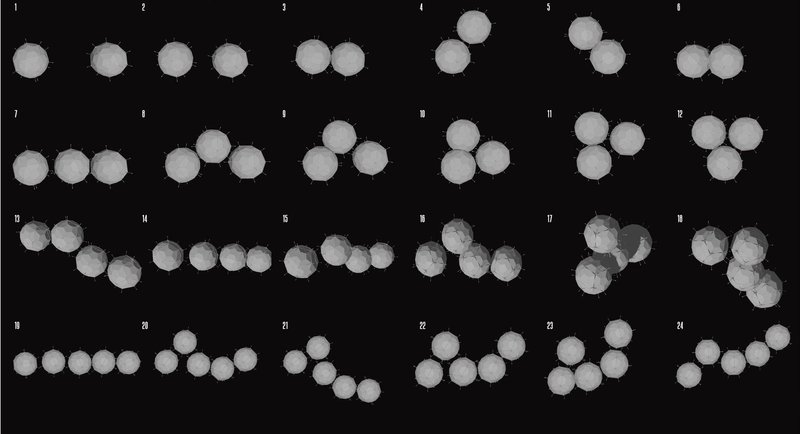
The second pivotal concept of FLOCK is its kinematic architecture. The design is based on the rhombic icosahedron, a geometric shape with a sphericity close to that of a sphere, which allows the modules to roll easily. Each module is equipped with a "hand" at the apex, enabling it to grip the ground, adjust its rolling speed, and interact with other modules. This mechanism allows the modules to move autonomously and form larger structures by connecting with other modules. This dynamic and adaptive system is essential for exploring the lunar surface and establishing expansive habitats.
Site Selection: The Lavatube Advantage
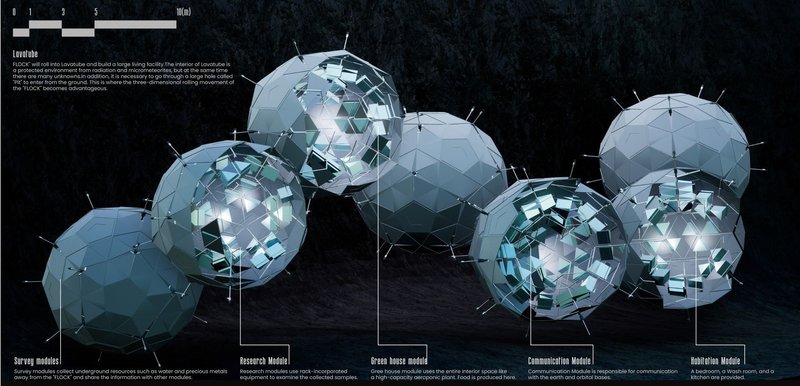
FLOCK is designed to be deployed in lunar lavatubes—large tunnels formed by ancient volcanic activity. These structures offer several advantages:
Protection from Radiation and Meteorites: Located more than 40 meters below the lunar surface, lavatubes provide excellent shielding from harmful space radiation and micrometeorite impacts.
Thermal Stability: The subterranean environment of lavatubes ensures a more stable temperature, making it more comfortable for human habitation.
Spacious and Expandable: Some lavatubes are over 50 meters in diameter and stretch for several kilometers, offering ample space for building extensive habitats.
Accessing these lavatubes involves descending through a large pit on the lunar surface. FLOCK modules are designed to act like a single robotic arm, gripping the sides of the pit and rolling down to the bottom, where they can then deploy and expand.
Innovative Construction Technologies
FLOCK leverages two major technological advancements to achieve its goals:
Folding Structure Technology
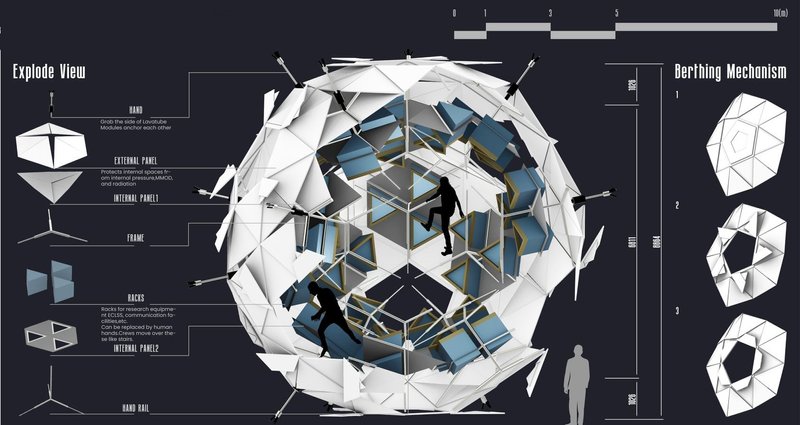
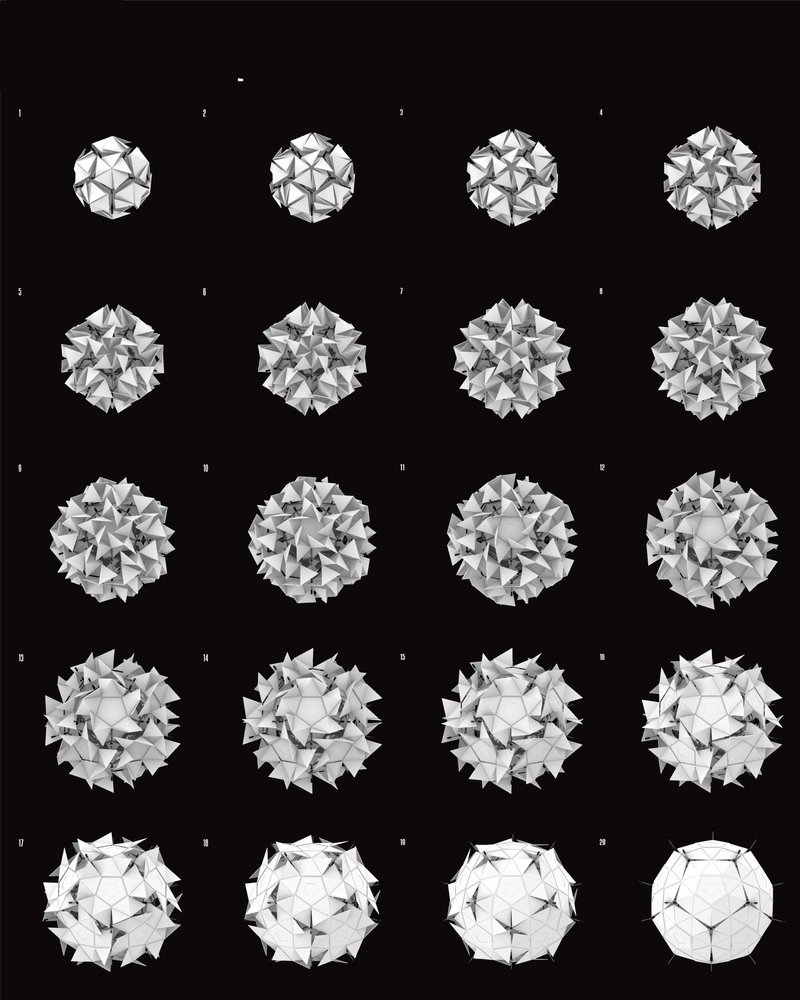
Each module in the FLOCK system is composed of panels with a folding mechanism, allowing the structure to be compact during transportation and then unfold upon deployment. This design ensures that the modules can be efficiently packed into payload fairings of transport rockets, such as the SpaceX Starship, and then expand to form large living spaces once they reach the lunar surface.
Swarm Robotics
The use of swarm robotics is a key innovation in the FLOCK project. These modular robots can self-assemble in three dimensions and navigate large, complex terrains. The Moon's low gravity makes it feasible to employ these large-scale swarm robotics for construction. The modules can move autonomously, adjusting to unstable ground conditions and ensuring that the habitat remains secure and functional.
Detailed Module Design and Deployment
Sectional Views and Movement
The sectional views of the FLOCK modules reveal the intricate design that supports autonomous movement and modular connectivity. Each module includes internal panels for equipment and handrails for human mobility. The modules can couple in 12 different directions, allowing for flexible configurations and easy reconfiguration as needed. This multi-directional coupling also provides numerous routes for movement and evacuation, enhancing safety.
Deployment Process
The deployment process of FLOCK modules is a marvel of engineering. Transported in a folded state, the modules fit snugly into rocket payloads. Once on the lunar surface, the folding structure allows the modules to unfold in 12 directions, forming a three-dimensional space. This deployment strategy not only maximizes space but also ensures rapid and efficient construction of the habitat.
Mobile Construction and Adaptability
FLOCK modules are designed for mobility, capable of rolling over the lunar surface like dumplings. This mobility is critical for adapting to the uneven and unpredictable terrain of the Moon. The modules can change their geometry and move as a cohesive unit, providing a flexible and responsive living environment. This adaptability is particularly important in the unstable conditions of lavatubes, where the modules must adjust to shifts in the ground and potential collapses.
Interior and Greenhouse Views
The interior views of the FLOCK modules highlight the innovative use of space and technology. The modules are equipped with racks and handrails, enabling inhabitants to move efficiently in the low-gravity environment. The greenhouse module, in particular, showcases a high-capacity aeroponic system that allows for sustainable food production. This integration of living and agricultural spaces ensures that the habitat can support long-term human presence on the Moon.
The FLOCK project represents a visionary approach to lunar architecture, combining advanced geometric design with cutting-edge technologies to create a sustainable and adaptable habitat for future lunar explorers. By leveraging the unique conditions of the Moon and employing innovative construction methods, FLOCK paves the way for the next generation of space habitats. As we look towards the future of space exploration, projects like FLOCK will play a crucial role in making long-term human presence on the Moon a reality.



Popular Articles
Popular articles from the community

Atelier Macri Concept Store Interior Design by CASE-REAL
Atelier Macri store features a "ko" counter, walnut wood details, cork displays, blending retail, gallery, and seamless customer experiences.
A Contemporary Take on Iranian Residential Architecture
A modern interior design in Mashhad that reinterprets brick, light, and spatial flow to create a warm, contemporary residential architecture.

Solar Steam: A Climate-Responsive Architecture That Redefines the Monument
A climate-responsive memorial architecture that transforms heat, decay, and time into a living system reflecting humanity’s ecological impact.


The Ken Roberts Memorial Delineation Competition (Krob)
As the most senior architectural drawing competition currently in operation anywhere in the world, it draws hundreds of entries each year, awarding the very best submissions in a series of medium-based categories.


Similar Reads
You might also enjoy these articles
The Ken Roberts Memorial Delineation Competition (Krob)
As the most senior architectural drawing competition currently in operation anywhere in the world, it draws hundreds of entries each year, awarding the very best submissions in a series of medium-based categories.
A Contemporary Take on Iranian Residential Architecture
A modern interior design in Mashhad that reinterprets brick, light, and spatial flow to create a warm, contemporary residential architecture.
Franche-Comté Advanced School of Engineering by Dominique Coulon & associés, Besançon
A flexible engineering school immersed in woodland, combining concrete minimalism, adaptable spaces, and natural light to support evolving educational environments.


Documentation Work on Buddhist Wooden Temple
Architectural syncretism and cultural hybridity: A comparative study of the Buddhist temples in Chattogram Hill tracks


Explore Architecture Competitions
Discover active competitions in this discipline




The International Standard for Design Portfolios


The Global Benchmark for Architecture Dissertation Awards


The Global Benchmark for Graduation Excellence


Challenge to reimagine the Iron Throne
Comments (0)
Please login or sign up to add comments
No comments yet. Be the first to comment!