
Franklin Village by Sauerbruch Hutton: A Vision of Sustainable Residential Architecture in Mannheim
This article explores Franklin Village’s sustainable residential architecture, transforming a historic military site into a vibrant urban community.


Transforming a Historic Military Site into a Sustainable Residential Community
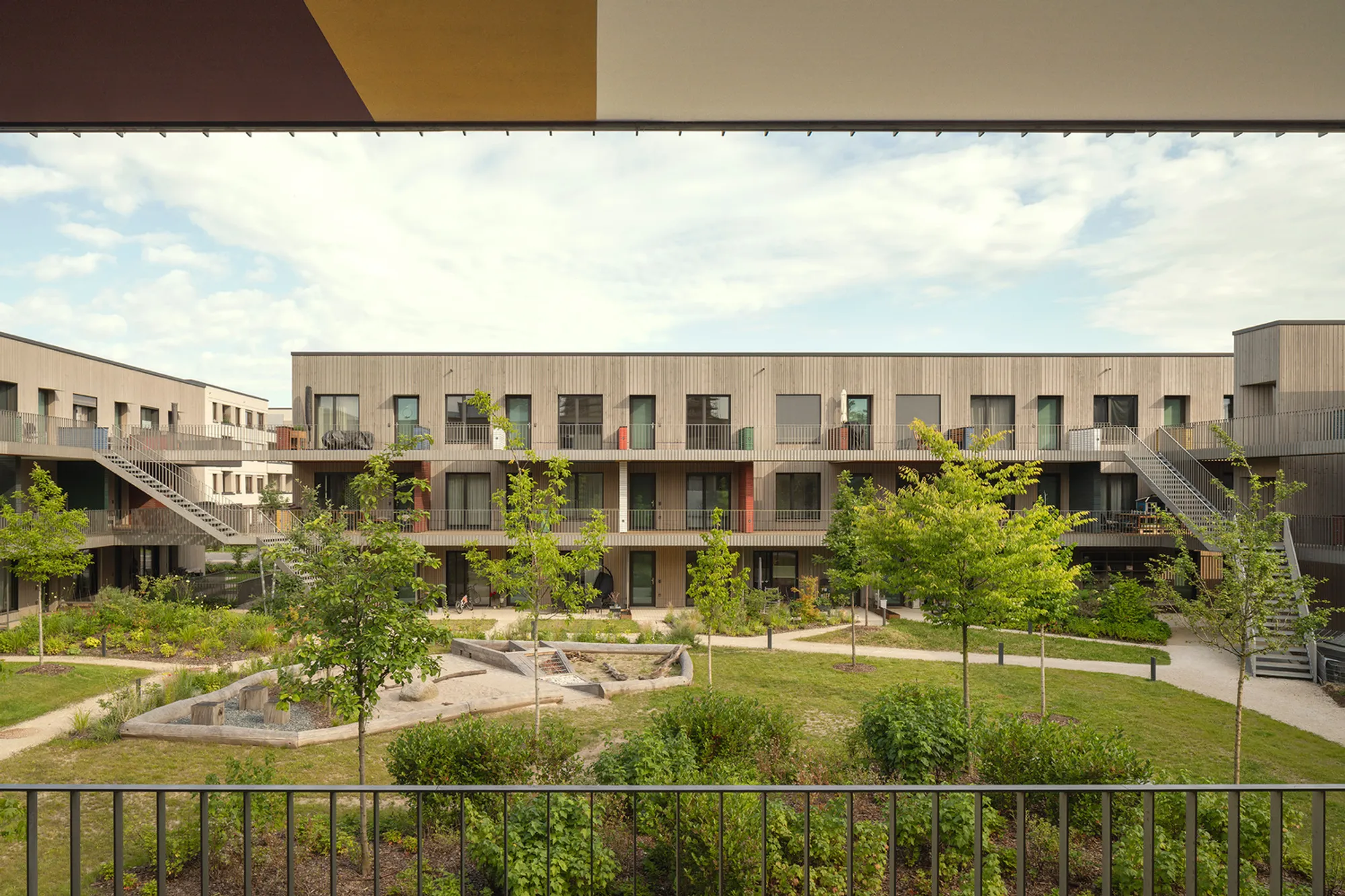
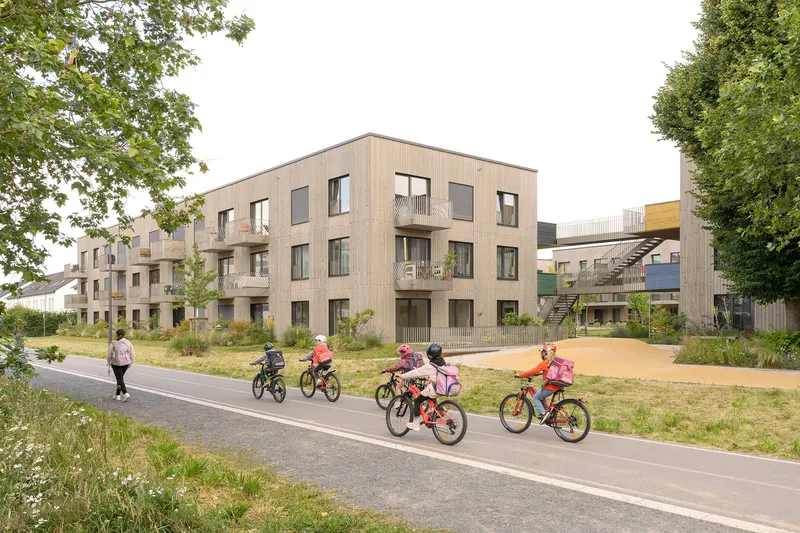
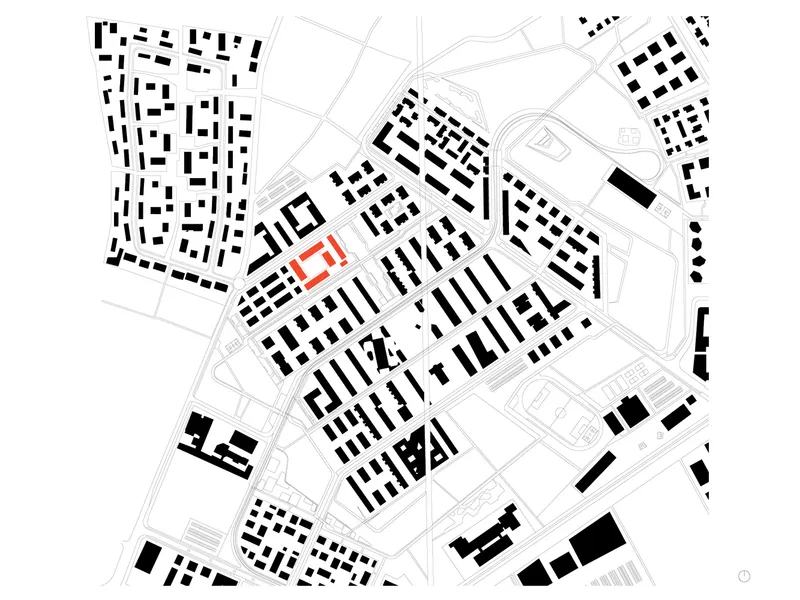
Franklin Village, designed by Sauerbruch Hutton, is a flagship project of sustainable residential architecture located in the northeast of Mannheim, Germany. This development is part of the larger transformation of Benjamin Franklin Village, a former US Armed Forces housing site built in the 1950s, into a vibrant urban district for approximately 10,000 residents. Surrounded by a vast park landscape, the masterplan integrates work, care, education, cultural, leisure, and local recreational functions, creating a lively, multifunctional neighborhood shaped by sustainability and social integration.
Architectural Design for Social Integration and Diversity
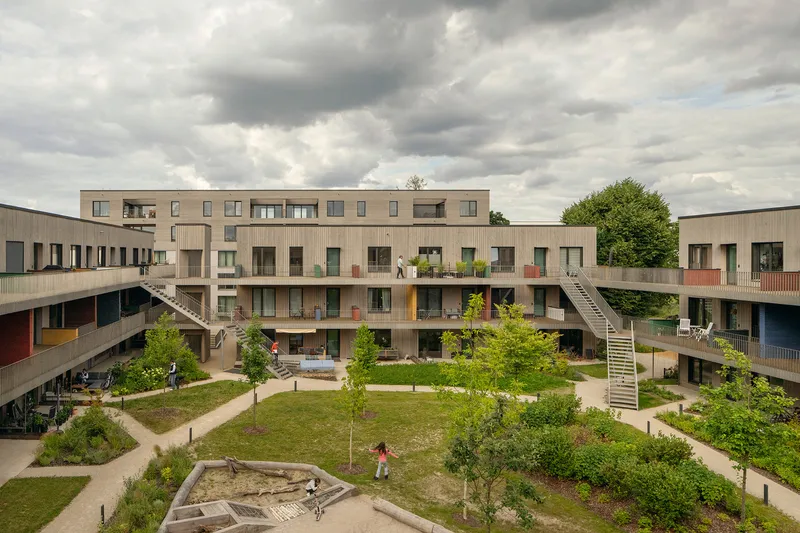
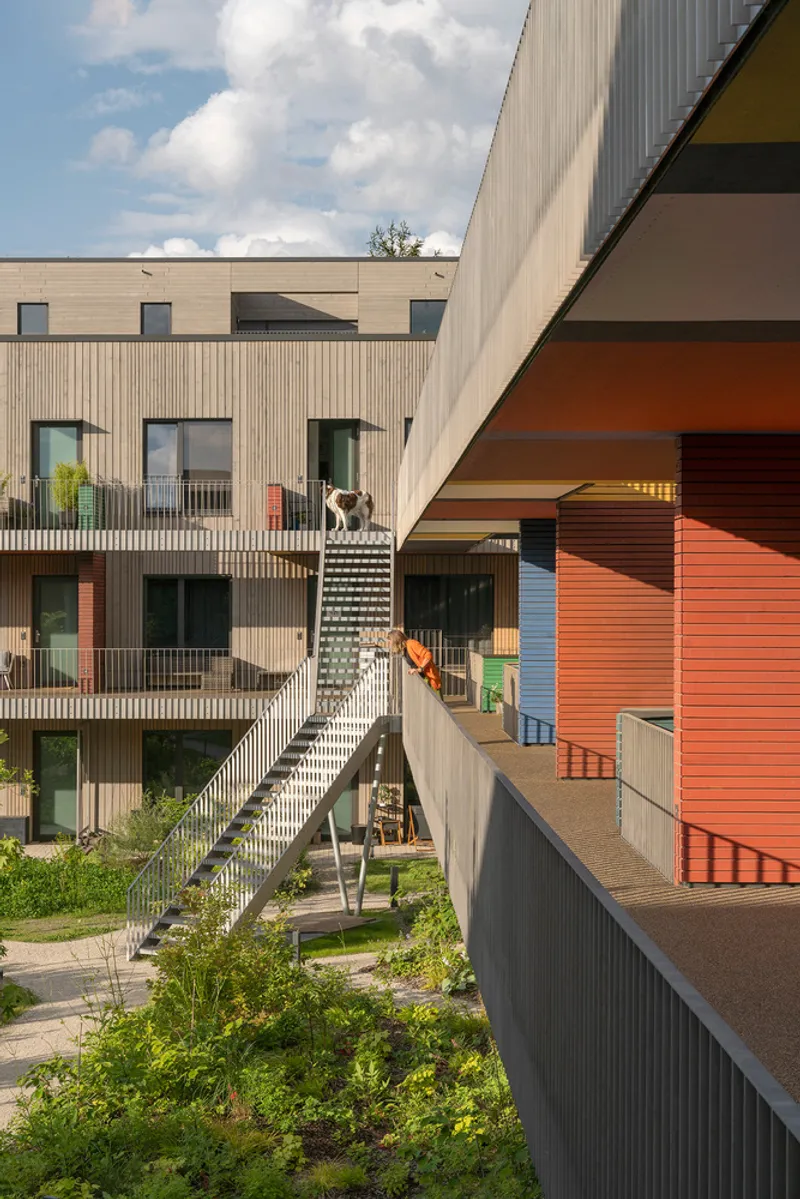
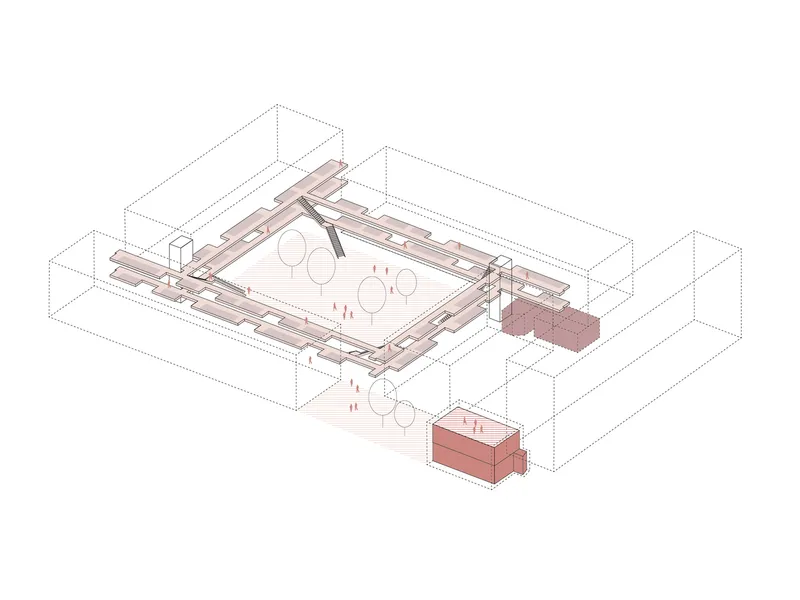
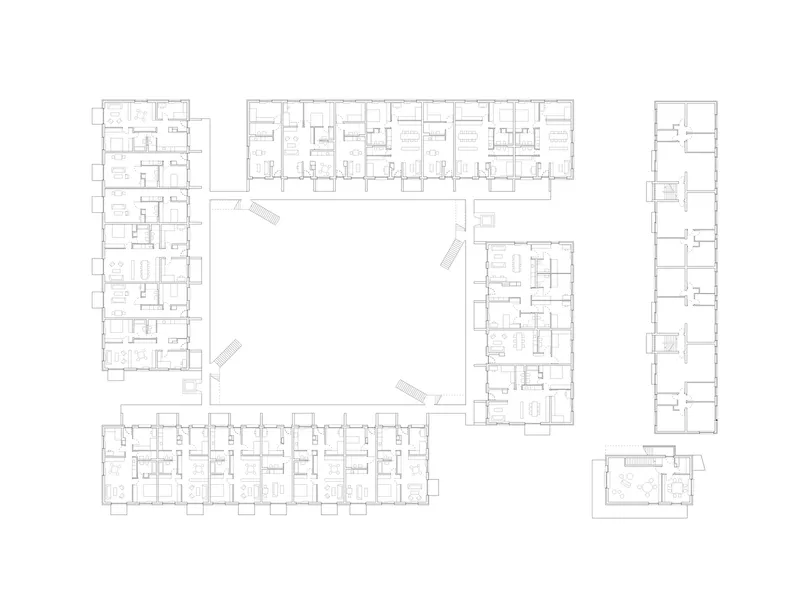
The project emphasizes target group diversity and social inclusivity by offering a wide range of residential typologies. Sauerbruch Hutton’s design introduces four new buildings organized around a shared courtyard, accommodating cluster housing, family units, and compact single apartments. These housing types address varied living needs while promoting affordability and adaptability.
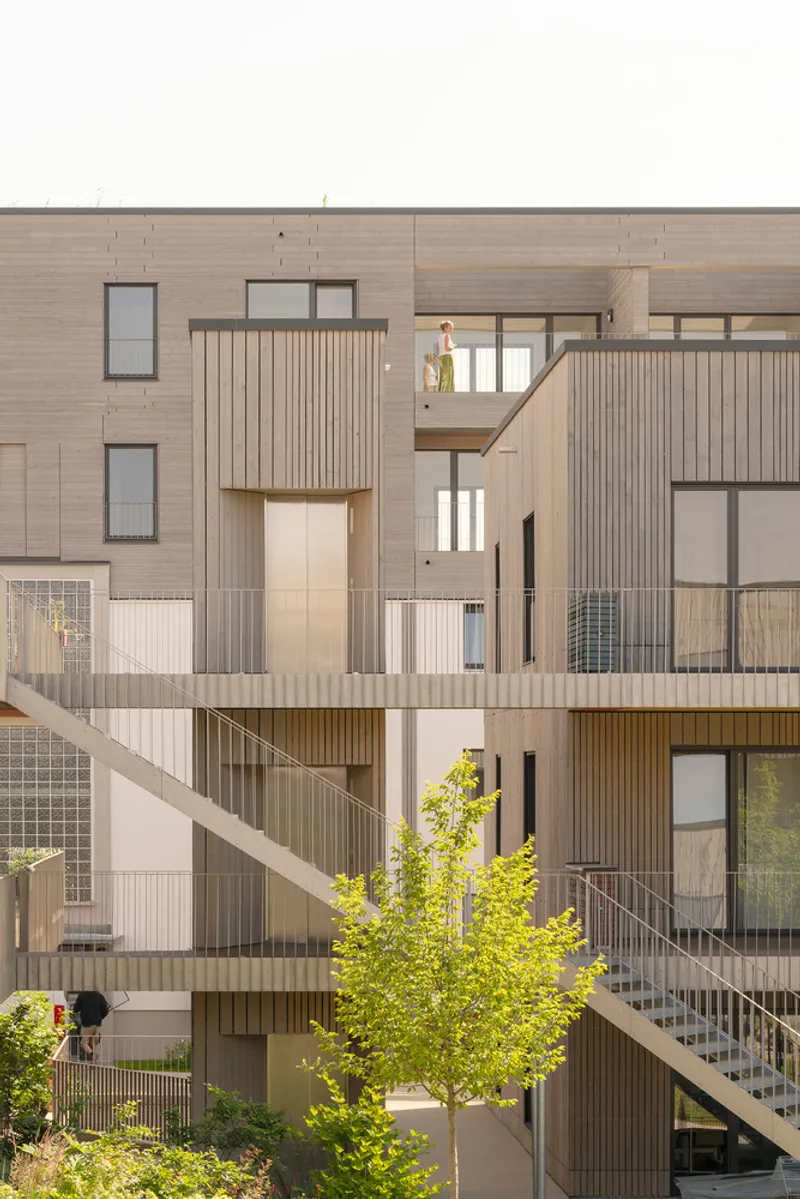
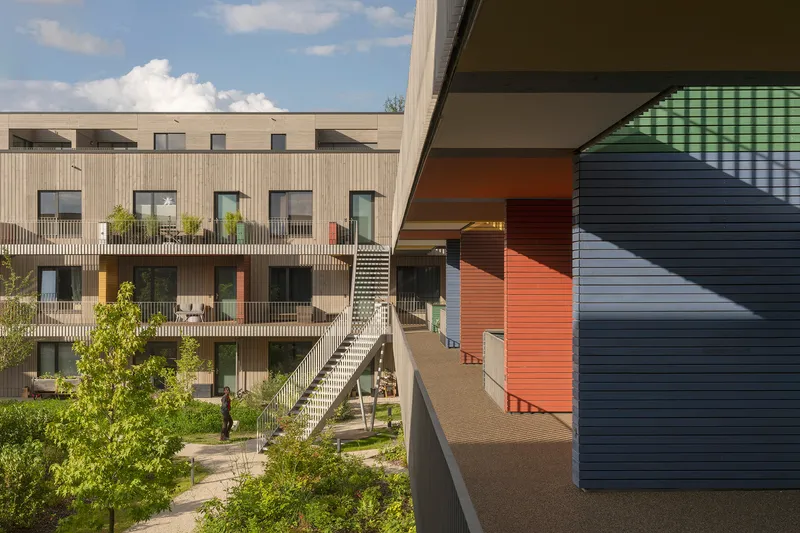
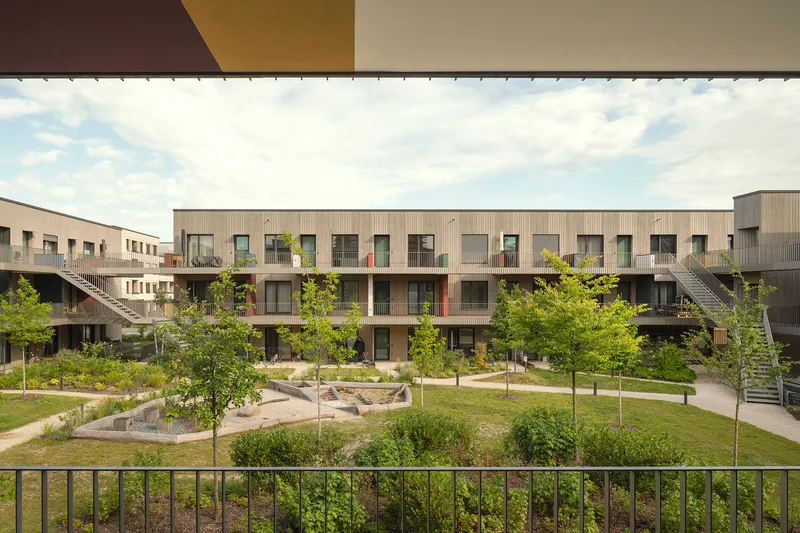
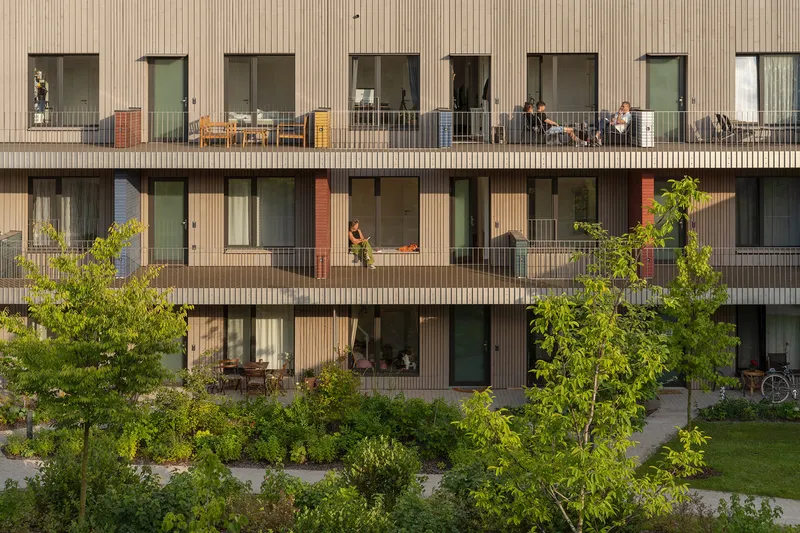
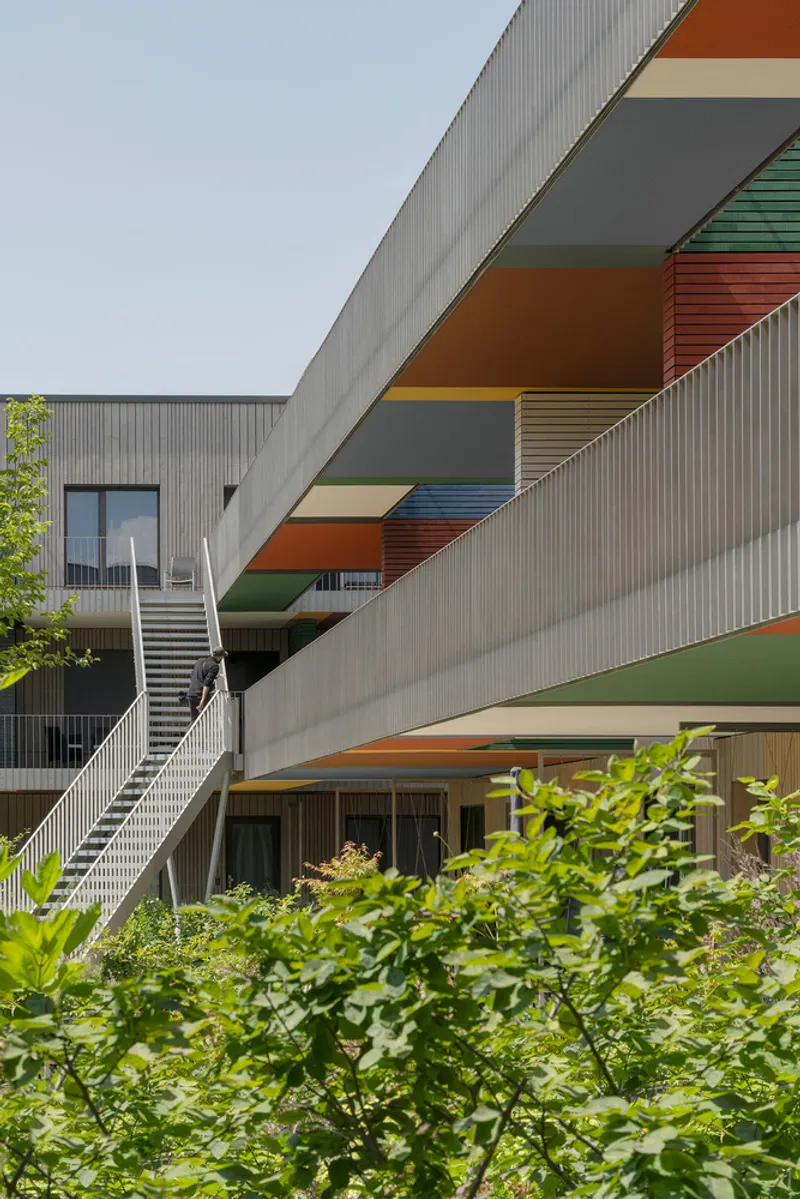
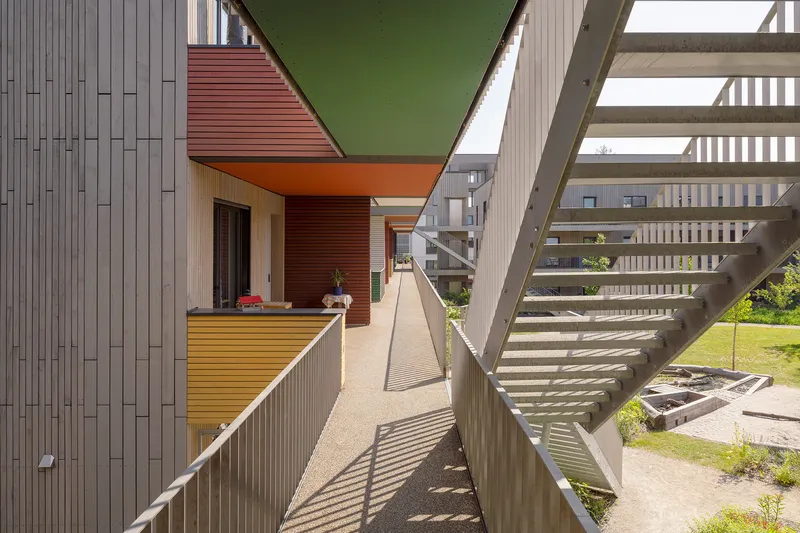
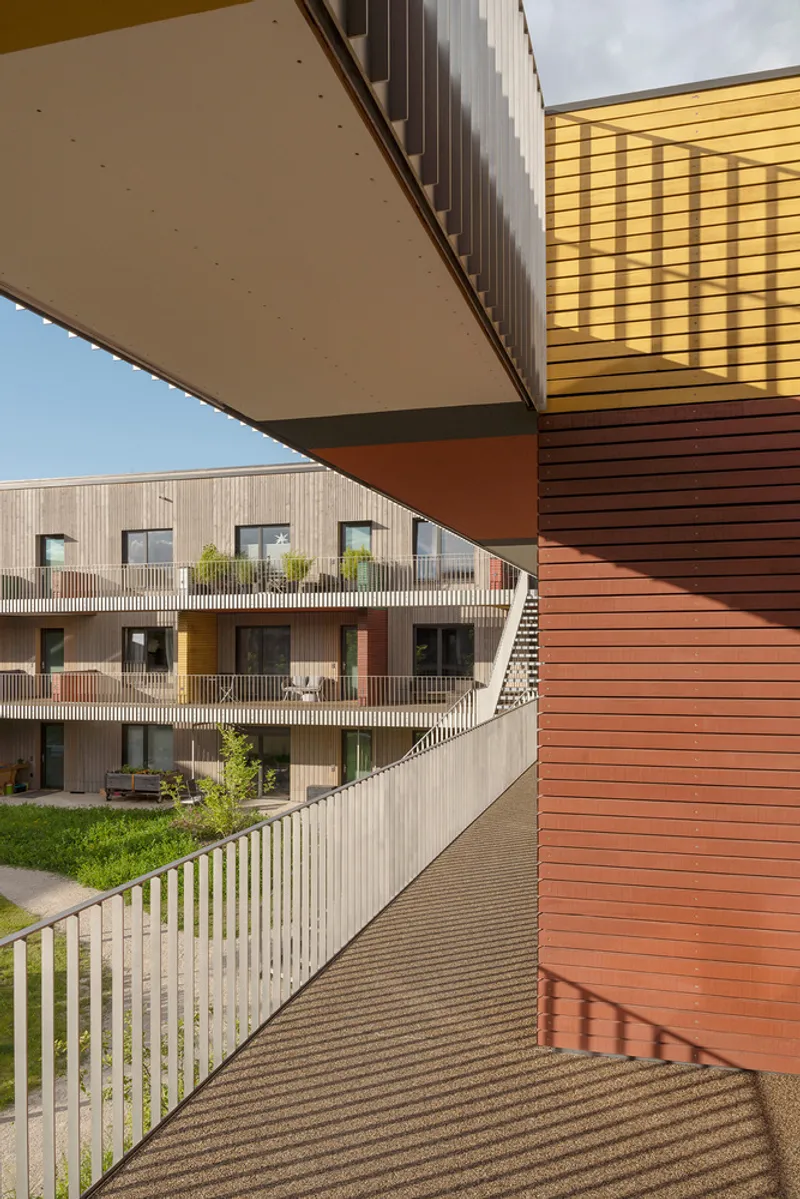
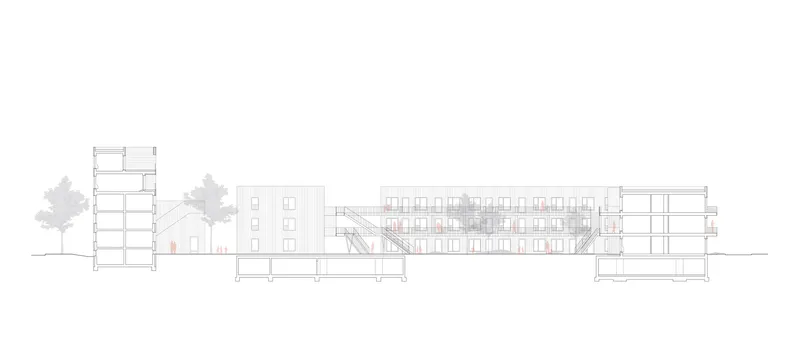
The buildings are connected through suspended, column-free walkways slightly detached from the façades, forming generous terraces that encourage spontaneous interactions and outdoor living. These terraces, accentuated with a vibrant color palette on soffits and bulkheads, function as semi-public “outdoor rooms” that enrich the daily life of residents and foster a strong sense of community.
The Quartiersforum: A Social and Functional Heart
At the center of Franklin Village lies the Quartiersforum, conceived as an “extended living room” for the neighborhood. This communal hub integrates a kitchen, lounge, co-working spaces, workshops, and a rooftop terrace, providing a focal point for social exchange, creativity, and neighborhood solidarity. The Quartiersforum exemplifies how sustainable residential architecture can weave together physical space and social infrastructure to strengthen urban communities.
Timber Construction and Flexibility for Sustainable Living
The architectural approach embraces sustainability through timber frame construction and timber composite floors, ensuring both environmental responsibility and construction efficiency. An existing building on the northeast edge of the site has been renovated and vertically expanded with two new timber-constructed floors, demonstrating a balance between preservation and innovation.
The timber grid system allows remarkable flexibility in floor plans, enabling various apartment layouts tailored to distinct household needs. The design incorporates north-south orientations with reduced depths to optimize natural daylight, improving energy efficiency and interior comfort. By offering multiple apartment sizes and adaptable spatial configurations, the project ensures long-term resilience, allowing future reconfigurations in response to evolving demographic and societal demands.
A Model for Sustainable Urban Redevelopment
Franklin Village stands as a powerful example of how sustainable residential architecture can transform underutilized or historic sites into dynamic, inclusive urban neighborhoods. Sauerbruch Hutton’s design merges architectural innovation, environmental consciousness, and social inclusivity, creating a living environment that addresses both present and future urban challenges. This project not only enriches Mannheim’s architectural landscape but also offers a replicable model for sustainable urban redevelopment across Europe and beyond.
All Photographs are works of Jan Bitter



Popular Articles
Popular articles from the community


Hill & Cross Opera: Sculptural Opera House Architecture Shaped by Tallinn’s Landscape and Identity
Hill & Cross Opera reimagines opera house architecture in Tallinn through its sculptural hill, civic plaza, glass wave and a luminous cross.

The Musturak Paradise: Senior Living Architecture for a Connected Future in Temara, Morocco
The Musturak Paradise reimagines senior living architecture in Temara via private homes, social spaces, culture, community, and shared care.

The Earth Pod: 3D Printed Homes for Resilient Refugee Communities
The Earth Pod reimagines refugee housing through 3D printed homes made from clay, combining resilience, self-sufficiency, and rapid shelter.

Riyadh For All: Intergenerational Urban Design for Active Aging in Rabat
Riyadh For All reimagines urban design in Rabat with intergenerational co-living, adaptive courtyards, and Moroccan cultural exchange today.

Similar Reads
You might also enjoy these articles


Hodi-Mandai Geram
Project Function: Preservation and revitalization of the Intangible heritage and socio-spatial identity of the Hodi by Housing, Cultural Memory Center, Sacred Grove, landscape, local tourism economy


Olio Towers: A Mid-Rise for Performers That Fuses Housing, Rehearsal, and Stage
Located blocks from Houston's Theater District, this modular tower stacks living units around a central performance atrium.

Oasis: Modular Green Housing Carved into Dhaka's Urban Fabric
A shortlisted Plugin Housing entry reclaims unauthorized settlements in Dhaka with stepped concrete volumes, green roofs, and ventilation-driven design.

Black Hole: A Floating Megastructure for the Post-Physical Era
Emiliano Mazzarotto envisions a spherical, self-scaling arena where e-sports, digital hotels, and holographic stadiums replace traditional public space.

Explore Architecture Competitions
Discover active competitions in this discipline



Challenge to reimagine the Iron Throne


Photograph architecture without architects


Illustrate the lost glory of Angkor Wat - Render Challenge


Design challenge to reuse E-waste
Comments (0)
Please login or sign up to add comments
No comments yet. Be the first to comment!