
Full House by WARchitect: A Multi-Generational Haven
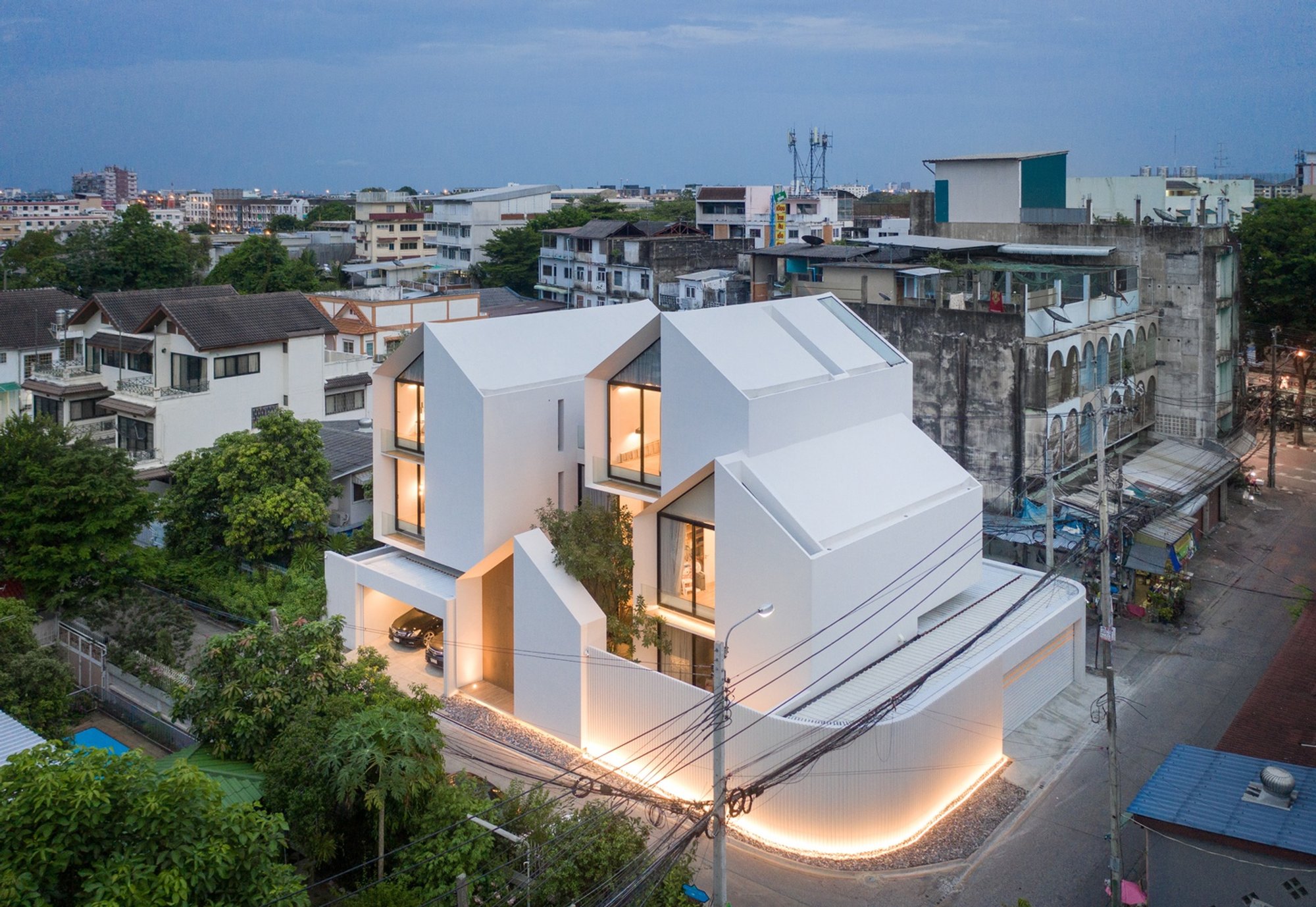
The Full House by WARchitect is a multi-generational home blending modern design, functionality, and warmth in Bangkok, Thailand.

Designing a Family-Oriented Space
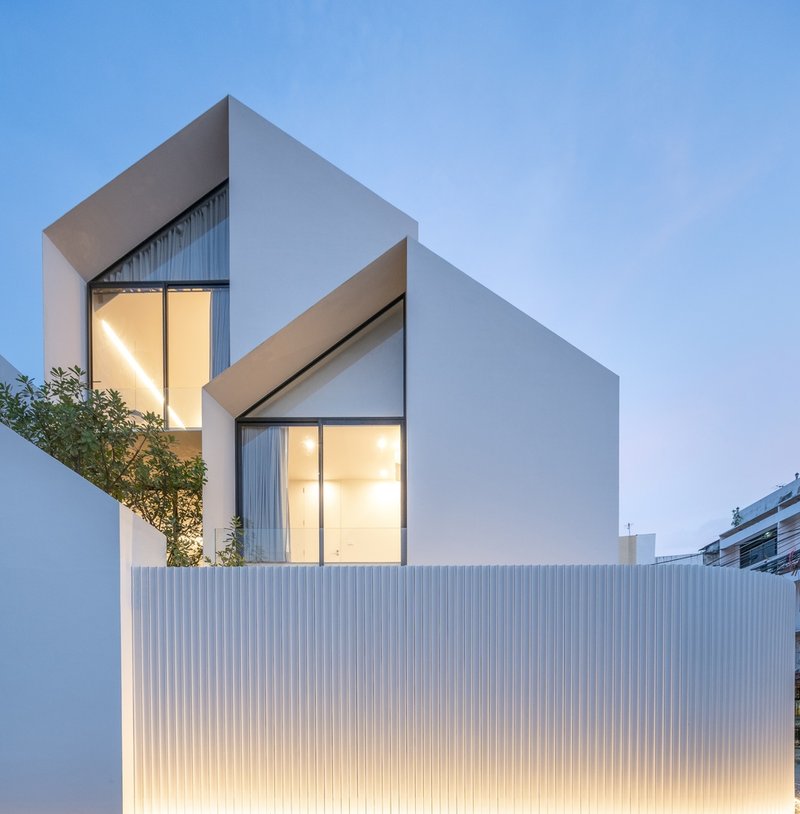
The Full House, designed by WARchitect in Bangkok, Thailand, is a striking example of a multi-generational home that seamlessly blends functionality and warmth. Although it appears as a single gable-shaped structure from the exterior, the house is cleverly divided into two residences for two brothers and their families, with a shared connection to their parents, the family's focal point. This home, which accommodates up to ten people, balances individuality and togetherness, making it a model for contemporary family living.
Context and Challenges
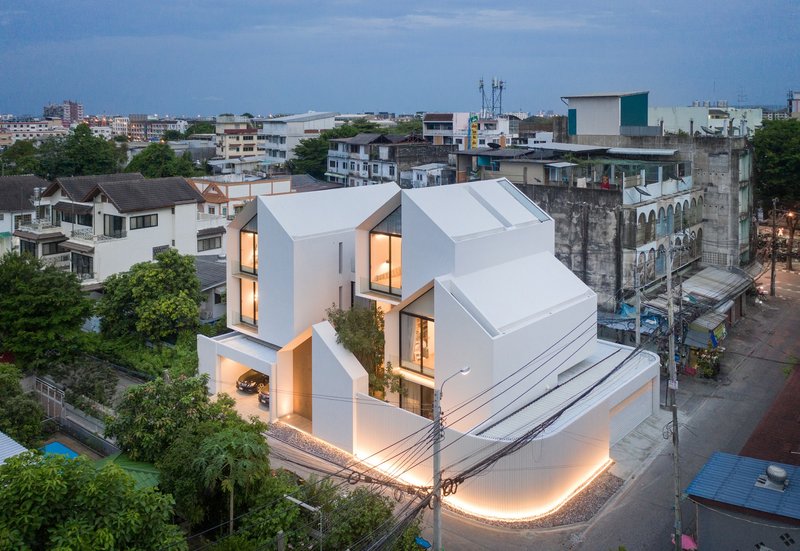
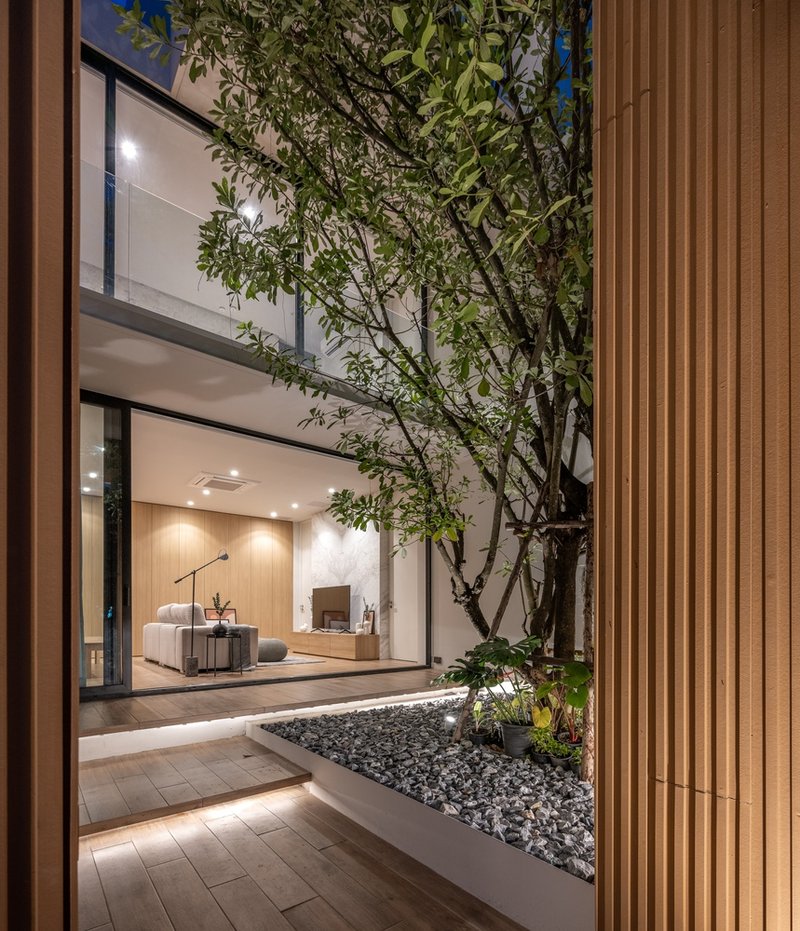
Situated on a plot bordered by roadways on three sides, the house required meticulous planning to maximize its usable space while adhering to setback regulations. The design needed to integrate privacy, natural light, and communal areas within a relatively small footprint. WARchitect’s solution was to craft a three-story layout featuring essential spaces like living rooms with sliding doors to courtyards, multiple bedrooms for the growing family, and a shared kitchen connecting the two homes.
Architectural Design
The Gable Form: A Symbol of Warmth
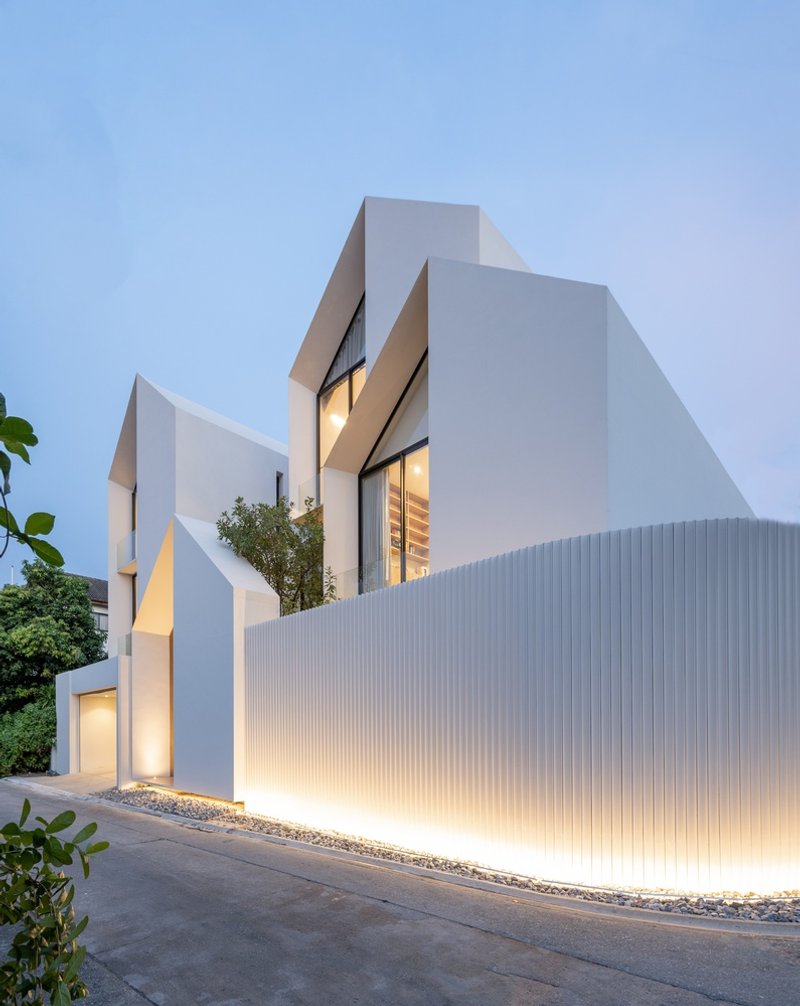
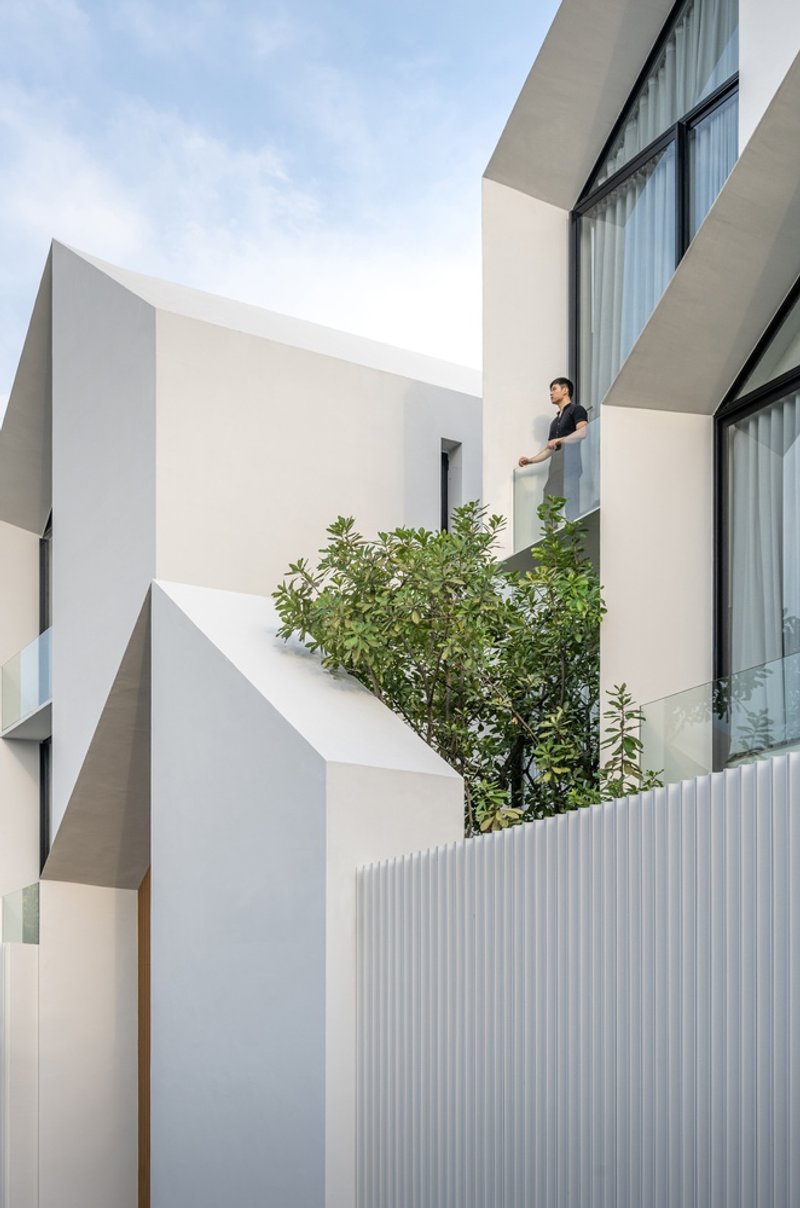
The defining feature of the Full House is its gable-shaped design, which evokes the image of a "warm house." To avoid a cold, disproportionate appearance, the architects divided the gable into two parts: one side as a solid wall and the other as an open, airy space. Thin steel edges frame the gable forms, emphasizing the clean, modern lines of the structure. The house's design employs four identical gable forms, arranged methodically to create a cohesive yet dynamic composition.
Natural Light and Ventilation
The house's orientation maximizes its interaction with natural light. The north-facing facade, free from obstructive electrical lines, serves as the home's primary visual focus. To mitigate direct sunlight from the east and west, the architects used two layers of thick walls without windows, channeling light into interior courtyards instead. This strategy not only enhances privacy but also creates a controlled and harmonious environment.
Structural Simplicity and Balance
The house’s layout revolves around six primary column grids, ensuring structural stability and symmetry. Each gable section is carefully proportioned, with varied depths to add dimension and visual interest. The juxtaposition of solid and open spaces creates a balance between privacy and openness, making the home suitable for both communal and personal moments.
Materials and Aesthetic
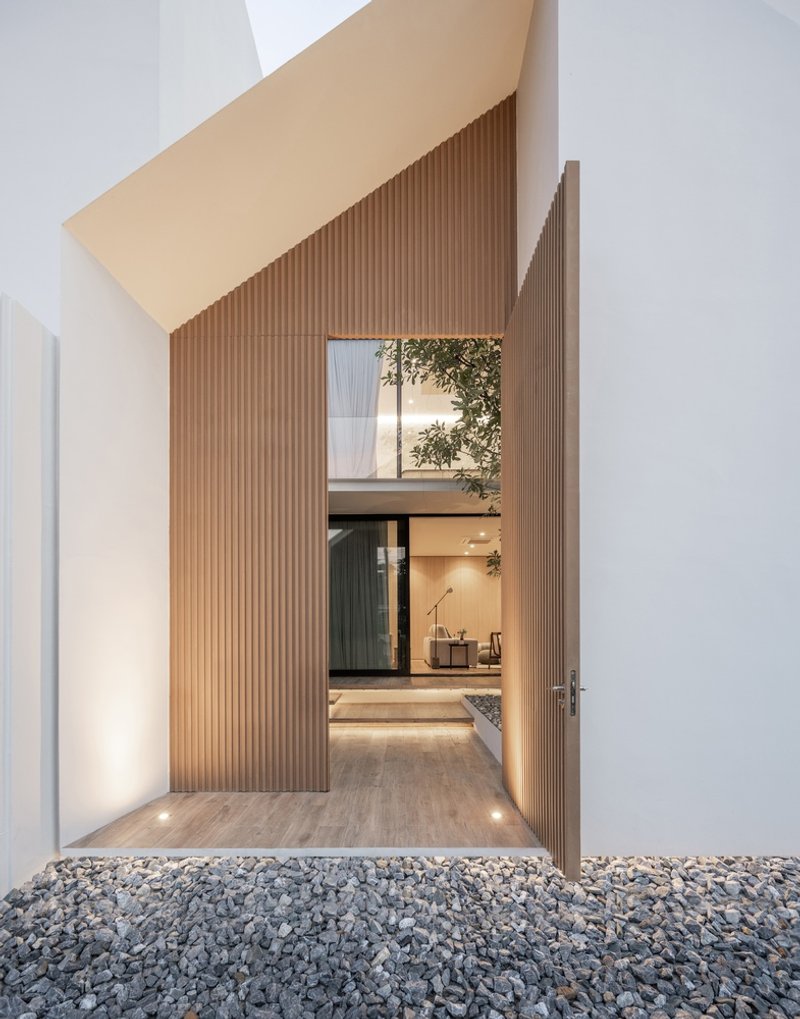
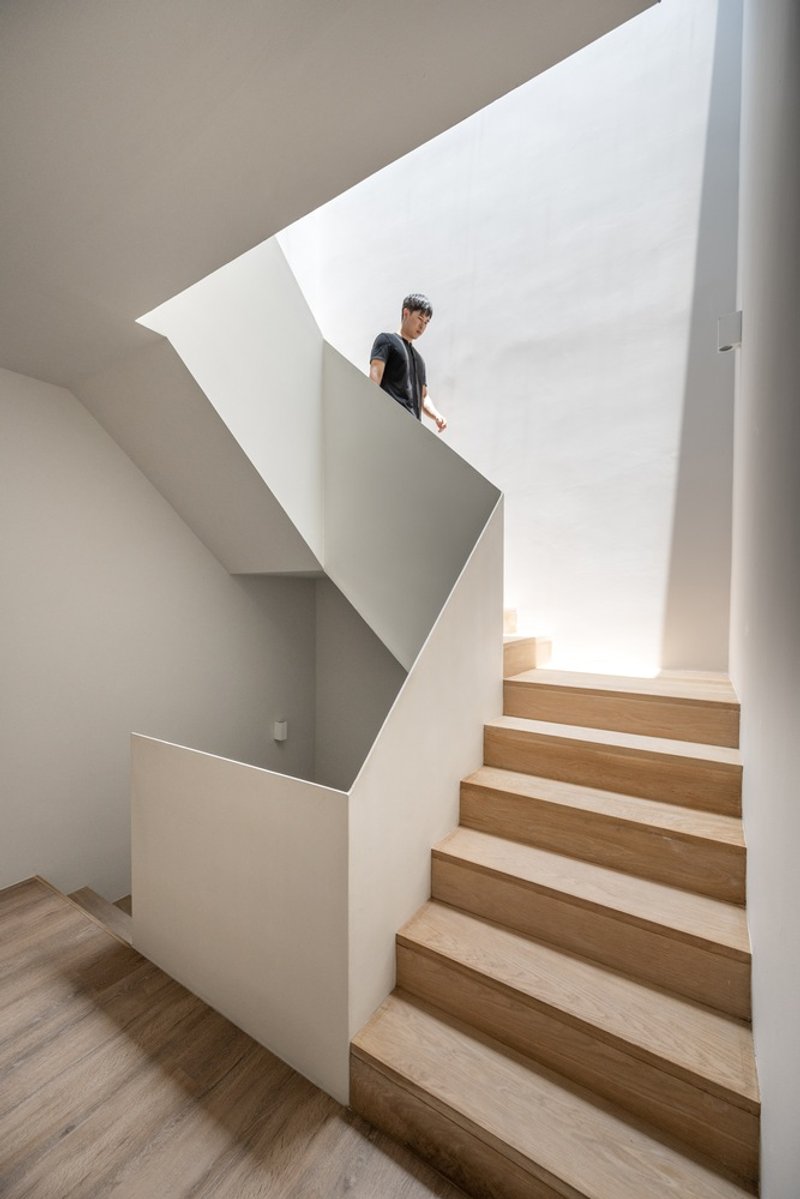
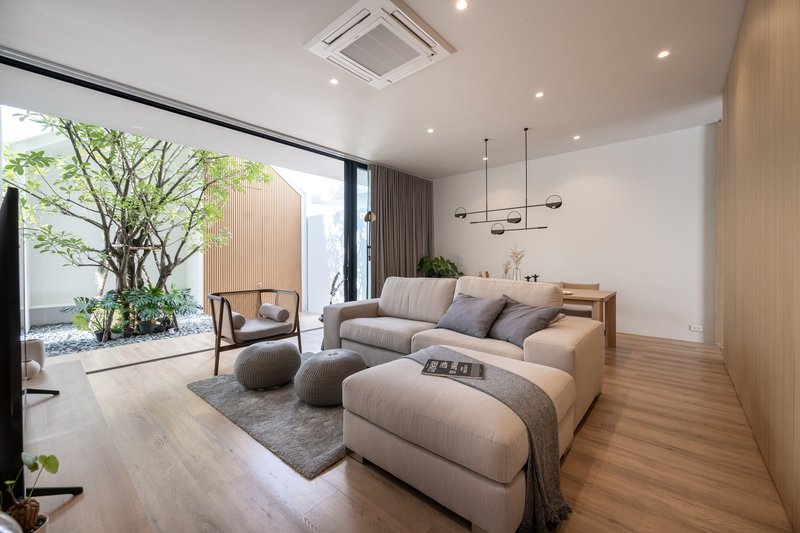
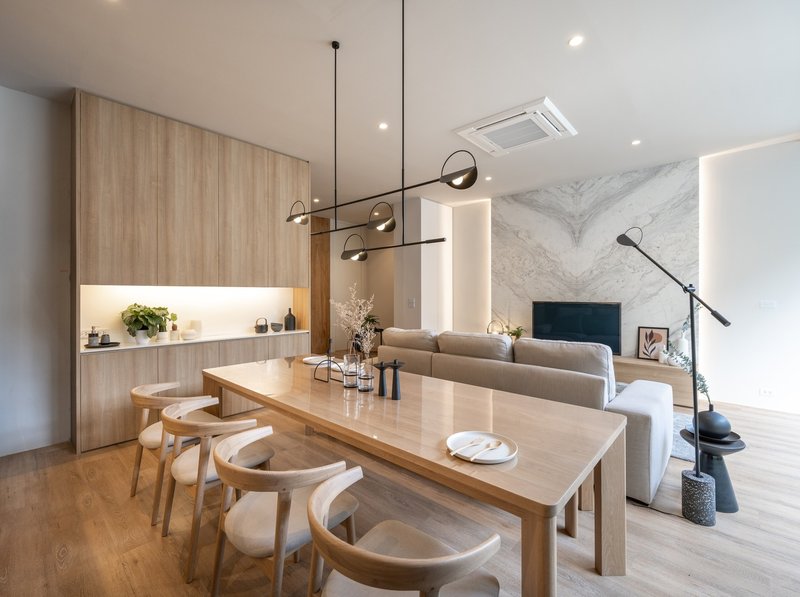
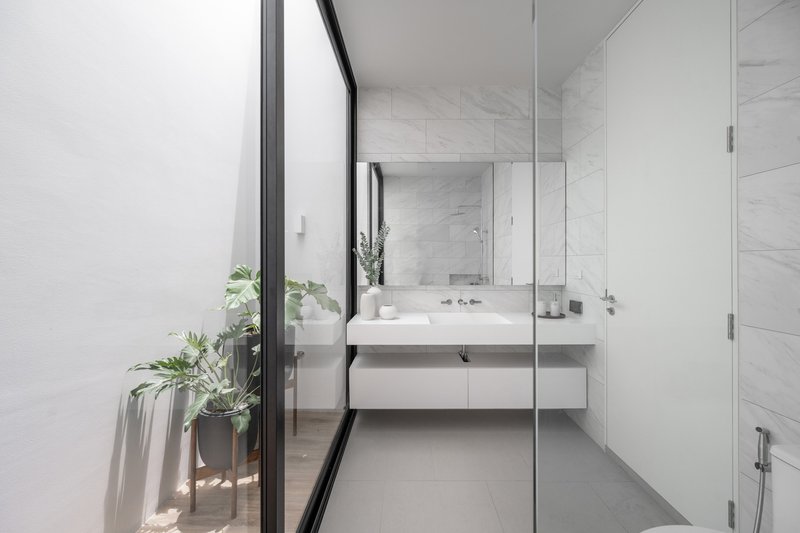
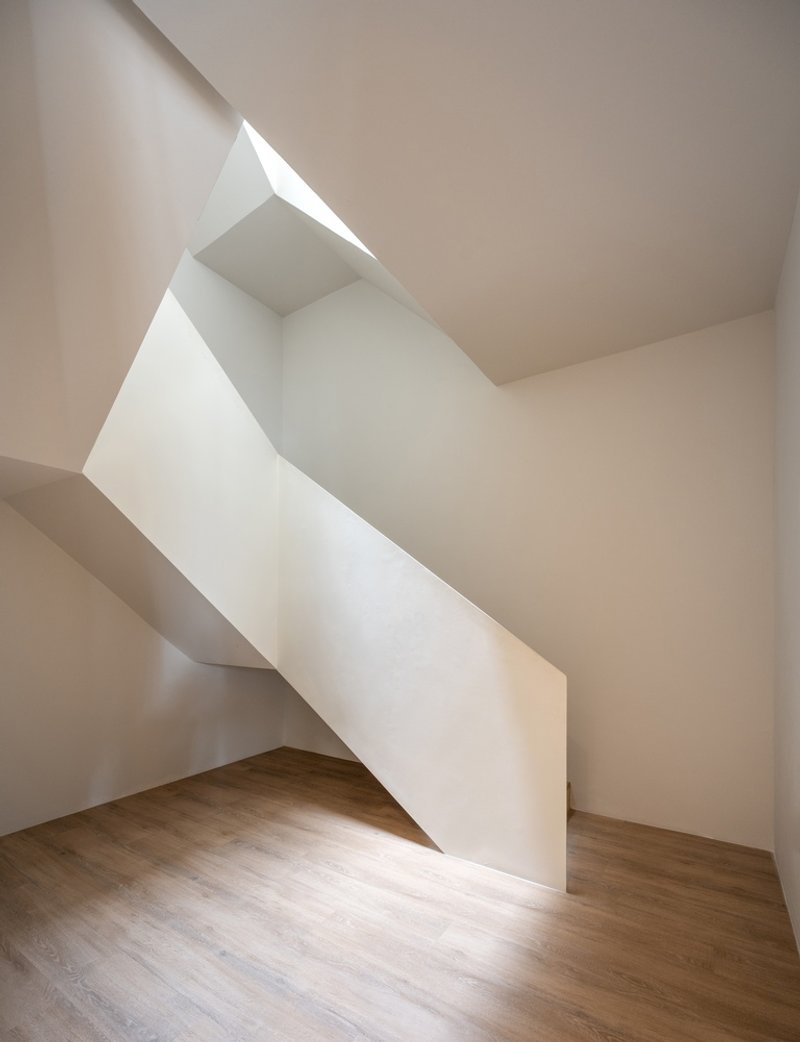
The interior design prioritizes warmth and simplicity, with white walls and light-colored wooden floors creating a serene and welcoming atmosphere. White marble paneling highlights key areas, adding a touch of sophistication. For safety and functionality, thin steel railings were incorporated in the staircase zone, a thoughtful addition for a household with children and elderly residents. The exterior fence, made from hemispherical fiber-cement panels, introduces a unique interplay of light and shadow throughout the day, enhancing the home’s aesthetic appeal.
A Multi-Generational Living Solution
The Full House exemplifies a harmonious blend of individuality and shared living. By designing two connected residences within a single structure, WARchitect addresses the needs of a multi-generational family, fostering interaction while maintaining privacy. The shared kitchen and communal spaces provide opportunities for bonding, while the thoughtful layout ensures personal space for each family unit.
Conclusion: A Home Rooted in Connection
WARchitect’s Full House is a testament to the power of design in creating spaces that nurture family connections. Through its thoughtful layout, innovative gable design, and harmonious blend of materials, the home transcends its functional requirements to become a warm and inviting sanctuary. The project showcases how architecture can adapt to the needs of modern families while retaining a timeless appeal.



Popular Articles
Popular articles from the community

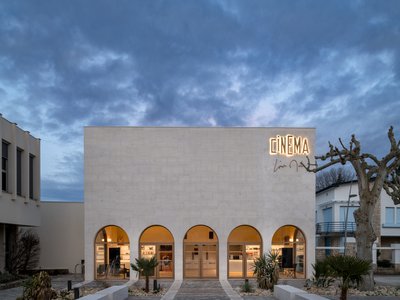
Louis Malle Cinema: A Limestone Cultural Landmark Revitalizing Community Life in Prayssac
Limestone cinema extension with public forecourt, blending heritage and modern design to create flexible cultural spaces and strengthen community interaction.
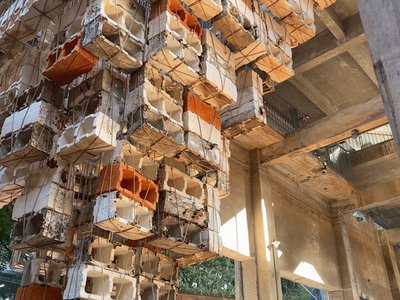
Inverted Architecture Installation by Studio Link-Arc: Exploring the Intersection of Architecture and Living Organisms
Inverted Architecture Installation by Studio Link-Arc blends mycelium, sustainability, inverted design, ecological cycles, and urban adaptive architecture in Shenzhen.

Solar Steam: A Climate-Responsive Architecture That Redefines the Monument
A climate-responsive memorial architecture that transforms heat, decay, and time into a living system reflecting humanity’s ecological impact.
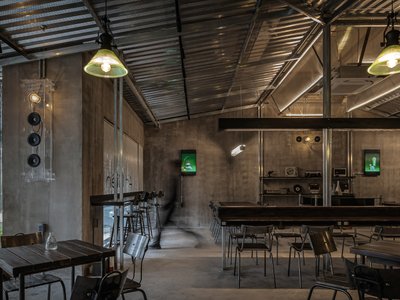
An Miên Lumière Cafe by xưởng xép, Ho Chi Minh City, Vietnam
An industrial-inspired café where layered steel and warm light create a dynamic, immersive environment shaped by reflection, depth, and perception.

Similar Reads
You might also enjoy these articles


The Ken Roberts Memorial Delineation Competition (Krob)
As the most senior architectural drawing competition currently in operation anywhere in the world, it draws hundreds of entries each year, awarding the very best submissions in a series of medium-based categories.


Waterfront Redevelopment and Urban Revitalization in Mumbai: Forging a New Dawn for Darukhana
A transformative waterfront redevelopment project reimagining Darukhana’s shipbreaking heritage into an inclusive urban future.

OUT-OF-MAP: A Call for Postcards on Feminist Narratives of Public Space
Rhizoma Design and Research Lab invites artists, designers, architects, researchers, and students to reflect on how feminist perspectives can reshape public space. Selected works will be exhibited in Barcelona, October 2026. Submissions open until 15 April 2026.


Documentation Work on Buddhist Wooden Temple
Architectural syncretism and cultural hybridity: A comparative study of the Buddhist temples in Chattogram Hill tracks

Explore Architecture Competitions
Discover active competitions in this discipline




The International Standard for Design Portfolios


The Global Benchmark for Architecture Dissertation Awards


The Global Benchmark for Graduation Excellence


Challenge to reimagine the Iron Throne
Comments (0)
Please login or sign up to add comments
No comments yet. Be the first to comment!