
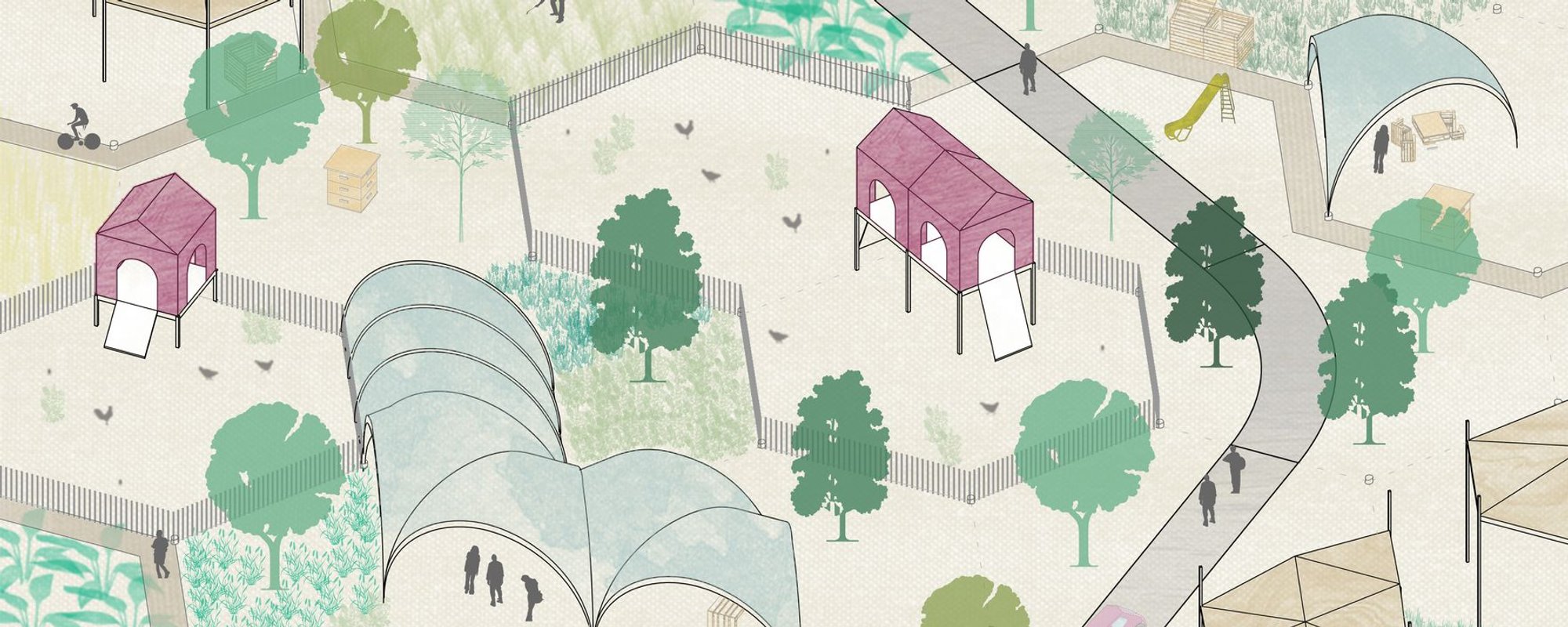
Hivemind: Urban Farming Architecture for a Shared Future
Hivemind: An urban farming architecture that transforms city life into a sustainable, collaborative, and gamified ecosystem

In the heart of London’s south bank, where the density and energy of city living collide with curiosity for agriculture, Hivemind emerges as a radical vision for the future of urban farming architecture. Conceived by Ian Chaplin, Orsolya Mátyus, and Cecilia Dobos, the project reimagines how architecture can serve as both a framework for collaborative farming and a platform for interactive engagement.
Rethinking the City Through Architecture
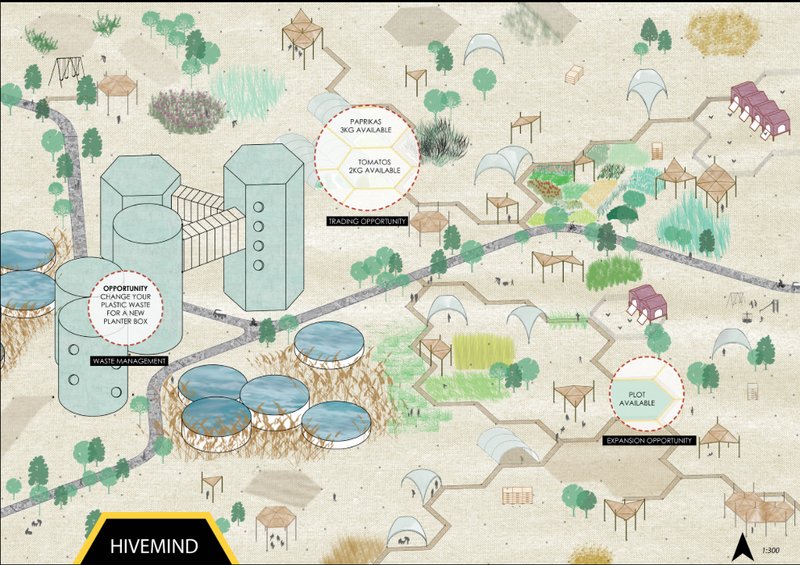
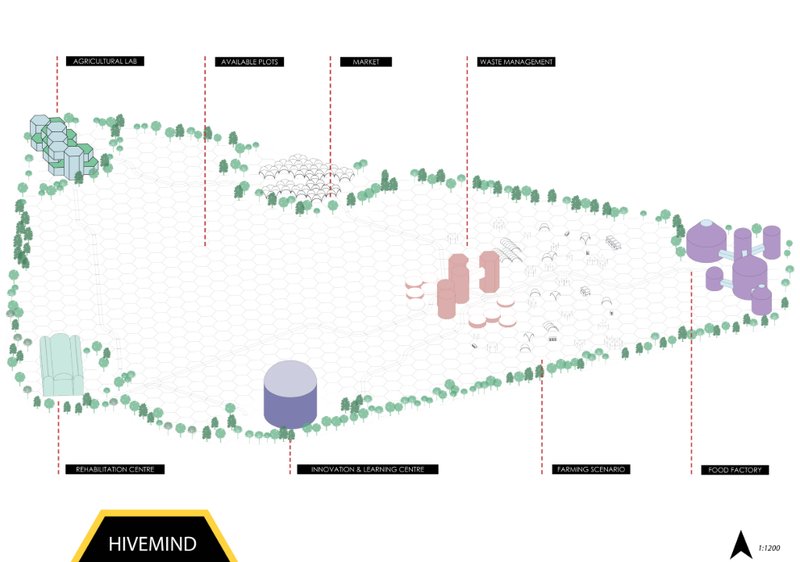
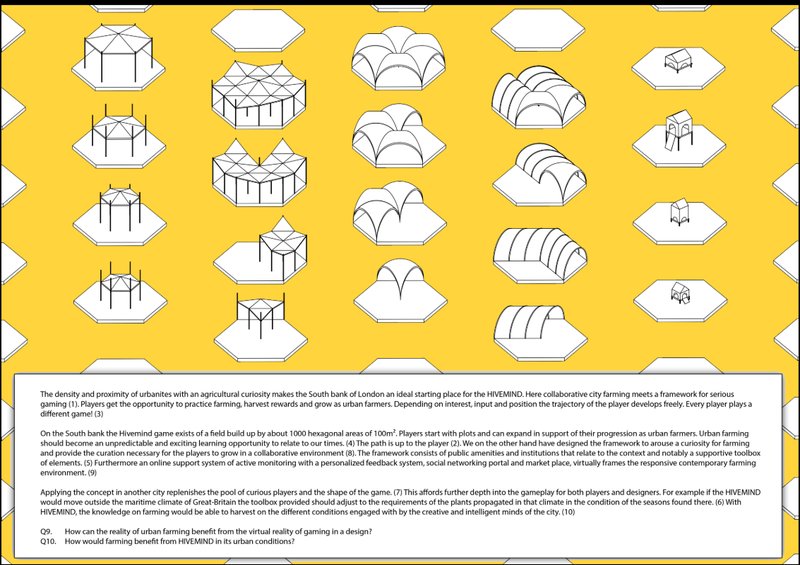
Hivemind introduces a spatial and social framework where the city is no longer just a backdrop for urban living but an active participant in food production. By integrating farming plots, markets, waste management systems, and agricultural labs into the urban fabric, the project demonstrates how sustainable architecture can transform public spaces into productive, resilient ecosystems.
The architectural concept leverages hexagonal modules—a form inspired by the efficiency of beehives—to create flexible spaces for farming, markets, and community interaction. These repeating units form a connected network that encourages collaboration, adaptability, and continuous expansion.
Architecture Meets Serious Gaming
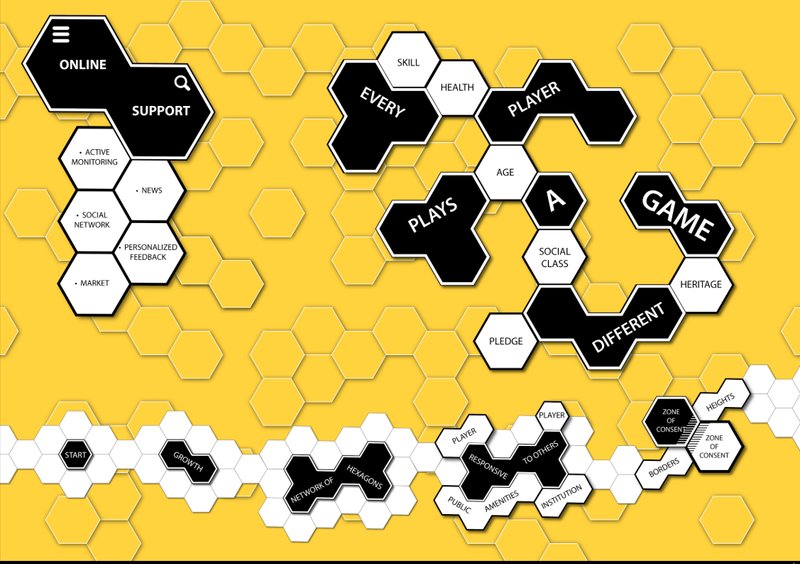
What makes Hivemind unique is its integration of serious gaming into architecture. Every resident becomes a player in a larger urban ecosystem, with roles shaped by interest, skill, and contribution. Whether tending crops, trading harvests, or innovating within learning hubs, each participant plays a different “game,” reinforcing the collective resilience of the system.
This gamified approach encourages active participation while building awareness of food cycles, environmental impact, and community interdependence. By blending play with architectural design, Hivemind transforms farming into an engaging, city-wide experience.
Sustainable Systems in Action
The design incorporates multiple layers of sustainable architecture:
- Agricultural Labs: Spaces for research and experimentation with urban farming methods.
- Waste Management Systems: Facilities that exchange waste for planter boxes, closing the loop on urban consumption.
- Markets and Food Factories: Hubs where produce is traded, processed, and shared with the community.
- Innovation & Learning Centers: Educational platforms that merge science, technology, and farming practices.
Through these interconnected systems, Hivemind emphasizes circular economy principles, ensuring that resources are reused, shared, and maximized for community benefit.
The Social Dimension of Architecture
At its core, Hivemind is more than just farming infrastructure—it is social architecture. By designing spaces that encourage interaction, trade, and shared responsibility, the project fosters a sense of belonging and collective purpose. Each urbanite’s contribution, whether large or small, helps maintain the balance and vitality of the system.
The architecture blurs boundaries between play and production, public and private, leisure and labor—creating a dynamic new way of living together in cities.
Hivemind stands as a forward-thinking model of urban farming architecture, where collaboration, sustainability, and play converge to reshape city life. By treating farming as both an architectural practice and a participatory game, it offers a blueprint for resilient, inclusive, and adaptive urban communities.
This project by Ian Chaplin, Orsolya Mátyus, and Cecilia Dobos demonstrates how the synergy of design, sustainability, and social innovation can redefine the way we experience cities—turning them into living, collaborative ecosystems.




Popular Articles
Popular articles from the community

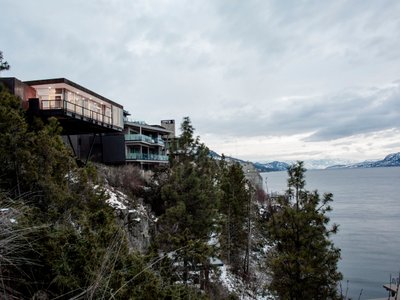
Alton Cliff House: A Harmonious Retreat by f2a Architecture in Lake Country, Canada
Alton Cliff House blends corten steel, prefabrication, and sustainable design, creating a luxurious, energy-efficient retreat perched on Canadian cliffs.
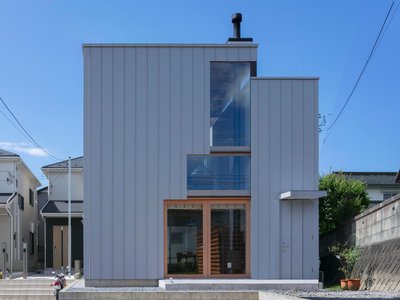
Split House: A Compact Urban Home Blending Privacy, Light, and Flexible Living in Japan
Compact Japanese home featuring DOMA space, flexible café potential, passive lighting, privacy zoning, and sustainable urban living design.

TGK Nirasaki Plant: A Smart Factory Blending Technology, Landscape, and Wellness
Smart factory in Japan blending IoT manufacturing, scenic trail design, natural ventilation, and landscape integration to enhance user experience and sustainability.


Similar Reads
You might also enjoy these articles

20 Most Popular Commercial Architecture Projects of 2025
From sustainable market concepts to heritage factories, the commercial buildings and proposals that drew the most attention on uni.xyz this year.
Free Architecture Competitions You Can Enter Right Now
No entry fees, real prizes. Here are the best free architecture competitions open for submissions in 2026.
Top 15 Architecture Competitions to Enter in 2026
From student-friendly idea competitions to prestigious international awards, here are the best architecture competitions open for entries in 2026. Updated regularly.

DIY & Engineering in Computational Design : Enter the BeeGraphy Design Awards
Showcase Your Creativity with Computational Design and Open Source Projects






Comments (0)
Please login or sign up to add comments
No comments yet. Be the first to comment!