
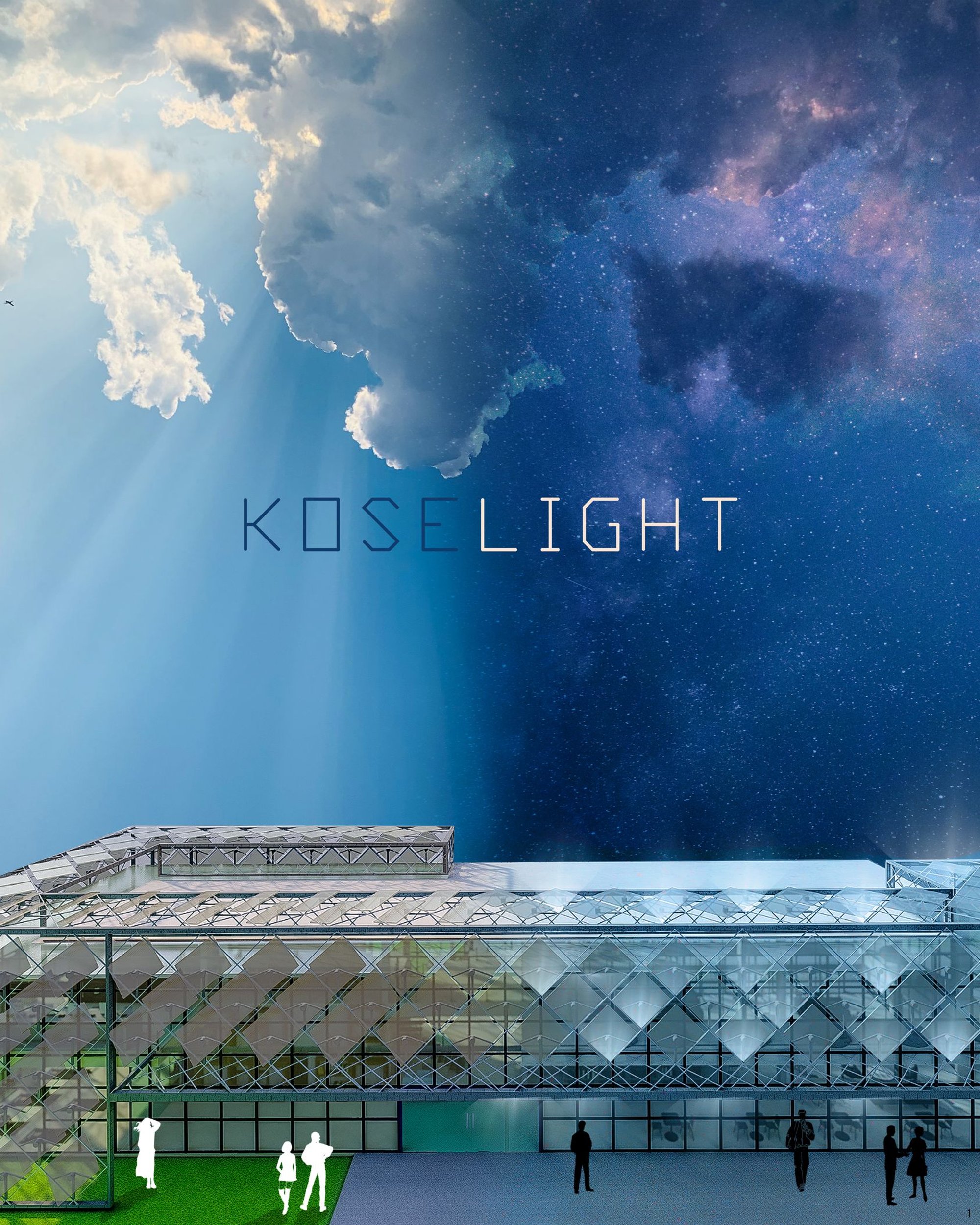
Innovative Solar Facades in Architecture: The koseLIGHT Project
This article delves into koseLight, an architectural feat combining Scandinavian koselig and dynamic solar lighting in a modern library design.

Nestled in the ethos of Scandinavian design philosophy and daylight utilization, the koseLIGHT project emerges as a beacon of innovation. The brainchild of Busra Kizilates, Esma Nur Yaldiran, Gulseren Tek, and Feyza Simsek, koseLIGHT is more than just a library; it's an embodiment of koselig—a life philosophy valuing coziness and comfort—married with the efficient use of sunlight.
The Genesis of Adaptive Solar Facades
Understanding the Technology
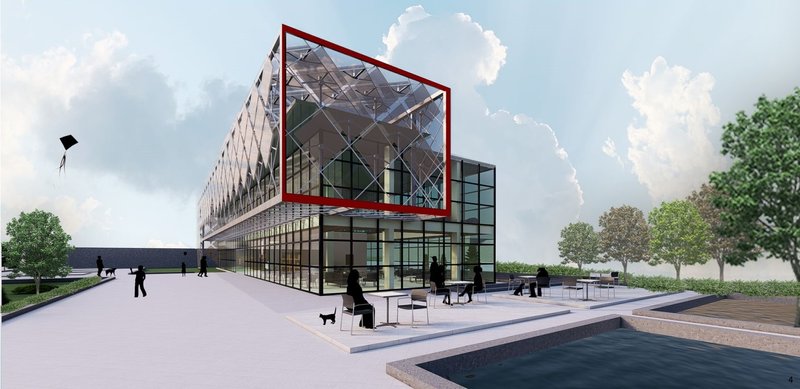
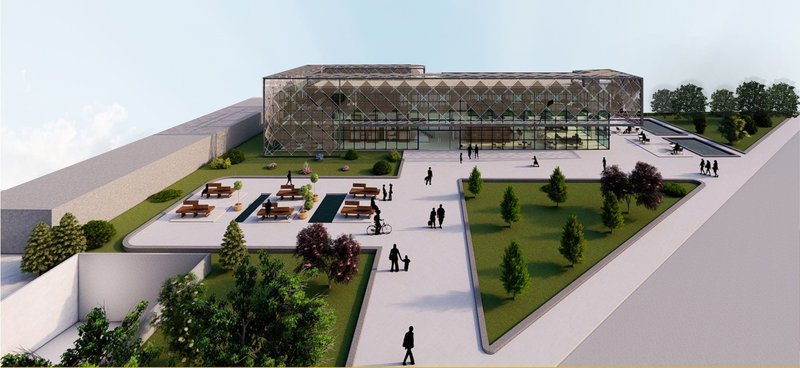
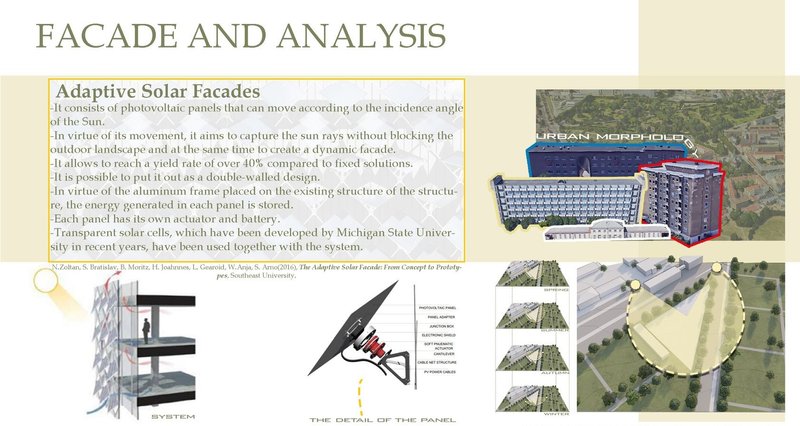
koseLIGHT features a cutting-edge design that incorporates adaptive solar facades. These are not your average photovoltaic panels; they are a dynamic system designed to move in response to the sun's incidence angle, optimizing energy capture without compromising the view of the outdoors.
Energy Efficiency and Dynamic Aesthetics
With the capacity to outperform fixed systems by over 40% in energy yield, these facades are a testament to the potential of solar energy in modern architecture. The possibility of a double-walled design enhances thermal insulation, while the energy harnessed in each panel is ingeniously stored, ready to power the library’s needs.
The Core Elements
The structure's bones are made of aluminum framing, supporting the storage and actuation of each solar cell. Every panel is equipped with its own actuator and battery, signifying individuality and autonomy within the collective design.
Innovation in Transparency
A notable mention goes to the transparent solar cells developed by Michigan State University, which have been integrated into koseLIGHT's facade, showcasing the marriage of aesthetic transparency with functional energy generation.
In-Depth Analysis of koseLIGHT's Facade
Panel Movement and Solar Tracking
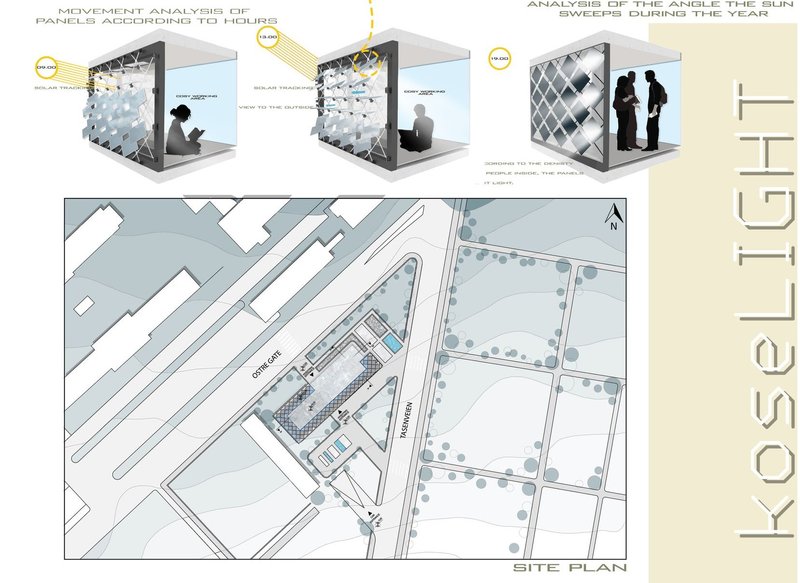
The facade's ability to follow the sun's path through the sky is not just smart; it's strategic. The movement analysis of the panels throughout the day ensures that each moment’s potential for solar energy is not lost.
The Detail of the Panel
Every component, from the electronic side to the pneumatic actuators, is meticulously designed for efficiency and durability. The cable net structure supports the power cables, which are the lifelines of the facade's energy system.
Architectural Plans and Functionality
A Look Inside
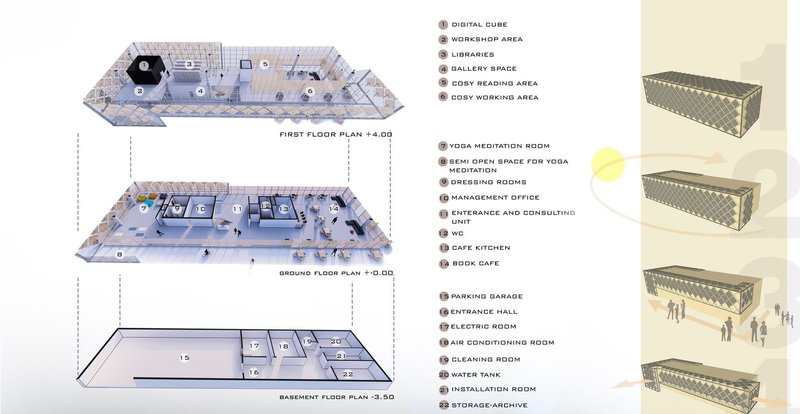
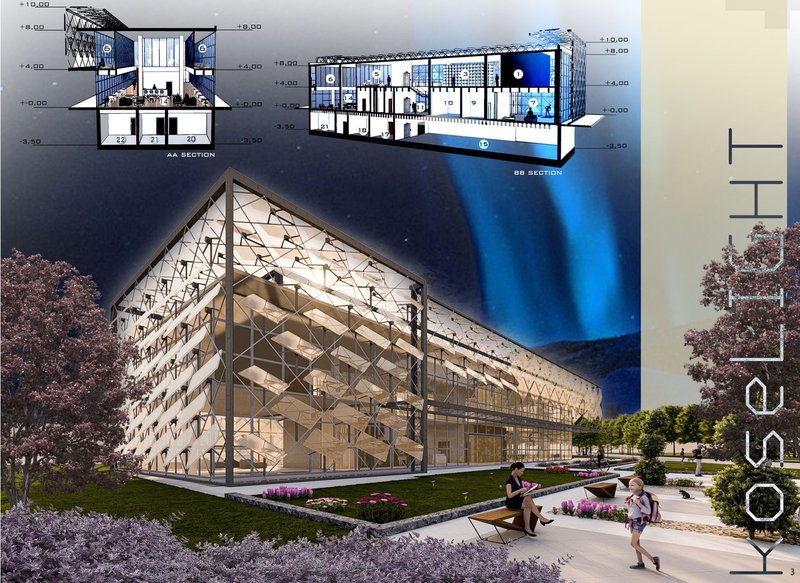
Moving beyond the facade, koseLIGHT is a marvel from the inside out. The building features distinct areas dedicated to workshops, libraries, gallery spaces, and cozy reading nooks. A yoga meditation room and semi-open spaces for relaxation further align with the koselig concept.
The Heart of koseLIGHT
At the core are the operational and recreational spaces, including management offices, entrance and consulting units, and a café kitchen that leads to a book café, blending intellectual pursuit with gastronomic pleasure.
The Foundation
The basement houses the building's vital systems, including parking, electrical units, air conditioning, and water storage, ensuring that the structure operates seamlessly.
The koseLIGHT project is more than an architectural endeavor; it's a step towards embracing renewable energy in building design. As we explore innovative solar facades in architecture, projects like koseLIGHT lead the way in demonstrating the harmony between form, function, and environmental consciousness.
By adopting innovative design principles and technologies such as adaptive solar facades, the architecture industry can look forward to a brighter, more sustainable future. The koseLIGHT library is not just a place for books; it's a manuscript of modern design, a chapter in the story of sustainable architecture, and a whisper of the potential that lies in the melding of tradition with innovation.




Popular Articles
Popular articles from the community


Solar Steam: A Climate-Responsive Architecture That Redefines the Monument
A climate-responsive memorial architecture that transforms heat, decay, and time into a living system reflecting humanity’s ecological impact.
A Contemporary Take on Iranian Residential Architecture
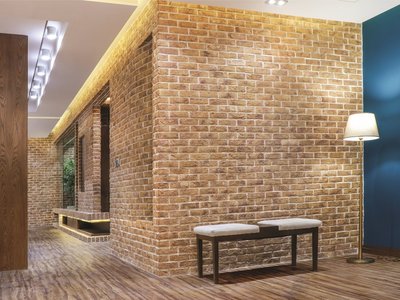
A modern interior design in Mashhad that reinterprets brick, light, and spatial flow to create a warm, contemporary residential architecture.


The Ken Roberts Memorial Delineation Competition (Krob)
As the most senior architectural drawing competition currently in operation anywhere in the world, it draws hundreds of entries each year, awarding the very best submissions in a series of medium-based categories.
Atelier Macri Concept Store Interior Design by CASE-REAL
Atelier Macri store features a "ko" counter, walnut wood details, cork displays, blending retail, gallery, and seamless customer experiences.


Similar Reads
You might also enjoy these articles
The Ken Roberts Memorial Delineation Competition (Krob)
As the most senior architectural drawing competition currently in operation anywhere in the world, it draws hundreds of entries each year, awarding the very best submissions in a series of medium-based categories.
A Contemporary Take on Iranian Residential Architecture
A modern interior design in Mashhad that reinterprets brick, light, and spatial flow to create a warm, contemporary residential architecture.
Franche-Comté Advanced School of Engineering by Dominique Coulon & associés, Besançon
A flexible engineering school immersed in woodland, combining concrete minimalism, adaptable spaces, and natural light to support evolving educational environments.


Documentation Work on Buddhist Wooden Temple
Architectural syncretism and cultural hybridity: A comparative study of the Buddhist temples in Chattogram Hill tracks


Explore Urban Planning Competitions
Discover active competitions in this discipline




The International Standard for Design Portfolios


The Global Benchmark for Architecture Dissertation Awards


The Global Benchmark for Graduation Excellence


Challenge to reimagine the Iron Throne
Comments (0)
Please login or sign up to add comments
No comments yet. Be the first to comment!