
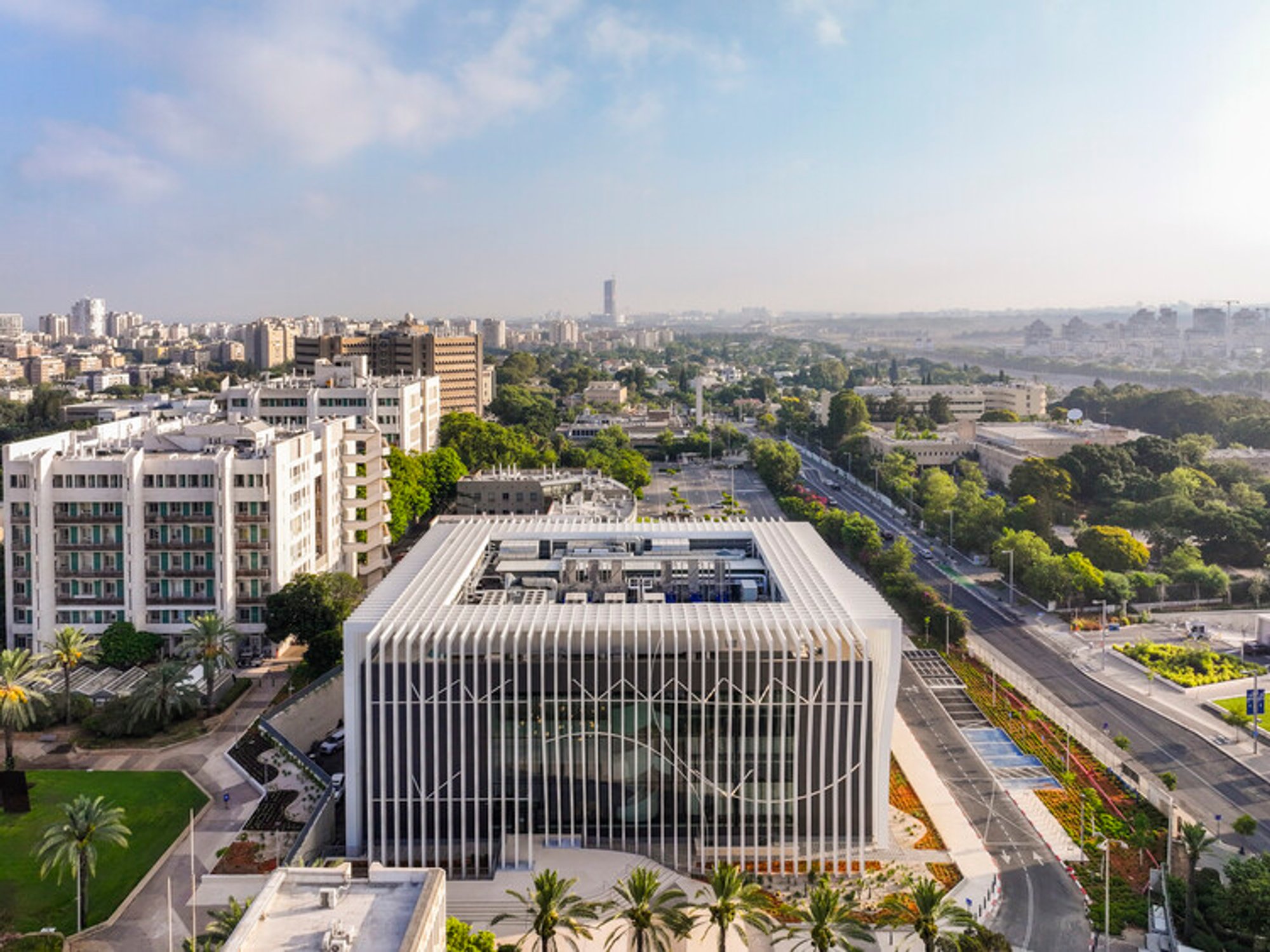
Jan Koum Center for Nanoscience and Nanotechnology by Michel Rémon & Associés
A high-precision research facility at Tel Aviv University, transforming nanoscience’s invisible scale into an abstract, iconic architectural form.

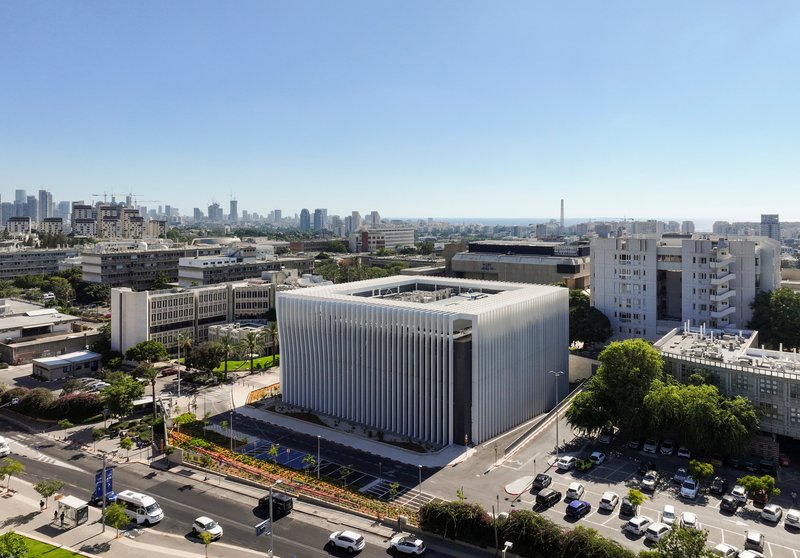
Located at the heart of Tel Aviv University (TAU), the Jan Koum Center for Nanoscience and Nanotechnology stands as a rare synthesis of architectural clarity and scientific precision. Designed by Michel Rémon & Associés, the 6,800 m² research facility embodies an idea that unites both architecture and nanoscience: scale. Conceived as a space dedicated to the infinitely small, the building transcends conventional architectural references to become an emblem of scientific innovation, technical mastery, and spatial abstraction.
An Architecture Beyond Scale at Tel Aviv University
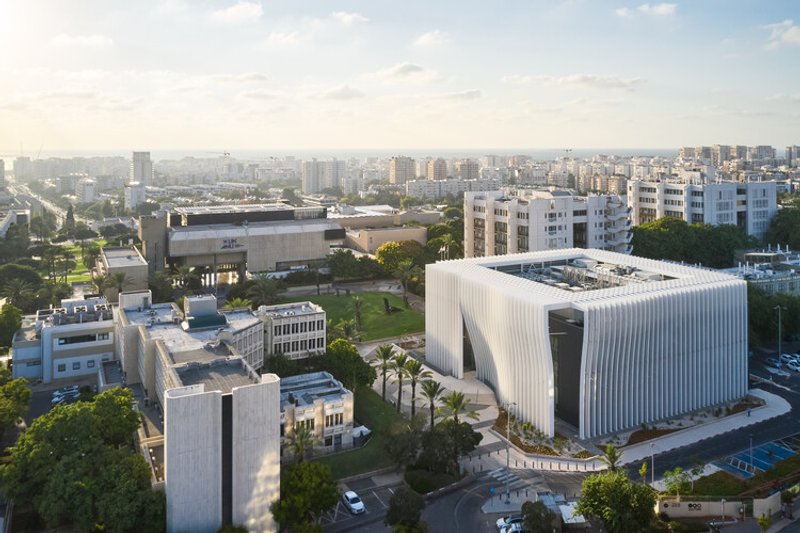
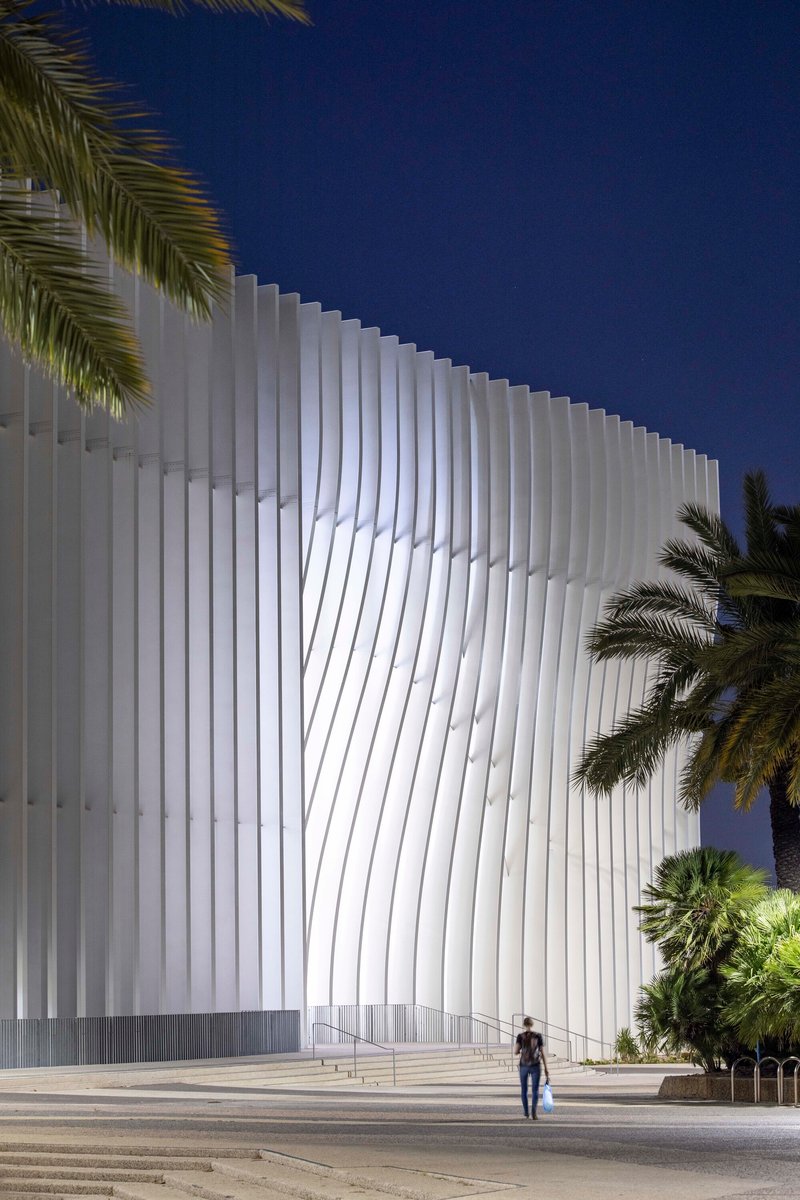
Set within the university’s lush campus landscape in Ramat Aviv, the NanoCenter emerges as a pure, enigmatic white volume, at once monumental and restrained. More than a laboratory building, it represents Tel Aviv University’s commitment to scientific excellence, international collaboration, and the future of research at the nanoscale.
A Campus of Nature, Knowledge, and Innovation
Founded in 1953, Tel Aviv University is Israel’s largest academic institution, hosting more than 30,000 students. The campus is renowned for its unique relationship with nature. Developed in the mid-20th century by landscape architects Dan Zur and Lipa Yahalom, the university environment is defined by dense greenery, open gardens, and biodiversity that accompanies everyday student life.
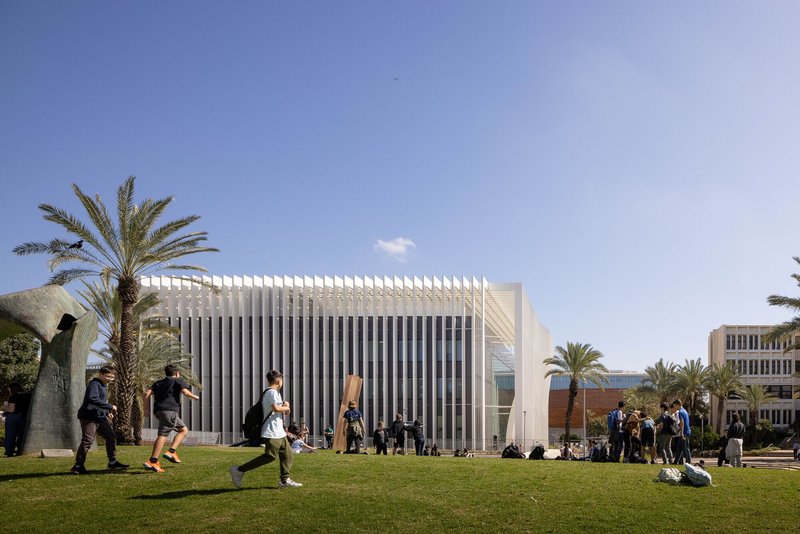
The campus master plan divides academic disciplines into two primary zones: humanities to the west and sciences to the east. Positioned near Klausner Street, opposite Gate 2, and close to the National Museum of Natural History, the Jan Koum Center occupies a strategic location at the scientific core of the campus. Nestled between nature and modernity, the building reinforces the scientific identity of its surroundings while maintaining a calm dialogue with the landscape.
Winning an International Design Competition
The project originated from an international architectural competition launched in 2015, attracting 128 architectural firms from around the world. Following a highly selective process: including rapid interviews across multiple continents: Michel Rémon & Associés advanced to the final stage alongside teams from Barcelona, Manchester, New York, Santiago, Geneva, and Paris.
After a site visit and final jury presentation in Tel Aviv in 2016, the project was awarded first prize. The jury praised the proposal for its elegant integration within the campus, clarity of plan, and ingenious control of laboratory access. Central to the winning concept was a powerful architectural idea: creating a building that reflects the nature of nanoscience itself, an architecture thateliminates conventional references to scale.
Architecture Inspired by the Infinitely Small
Nanoscience operates at the nanometer scale, one billionth of a meter, comparable to the distance between atoms. This extreme dimension challenges human perception and conventional spatial understanding. Michel Rémon & Associés translated this idea into architecture by exploring three distinct scales:
- the infinitely small,
- the human scale, and
- the absence of scale altogether.
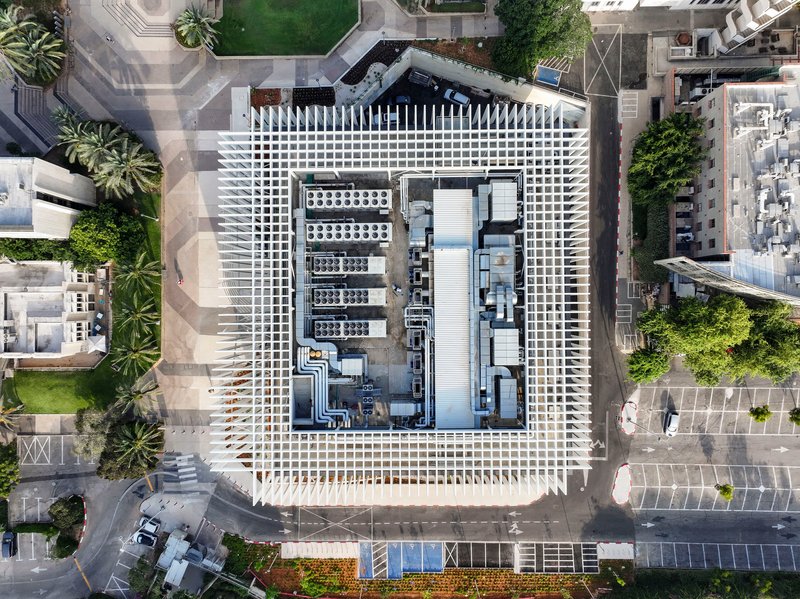
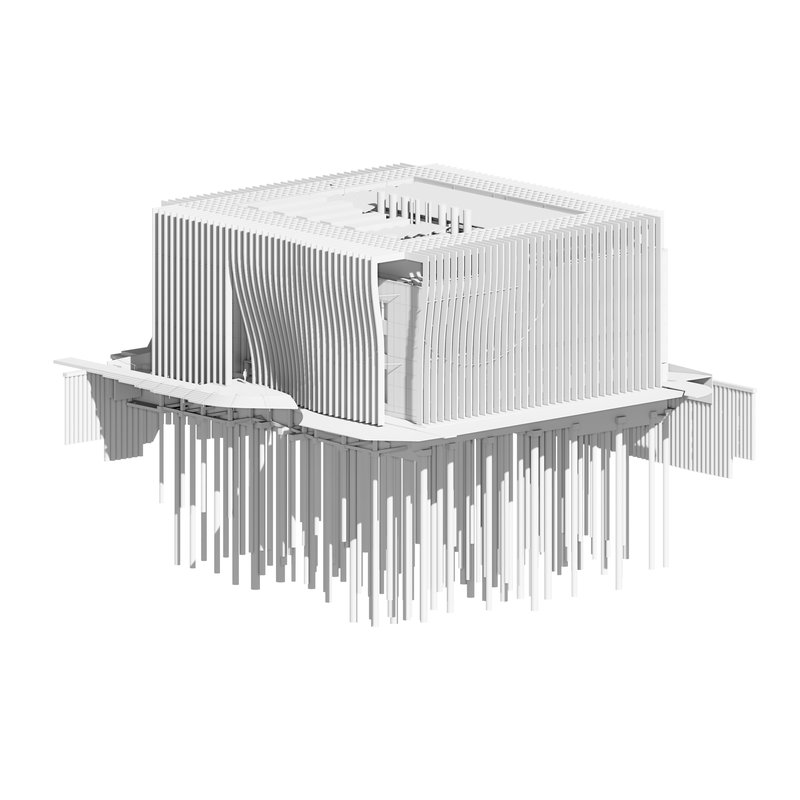
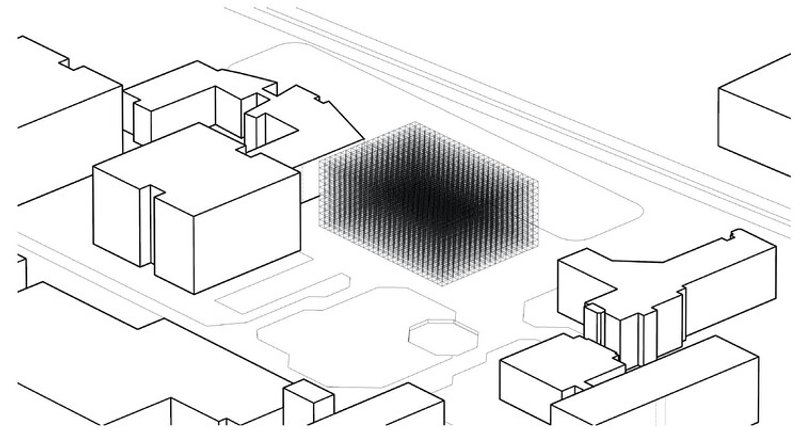
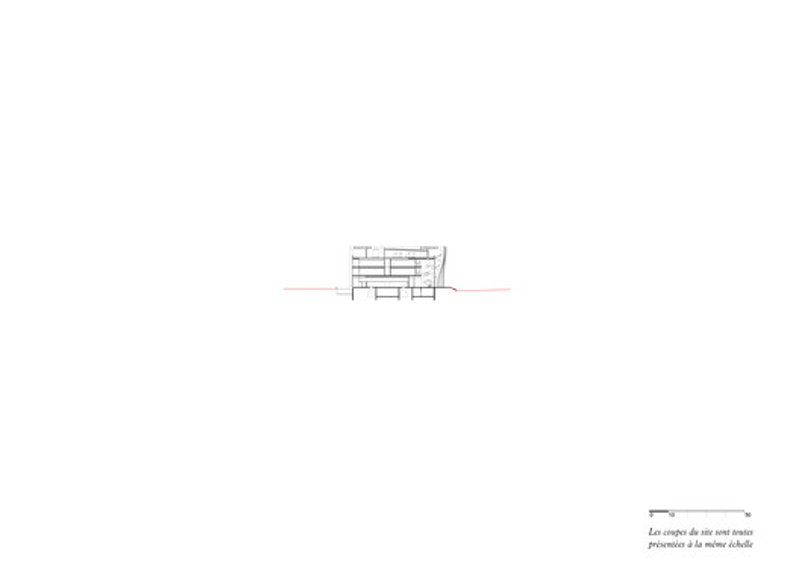
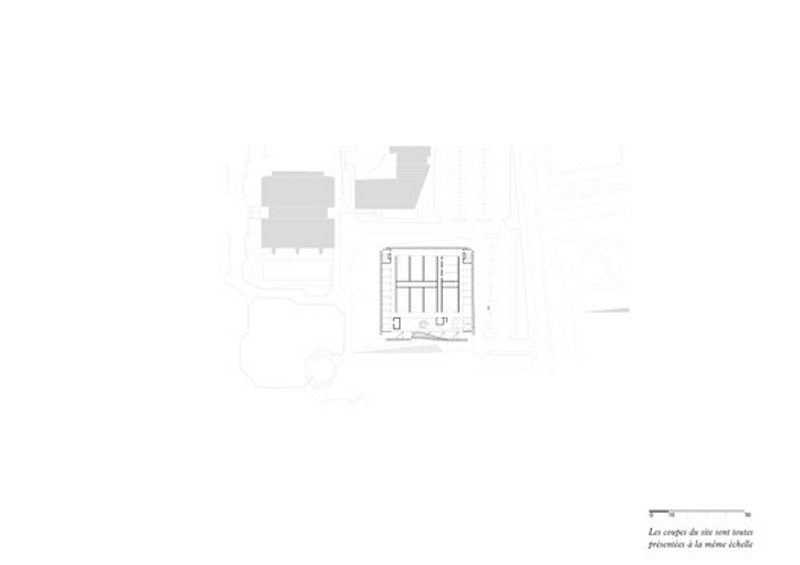
The resulting building is a refined parallelepiped set on a square footprint measuring 50 meters per side. Rising three levels above a deep services basement and capped by a technical roof level, the structure achieves a palazzo-like monumentality through its exceptional floor heights. Yet despite its size, the building resists visual heaviness, appearing abstract and almost immaterial within the garden setting.
The Evolving Matrix: Simplicity and Flexibility
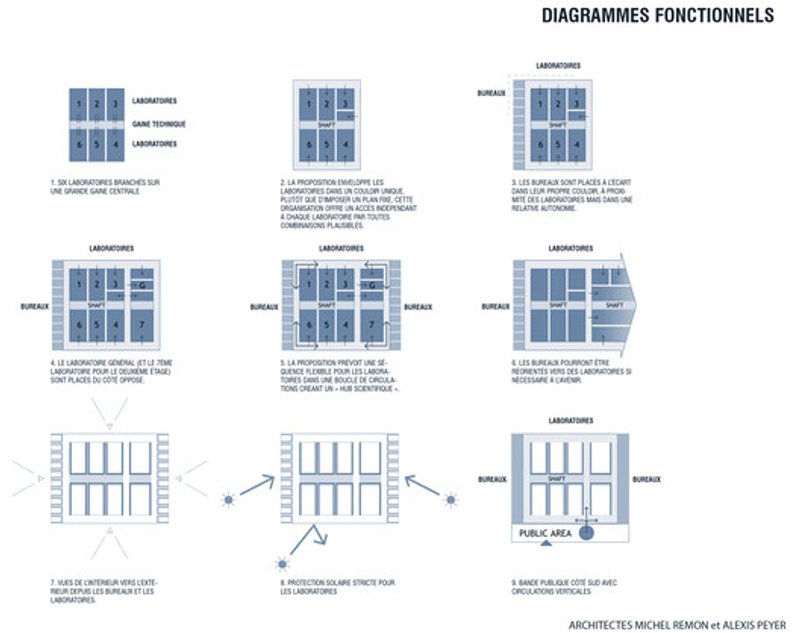
At the core of the NanoCenter lies a radically simple plan designed to accommodate constant scientific evolution. A massive vertical services shaft runs through the center of the building, distributing utilities to all levels and connecting to rooftop plant areas. This configuration allows laboratories to be reconfigured over time without structural intervention, ensuring long-term adaptability.
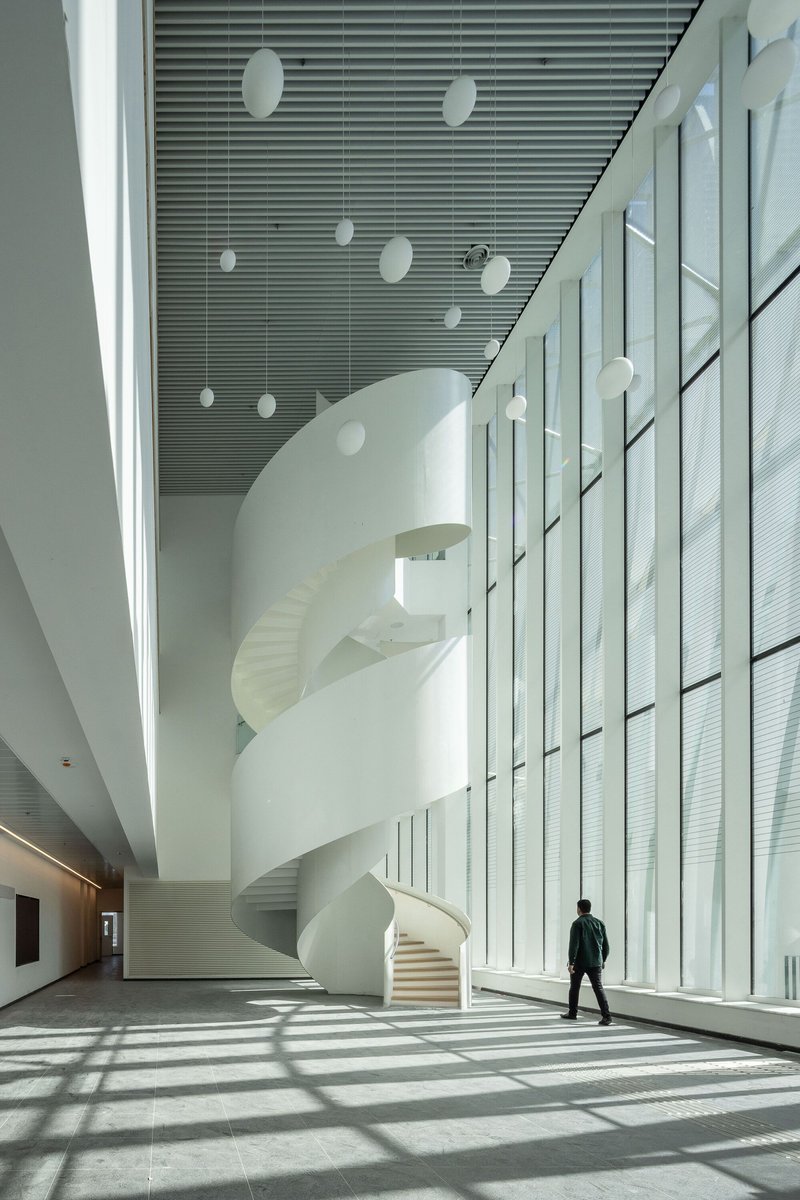
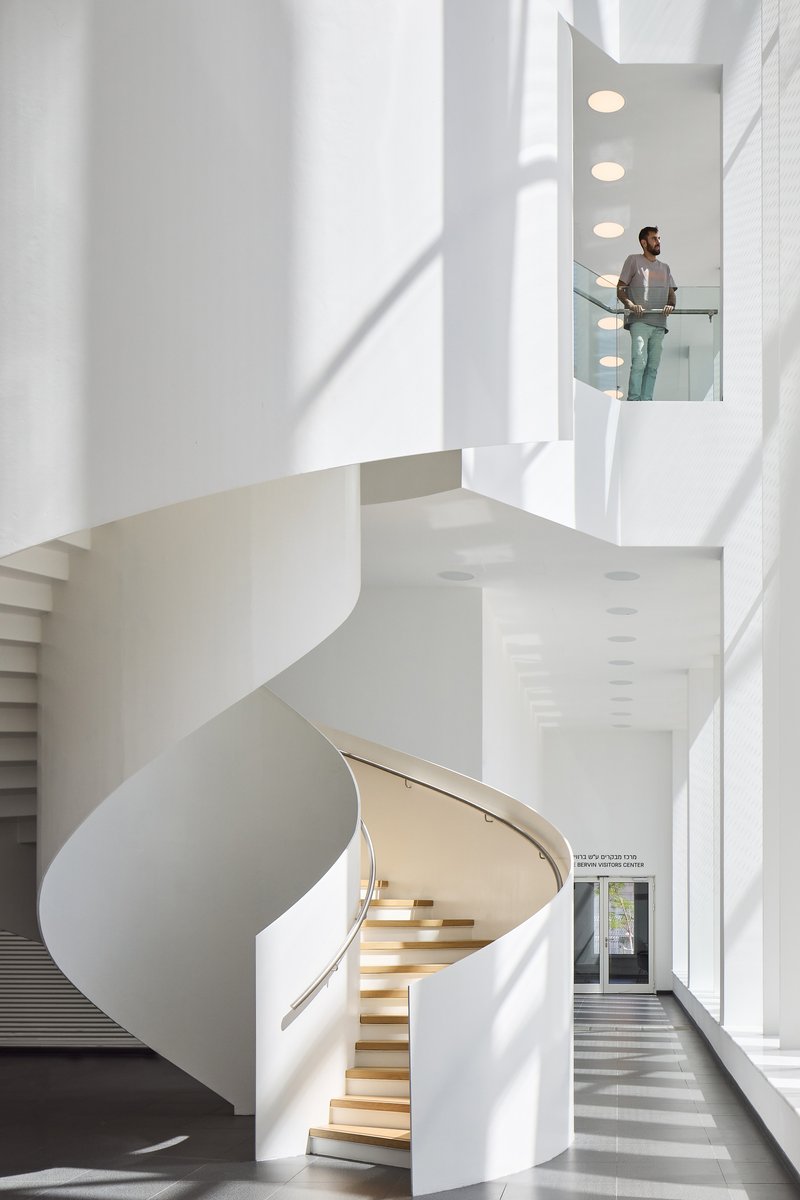
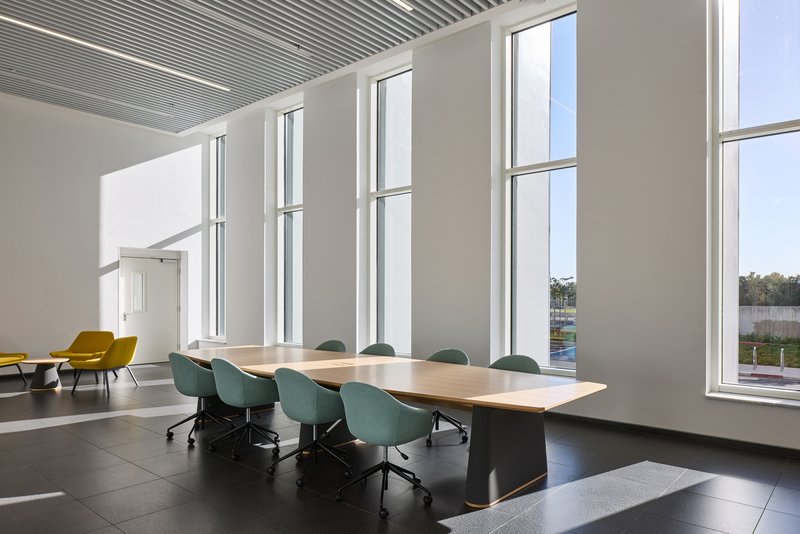
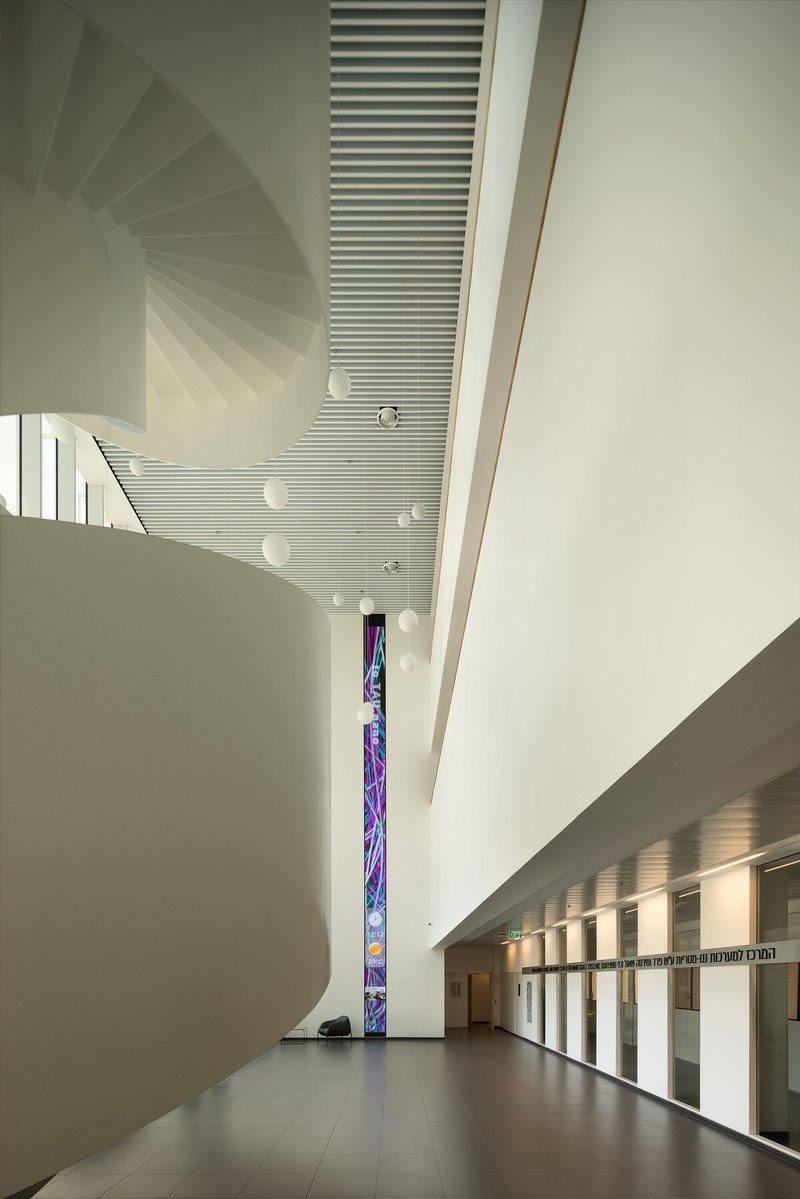
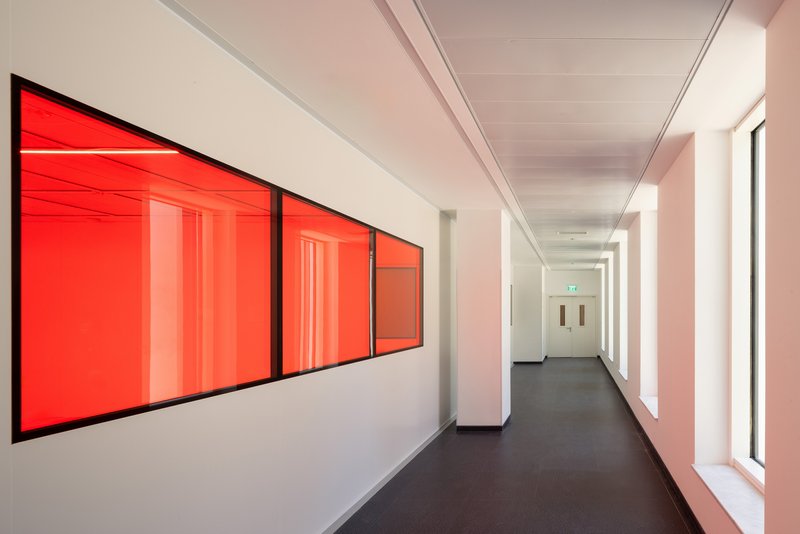
Surrounding this core is a daylit circulation ring, conceived as a social and intellectual space where researchers meet, exchange ideas, and collaborate. A sculptural white spiral staircase rises through the interior, concealing elevators and encouraging movement on foot, symbolizing walking as a metaphor for scientific discovery.
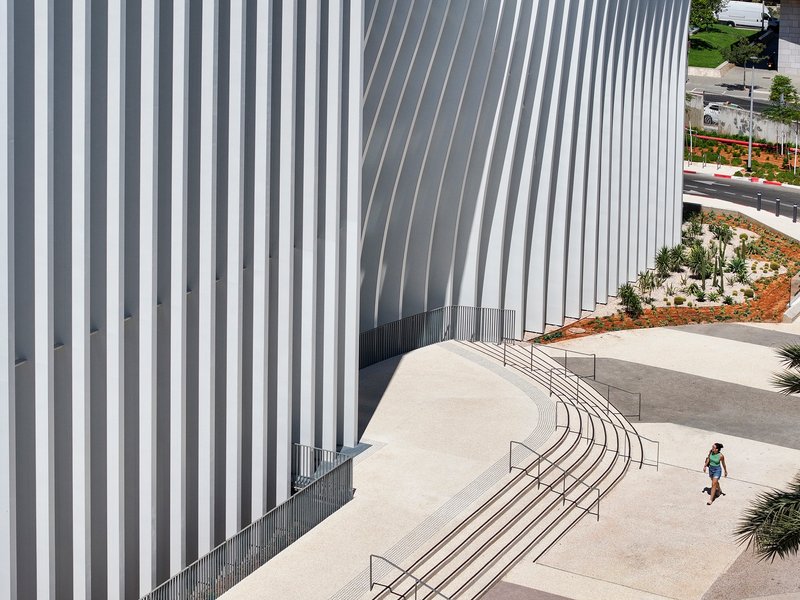
Office spaces line the perimeter, opening toward the landscape through deep window recesses that filter daylight and protect interiors from direct sun. The building thus operates as anarchitectural matrix, a neutral yet highly sophisticated framework capable of supporting extraordinary scientific activity.
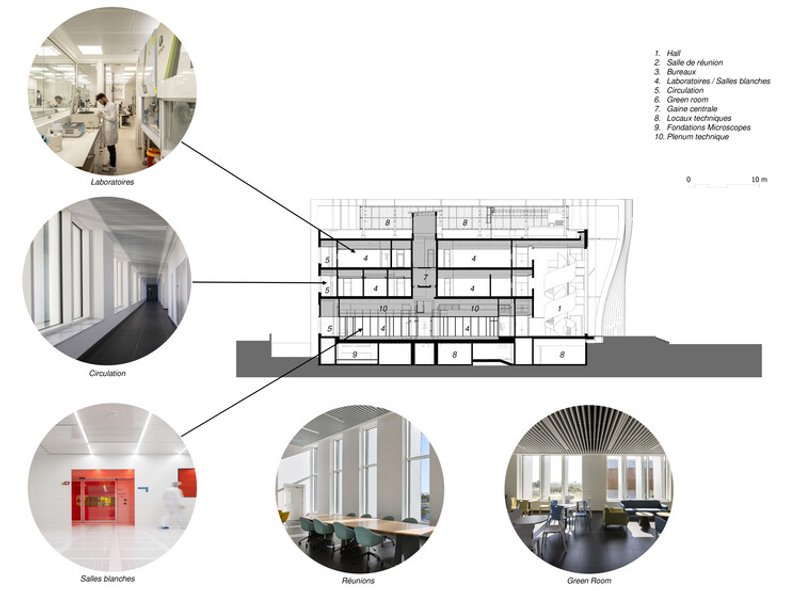
Cleanrooms and the Architecture of Control
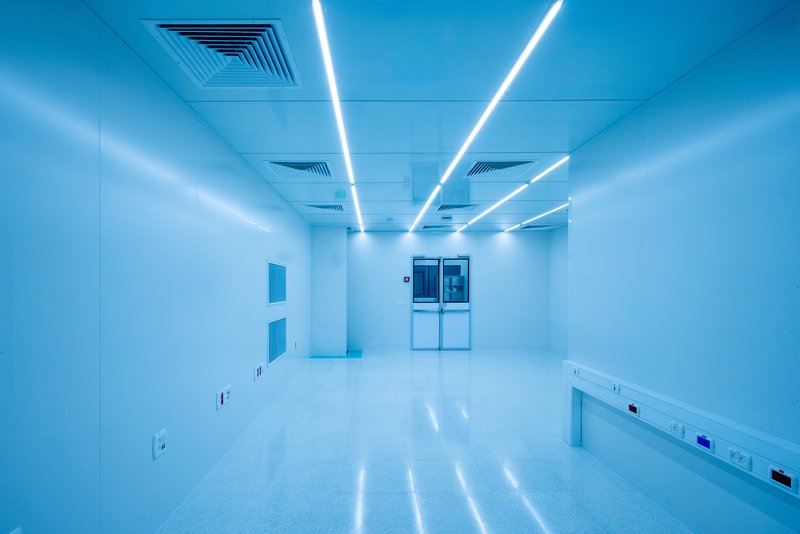
Nanoscience research demands extreme environmental precision. Dust particles, electromagnetic interference, and vibrations, even those caused by nearby traffic, can disrupt experiments. As a result, cleanrooms are central to the NanoCenter’s design.
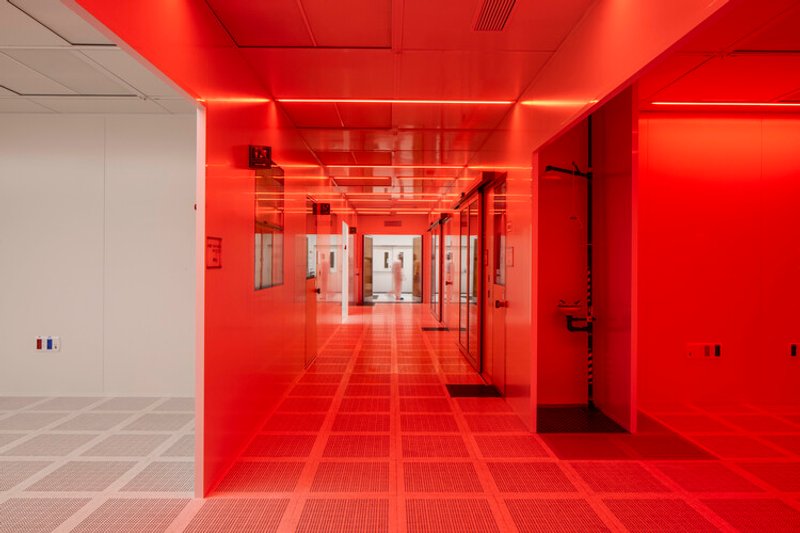
These spaces function as nested environments, organized like “Russian dolls,” each layer achieving progressively higher ISO cleanliness levels. The architectural and technical challenge is immense: for every usable square meter of laboratory space, approximately four square meters of structure and services are required.
To meet these demands, the building incorporates:
- Deep access service floors for utilities
- Trafficable plenums for air circulation and maintenance
- A sub-fabrication level in the basement for heavy plant
- Extensive rooftop service zones for filtration and control systems
This complexity is not visible to the eye, yet it defines the building’s performance and purpose.
Vibration Control and the “Sixth Facade”
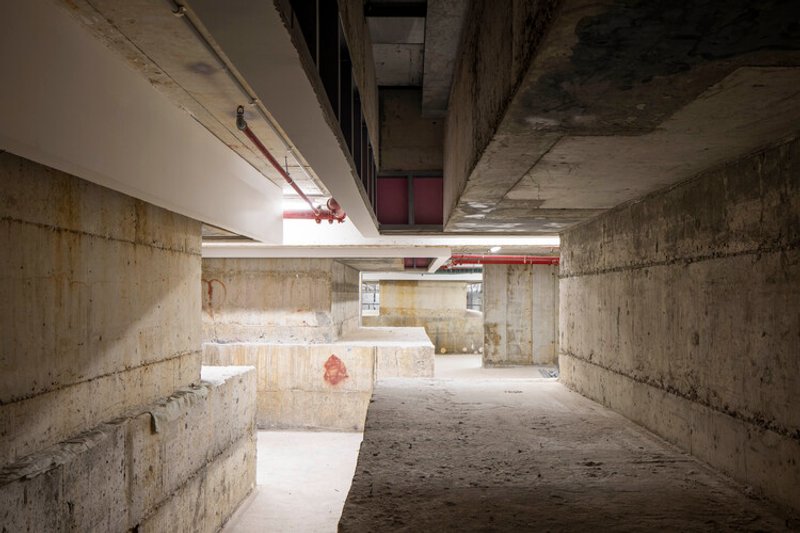
One of the most remarkable technical achievements of the project lies beneath the building. To eliminate vibrations, nine massive concrete blocks were cast on site and anchored into deep foundations. These blocks can be fitted with hydraulic systems that absorb vibrations entirely, rendering them imperceptible.
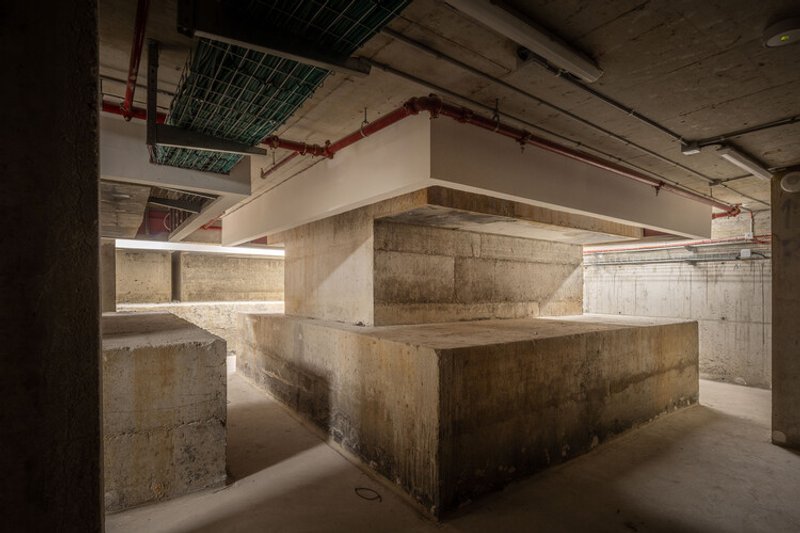
This hidden infrastructure functions as a“sixth facade”, an unseen architectural plane that ensures absolute stability for sensitive equipment. In a context where even a car passing over a speed bump could affect research outcomes, such precision underscores the building’s extraordinary technical ambition.
The Steel Fins: An Abstract Second Skin
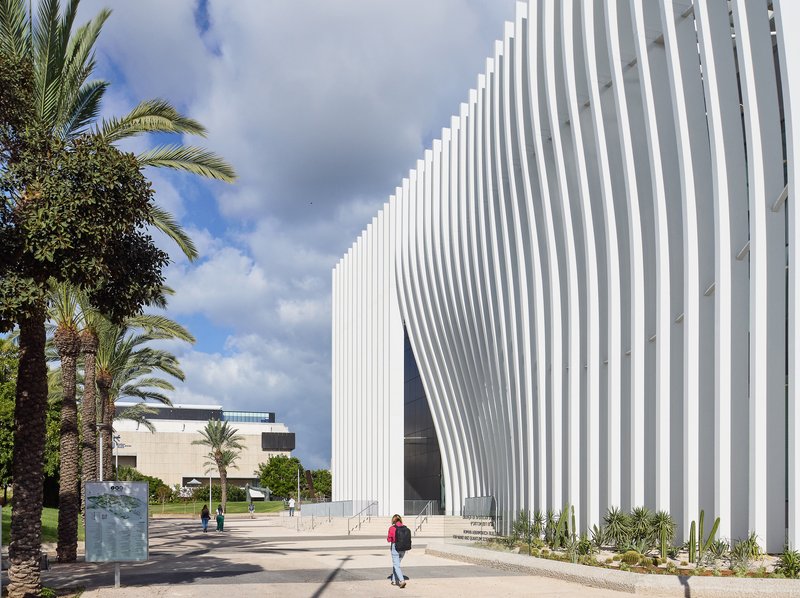
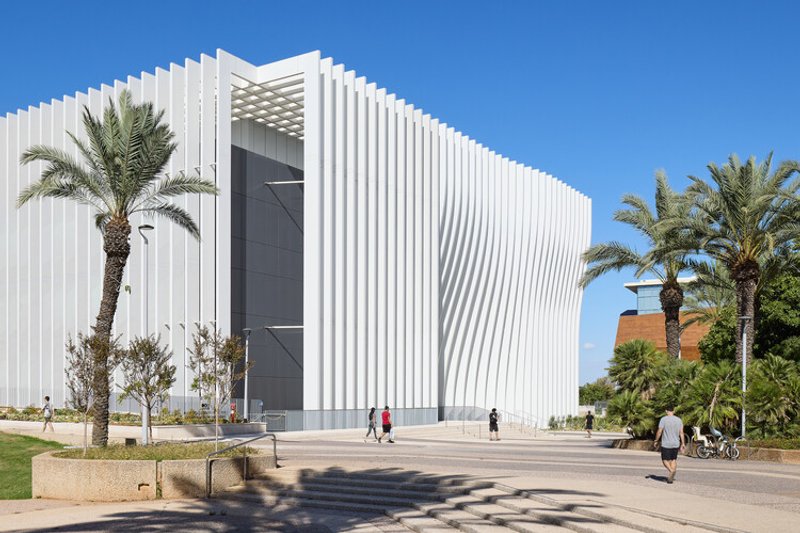
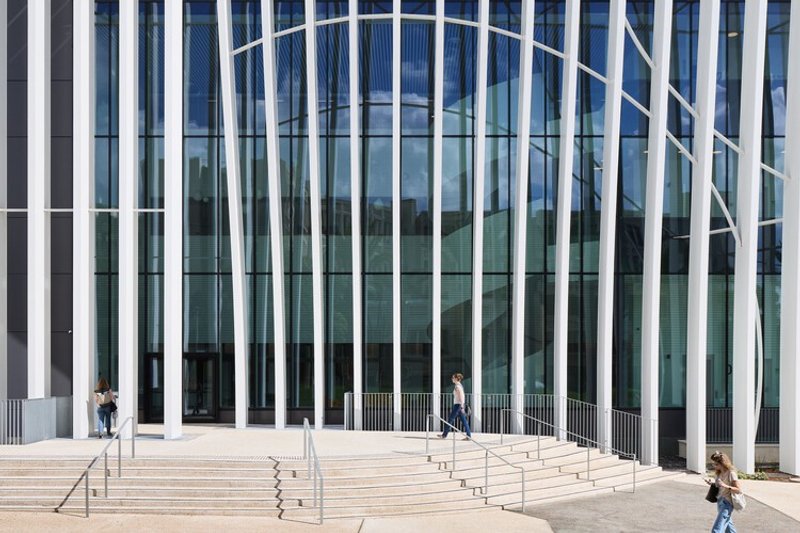
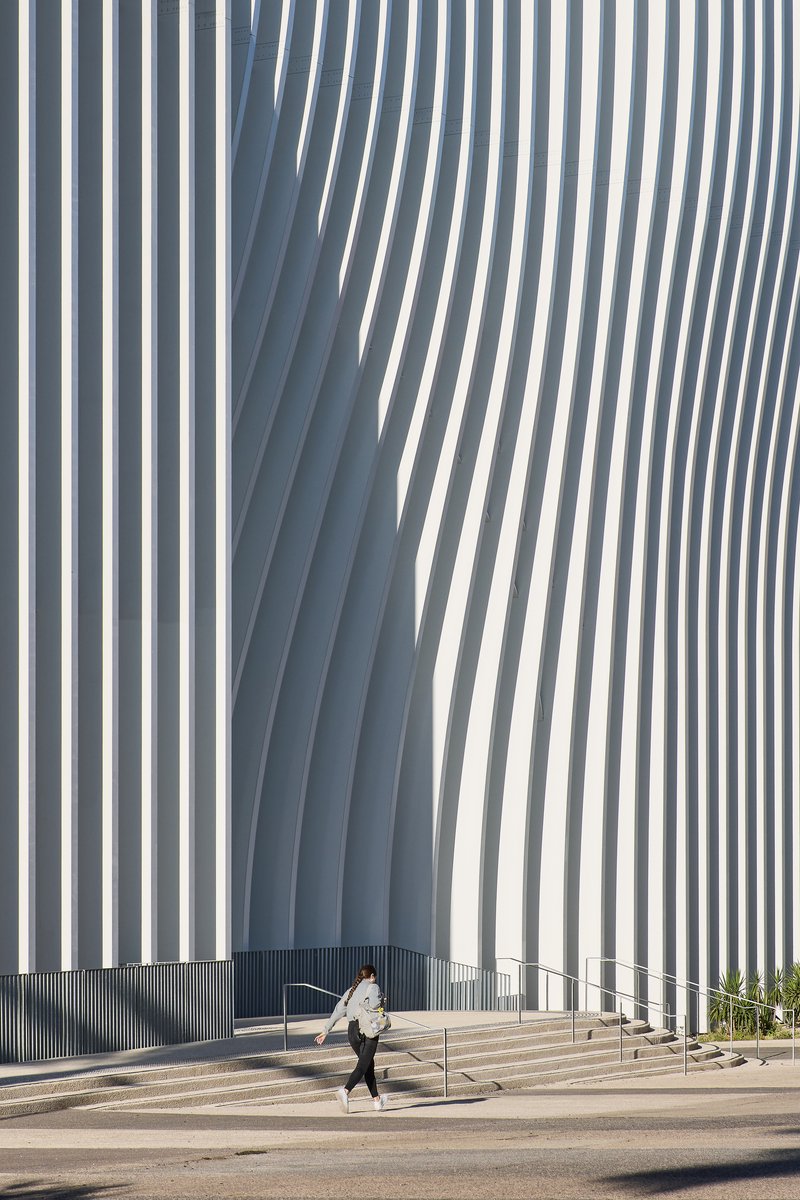
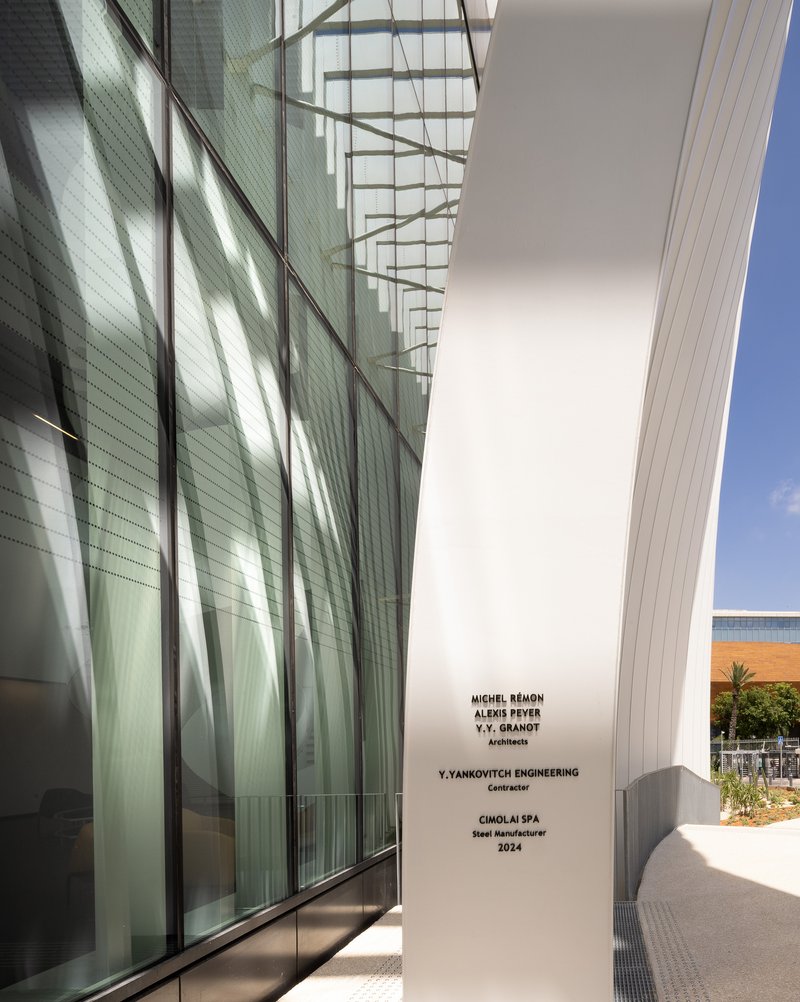
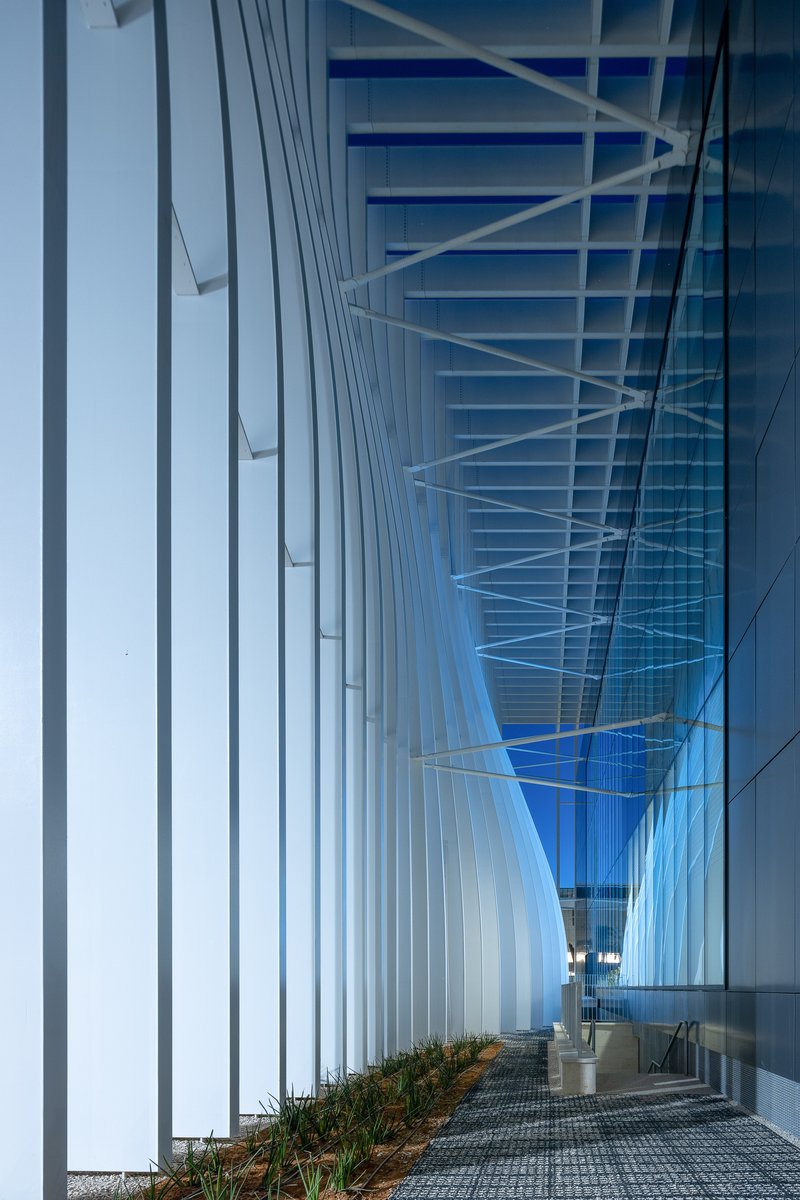
Visually, the NanoCenter is defined by its external envelope of vertical steel fins. Composed of 146 white-lacquered steel blades: each 25 meters tall, one meter deep, and spaced 1.2 meters apart, the second skin wraps the building in a rhythmic matrix.
This envelope eliminates conventional architectural elements such as windows and doors, creating an abstract geometric surface where structure becomes language. On the north, east, and west façades, the fins sit flush with the building volume. On the south façade, they extend six meters outward, forming an effective solar screen.
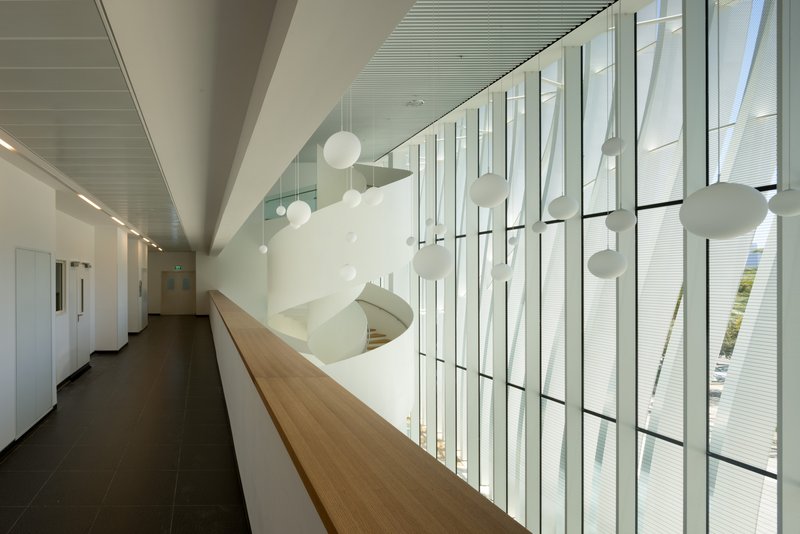
At roof level, the blades turn upward to create a three-dimensional cage that conceals plant rooms behind aluminum cladding. The result is a dynamic façade that regulates daylight, controls heat gain, and reinforces the building’s identity as an architecture beyond scale.
Research at the Frontiers of Science
Within this controlled environment, researchers explore some of the most advanced scientific fields today. At the heart of the NanoCenter, teams develop neural implants, nanorobotics, graphene-based materials, and 3D-printed human tissues.
Professor Yael Hanein focuses on neural interfaces that may transform hearing and artificial vision. Professor Tal Dviradvances human tissue engineering, combining nanotechnology with microfluidics to regenerate complex organs such as the heart, spinal cord, and brain.
To support this work, the building houses cutting-edge equipment including electron microscopes, nanoscopic lasers, spectrometers, and electron beam lithography devices, tools that operate at the very limits of human perception.
An Emblem for Scientific Excellence
Beyond its functional role, the Jan Koum Center for Nanoscience and Nanotechnology was conceived as an emblematic building at the eastern entrance to Tel Aviv University. Its architectural purity, technical sophistication, and symbolic strength reflect the ambitions of the institution and its benefactors.
By transforming the invisible world of nanoscience into a powerful architectural expression, Michel Rémon & Associés have created a building that is both a scientific instrument and a cultural landmark, an architecture that does not merely house research, but embodies it.
All the Photographs are works of Omri Amsalem, Harel Gilboa, Nimrod Levy




Popular Articles
Popular articles from the community

Fifth NRE Jazz Club – De Bever Architecten: Eindhoven’s Revitalized Cultural Hub
Historic gas factory transformed into Fifth NRE Jazz Club blending modern sustainability, jazz culture, dining, and heritage architecture seamlessly.

Atelier Macri Concept Store Interior Design by CASE-REAL
Atelier Macri store features a "ko" counter, walnut wood details, cork displays, blending retail, gallery, and seamless customer experiences.

Solar Steam: A Climate-Responsive Architecture That Redefines the Monument
A climate-responsive memorial architecture that transforms heat, decay, and time into a living system reflecting humanity’s ecological impact.
Inverted Architecture Installation by Studio Link-Arc: Exploring the Intersection of Architecture and Living Organisms
Inverted Architecture Installation by Studio Link-Arc blends mycelium, sustainability, inverted design, ecological cycles, and urban adaptive architecture in Shenzhen.


Similar Reads
You might also enjoy these articles


The Ken Roberts Memorial Delineation Competition (Krob)
As the most senior architectural drawing competition currently in operation anywhere in the world, it draws hundreds of entries each year, awarding the very best submissions in a series of medium-based categories.

Waterfront Redevelopment and Urban Revitalization in Mumbai: Forging a New Dawn for Darukhana
A transformative waterfront redevelopment project reimagining Darukhana’s shipbreaking heritage into an inclusive urban future.

OUT-OF-MAP: A Call for Postcards on Feminist Narratives of Public Space
Rhizoma Design and Research Lab invites artists, designers, architects, researchers, and students to reflect on how feminist perspectives can reshape public space. Selected works will be exhibited in Barcelona, October 2026. Submissions open until 15 April 2026.


Documentation Work on Buddhist Wooden Temple
Architectural syncretism and cultural hybridity: A comparative study of the Buddhist temples in Chattogram Hill tracks


Explore Architecture Competitions
Discover active competitions in this discipline




The International Standard for Design Portfolios


The Global Benchmark for Architecture Dissertation Awards


The Global Benchmark for Graduation Excellence


Challenge to design public laboratory
Comments (0)
Please login or sign up to add comments
No comments yet. Be the first to comment!