
Jiuzhai Valley Visitor Center by THAD – A Harmonious Blend of Nature and Tibetan Culture
Jiuzhai Valley Visitor Center by THAD blends Tibetan culture and nature with sustainable design, iconic awnings, and innovative glulam structures.

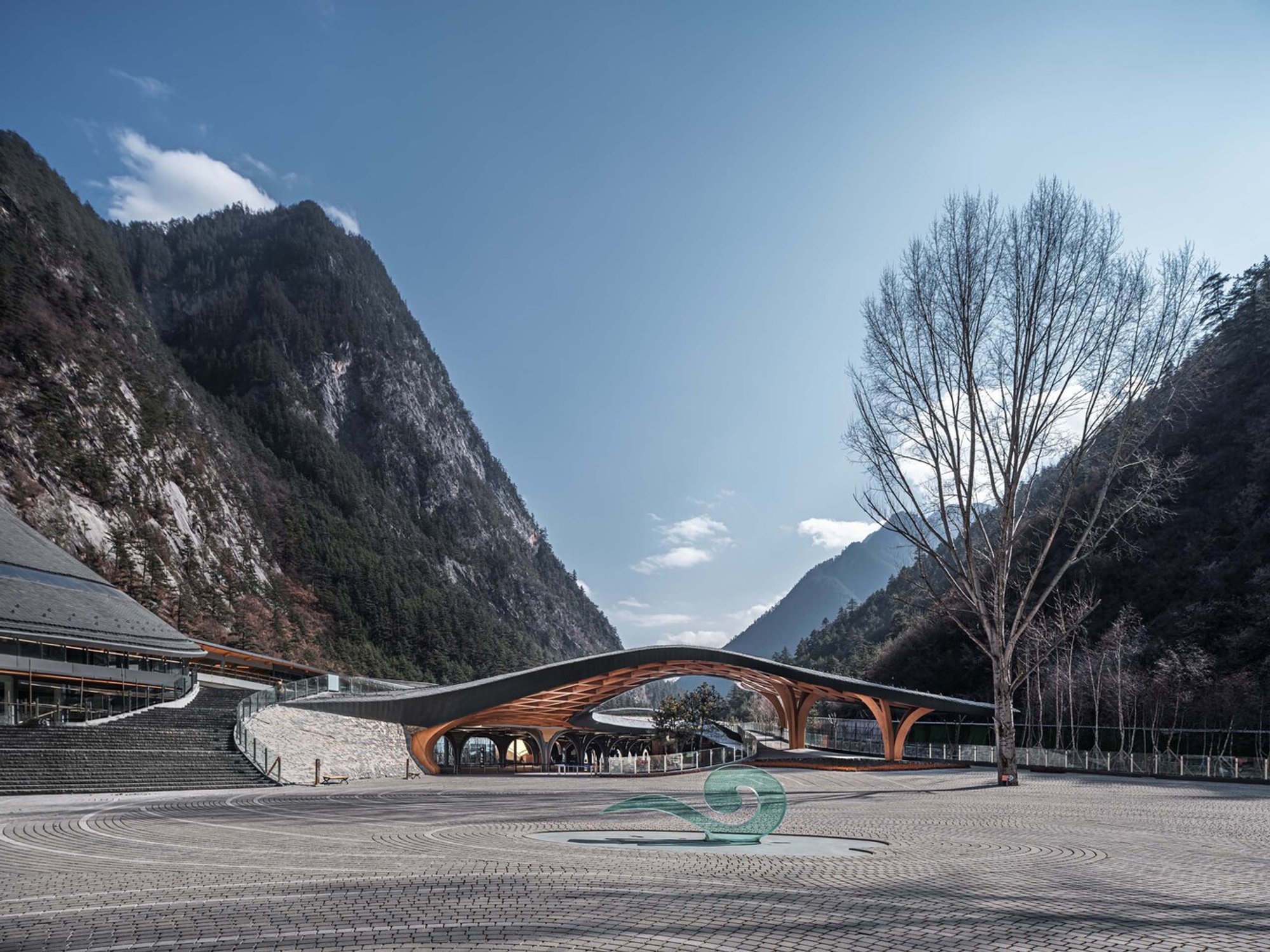
Located at the gateway of Jiuzhai Valley National Park, the Jiuzhai Valley Visitor Center, designed by THAD, spans approximately 30,650 m² on a site of 89,960 m². Completed in 2018, this landmark project serves as a visitor center and international communication hub, featuring the renovation of Heye Hotel, garden landscaping, embankment reinforcement along the Baishui River and Feicui River, as well as overpasses and ramps to improve accessibility. Designed to accommodate up to 41,000 visitors daily, it is a crucial infrastructure for the park’s tourism and local economy.
The project was meticulously overseen by Mr. Zhuang Weimin, a member of the Chinese Academy of Engineering, and constructed in collaboration with the Architectural Design and Research Institute of Tsinghua University, SCEGC No.9 Construction Engineering Group, and Sichuan Chuanjian Geotechnical Survey and Design Institute.
Design Concept
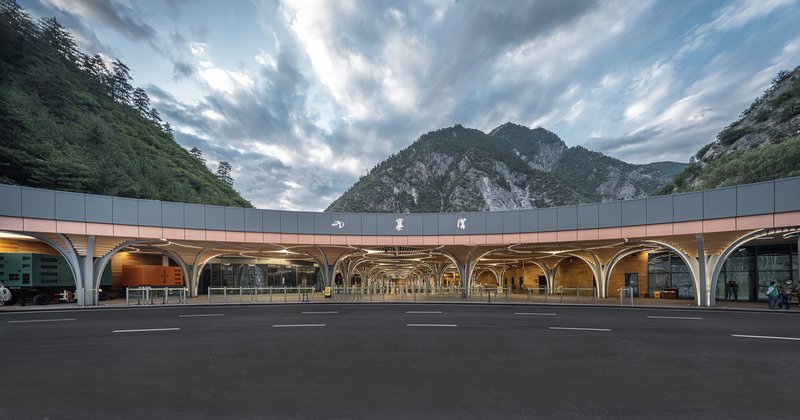
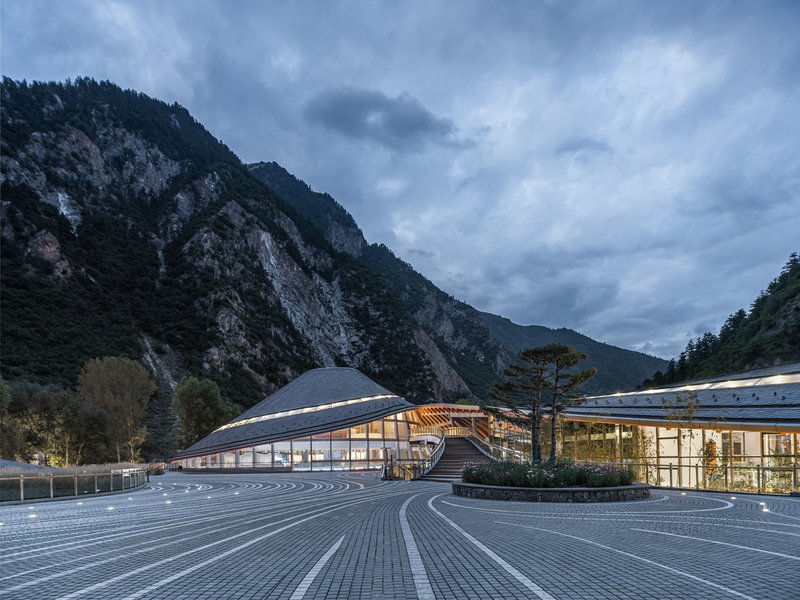
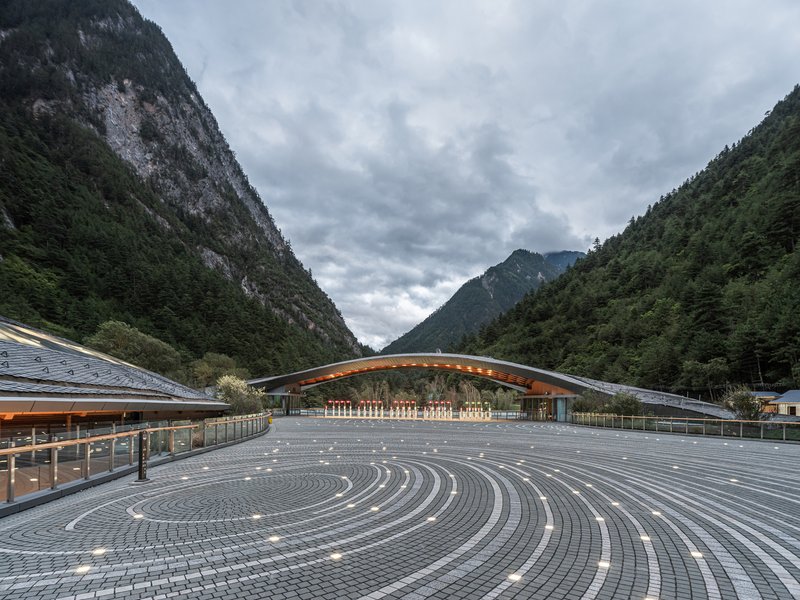
Drawing inspiration from the breathtaking natural scenery and Tibetan culture, the architecture seamlessly integrates modern design with cultural heritage, creating an “environmental architecture” that mirrors the surrounding mountains and rivers. The building employs smooth curves, platformed levels, and open spaces to provide an intimate connection with nature while accommodating high tourist volumes. The main departure platform offers panoramic views of the three mountains and two rivers, enhancing the visitor experience from the very first step.
Iconic Entrance & Awnings
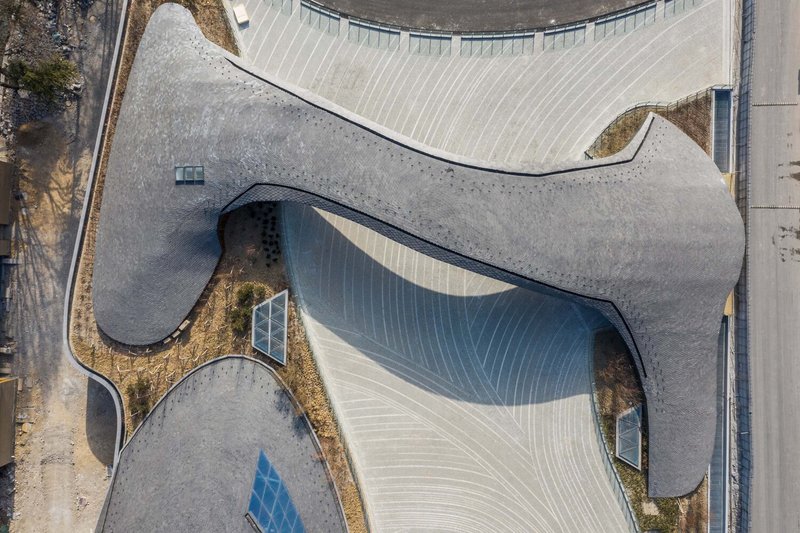
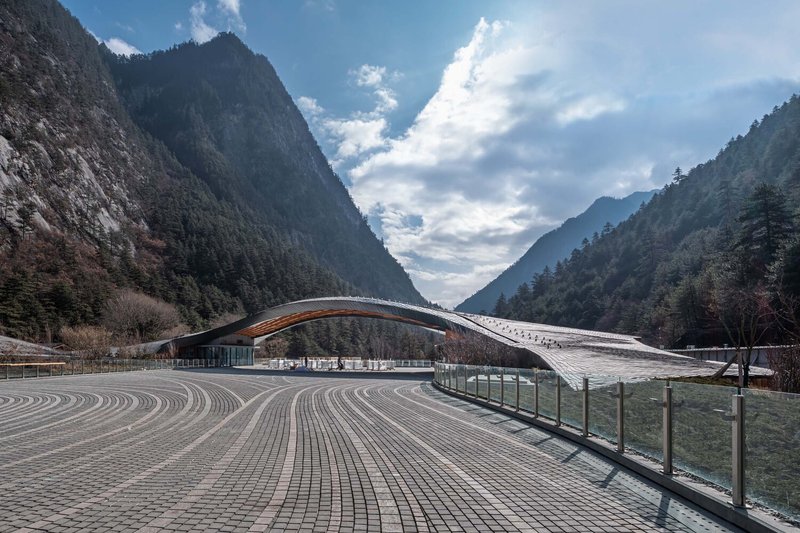
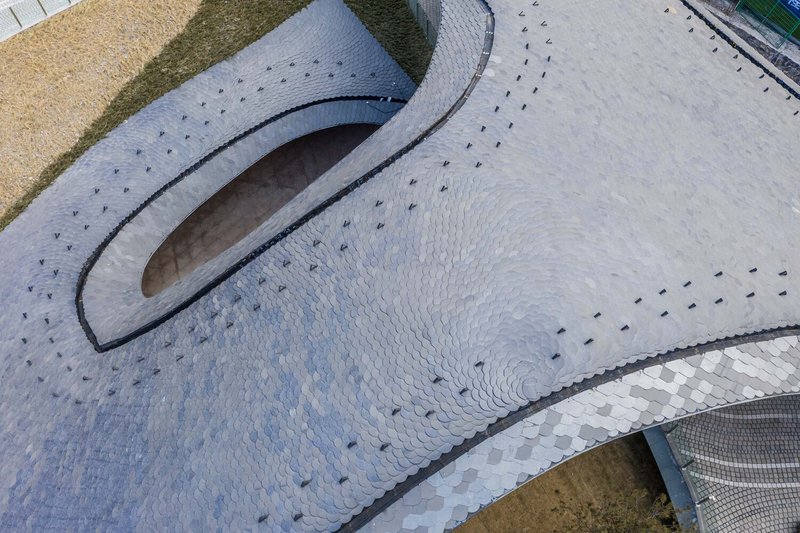
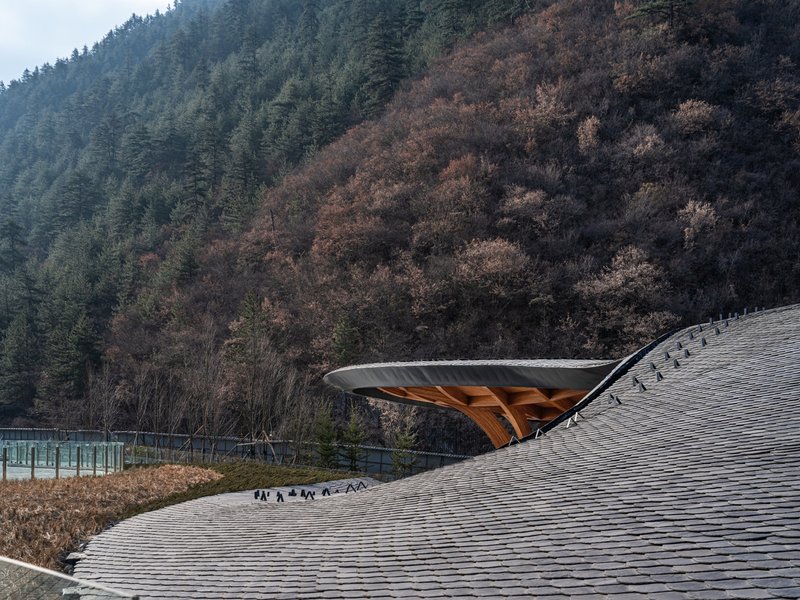
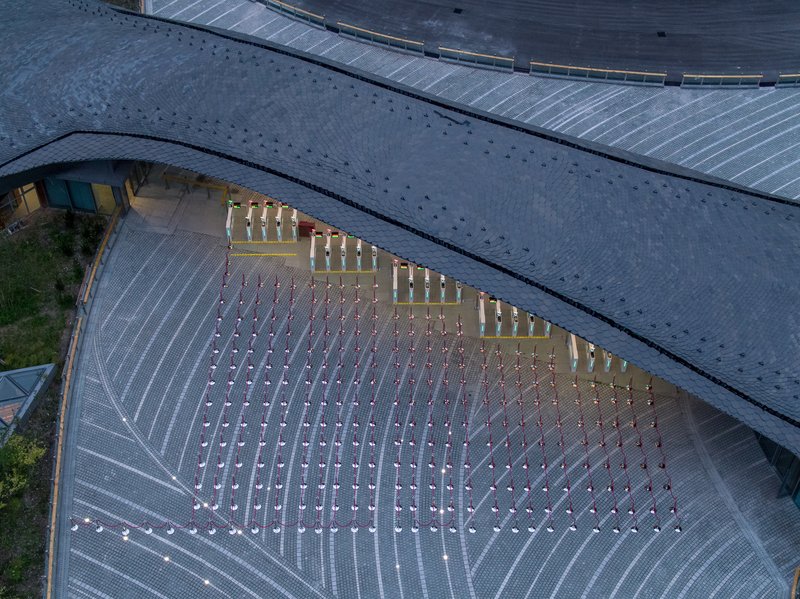
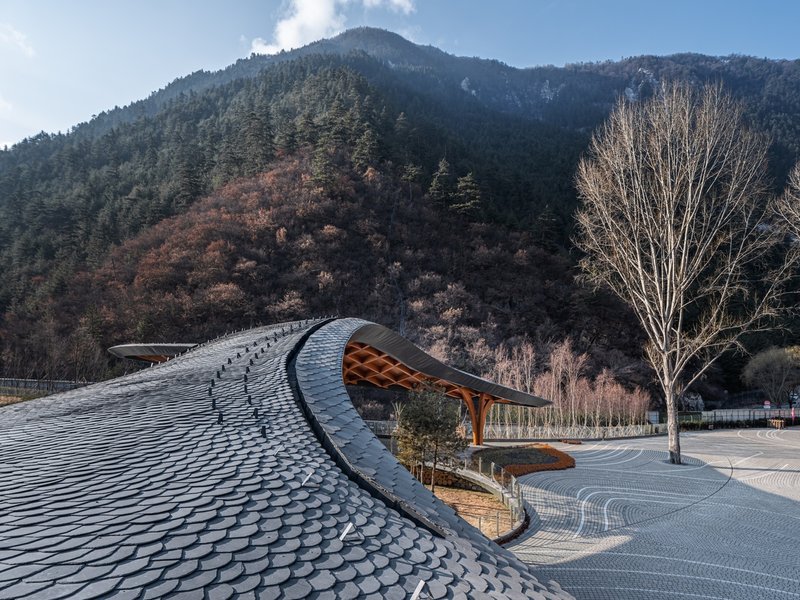
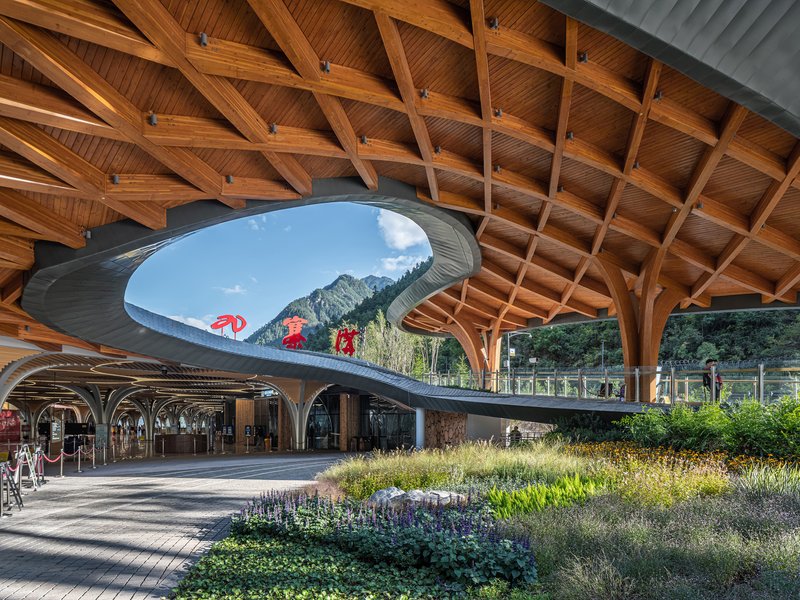
The entrance features tree-inspired dendriform columns and a massive glulam grid shell structure spanning 38 meters, supported by three branching columns. This unique design references Tibetan cultural symbols and Jiuzhai Valley’s natural forms. The awning, tiled with local slate, echoes the surrounding mountains and water bodies, creating a signature architectural icon for the park. The design allows for smooth visitor flow while framing the landscape naturally.
Innovative Structural Design
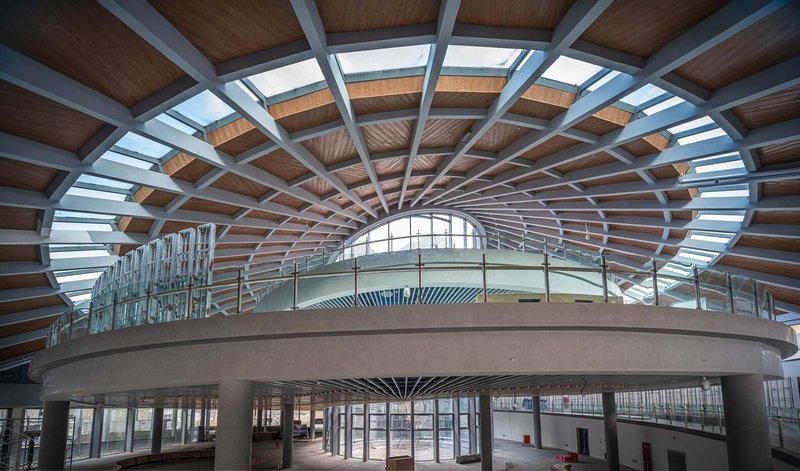
Beneath the main platform, over 6,000 m² of assembly and departure space features arched steel beams forming dendriform columns, combining structural integrity with aesthetic beauty. These columns not only support the platform but also reflect the valley’s natural rhythm, accommodating thousands of visitors without compromising openness or comfort.
Exhibition & Smart Center
The Exhibition Center, east of the assembly area, connects to the Smart Center and features a roof inspired by a Dharma-Sankha conch shell, symbolizing Tibetan heritage. The exhibition path gently spirals upward along a 3% slope, integrating natural scenery with interactive displays. Over 450 ultra-clear tempered glass panels, including the largest curved piece of 16 m², offer unobstructed views of the rivers and landscape while showcasing cutting-edge engineering.
Materials & Landscaping
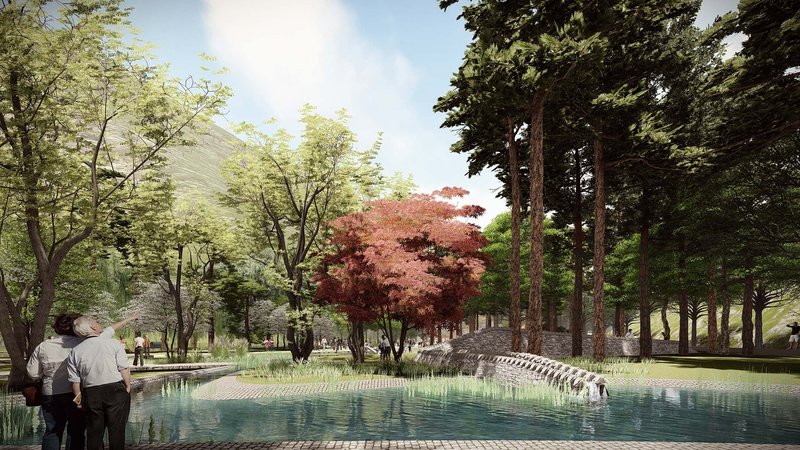
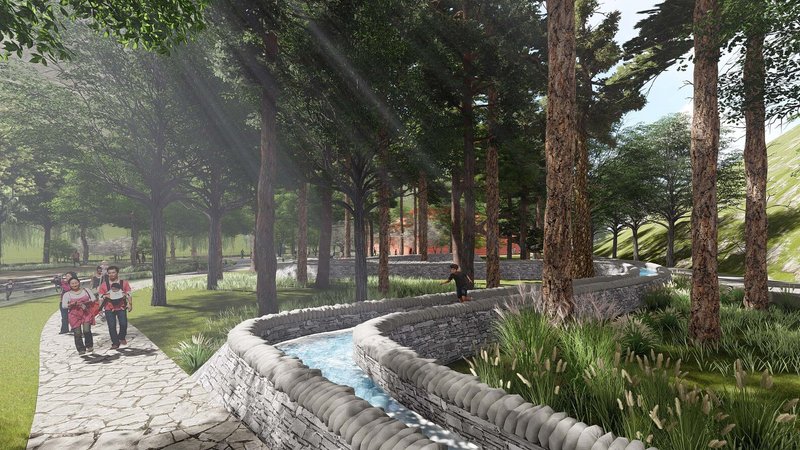
Natural roofing slate is used extensively, while the main departure square features paving inspired by the starry sky of Jiuzhai Valley, guiding visitors into the park through flowing star-trail patterns. The southeast garden, designed by Professor Zhu Yufan, incorporates Tibetan-style water gardens, existing vegetation, and lawns to create relaxing, scenic spaces that enhance visitor experience while alleviating congestion.
By combining cultural heritage, environmental sensitivity, and innovative engineering, the Jiuzhai Valley Visitor Center stands as a modern architectural landmark that honors both nature and Tibetan tradition, making it a key gateway to one of China’s most treasured natural landscapes.



Popular Articles
Popular articles from the community

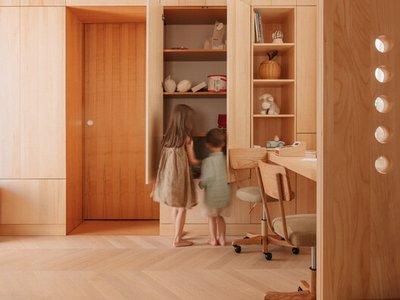
Treehouse Apartment: A Warm Timber Interior Blending Craft, Play, and Contemporary Living
Warm timber apartment with integrated treehouse, combining natural materials, craftsmanship, and playful design to create a flexible, family-oriented living environment.
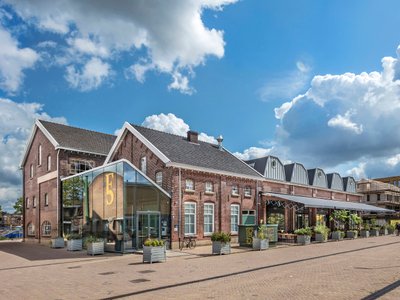
Fifth NRE Jazz Club – De Bever Architecten: Eindhoven’s Revitalized Cultural Hub
Historic gas factory transformed into Fifth NRE Jazz Club blending modern sustainability, jazz culture, dining, and heritage architecture seamlessly.
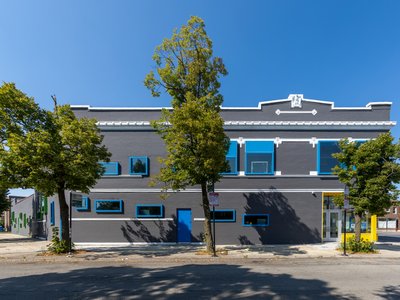
Gads Hill Early Learning Center by JGMA: Adaptive Reuse Shaping Community-Focused Educational Architecture
Adaptive reuse transforms fragmented structure into vibrant early learning center with playful façade, natural light, and community-focused sustainable design.
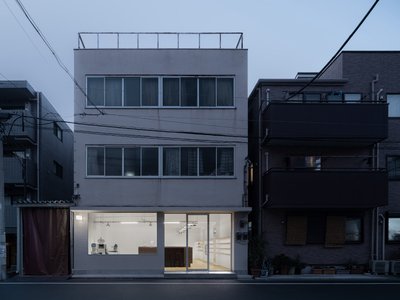
Atelier Macri Concept Store Interior Design by CASE-REAL
Atelier Macri store features a "ko" counter, walnut wood details, cork displays, blending retail, gallery, and seamless customer experiences.


Similar Reads
You might also enjoy these articles


The Ken Roberts Memorial Delineation Competition (Krob)
As the most senior architectural drawing competition currently in operation anywhere in the world, it draws hundreds of entries each year, awarding the very best submissions in a series of medium-based categories.


Waterfront Redevelopment and Urban Revitalization in Mumbai: Forging a New Dawn for Darukhana
A transformative waterfront redevelopment project reimagining Darukhana’s shipbreaking heritage into an inclusive urban future.

OUT-OF-MAP: A Call for Postcards on Feminist Narratives of Public Space
Rhizoma Design and Research Lab invites artists, designers, architects, researchers, and students to reflect on how feminist perspectives can reshape public space. Selected works will be exhibited in Barcelona, October 2026. Submissions open until 15 April 2026.


Documentation Work on Buddhist Wooden Temple
Architectural syncretism and cultural hybridity: A comparative study of the Buddhist temples in Chattogram Hill tracks

Explore Architecture Competitions
Discover active competitions in this discipline




The International Standard for Design Portfolios


The Global Benchmark for Architecture Dissertation Awards


The Global Benchmark for Graduation Excellence


Challenge to design an urban locus of culture and heritage
Comments (0)
Please login or sign up to add comments
No comments yet. Be the first to comment!