
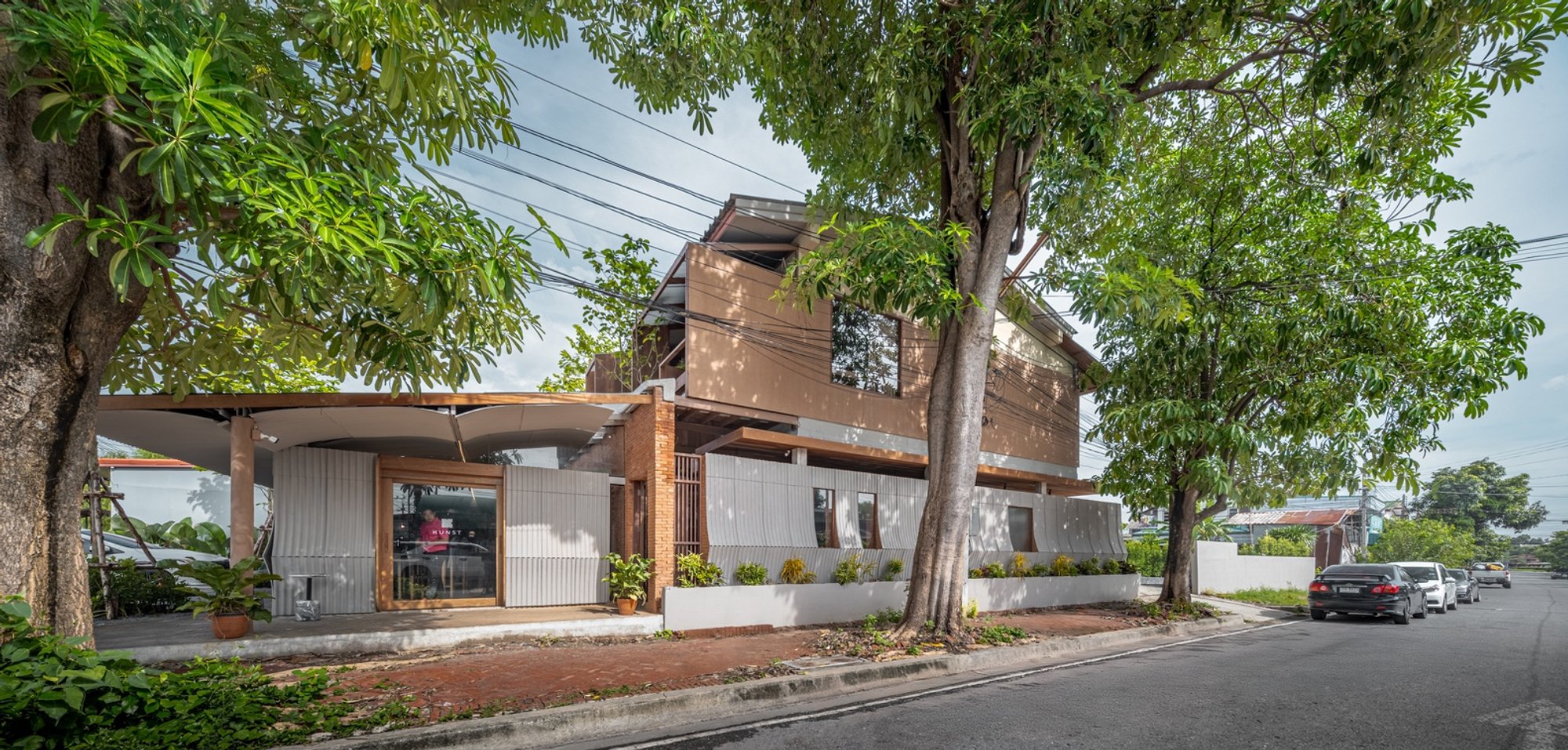
Kunst Ayutthaya Hotel Architecture: Familiar Materials Reimagined as Everyday Art by BodinChapa Architects
Adaptive reuse townhouse in historic Ayutthaya becomes hotel, bakery, and studio where familiar Thai materials are reimagined as everyday art.

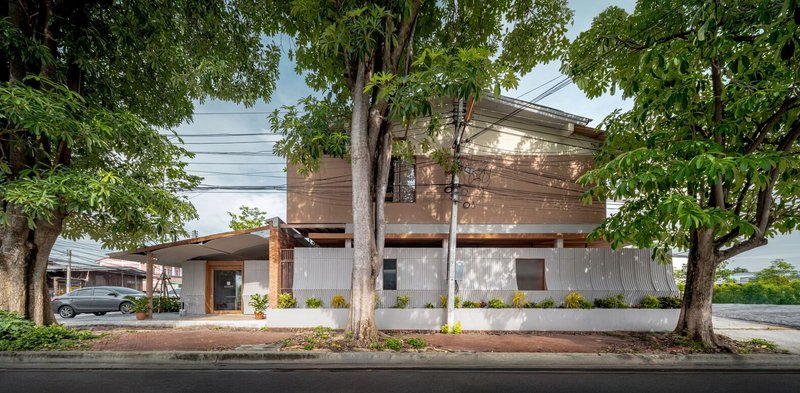
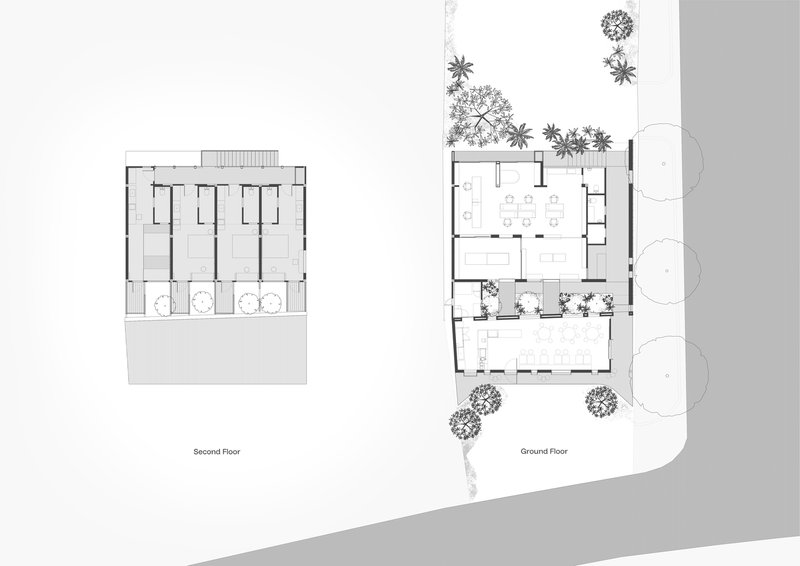
Kunst Ayutthaya occupies a once-enclosed townhouse in the historic island district of Phra Nakhon Si Ayutthaya, Thailand, and transforms it into a layered hospitality, café, and creative studio environment that feels at once new and deeply familiar. Designed by BodinChapa Architects and completed in 2025, the 420 square meter project is conceived as a generative place: a space that nourishes work, gathering, memory, and small daily rituals while honoring local craft lineages embedded in Ayutthaya’s built culture. Rather than pursuing novelty for its own sake, the design mines everyday vernacular cues—corrugated roof sheets, handmade brick, timber textures—and redeploys them in unexpected ways that invite recognition, curiosity, and belonging.
Name, Language, And Intent
The word Kunst, borrowed from the German term for art, was selected with deliberate linguistic play. In Thai, its sound recalls Khun (คุ้น), meaning familiarity, intimacy, and warmth. Kunst Ayutthaya therefore signals an architecture of artful familiarity: the art discovered in routine passages between home and street, in small service alleys and eaves details, in the weathering of brick and wood that characterize Ayutthaya’s memory-scape. The project positions itself between cultures and between meanings, carrying the precision of a design practice while foregrounding the emotional comfort of the known.
Reimagining An Existing Townhouse
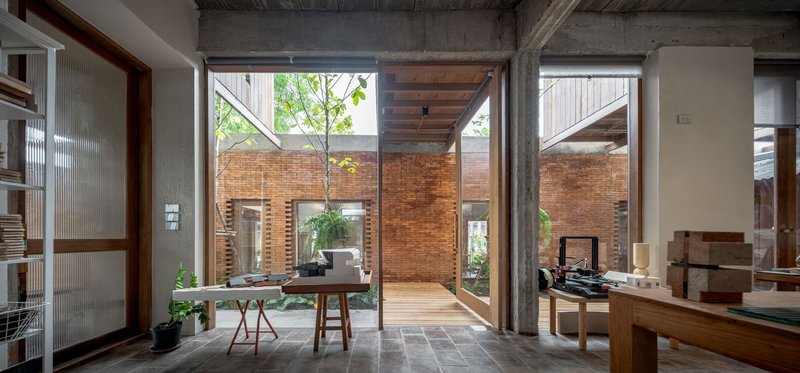
The original structure was a dense, inward townhouse typical of the historic core, its ground floor darkened by enclosure and layered accretions of walls and opaque roofing. BodinChapa’s intervention began by peeling back those layers to reintroduce air, sky, and filtered daylight. Openings were cut, roof planes partially lifted, and spatial connections threaded through the depth of the plot so that light could reach the ground level and internal movement could unfold around planted voids. What had been a sealed volume now performs as a porous, community-oriented frame.
Mixed Use As Layered Daily Life
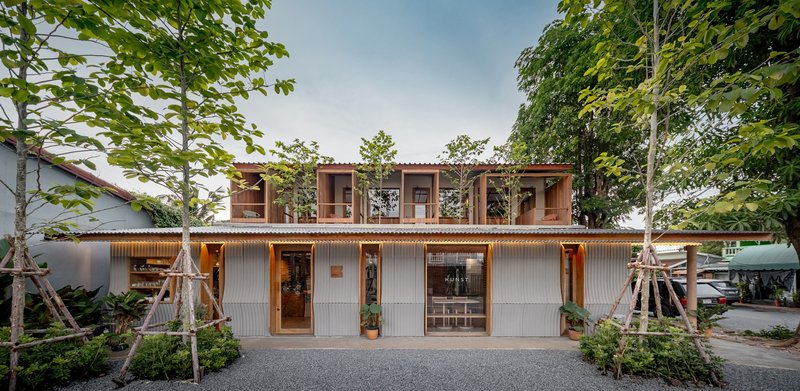
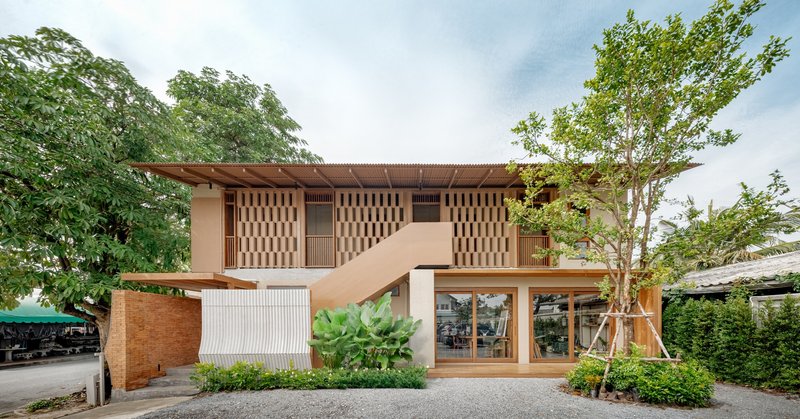
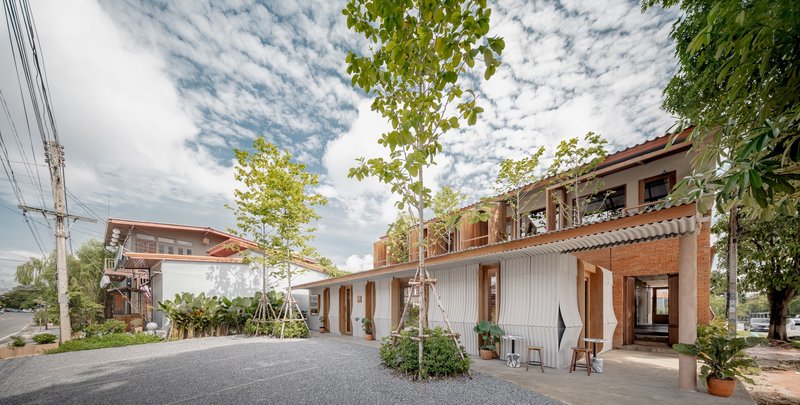
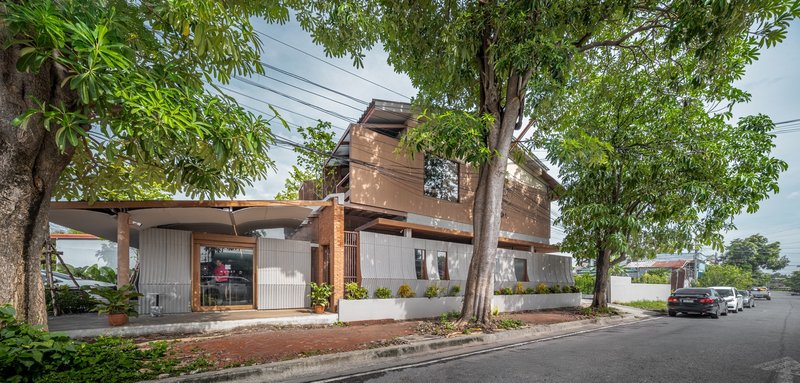
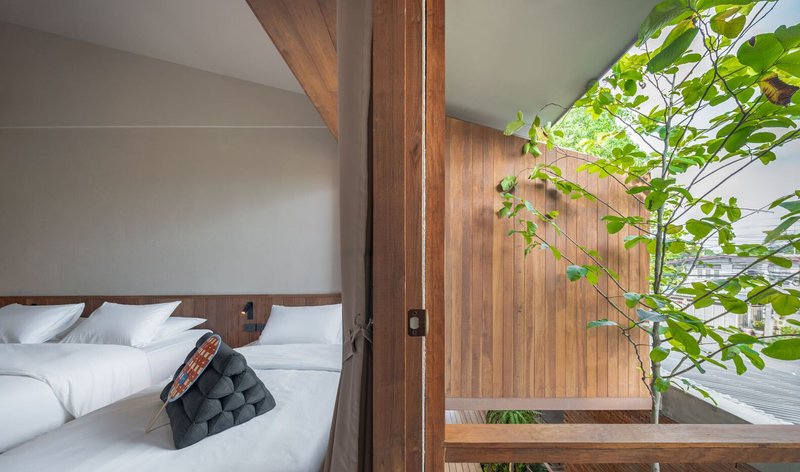
Kunst Ayutthaya is organized as three interdependent presences that share circulation and landscape while maintaining distinct identities. Visitors first encounter Kunst Bake ’n Cof at street level, an inviting bakery and coffee space that establishes the public face of the project and draws local foot traffic. Moving inward, the BodinChapa Architects studio occupies deeper ground, positioning the design team within the lived ecosystem they created and allowing spontaneous overlap between patrons, clients, and neighbors. Above, the Kunst Ayutthaya Hotel offers guestrooms tucked into the upper floor, giving travelers a quiet perch suspended over the social life below. What binds these programs is not a corridor but a network of open-air passages, planted cuts, and visual overlaps that allow the building to breathe and its uses to cross-pollinate.
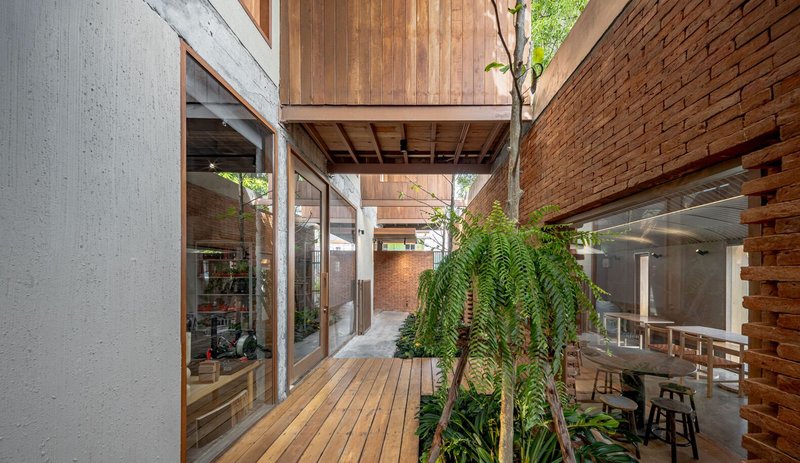
Courtyard Spine And Vertical Connection
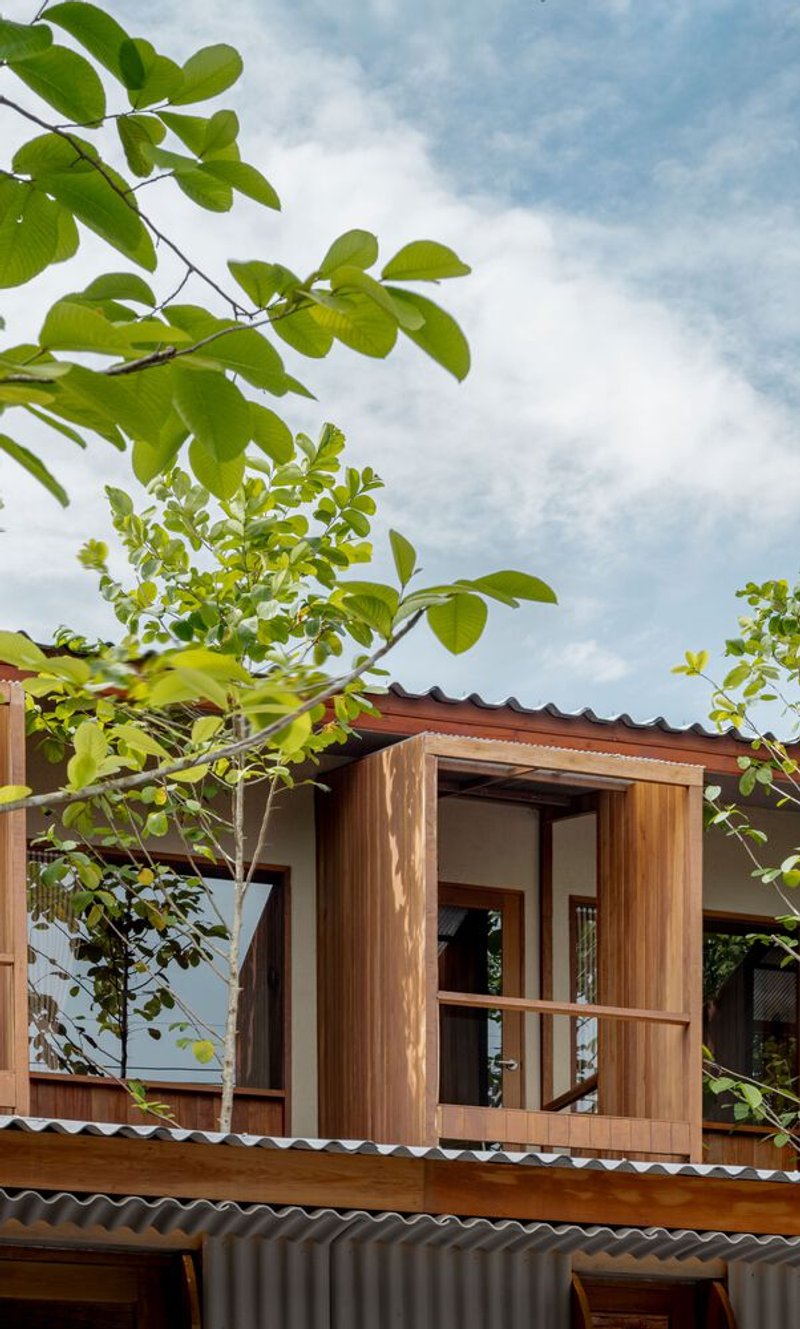
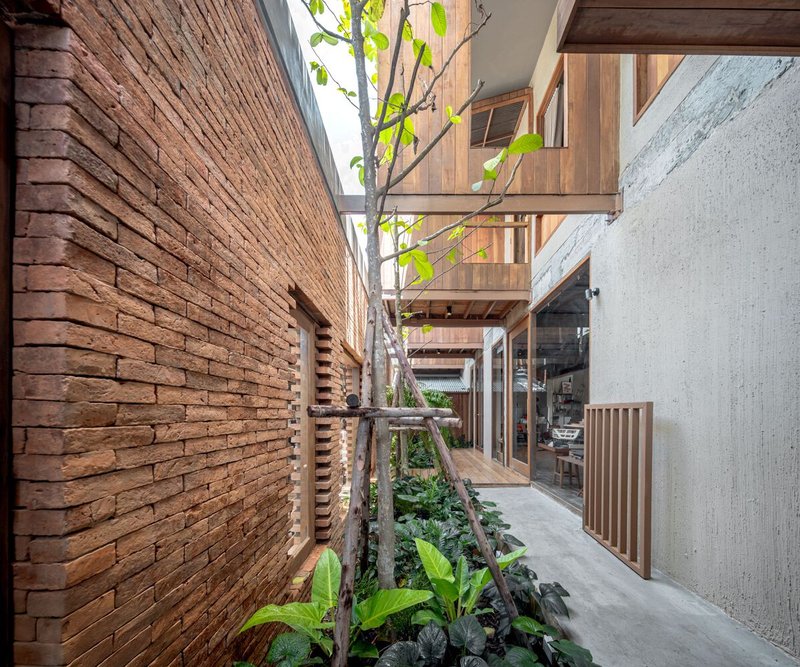
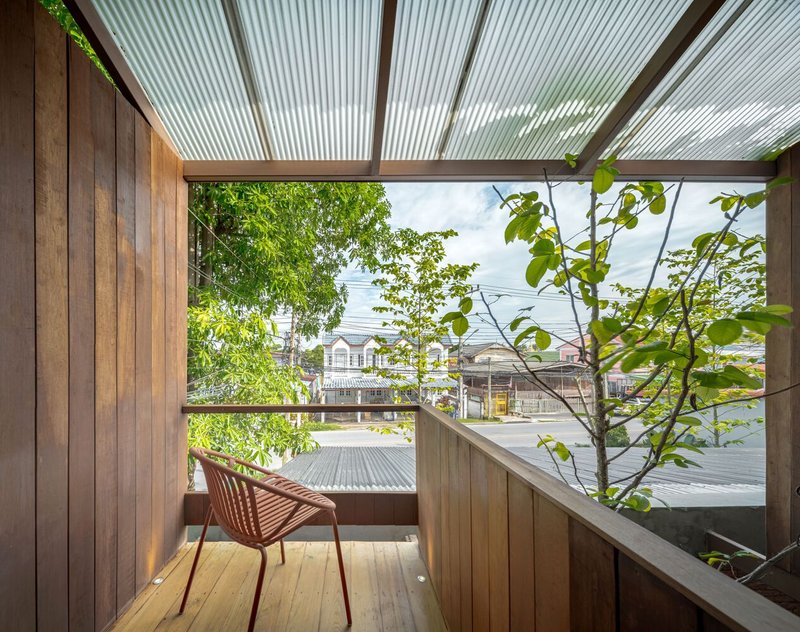
A central courtyard carved from the townhouse depth becomes the social and environmental lung of the project. A mature tree rises through the void, its canopy threading between hotel balconies and upper walkways. Light washes down trunks and brick surfaces, animating shared circulation while preserving privacy for guest rooms and workspaces. Green pockets and transitional landings act as slow zones where guests, café visitors, and studio staff intersect without crowding. The courtyard also organizes ventilation, drawing breezes across shaded surfaces and distributing cooler air through connected interiors.
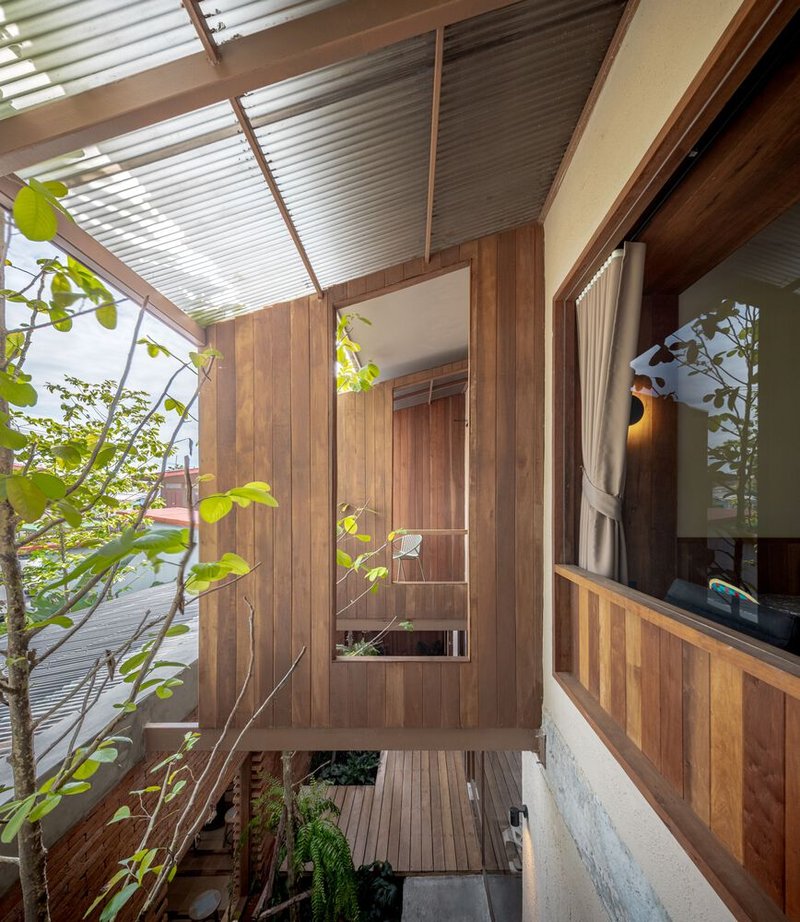
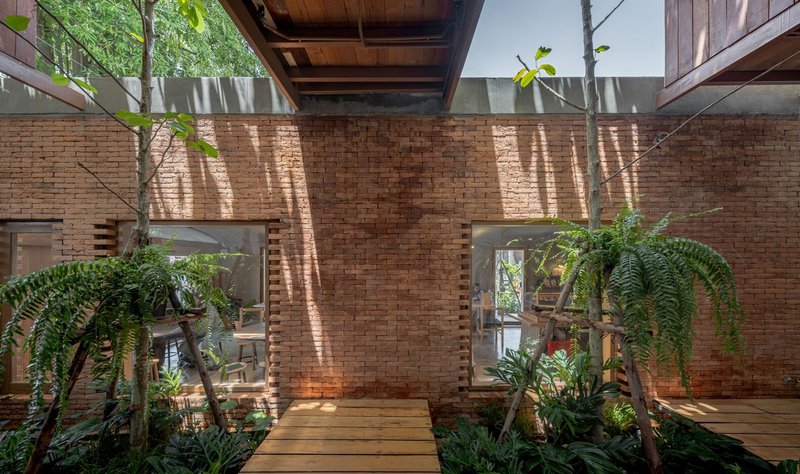
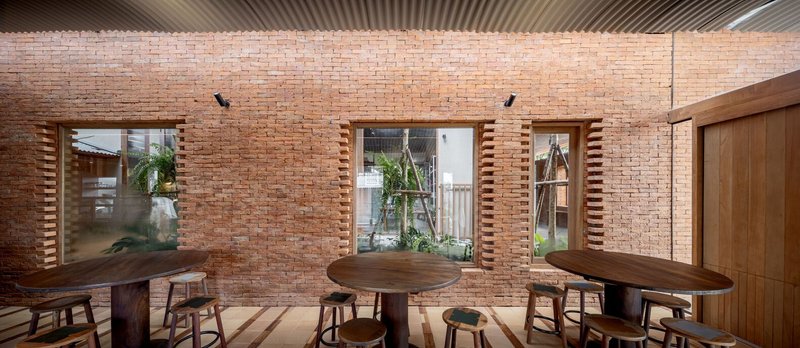
Familiar Forms Reinterpreted
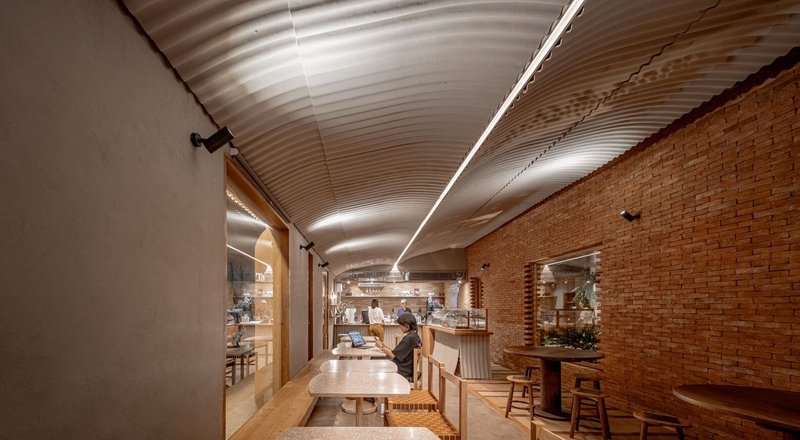
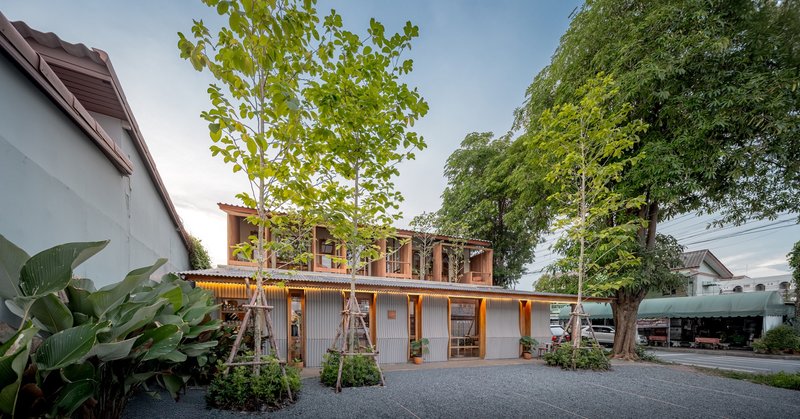
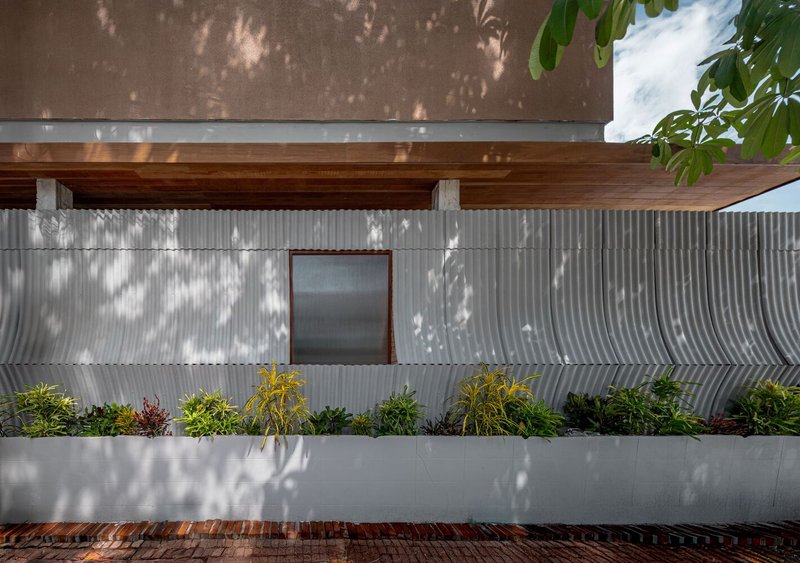
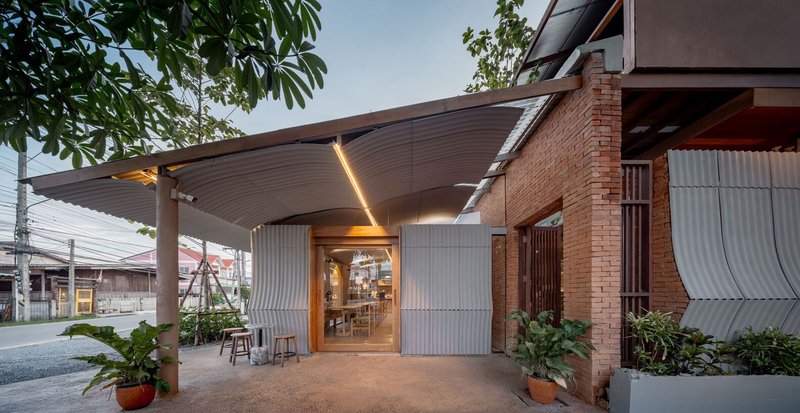
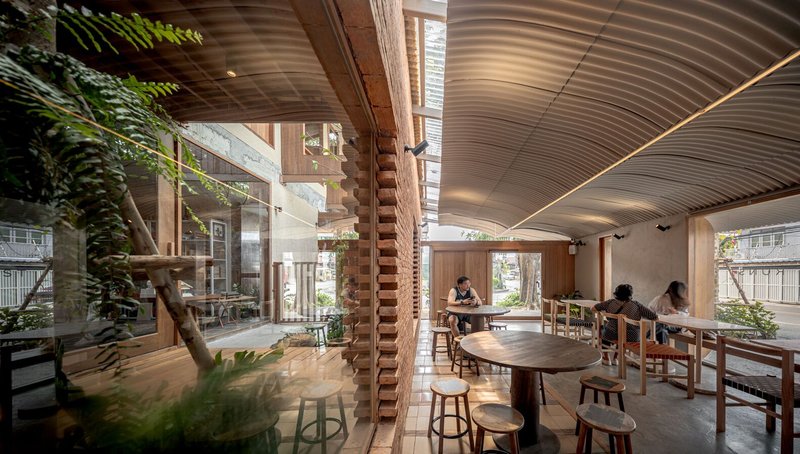
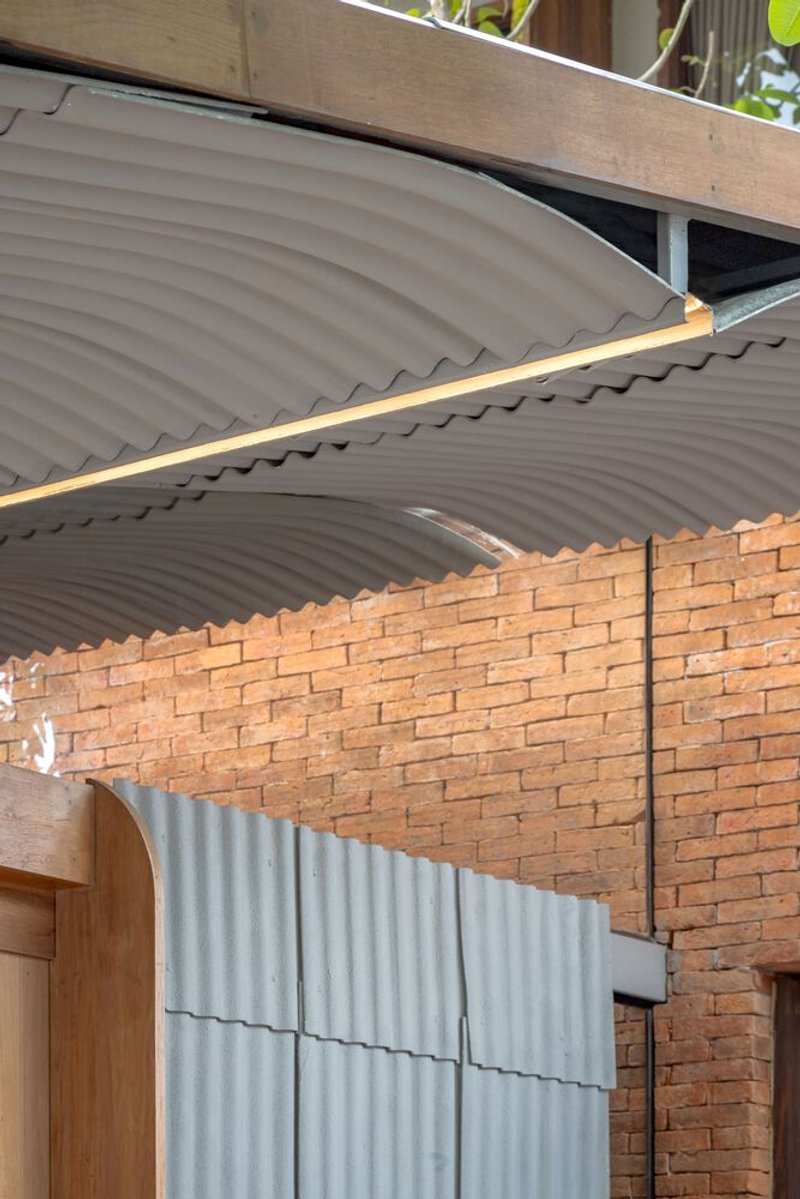
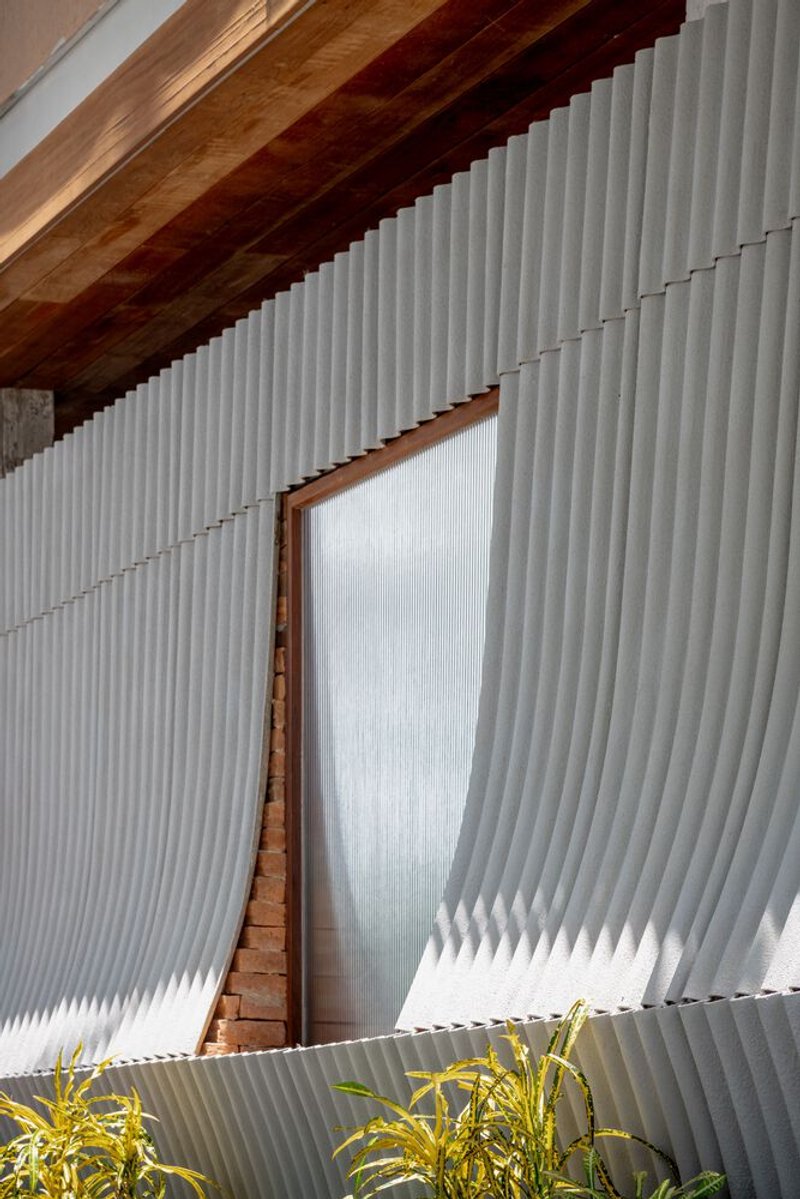
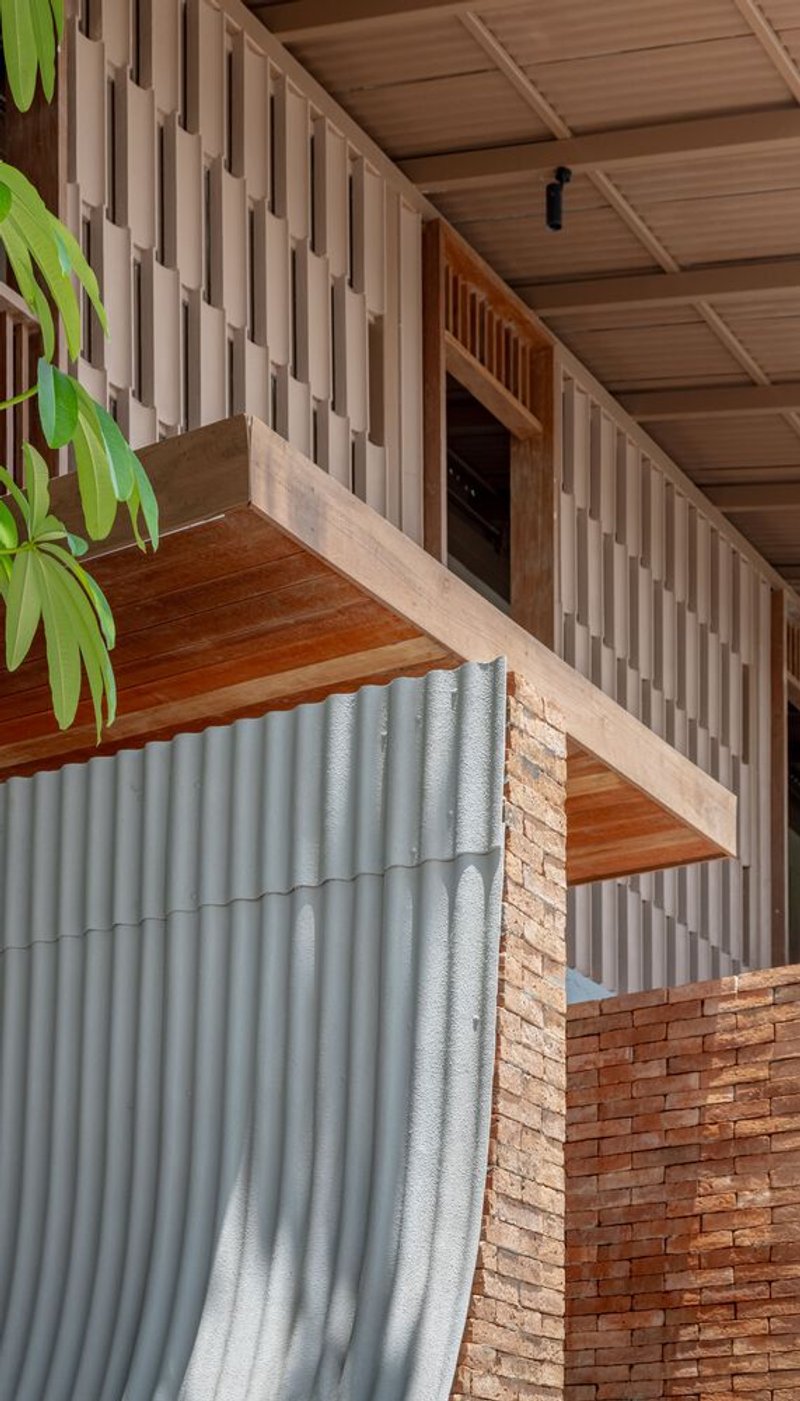
One of the project’s most distinctive gestures is the repurposing of small-curved corrugated roofing sheets—humble elements long seen at the eaves of traditional Thai houses. Here they appear not overhead but as façade cladding, soffit texture, and boundary-field material, shifting from background utility to expressive surface. By elevating an everyday component, the architects prompt users to notice what usually goes unseen and to reconsider the cultural intelligence embedded in low-cost, climate-responsive vernacular construction. The familiar becomes artifact; artifact becomes architectural language.
Material Memory And Local Craft
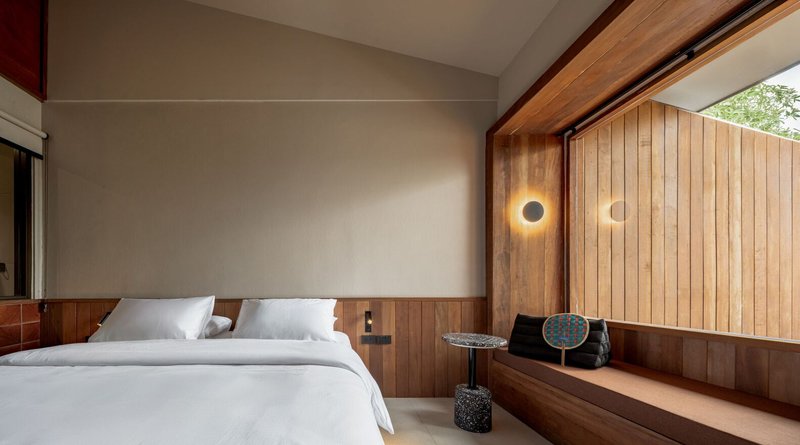
Locally made brick and real wood line walls, floors, and thresholds, grounding the renewed structure in the tactile economies of Ayutthaya’s timber trade and brick kilns. Imperfections are retained rather than erased, allowing tool marks, tonal variation, and grain shifts to register human labor. This acceptance of irregularity builds narrative density: guests are not surrounded by anonymous finishes but by materials that speak of sourcing, handling, and weather. In this way, material selection operates as memory storage, translating regional craft into an everyday hospitality setting without resorting to pastiche.
Light, Shade, And Climatic Softening
Opening the townhouse permitted daylight to reach the ground floor, but unmanaged sun in a tropical environment can overwhelm comfort. The designers counterbalance exposure through deep-set apertures, shaded walkways, layered screens, and vegetated edges that temper glare. Corrugated metal used as vertical cladding develops micro-shadow lines that break up reflected light; timber soffits warm lower sightlines; brick surfaces absorb and re-radiate heat gradually. The resulting light quality is mottled and temporal, shifting across the day to mirror the rhythm of a city whose historic ruins and riverine climate are always in flux.
Emotional Recognition And Spatial Belonging
Kunst Ayutthaya is structured around the idea that people attach to places when something about them is already known. That recognition need not be literal replication; it can arise through proportion, touch, smell of wood in heat, the sound of café activity filtering through a courtyard, or the sight of a common roofing sheet used with new intention. Guests sense continuity with Thai domestic vernacular even as they encounter a contemporary spatial sequence. Locals recognize textures from daily life re-presented with care. The project therefore mediates between memory and imagination, encouraging users to question what makes a space feel like home.
Architecture As Generative Platform
Because the building houses the BodinChapa studio along with public and guest-facing programs, it functions as a living laboratory. Surfaces can be adapted, details iterated, and new layers added as use patterns emerge. The architects describe the project as a space that bears fruit, suggesting an environment designed to evolve in response to the people who occupy it. Shared courtyards, adaptable boundaries, and modular surface treatments make ongoing growth an integral part of the architectural proposition.
Kunst Ayutthaya Hotel Architecture models how adaptive reuse in a heritage urban fabric can cultivate contemporary hospitality without severing ties to local memory. By foregrounding familiar Thai materials, reinterpreting vernacular elements, and staging social overlap among café, studio, and guestrooms around a breathing courtyard spine, BodinChapa Architects deliver an experience that feels rooted, artful, and alive. In Ayutthaya—a city defined by layered histories—the project demonstrates that continuity emerges not from replication but from sensitive transformation of what people already hold close.
All the photographs are works of shootative / Witsawarut Kekina


Popular Articles
Popular articles from the community

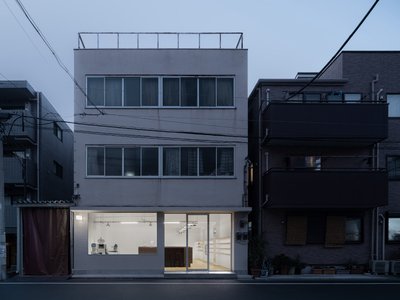
Atelier Macri Concept Store Interior Design by CASE-REAL
Atelier Macri store features a "ko" counter, walnut wood details, cork displays, blending retail, gallery, and seamless customer experiences.
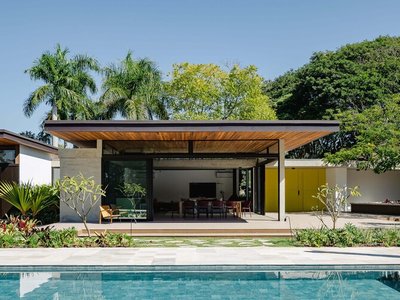
Flamboyant House by Juliana Camargo + Prumo Projetos
Modern Brazilian house integrating existing tree, pool, and volumes with glass, wood, and transitional spaces blending interior, exterior, and landscape seamlessly.
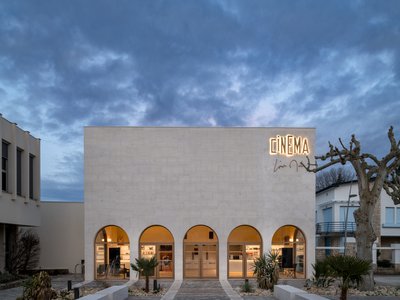
Louis Malle Cinema: A Limestone Cultural Landmark Revitalizing Community Life in Prayssac
Limestone cinema extension with public forecourt, blending heritage and modern design to create flexible cultural spaces and strengthen community interaction.
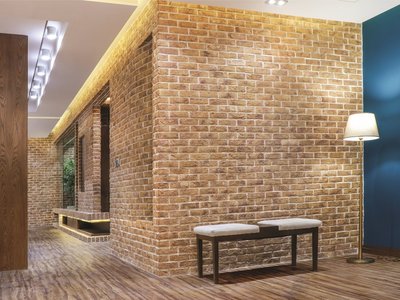
A Contemporary Take on Iranian Residential Architecture
A modern interior design in Mashhad that reinterprets brick, light, and spatial flow to create a warm, contemporary residential architecture.

Similar Reads
You might also enjoy these articles

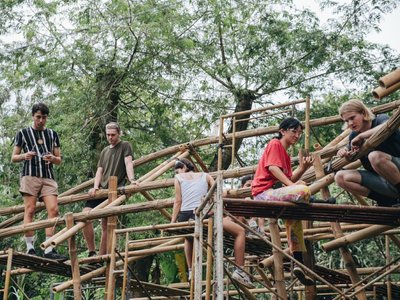
Bamboo Housing Challenge 2026: Design Affordable, Sustainable Homes Using Bamboo
An international design competition by Bamboo U and IBUKU inviting architects and designers to reimagine affordable housing using bamboo — with the winning design built full-scale in Bali.
Computational Design & Education: Beegraphy Design Awards Introduces 7th Category (Featuring Jiyun's Innovative Approach)
Dive into Beegraphy’s 7th Design Awards category, where computational design meets education to create immersive, interactive learning tools, inspired by Jiyun’s work.
From Parametric Lighting to Urban Furniture: Join the 2nd Workshop in Beegraphy’s Computational Design Series
Dive into Cutting-Edge Design Techniques and Practical Applications with Industry Experts

Introducing Sphere by UNI: Pioneering a New Era in AEC Industry
Unlocking Global Potential with BIM and Agile Management

Explore Architecture Competitions
Discover active competitions in this discipline




The International Standard for Design Portfolios


The Global Benchmark for Architecture Dissertation Awards


The Global Benchmark for Graduation Excellence


Challenge to reimagine the Iron Throne
Comments (0)
Please login or sign up to add comments
No comments yet. Be the first to comment!