
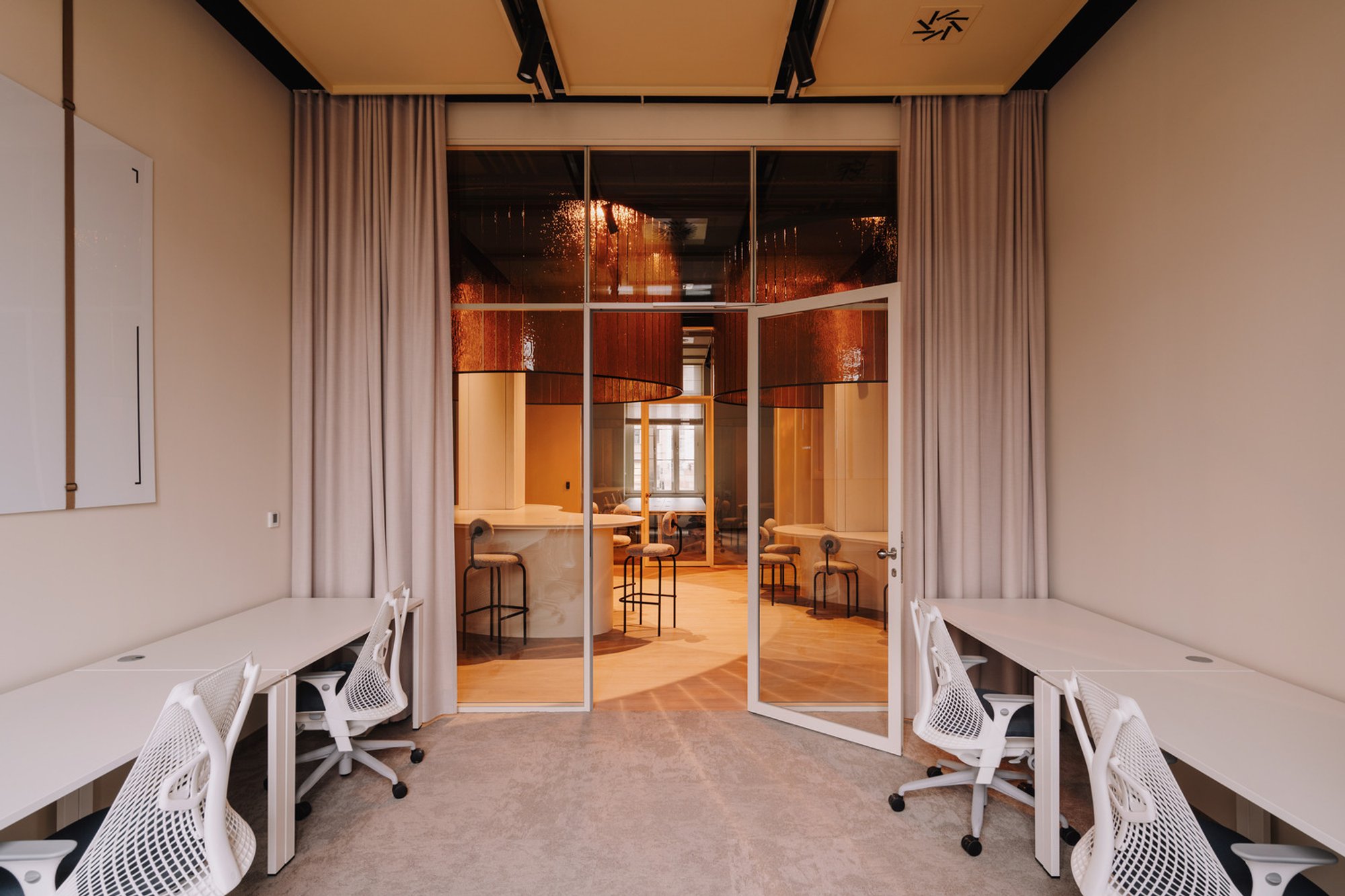
LABO by L’UNI: A High-End Coworking Space Redefining Office Design in Wrocław
LABO by L’UNI is a high-end coworking space in Wrocław, blending pharmaceutical glass artistry with modern office design.

A Fusion of Functionality and Artistic Vision
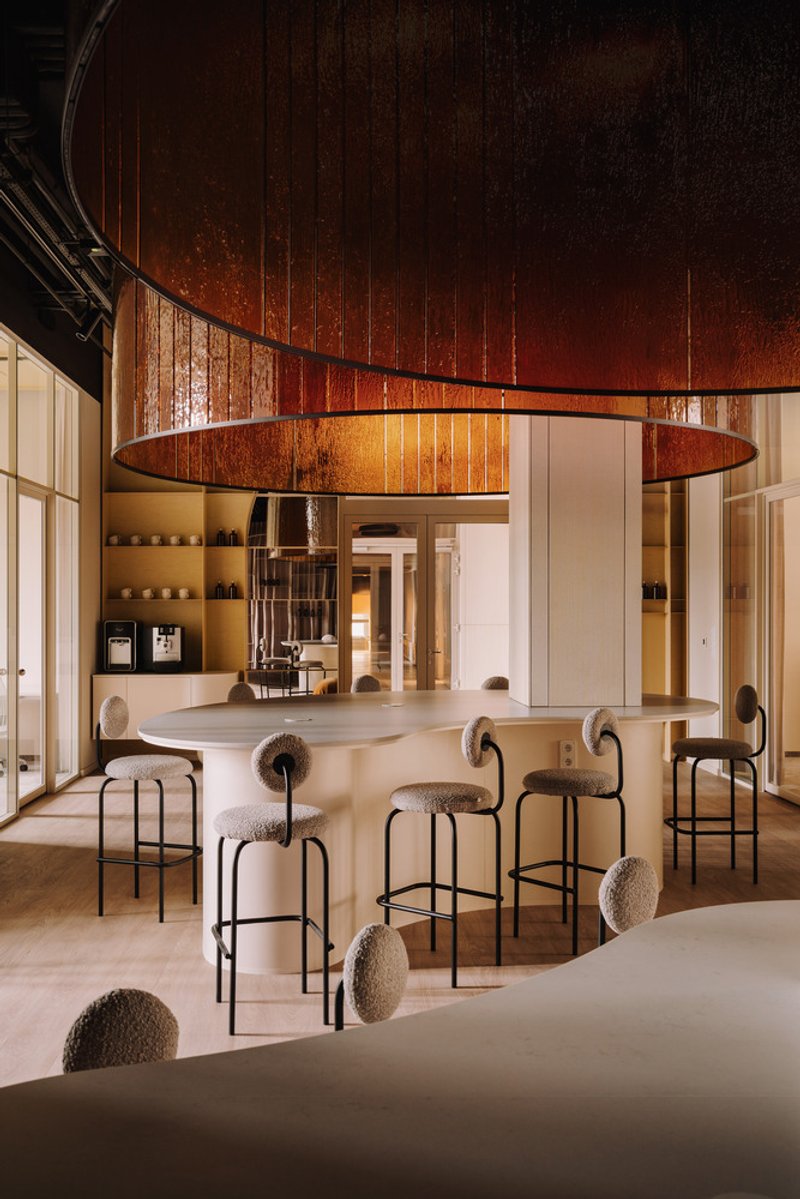
LABO by L’UNI, designed by CUDO, is a groundbreaking high-end coworking space in Wrocław that merges sophisticated design with artistic expression. Located in a historic building that once housed the Faculty of Pharmacy at the Medical University, this space reinterprets its past with a contemporary approach. The design is inspired by pharmaceutical glass, a nod to the building’s heritage, while fluid, organic forms reference the nearby Odra River.
Architectural Innovation with Glass Installations
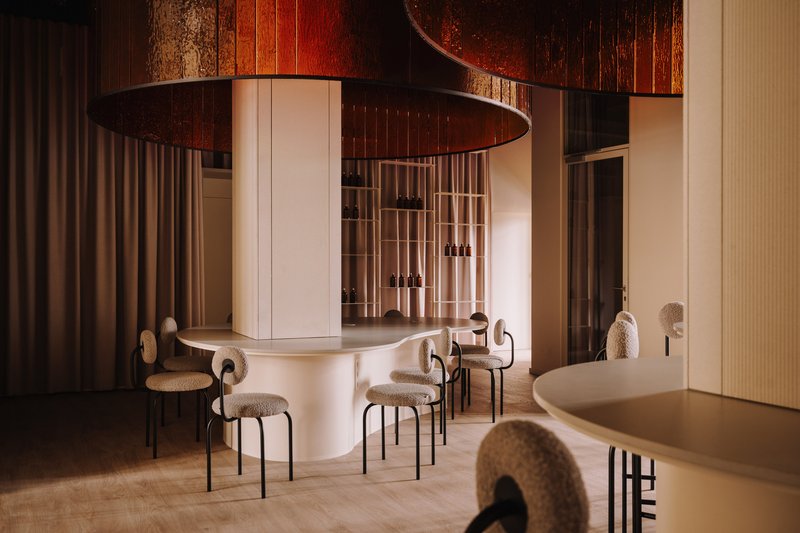
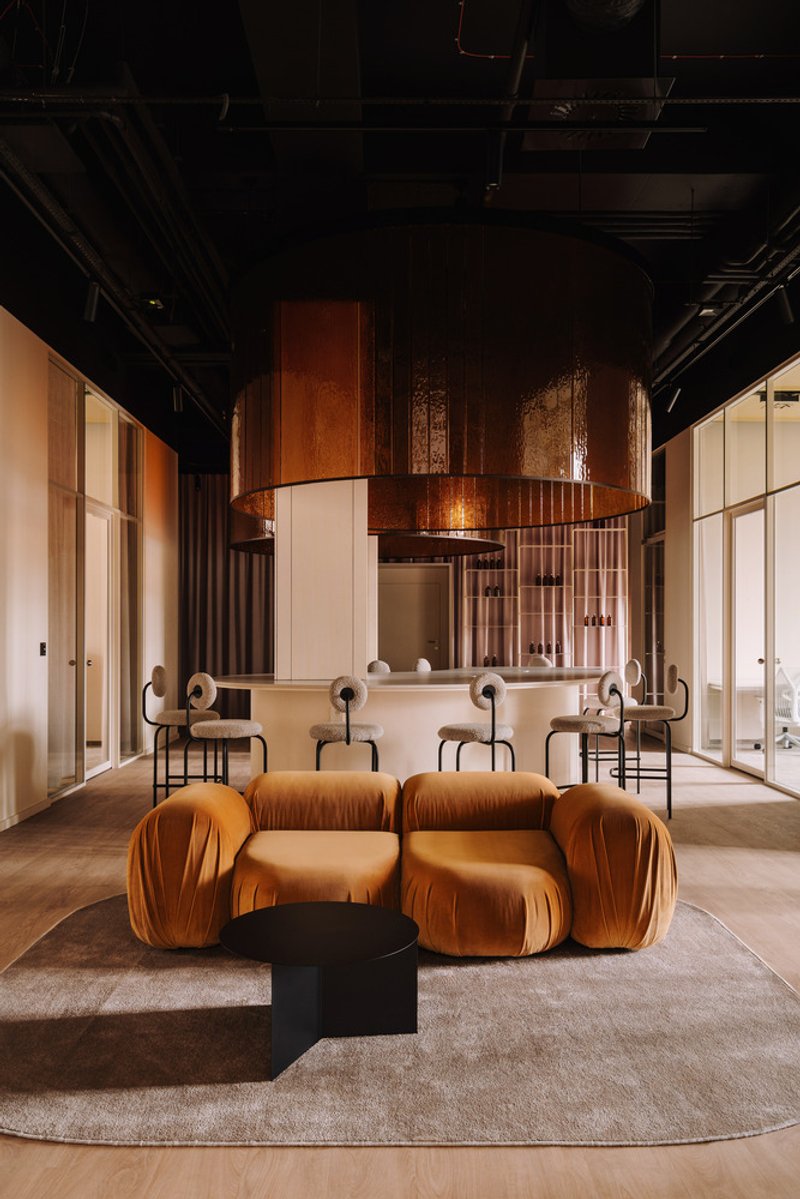
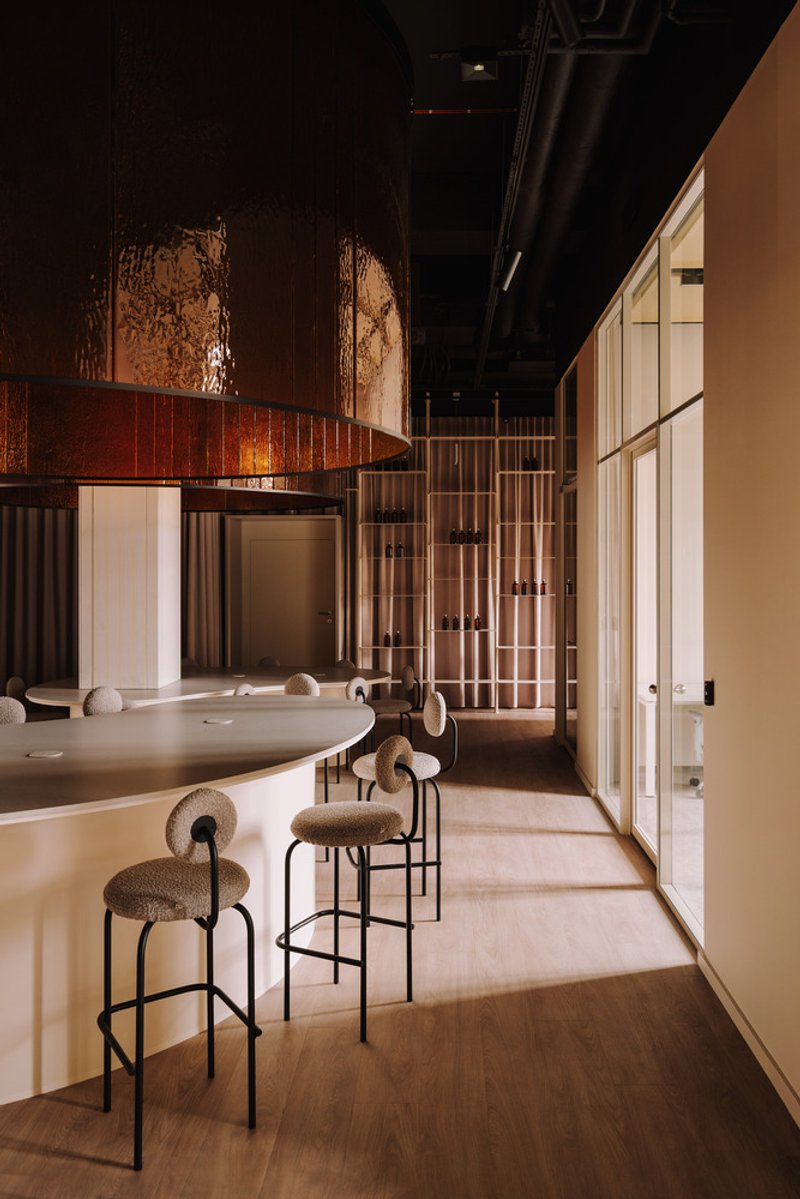
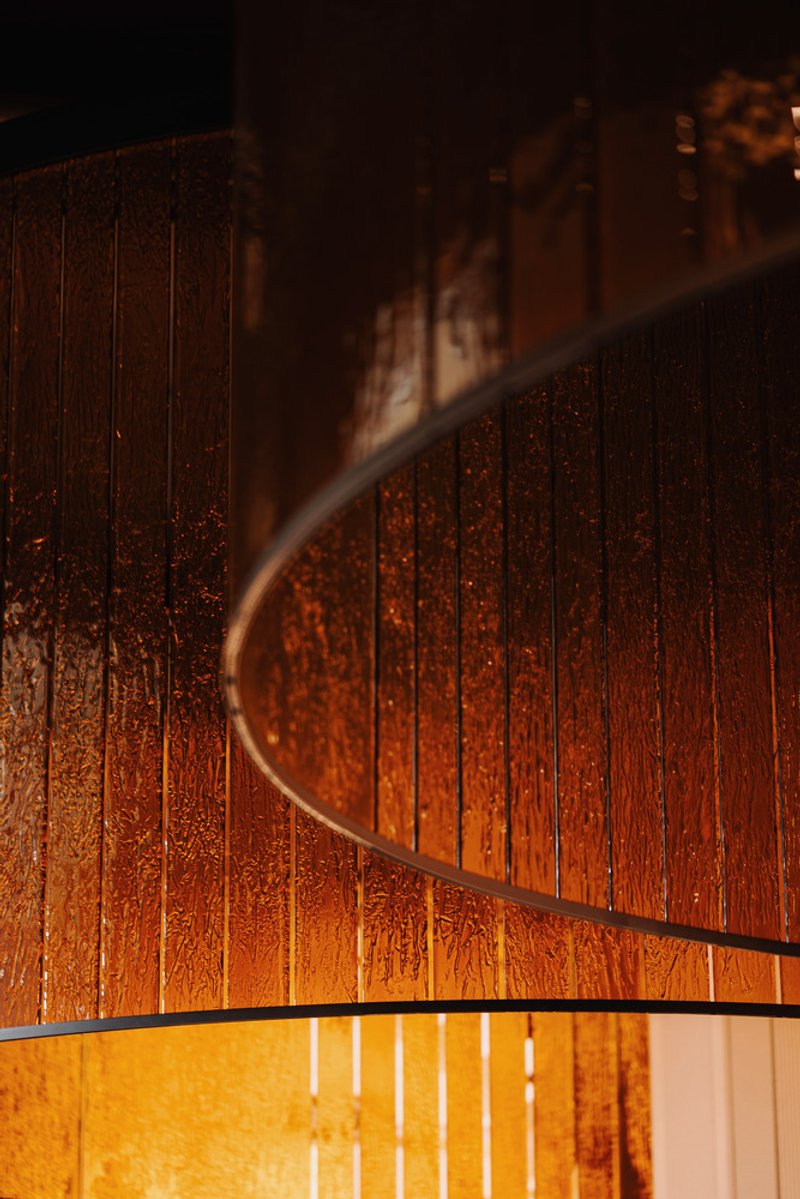
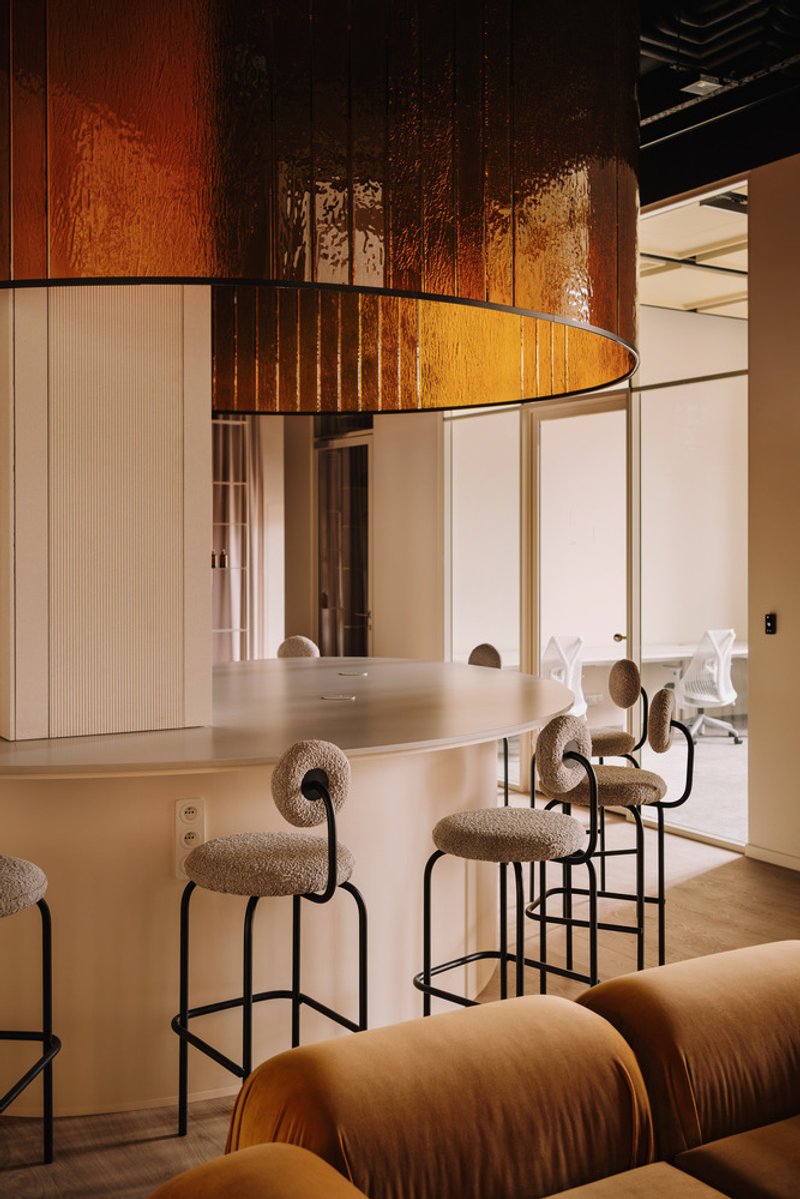
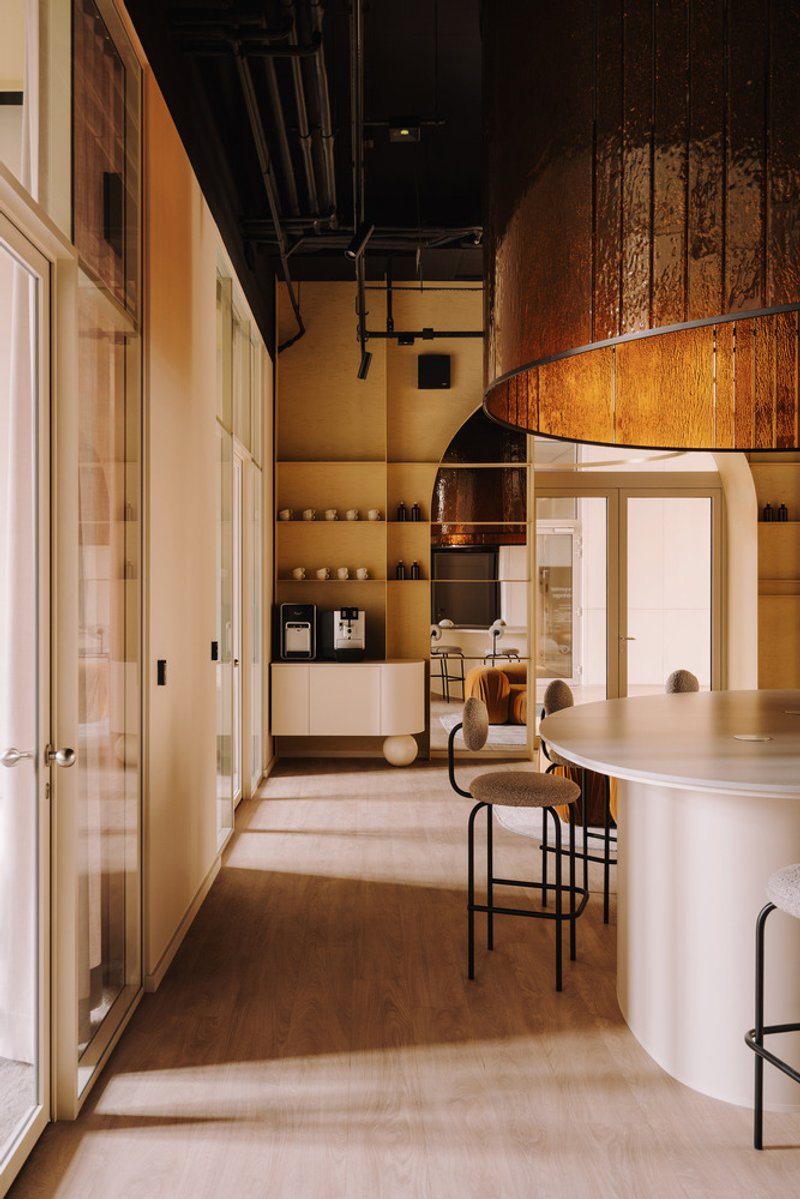
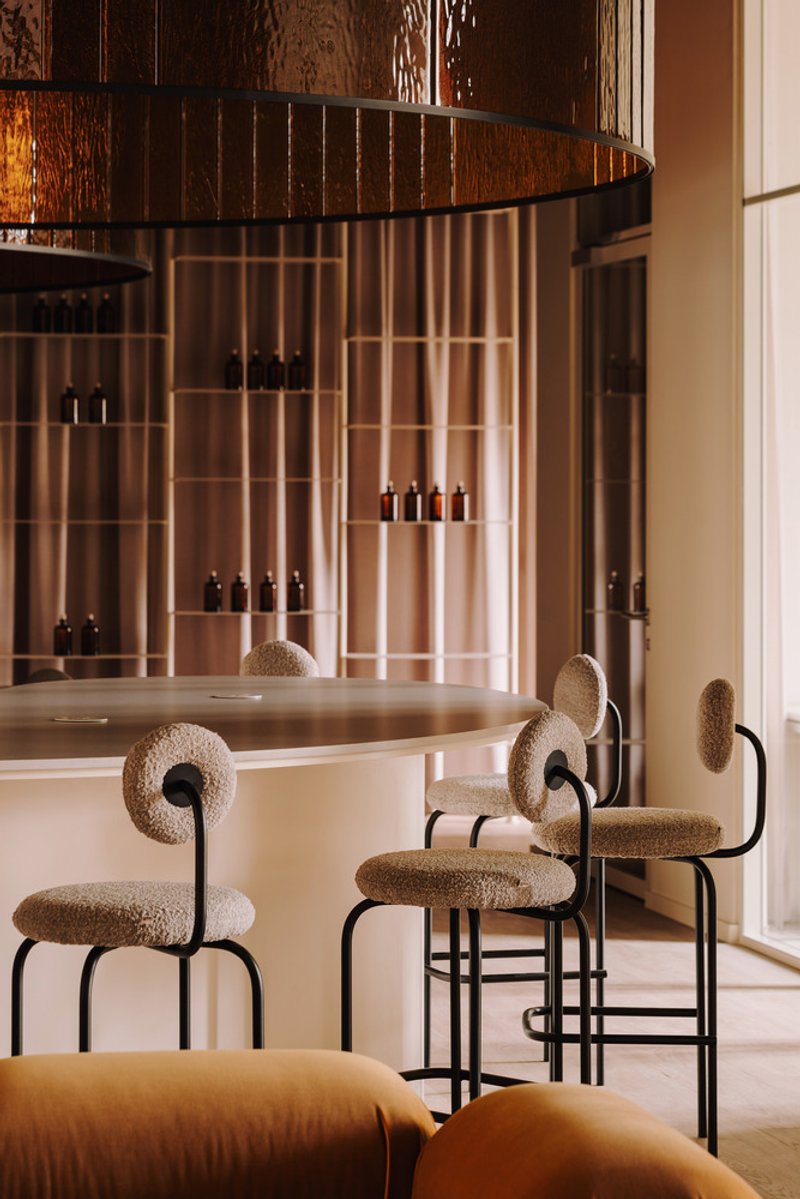
The defining feature of LABO by L’UNI is its striking use of fused pharmaceutical glass in large-scale artistic installations. These intricate glass compositions, measuring over three meters in diameter, consist of more than 50 individual glass elements. Advanced glass-curving technology was employed to achieve seamless integration, showcasing a custom-developed technique that pushes the boundaries of materiality in office design. The result is a luminous and refined workspace that enhances both functionality and aesthetic appeal.
A Thoughtfully Designed Workspace
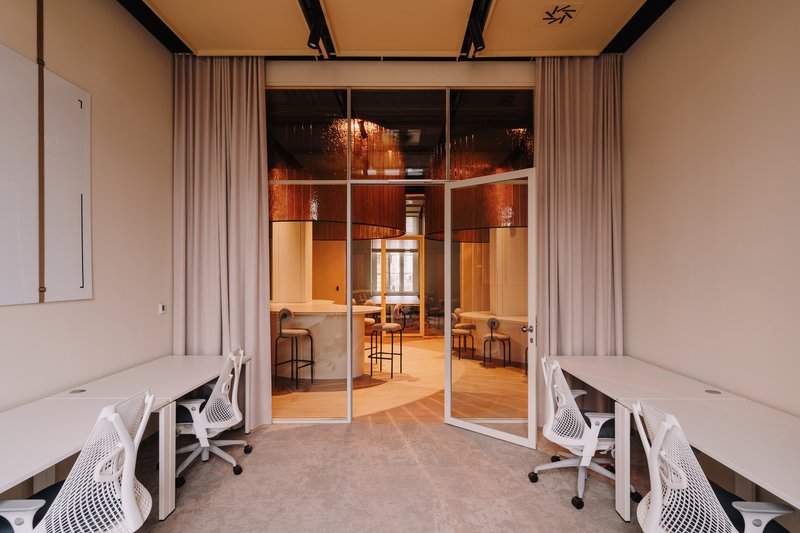
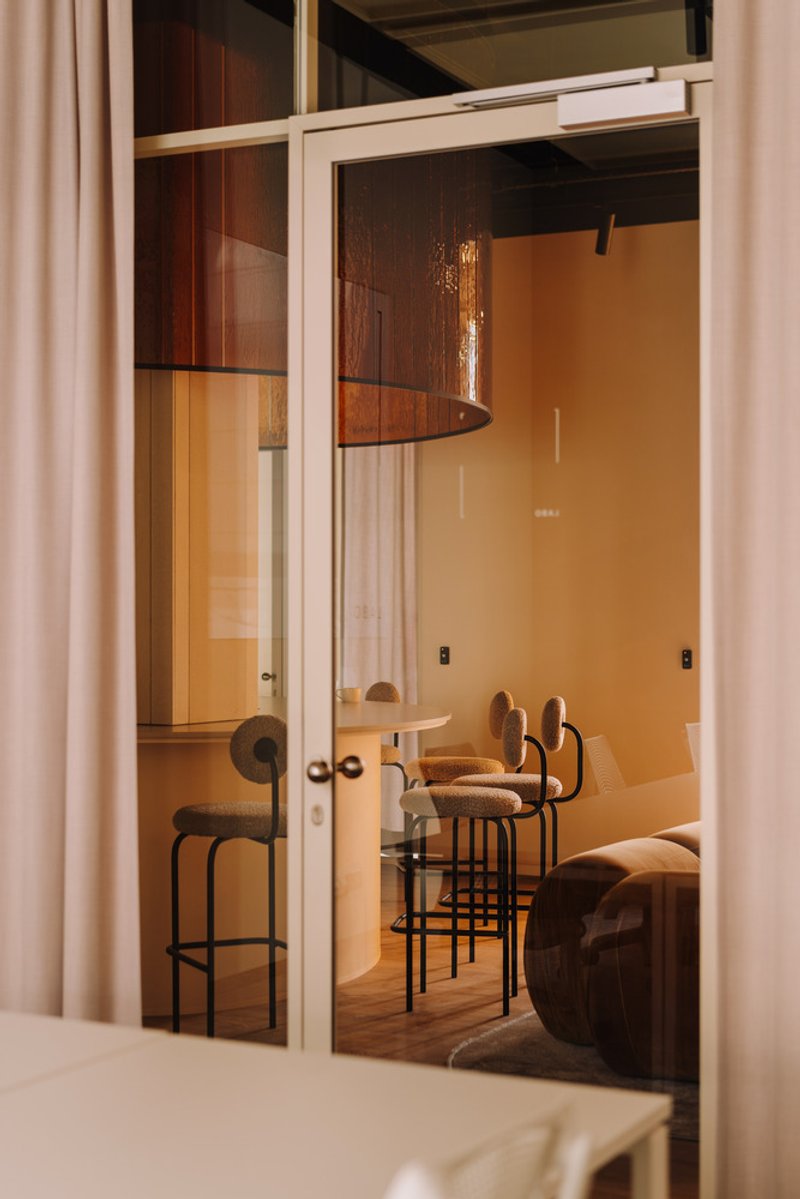
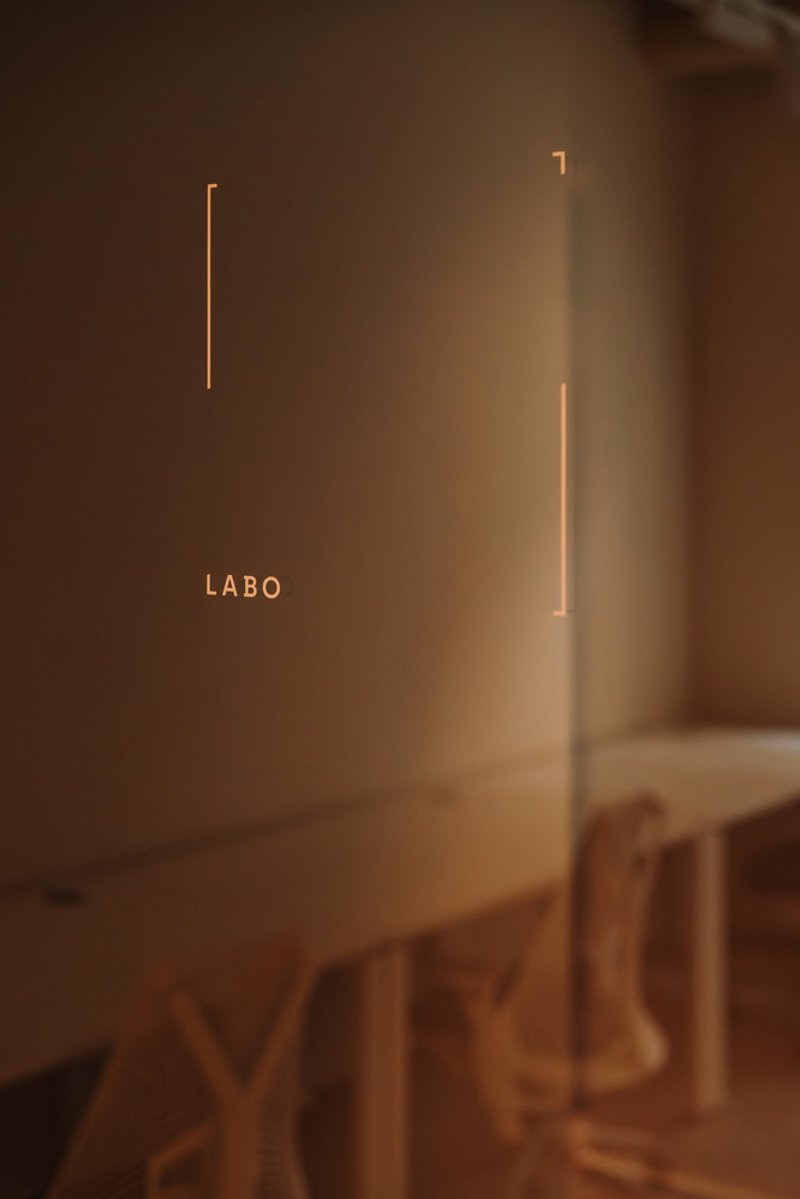
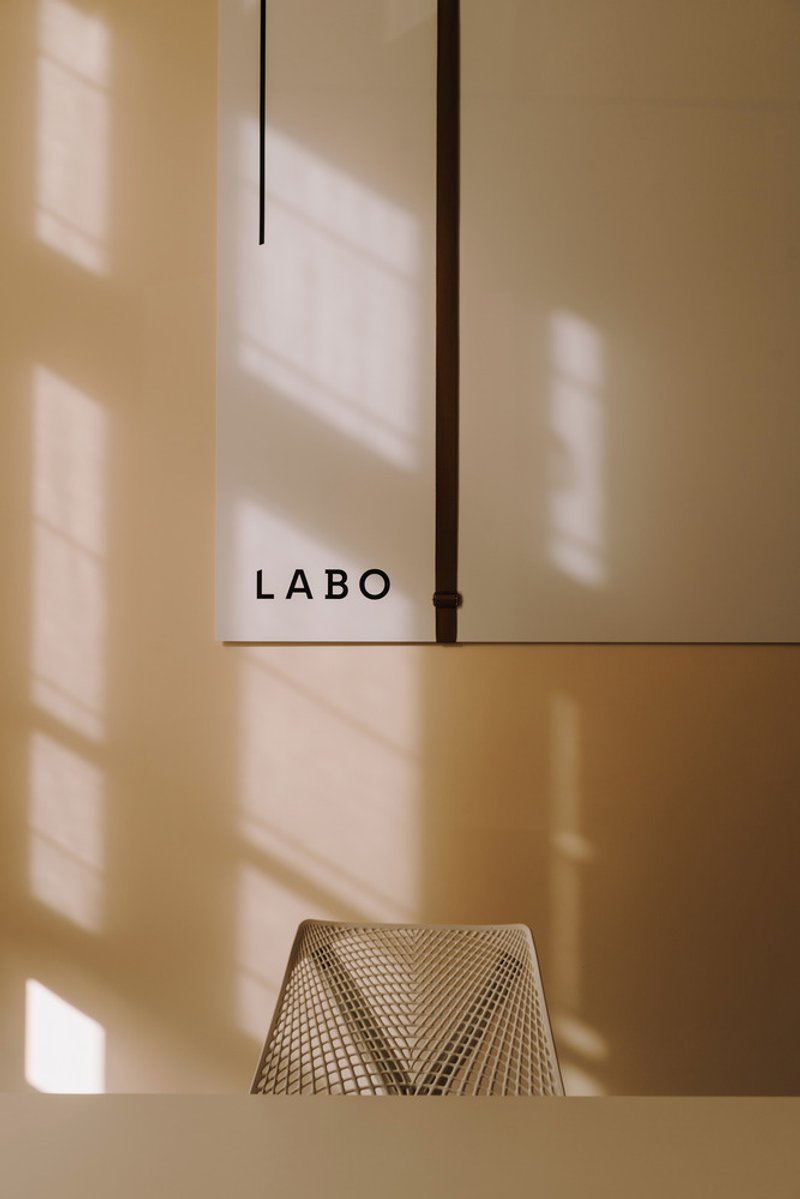
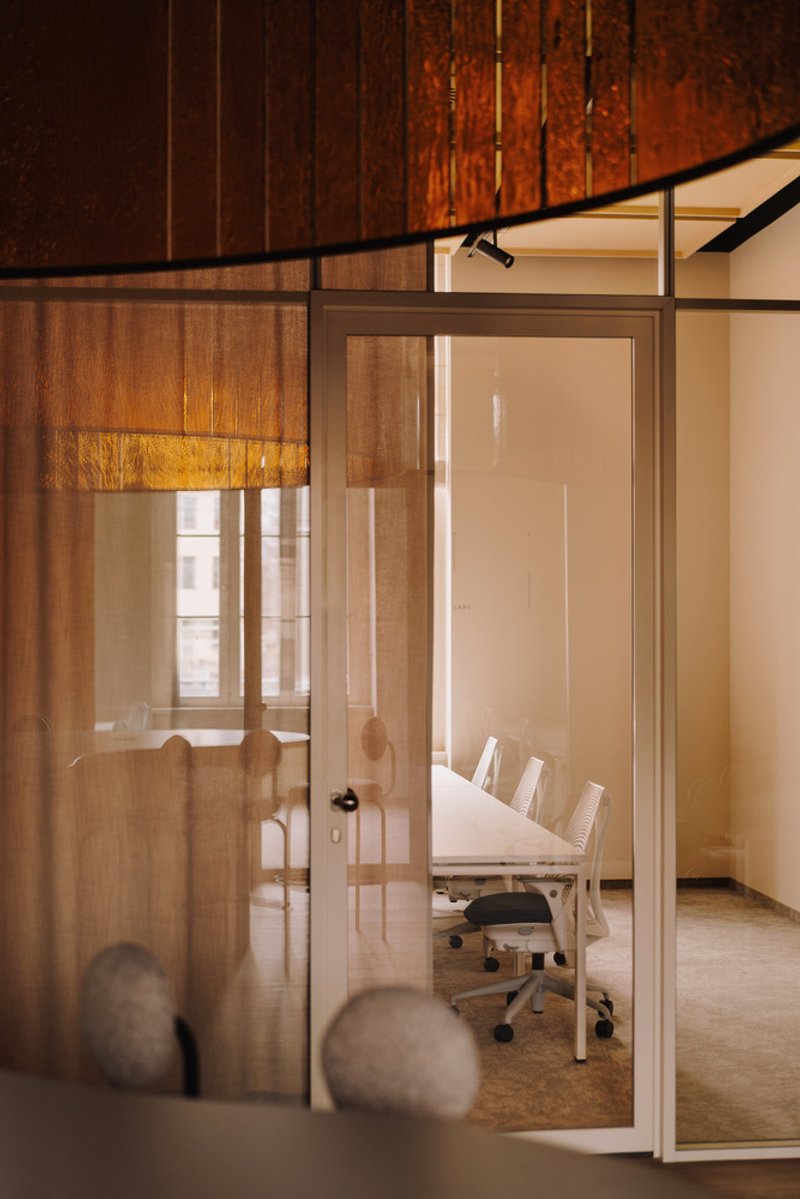
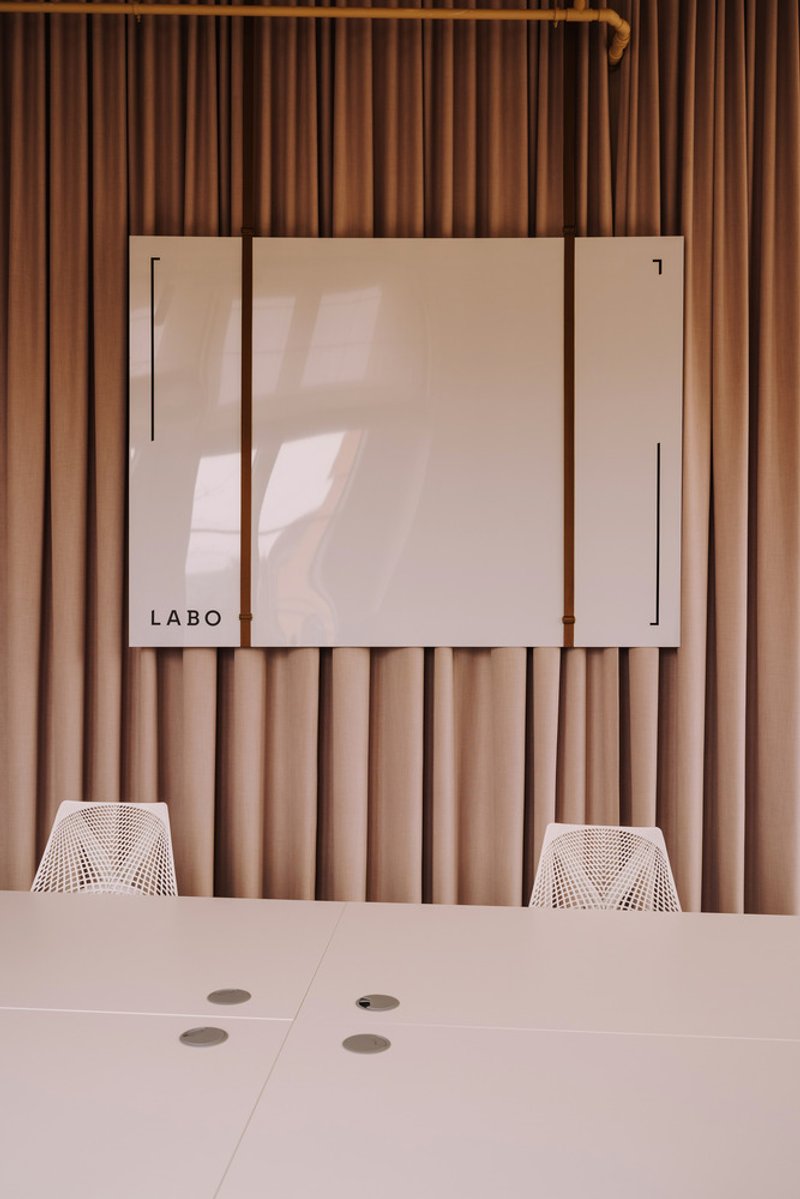
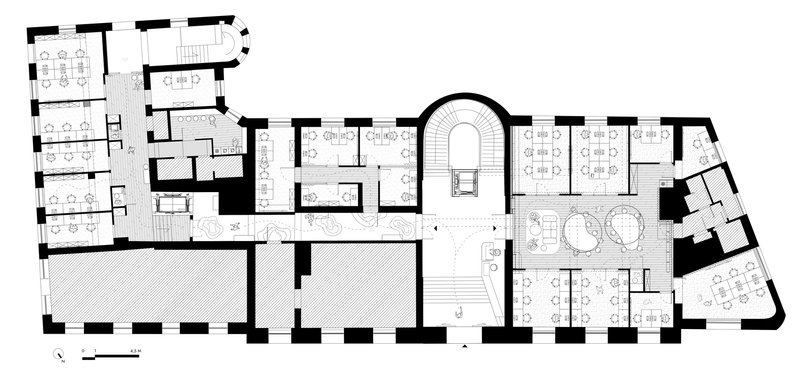
The spatial arrangement prioritizes openness while maintaining privacy through thoughtfully placed glass partitions. The central coworking area is designed for collaboration, featuring expansive artistic glass dividers that maintain visual transparency while ensuring distinct work zones. Natural light floods the interiors, enhancing the overall ambiance and promoting a sense of well-being among users. Concealed kitchen and wardrobe areas contribute to a clutter-free, organized environment that fosters productivity.
Aesthetic and Material Harmony
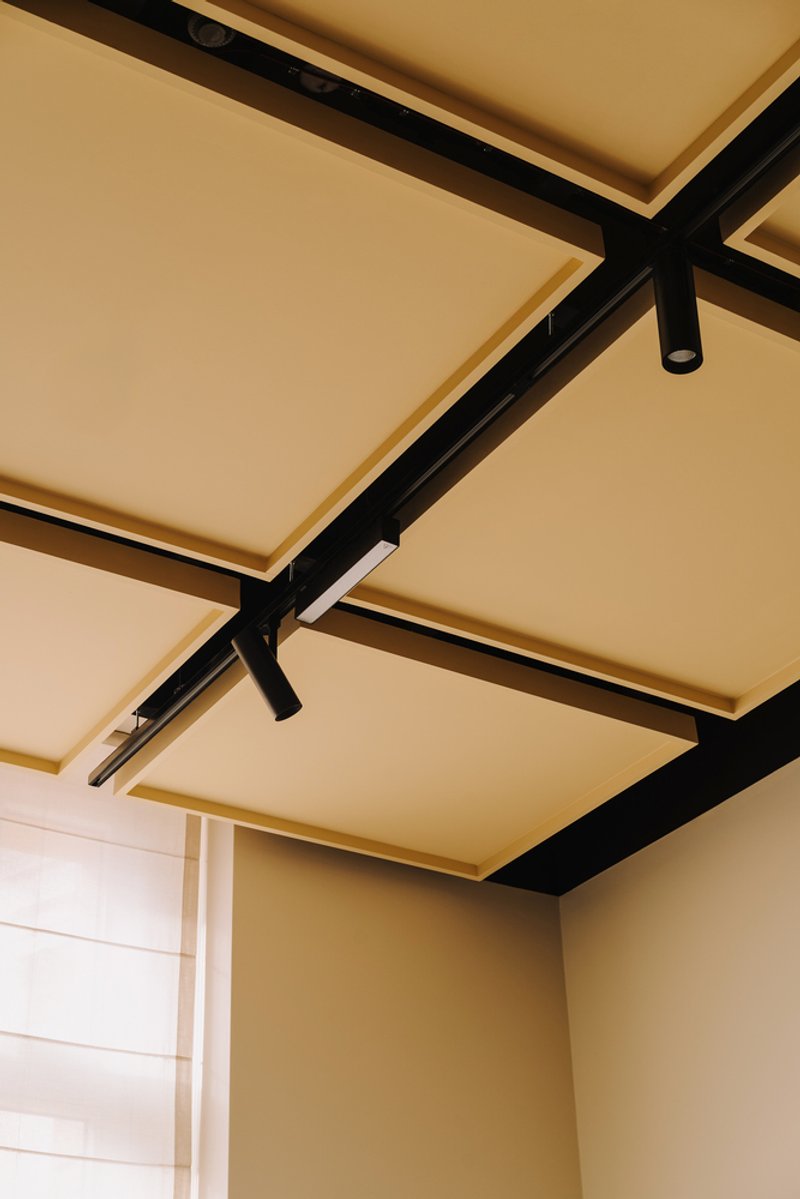
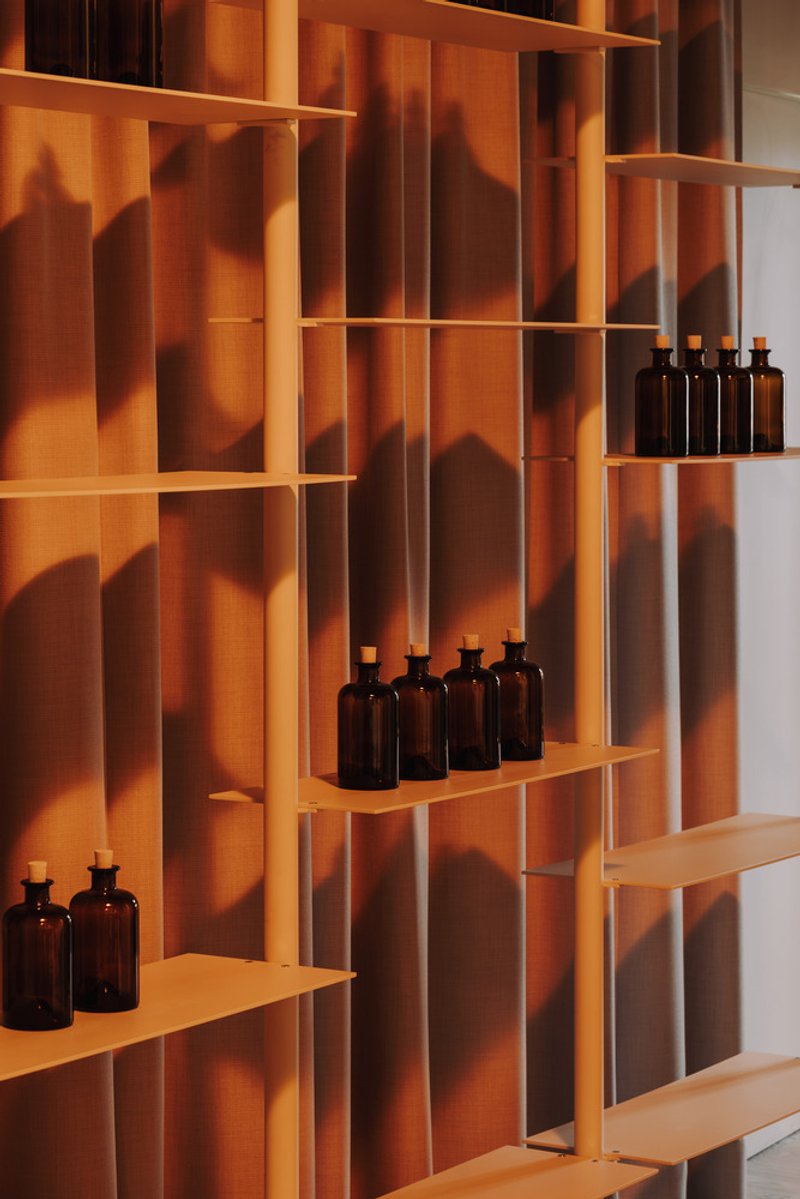
Material selection plays a crucial role in defining the character of LABO by L’UNI. Sand-colored steel is used for shelving and acoustic panels, complementing the neoclassical architecture of the building. Designer furniture and ergonomic solutions further elevate the office experience, offering a seamless blend of comfort and functionality. Every detail is meticulously crafted to align with the high-end coworking space concept, making it an ideal environment for professionals seeking an inspiring workspace.
Redefining the Future of Office Spaces
LABO by L’UNI is more than just a coworking space—it is an architectural statement that redefines modern office design. By integrating history, advanced materials, and artistic elements, CUDO has created a workspace that transcends conventional office environments. This project sets a new benchmark for high-end coworking space design, proving that functionality and elegance can coexist harmoniously in the workplace.
All photographs are works of Migdał Studio



Popular Articles
Popular articles from the community

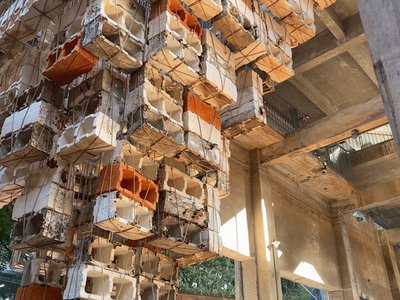
Inverted Architecture Installation by Studio Link-Arc: Exploring the Intersection of Architecture and Living Organisms
Inverted Architecture Installation by Studio Link-Arc blends mycelium, sustainability, inverted design, ecological cycles, and urban adaptive architecture in Shenzhen.
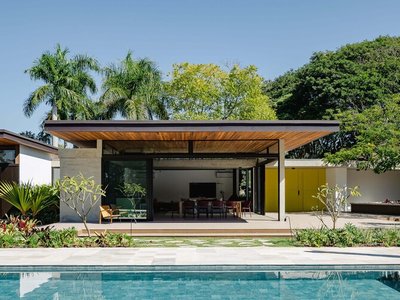
Flamboyant House by Juliana Camargo + Prumo Projetos
Modern Brazilian house integrating existing tree, pool, and volumes with glass, wood, and transitional spaces blending interior, exterior, and landscape seamlessly.
On the Brooks House by Monsoon Collective – A Contemporary Kerala Home Rooted in Tradition
Kerala home blending tradition and modernity with water-inspired design, brick architecture, courtyard planning, and sustainable rainwater harvesting strategies.
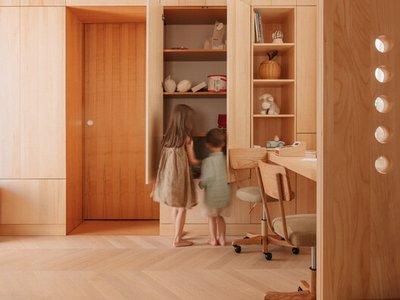
Treehouse Apartment: A Warm Timber Interior Blending Craft, Play, and Contemporary Living
Warm timber apartment with integrated treehouse, combining natural materials, craftsmanship, and playful design to create a flexible, family-oriented living environment.


Similar Reads
You might also enjoy these articles


The Ken Roberts Memorial Delineation Competition (Krob)
As the most senior architectural drawing competition currently in operation anywhere in the world, it draws hundreds of entries each year, awarding the very best submissions in a series of medium-based categories.


Waterfront Redevelopment and Urban Revitalization in Mumbai: Forging a New Dawn for Darukhana
A transformative waterfront redevelopment project reimagining Darukhana’s shipbreaking heritage into an inclusive urban future.

OUT-OF-MAP: A Call for Postcards on Feminist Narratives of Public Space
Rhizoma Design and Research Lab invites artists, designers, architects, researchers, and students to reflect on how feminist perspectives can reshape public space. Selected works will be exhibited in Barcelona, October 2026. Submissions open until 15 April 2026.


Documentation Work on Buddhist Wooden Temple
Architectural syncretism and cultural hybridity: A comparative study of the Buddhist temples in Chattogram Hill tracks


Explore Office Building Competitions
Discover active competitions in this discipline




The International Standard for Design Portfolios


The Global Benchmark for Architecture Dissertation Awards


The Global Benchmark for Graduation Excellence


Challenge to reimagine the Iron Throne
Comments (0)
Please login or sign up to add comments
No comments yet. Be the first to comment!