
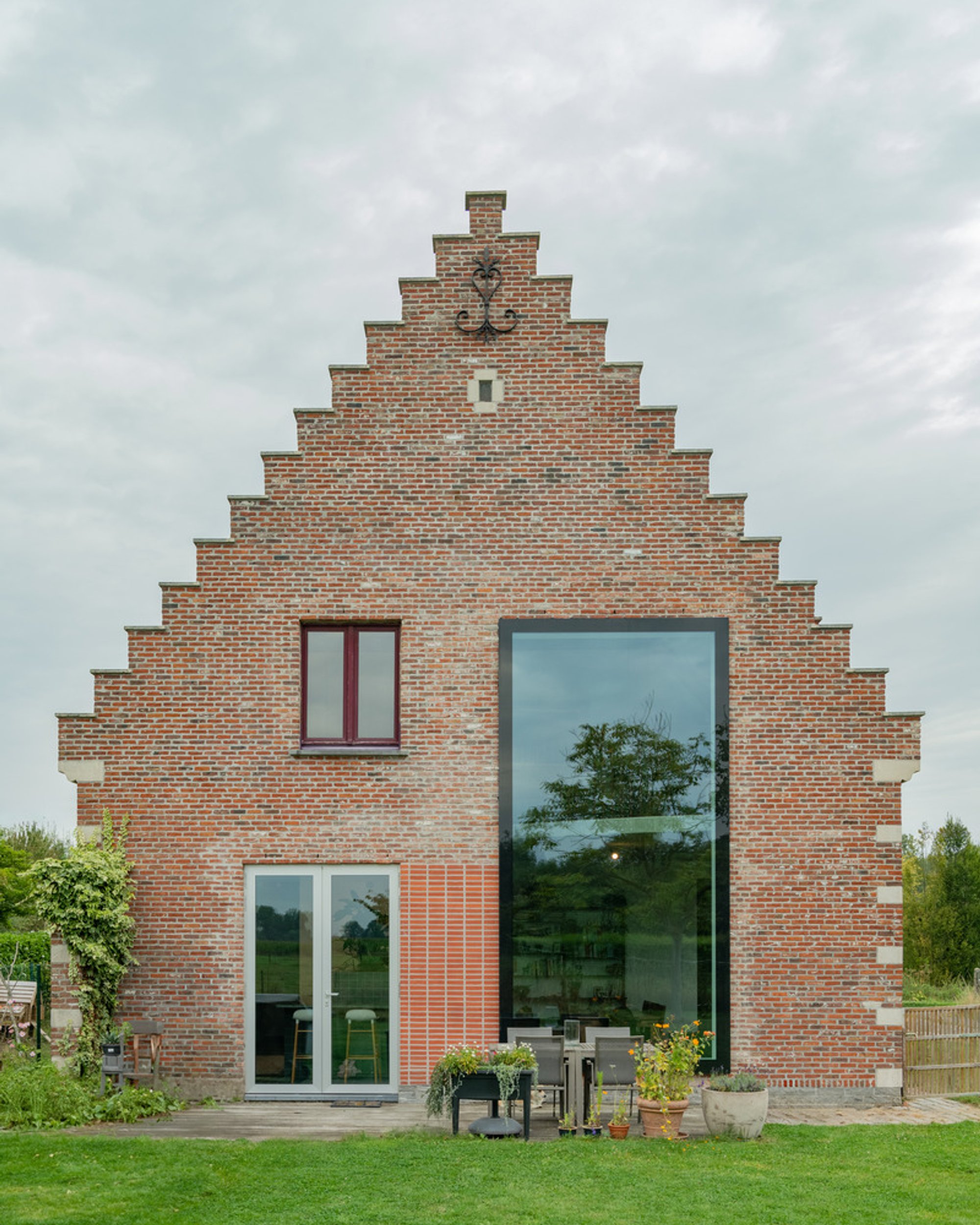
Lamat House by Objekt Architecten: A Contemporary Transformation of a Classic Belgian Home
A classic Belgian home transformed with restored gable, double-height spaces, concrete mezzanine, and modern interiors seamlessly connected to garden views.

Located in the rural landscape of Wichelen, Belgium, the Lamat House is a striking example of how a traditional detached residence can be reimagined through thoughtful renovation and contemporary spatial strategies. Designed by Objekt Architecten and completed in 2023, this 306 m² project balances heritage preservation with modern architectural intervention, crafting a home that feels both authentic and refreshingly new.
Restoring Classic Heritage with Precision
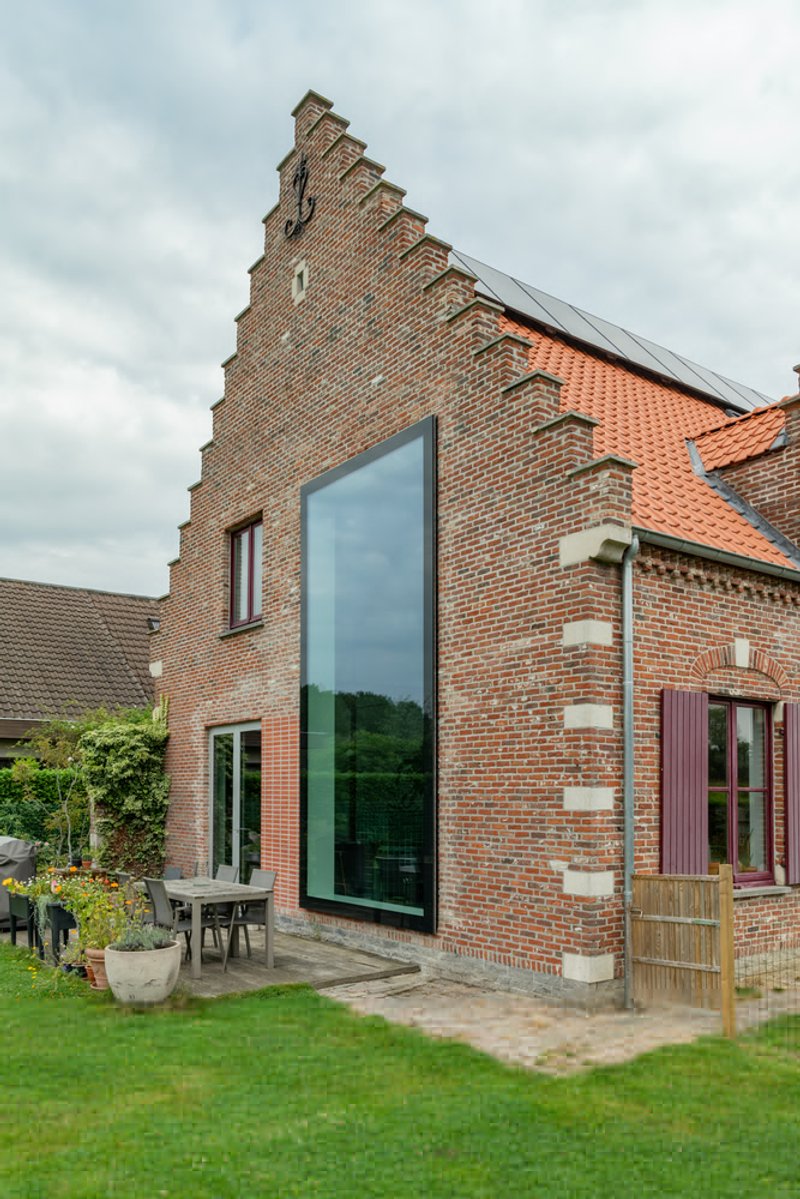
The house originally featured a crow-stepped gable, a hallmark of traditional Flemish architecture. Over the years, moisture issues led to the gable being covered, hiding its defining geometry. Objekt Architecten meticulously restored the gable to its original character, reintroducing a crucial element of the house’s historic identity.
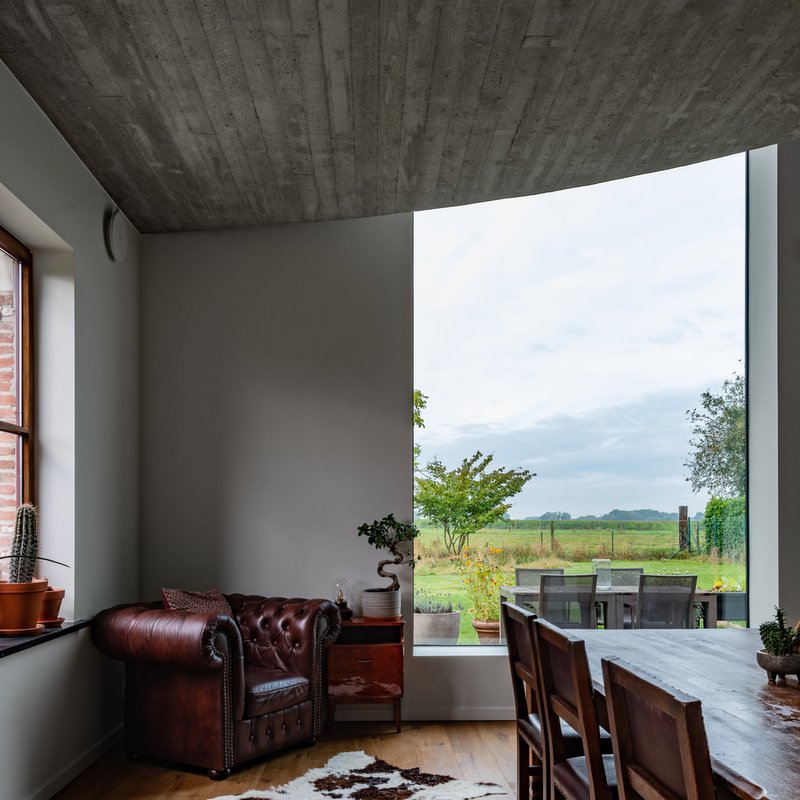
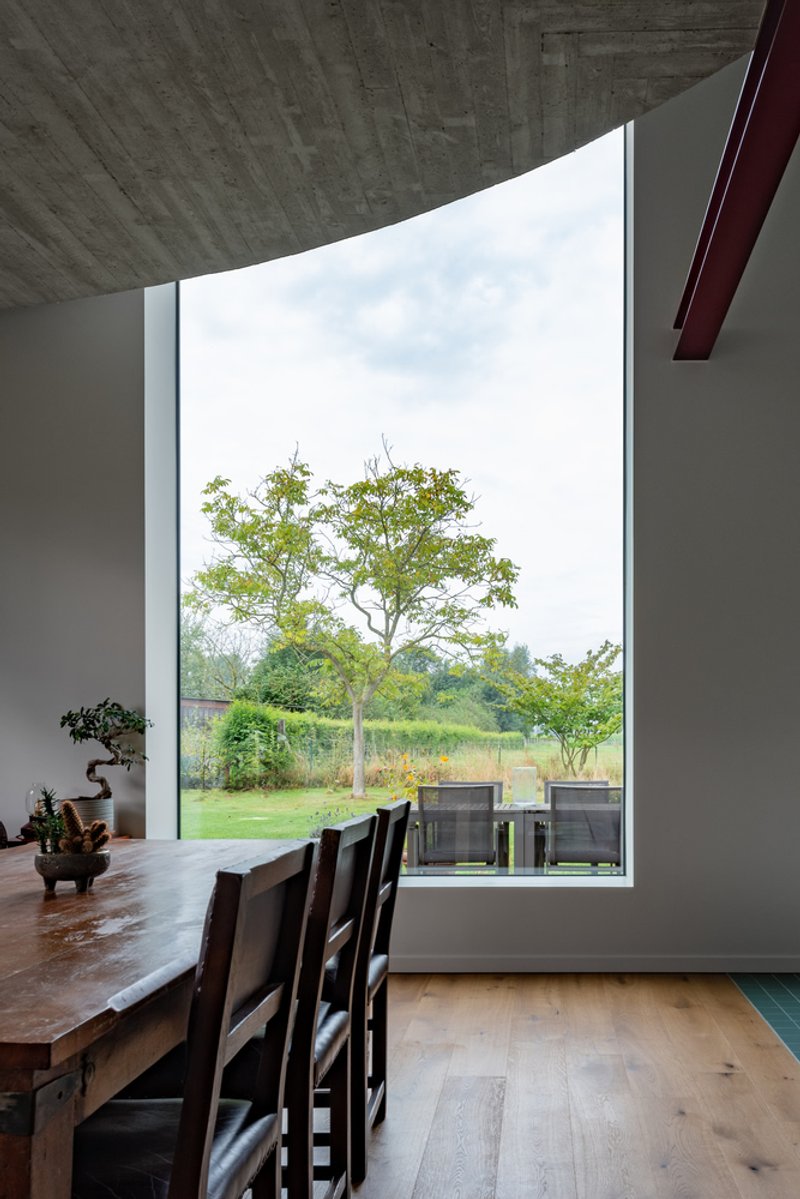
Beyond this sensitive restoration, the architects maintained most of the exterior’s classic appearance. The only major alteration comes in the form of bold, contrasting window openings added to the rear façade. The highlight is a new double-height window that dramatically opens the home to the garden and surrounding meadows, emphasizing transparency and landscape connection while intentionally diverging from the home’s neo-style frontage.
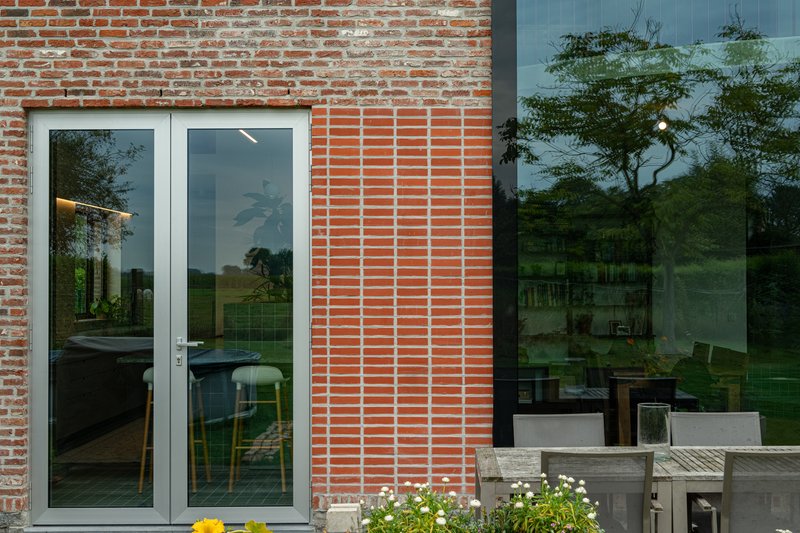
A Radical Interior Transformation
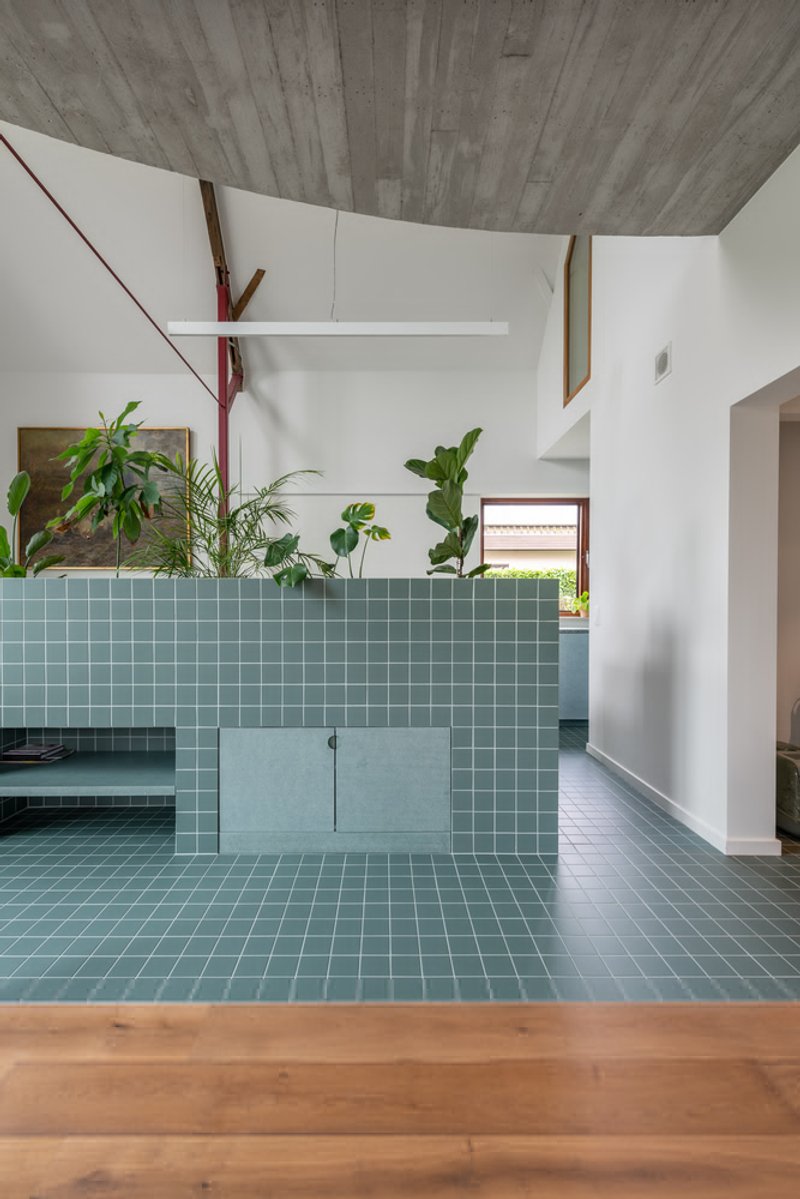
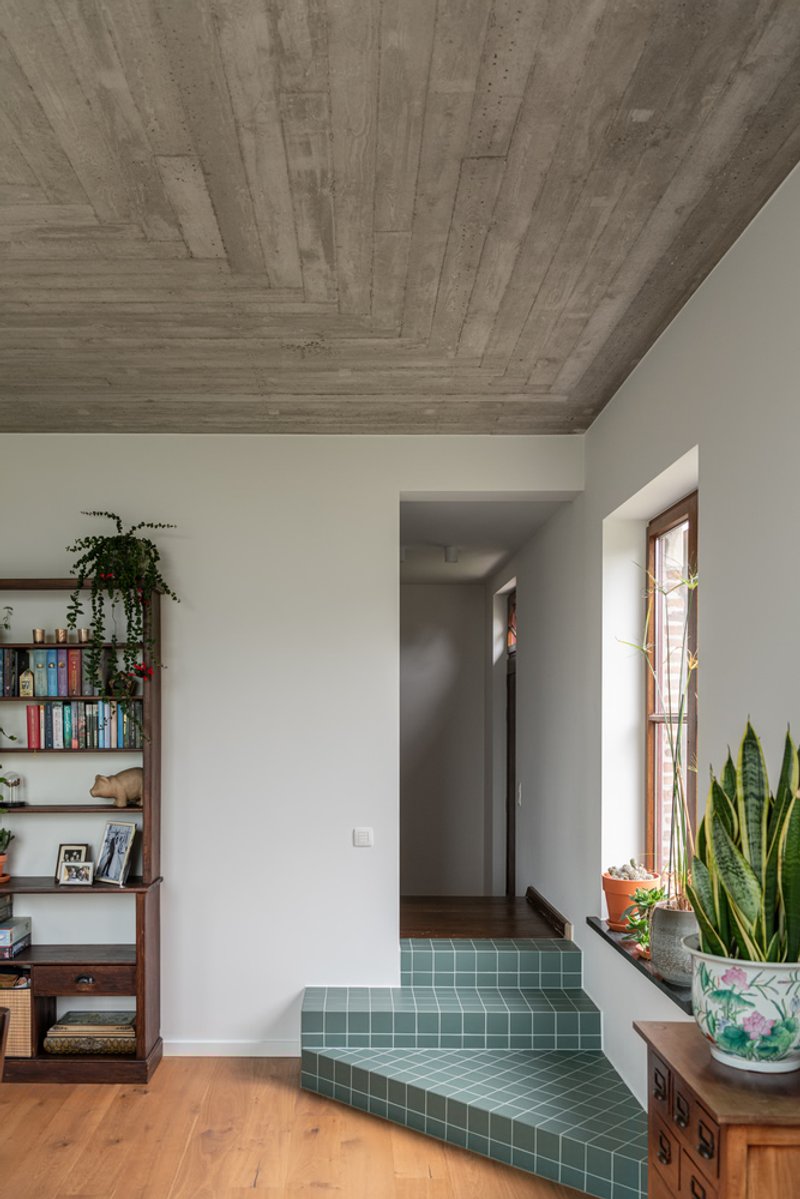
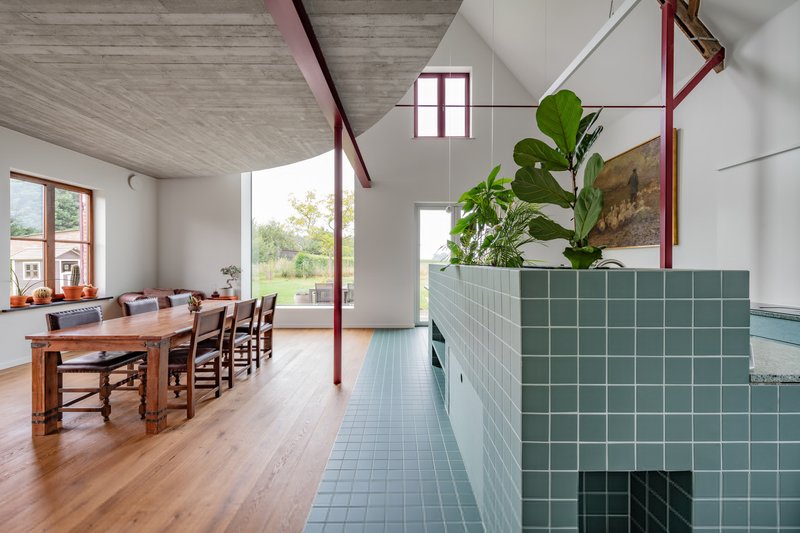
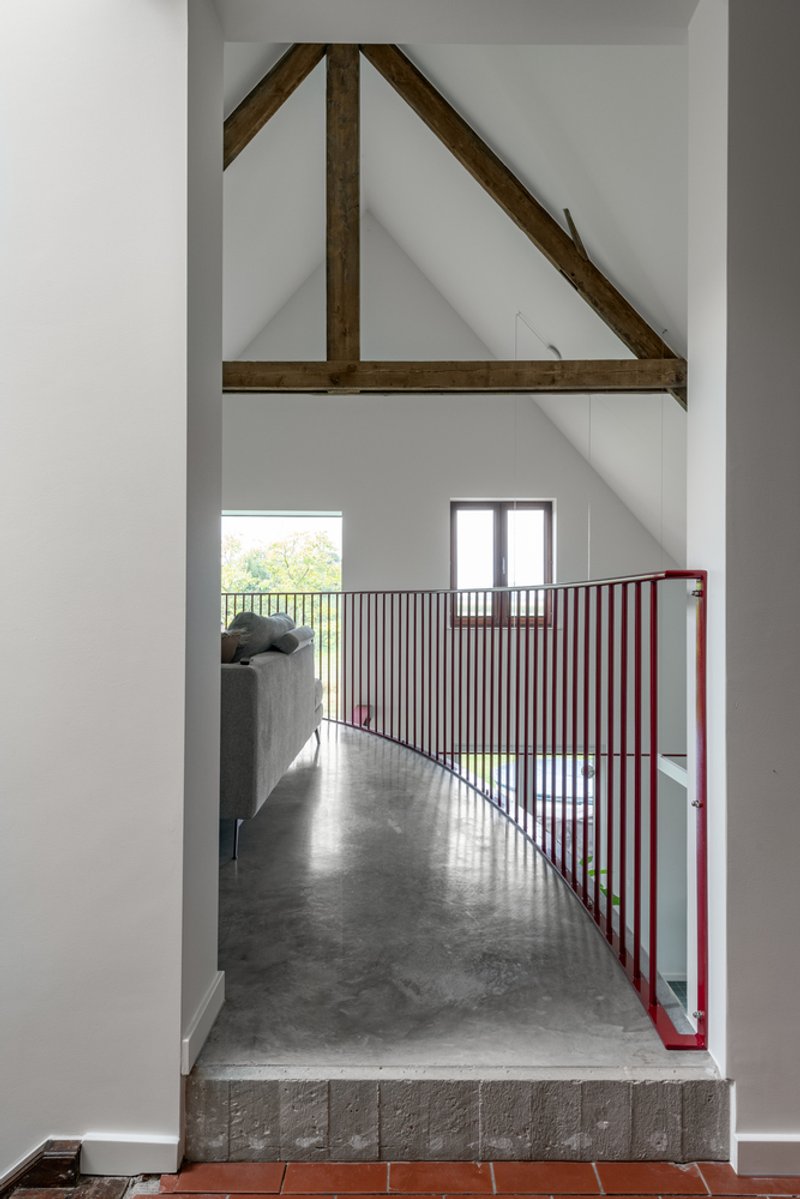
While the exterior maintains its quiet charm, the interior reveals the true architectural ambition of the project. The designers removed the existing ceiling of the living space, creating a double-height volume extending to the roof ridge. This spatial expansion completely redefines the home’s interior atmosphere—bright, open, and unexpectedly contemporary.
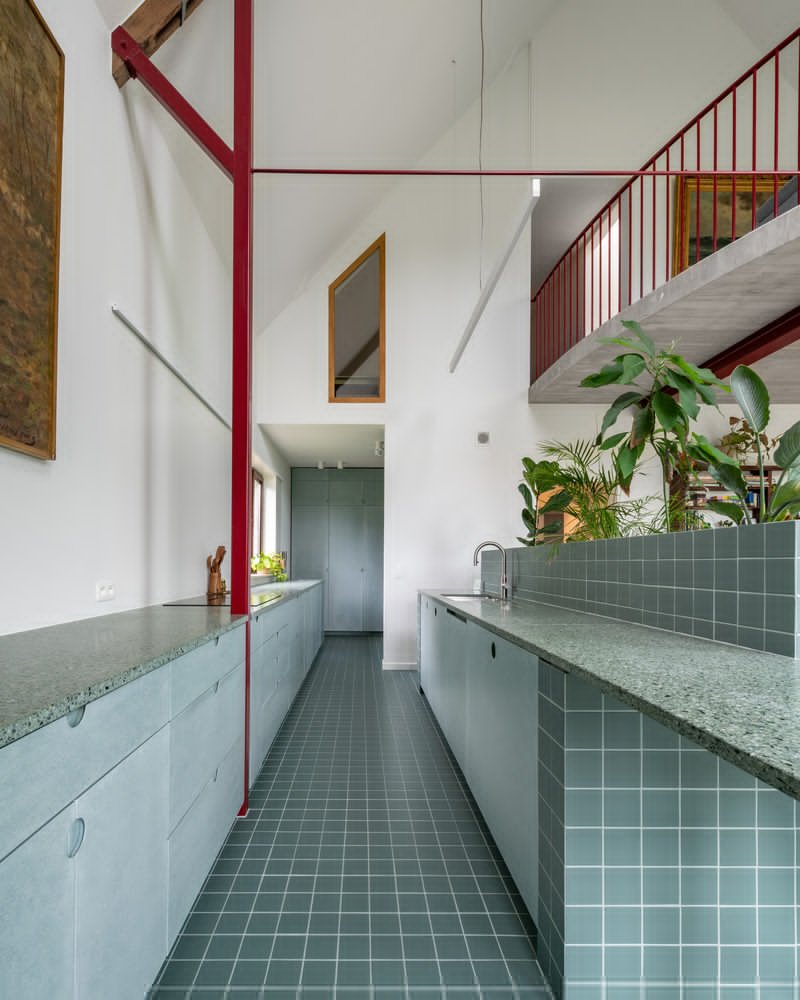
A sculptural mezzanine, cast in place as a concrete disc, floats within this double-height space. It establishes visual and physical connectivity between the upper level, the living area, and the kitchen. The structural engineering behind this element received careful attention, ensuring stability while maintaining its minimalist, clean-edged aesthetic.
Materiality and Spatial Zoning
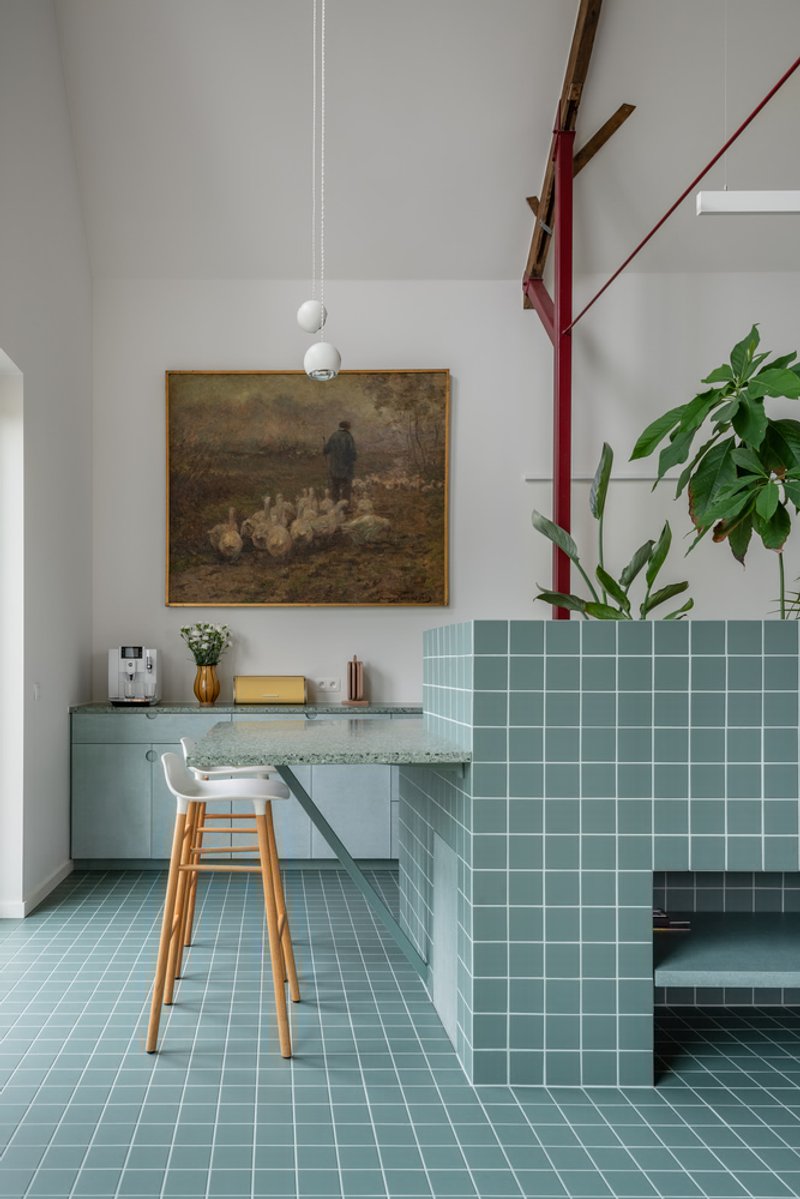
Material contrast plays a key role in organizing the open-plan interior. The kitchen and living space are subtly separated through flooring choices and integrated landscaping elements:
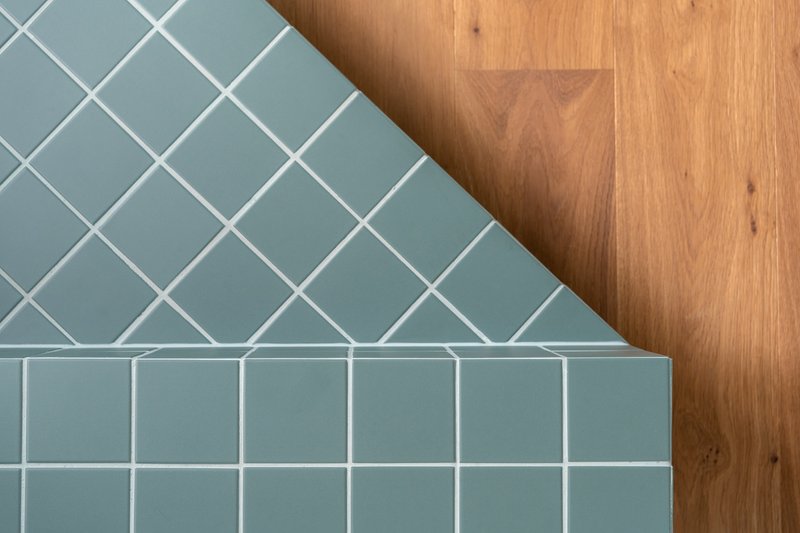
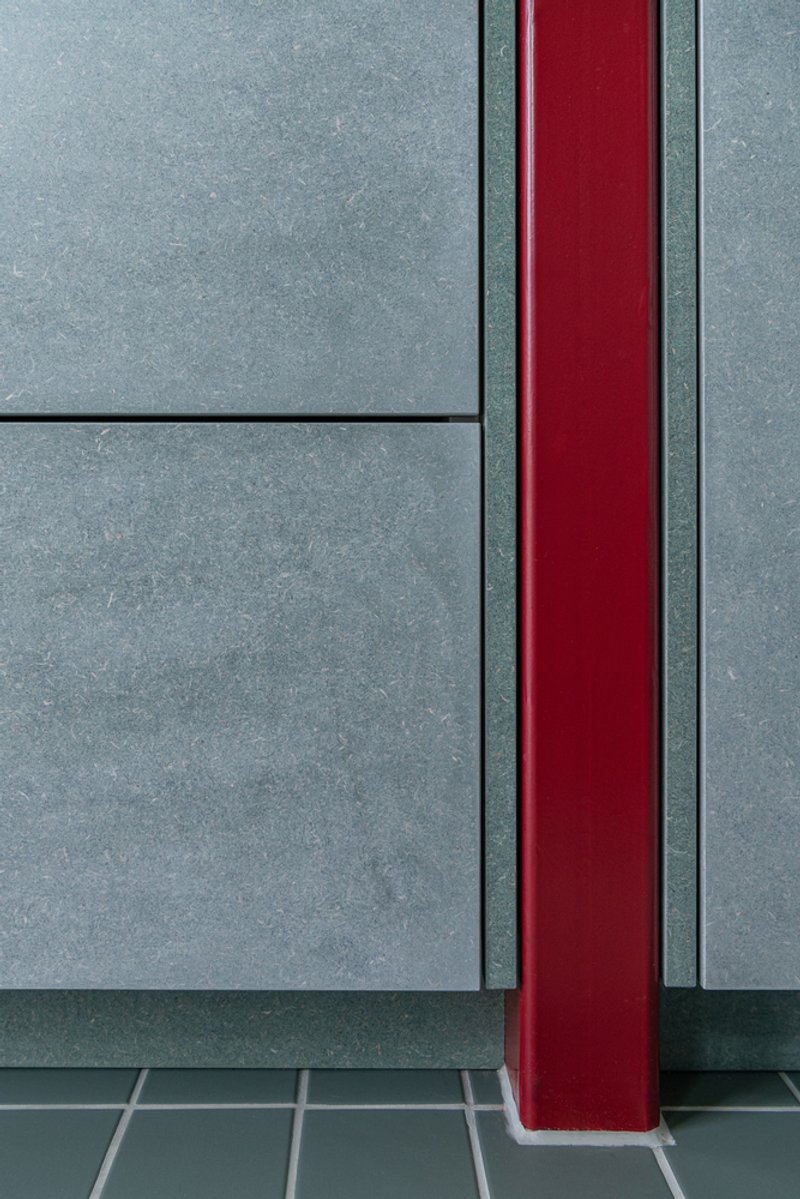
- Green Topcer tiles define the kitchen area, extending up the kitchen island and wrapping the integrated planter.
- A warm wood parquet anchors the living area, blending comfort with modern simplicity.
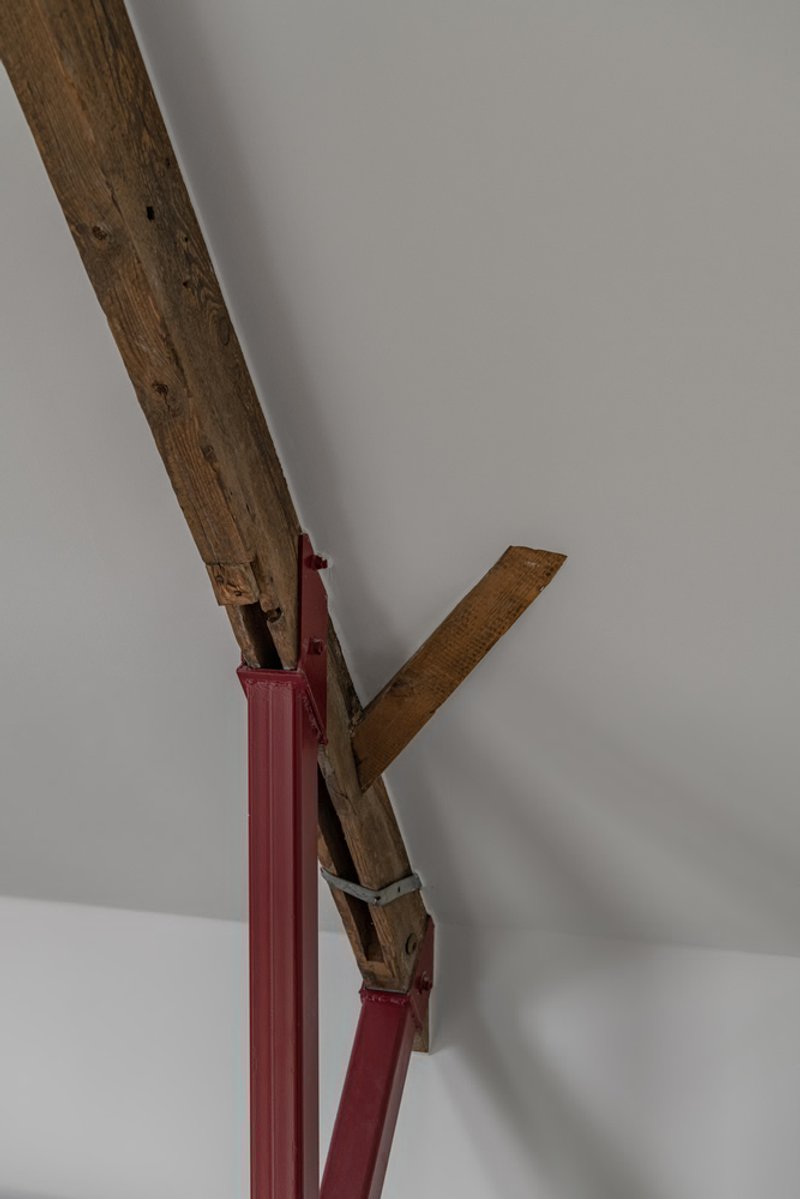
A large planter filled with tropical vegetation creates a natural threshold between the two zones, adding texture, color, and an organic softness to the crisp architectural lines. Every new material and structural element is carefully detailed to become a seamless part of the interior language.
A Contemporary Home Hidden Behind a Classic Façade
The Lamat House stands as a reminder that architectural transformation does not always require dramatic exterior redesign. From the outside, the home retains its familiar Belgian charm. Inside, however, it unfolds into a bright, airy, and contemporary living environment that defies expectations.
All photographs are works of Ypsilon Business Photography



Popular Articles
Popular articles from the community

Inverted Architecture Installation by Studio Link-Arc: Exploring the Intersection of Architecture and Living Organisms
Inverted Architecture Installation by Studio Link-Arc blends mycelium, sustainability, inverted design, ecological cycles, and urban adaptive architecture in Shenzhen.

Solar Steam: A Climate-Responsive Architecture That Redefines the Monument
A climate-responsive memorial architecture that transforms heat, decay, and time into a living system reflecting humanity’s ecological impact.


The Ken Roberts Memorial Delineation Competition (Krob)
As the most senior architectural drawing competition currently in operation anywhere in the world, it draws hundreds of entries each year, awarding the very best submissions in a series of medium-based categories.
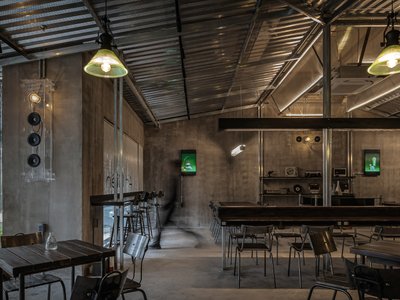
An Miên Lumière Cafe by xưởng xép, Ho Chi Minh City, Vietnam
An industrial-inspired café where layered steel and warm light create a dynamic, immersive environment shaped by reflection, depth, and perception.

Similar Reads
You might also enjoy these articles
The Ken Roberts Memorial Delineation Competition (Krob)
As the most senior architectural drawing competition currently in operation anywhere in the world, it draws hundreds of entries each year, awarding the very best submissions in a series of medium-based categories.

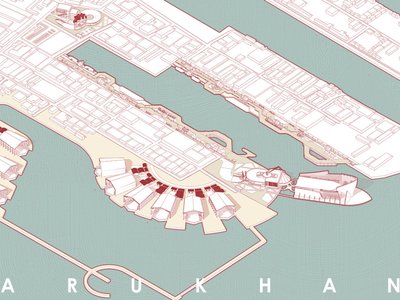
Waterfront Redevelopment and Urban Revitalization in Mumbai: Forging a New Dawn for Darukhana
A transformative waterfront redevelopment project reimagining Darukhana’s shipbreaking heritage into an inclusive urban future.
OUT-OF-MAP: A Call for Postcards on Feminist Narratives of Public Space
Rhizoma Design and Research Lab invites artists, designers, architects, researchers, and students to reflect on how feminist perspectives can reshape public space. Selected works will be exhibited in Barcelona, October 2026. Submissions open until 15 April 2026.


Documentation Work on Buddhist Wooden Temple
Architectural syncretism and cultural hybridity: A comparative study of the Buddhist temples in Chattogram Hill tracks


Explore Architecture Competitions
Discover active competitions in this discipline




The International Standard for Design Portfolios


The Global Benchmark for Architecture Dissertation Awards


The Global Benchmark for Graduation Excellence


Challenge to reimagine the Iron Throne
Comments (0)
Please login or sign up to add comments
No comments yet. Be the first to comment!