

Miyagi Technology Innovation Center: A Sustainable Hub for Innovation and Co-Creation in Taiwa, Japan
Miyagi Technology Innovation Center blends sustainable design, local materials, and open spaces to foster innovation, wellness, and community collaboration.


Nestled in the serene landscape of Taiwa, Japan, the Miyagi Technology Innovation Center stands as a beacon of sustainable design and collaborative innovation. Designed by TAISEI DESIGN Planners Architects & Engineers for Tokyo Electron, one of the world’s leading semiconductor manufacturers, the 19,400-square-meter facility was completed in 2021 with a vision to foster open innovation, interdisciplinary dialogue, and environmental responsibility.
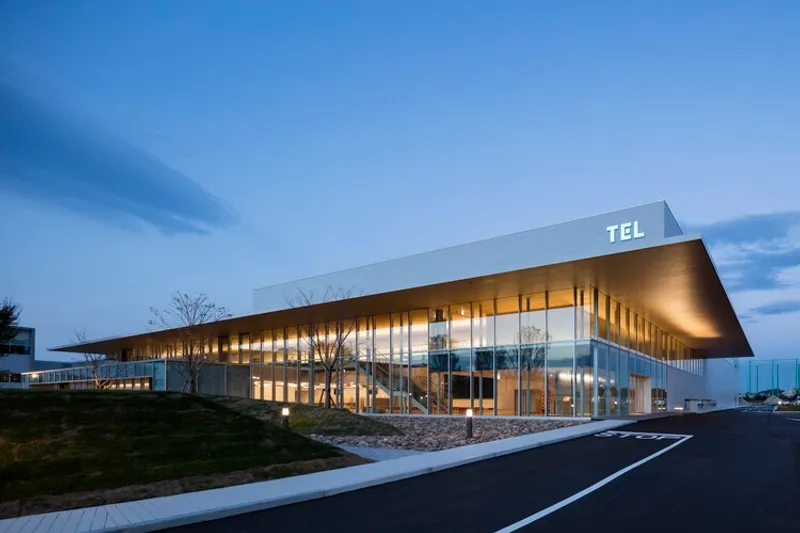
A Design Rooted in Community and Nature
The architecture reflects the spirit of openness and inclusion. A broad roofline inspired by traditional Japanese factory silhouettes greets both employees and the public, acting as a symbolic gesture of welcome. The structure blends seamlessly with its mountainous surroundings, while the eco-friendly green mounds around the site not only enhance the landscape but also help reduce visibility from the outside, creating a secure and tranquil environment.
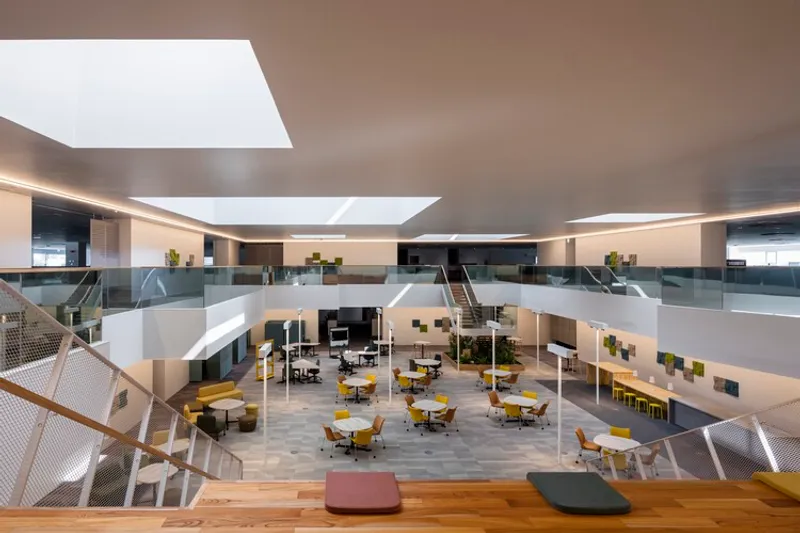

Embracing Local Materials and Artistry
Built with locally sourced Minamisanriku cedar and Inai stone, the center embraces regional craftsmanship and promotes the recovery and resilience of the local economy, especially in the wake of the Great East Japan Earthquake. The interiors are brought to life by art installations from local students, reinforcing the space’s strong ties with the Miyagi community.
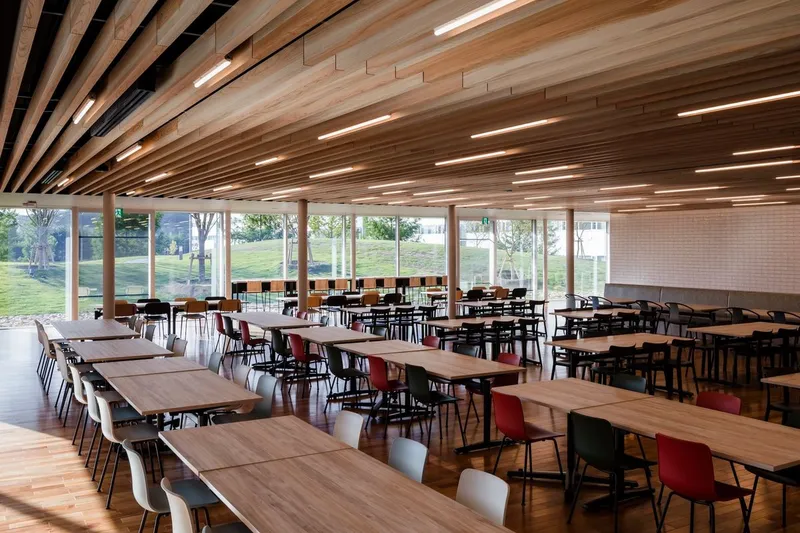
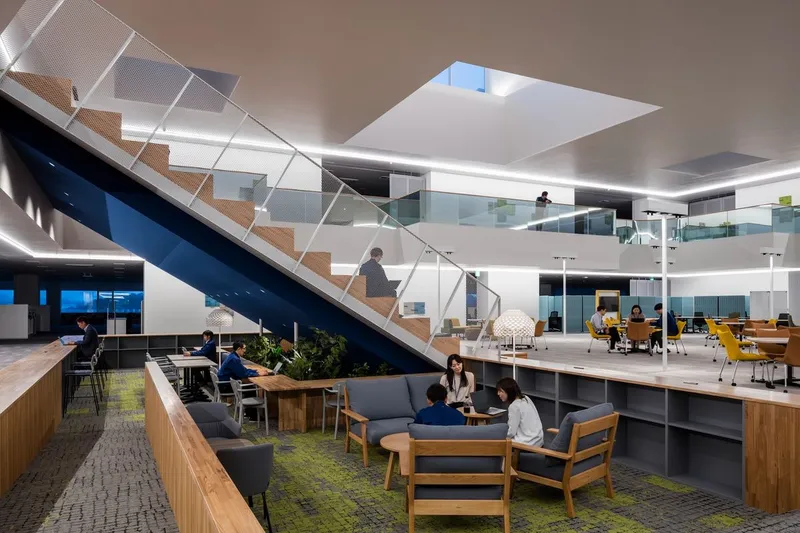
A Light-Filled Atrium for Innovation and Wellness
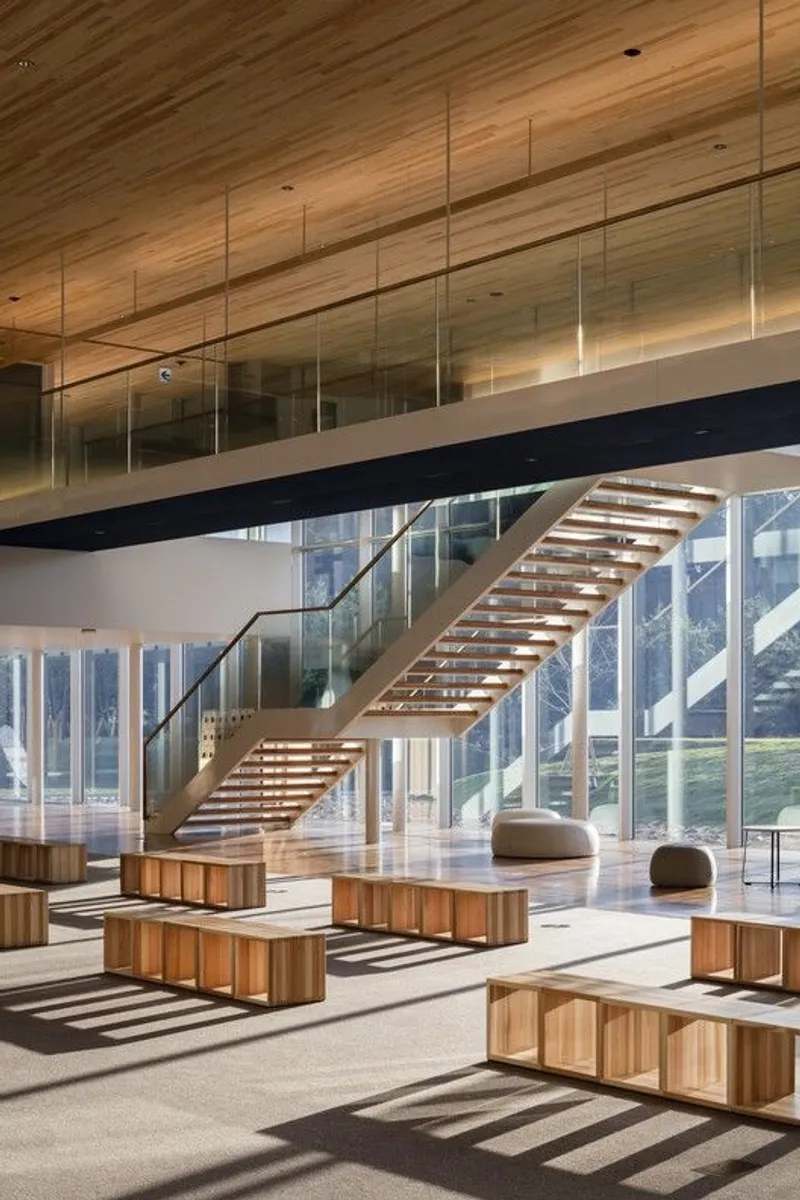
At the heart of the building lies a sunlit atrium, the Creative Office, designed to maximize natural light and airflow through strategically placed north-south windows and integrated ventilation systems. These passive design elements reduce energy consumption while enhancing employee wellness and productivity. The dynamic interior environment shifts in character throughout the day, creating a sense of connection between work and nature.


Flexible, Human-Centered Workspaces
The Innovation Area, with its wood-clad dining zones, lounges, and entrance halls, encourages informal meetings, chance encounters, and a free exchange of ideas. This human-centric design approach promotes varied work styles, fostering creativity and collaboration among employees, partners, and researchers.

Eco-Conscious Construction
Mindful of its carbon footprint, the project reuses on-site excavated soil for landscaping, significantly lowering emissions typically associated with soil transport. The resulting green berms contribute to the building’s thermal insulation while visually harmonizing with the region's topography.
The Miyagi Technology Innovation Center is more than a research facility—it's a living ecosystem of innovation, designed for sustainability, community engagement, and technological advancement. With its emphasis on natural materials, open design, and employee well-being, the center sets a new benchmark in architectural and workplace excellence.


All the photographs are works of Norihito Yamauchi


Popular Articles
Popular articles from the community

Faces of the Soviet Avant-Garde: Turning Moscow's Street Names into an Open-Air Museum
A network of sculptural installations across a Moscow residential district transforms forgotten architect names into spatial encounters with cultural memor
Tsunami Convergenics: Turning Catastrophic Ocean Forces into Underwater Housing Infrastructure
A speculative underwater settlement off the coast of Onagawa, Japan, treats tsunamis and typhoons as energy sources rather than threats.

Cloaked Colonization: A Mobile Underwater Habitat That Moves Like a Fish
Micah Abaya's shortlisted EHC Pacific entry reimagines ocean settlement as a dispersed network of self-sustaining architectural organisms.
Extended Shell: Retrofitting Kolkata's Balconies as Living Urban Thresholds
A modular retrofit system recovers the social and environmental intelligence of Kolkata's historic verandas for contemporary Park Street residents.

Similar Reads
You might also enjoy these articles


Hodi-Mandai Geram
Project Function: Preservation and revitalization of the Intangible heritage and socio-spatial identity of the Hodi by Housing, Cultural Memory Center, Sacred Grove, landscape, local tourism economy


Olio Towers: A Mid-Rise for Performers That Fuses Housing, Rehearsal, and Stage
Located blocks from Houston's Theater District, this modular tower stacks living units around a central performance atrium.

Oasis: Modular Green Housing Carved into Dhaka's Urban Fabric
A shortlisted Plugin Housing entry reclaims unauthorized settlements in Dhaka with stepped concrete volumes, green roofs, and ventilation-driven design.

Black Hole: A Floating Megastructure for the Post-Physical Era
Emiliano Mazzarotto envisions a spherical, self-scaling arena where e-sports, digital hotels, and holographic stadiums replace traditional public space.

Explore Architecture Competitions
Discover active competitions in this discipline

Challenge to reimagine the Iron Throne

Photograph architecture without architects

Illustrate the lost glory of Angkor Wat - Render Challenge

Design challenge to reuse E-waste
Comments (0)
Please login or sign up to add comments
No comments yet. Be the first to comment!