
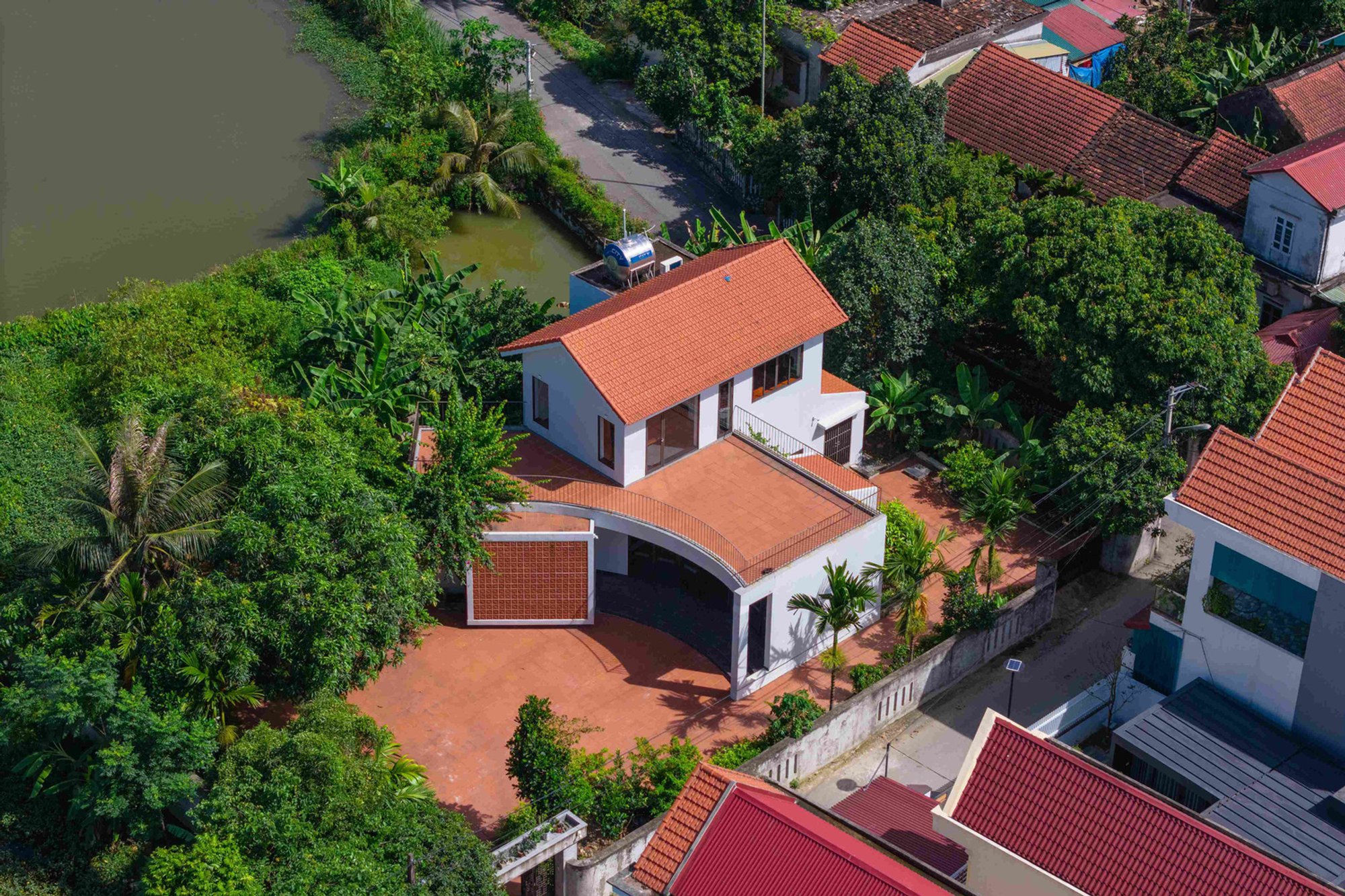
Modern Rural House Design: Xom Me House by NH Village Architects in Vietnam
This article explores Xom Me House by NH Village Architects, a modern rural house design in Vietnam that merges tradition with contemporary architecture.

Bridging Tradition and Modernity in Rural House Design
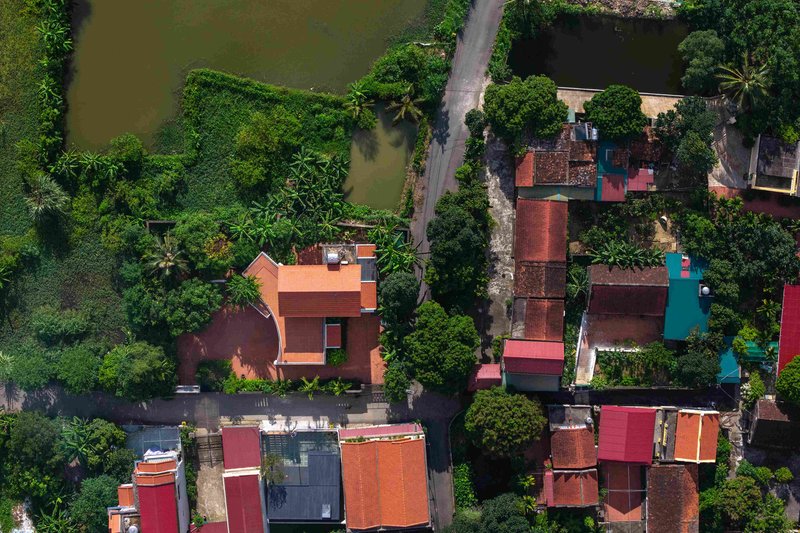
Xom Me House, designed by NH Village Architects, represents a new approach to modern rural house design in Vietnam. Situated in Gia Vien District, Ninh Bình province, this multi-generational home serves both as a gathering place for extended family during traditional events and a tranquil retreat for those returning to their roots. The design seamlessly integrates rural traditions with contemporary architectural solutions, creating a home that honors the past while embracing the future.
Context and Purpose Behind the Design
Vietnam’s rural regions are undergoing demographic shifts, with younger generations migrating to urban centers and traditional housing models facing disruption. Xom Me House emerges as a response to these changes. The architects sought to preserve the cultural significance of rural family homes while adapting to the evolving needs of modern living.
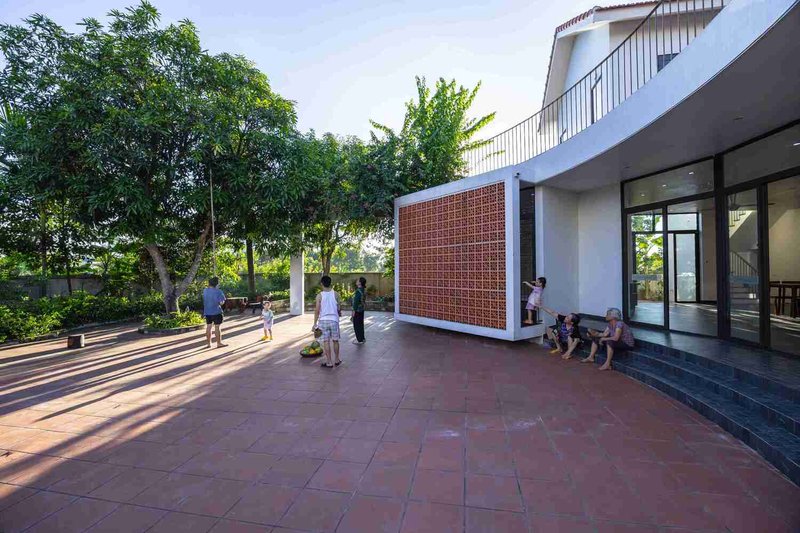
The house serves as a central hub for family gatherings, reflecting the deep-rooted Vietnamese tradition of multi-generational living. It is designed to accommodate large groups during ancestral worship ceremonies and festive occasions, while also offering private, comfortable spaces for daily use.
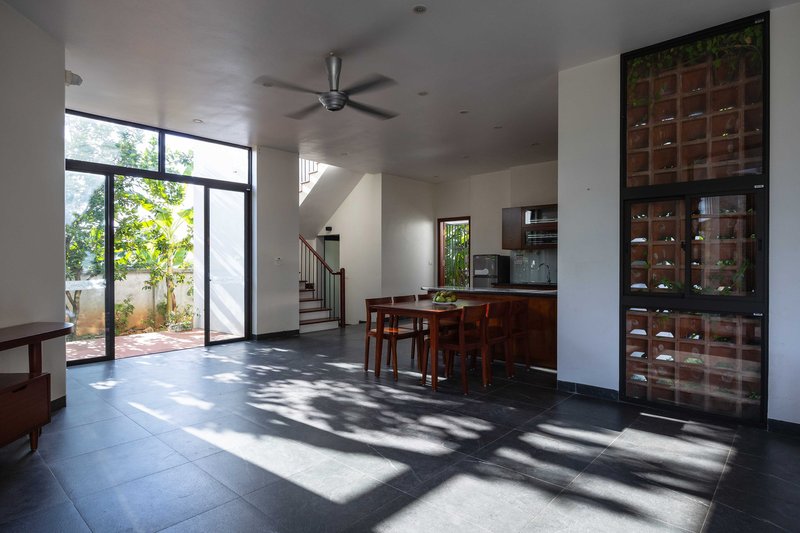
Spatial Organization and Courtyard Concept
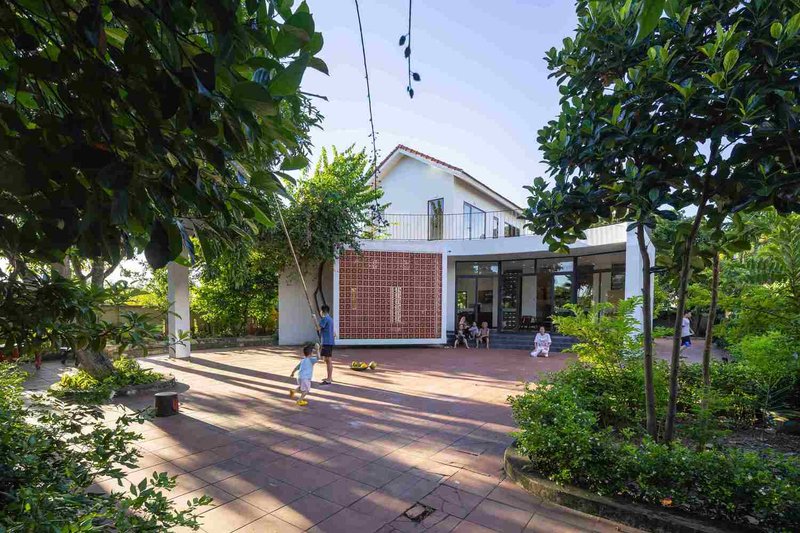
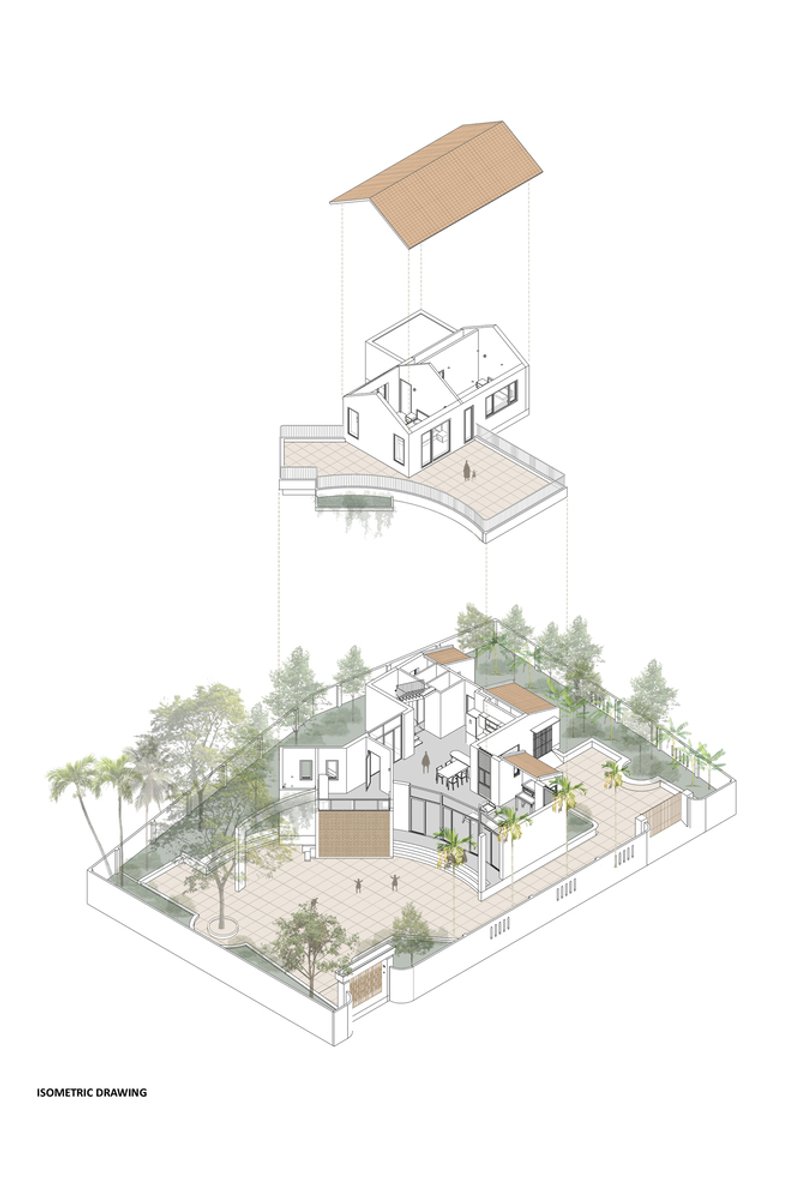
The layout of Xom Me House is inspired by the spatial hierarchy of traditional Vietnamese rural homes. Courtyards, gardens, and verandas play a pivotal role in fostering social interaction and enhancing the living experience. These elements are reinterpreted to create fluid transitions between indoor and outdoor spaces.
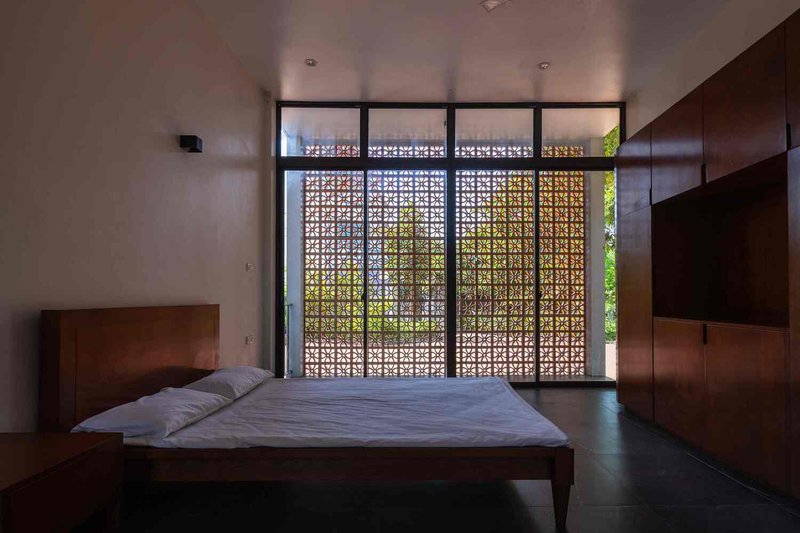
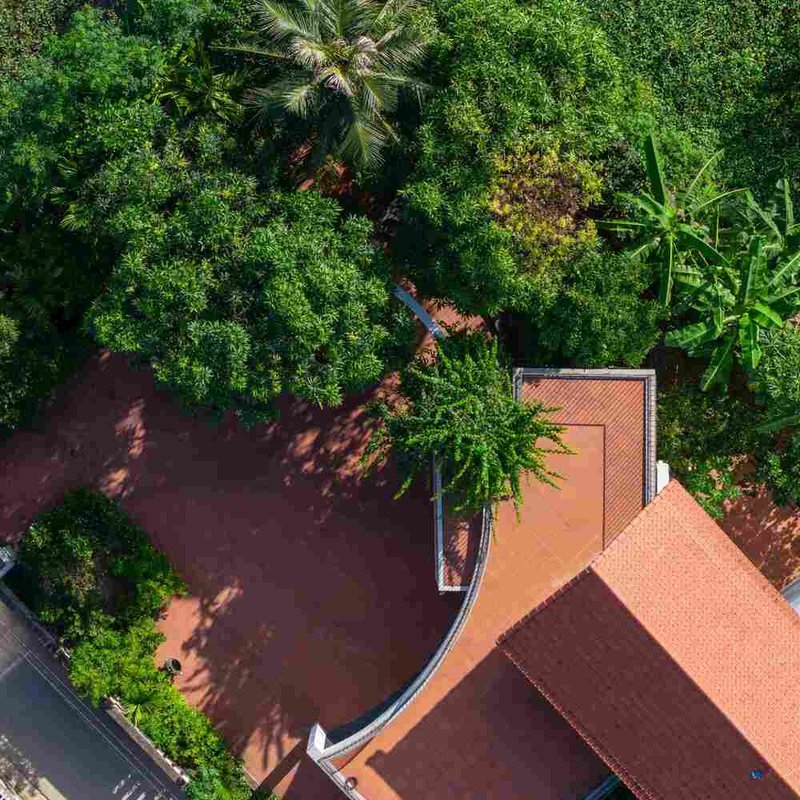
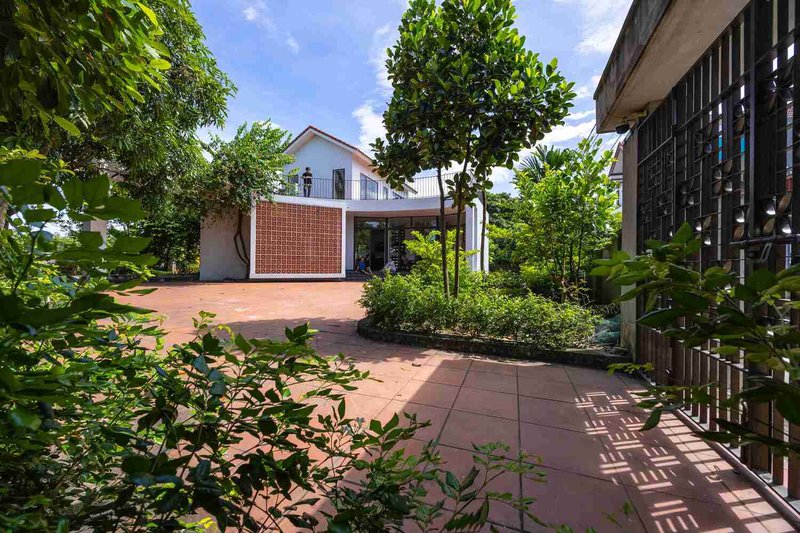
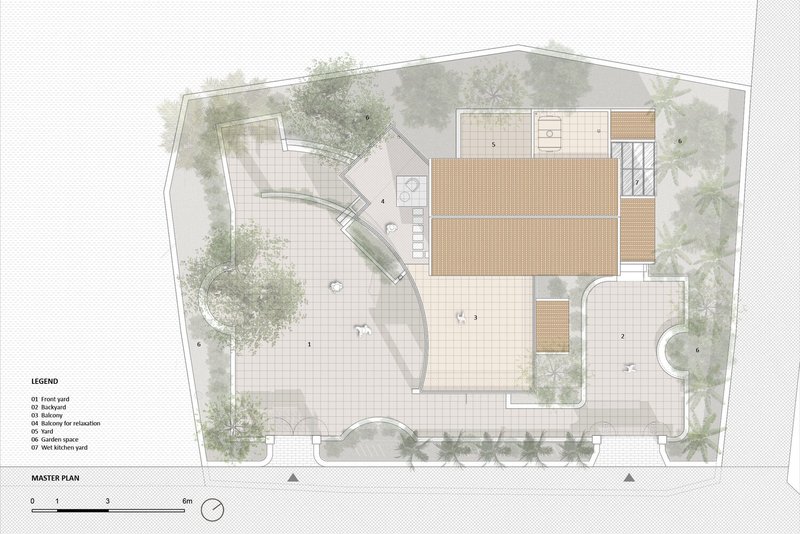
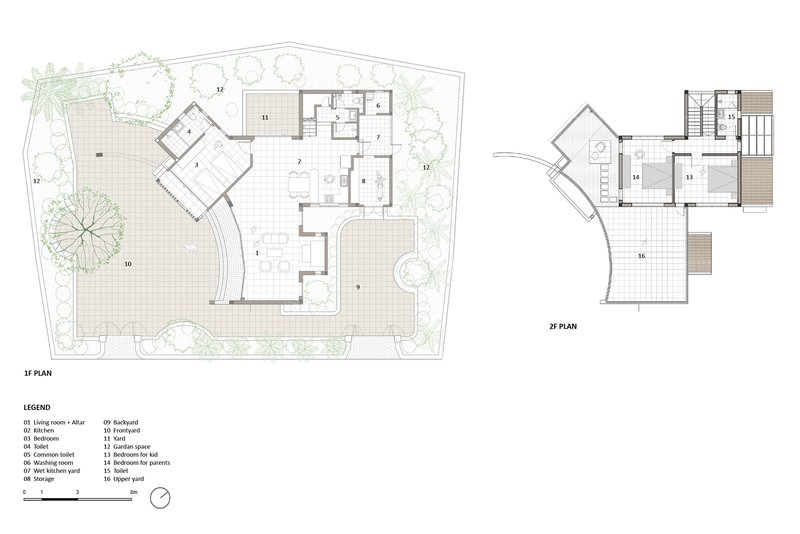
The house features interconnected yards, including a front yard, backyard, and upper and lower terraces. This arrangement not only enhances visual connectivity but also encourages spontaneous interactions among family members and neighbors. The zigzag garden weaves through the house, introducing greenery into every corner and establishing a seamless relationship between architecture and nature.
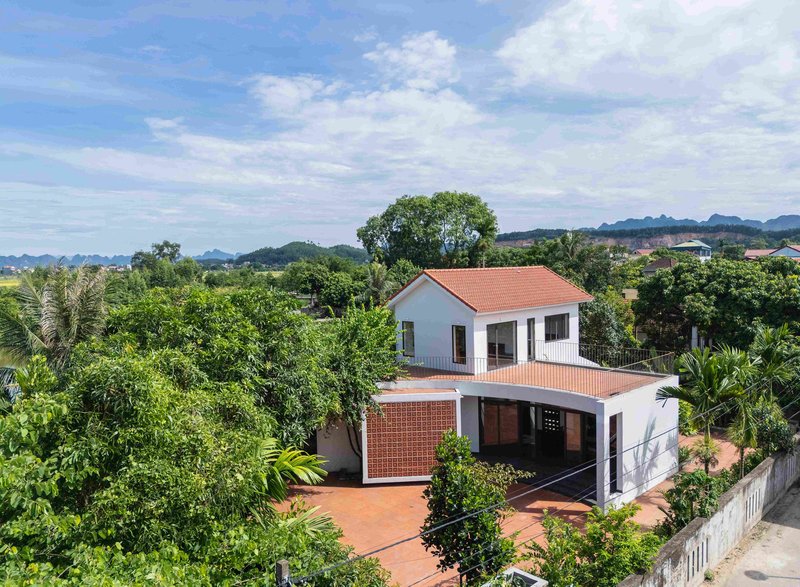
Architectural Form and Orientation
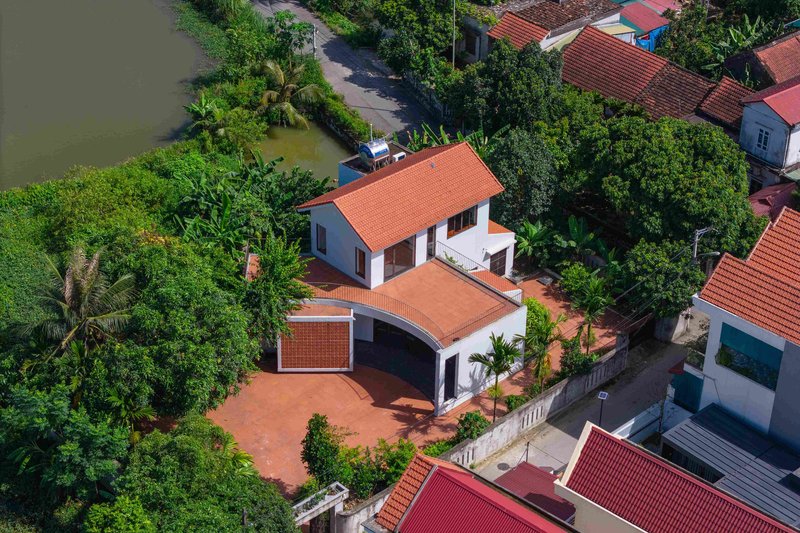
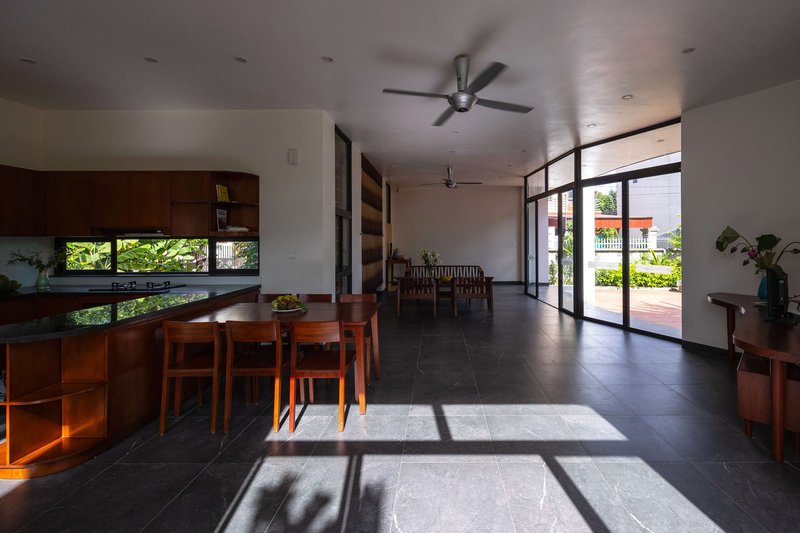
The house adopts an arc-shaped form, designed specifically to capture the southern breezes prevalent in the region. This orientation optimizes natural ventilation, ensuring thermal comfort throughout the year. Large openings and sliding doors connect the interior spaces to the surrounding gardens, allowing air and light to circulate freely.
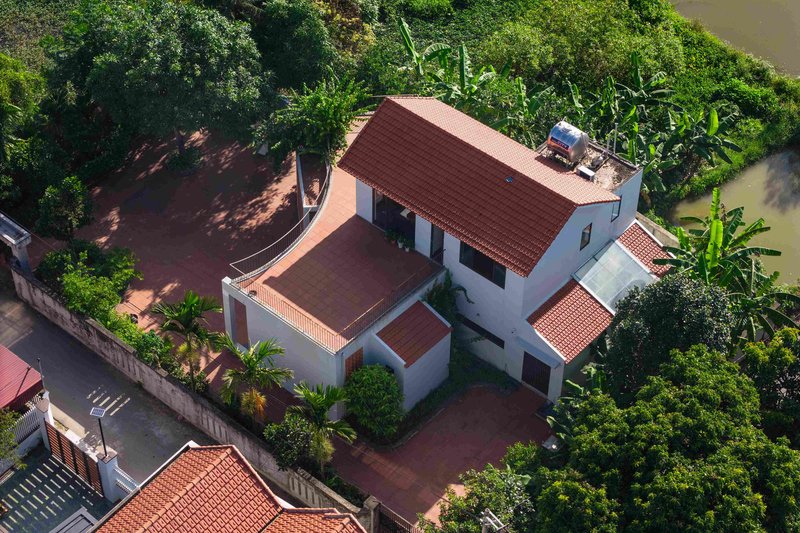
The curved structure softens the visual impact of the building, blending harmoniously with the landscape. The organic form contrasts with the rigid, rectangular layouts often seen in modern developments, offering a more contextual response to the rural setting.
Material Palette and Sustainable Construction
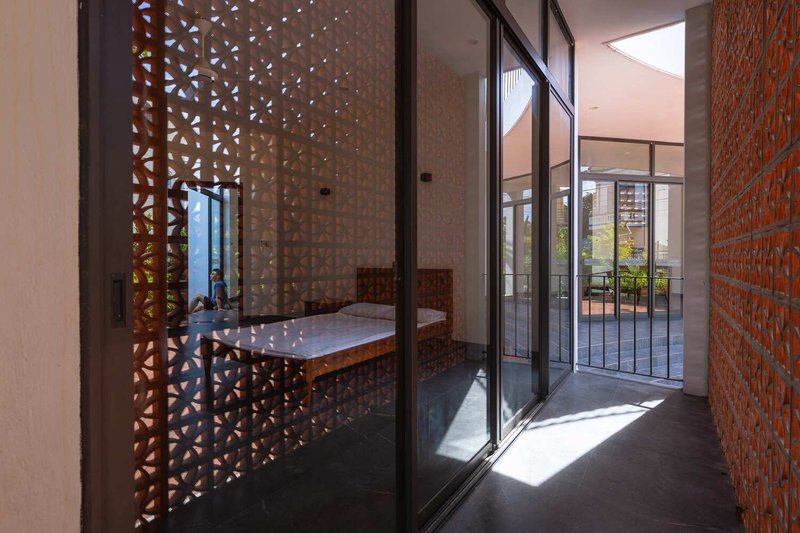
Local and eco-friendly materials form the backbone of Xom Me House’s construction. Red ceramic bricks, commonly found in Vietnamese villages, pave the garden patios, lending a rustic charm to the outdoor spaces. Bamboo is employed for the ceiling on the second floor, adding warmth and texture to the interior while reinforcing the connection to nature.
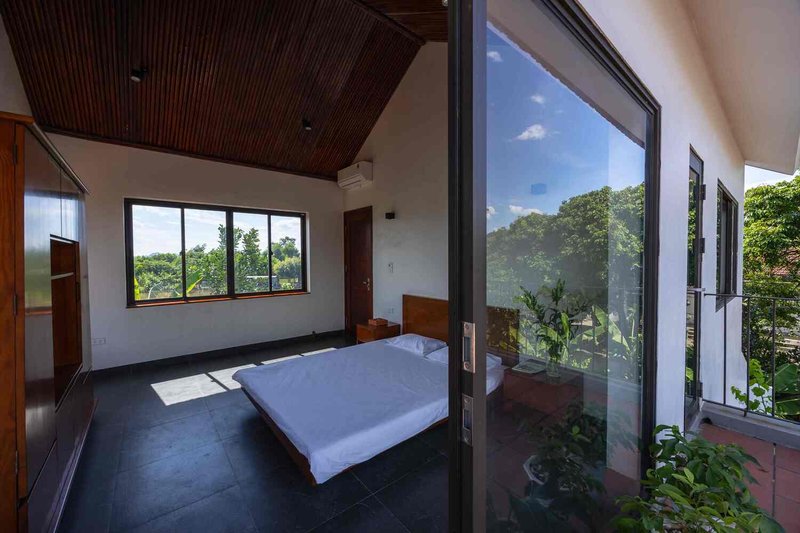
These materials not only reduce the building’s environmental footprint but also establish a visual dialogue with the architectural heritage of the region. The natural tones and textures create a welcoming atmosphere, emphasizing comfort and familiarity.
Interior Design and Multi-Functional Spaces
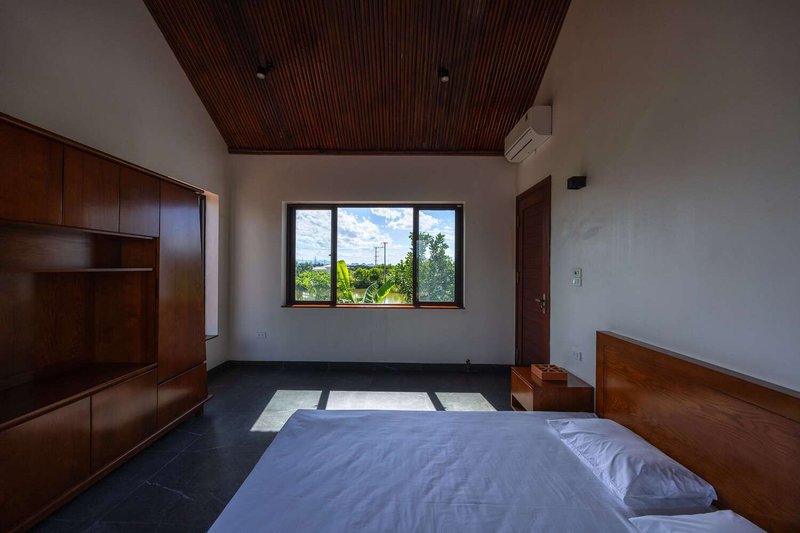
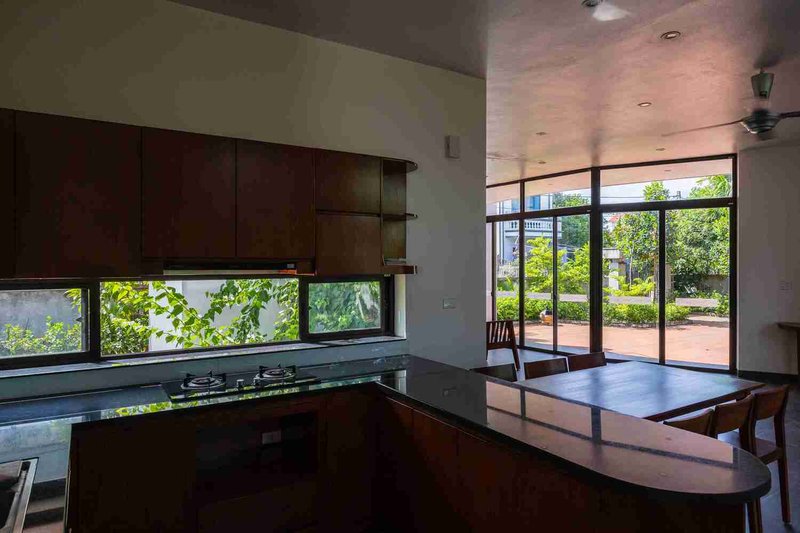
The interior spaces of Xom Me House are designed with flexibility in mind, catering to both large family gatherings and intimate daily routines. The ground floor accommodates common areas, including the living room, kitchen, and dining area, which seamlessly open onto the gardens. Bedrooms and private zones are positioned on the upper level, offering seclusion without compromising the sense of connection to the communal spaces below.
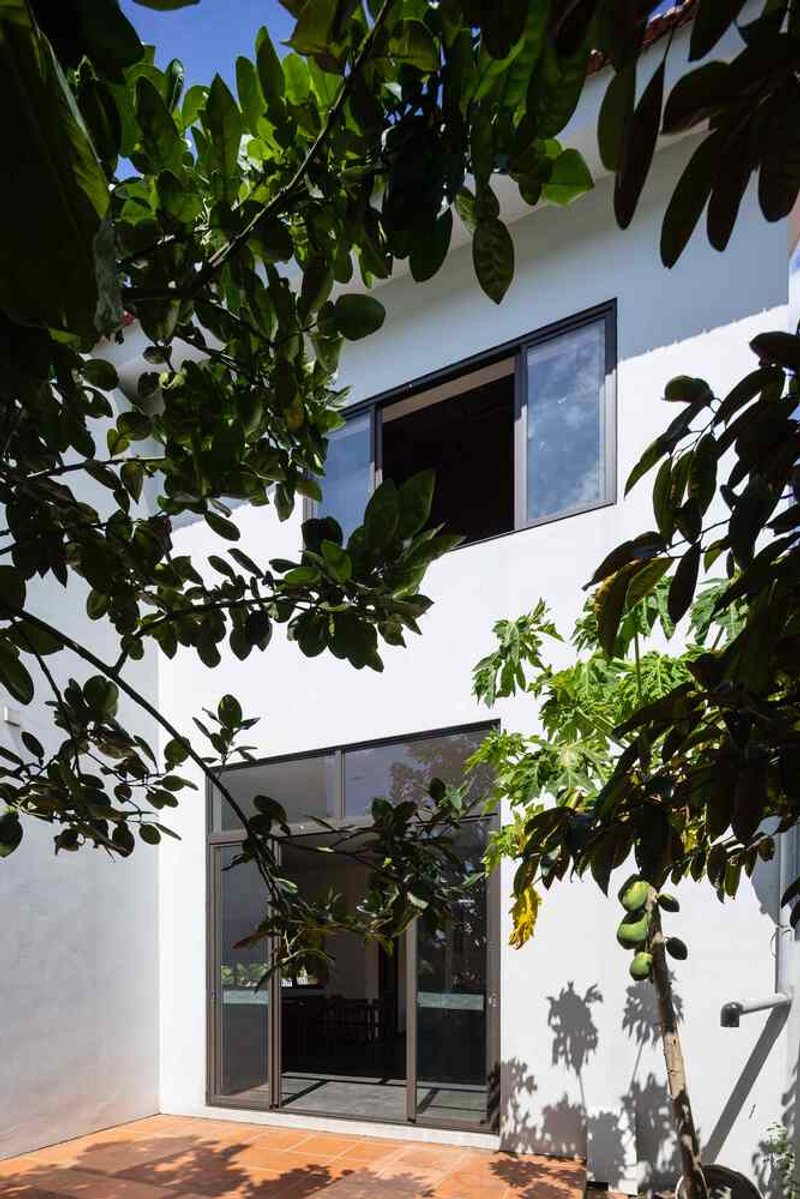
The bamboo ceiling enhances acoustic comfort while visually unifying the upper level. Large glass doors frame views of the surrounding gardens, blurring the distinction between interior and exterior environments.
Climate Responsiveness and Natural Ventilation
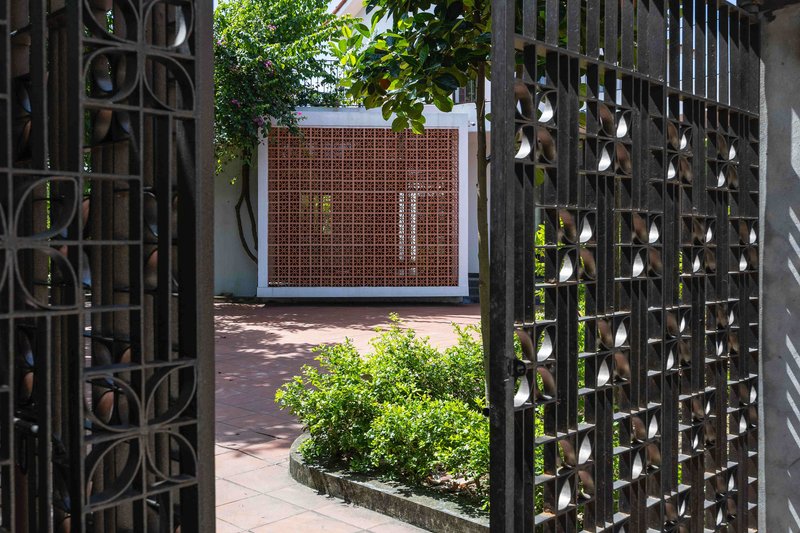
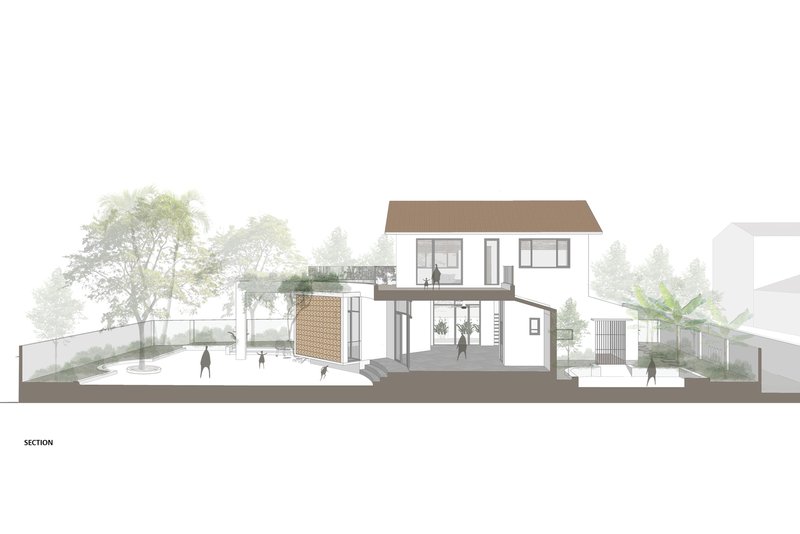
A key feature of modern rural house design is the integration of passive climate control strategies. Xom Me House exemplifies this approach through its orientation, cross-ventilation, and shading elements. The arc-shaped facade directs the southern breeze into the interior spaces, while the garden courtyards act as cooling buffers.
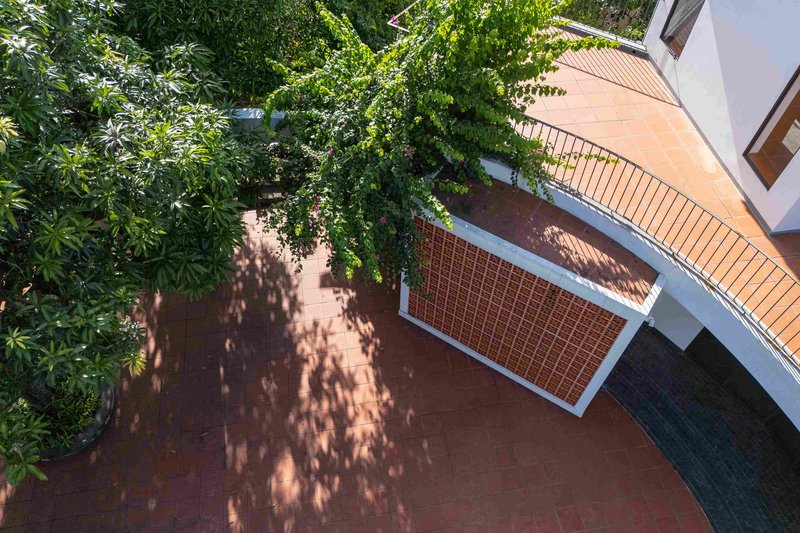
The open-plan design, combined with operable windows and sliding doors, allows residents to regulate airflow based on seasonal changes. This natural ventilation system reduces reliance on mechanical cooling, enhancing both energy efficiency and occupant comfort.
Landscaping and Integration with Nature
The landscaping of Xom Me House reflects the architects’ commitment to preserving the rural ecosystem. Existing fruit trees were carefully retained and incorporated into the garden design, providing shade, seasonal produce, and a familiar connection to the land. The zigzag garden introduces movement and rhythm into the spatial experience, guiding residents through a sequence of green pockets and open terraces.
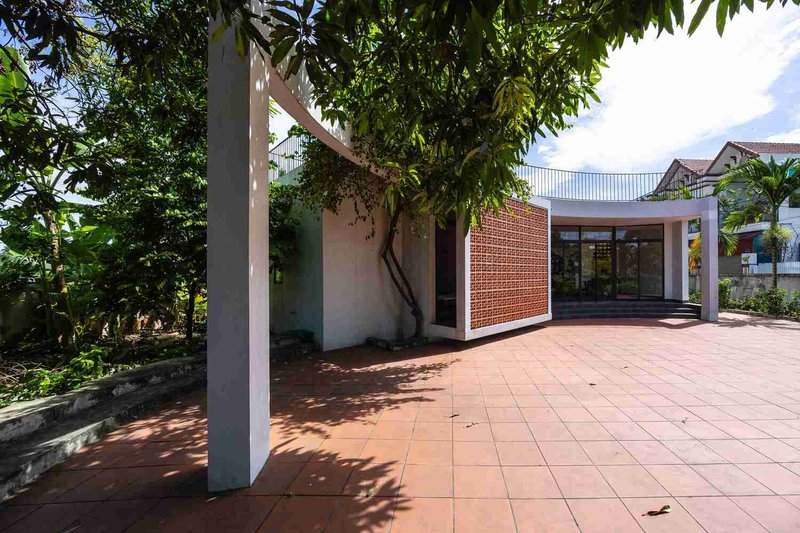
The garden serves not only as an aesthetic feature but also as a microclimate regulator, mitigating heat and promoting biodiversity. This symbiotic relationship between architecture and nature embodies the essence of modern rural house design.
Preserving Cultural Identity Through Design
Xom Me House is more than a residence; it is a cultural anchor that safeguards the values of Vietnamese rural life. The house embodies the spirit of community, emphasizing the importance of shared spaces and collective experiences. The design revitalizes age-old traditions while offering contemporary solutions that cater to the changing dynamics of rural living.
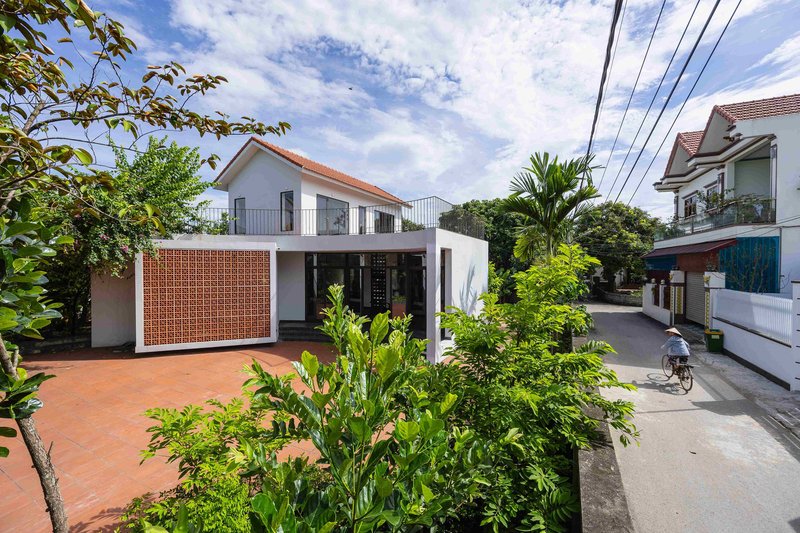
The project stands as a prototype for future rural developments, advocating for a design approach that respects local heritage while addressing the demands of modern lifestyles. It exemplifies how architecture can serve as a bridge between generations, ensuring that rural homes remain vibrant and relevant.
A Model for Modern Rural House Design
Xom Me House by NH Village Architects sets a new standard for modern rural house design in Vietnam. By blending traditional spatial elements with innovative architectural solutions, the house fosters a sense of belonging while accommodating contemporary needs. Its climate-responsive design, sustainable materials, and seamless integration with nature offer a blueprint for the future of rural housing.
As Vietnam’s rural landscape continues to evolve, Xom Me House serves as a reminder that progress need not come at the expense of tradition. It is a celebration of family, culture, and the enduring bond between people and place.
All Photographs are works of Trieu Chien




Popular Articles
Popular articles from the community

A Contemporary Take on Iranian Residential Architecture
A modern interior design in Mashhad that reinterprets brick, light, and spatial flow to create a warm, contemporary residential architecture.
Gads Hill Early Learning Center by JGMA: Adaptive Reuse Shaping Community-Focused Educational Architecture
Adaptive reuse transforms fragmented structure into vibrant early learning center with playful façade, natural light, and community-focused sustainable design.
Atelier Macri Concept Store Interior Design by CASE-REAL
Atelier Macri store features a "ko" counter, walnut wood details, cork displays, blending retail, gallery, and seamless customer experiences.
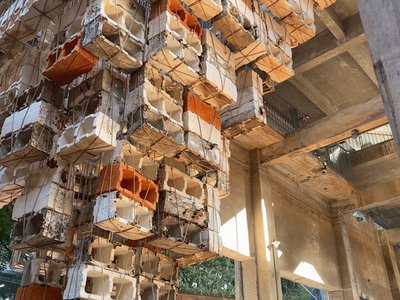
Inverted Architecture Installation by Studio Link-Arc: Exploring the Intersection of Architecture and Living Organisms
Inverted Architecture Installation by Studio Link-Arc blends mycelium, sustainability, inverted design, ecological cycles, and urban adaptive architecture in Shenzhen.
Similar Reads
You might also enjoy these articles


The Ken Roberts Memorial Delineation Competition (Krob)
As the most senior architectural drawing competition currently in operation anywhere in the world, it draws hundreds of entries each year, awarding the very best submissions in a series of medium-based categories.

Waterfront Redevelopment and Urban Revitalization in Mumbai: Forging a New Dawn for Darukhana
A transformative waterfront redevelopment project reimagining Darukhana’s shipbreaking heritage into an inclusive urban future.
OUT-OF-MAP: A Call for Postcards on Feminist Narratives of Public Space
Rhizoma Design and Research Lab invites artists, designers, architects, researchers, and students to reflect on how feminist perspectives can reshape public space. Selected works will be exhibited in Barcelona, October 2026. Submissions open until 15 April 2026.


Documentation Work on Buddhist Wooden Temple
Architectural syncretism and cultural hybridity: A comparative study of the Buddhist temples in Chattogram Hill tracks

Explore Architecture Competitions
Discover active competitions in this discipline




The International Standard for Design Portfolios


The Global Benchmark for Architecture Dissertation Awards


The Global Benchmark for Graduation Excellence


Challenge to reimagine the Iron Throne
Comments (0)
Please login or sign up to add comments
No comments yet. Be the first to comment!