
Namyangju Detached House by SMxL Architects: A Harmonious Dialogue Between Landscape and Living
Modern forest-edge residence in Namyangju featuring a gabled roof, rooftop courtyard, attic space, and seamless indoor-outdoor living.

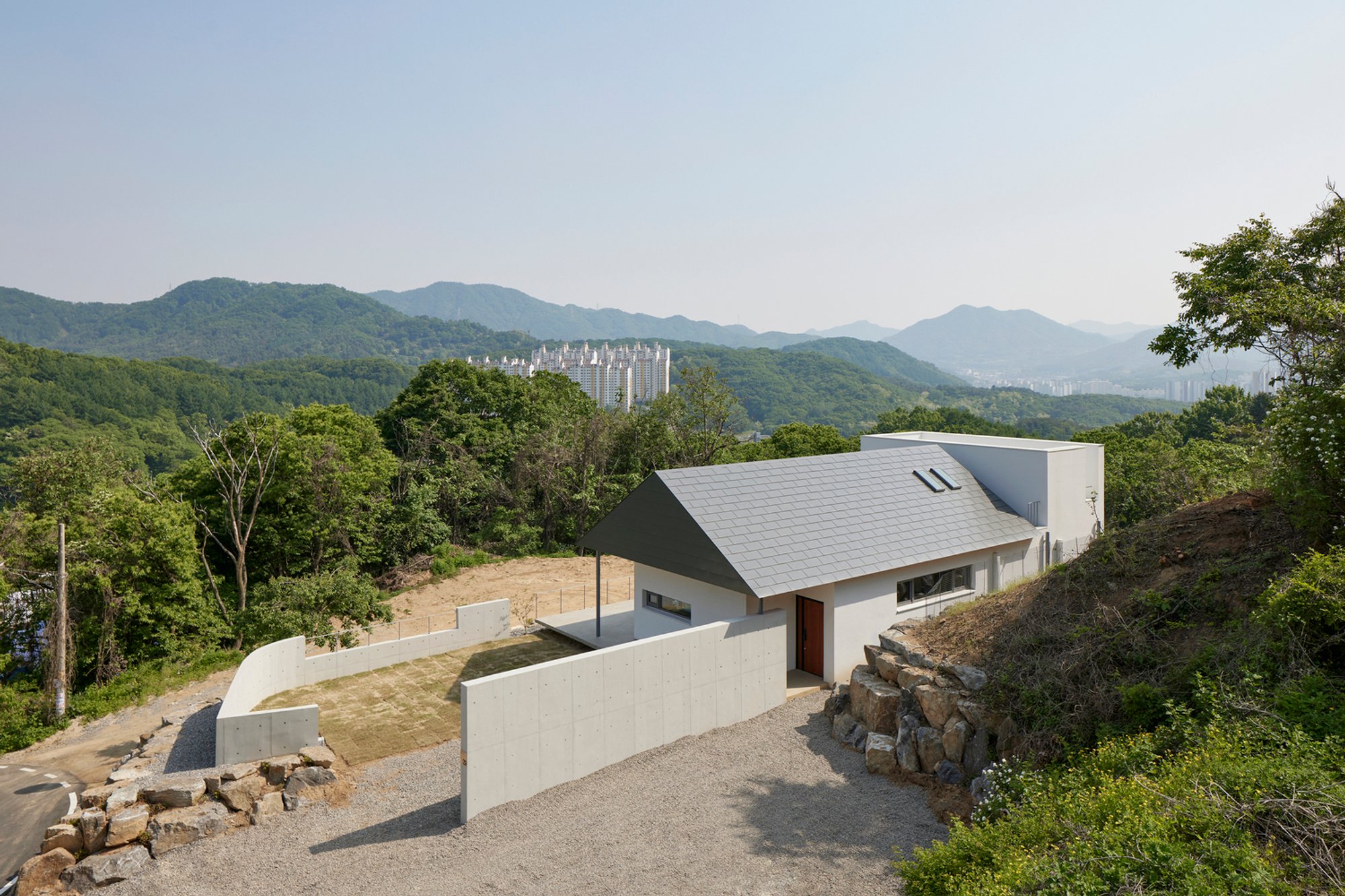
Nestled in the mountainous forests of Namyangju-si, South Korea, the Namyangju Detached House by SMxL Architects offers a compelling reinterpretation of suburban living. Designed for a newlywed couple embarking on family life, this 131-square-meter residence embodies the essence of site-responsive architecture, seamlessly blending contemporary design with natural tranquility.
Set on a slender, sloped plot amidst a sea of trees, the house appears like a modern hermitage—quietly removed yet intimately connected to its environment. Despite being surrounded by emerging villa developments and rural housing clusters, the immediate context remains remarkably untouched, offering an immersive forest-living experience in the heart of the city.
A Compact Program Tailored to Family Life
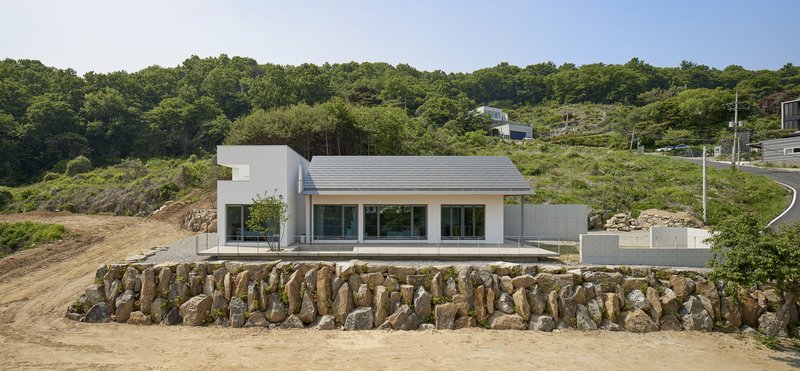
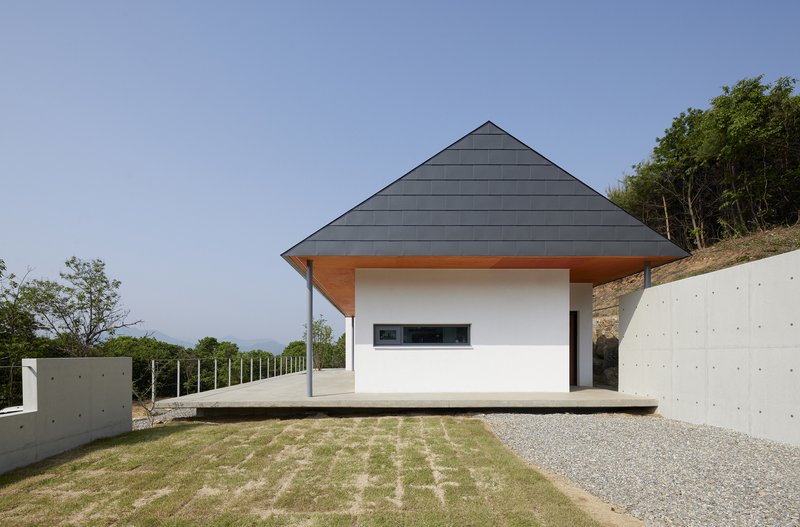
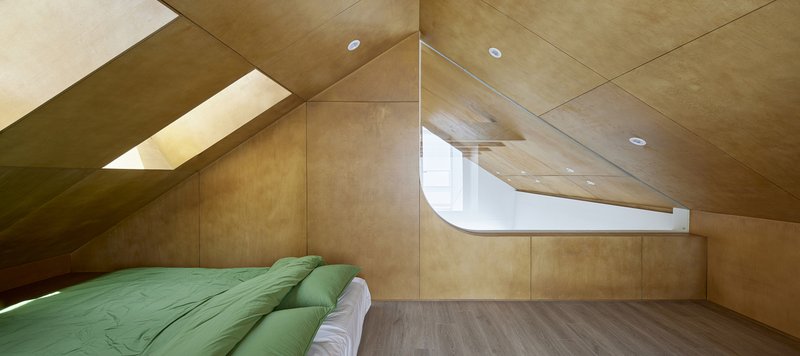
The clients envisioned a single-story home with three bedrooms and a private rooftop yard—a challenge given the limited site area. Rather than compromising comfort, SMxL Architects adopted a hybrid layout. Two bedrooms, a kitchen, a living room, and a bathroom are organized on the ground level, while a third bedroom is discreetly placed in an attic beneath the gabled roof. This spatial solution maximizes both volume and natural light, with the roof geometry doubling as a design feature and a daylighting strategy.
To preserve openness, the master bedroom sits under a flat roof, allowing for a rooftop courtyard that remains private and serene—a space where architecture orchestrates quiet views of the sky and treetops.
Spatial Zoning: Public vs. Private, Indoors vs. Outdoors
The house is composed of four distinct spatial zones: public exterior, private exterior, public interior, and private interior.
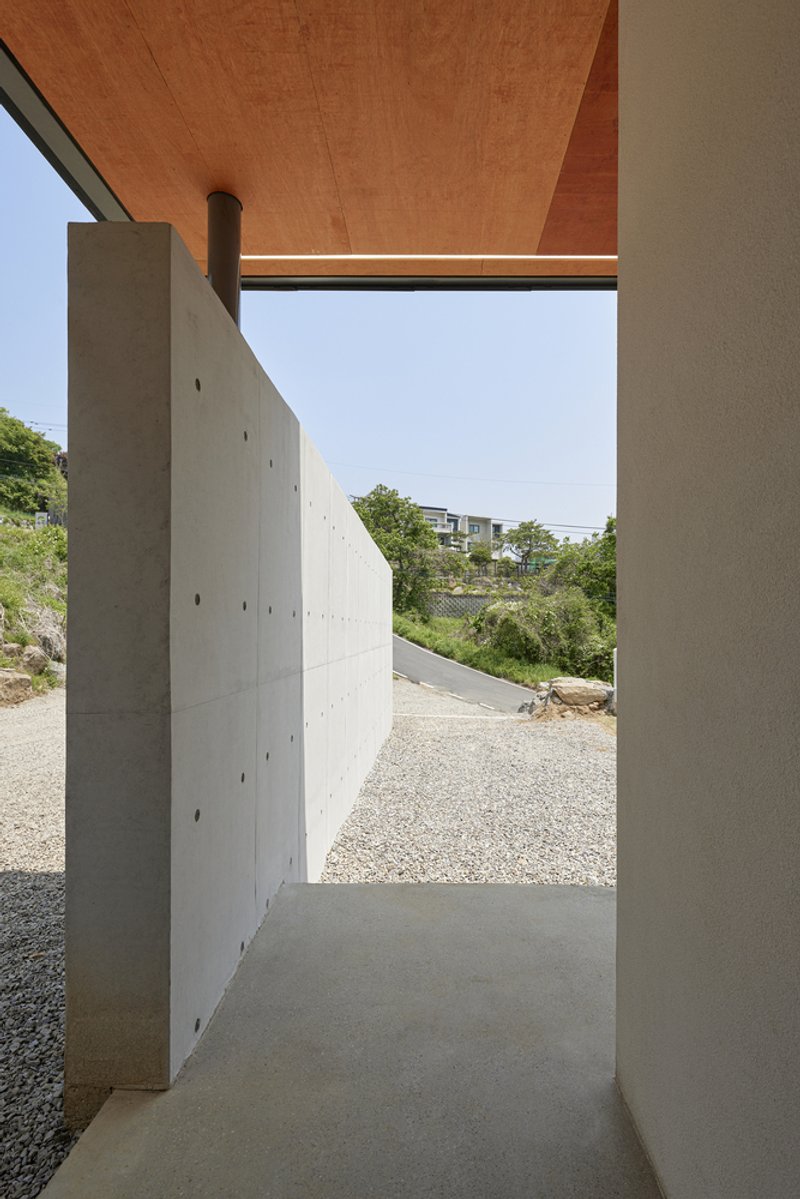
At the threshold, a semi-enclosed entrance courtyard welcomes guests while also acting as a buffer from the street. A staggered concrete wall provides visual privacy and acoustical insulation from the adjacent road while defining a spatial boundary.
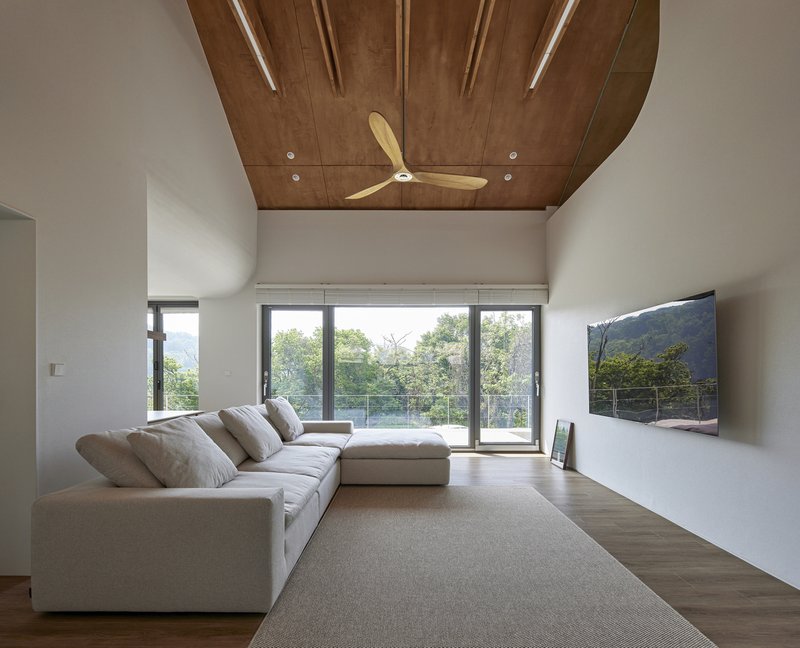
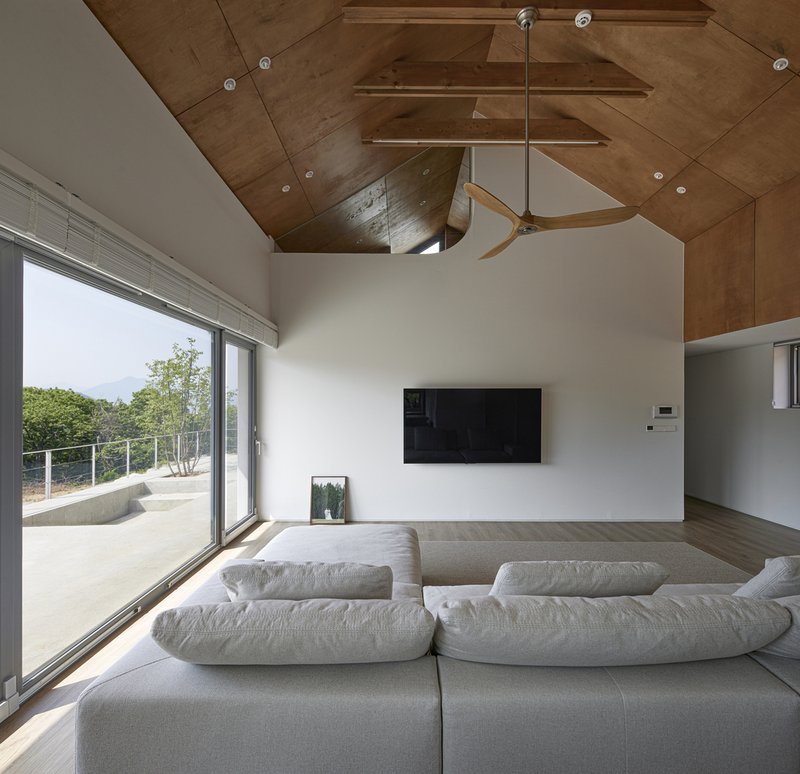
Stepping inside, the living room opens dramatically under a pitched roof with expansive south-facing windows, framing panoramic views and flooding the space with sunlight. Additional clerestory windows to the north invite in forest views and allow for cross-ventilation, reducing reliance on mechanical systems. The open-plan layout merges the living room and kitchen into a shared family hub, emphasizing communal interaction and spatial fluidity.
Nature as Extension of the Home
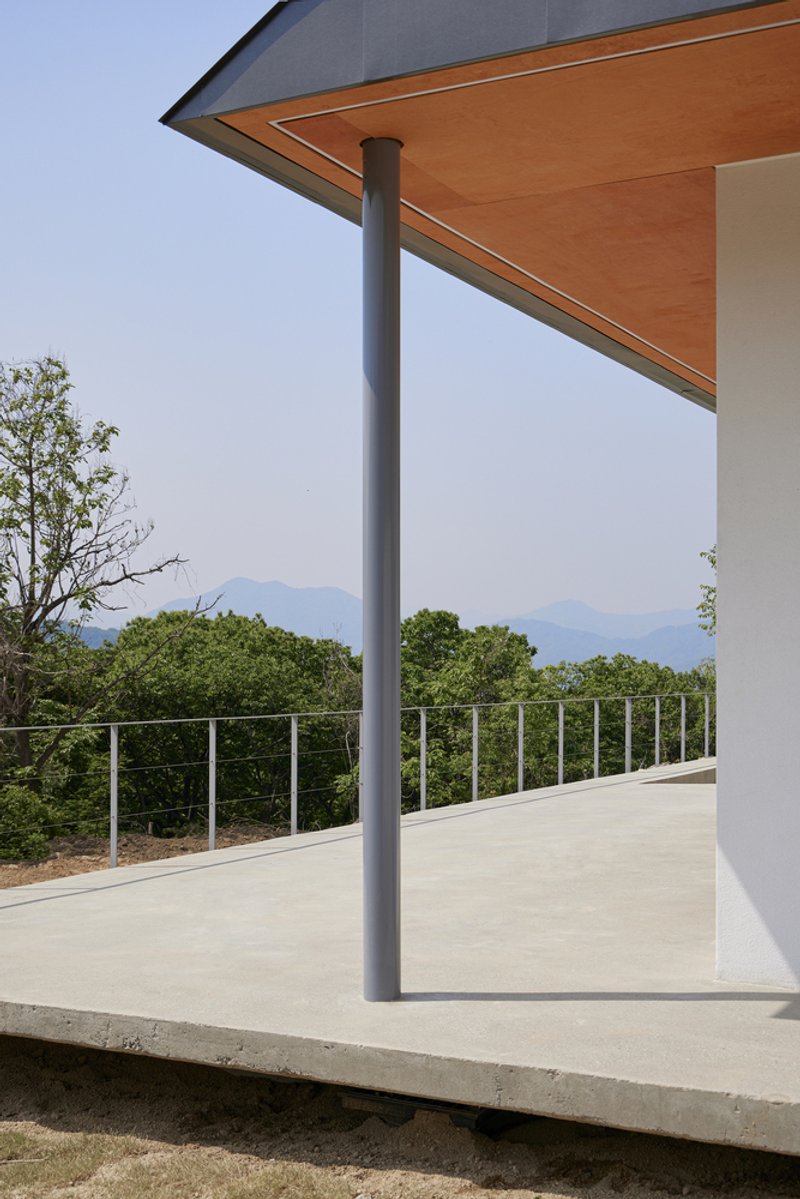
The kitchen’s horizontal window over the sink visually connects with the landscape, while a folding door opens onto a front terrace, transforming indoor activities into an alfresco experience. This flexible interface blurs the lines between interior and exterior, inviting seasonal change into the everyday domestic rhythm.
The terrace functions as a private outdoor space for family bonding. A concrete bench and planter integrate furniture with architecture, creating a minimalist yet functional outdoor living room.
Thoughtful Privacy and Multi-Level Interaction
Moving along the hallway, one enters the private quarters, including the master bedroom and a smaller room designed for hobbies. Each room enjoys access to the terrace through wide glazed openings. A miniature courtyard between the main room and bathroom provides visual softness and seclusion, blending light, nature, and privacy.
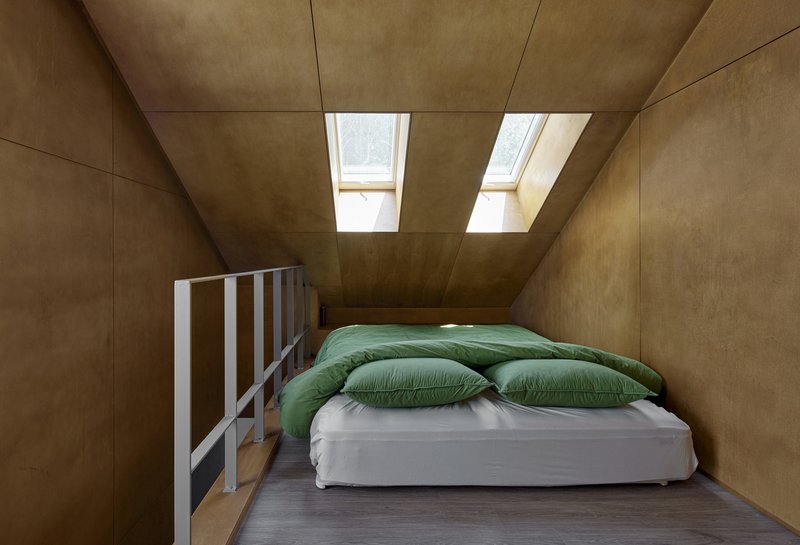
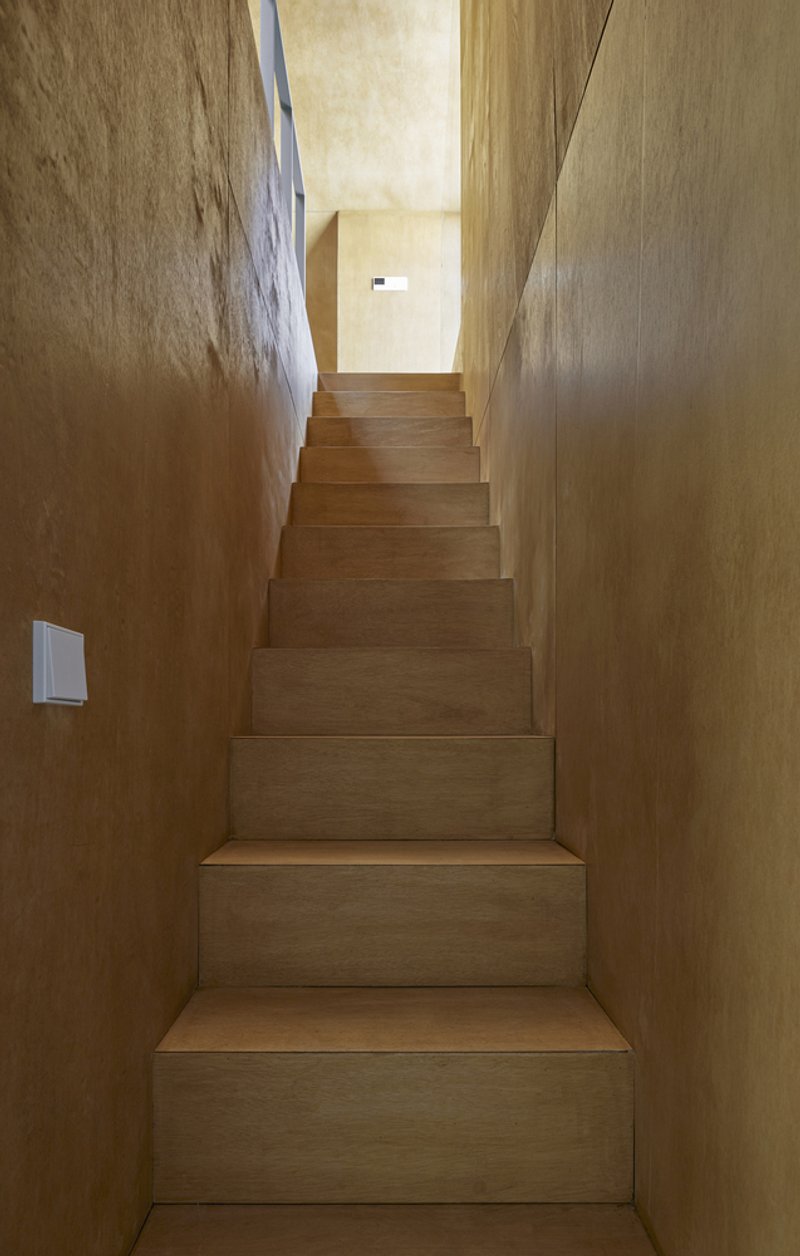
A discreet sliding door reveals stairs to the attic—an intimate loft space defined by sloping ceilings, a skylight, and strategically placed windows that visually link the attic to the spaces below. This subtle connection encourages inter-level communication between family members while keeping spaces distinct.
A Rooftop Escape Framed by Design
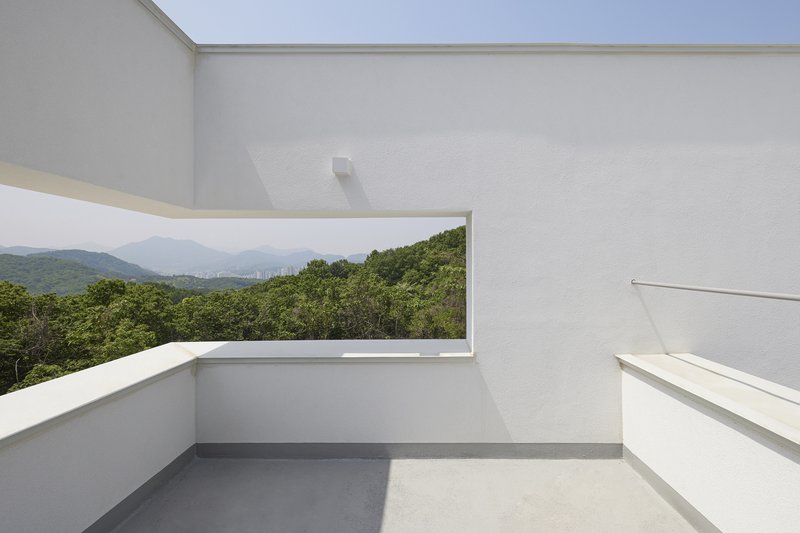
Atop the house lies a secluded rooftop yard, reserved exclusively for the family. Framed by a high balustrade wall and a picture-frame-like opening, this rooftop space curates a dramatic view of the surrounding landscape. The design transforms the natural scenery into a living artwork, celebrating architectural framing and curated vistas while offering peace from urban interruptions.
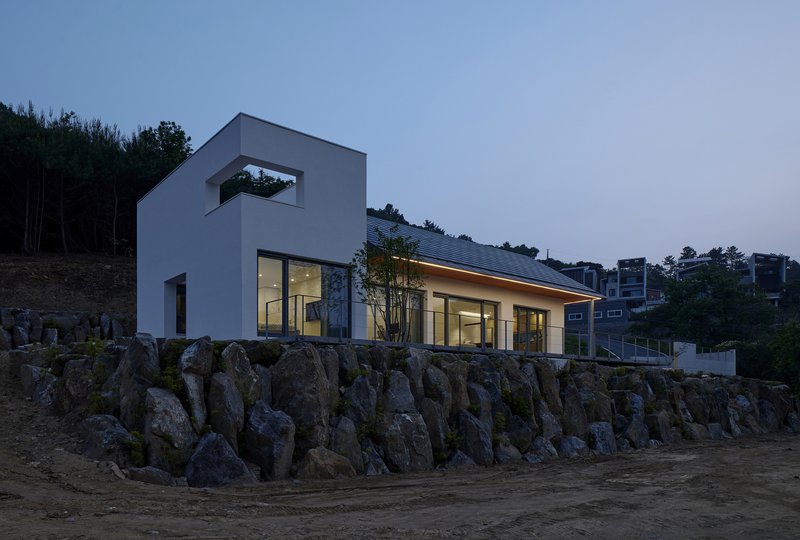
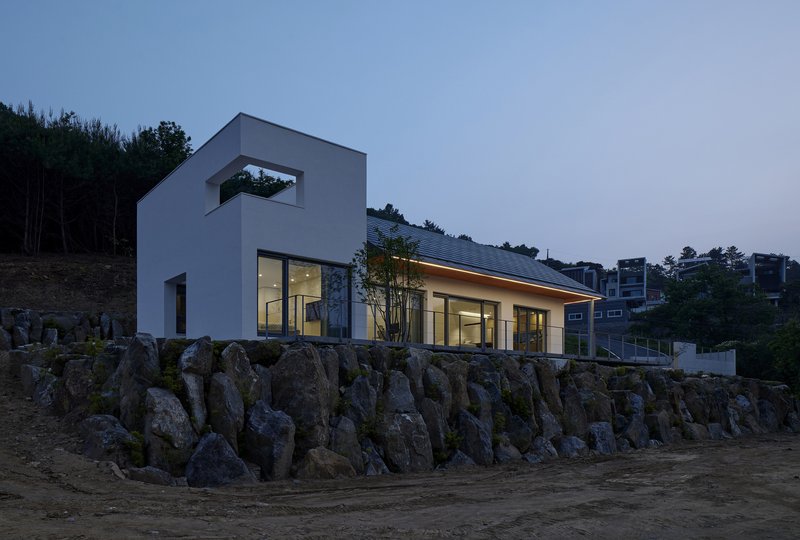
All Photographs are works of Hanbit Kim




Popular Articles
Popular articles from the community

Split House: A Compact Urban Home Blending Privacy, Light, and Flexible Living in Japan
Compact Japanese home featuring DOMA space, flexible café potential, passive lighting, privacy zoning, and sustainable urban living design.
Atelier Macri Concept Store Interior Design by CASE-REAL
Atelier Macri store features a "ko" counter, walnut wood details, cork displays, blending retail, gallery, and seamless customer experiences.




The Ken Roberts Memorial Delineation Competition (Krob)
As the most senior architectural drawing competition currently in operation anywhere in the world, it draws hundreds of entries each year, awarding the very best submissions in a series of medium-based categories.


Similar Reads
You might also enjoy these articles
The Ken Roberts Memorial Delineation Competition (Krob)
As the most senior architectural drawing competition currently in operation anywhere in the world, it draws hundreds of entries each year, awarding the very best submissions in a series of medium-based categories.


Waterfront Redevelopment and Urban Revitalization in Mumbai: Forging a New Dawn for Darukhana
A transformative waterfront redevelopment project reimagining Darukhana’s shipbreaking heritage into an inclusive urban future.

OUT-OF-MAP: A Call for Postcards on Feminist Narratives of Public Space
Rhizoma Design and Research Lab invites artists, designers, architects, researchers, and students to reflect on how feminist perspectives can reshape public space. Selected works will be exhibited in Barcelona, October 2026. Submissions open until 15 April 2026.


Documentation Work on Buddhist Wooden Temple
Architectural syncretism and cultural hybridity: A comparative study of the Buddhist temples in Chattogram Hill tracks
Explore Architecture Competitions
Discover active competitions in this discipline




The International Standard for Design Portfolios


The Global Benchmark for Architecture Dissertation Awards


The Global Benchmark for Graduation Excellence


Challenge to reimagine the Iron Throne
Comments (0)
Please login or sign up to add comments
No comments yet. Be the first to comment!