
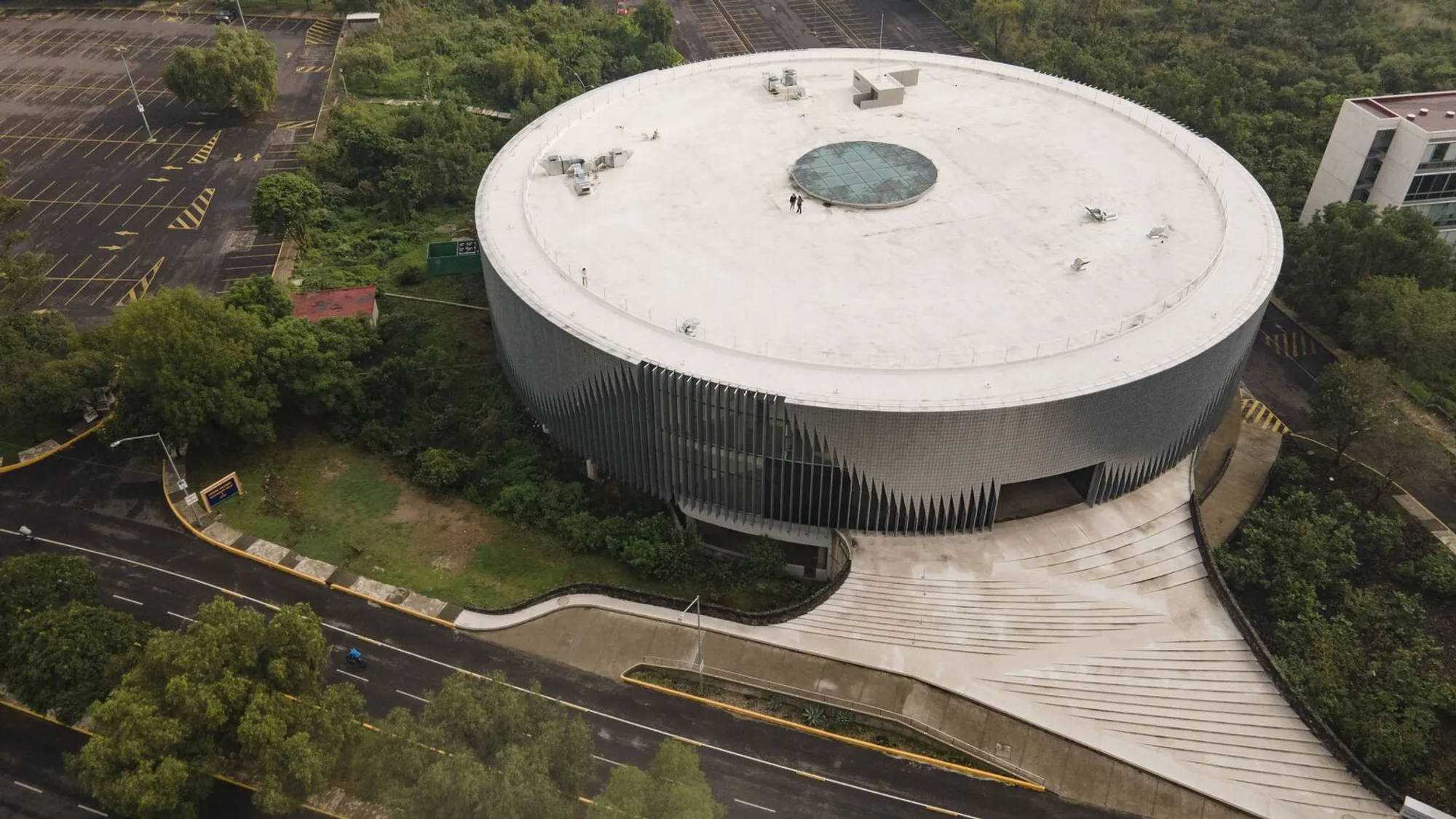
National Pavilion of Biodiversity by Fernanda Ahumada + FREE: An Architectural Ode to Life’s Diversity
Radial museum design blending science, sustainability, and symbolism to showcase Latin America’s largest biodiversity collection at UNAM, Mexico City.


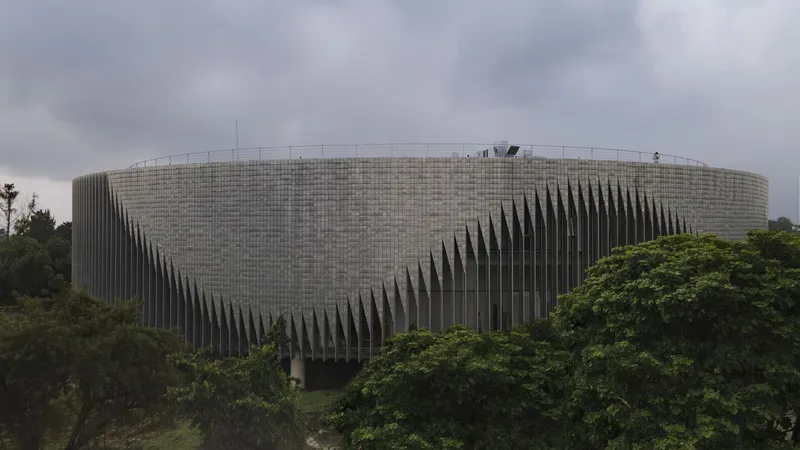
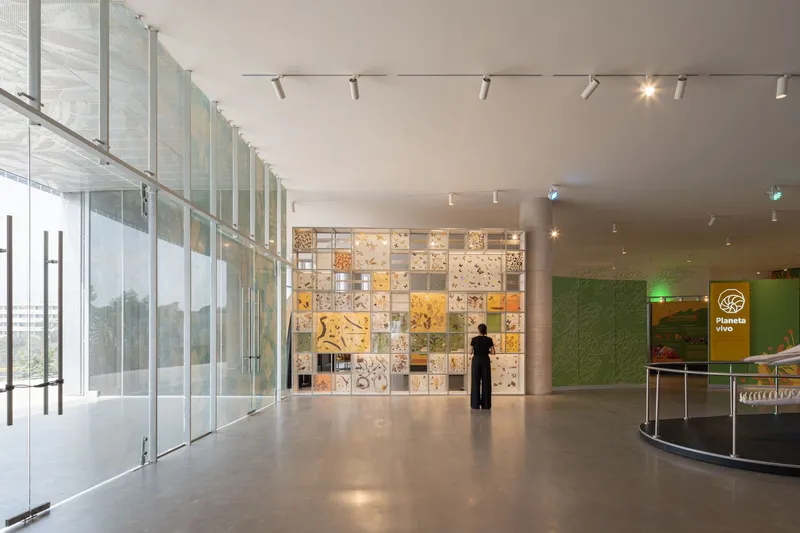
Nestled in the cultural corridor of Ciudad Universitaria in Mexico City, the National Pavilion of Biodiversity is a landmark project designed by Fernanda Ahumada in collaboration with FREE. Completed in 2022, this 11,780-square-meter building seamlessly merges architecture, science, and education, serving as a new home for the Institute of Biology at UNAM. It is not only a scientific archive but also a dynamic space for public engagement and learning, housing Latin America’s largest collection of preserved species.
Concept: Architecture Inspired by Nature
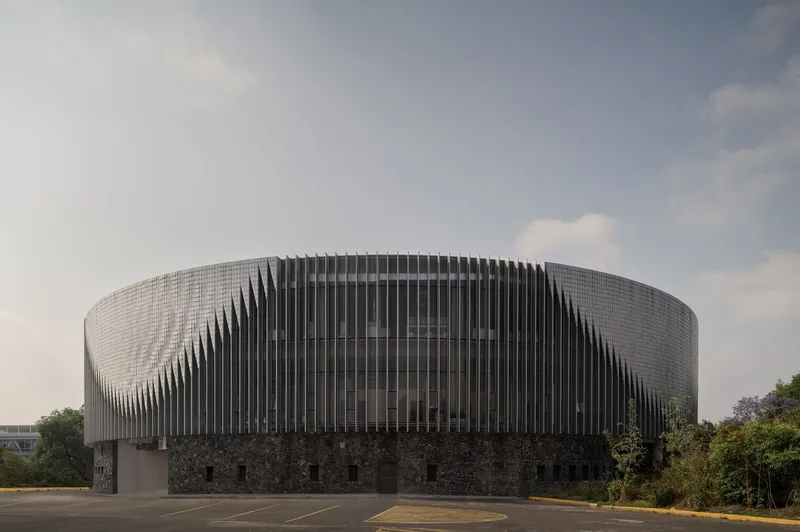
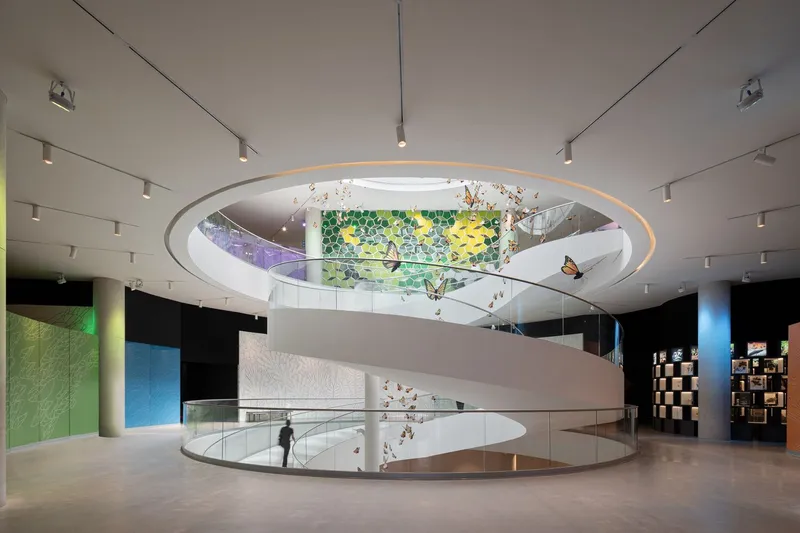
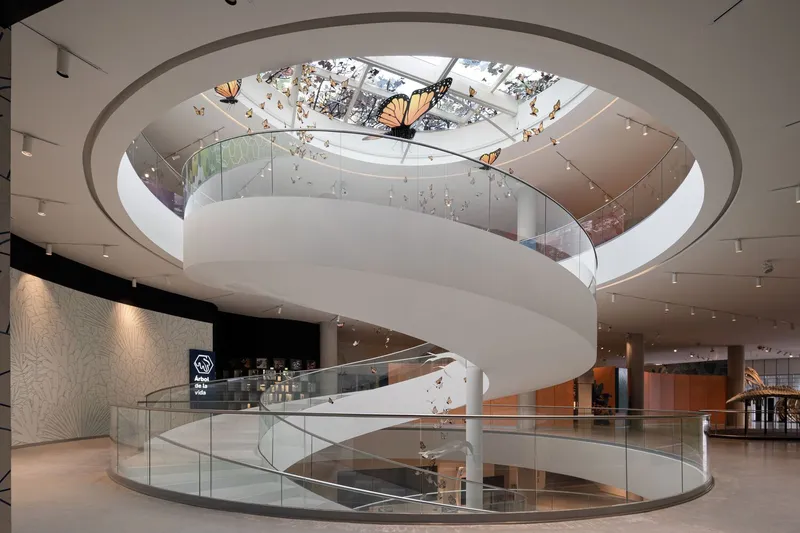
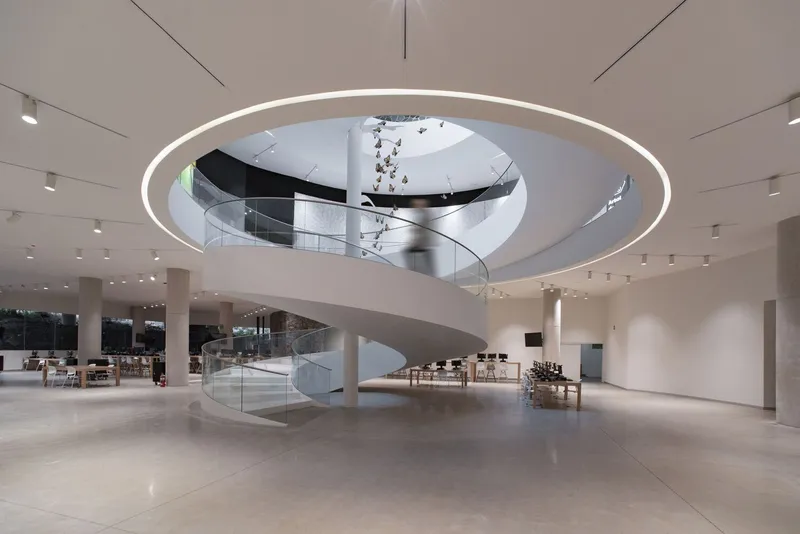
The architectural concept draws inspiration from the Tree of Life, reflecting the interconnectedness of all living beings. The radial floor plan symbolizes the branching structure of evolution, while the central spiral staircase—evocative of the DNA double helix—acts as a sculptural core connecting all levels. This symbolic gesture highlights the genetic code shared by all species and aligns with the building’s mission of biodiversity conservation.
Spatial Strategy: A Radial and Layered Experience
The pavilion’s three-ring organizational layout reflects its mixed-use nature:
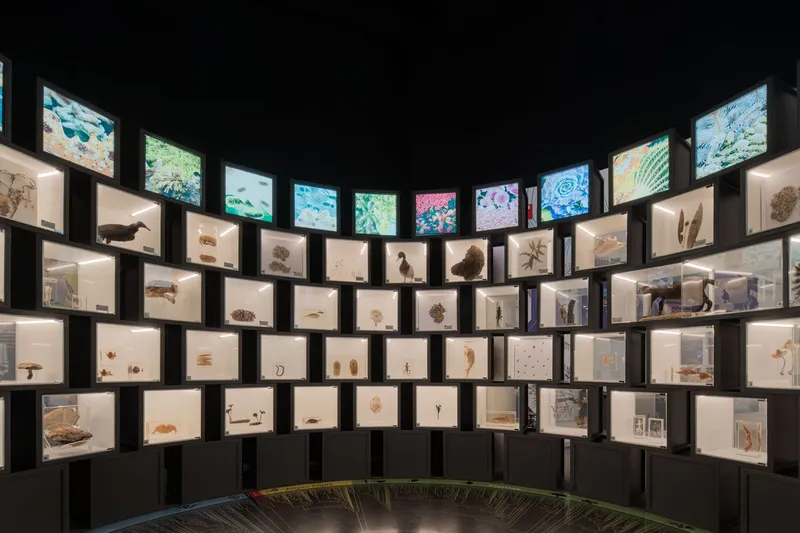
- Inner ring: Public spaces like permanent exhibitions and vertical circulation.
- Middle ring: Specialized research and archival collections, housing mammals, reptiles, birds, and fish.
- Outer ring: Laboratories, digital libraries, and consultation rooms, providing expansive 360° views of the surrounding landscape.
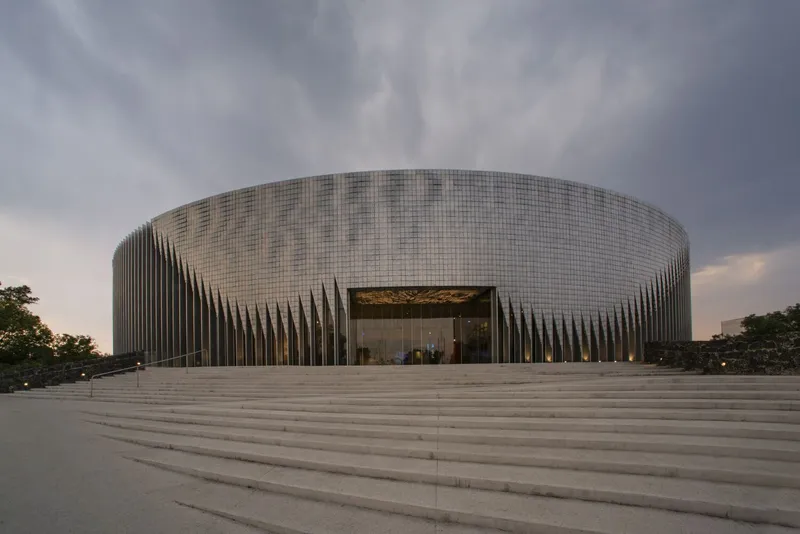
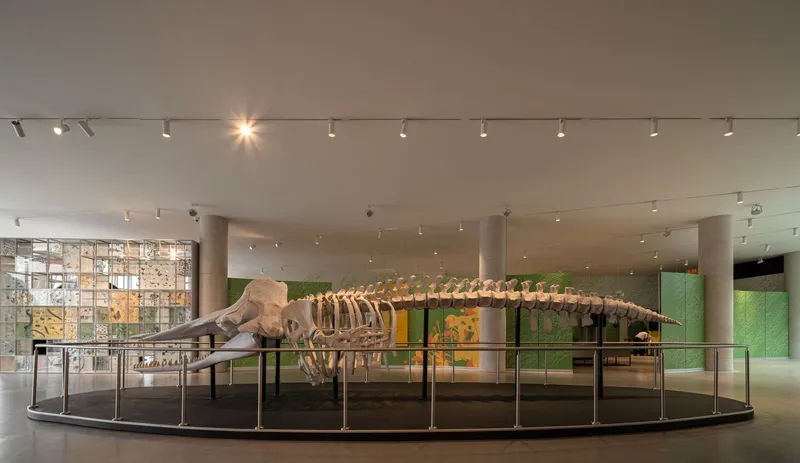
This layered circulation fosters interaction between researchers, students, and visitors, promoting a deeper understanding of biodiversity through immersive museum architecture.
Design & Materials: Sustainability and Symbolism
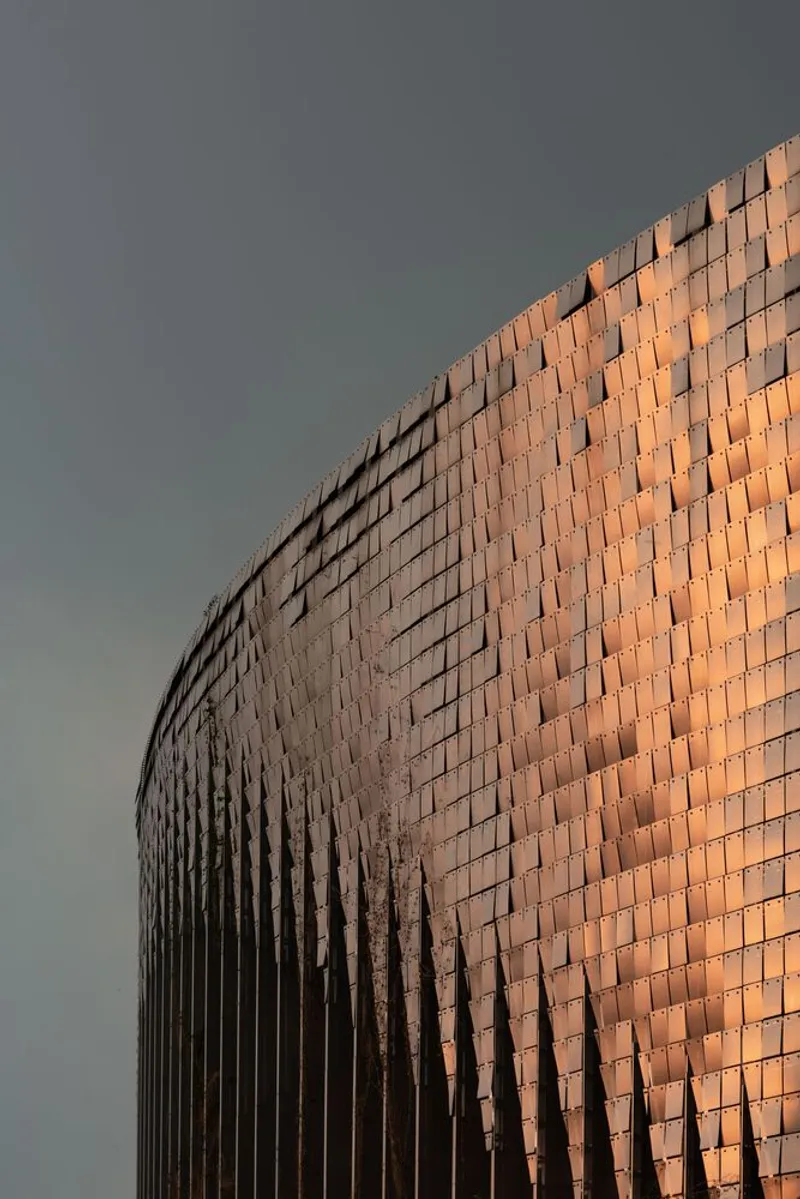
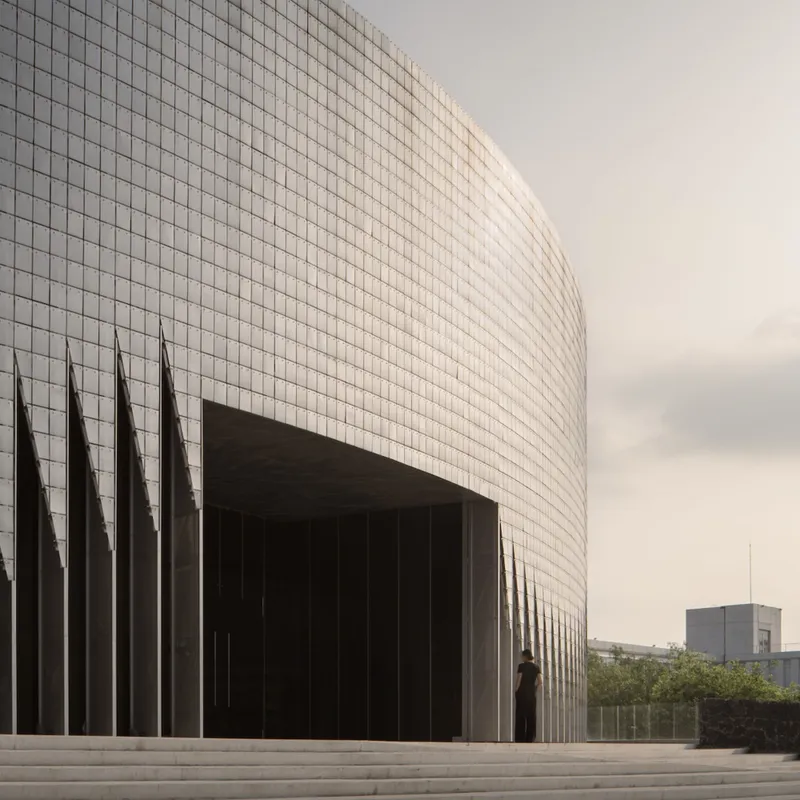
The façade combines glass, local volcanic quarry stone, and perforated aluminum panels that respond dynamically to natural light and wind. The kinetic facade, composed of thousands of aluminum modules, moves with the breeze, embodying the vitality and constant change of natural ecosystems. The quarry base, made from volcanic rock excavated onsite, grounds the building in the geological history of the Pedregal area.
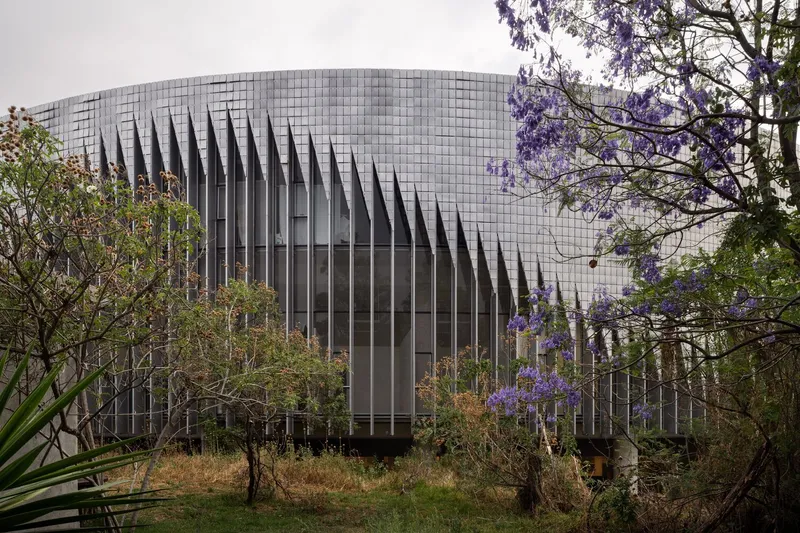
These sustainable architecture strategies not only improve energy efficiency but also root the pavilion in its ecological and cultural context.
Interior Programming: A Scientific and Public Nexus
Distributed over three levels, the Pavilion includes:
- Exhibition halls and multimedia spaces for public education
- Climate-controlled archives for specimen preservation
- Laboratories, including a molecular biology lab
- A digital library, auditorium, gift shop, and cafeteria
The lower floor, partially buried into the terrain, offers quiet public zones with views of the quarry, encouraging contemplation and deeper engagement. The upper levels prioritize functionality, enabling intensive research and archival work while remaining visually and spatially connected to the exterior.
Architectural Significance: A Living Monument
The National Pavilion of Biodiversity stands as a vital institution at the intersection of science, architecture, and sustainability. It supports ongoing biodiversity research while also serving as a place of wonder and learning for the public. Through its symbolic form and innovative material palette, the building communicates the urgency of conservation and the beauty of life on Earth.
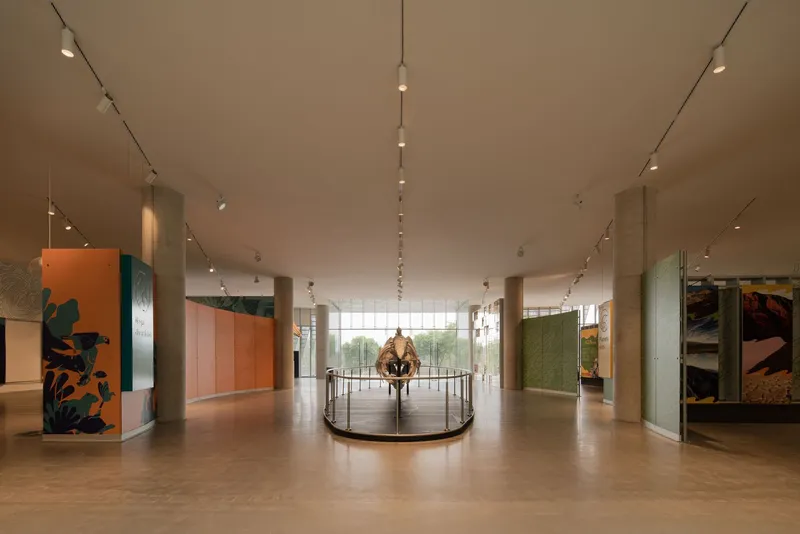
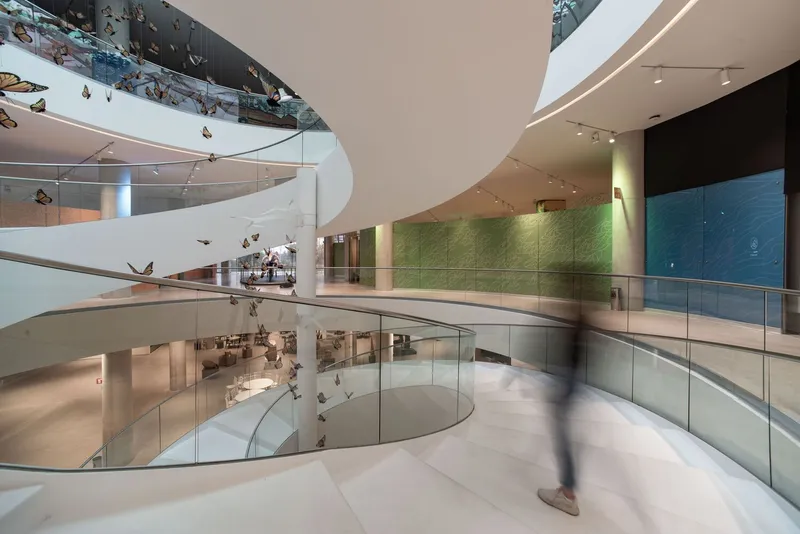
All the photographs are works of César Belio, Mariola Soberón



Popular Articles
Popular articles from the community


Riyadh For All: Intergenerational Urban Design for Active Aging in Rabat
Riyadh For All reimagines urban design in Rabat with intergenerational co-living, adaptive courtyards, and Moroccan cultural exchange today.

AL-JANNAH: Sustainable Architecture and Permaculture for Afghan Widows
AL-JANNAH uses sustainable architecture and permaculture to create resilient oasis of housing, learning, work and renewal for Afghan widows.

The Earth Pod: 3D Printed Homes for Resilient Refugee Communities
The Earth Pod reimagines refugee housing through 3D printed homes made from clay, combining resilience, self-sufficiency, and rapid shelter.

Co-life: Sustainable Architecture for Age-Friendly Community Living
Co-life reimagines sustainable architecture for seniors through courtyards, rammed earth, shared gardens, and spaces designed for belonging.


Similar Reads
You might also enjoy these articles


Hodi-Mandai Geram
Project Function: Preservation and revitalization of the Intangible heritage and socio-spatial identity of the Hodi by Housing, Cultural Memory Center, Sacred Grove, landscape, local tourism economy


Olio Towers: A Mid-Rise for Performers That Fuses Housing, Rehearsal, and Stage
Located blocks from Houston's Theater District, this modular tower stacks living units around a central performance atrium.

Oasis: Modular Green Housing Carved into Dhaka's Urban Fabric
A shortlisted Plugin Housing entry reclaims unauthorized settlements in Dhaka with stepped concrete volumes, green roofs, and ventilation-driven design.

Black Hole: A Floating Megastructure for the Post-Physical Era
Emiliano Mazzarotto envisions a spherical, self-scaling arena where e-sports, digital hotels, and holographic stadiums replace traditional public space.


Explore Cultural Architecture Competitions
Discover active competitions in this discipline



Challenge to reimagine the Iron Throne


Photograph architecture without architects


Illustrate the lost glory of Angkor Wat - Render Challenge


Bring back Drive In's
Comments (0)
Please login or sign up to add comments
No comments yet. Be the first to comment!