
Nature-Inspired Hotel Architecture: Lost Villa · Ginkgo Valley Design Hotel by Moguang Studio
Lost Villa · Ginkgo Valley Design Hotel exemplifies nature-inspired hotel architecture, seamlessly integrating with the landscape through modular design and sustainable materials.

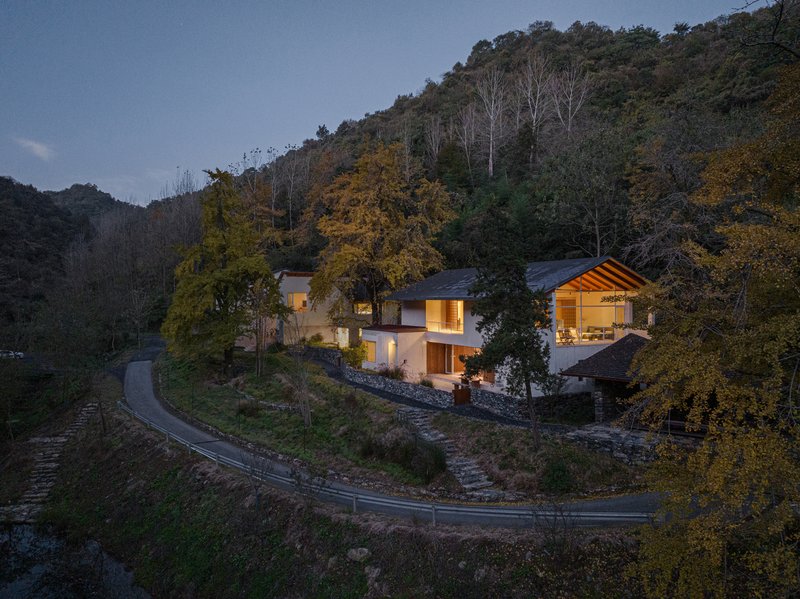
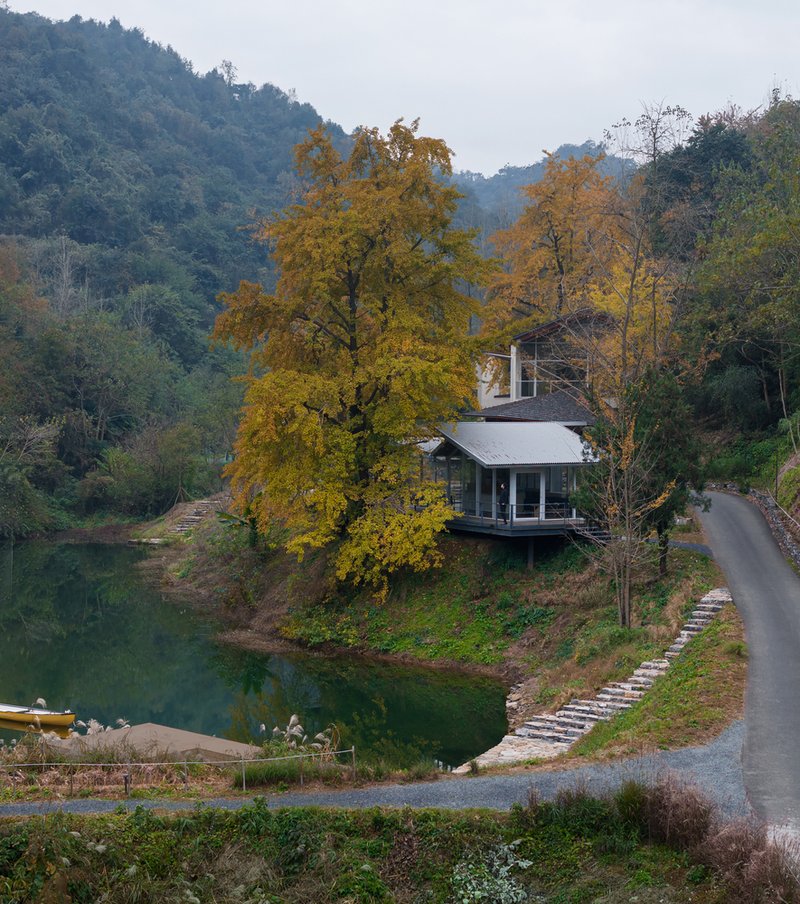
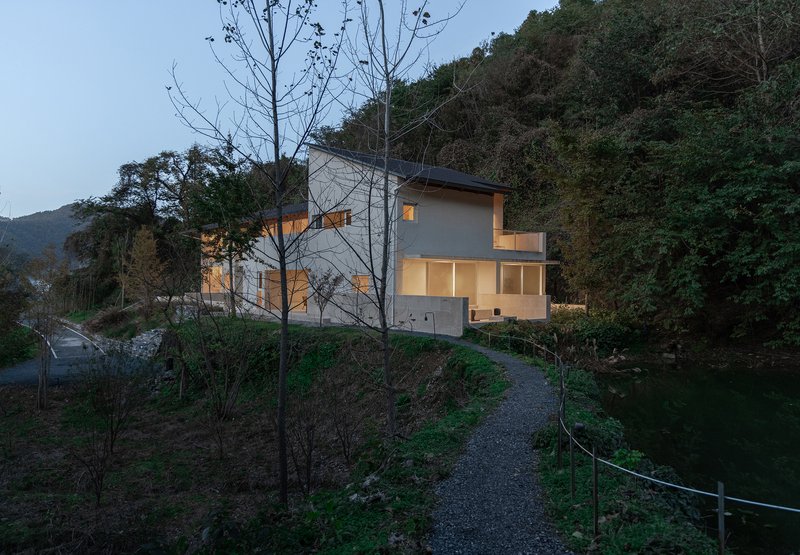
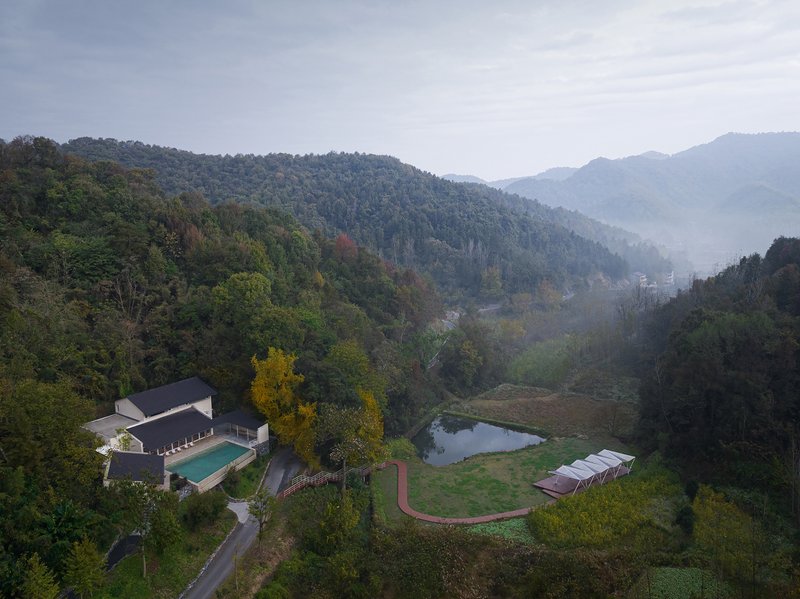
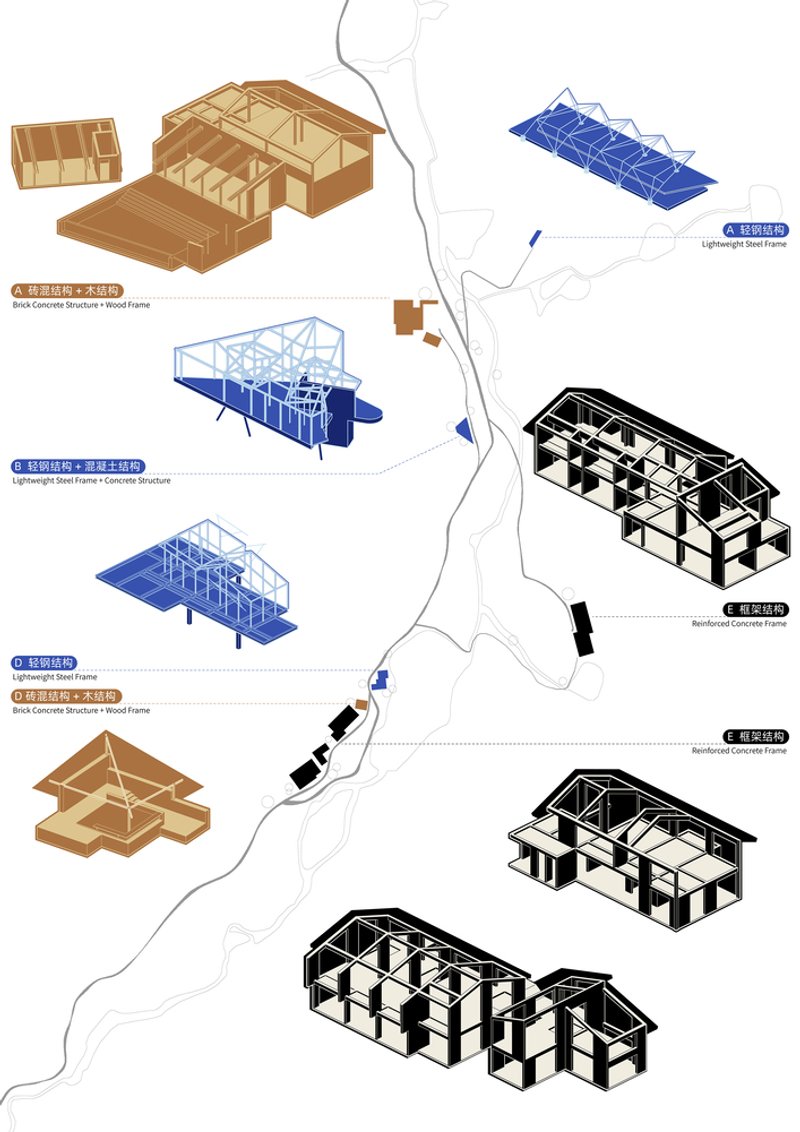
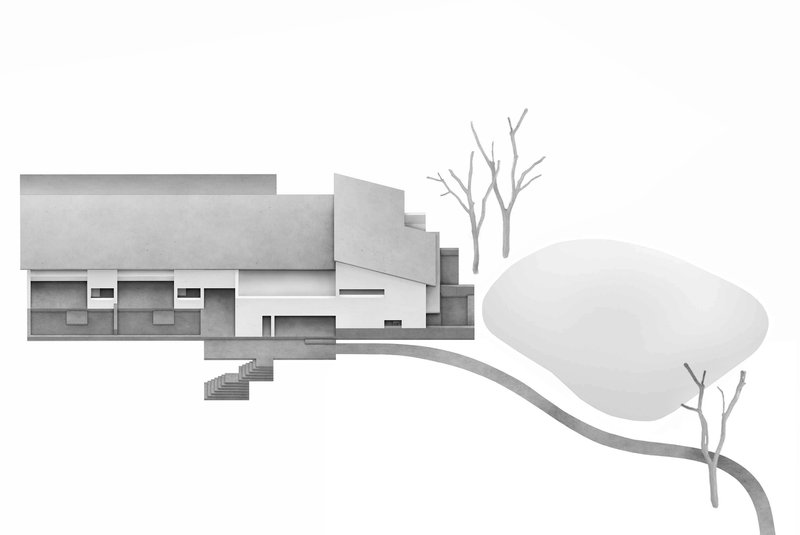
Nestled in the serene landscape of Suizhou, China, the Lost Villa · Ginkgo Valley Design Hotel by Moguang Studio is a striking example of nature-inspired hotel architecture. Spanning six abandoned homestead plots, the project harmonizes with the surrounding valley, integrating ancient ginkgo trees, rolling mountains, and existing topographical features into its design.
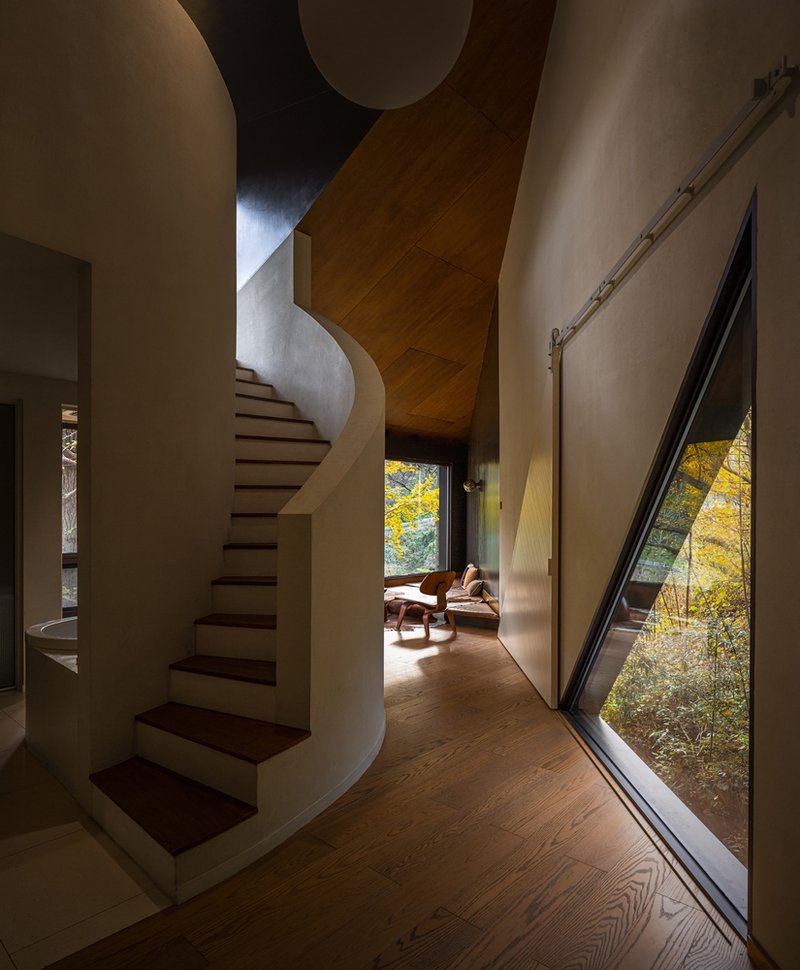
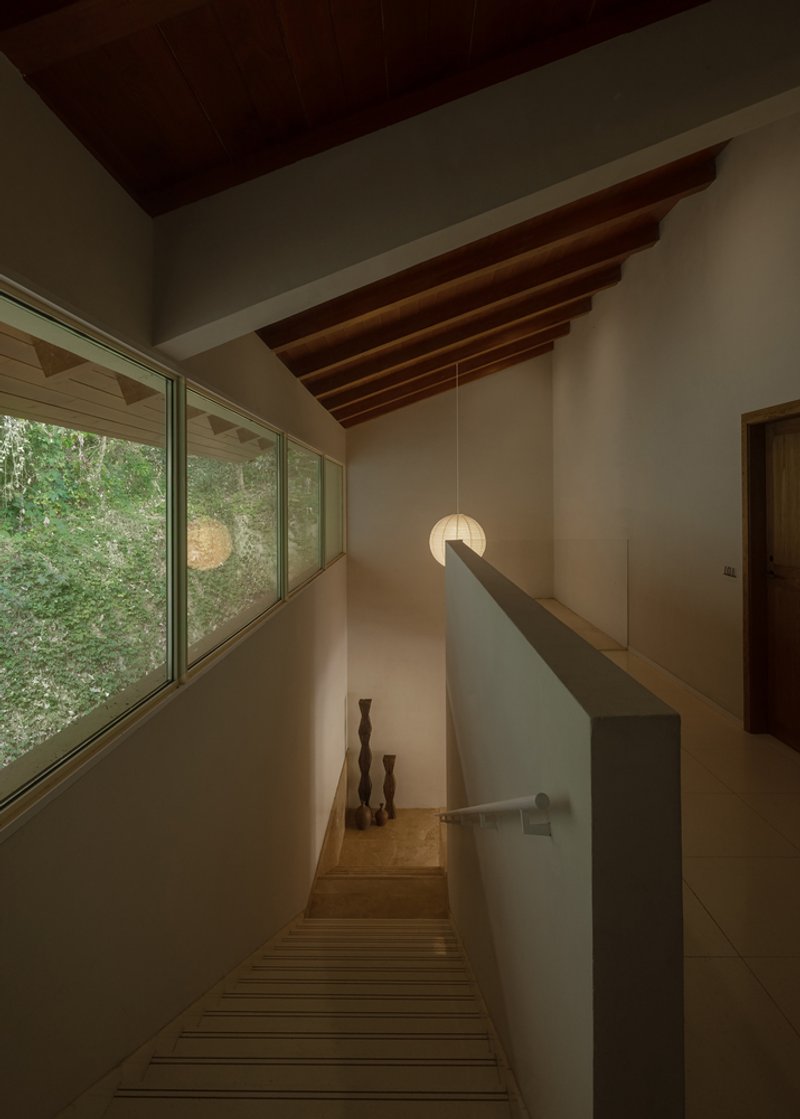
A Design Rooted in Landscape and Culture
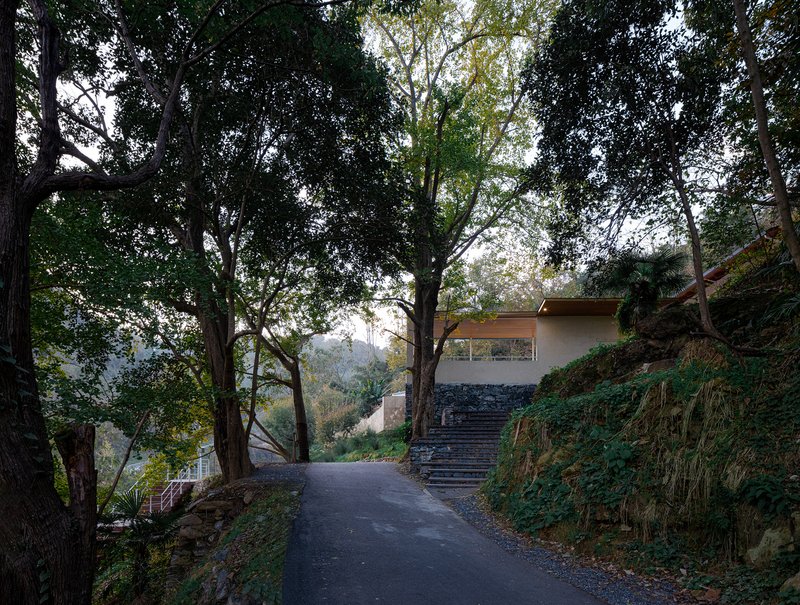
Situated in Guangjia Chong, Jiukouyan Village, the hotel is located in a valley abundant with over 200 dawn redwoods and ancient ginkgo trees, some dating back a thousand years. The design concept follows the principle of "appropriate construction", ensuring that the built structures subtly integrate with the environment rather than dominate it.
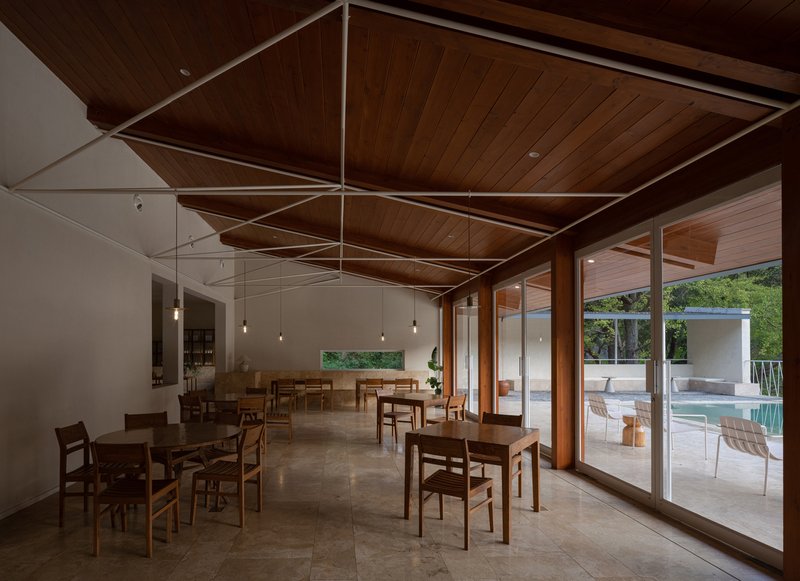
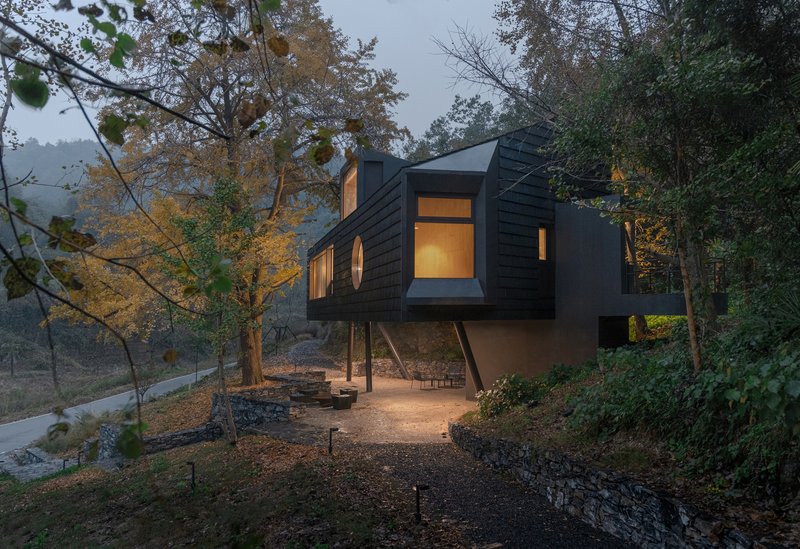
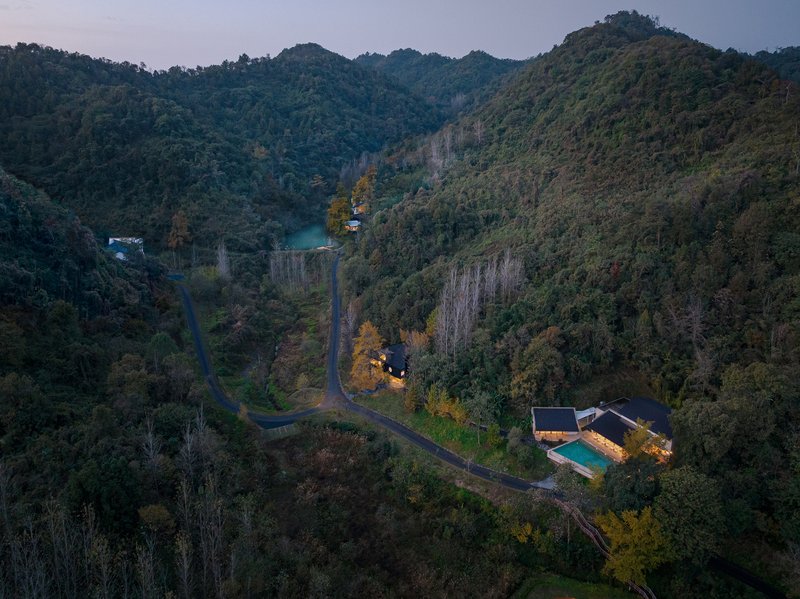
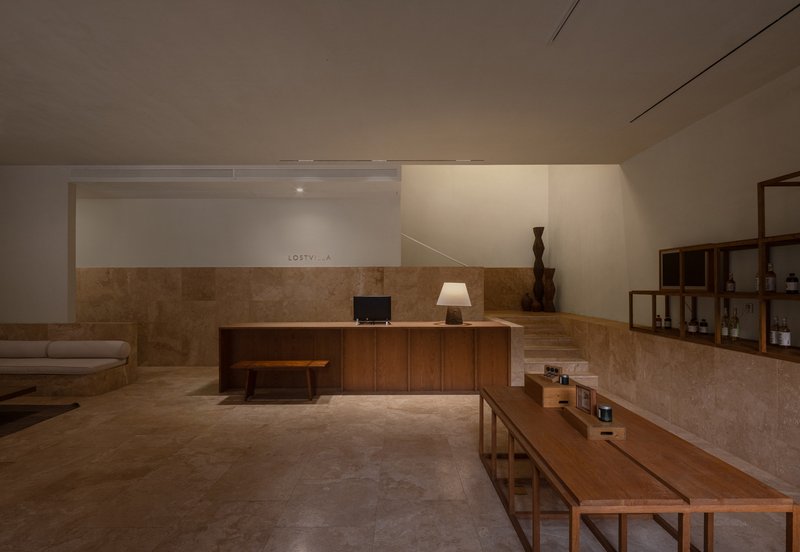
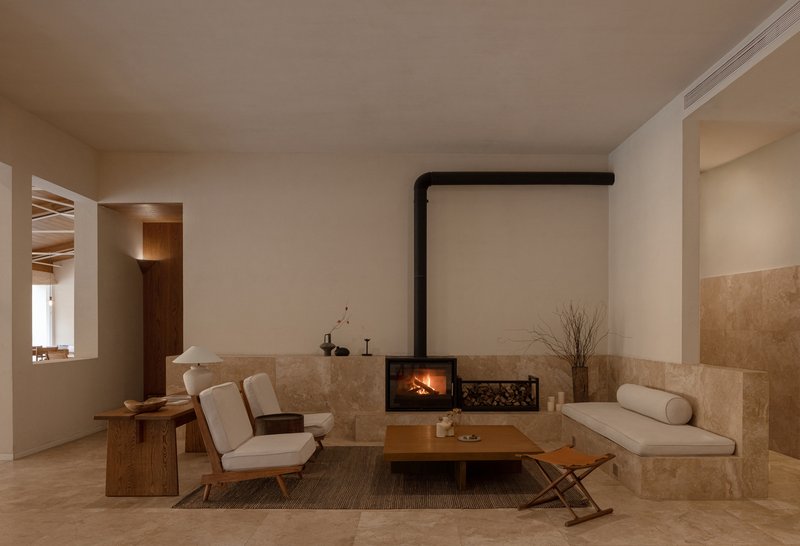
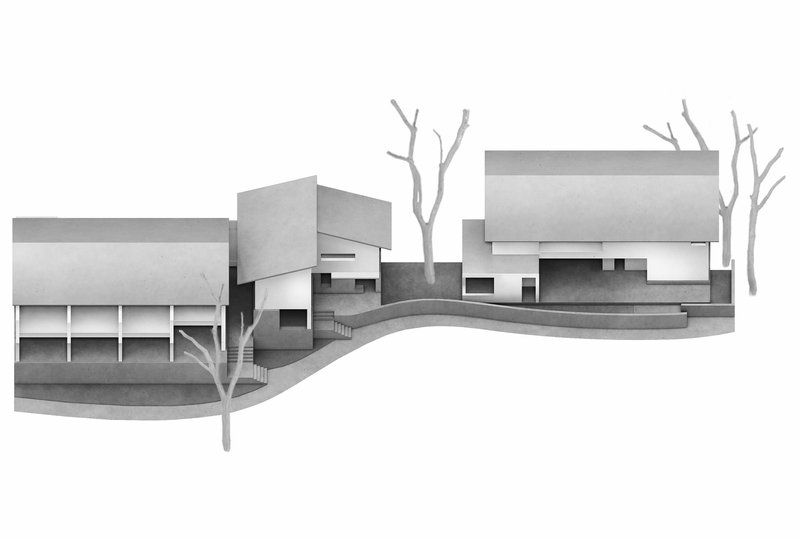
The architects carefully adapted the buildings to the natural elevation differences of the site, establishing a dialogue between the built environment and the wilderness. By taking a low-profile architectural approach, the hotel avoids disrupting the landscape while fostering an immersive experience that strengthens the relationship between visitors, the land, and the village.
Spatial Organization and Modular Design
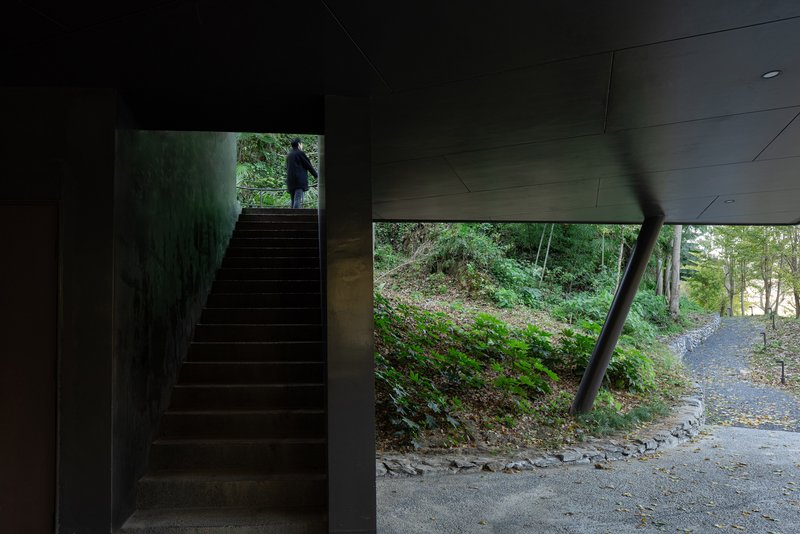
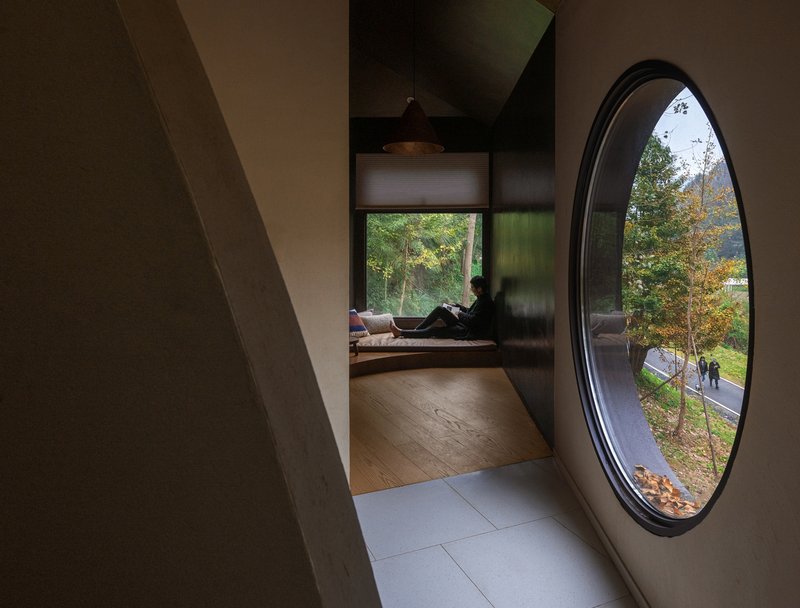
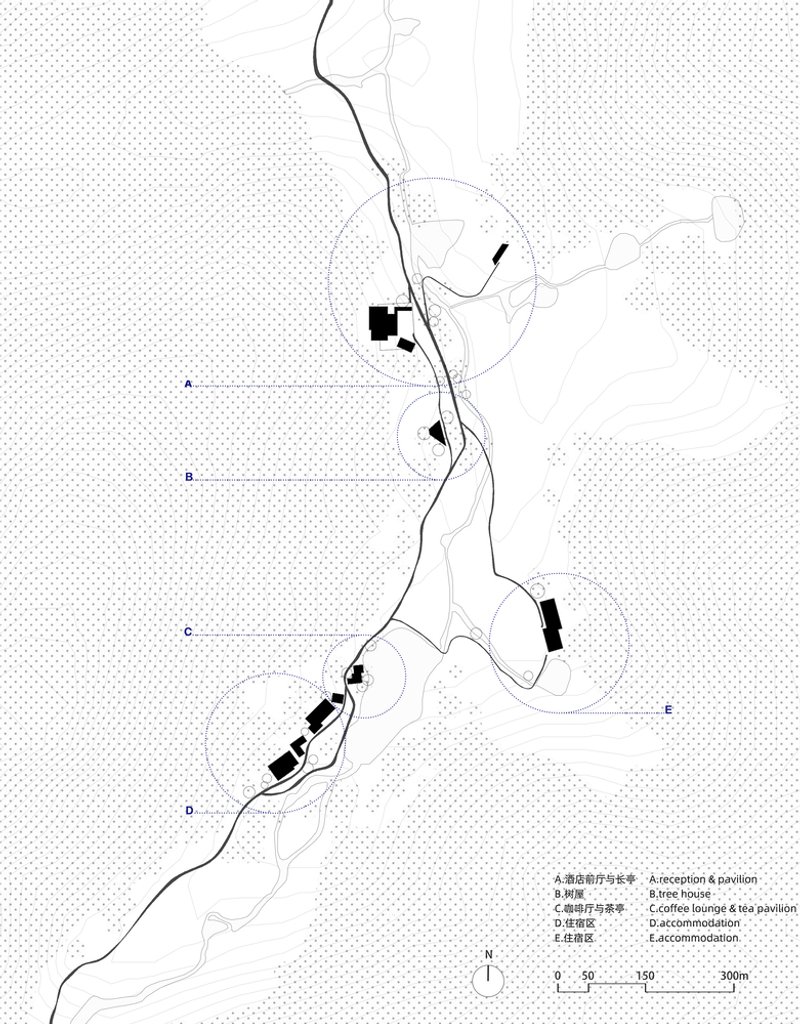
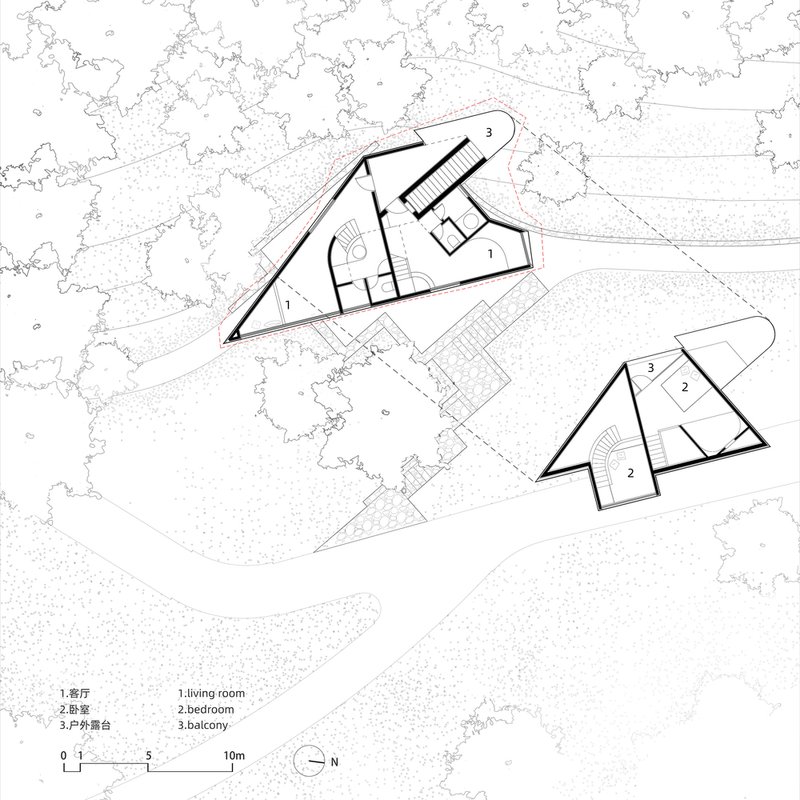
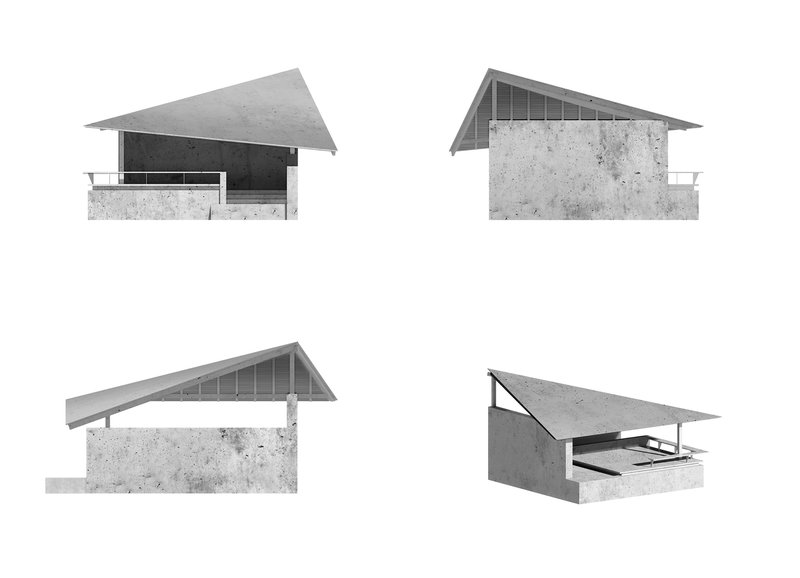
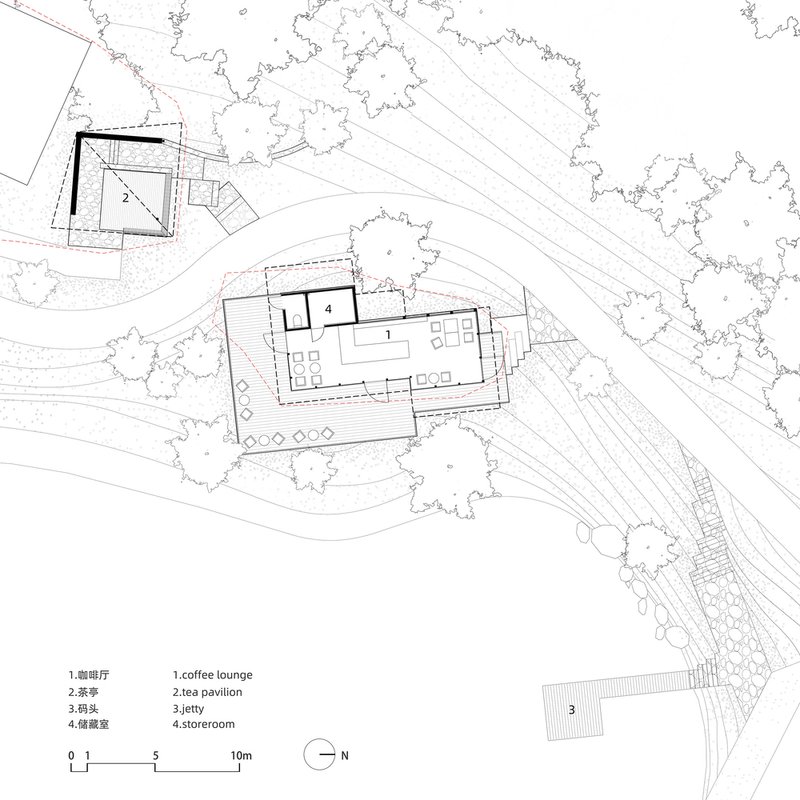
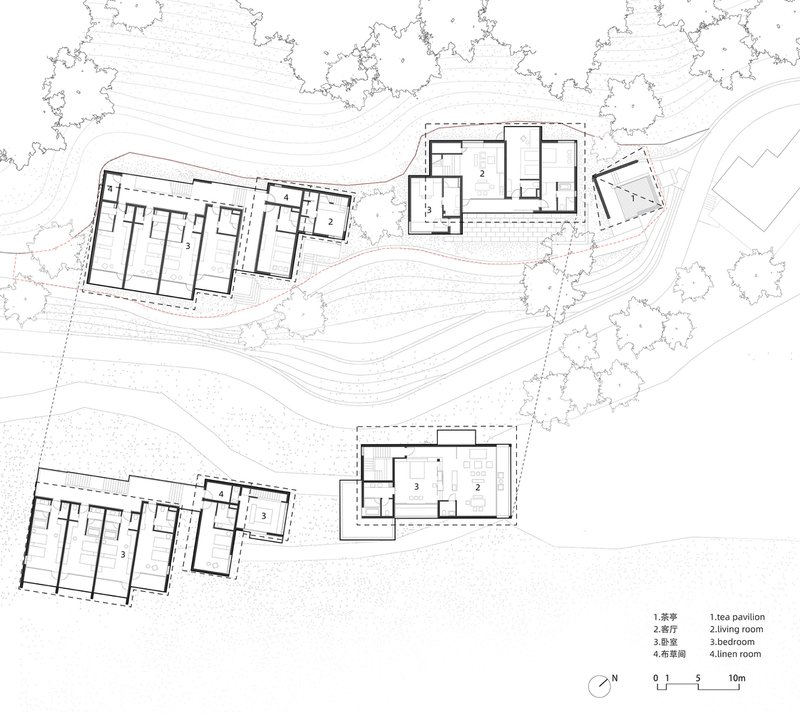
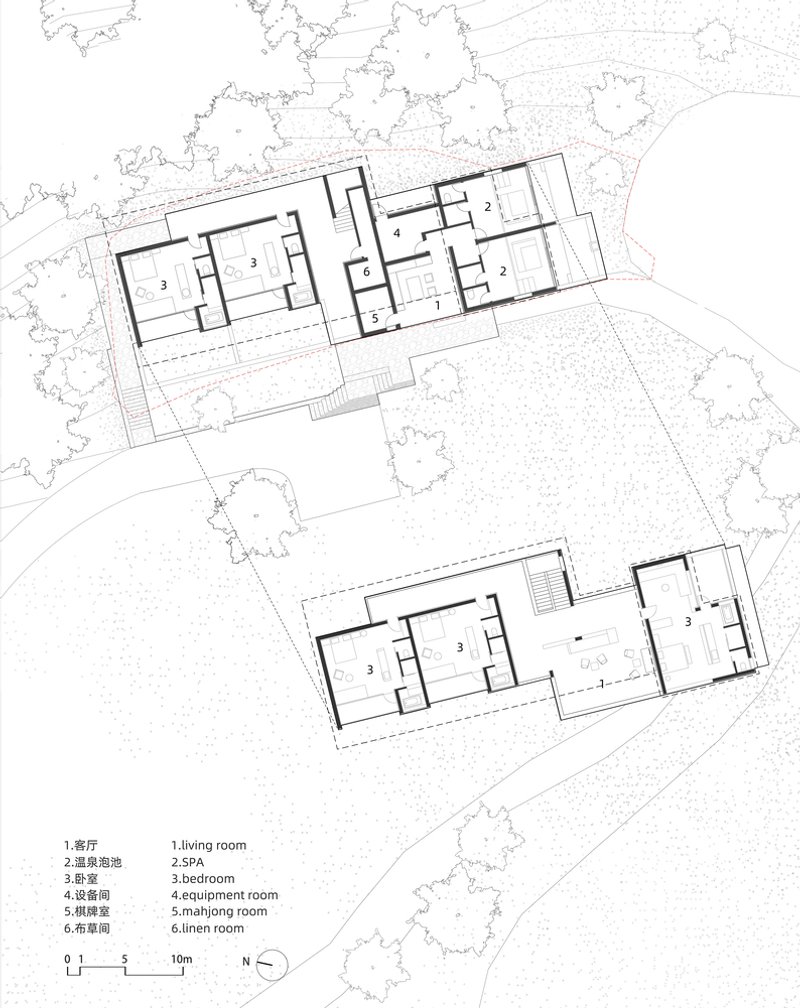
The architectural composition follows a restrained modular approach, creating diverse settlement patterns that respond to the valley’s contours. Each newly constructed unit is designed to frame the surrounding landscape, transforming into a viewing pavilion while also becoming part of the scenery.
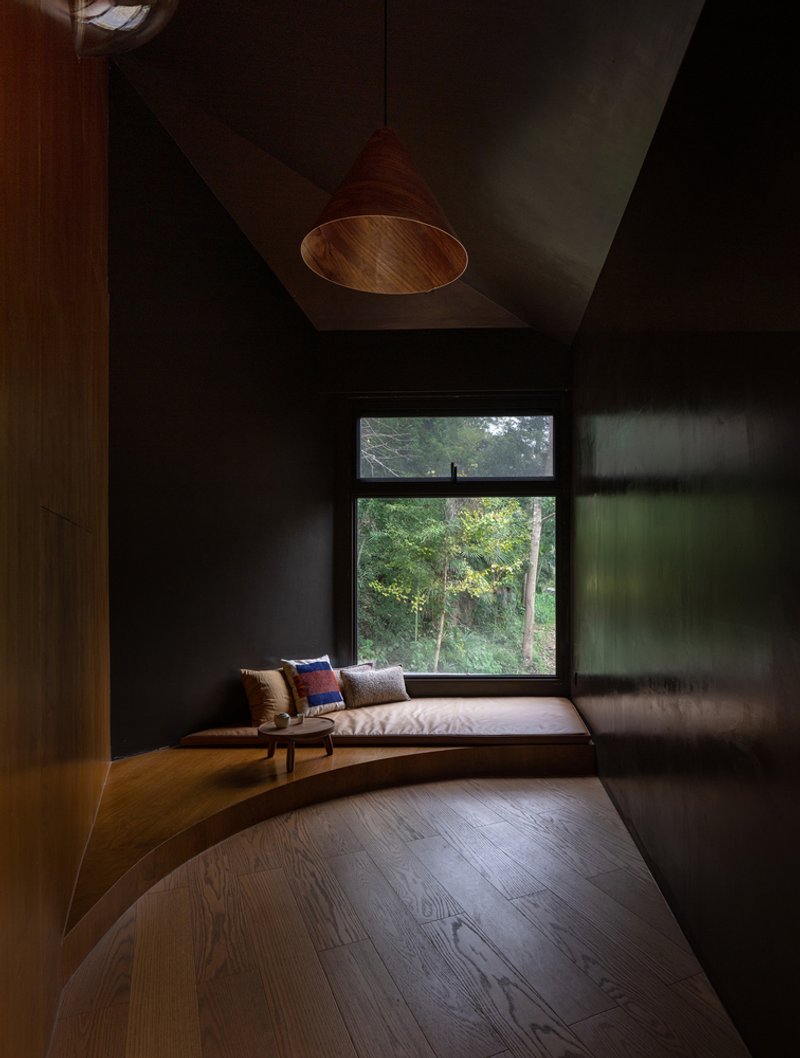
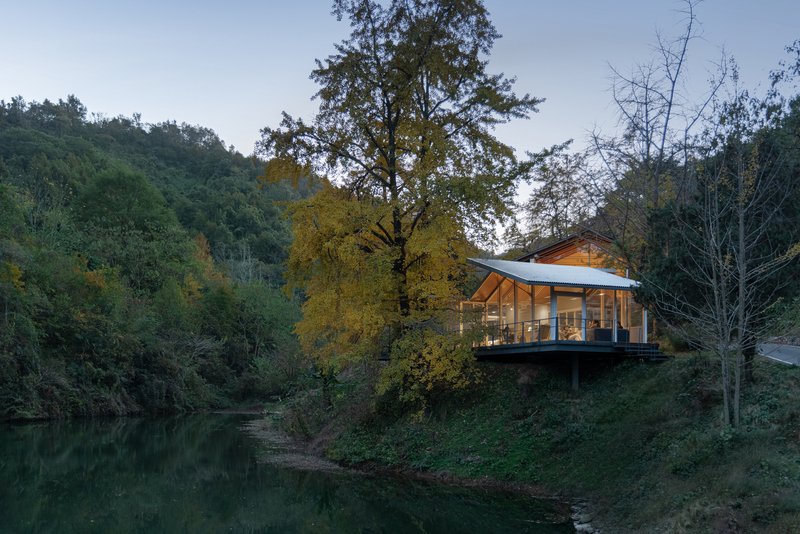
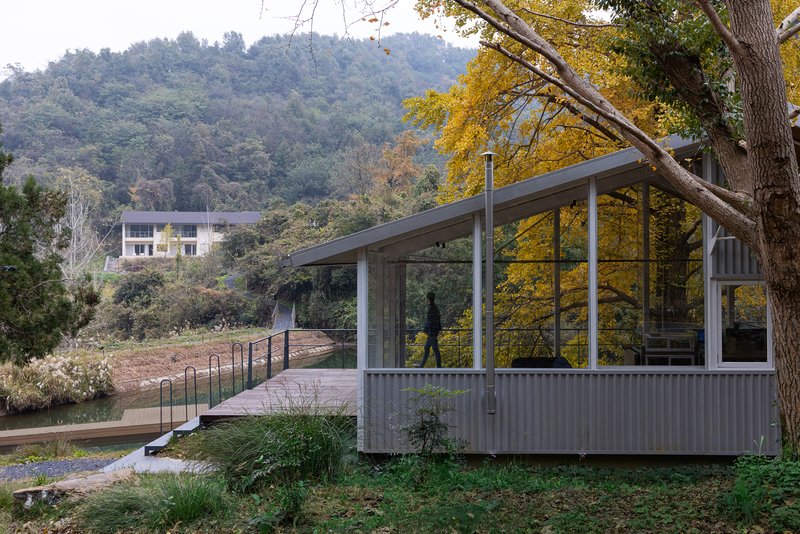
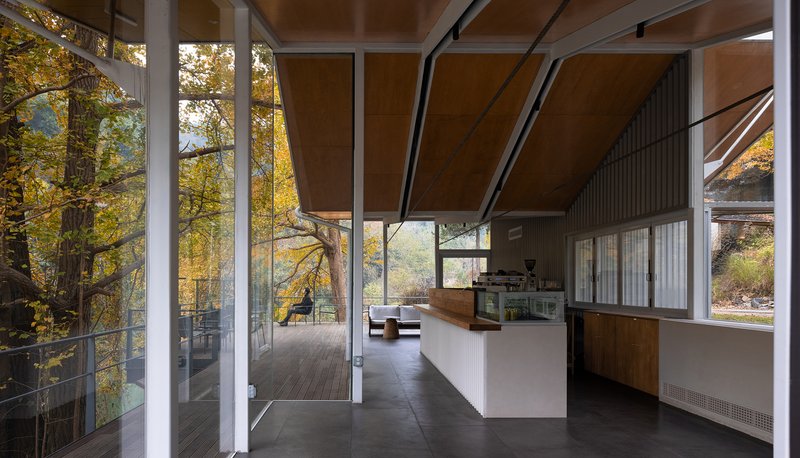
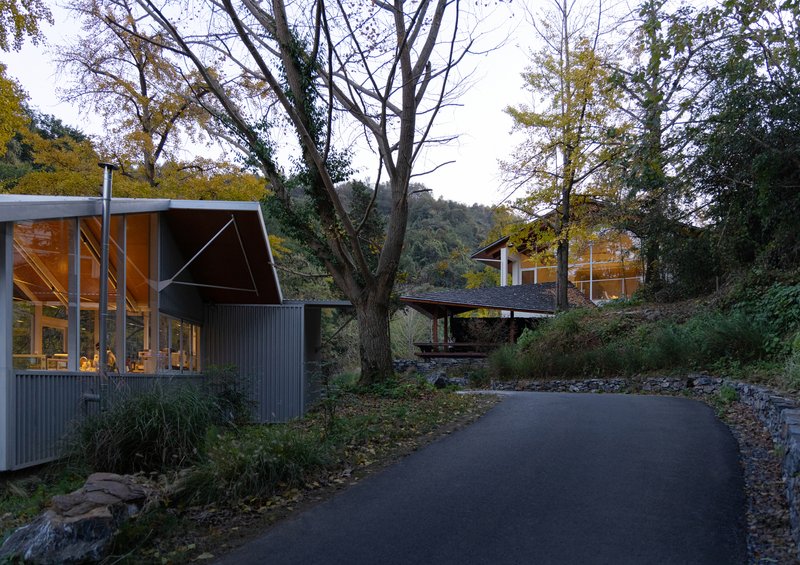
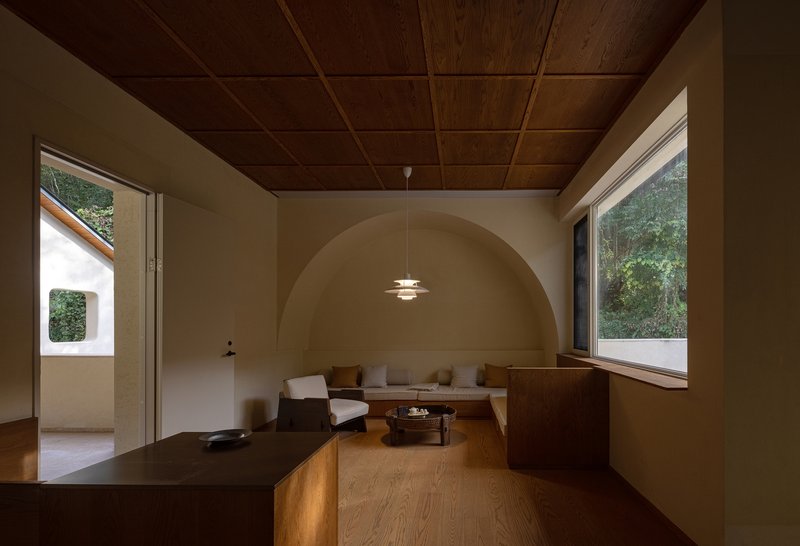
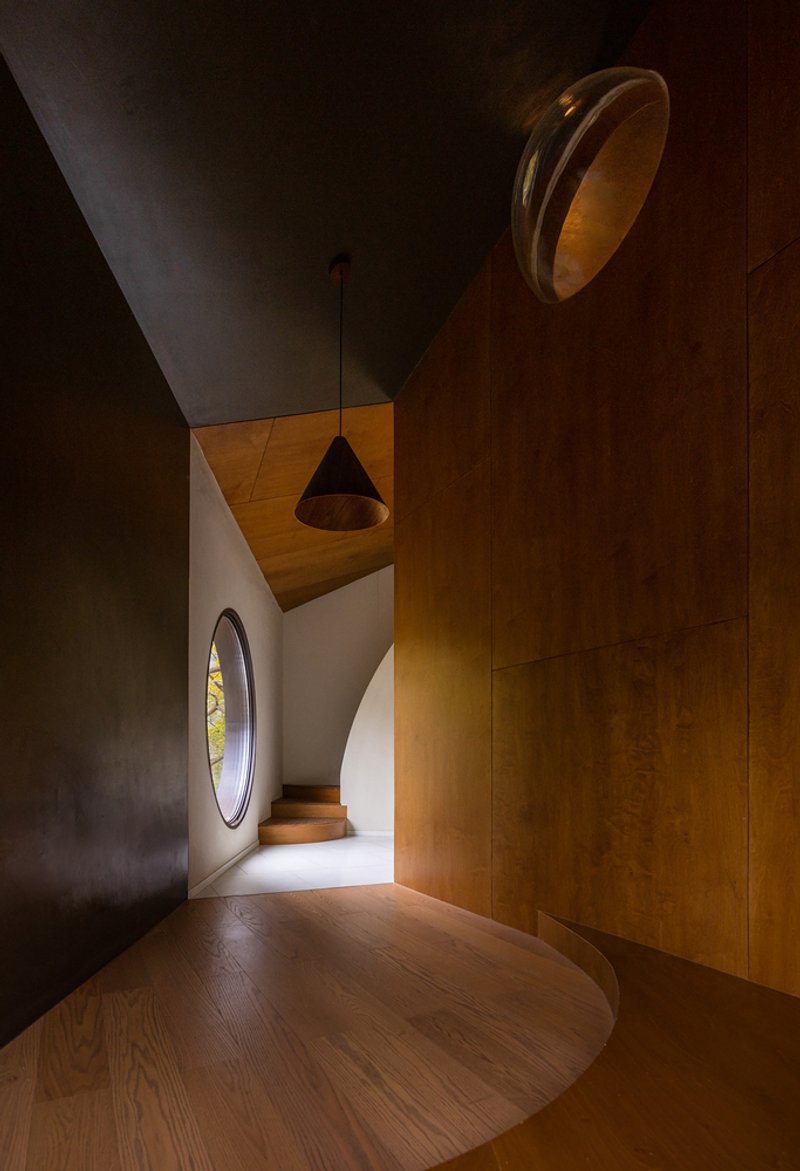
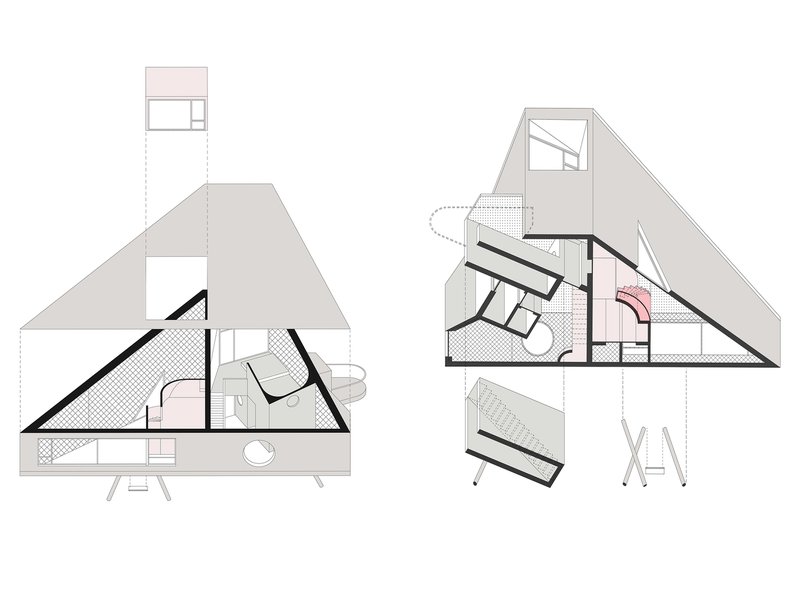
Geometrically shaped rooms enhance spatial functionality and efficiency, while irregular triangular and trapezoidal spaces serve as connectors between these units. These unconventional forms accommodate the natural growth of existing trees, creating a fluid blend of movement and stillness, interior and exterior interaction.
A Reception Hall Blending Tradition and Innovation
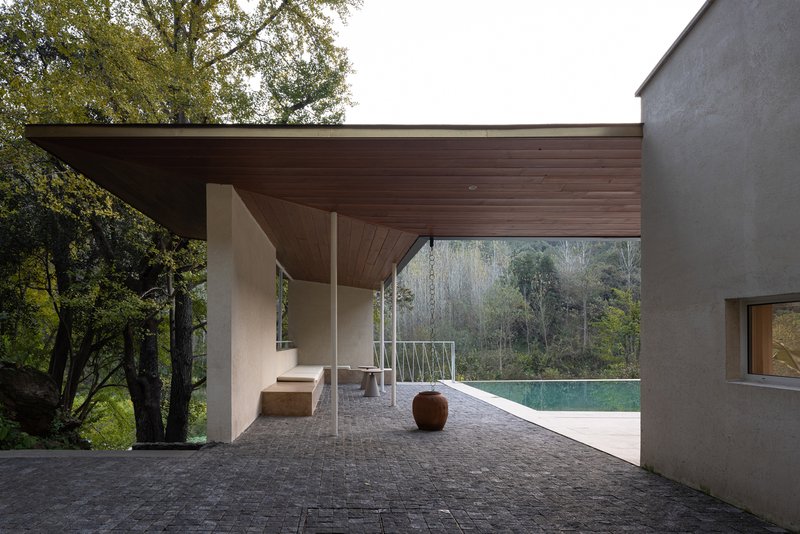
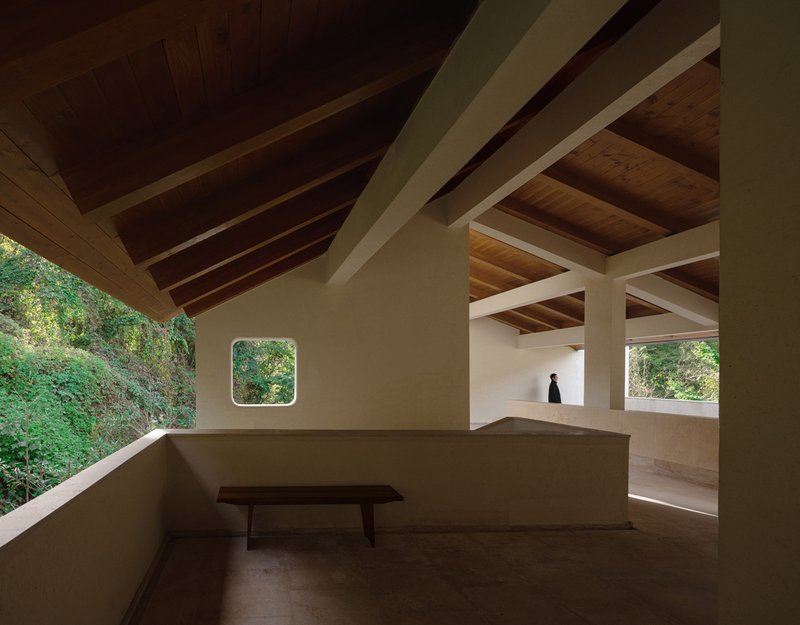
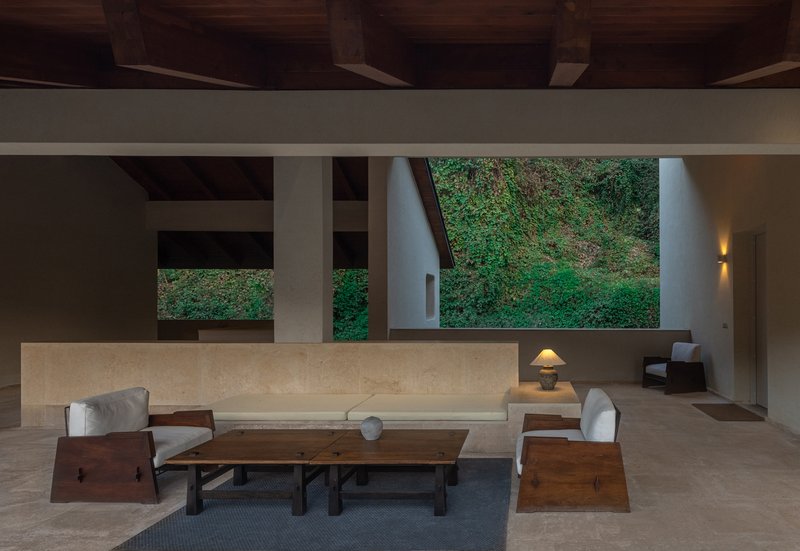
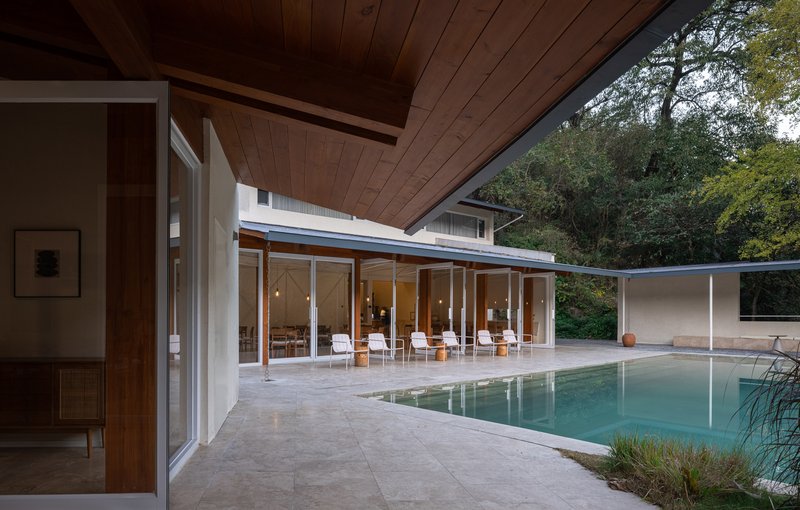
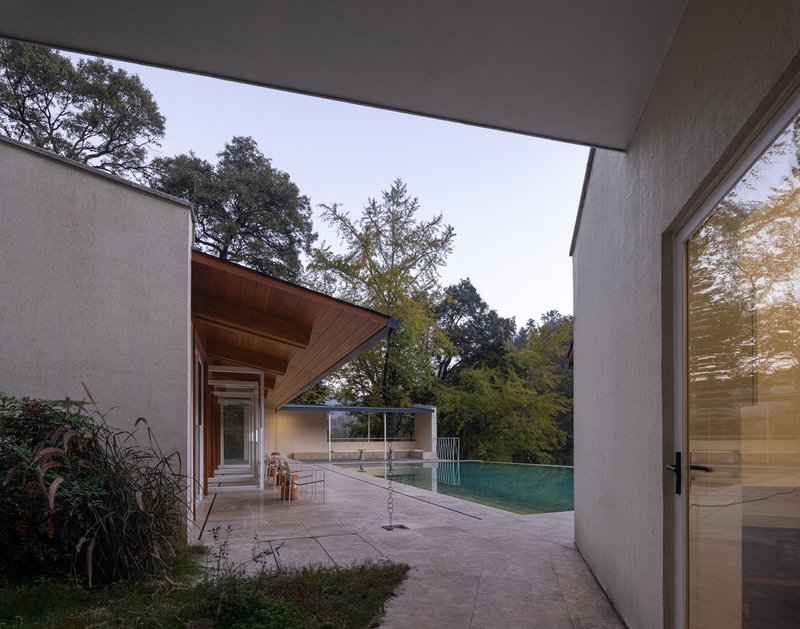
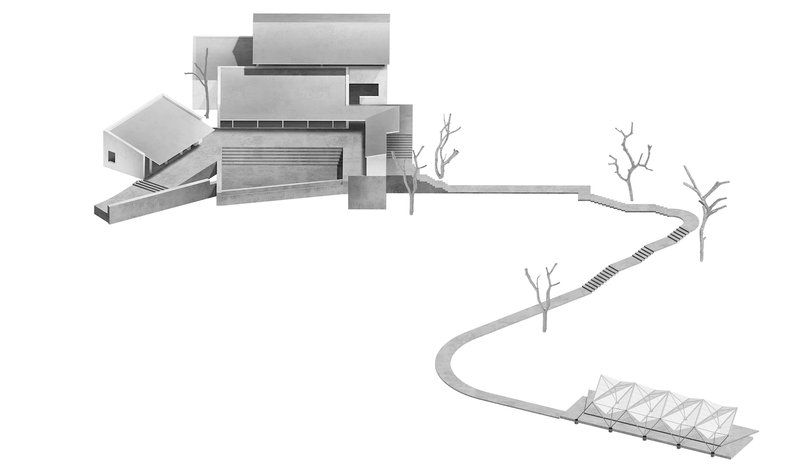
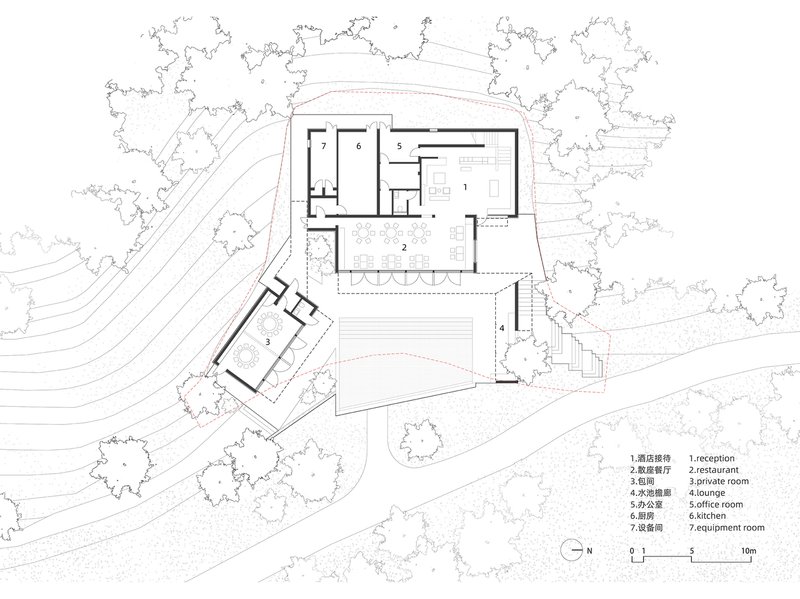
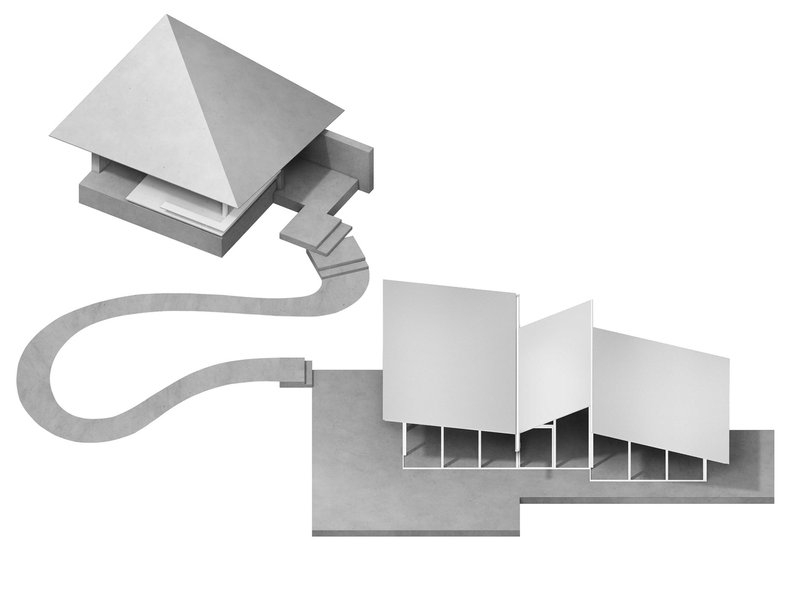
The reception hall is situated on an existing terrace, maintaining the three-sided courtyard layout of the original homestead. Designed with two roof levels—one high and one low—the structure directs focus towards a central water feature, enhancing the tranquil atmosphere of the courtyard.
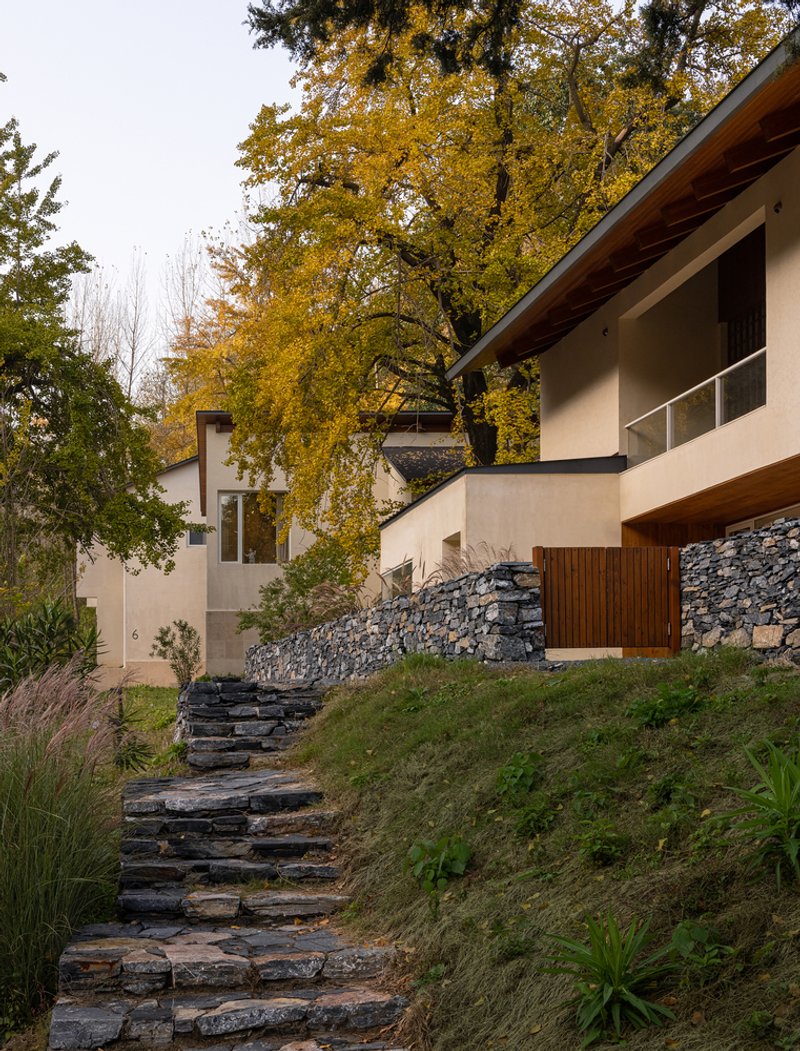
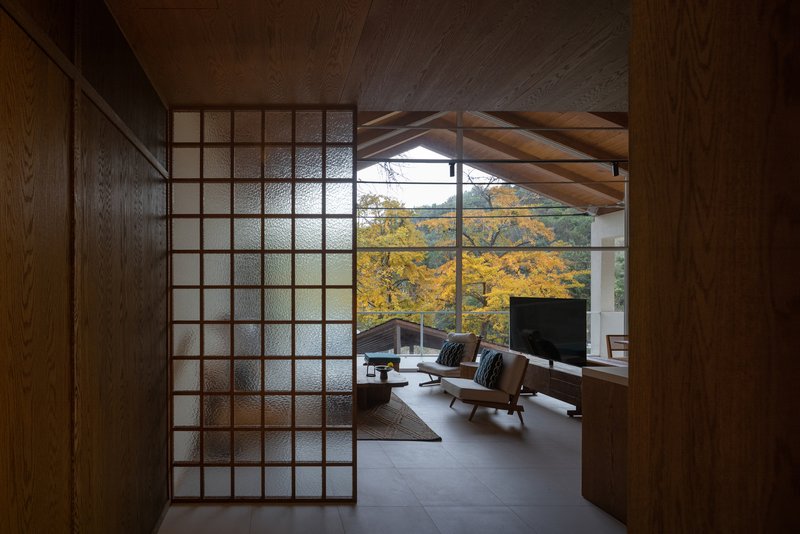
By incorporating framed views and walking paths, the design expands the perception of space, allowing guests to experience a continuous interplay between architecture and nature. The courtyard’s gentle slope reinforces a sense of enclosure and retreat, inviting visitors to engage with their surroundings on an intimate level.
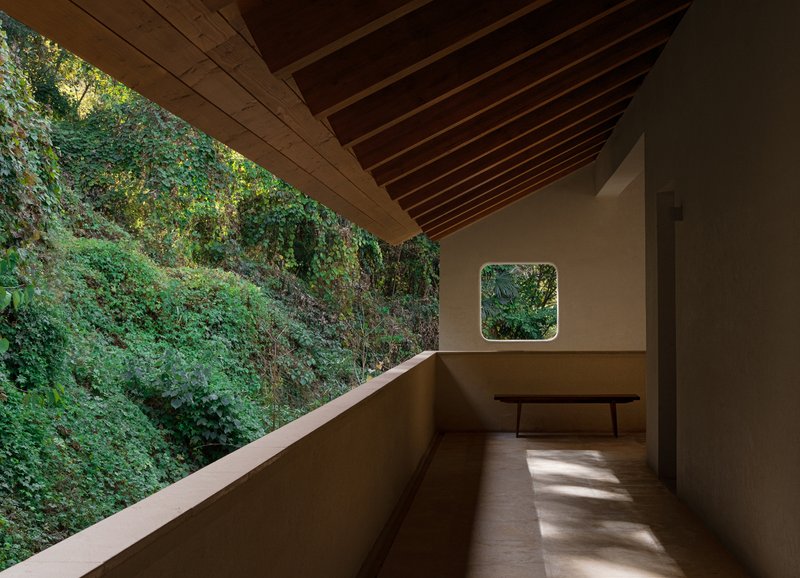
The Elevated Treehouse Experience
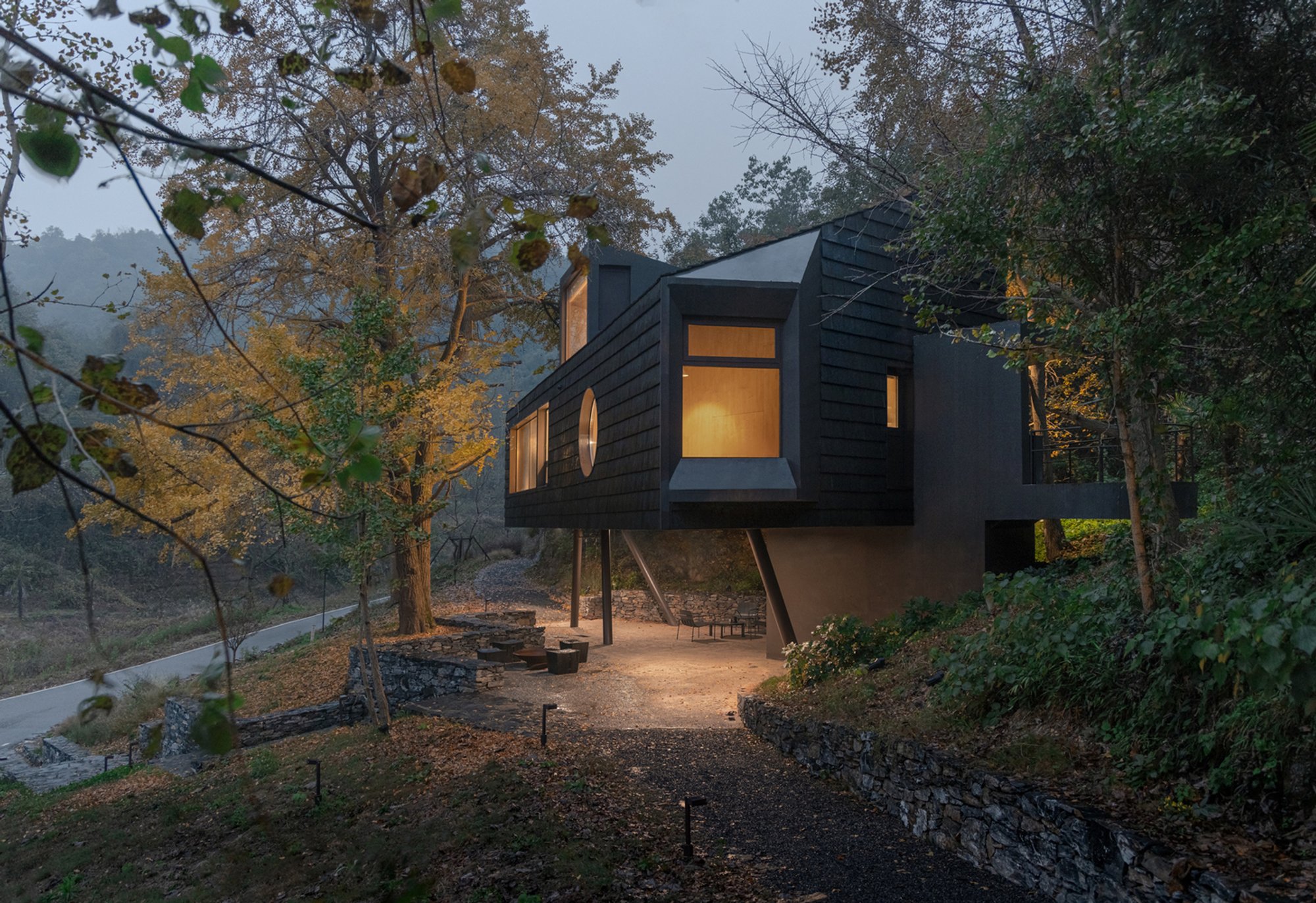
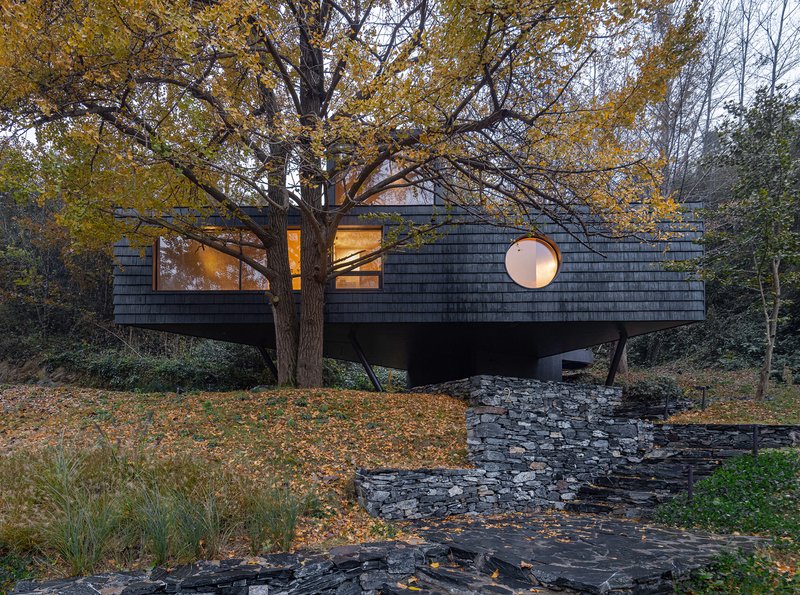
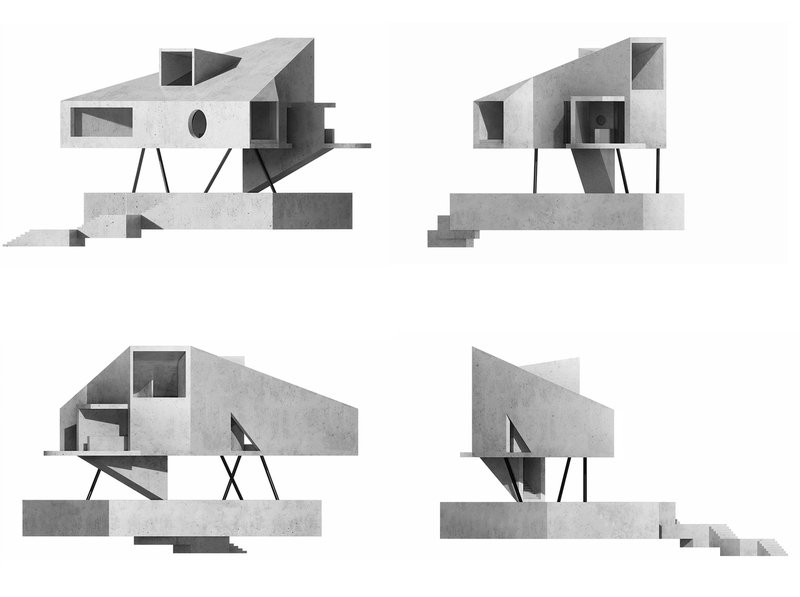
Positioned at a natural junction between two pathways, the treehouse is a distinctive feature of the hotel. Elevated above the ground to protect the roots of ancient ginkgo trees, it contains two guest rooms and a utility storage space, offering guests a secluded retreat among the treetops.
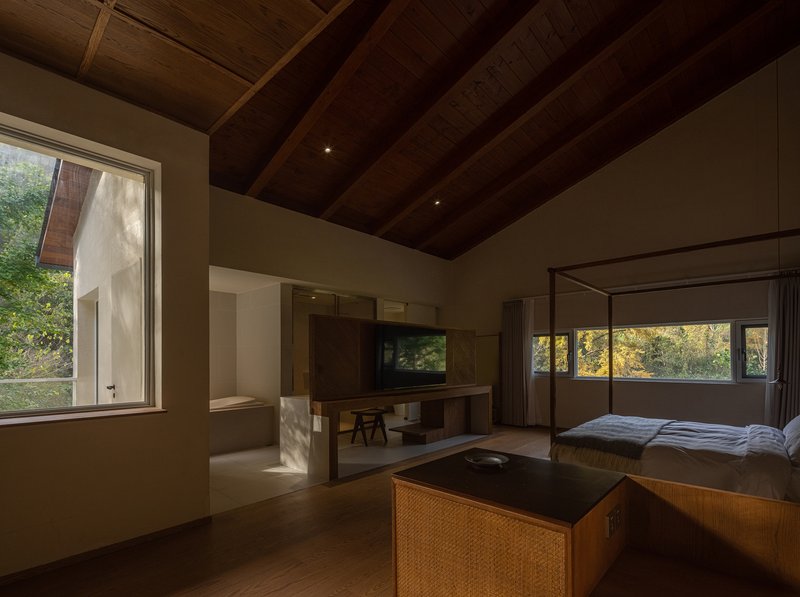
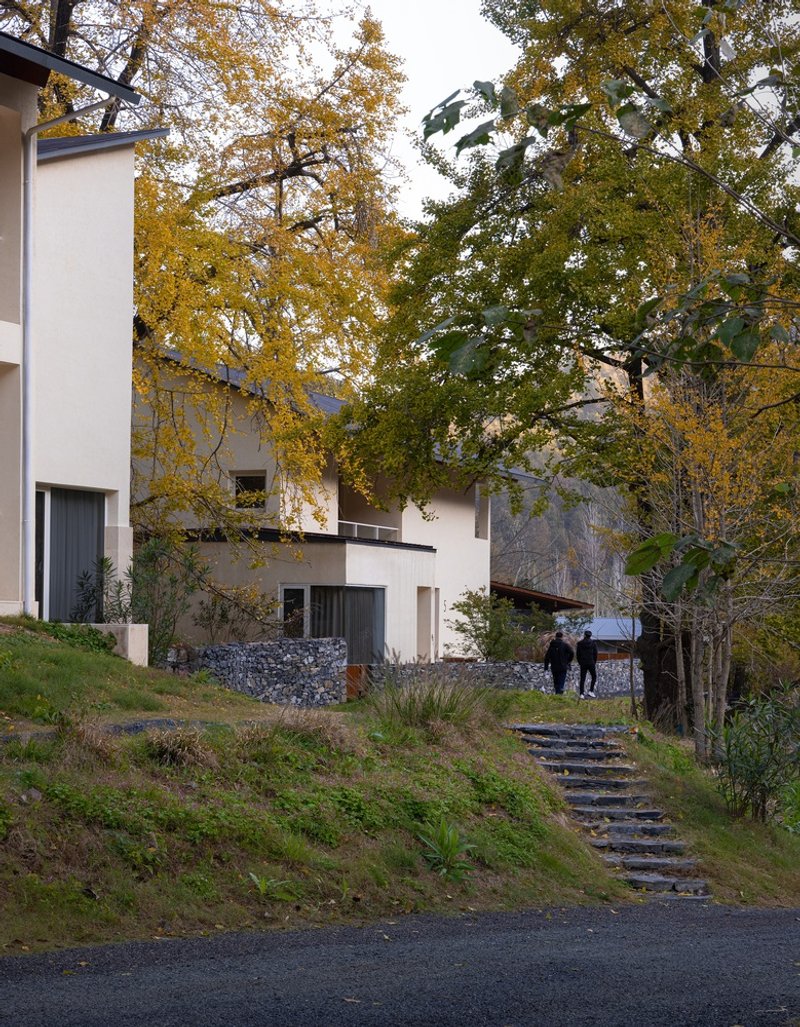
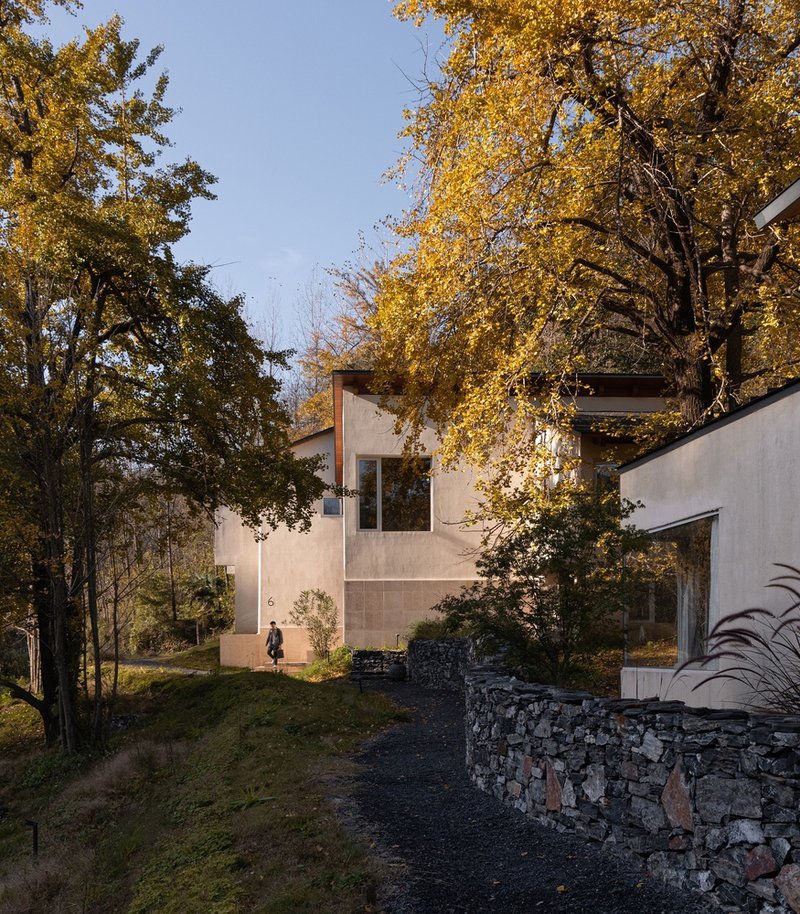
The ginkgo canopy acts as a privacy screen, ensuring that each room enjoys both seclusion and breathtaking views of the valley. Below, the open ground level transforms into a semi-outdoor space, designed for dining, gathering, and seasonal activities such as roasting ginkgo nuts.
Materiality and Sensory Connection
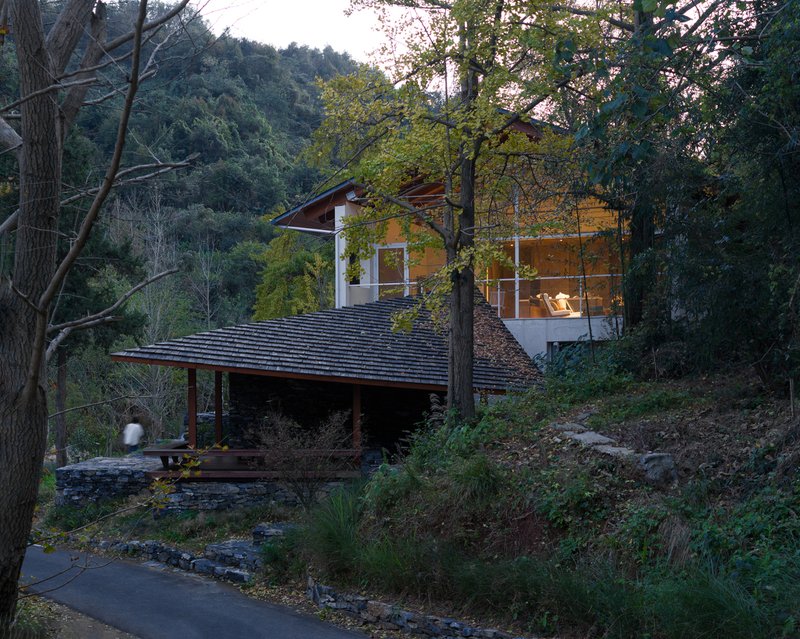
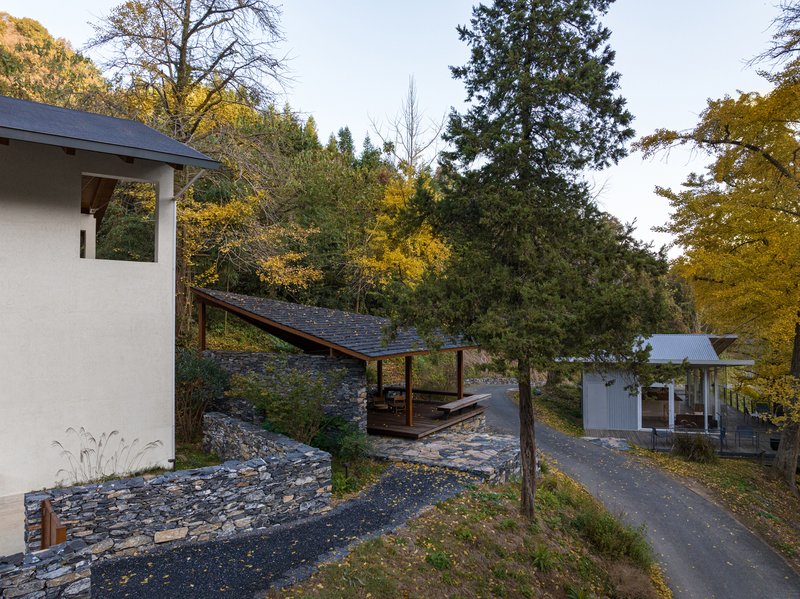
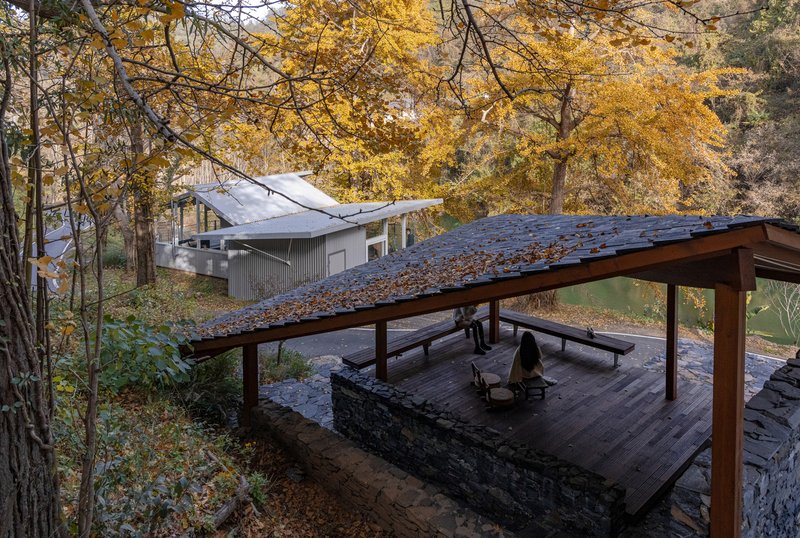
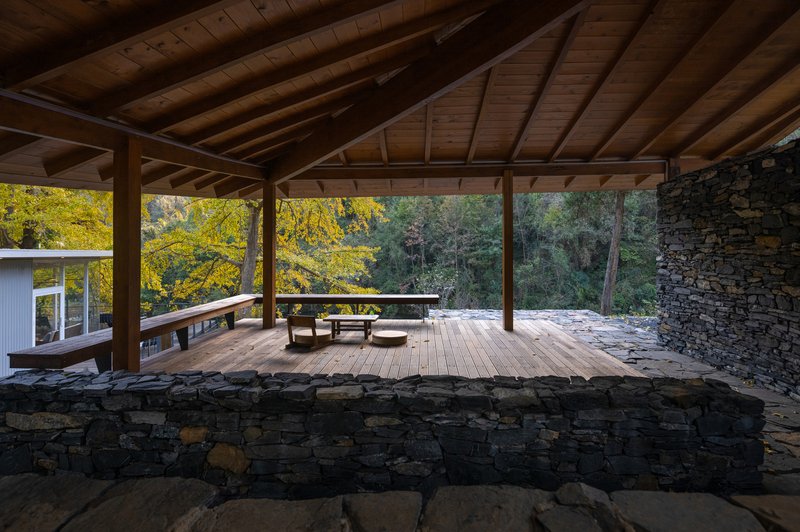
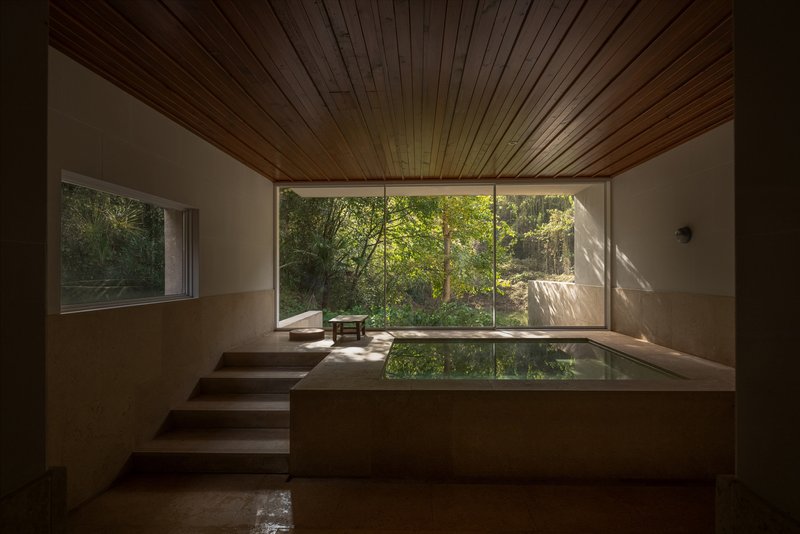
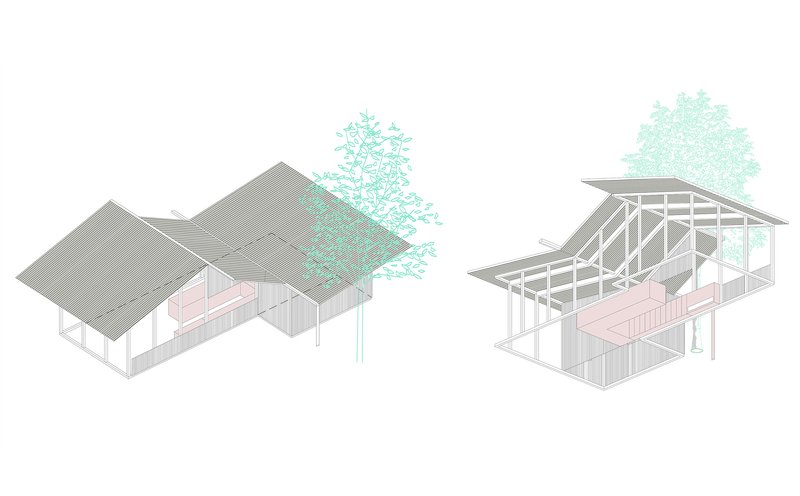
Material selection was a key factor in reinforcing the project’s nature-inspired aesthetic. The tea pavilion, constructed with dark-toned wood, charred cedar shingles, and rough local stone, integrates seamlessly between the white café and guestroom buildings.
This material palette not only enhances visual harmony with the landscape but also adds a tactile, organic quality that deepens the sensory experience of the site. The balance between modern architectural elements and raw, natural materials reflects a deep respect for the vernacular traditions of the region.
Architecture as an Emotional Journey
Beyond providing accommodation, the Lost Villa · Ginkgo Valley Design Hotel is designed to create a holistic, immersive experience that connects guests to the land, history, and seasonal rhythms of the valley. The paths between buildings, framed perspectives, and layered spatial composition establish a reciprocal relationship between architecture and nature.
Through a series of interlinked yet independent scenes, visitors engage in a journey of discovery, forging new emotional connections with the site. This careful orchestration of architecture, nature, and cultural memory makes the hotel a remarkable model of nature-inspired hotel design, where sustainability and serenity coexist effortlessly.
All Photographs are works of Shengliang Su



Popular Articles
Popular articles from the community

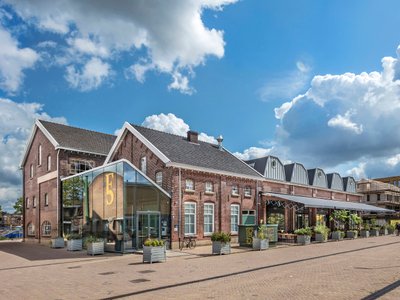
Fifth NRE Jazz Club – De Bever Architecten: Eindhoven’s Revitalized Cultural Hub
Historic gas factory transformed into Fifth NRE Jazz Club blending modern sustainability, jazz culture, dining, and heritage architecture seamlessly.
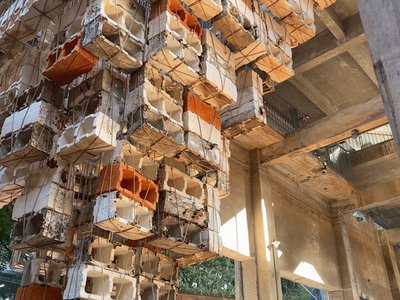
Inverted Architecture Installation by Studio Link-Arc: Exploring the Intersection of Architecture and Living Organisms
Inverted Architecture Installation by Studio Link-Arc blends mycelium, sustainability, inverted design, ecological cycles, and urban adaptive architecture in Shenzhen.

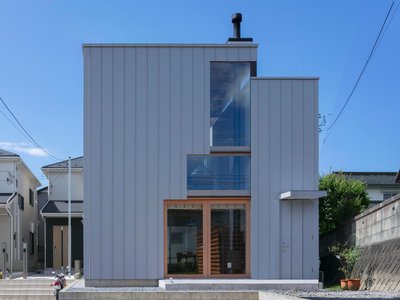
Split House: A Compact Urban Home Blending Privacy, Light, and Flexible Living in Japan
Compact Japanese home featuring DOMA space, flexible café potential, passive lighting, privacy zoning, and sustainable urban living design.


Similar Reads
You might also enjoy these articles

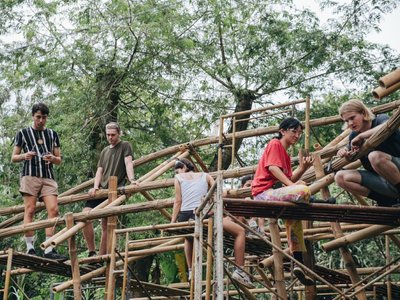
Bamboo Housing Challenge 2026: Design Affordable, Sustainable Homes Using Bamboo
An international design competition by Bamboo U and IBUKU inviting architects and designers to reimagine affordable housing using bamboo — with the winning design built full-scale in Bali.

Computational Design & Education: Beegraphy Design Awards Introduces 7th Category (Featuring Jiyun's Innovative Approach)
Dive into Beegraphy’s 7th Design Awards category, where computational design meets education to create immersive, interactive learning tools, inspired by Jiyun’s work.

From Parametric Lighting to Urban Furniture: Join the 2nd Workshop in Beegraphy’s Computational Design Series
Dive into Cutting-Edge Design Techniques and Practical Applications with Industry Experts


Explore Architecture Competitions
Discover active competitions in this discipline




The International Standard for Design Portfolios


The Global Benchmark for Architecture Dissertation Awards


The Global Benchmark for Graduation Excellence


Challenge to reimagine the Iron Throne
Comments (0)
Please login or sign up to add comments
No comments yet. Be the first to comment!