
Nine Elms Food Park: A Model for Sustainable Architecture and Urban Agriculture
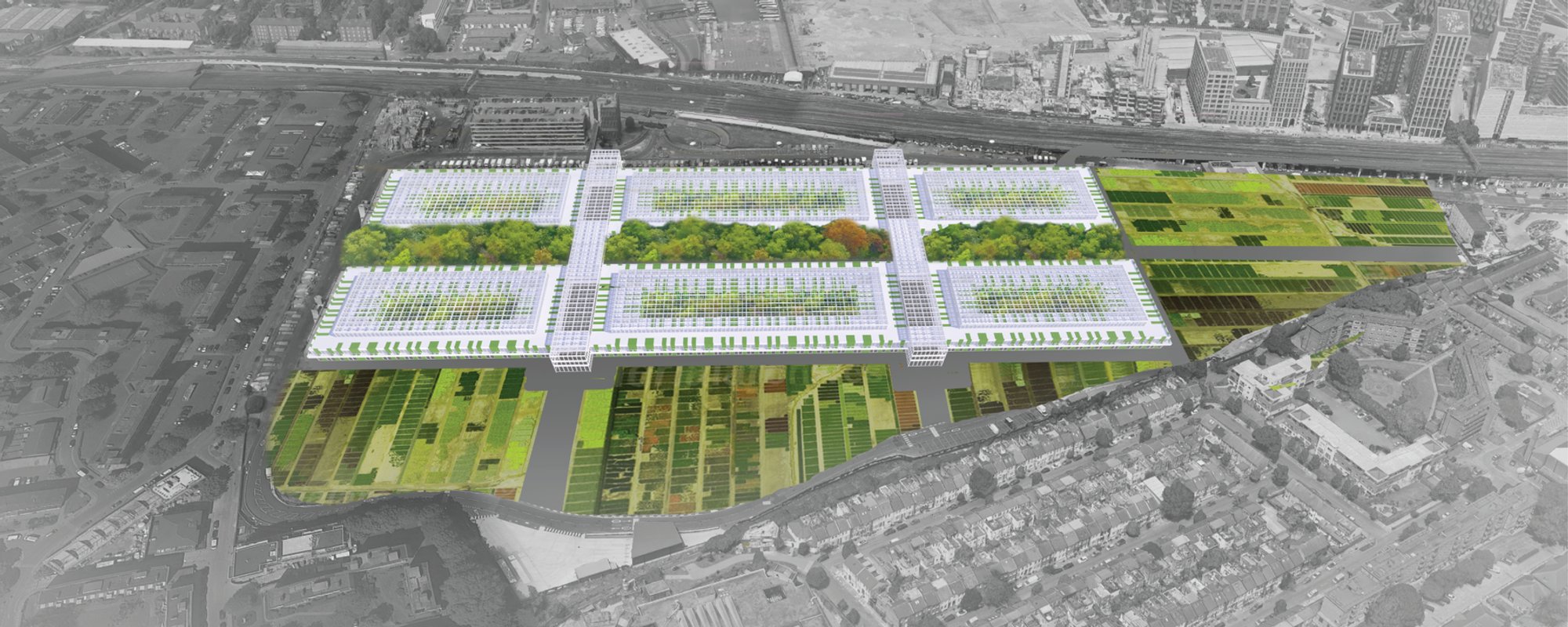
Nine Elms Food Park blends sustainable architecture and urban agriculture, redefining resilient city living through food and design.

The Nine Elms Food Park is a groundbreaking project that integrates sustainable architecture with urban food production. Designed to reconnect city residents with nature, the project creates a holistic ecosystem where food is grown, processed, consumed, and understood—all within one architectural framework. This visionary project was conceptualized by Yujie Cui and Matthew Hirsch, who emphasize how architecture can play a crucial role in shaping sustainable urban lifestyles.
Rethinking Architecture Through Food Production
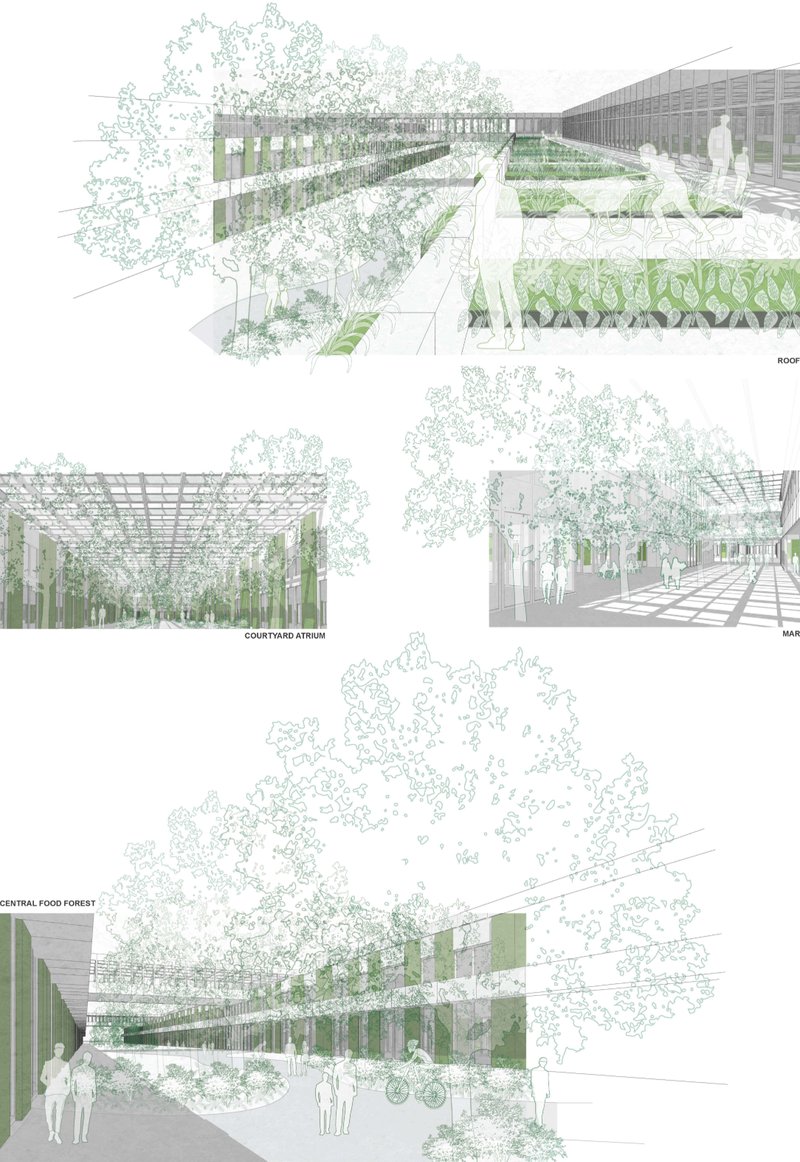
At its core, the Nine Elms Food Park addresses the growing disconnect between cities and food sources. By embedding agricultural systems into the urban fabric, the design provides residents and visitors with an opportunity to experience food cycles firsthand. This is not just about farming in cities—it is about how urban architecture can redefine self-sufficiency, resilience, and sustainability.
The project demonstrates how buildings can function as more than static structures. They can become living systems that educate, nourish, and strengthen communities. With courtyards, rooftop farms, hydroponic walls, and greenhouses, the park introduces new ways of integrating agriculture into built environments.
Spatial Organization and Design
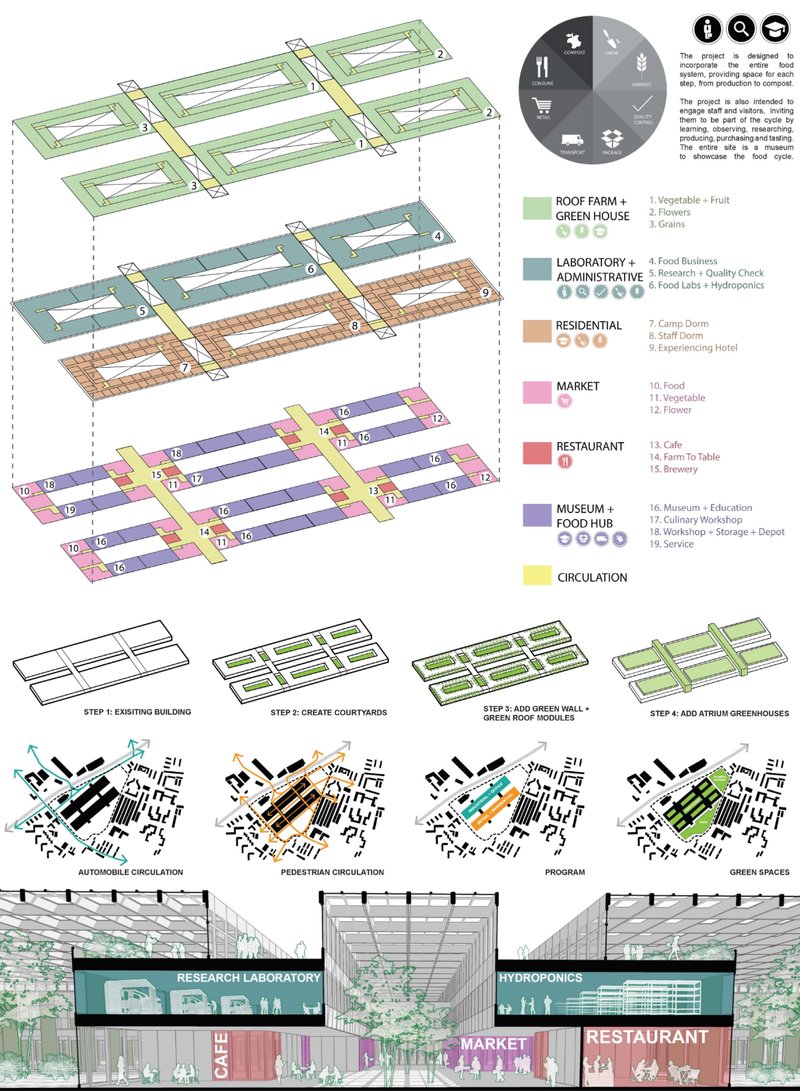
The architecture of Nine Elms Food Park is both functional and symbolic. Organized into layers, the structure accommodates multiple activities:
- Rooftop farms and greenhouses grow vegetables, fruits, grains, and flowers.
- Laboratories and research hubs conduct food quality checks, hydroponics experiments, and food business incubation.
- Residential zones provide space for staff dormitories and experiential hotels for visitors.
- Markets and restaurants create direct access between food production and consumption.
- Museums and food hubs serve as educational spaces that showcase the food cycle, from production to composting.
This layered system reflects a holistic vision of architecture—where living, learning, and sustainability coexist.
Modular and Adaptive Design
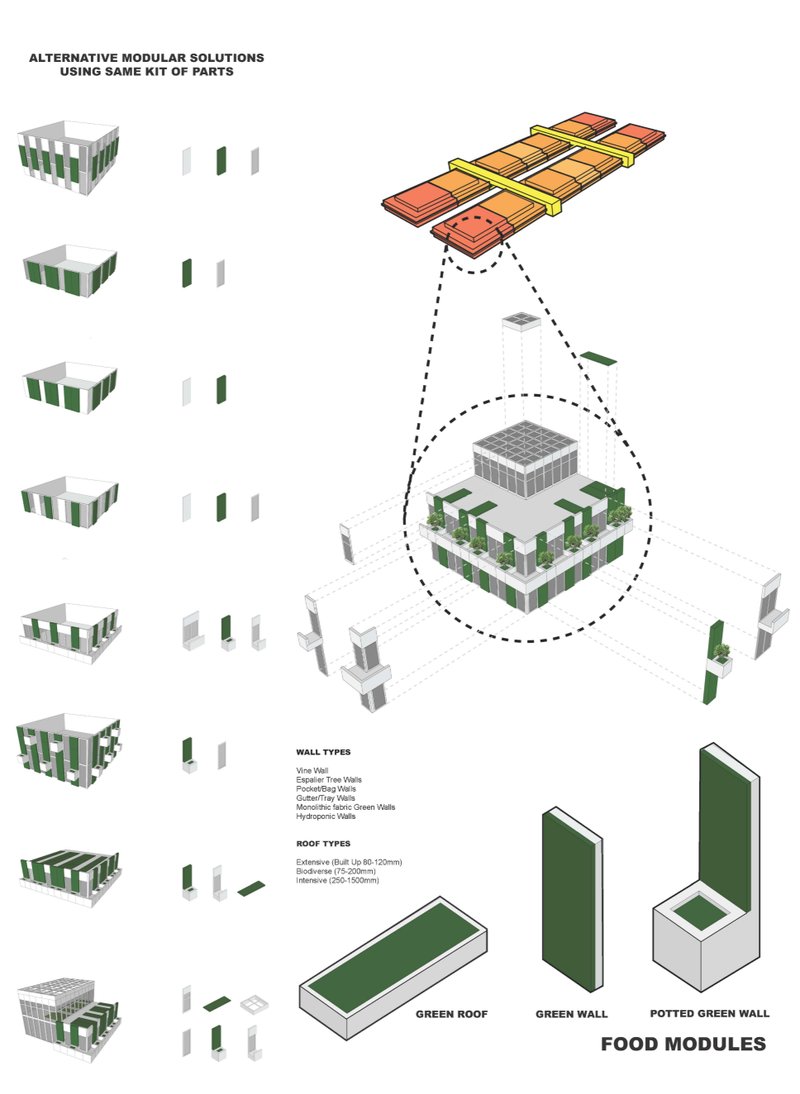
A key innovation in the project lies in its modular architecture. Using prefabricated parts, the building allows for adaptive green walls, roofs, and hydroponic systems. This flexibility means that the project can be scaled, replicated, or adjusted to suit different urban contexts worldwide. The modular food modules include:
- Green roofs for intensive or extensive farming
- Vertical hydroponic and vine walls
- Potted green walls for space-efficient cultivation
These systems turn architecture into a dynamic framework that evolves with community needs.
The Layers of a Food Forest
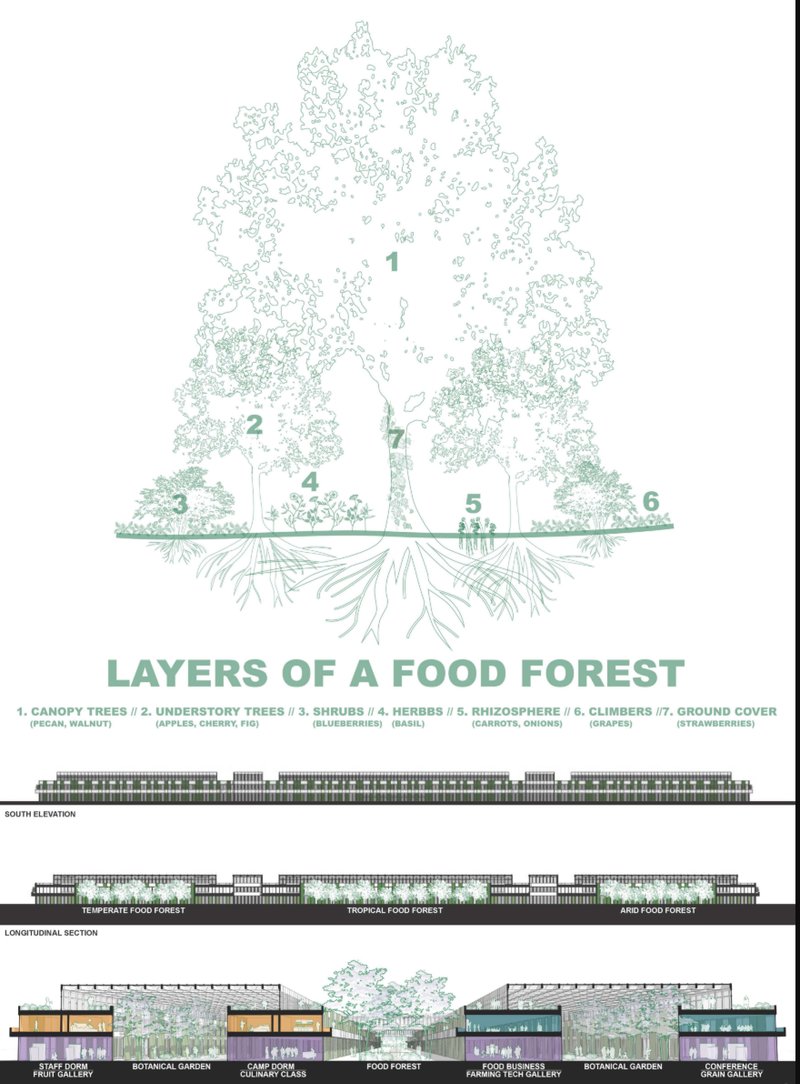
Beyond buildings, the Nine Elms Food Park incorporates the concept of a food forest—a multi-layered ecosystem that mimics natural forests while producing edible crops. The design integrates:
- Canopy trees like pecan and walnut
- Understory trees such as apple, cherry, and fig
- Shrubs including blueberries
- Herbs like basil
- Root crops including carrots and onions
- Climbers like grapes
- Ground covers such as strawberries
By embedding biodiversity within urban architecture, the project ensures ecological balance, food diversity, and long-term resilience.
A Sustainable Urban Lifestyle
Nine Elms Food Park is not only an architectural project—it is a cultural shift. It redefines how communities engage with food, knowledge, and nature. Visitors are encouraged to participate in farming, attend culinary workshops, explore botanical gardens, and dine in farm-to-table restaurants. Every activity within the park reinforces the relationship between architecture, sustainability, and community well-being.
As cities face the challenges of climate change, population growth, and food insecurity, projects like the Nine Elms Food Park offer a powerful blueprint for the future. By merging sustainable architecture with urban agriculture, the project shows that cities can be self-reliant, resilient, and deeply connected to nature.
The Nine Elms Food Park stands as a living example of how architecture can cultivate not only spaces but also sustainable lifestyles.


Popular Articles
Popular articles from the community

On the Brooks House by Monsoon Collective – A Contemporary Kerala Home Rooted in Tradition
Kerala home blending tradition and modernity with water-inspired design, brick architecture, courtyard planning, and sustainable rainwater harvesting strategies.


The Ken Roberts Memorial Delineation Competition (Krob)
As the most senior architectural drawing competition currently in operation anywhere in the world, it draws hundreds of entries each year, awarding the very best submissions in a series of medium-based categories.
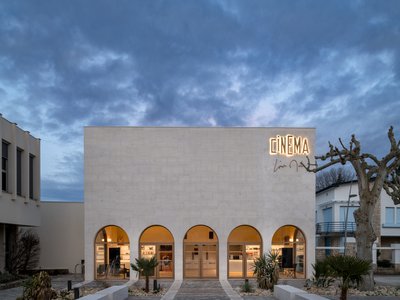
Louis Malle Cinema: A Limestone Cultural Landmark Revitalizing Community Life in Prayssac
Limestone cinema extension with public forecourt, blending heritage and modern design to create flexible cultural spaces and strengthen community interaction.
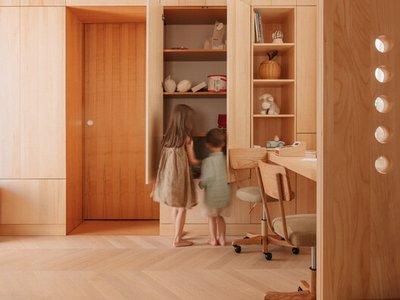
Treehouse Apartment: A Warm Timber Interior Blending Craft, Play, and Contemporary Living
Warm timber apartment with integrated treehouse, combining natural materials, craftsmanship, and playful design to create a flexible, family-oriented living environment.

Similar Reads
You might also enjoy these articles

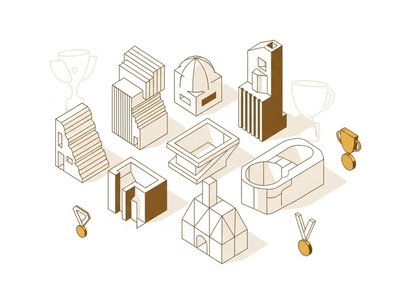
Top 15 Architecture Competitions to Enter in 2026
From student-friendly idea competitions to prestigious international awards, here are the best architecture competitions open for entries in 2026. Updated regularly.

DIY & Engineering in Computational Design : Enter the BeeGraphy Design Awards
Showcase Your Creativity with Computational Design and Open Source Projects
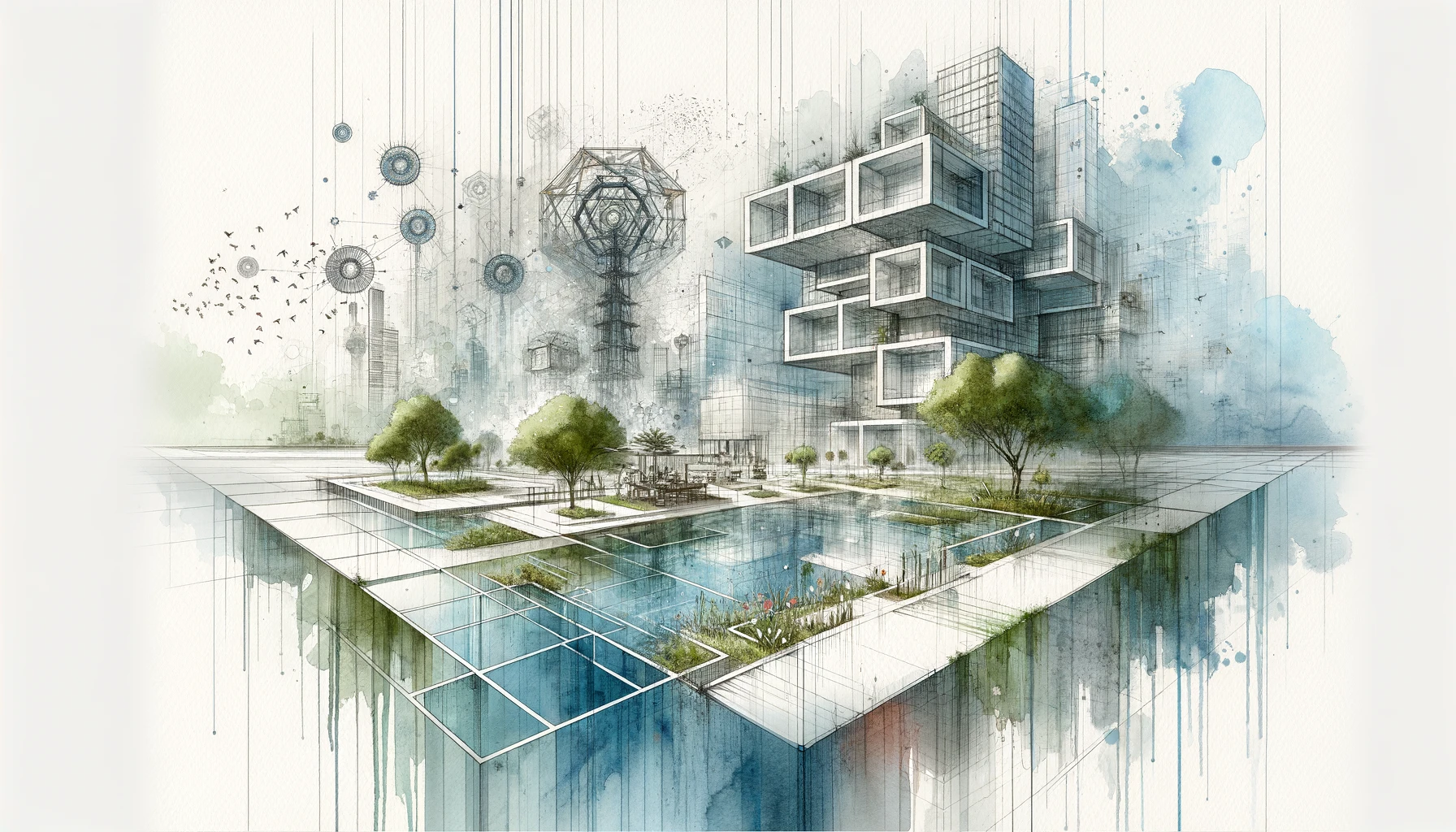
Innovative Design Solutions: Award-Winning Projects from Recent Architecture Competitions
Exploring award-winning architectural projects shaping the future of design, sustainability, and community.





Comments (0)
Please login or sign up to add comments
No comments yet. Be the first to comment!