
Rain Tree House Singapore Architecture: A Sustainable Oasis by Guz Architects
Discover Rain Tree House in Singapore, a sustainable, multigenerational home by Guz Architects, blending nature, design, and innovation.

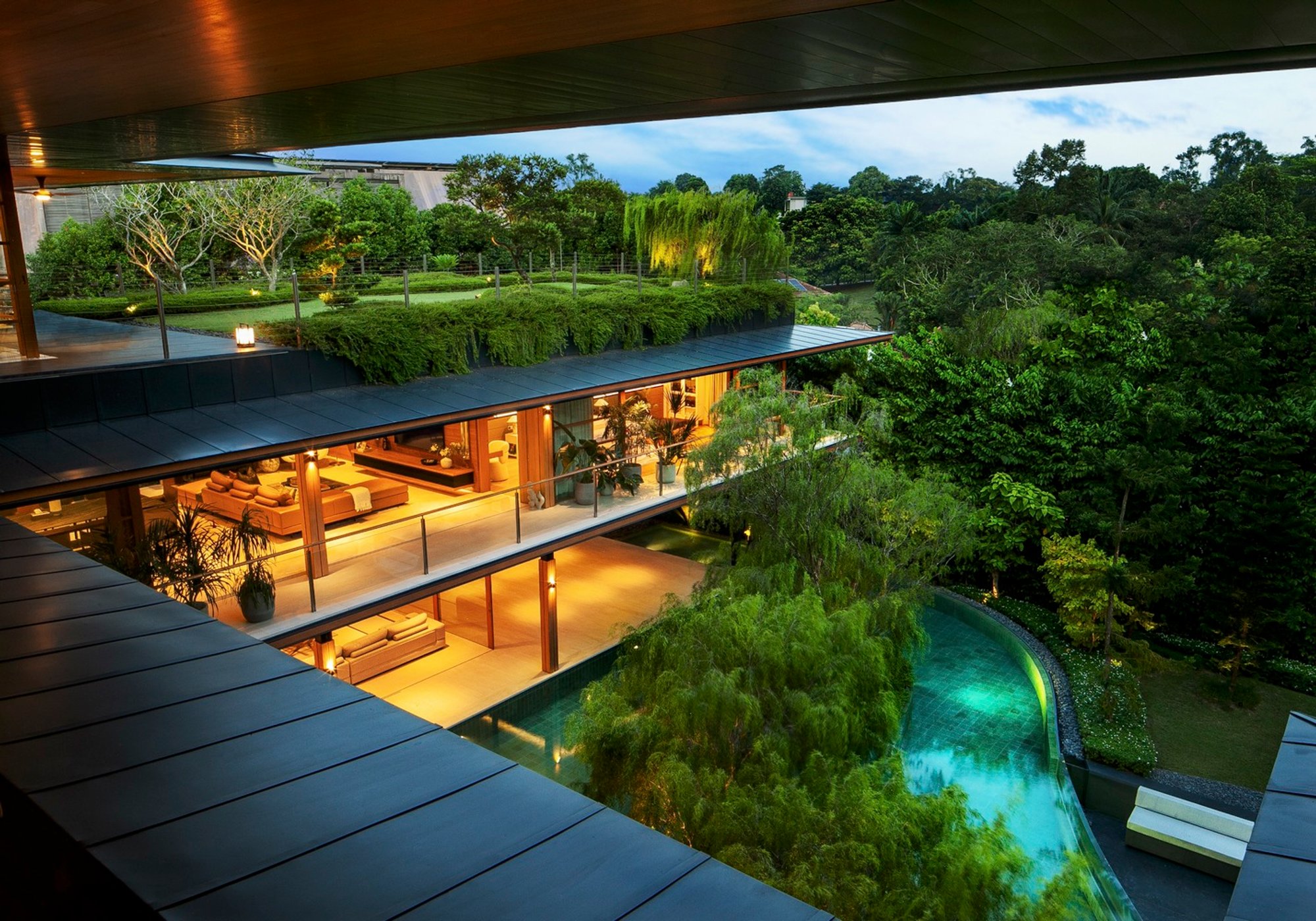
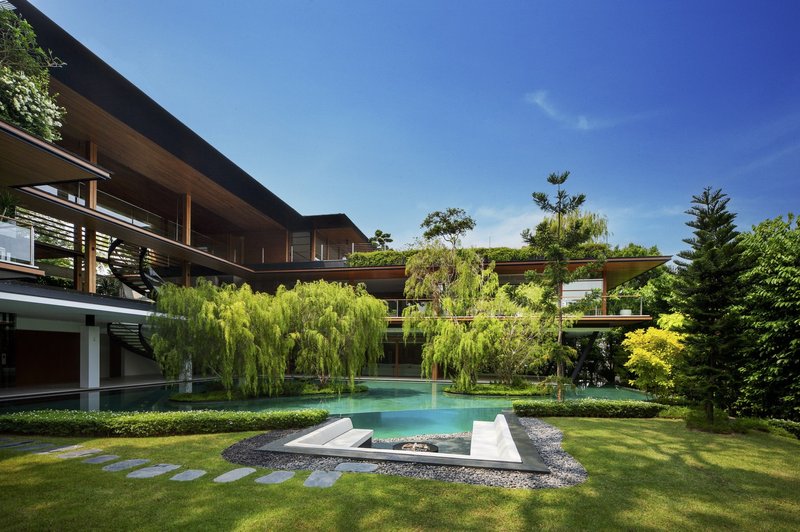
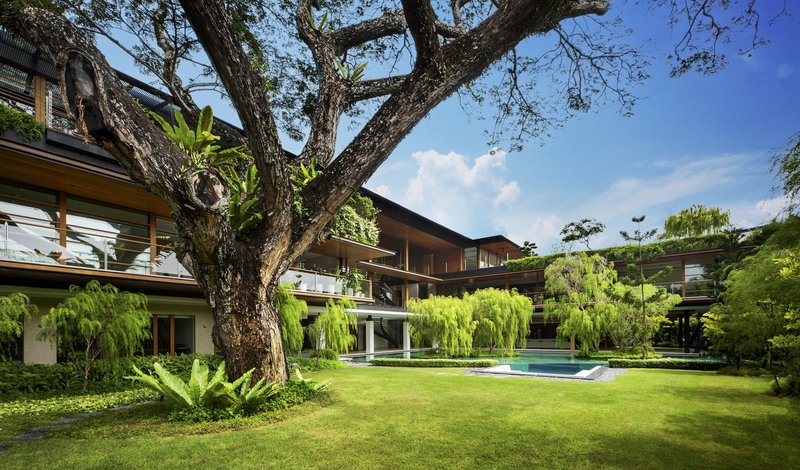
Nestled in the lush tropical environment of Singapore, Rain Tree House is a testament to sustainable, multigenerational living. Designed by Guz Architects, this 2023 masterpiece harmonizes nature and architecture, creating a sanctuary centered around a majestic rain tree. The project, spanning 1,871 square meters, showcases innovative design that integrates passive cooling, seamless indoor-outdoor transitions, and eco-friendly solutions.
In this article, we explore the captivating design of Rain Tree House, highlighting its architectural ingenuity and sustainability features that make it a standout in modern tropical architecture.
A Multigenerational Design for Family Living
Rain Tree House was designed with a multigenerational family in mind, providing spaces that balance privacy and connectivity. Each generation’s accommodations are strategically placed within the home to maintain personal space, while shared areas foster family interactions.
The design achieves this delicate balance through:
- Stratified Layouts: Each floor caters to a specific generation, offering a sense of ownership and seclusion.
- Common Spaces: Central areas such as the garden and living rooms serve as gathering points for family bonding.
- Human Scale Design: Despite its size, the house retains a cozy, “homely” feel through warm materials and thoughtful proportions.
Sustainability at the Core
Preserving Nature
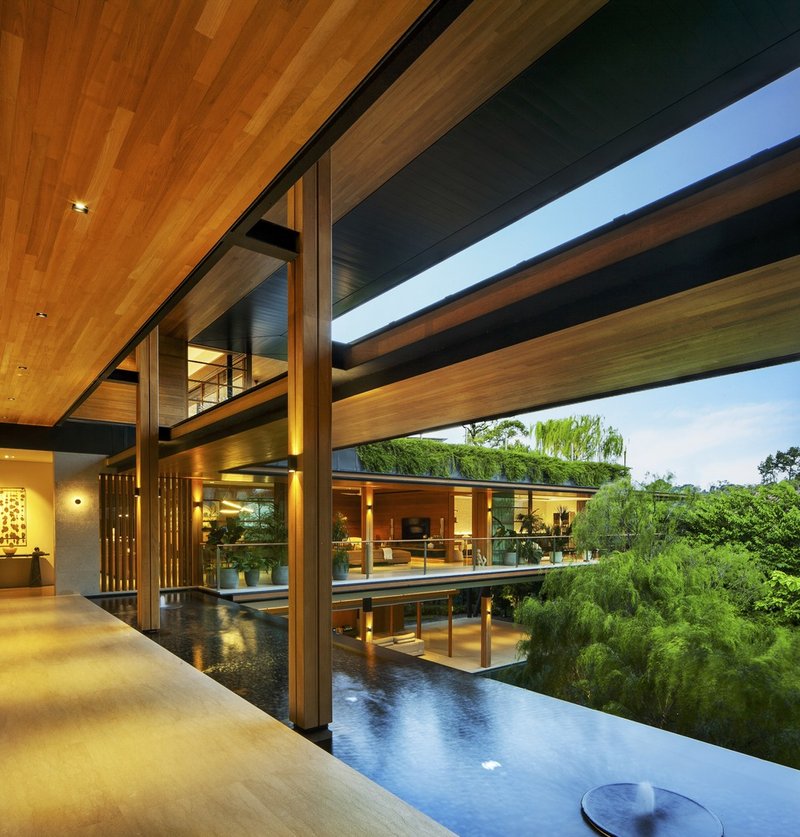
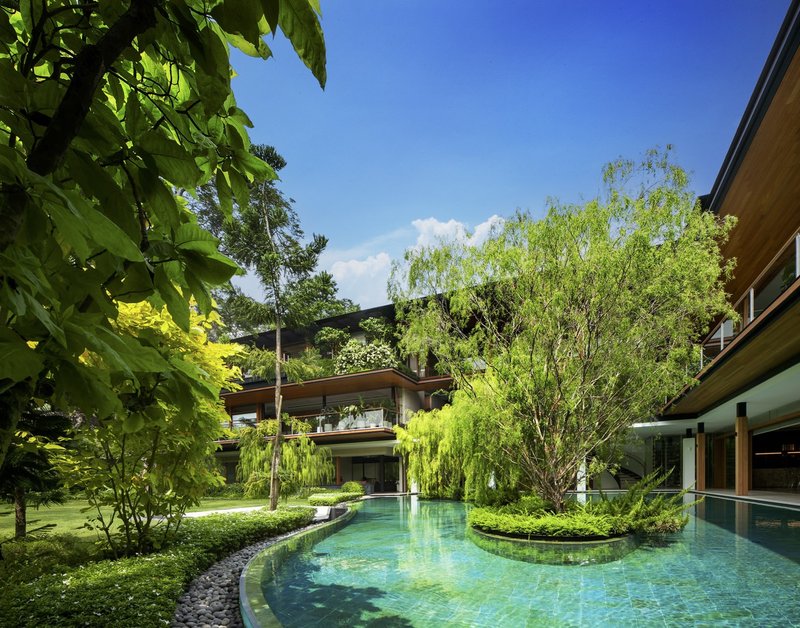
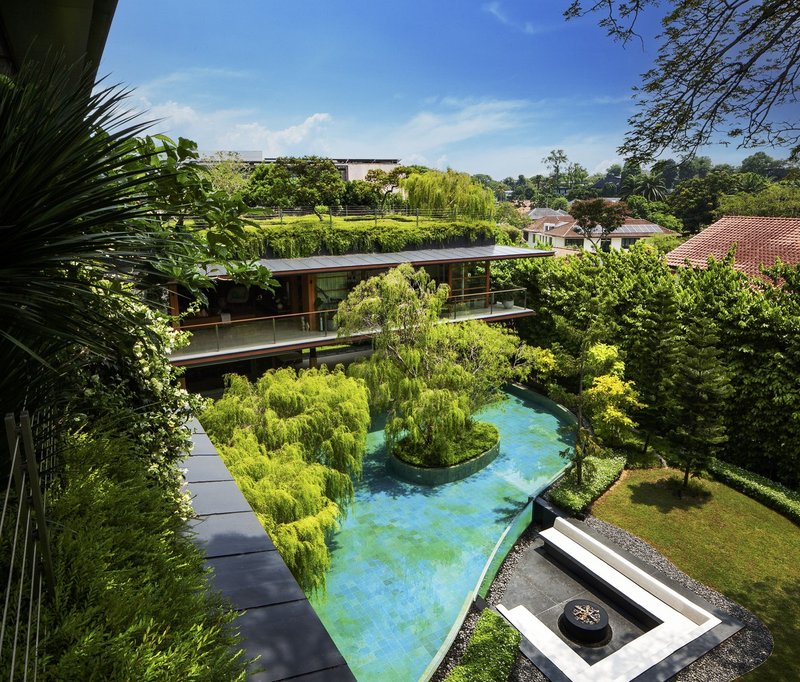
At the heart of Rain Tree House is an old rain tree, carefully protected and integrated into the design. This symbol of preservation underscores Guz Architects' commitment to nature-first architecture. The house's garden and water features further enhance this connection to the natural world.
Passive Cooling Features
The house is meticulously crafted to respond to Singapore’s tropical climate, utilizing passive cooling strategies:
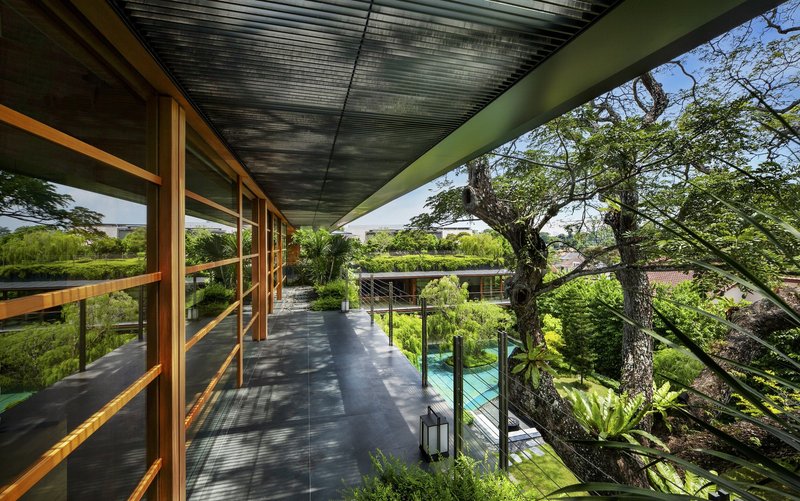
- Cross Ventilation: Unclad circulation spaces allow for breezes to flow freely, reducing heat build-up.
- Overhanging Roofs: These expansive roofs shield the interiors from direct sunlight and heavy rain, keeping the spaces naturally cool.
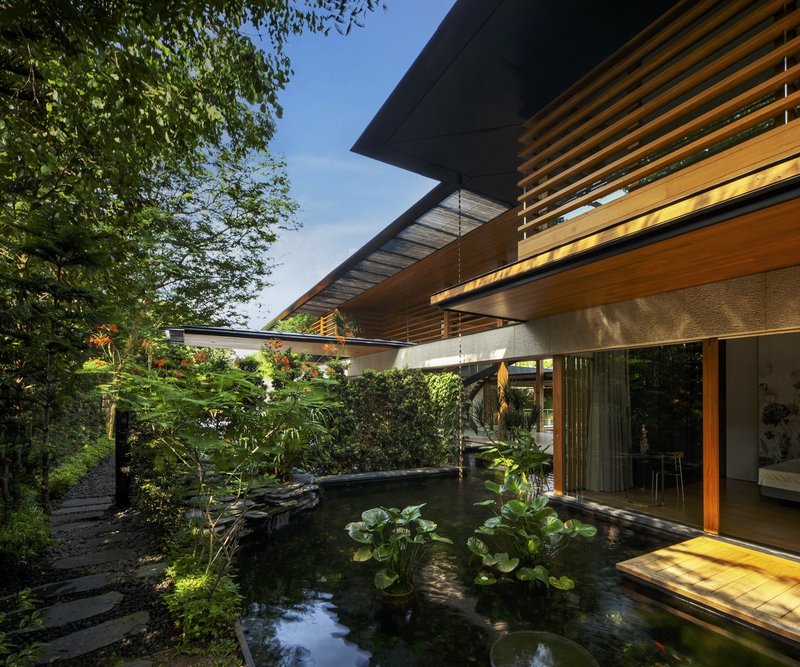
- Ponds and Pools: Water features act as thermal sinks, passively cooling the surrounding air.
Green Roofs and Solar Power
To further reduce its environmental footprint, Rain Tree House incorporates green roofs and a photovoltaic array:
- Green Roofs: Roof gardens enhance insulation and reduce heat gain, while blending the architecture with the natural surroundings.
- Solar Panels: The large photovoltaic array generates sufficient energy to power the house during the day, making it largely self-sufficient.
Seamless Indoor-Outdoor Living
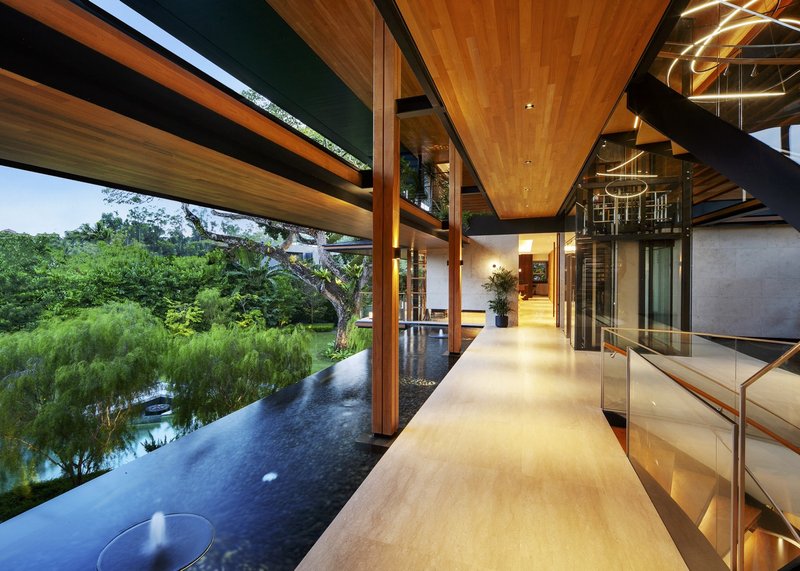
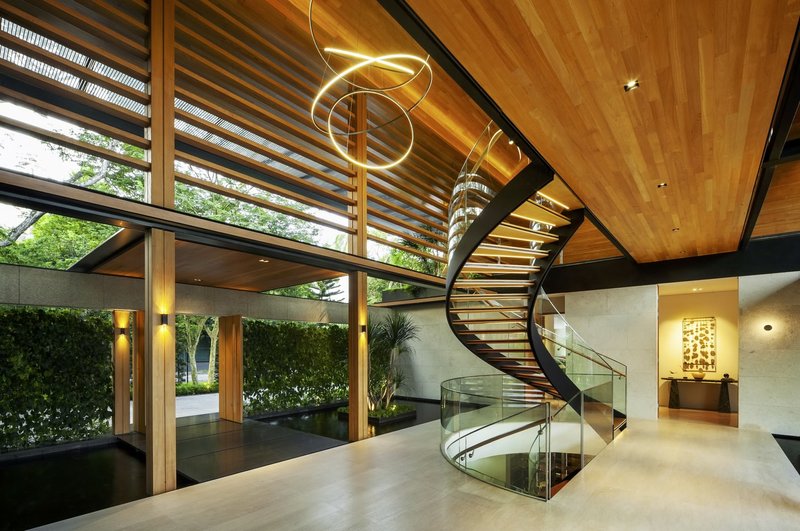
One of the defining aspects of the Rain Tree House is its seamless integration of indoor and outdoor spaces. Every room is designed to connect with the lush greenery that envelops the property, creating a harmonious dialogue between architecture and nature.
Key Design Highlights:
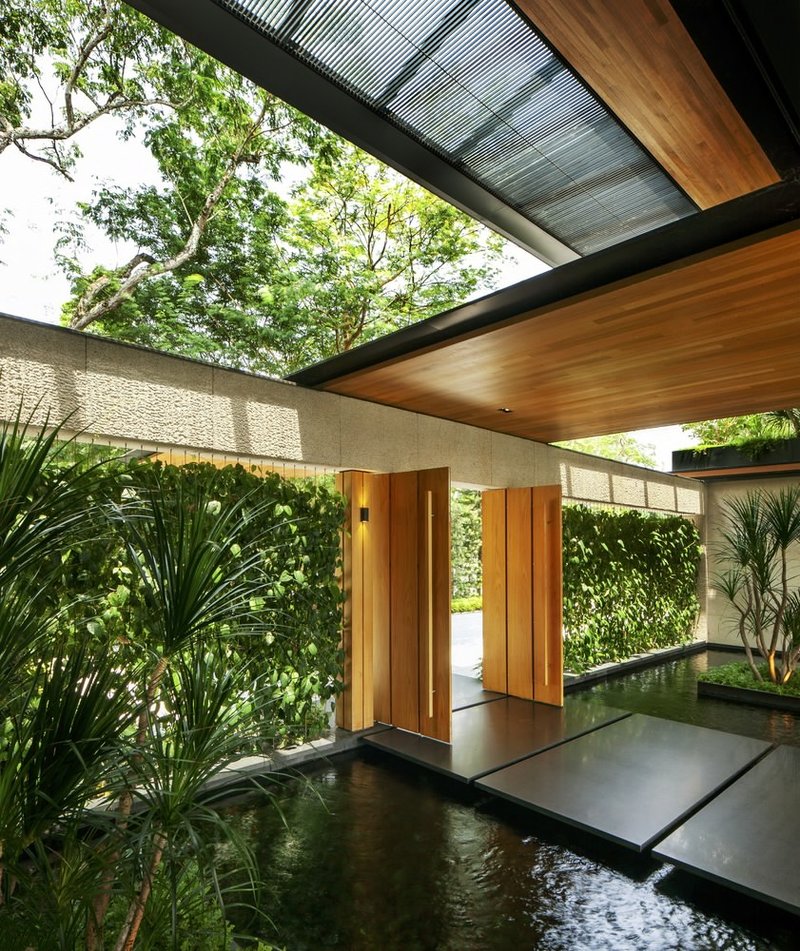
- Large Openings: Sliding glass doors and expansive windows erase boundaries between interior and exterior.
- Natural Materials: The use of earthy tones and wood enhances the organic feel of the home.
- Courtyards and Gardens: These spaces serve as extensions of the indoor areas, encouraging outdoor living.
Architectural Team and Collaborators
The project was brought to life by a skilled team led by Guz Wilkinson, Lee Rong Rong, and Kelly Woo. The collaboration included:
- Structural Engineers: MSE Consultants
- M&E Consultants: CCA Partners
- Landscape Contractors: Nyee Phoe Flower Garden Pte Ltd
- Main Contractors: Straits Dredging
- Photographer: Patrick Bingham-Hall
Rain Tree House stands as a remarkable example of sustainable and functional architecture in the tropics. By prioritizing environmental preservation, passive cooling techniques, and family-centric design, Guz Architects has created a home that exemplifies modern living in harmony with nature.
For those inspired by Rain Tree House Singapore Architecture, it offers a glimpse into the future of green, multigenerational housing, proving that luxury and sustainability can coexist beautifully.
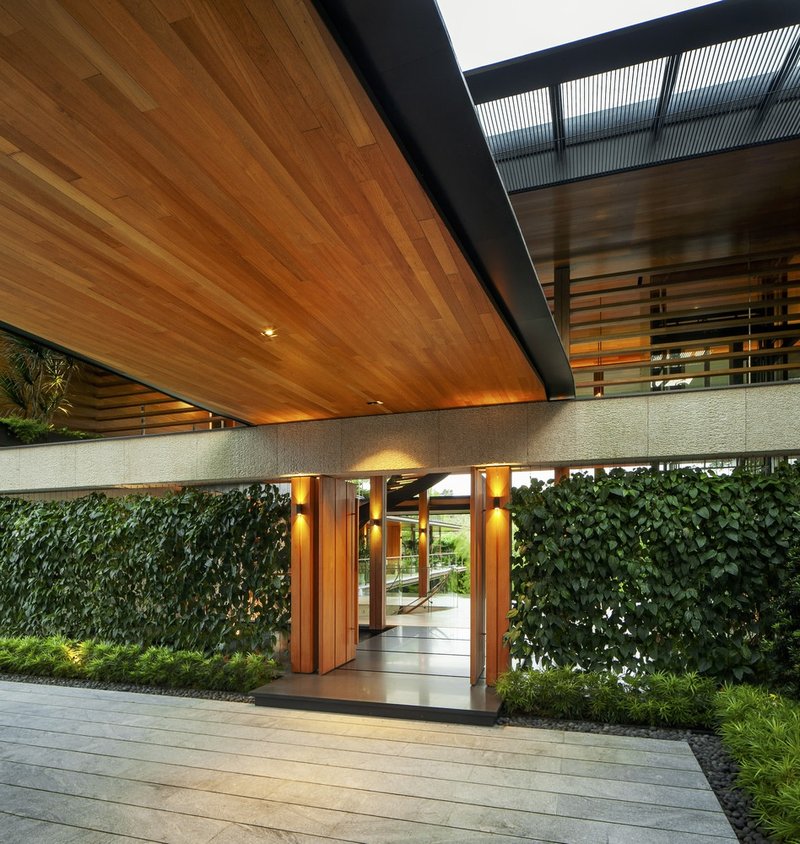
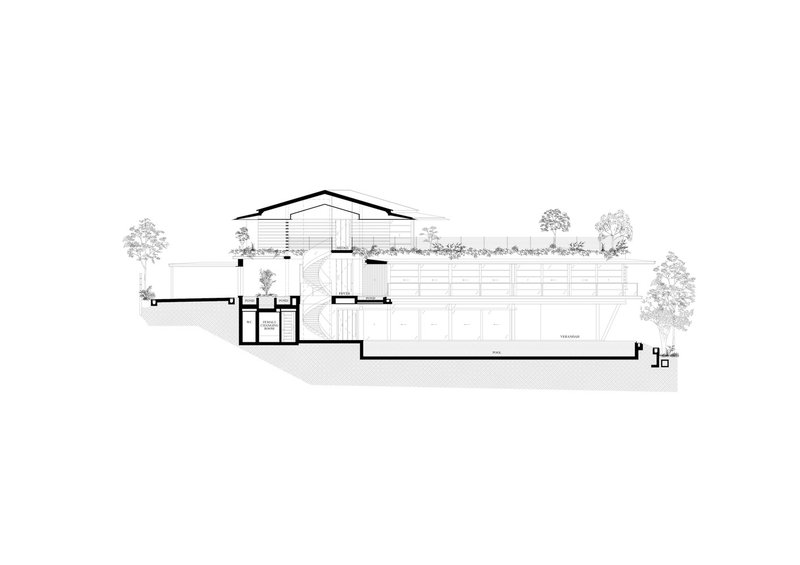
All the photographs are work of Patrick Bingham Hall




Popular Articles
Popular articles from the community


The Ken Roberts Memorial Delineation Competition (Krob)
As the most senior architectural drawing competition currently in operation anywhere in the world, it draws hundreds of entries each year, awarding the very best submissions in a series of medium-based categories.

On the Brooks House by Monsoon Collective – A Contemporary Kerala Home Rooted in Tradition
Kerala home blending tradition and modernity with water-inspired design, brick architecture, courtyard planning, and sustainable rainwater harvesting strategies.

Solar Steam: A Climate-Responsive Architecture That Redefines the Monument
A climate-responsive memorial architecture that transforms heat, decay, and time into a living system reflecting humanity’s ecological impact.
Atelier Macri Concept Store Interior Design by CASE-REAL
Atelier Macri store features a "ko" counter, walnut wood details, cork displays, blending retail, gallery, and seamless customer experiences.


Similar Reads
You might also enjoy these articles
The Ken Roberts Memorial Delineation Competition (Krob)
As the most senior architectural drawing competition currently in operation anywhere in the world, it draws hundreds of entries each year, awarding the very best submissions in a series of medium-based categories.

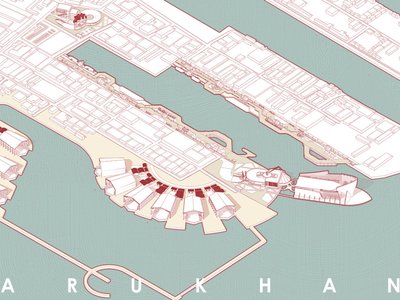
Waterfront Redevelopment and Urban Revitalization in Mumbai: Forging a New Dawn for Darukhana
A transformative waterfront redevelopment project reimagining Darukhana’s shipbreaking heritage into an inclusive urban future.
OUT-OF-MAP: A Call for Postcards on Feminist Narratives of Public Space
Rhizoma Design and Research Lab invites artists, designers, architects, researchers, and students to reflect on how feminist perspectives can reshape public space. Selected works will be exhibited in Barcelona, October 2026. Submissions open until 15 April 2026.

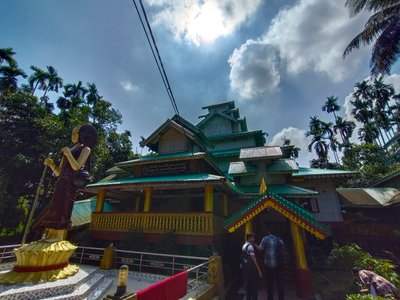
Documentation Work on Buddhist Wooden Temple
Architectural syncretism and cultural hybridity: A comparative study of the Buddhist temples in Chattogram Hill tracks


Explore Architecture Competitions
Discover active competitions in this discipline




The International Standard for Design Portfolios


The Global Benchmark for Architecture Dissertation Awards


The Global Benchmark for Graduation Excellence


Challenge to reimagine the Iron Throne
Comments (0)
Please login or sign up to add comments
No comments yet. Be the first to comment!