
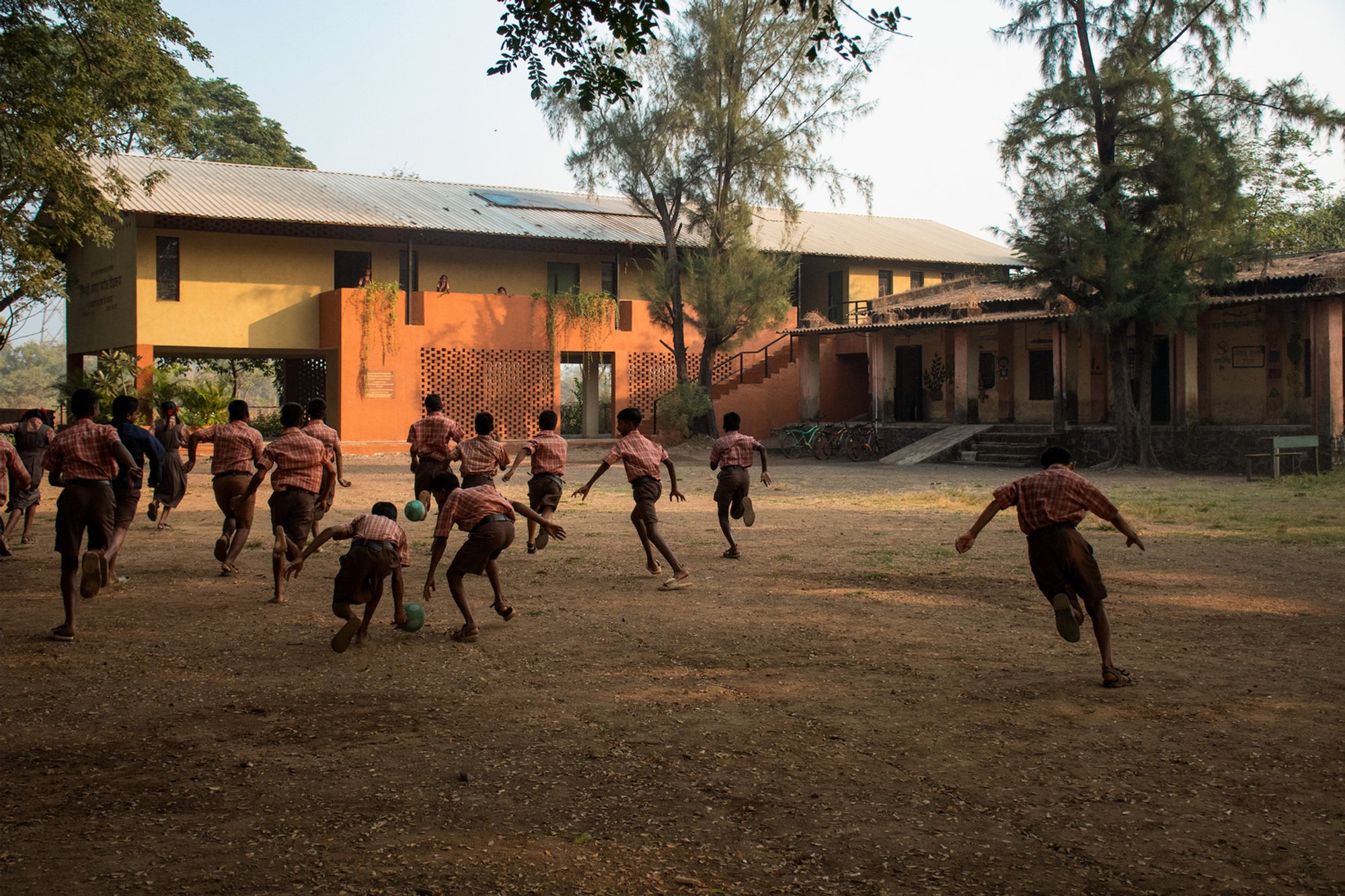
Rebuilding Resilient Education: Flood Affected School at Kelthan Village by unTAG
Flood-resilient school in Kelthan Village by unTAG, combining sustainable, low-cost construction with solar passive design and community-driven development.

Transforming Disaster into Opportunity
Saraswati Vidyalaya, a rural government school in Kelthan Village, Palghar, Maharashtra, stands as a symbol of resilience and innovation. Nestled along the banks of the Tansa River, this school educates 180 students from grades 8 to 10. In 2019, devastating floods submerged the school, causing severe infrastructural damage and rendering the premises unsafe for both students and staff.
Collaborative Rebuilding Efforts
The journey towards reconstruction began in 2020. Architects from unTAG, in collaboration with a local NGO, initiated a participatory rebuilding process involving school teachers and students. The redevelopment was planned in two phases to ensure uninterrupted classes while enabling fundraising efforts.
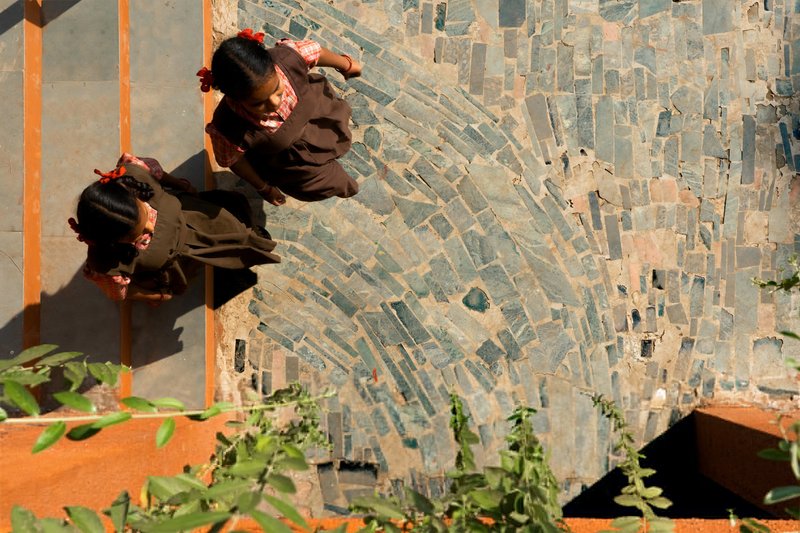
Context-Sensitive Design for Flood Resilience
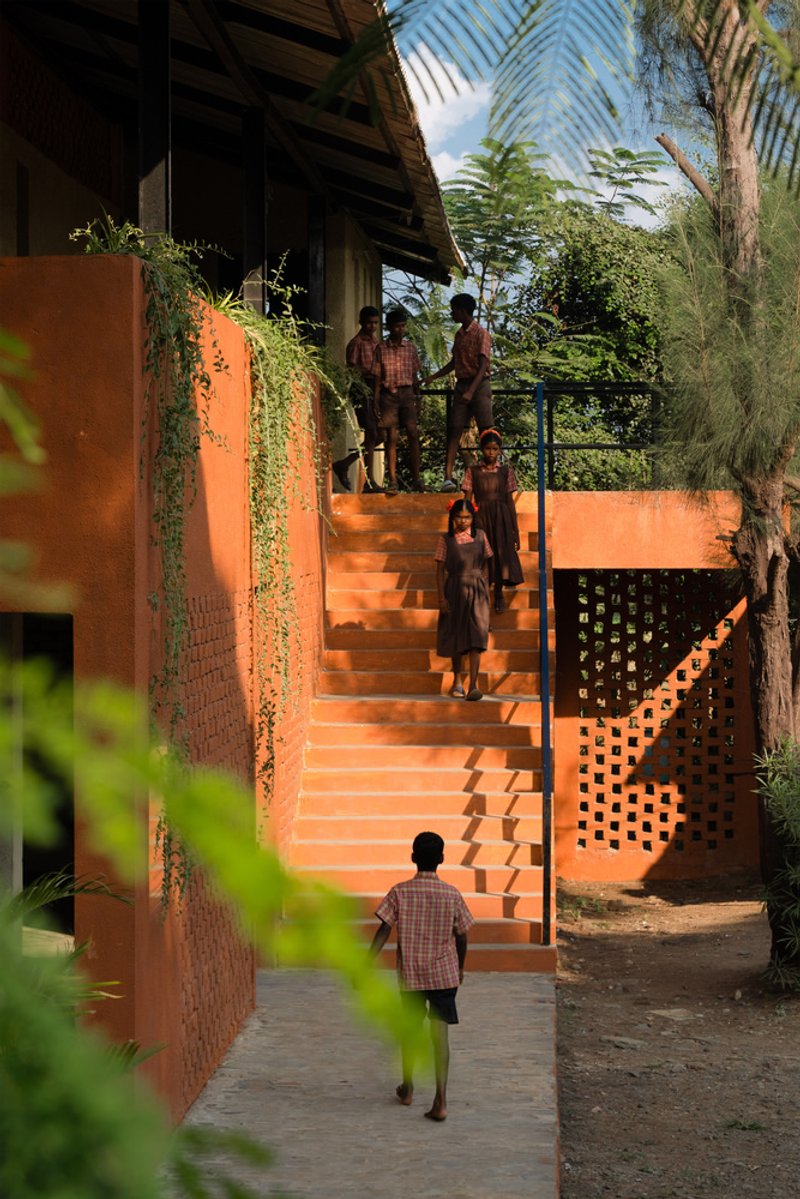
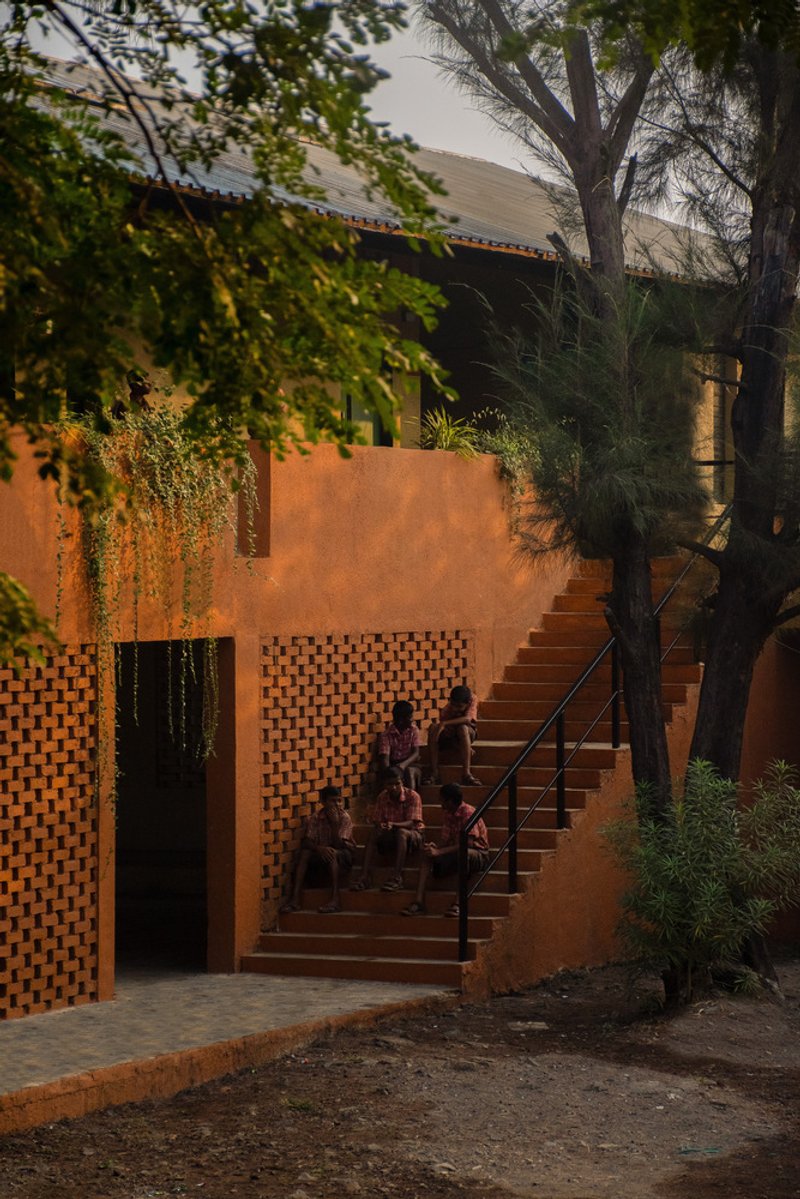
Designed with sensitivity to the region's climate and topography, the new school incorporates solar passive architecture and flood-adaptive features. Located in the northeast corner of the one-acre site, the elevated structure on stilts minimizes floodwater resistance while maximizing the playground area.
Phase 1 of the school includes:
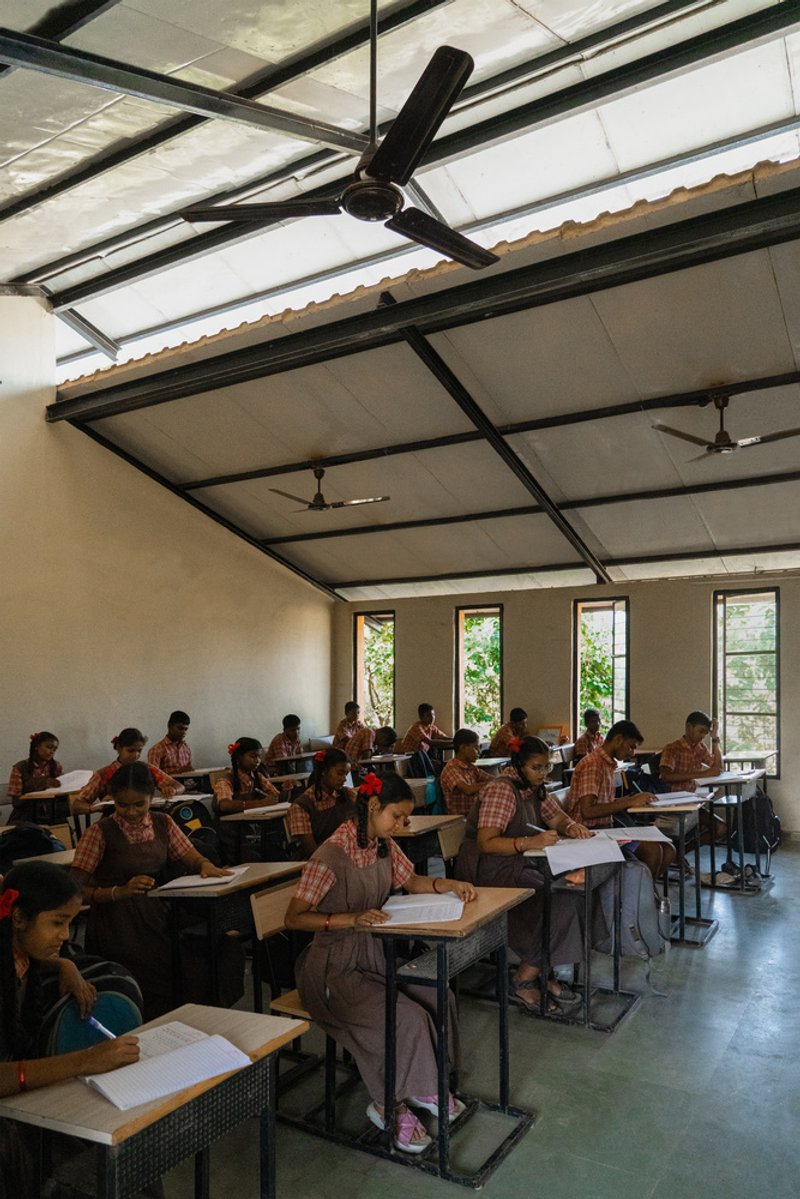
- Three cross-ventilated, naturally lit classrooms with a North-light roof
- Staffroom and separate girls' restroom
- Toilets with improved sanitation
- Community kitchen on the ground floor
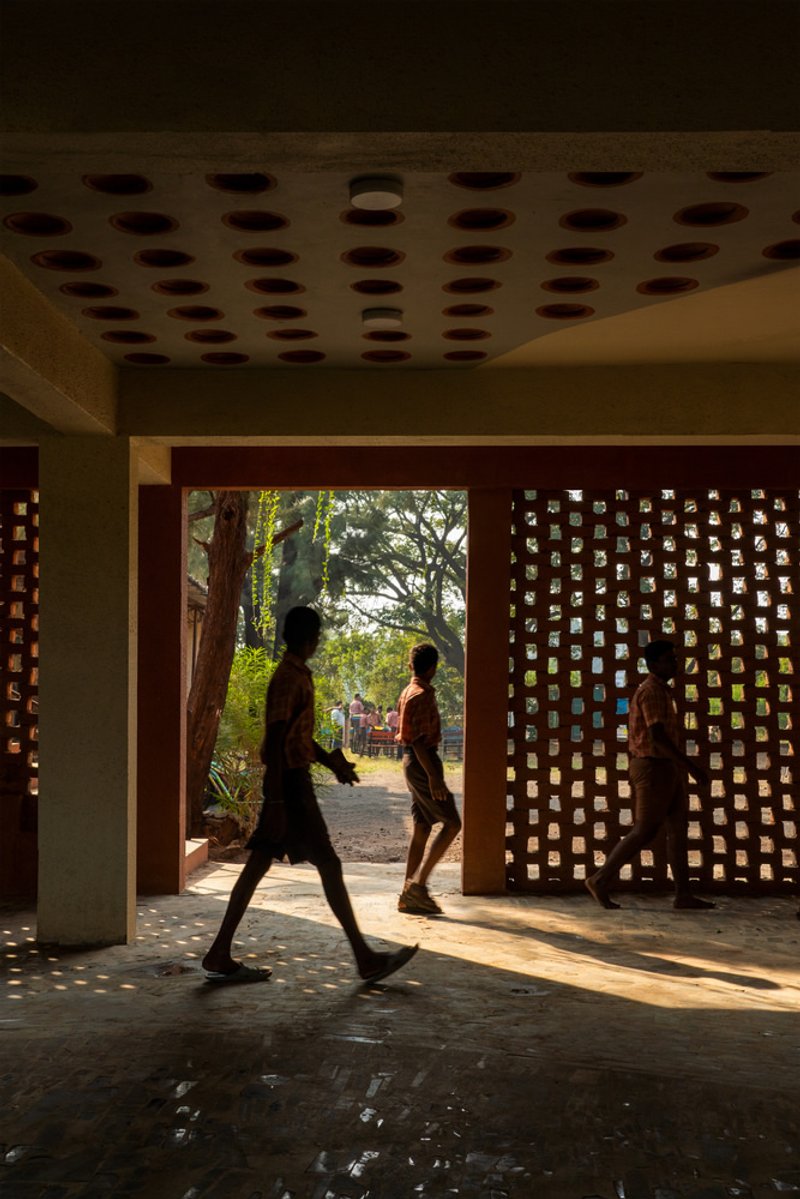
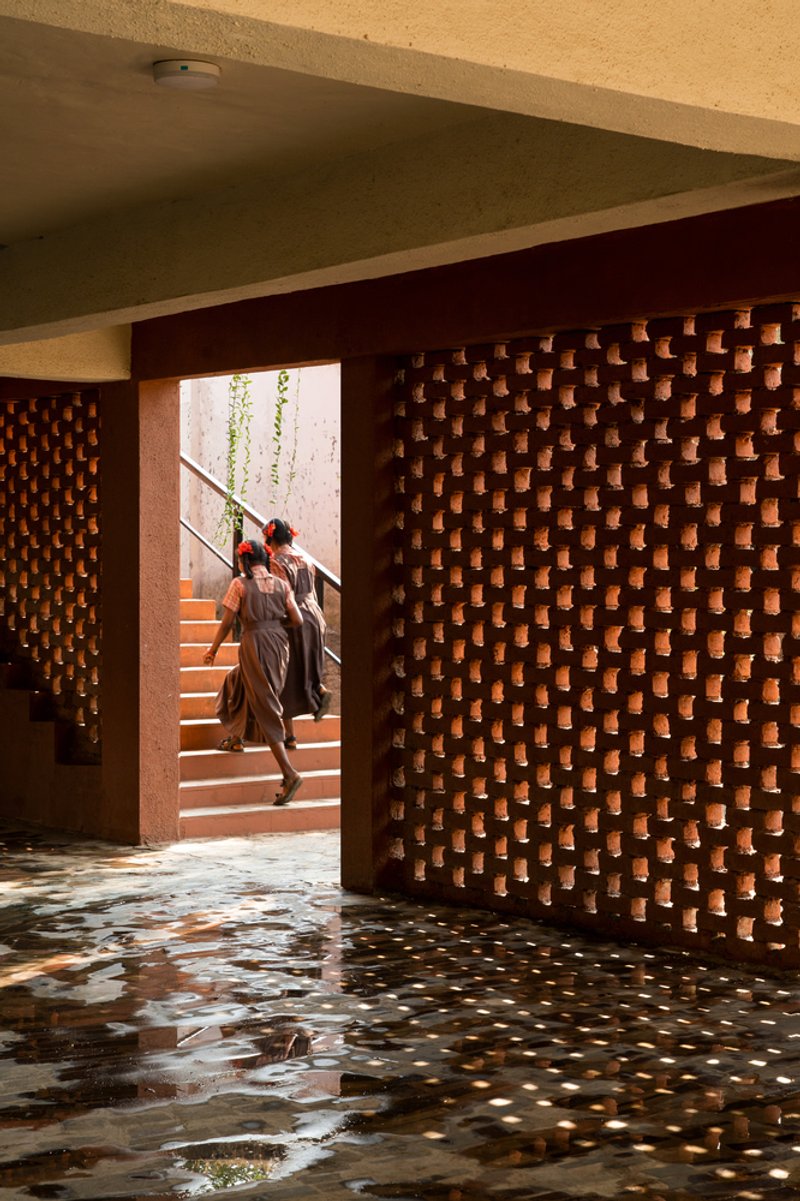
- Stilted undercroft as a multipurpose social space hosting school activities, community gatherings, medical camps, and awareness drives
Sustainable and Cost-Effective Construction
With an impressive construction cost of Rs. 1200 per sq. ft. ($13.5 per sq. ft.), the school sets an example in affordability and sustainability. Locally sourced materials and vernacular techniques were key to achieving this:
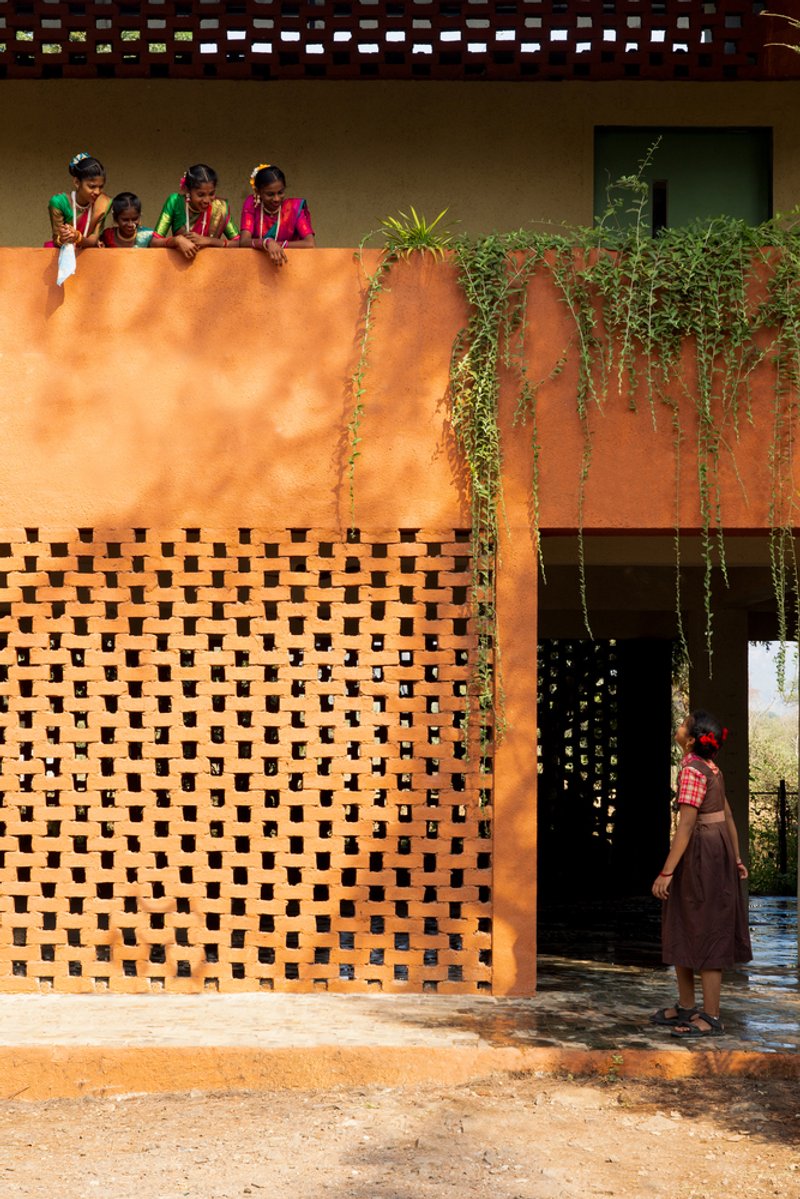
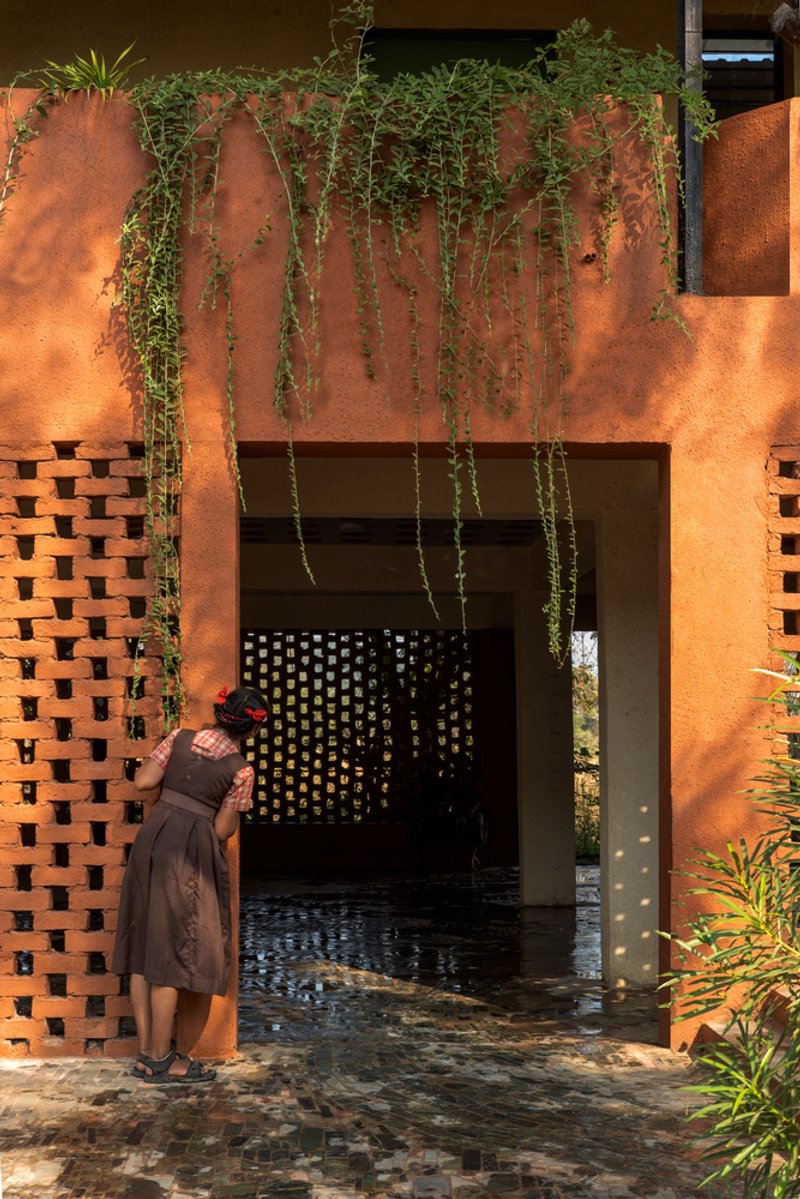
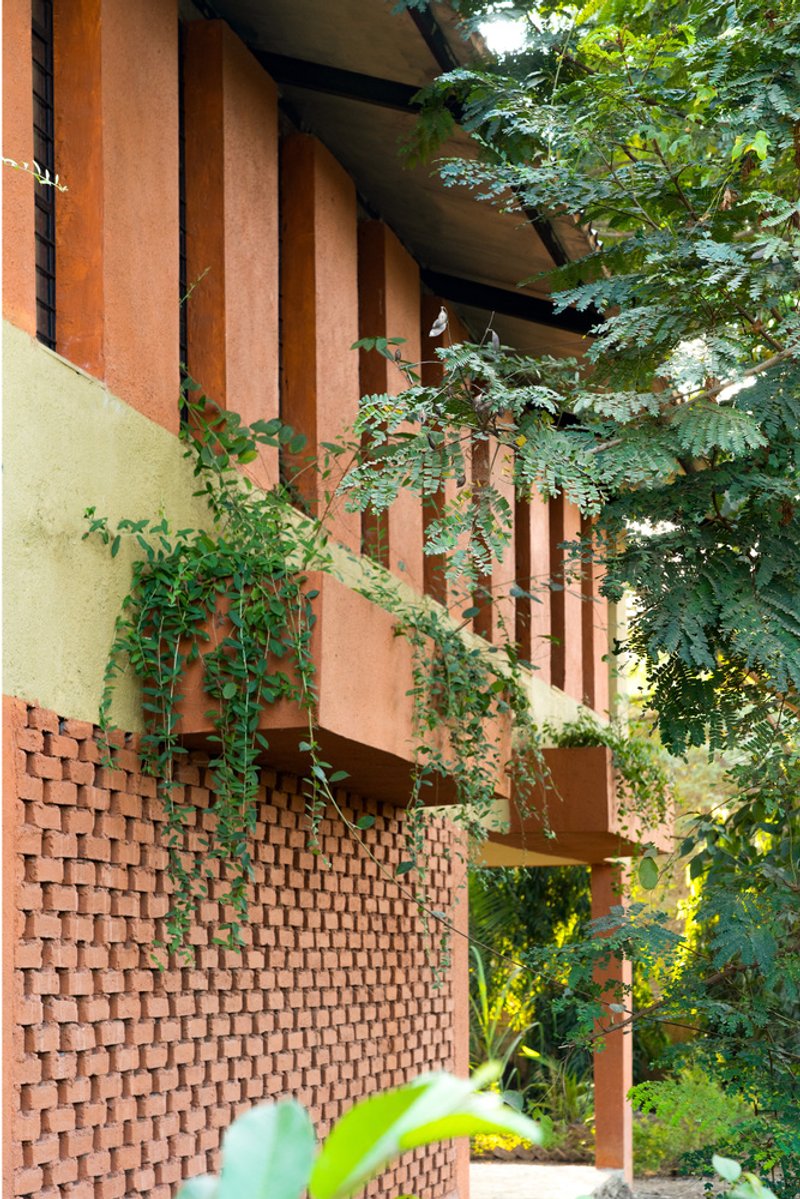
- Concrete framework with locally baked red bricks laid in Rat-trap bond for thermal insulation
- Brick Jalis for ventilation and visual connectivity
- Filler-slab technique using locally crafted earthen disks for reducing concrete and enhancing aesthetics
- Recycled Indian stone flooring sourced from local vendors, inspired by the meandering Tansa River
- Insulated puff panels for thermal comfort throughout the year
- Roof-mounted solar panels, making the school net-zero and energy self-reliant
Green and Biophilic Design Elements
The school facade integrates biophilic elements with student-maintained green planters, fostering environmental stewardship. Students and local farmers also cultivate seasonal vegetables in the open spaces, contributing to the midday meal program.
Community Empowerment through Shramdaan
Construction involved the local community through 'Shramdaan' (voluntary labor). Farmers and parents contributed hands-on labor, receiving on-site training in alternative construction techniques led by the architects. This approach not only reduced costs but also upskilled the local workforce.




Popular Articles
Popular articles from the community

Flamboyant House by Juliana Camargo + Prumo Projetos
Modern Brazilian house integrating existing tree, pool, and volumes with glass, wood, and transitional spaces blending interior, exterior, and landscape seamlessly.

Solar Steam: A Climate-Responsive Architecture That Redefines the Monument
A climate-responsive memorial architecture that transforms heat, decay, and time into a living system reflecting humanity’s ecological impact.


The Ken Roberts Memorial Delineation Competition (Krob)
As the most senior architectural drawing competition currently in operation anywhere in the world, it draws hundreds of entries each year, awarding the very best submissions in a series of medium-based categories.
Inverted Architecture Installation by Studio Link-Arc: Exploring the Intersection of Architecture and Living Organisms
Inverted Architecture Installation by Studio Link-Arc blends mycelium, sustainability, inverted design, ecological cycles, and urban adaptive architecture in Shenzhen.

Similar Reads
You might also enjoy these articles
The Ken Roberts Memorial Delineation Competition (Krob)
As the most senior architectural drawing competition currently in operation anywhere in the world, it draws hundreds of entries each year, awarding the very best submissions in a series of medium-based categories.


Waterfront Redevelopment and Urban Revitalization in Mumbai: Forging a New Dawn for Darukhana
A transformative waterfront redevelopment project reimagining Darukhana’s shipbreaking heritage into an inclusive urban future.

OUT-OF-MAP: A Call for Postcards on Feminist Narratives of Public Space
Rhizoma Design and Research Lab invites artists, designers, architects, researchers, and students to reflect on how feminist perspectives can reshape public space. Selected works will be exhibited in Barcelona, October 2026. Submissions open until 15 April 2026.


Documentation Work on Buddhist Wooden Temple
Architectural syncretism and cultural hybridity: A comparative study of the Buddhist temples in Chattogram Hill tracks


Explore Architecture Competitions
Discover active competitions in this discipline




The International Standard for Design Portfolios


The Global Benchmark for Architecture Dissertation Awards


The Global Benchmark for Graduation Excellence


Challenge to design public laboratory
Comments (0)
Please login or sign up to add comments
No comments yet. Be the first to comment!