
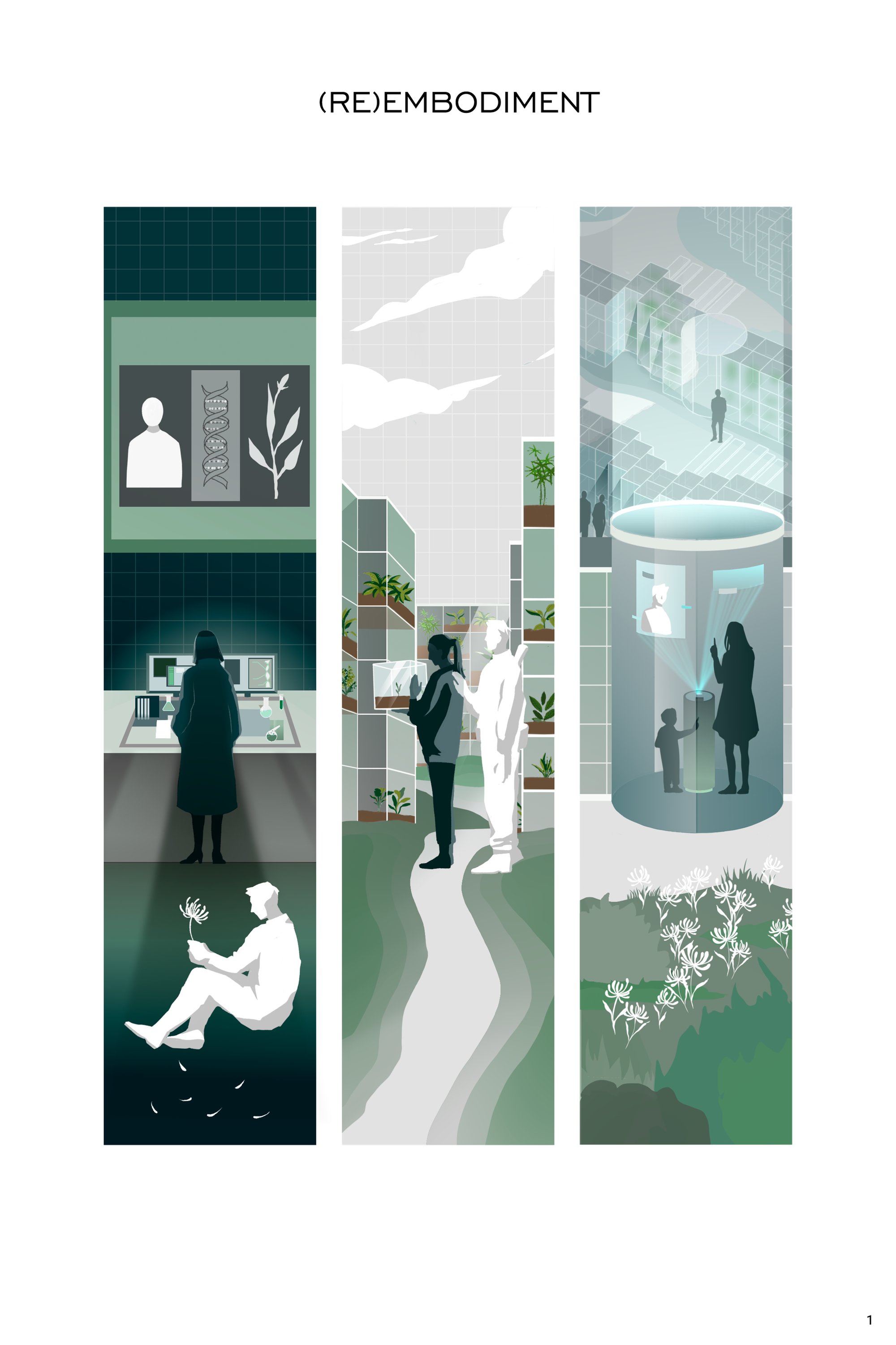
(Re)Embodiment: Sustainable Memorial Architecture
(Re)Embodiment: Architecture that Sustains Life, Memory, and Nature in One Harmonious Cycle.

A New Approach to Sustainable Memorial Architecture
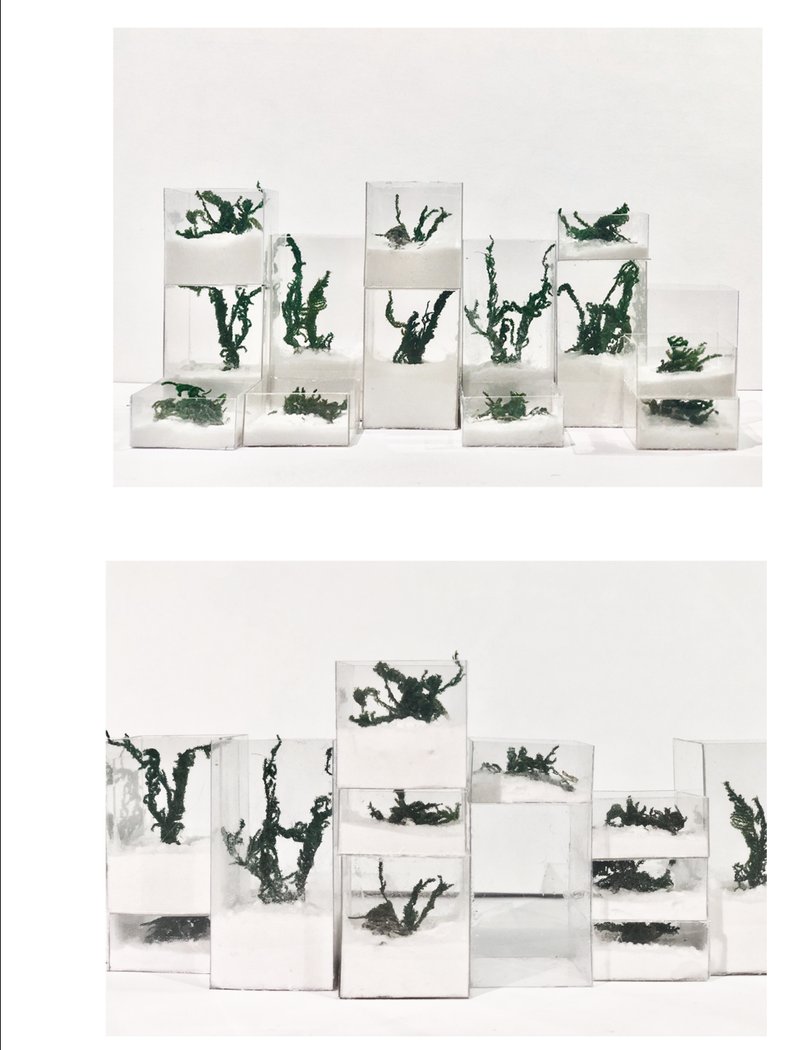
In an era where sustainability and innovation merge, the (Re)Embodiment project redefines traditional burial practices by introducing a green cemetery concept. This initiative integrates nature and architecture, allowing the DNA of a deceased individual to be introduced into plant cells, giving rise to trees, flowers, and herbs that continue their legacy.
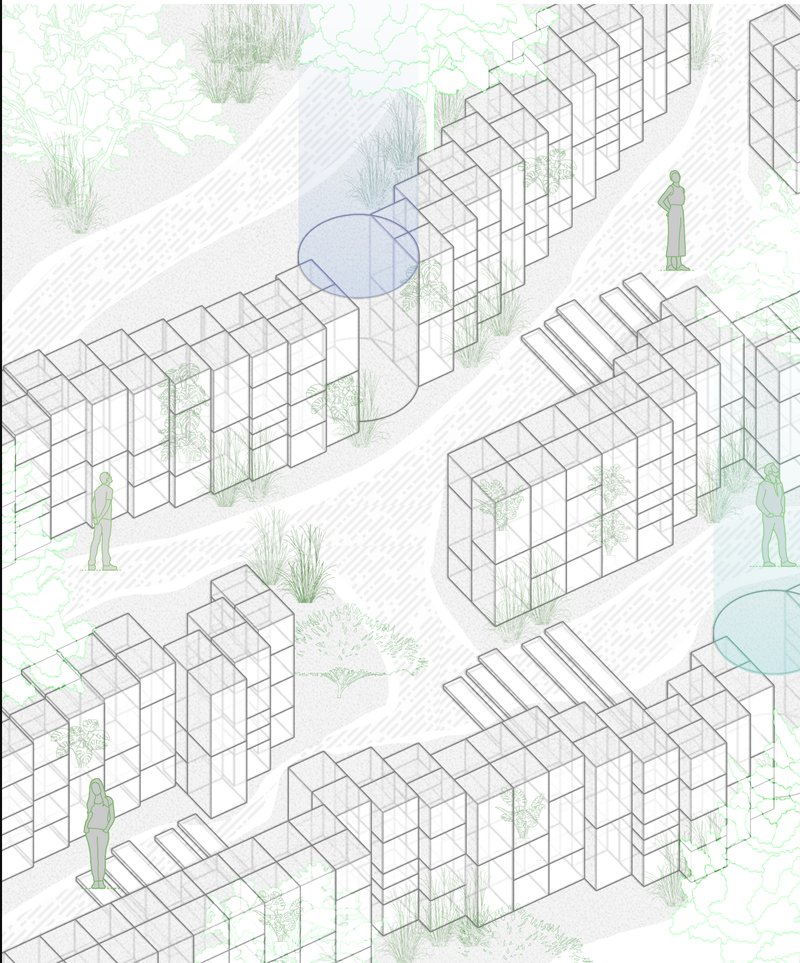
Transforming Memory Into Life
Every atom in us was once part of nature, and this project honors that cycle. By embedding genetic material into plant DNA—an organism known for its adaptability and ability to carry mutations—(Re)Embodiment offers a symbolic and tangible continuation of life.
The Concept:
- Plant + Soil = Person Through the natural process of photosynthesis and metabolism, a person's DNA is preserved and nurtured within a plant, forming a bio-architectural connection between life and remembrance.
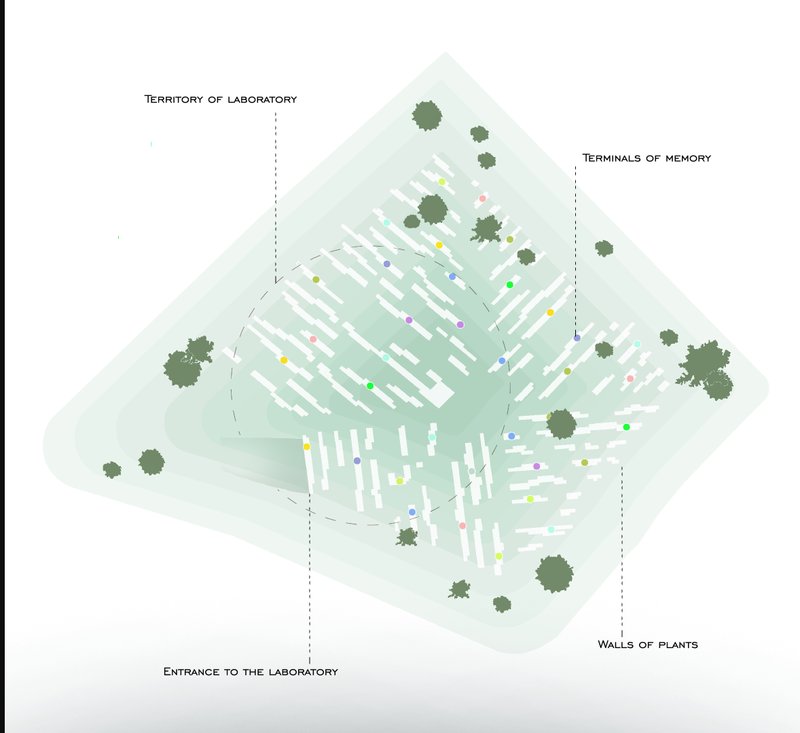
- Memory and Living Spaces Relatives have the choice to nurture these plants at home or leave them in a specially designed cemetery. This creates a dynamic, interactive space where memorials are living, breathing tributes rather than static tombstones.
- Growing Reincarnation Over time, the cemetery transforms into a thriving forest, reinforcing the belief that life, even in passing, remains interconnected with nature. This cycle of growth establishes an eco-conscious legacy where every plant becomes a living monument.
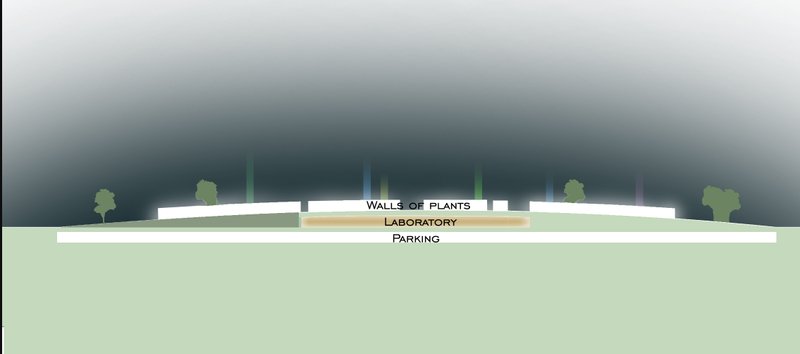
Architecture Meets Ecology
(Re)Embodiment is not just about plants; it is about designing a harmonious, sustainable environment where architecture blends with natural landscapes. The project envisions a cemetery that evolves over time, organically growing into a memorial grove, creating a space where all people, regardless of their past, are equal in the cycle of renewal.
Project Contributors
This innovative concept was developed by Alena Lang, Katya Ch., and Alexandra Spesh as a shortlisted entry for the Circle of Life competition. Their architectural vision merges biology, sustainability, and human memory into a singular, meaningful space.



Popular Articles
Popular articles from the community

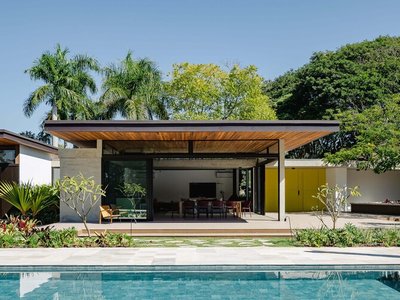
Flamboyant House by Juliana Camargo + Prumo Projetos
Modern Brazilian house integrating existing tree, pool, and volumes with glass, wood, and transitional spaces blending interior, exterior, and landscape seamlessly.
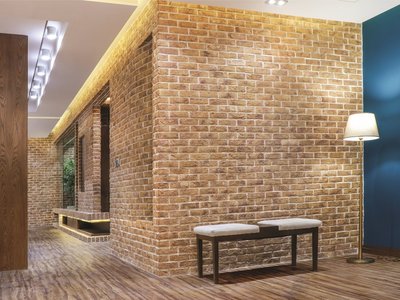
A Contemporary Take on Iranian Residential Architecture
A modern interior design in Mashhad that reinterprets brick, light, and spatial flow to create a warm, contemporary residential architecture.
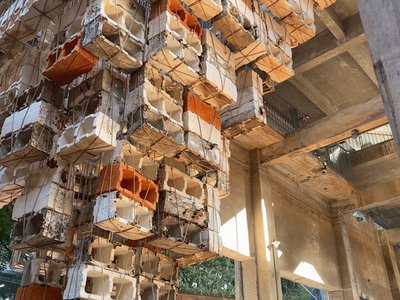
Inverted Architecture Installation by Studio Link-Arc: Exploring the Intersection of Architecture and Living Organisms
Inverted Architecture Installation by Studio Link-Arc blends mycelium, sustainability, inverted design, ecological cycles, and urban adaptive architecture in Shenzhen.
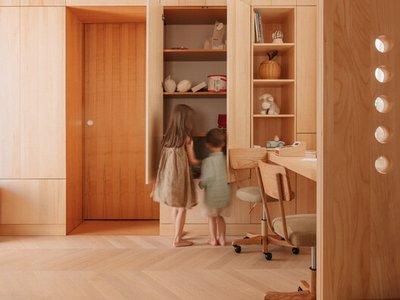
Treehouse Apartment: A Warm Timber Interior Blending Craft, Play, and Contemporary Living
Warm timber apartment with integrated treehouse, combining natural materials, craftsmanship, and playful design to create a flexible, family-oriented living environment.

Similar Reads
You might also enjoy these articles


The Ken Roberts Memorial Delineation Competition (Krob)
As the most senior architectural drawing competition currently in operation anywhere in the world, it draws hundreds of entries each year, awarding the very best submissions in a series of medium-based categories.


Waterfront Redevelopment and Urban Revitalization in Mumbai: Forging a New Dawn for Darukhana
A transformative waterfront redevelopment project reimagining Darukhana’s shipbreaking heritage into an inclusive urban future.

OUT-OF-MAP: A Call for Postcards on Feminist Narratives of Public Space
Rhizoma Design and Research Lab invites artists, designers, architects, researchers, and students to reflect on how feminist perspectives can reshape public space. Selected works will be exhibited in Barcelona, October 2026. Submissions open until 15 April 2026.


Documentation Work on Buddhist Wooden Temple
Architectural syncretism and cultural hybridity: A comparative study of the Buddhist temples in Chattogram Hill tracks





Comments (0)
Please login or sign up to add comments
No comments yet. Be the first to comment!