
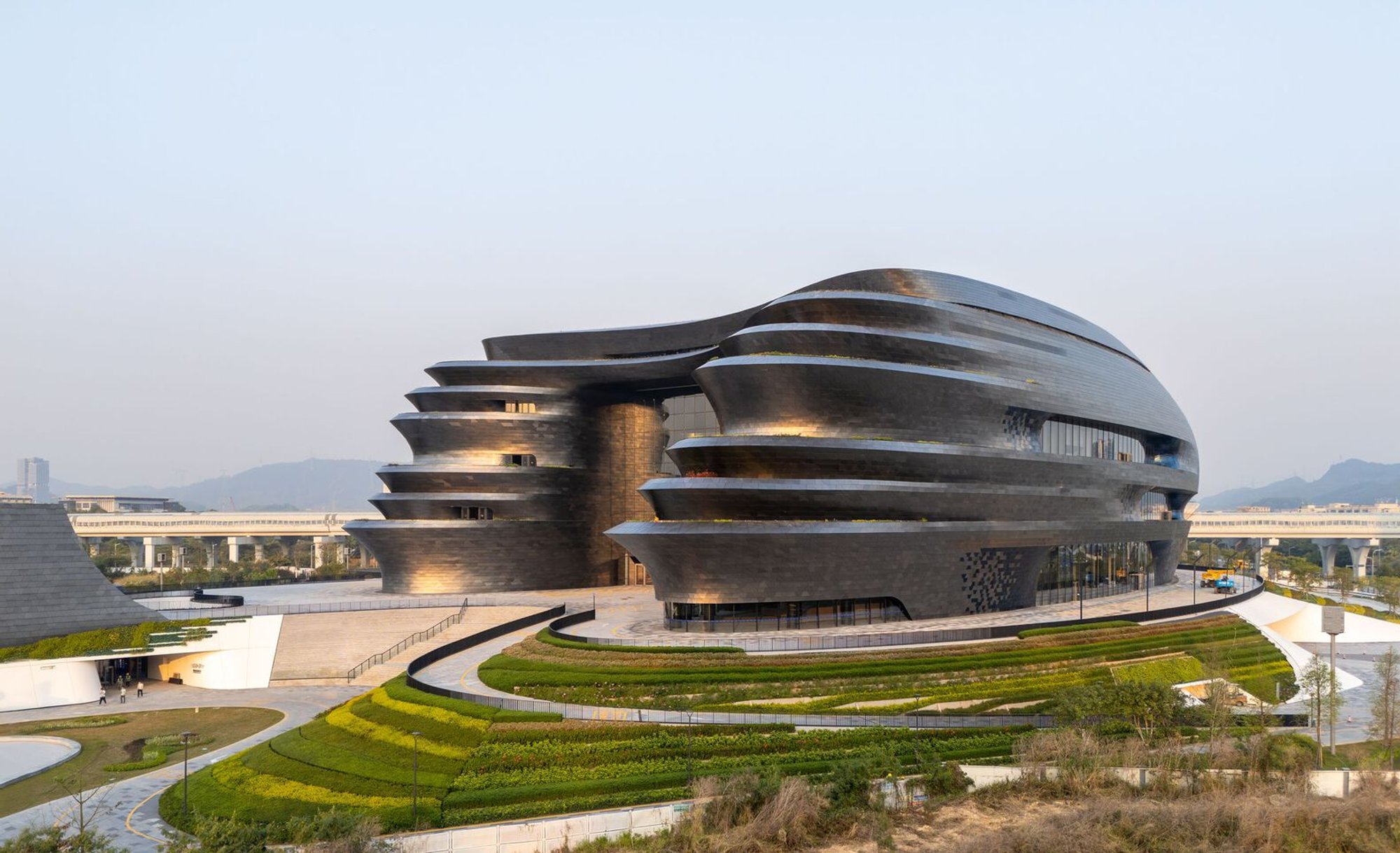
Shenzhen Science and Technology Museum by Zaha Hadid Architects: A Futuristic Beacon of Innovation and Sustainability
An iconic museum by Zaha Hadid Architects in Shenzhen merging sustainable innovation, scientific exploration, and futuristic architecture.

Introduction to Shenzhen’s Landmark of Science and Architecture
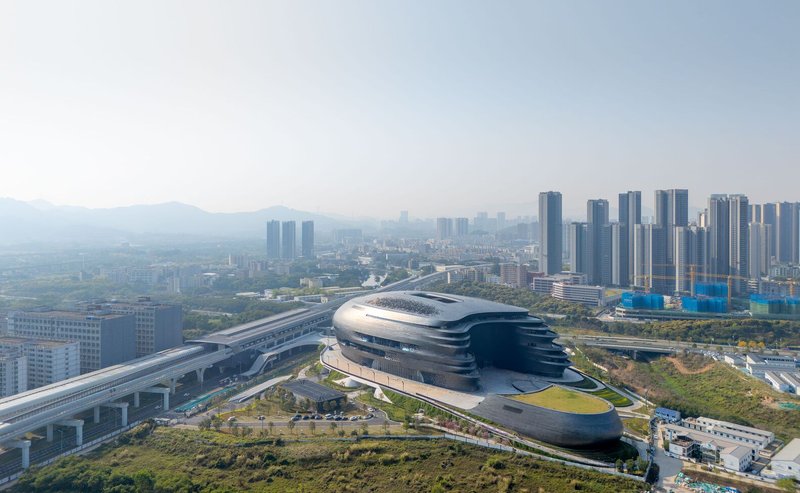
The Shenzhen Science and Technology Museum by Zaha Hadid Architects stands as a monumental expression of China's commitment to technological innovation, sustainability, and public education. Located in Guangming District, this 128,276-square-meter structure is a centerpiece of Shenzhen's Greater Bay Area development strategy—an urban region with nearly 100 million residents. The museum not only symbolizes the region’s scientific ambition but also redefines civic architecture through an advanced combination of formal experimentation, sustainable engineering, and public engagement.
Strategic Location and Urban Integration
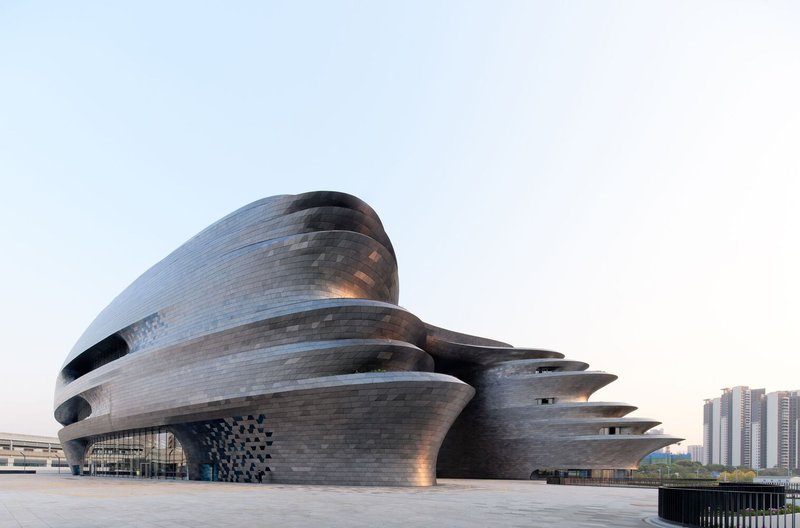
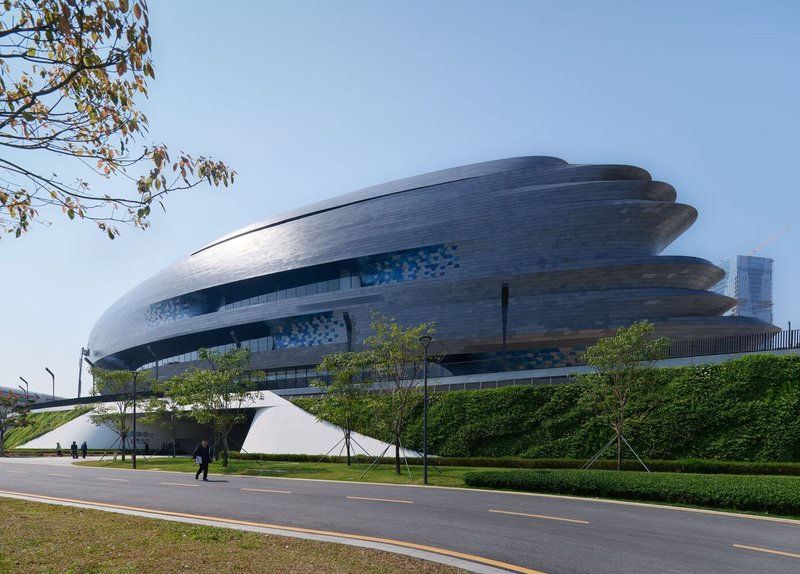
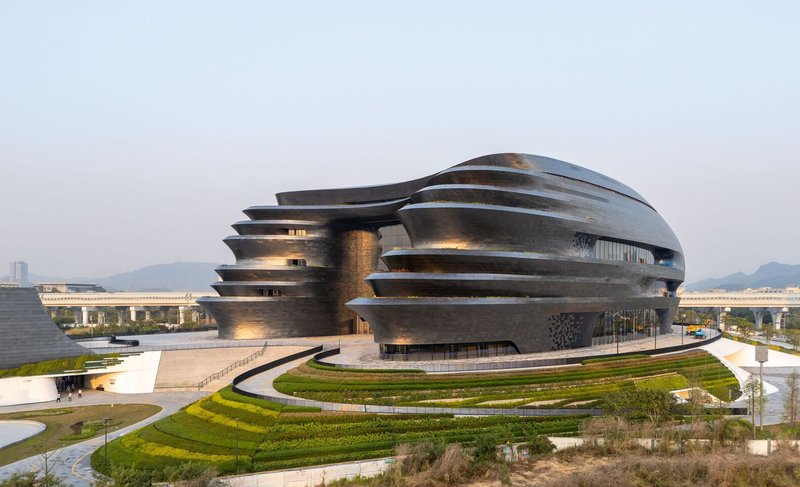
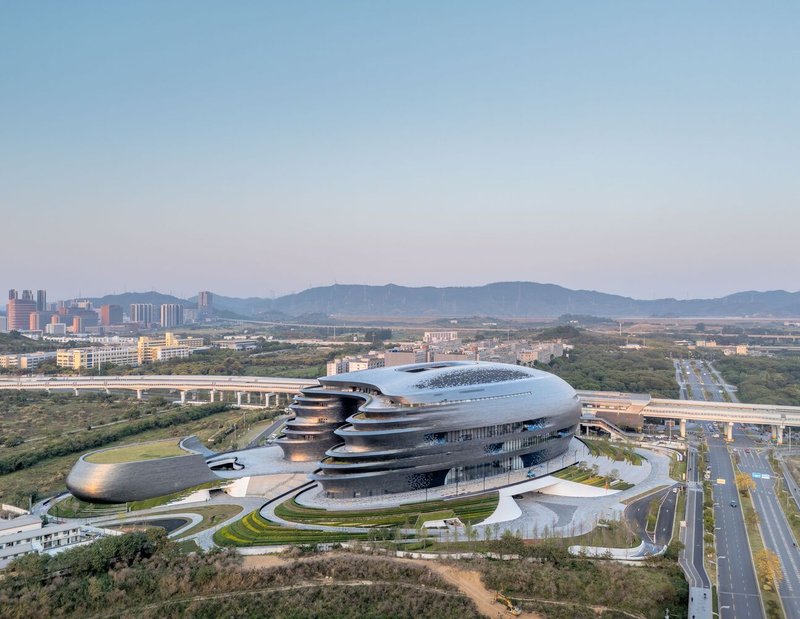
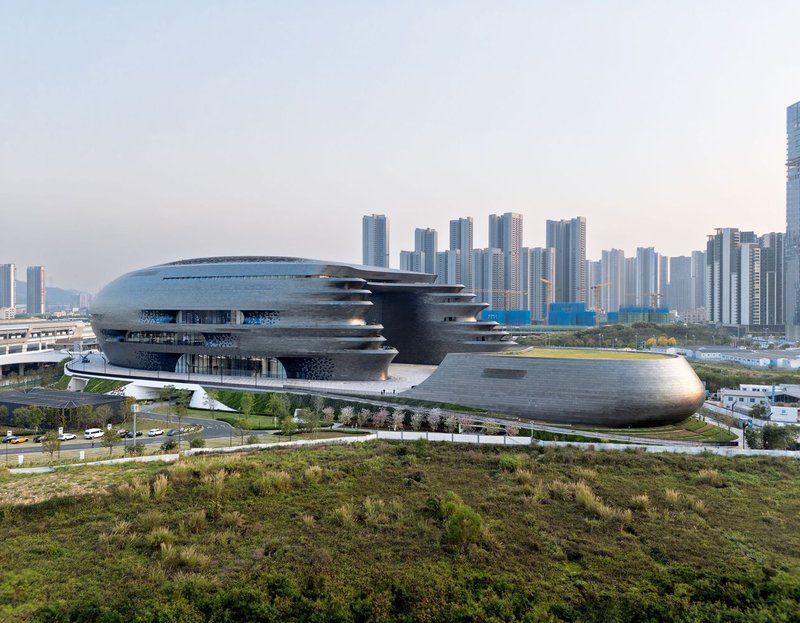
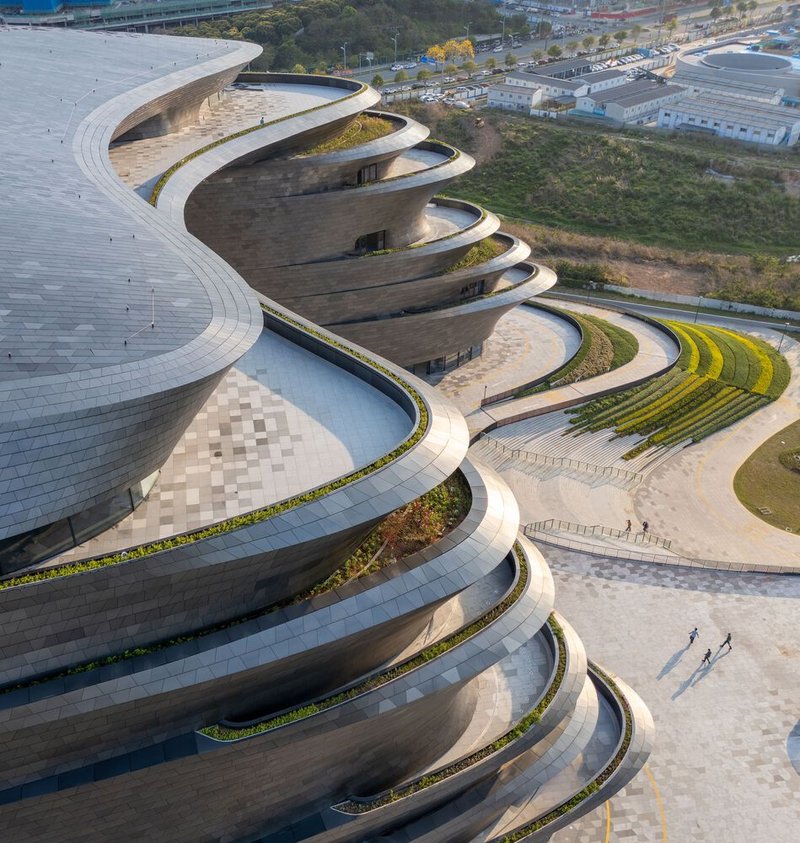
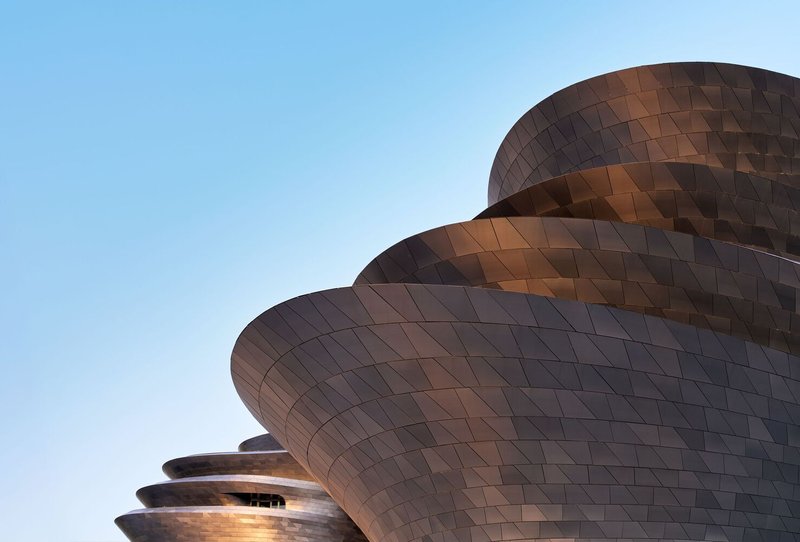
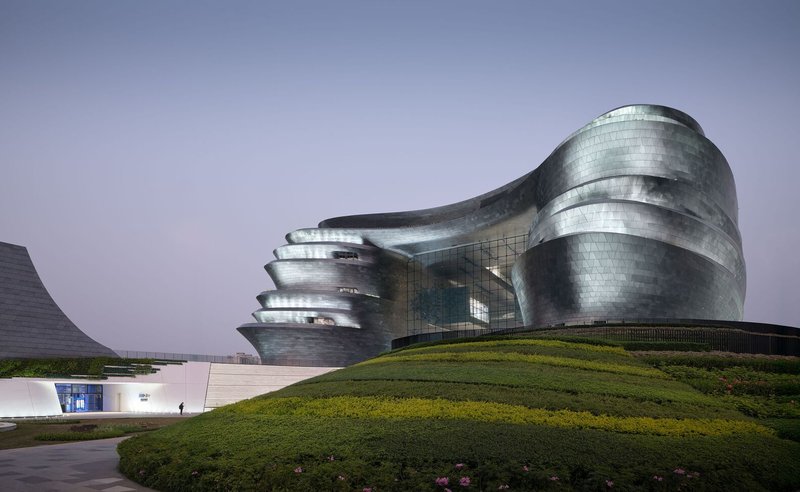
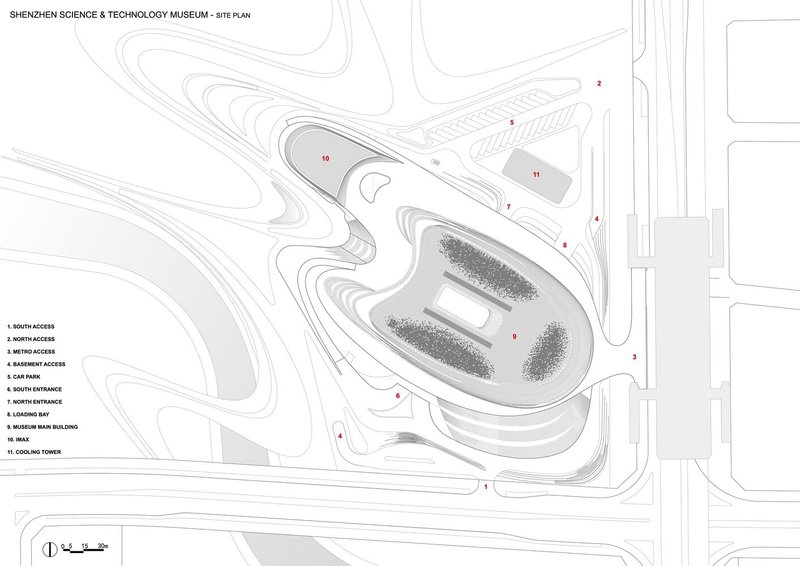
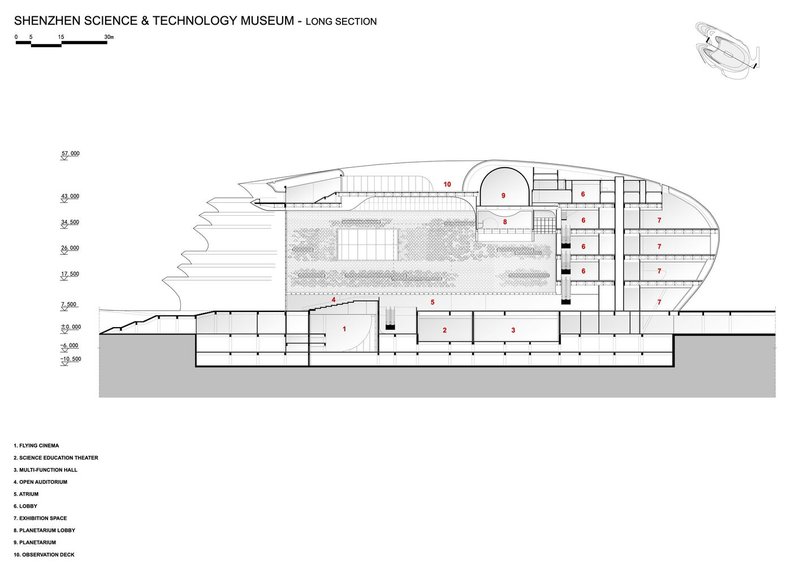
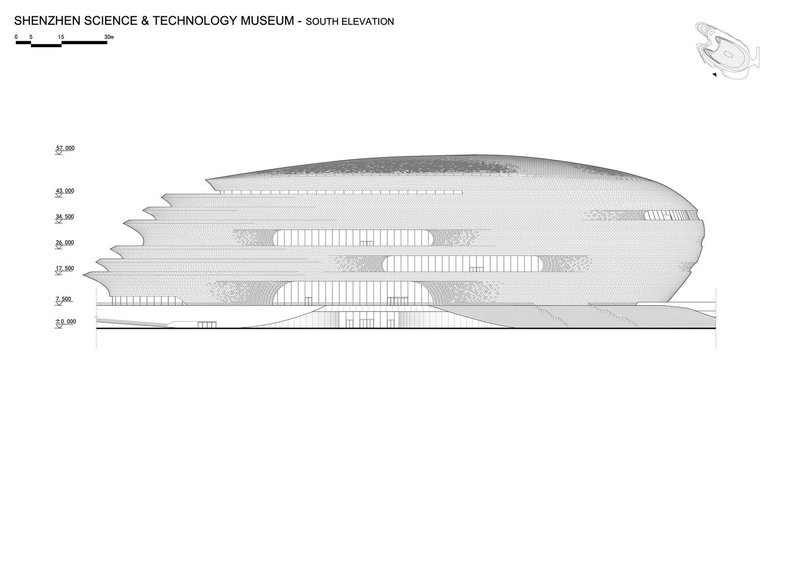
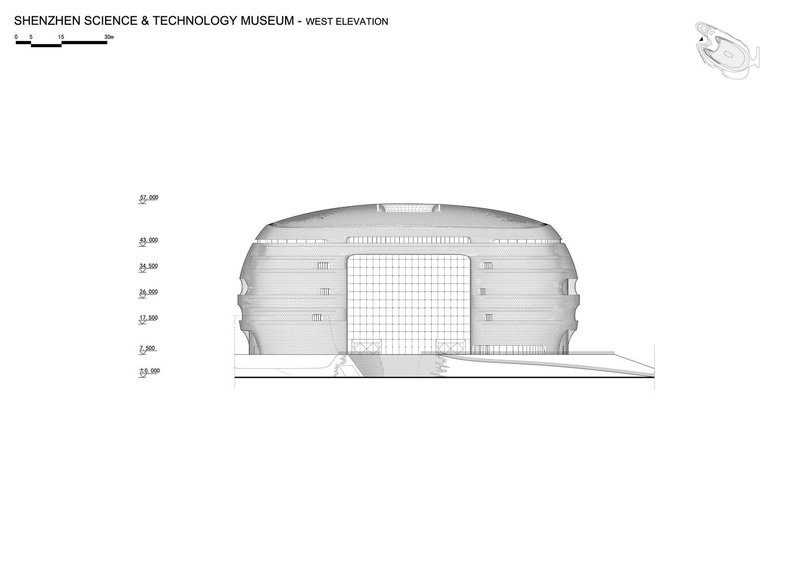
Situated adjacent to Guangming Station on Shenzhen’s metro line, the museum is strategically placed within the city's burgeoning Science Park. It presents a bold spherical volume that asserts its presence at the park’s southeastern edge. As it extends westward, the building gradually transforms into a series of cascading terraces that serve as both architectural features and functional extensions of its internal galleries. These elevated outdoor spaces overlook the surrounding park and are seamlessly integrated into the urban fabric, creating a public realm that connects architecture, landscape, and community.
Architectural Form and Spatial Experience
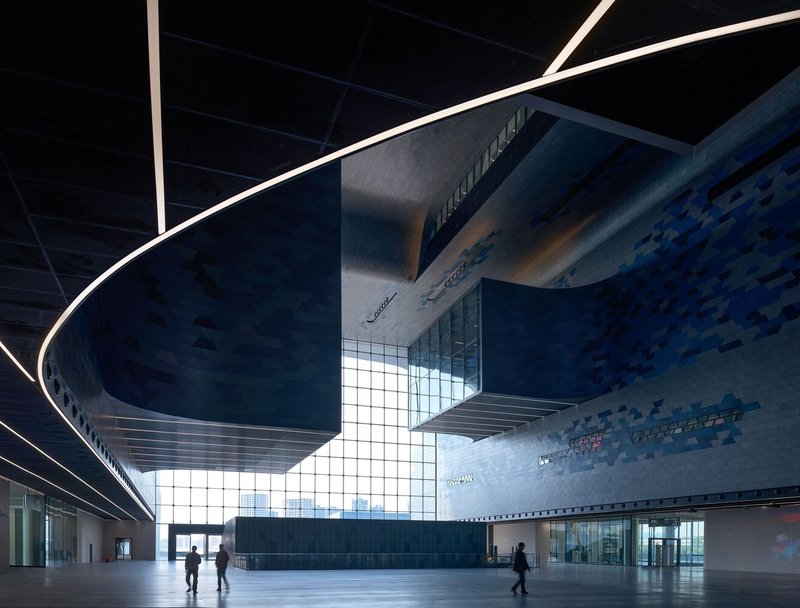
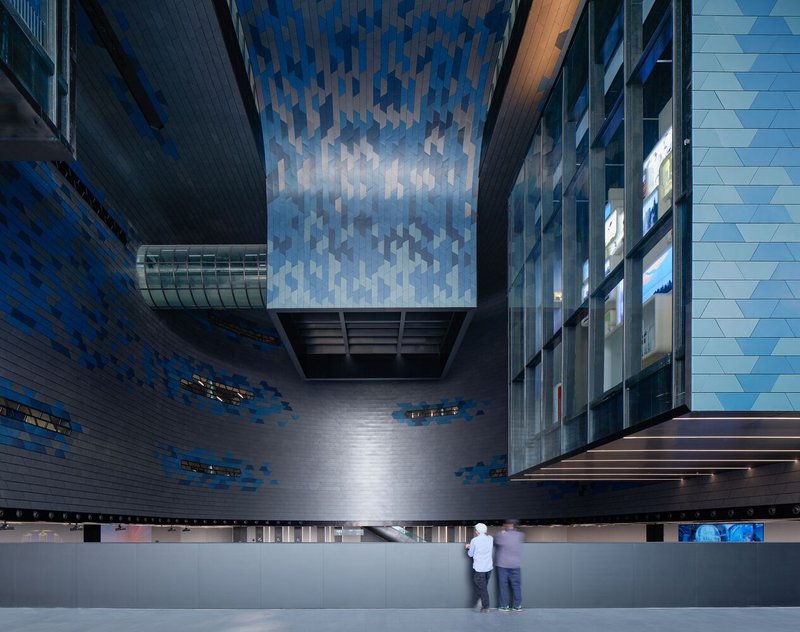
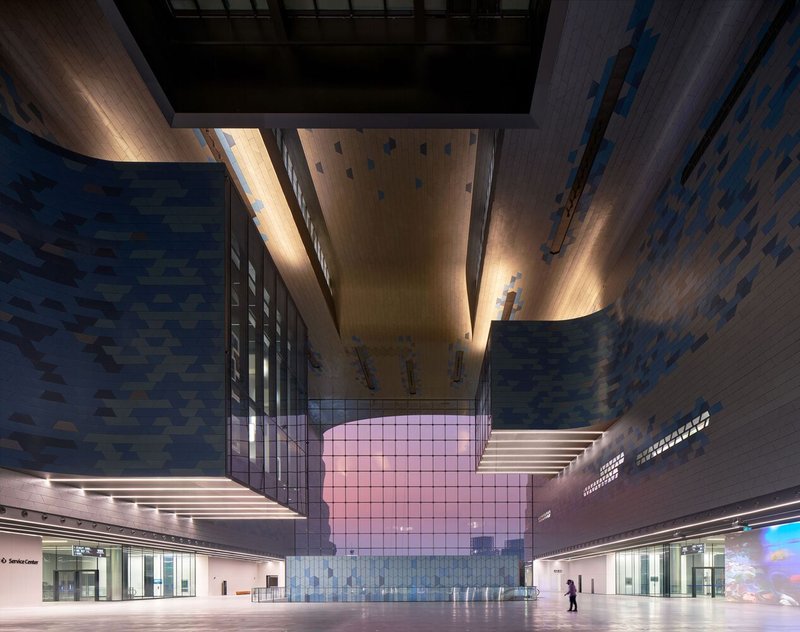
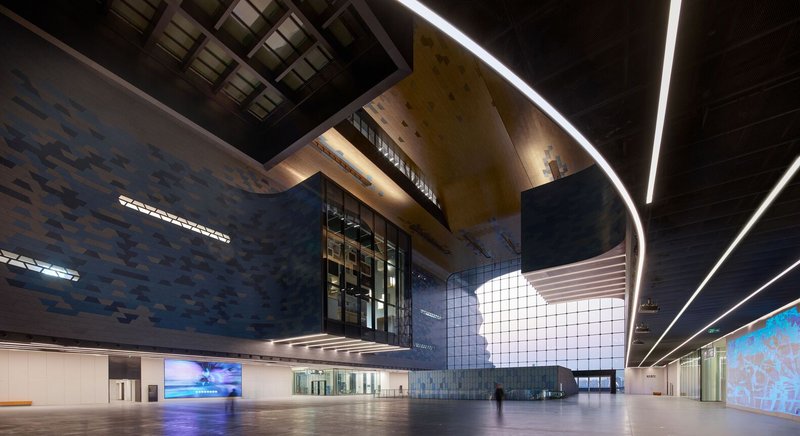
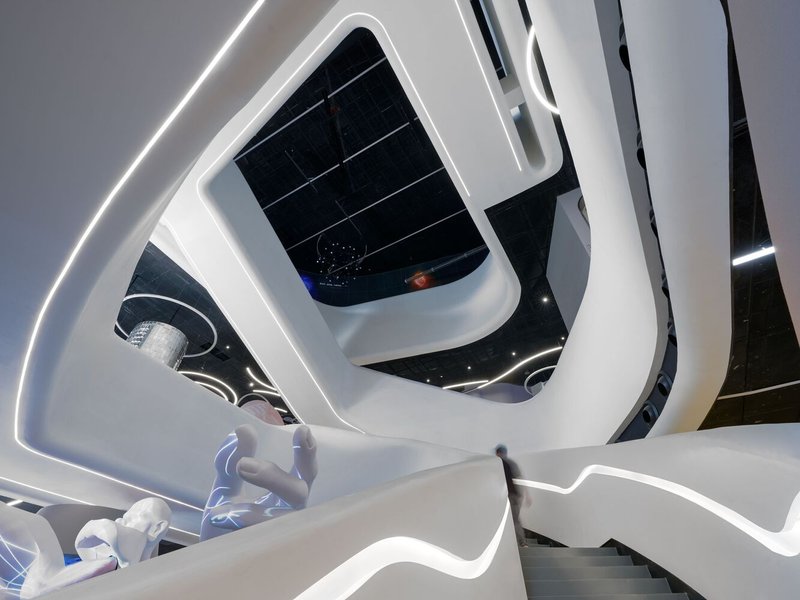
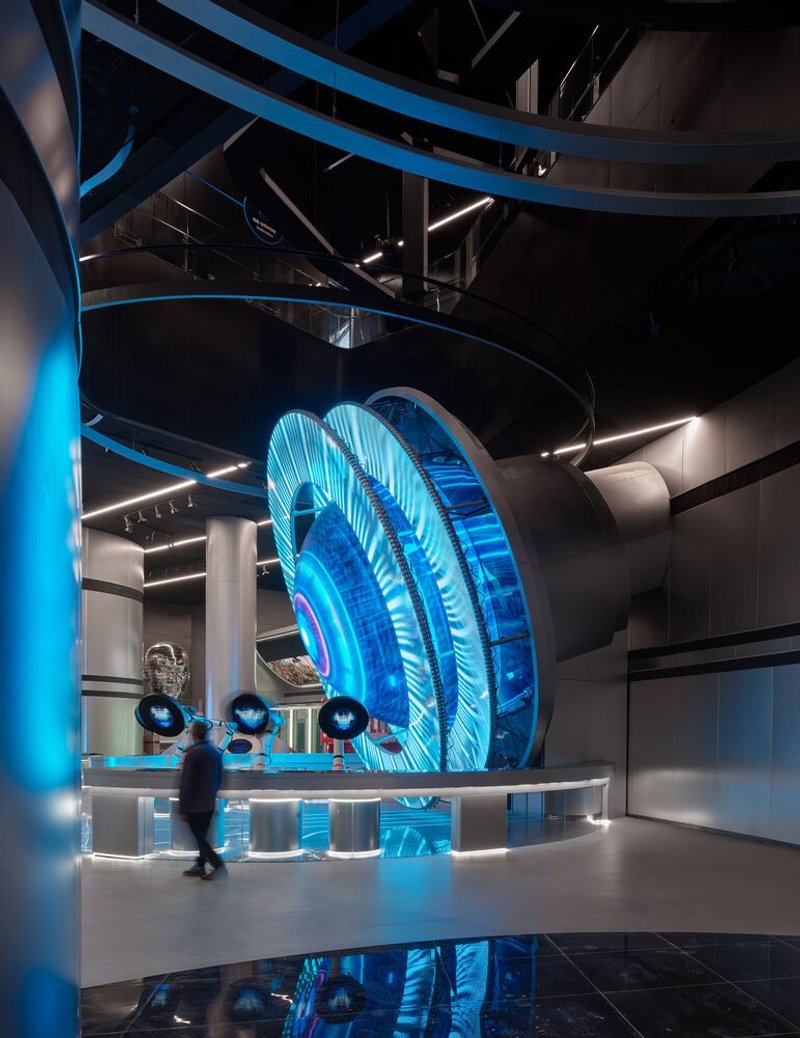
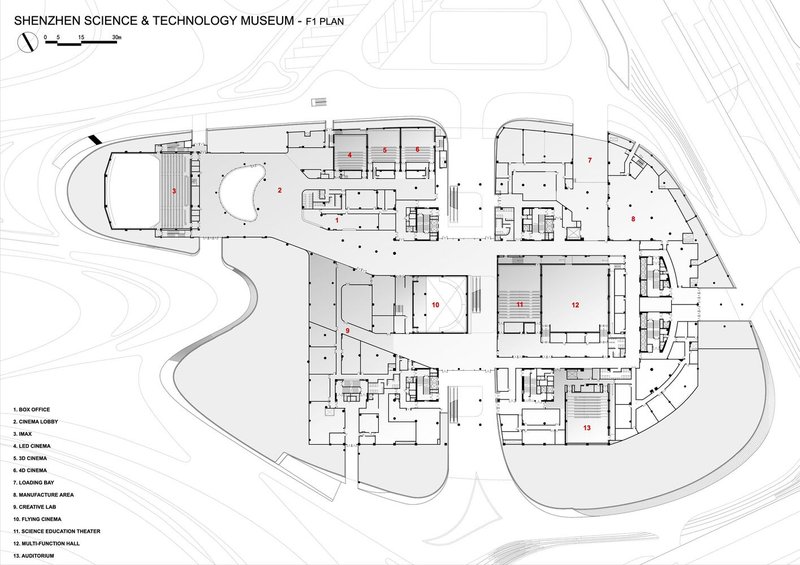
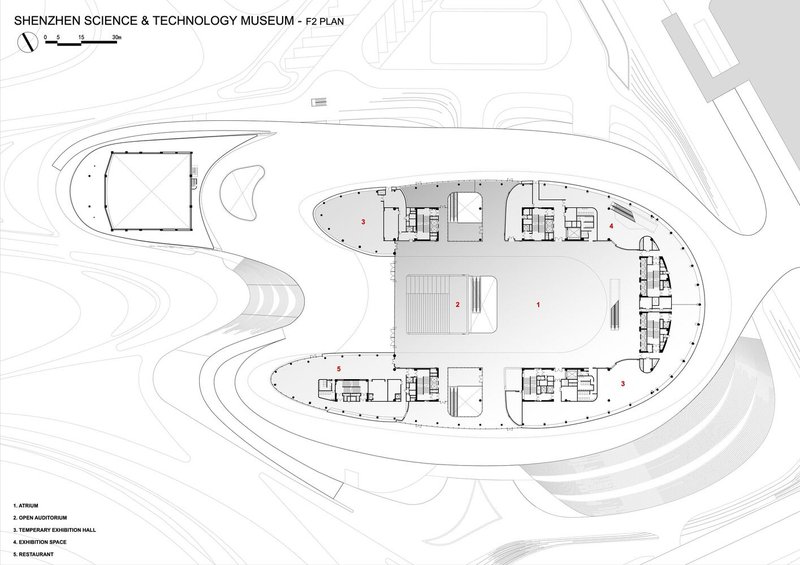
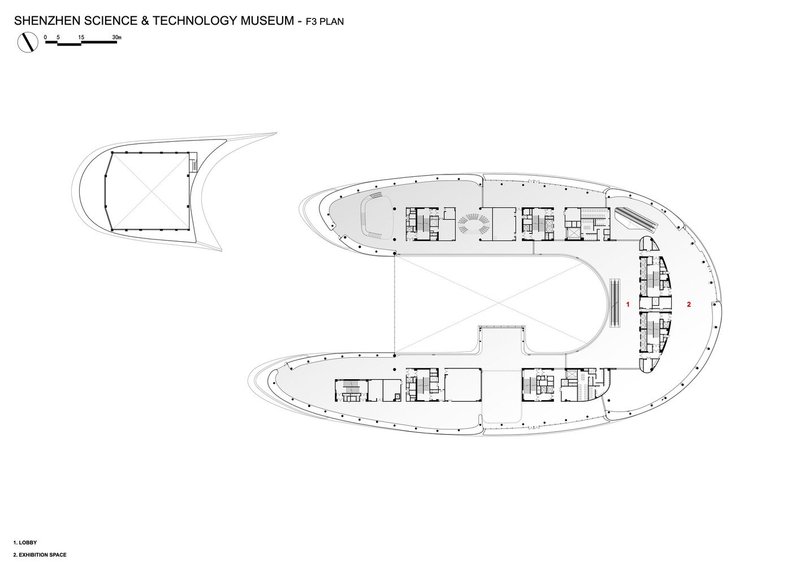
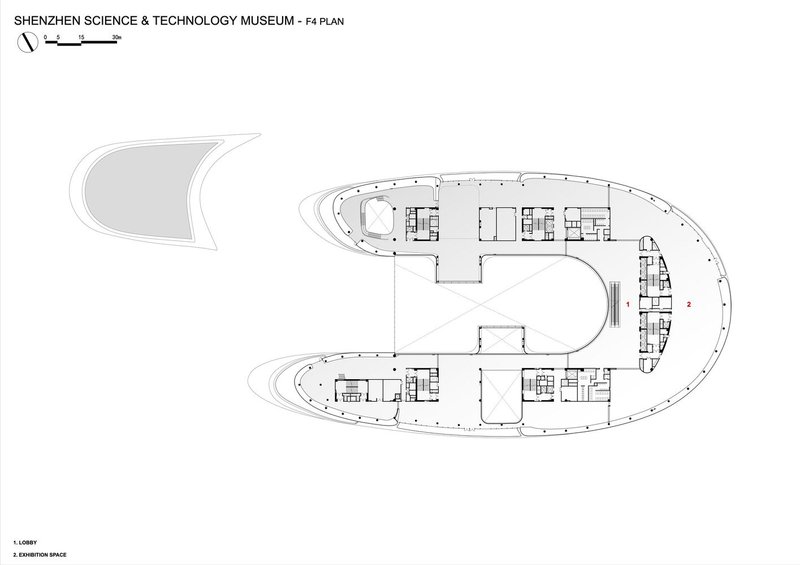
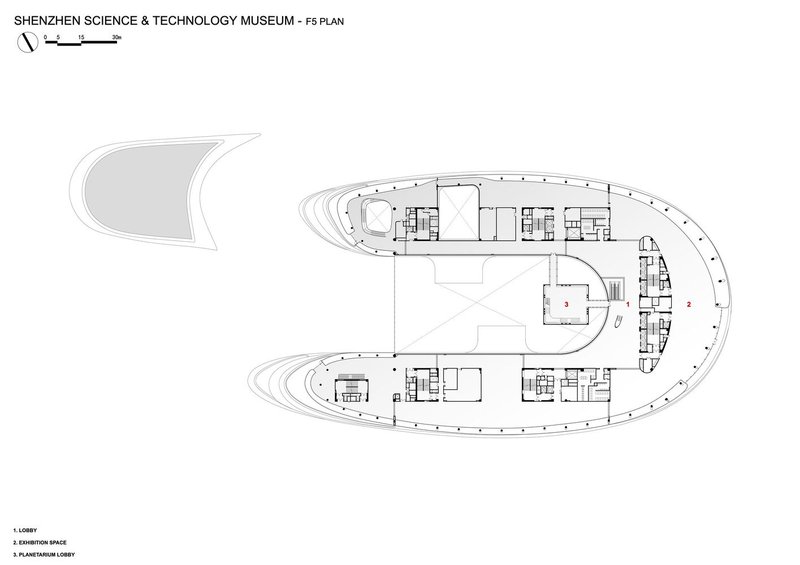
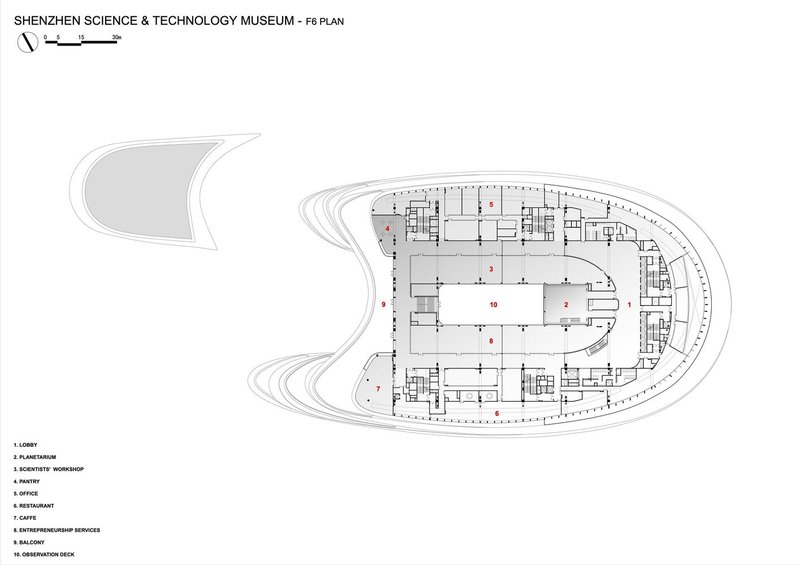
Zaha Hadid Architects envisioned the museum’s form as a synthesis of geometry and fluidity. At its heart lies a grand central atrium from which multiple galleries emerge and float above, forming an interconnected network of exhibitions. These spatial relationships guide visitors intuitively through the museum, offering ever-shifting perspectives and immersive environments. The atrium itself, bathed in natural light through a vast glazed wall, dissolves the barrier between inside and outside, turning the interior into an open gateway to both intellectual discovery and the surrounding natural landscape.
Programmatic Composition and Innovation Functions
The museum is programmed with 35,000 square meters of permanent and temporary galleries, 6,000 square meters of immersive theatres and cinemas, and 5,400 square meters dedicated to research laboratories, educational classrooms, and an innovation center. These core spaces are complemented by 34,000 square meters of visitor amenities, technical workshops, and storage. Designed to support collaboration among tech industries, universities, and schools, the museum functions not just as a cultural destination but as a dynamic incubator for scientific dialogue and creativity.
Environmental Design and Passive Strategies
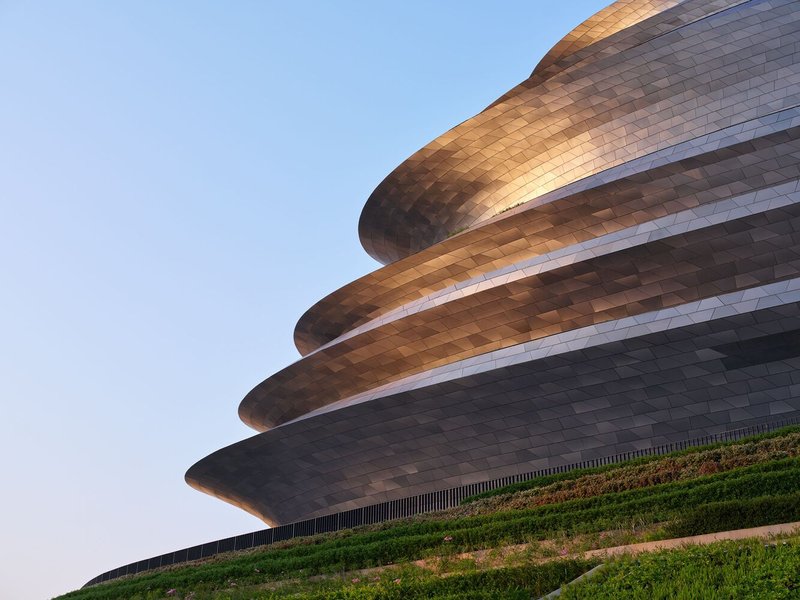
Environmental performance was a central driver of the design. The building’s orientation minimizes solar heat gain while preserving expansive views of the park. Each terrace is carefully designed to shade the atrium’s large glass façade, enhancing thermal comfort and energy efficiency. Advanced computational simulations were employed throughout the design process to analyze solar radiation, wind, humidity, and temperature patterns. This allowed the architects to fine-tune the form and building envelope for Shenzhen’s subtropical climate, reducing energy use and increasing passive cooling capabilities.
Façade Technology and Material Innovation
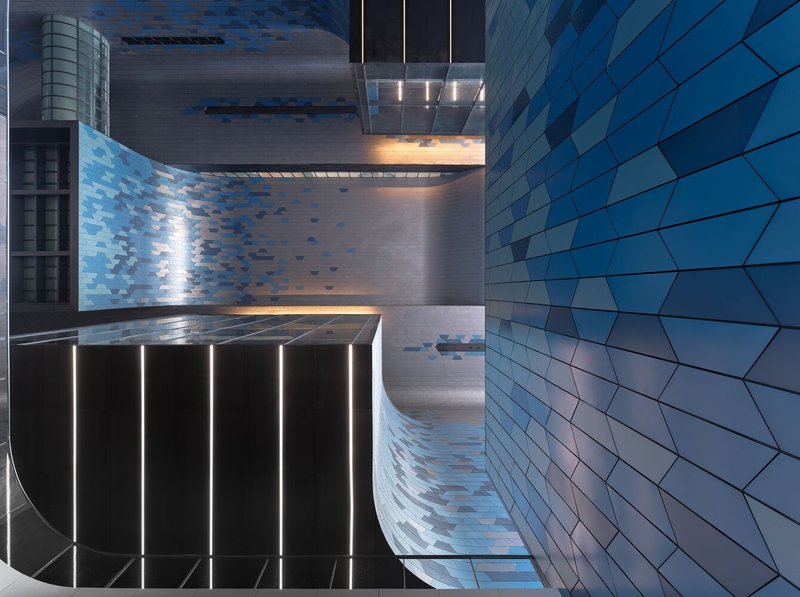
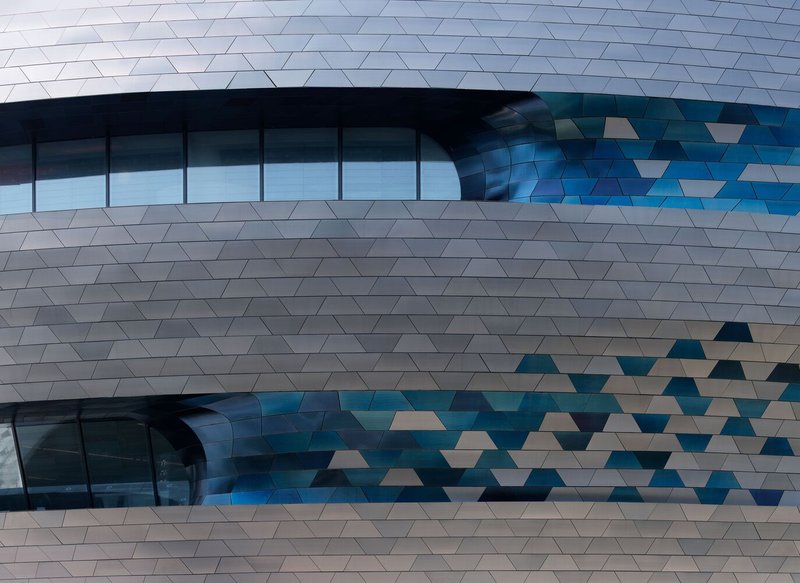
A standout feature is the museum’s stainless-steel façade, which incorporates the first large-scale application of dual-color INCO technology in China. Using an electrolyte-based anodizing process, a nano-scale oxide film forms on the steel's surface, producing a self-cleaning, corrosion-resistant layer that extends the life cycle of the material. The resulting gradient of colors—from deep blue to subtle greys—evokes imagery of celestial movement, while enriching the material texture without relying on paint. The façade is also part of a ventilated double-skin system that reduces heat load and incorporates photovoltaic panels on the roof to generate on-site renewable energy.
Sustainability and Smart Building Performance
Targeting the top-tier three-star rating in China's Green Building Evaluation Standard, the museum integrates high-efficiency systems managed by smart networks. Energy consumption is projected at just 15.47 kWh per square meter per year, reducing electricity-related emissions to 125.89 kgce/sqm annually. Construction materials prioritized recyclability, using over 389,000 tonnes of recyclable content. A sophisticated water management system captures rainwater and recycles greywater, limiting overall consumption to approximately 14,906 cubic meters per year. These sustainable systems position the museum as a benchmark in environmentally conscious public architecture.
Digital Fabrication and Construction Technology
To realize its complex geometries, the museum's construction utilized a digital twin methodology powered by BIM and 3D scanning. Real-time monitoring of every building component ensured precise alignment with the digital model. Robotic multi-point forming was employed to fabricate intricate surfaces with millimeter-level precision. This high-tech construction process not only improved quality control but also pushed the boundaries of architectural fabrication in China.
A New Civic and Cultural Icon
The Shenzhen Science and Technology Museum by Zaha Hadid Architects encapsulates the essence of future-forward design: a harmonious blend of public space, technological expression, and environmental stewardship. As both a cultural destination and a center for scientific innovation, it reaffirms Shenzhen’s role as a global leader in technology and design. This architectural landmark is more than just a museum—it is a dynamic civic organism that connects people, place, and progress.
All Photographs are works of Virgile Simon Bertrand



Popular Articles
Popular articles from the community

Atelier Macri Concept Store Interior Design by CASE-REAL
Atelier Macri store features a "ko" counter, walnut wood details, cork displays, blending retail, gallery, and seamless customer experiences.
A Contemporary Take on Iranian Residential Architecture
A modern interior design in Mashhad that reinterprets brick, light, and spatial flow to create a warm, contemporary residential architecture.
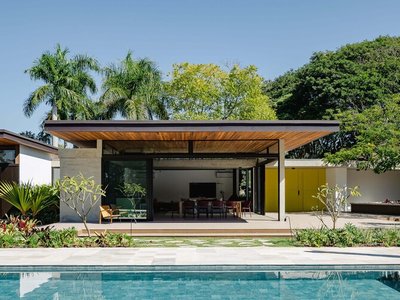
Flamboyant House by Juliana Camargo + Prumo Projetos
Modern Brazilian house integrating existing tree, pool, and volumes with glass, wood, and transitional spaces blending interior, exterior, and landscape seamlessly.
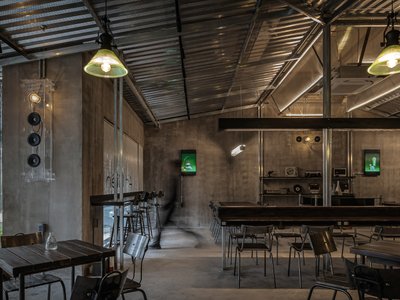
An Miên Lumière Cafe by xưởng xép, Ho Chi Minh City, Vietnam
An industrial-inspired café where layered steel and warm light create a dynamic, immersive environment shaped by reflection, depth, and perception.

Similar Reads
You might also enjoy these articles


Bamboo Housing Challenge 2026: Design Affordable, Sustainable Homes Using Bamboo
An international design competition by Bamboo U and IBUKU inviting architects and designers to reimagine affordable housing using bamboo — with the winning design built full-scale in Bali.
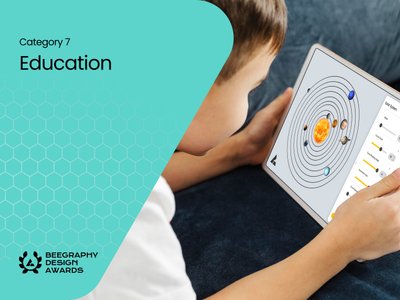
Computational Design & Education: Beegraphy Design Awards Introduces 7th Category (Featuring Jiyun's Innovative Approach)
Dive into Beegraphy’s 7th Design Awards category, where computational design meets education to create immersive, interactive learning tools, inspired by Jiyun’s work.

From Parametric Lighting to Urban Furniture: Join the 2nd Workshop in Beegraphy’s Computational Design Series
Dive into Cutting-Edge Design Techniques and Practical Applications with Industry Experts

Introducing Sphere by UNI: Pioneering a New Era in AEC Industry
Unlocking Global Potential with BIM and Agile Management
Explore Architecture Competitions
Discover active competitions in this discipline




The International Standard for Design Portfolios


The Global Benchmark for Architecture Dissertation Awards


The Global Benchmark for Graduation Excellence


Challenge to reimagine the Iron Throne
Comments (0)
Please login or sign up to add comments
No comments yet. Be the first to comment!