
Spiritual Architecture for Collective Consciousness
A sacred spiritual architecture in Tokyo uniting sacred geometry, healing energy, and consciousness through design and ritual.

Project by Yoshie Takeo | People's Choice Award, Di - Generic Cities: Tokyo
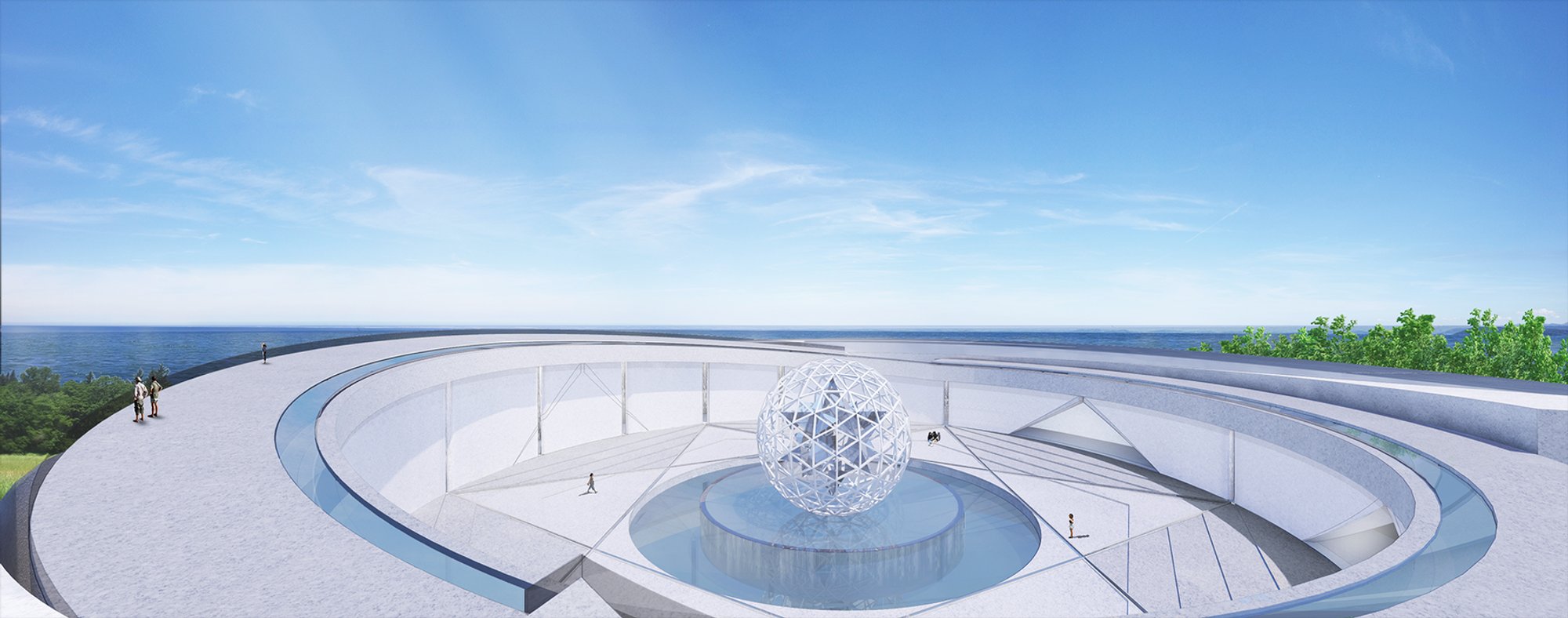
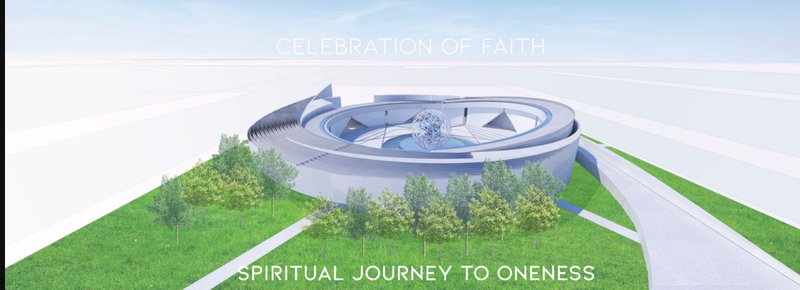
The project titled "Spiritual Journey to Oneness" by Yoshie Takeo is a profound exploration in spiritual architecture, reimagining sacred space as a universal platform for healing, connection, and transformation. Set in Koto City, Tokyo, this visionary structure transcends religious and cultural boundaries, creating an inclusive destination where people from all walks of life can reconnect with their Higher Self and the Divine.
Designed around the spiritual principle of energetic balance, the architecture embodies a journey inward through sacred geometry, symbolism, and material language. This journey is structured around five experiential phases: Inward, Purify, Reflect, Connect, and Outward. Each zone leads visitors deeper into their consciousness and spiritual awareness through spatial sequencing, elemental materials, and sensory interaction.
Designing for Universal Healing
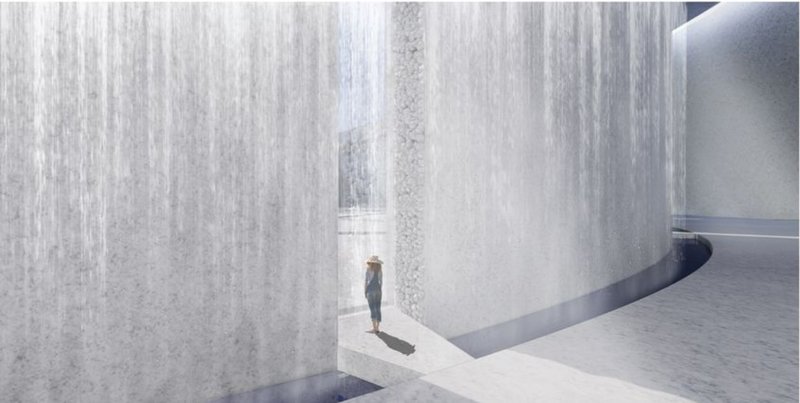
At the heart of this spiritual architecture is the union of Divine Feminine and Masculine energies. The structure channels these polarities into a harmonious flow through curved walls, angular transitions, crystalline elements, and ritual movement patterns. As visitors walk the circular paths, pass through waterfalls, and engage with sacred geometry (such as the Metatron's Cube and stellated dodecahedron), they experience a progressive healing and rebalancing of energy centers—rooted in the chakra system.
This is a building that does not merely house activity; it transforms it. Every element—from grey granite surfaces to clear quartz-infused water channels—is selected not only for aesthetics but for their metaphysical resonance. Water features cleanse, crystals energize, and light guides the mind inward. The architecture engages body, mind, and spirit in a synchronized dialogue.
Programmatic Phases
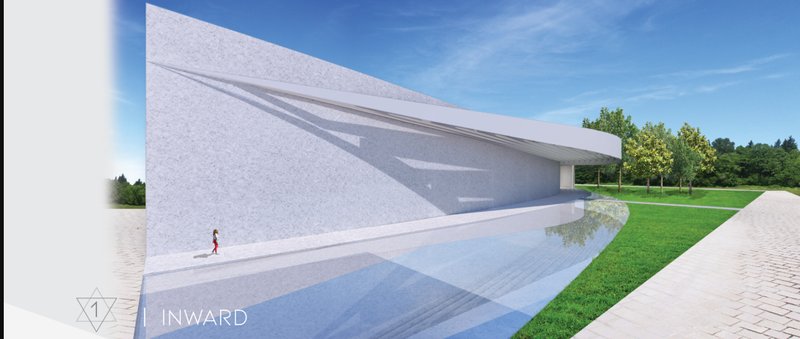
- Inward: The entrance is guided by feminine energy—soft forms, intuition, and nurturing curves that invite reflection.
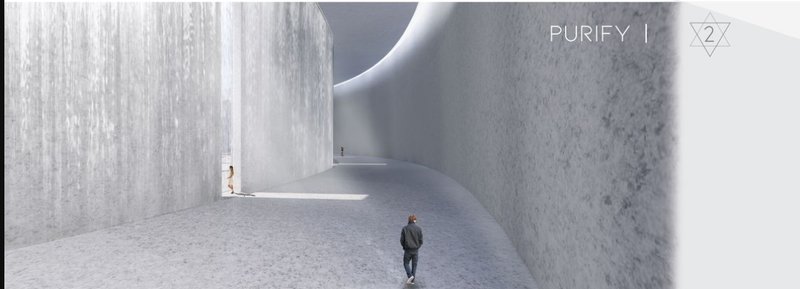
- Purify: A dramatic waterfall lined with clear quartz facilitates energetic cleansing through movement and sound.
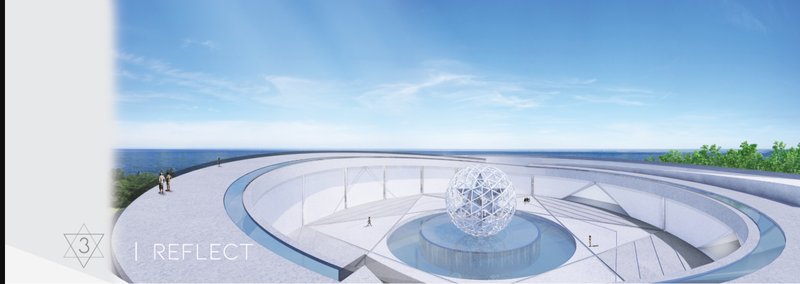
- Reflect: Sacred geometry and open light wells center the visitor’s awareness around spiritual truths and inner symmetry.
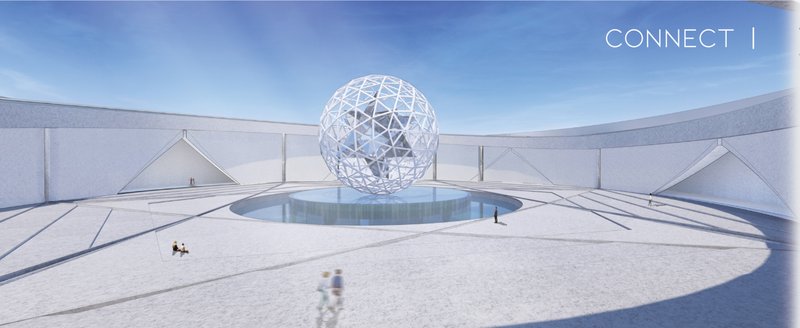
- Connect: A central sphere floats above a circular fountain, symbolizing unity consciousness. Visitors are immersed in balance, aligning inner dualities.
- Outward: The experience culminates in open paths leading toward a heightened awareness and expanded connection to the cosmos.
A Built Expression of Conscious Evolution
By integrating ancient wisdom with futuristic design, Yoshie Takeo’s concept stands as a milestone in spiritual architecture. It is not merely a structure but a ritual landscape—a living organism where sacred design facilitates energetic realignment. The design leverages symbols from multiple belief systems and spiritual practices (chakras, sacred geometry, cosmic forms), thus inviting universal participation.
The sketches and diagrams highlight the thoughtful layering of function, meaning, and sequence. Pathways are not arbitrary; they are coded for transformation. Spatial form is not symbolic; it is active and responsive. Even the building materials participate in the journey—whether by casting shadows that nurture introspection or by channeling moonlight for ritual purification.
As cities grow increasingly generic, the Spiritual Journey to Oneness offers a blueprint for how architecture can reclaim its ancient role: to inspire, heal, and elevate. In the heart of Tokyo, this concept envisions a future where architecture not only reflects culture but elevates human consciousness.




Popular Articles
Popular articles from the community

On the Brooks House by Monsoon Collective – A Contemporary Kerala Home Rooted in Tradition
Kerala home blending tradition and modernity with water-inspired design, brick architecture, courtyard planning, and sustainable rainwater harvesting strategies.
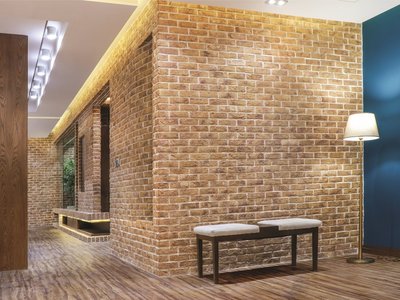
A Contemporary Take on Iranian Residential Architecture
A modern interior design in Mashhad that reinterprets brick, light, and spatial flow to create a warm, contemporary residential architecture.


The Ken Roberts Memorial Delineation Competition (Krob)
As the most senior architectural drawing competition currently in operation anywhere in the world, it draws hundreds of entries each year, awarding the very best submissions in a series of medium-based categories.
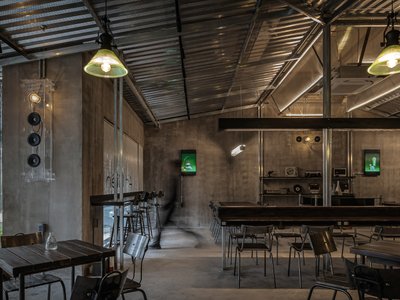
An Miên Lumière Cafe by xưởng xép, Ho Chi Minh City, Vietnam
An industrial-inspired café where layered steel and warm light create a dynamic, immersive environment shaped by reflection, depth, and perception.

Similar Reads
You might also enjoy these articles
The Ken Roberts Memorial Delineation Competition (Krob)
As the most senior architectural drawing competition currently in operation anywhere in the world, it draws hundreds of entries each year, awarding the very best submissions in a series of medium-based categories.


Waterfront Redevelopment and Urban Revitalization in Mumbai: Forging a New Dawn for Darukhana
A transformative waterfront redevelopment project reimagining Darukhana’s shipbreaking heritage into an inclusive urban future.

OUT-OF-MAP: A Call for Postcards on Feminist Narratives of Public Space
Rhizoma Design and Research Lab invites artists, designers, architects, researchers, and students to reflect on how feminist perspectives can reshape public space. Selected works will be exhibited in Barcelona, October 2026. Submissions open until 15 April 2026.

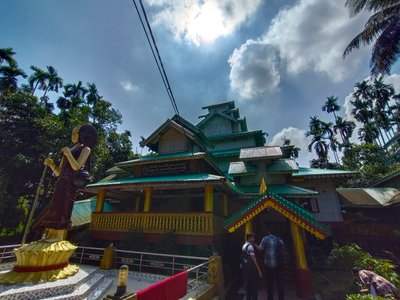
Documentation Work on Buddhist Wooden Temple
Architectural syncretism and cultural hybridity: A comparative study of the Buddhist temples in Chattogram Hill tracks

Explore Interior Design Competitions
Discover active competitions in this discipline




The Global Benchmark for Architecture Dissertation Awards

Design Challenge - Contemporary interpretation of a religious complex


Challenge to design luxury tourism on rails

VR headsets Storefront design competition
Comments (0)
Please login or sign up to add comments
No comments yet. Be the first to comment!