
Sustainable Academic Architecture: McCourt School of Public Policy by Robert A.M. Stern Architects
The McCourt School of Public Policy exemplifies sustainable academic architecture, blending energy efficiency, collaborative spaces, and environmental consciousness in a modern academic setting.

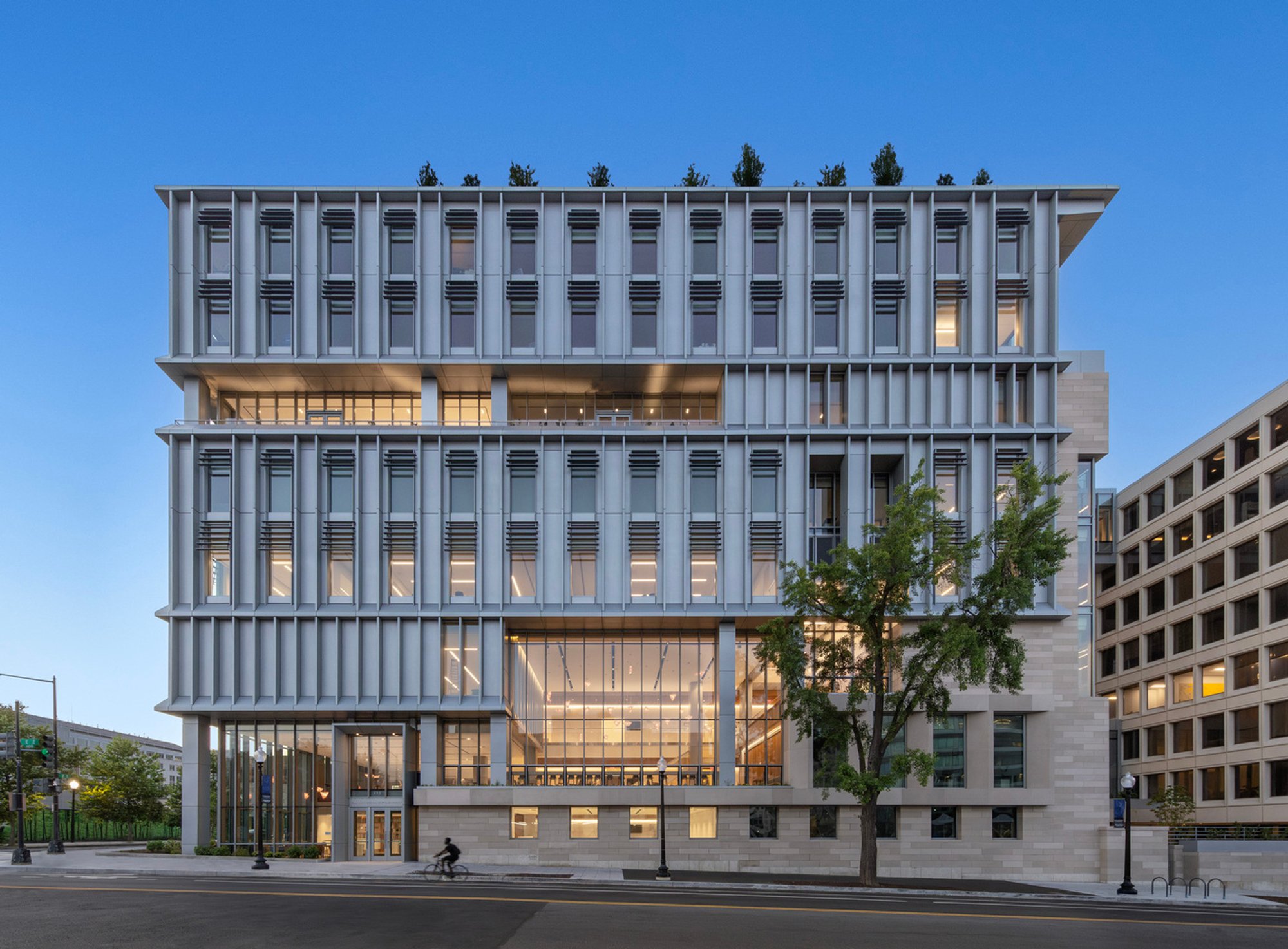
The McCourt School of Public Policy at Georgetown University stands as a remarkable example of sustainable academic architecture, designed by Robert A.M. Stern Architects (RAMSA). Located in the heart of Washington, D.C., this newly completed flagship building serves as a central hub for students, faculty, and policymakers. With its commitment to sustainability, energy efficiency, and innovative architectural features, the McCourt School embodies the future of academic institutions that prioritize environmental responsibility and community engagement.
Architectural Vision and Urban Context
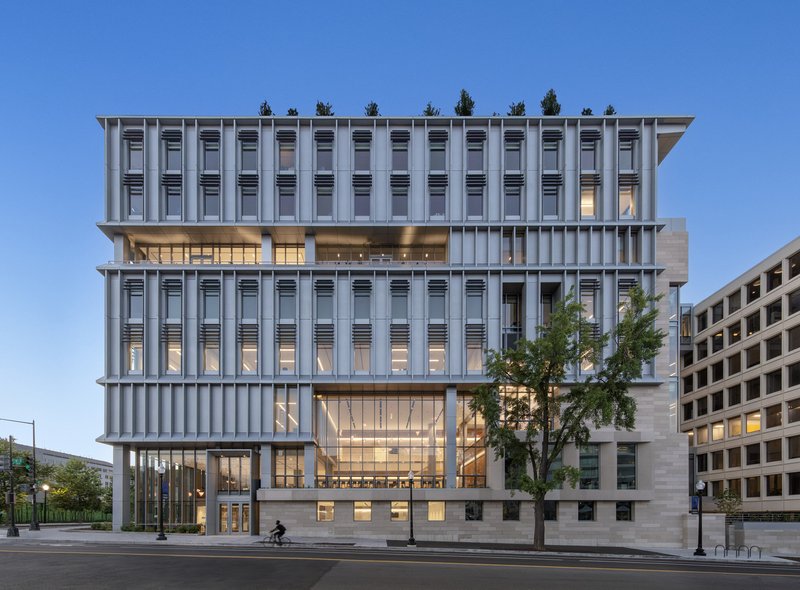
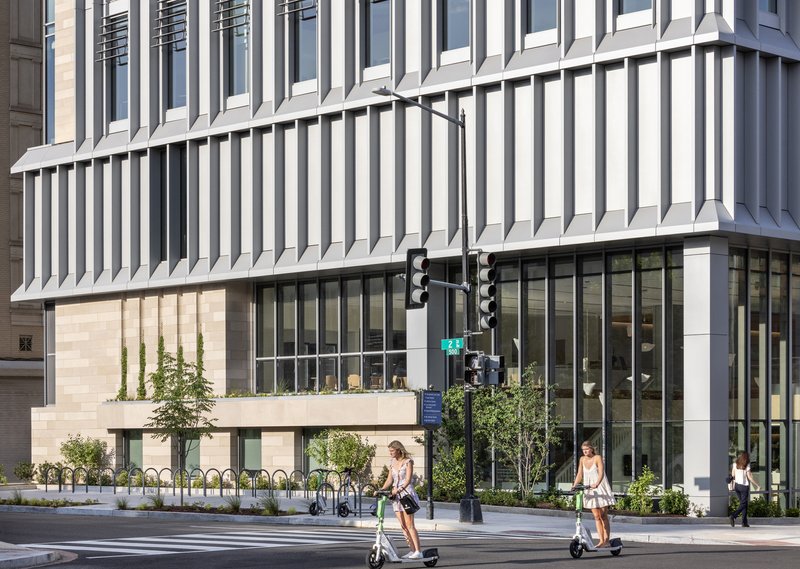
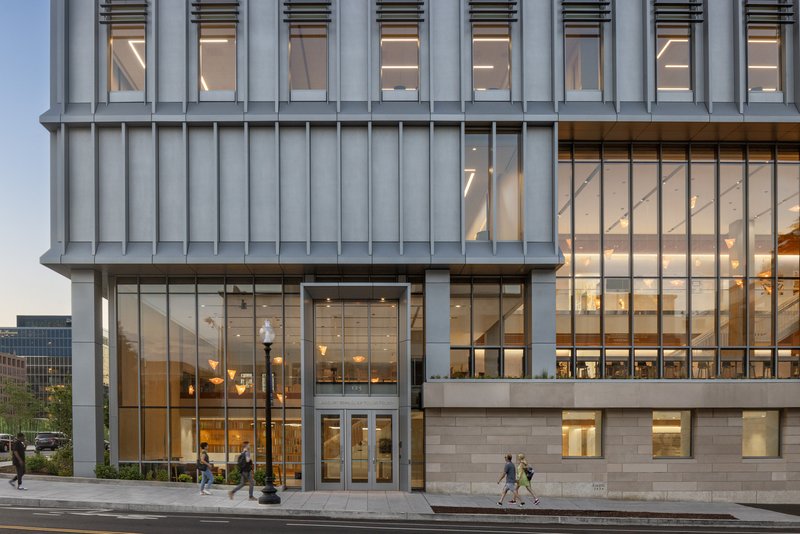
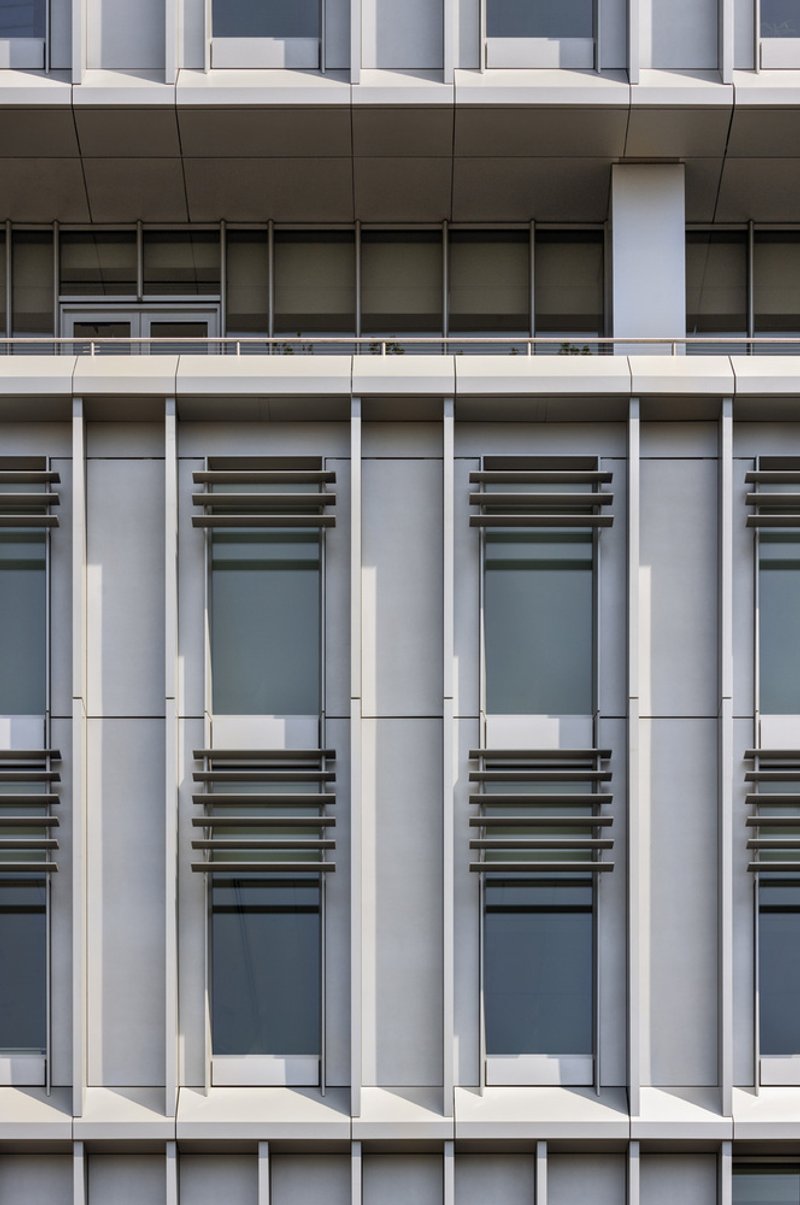
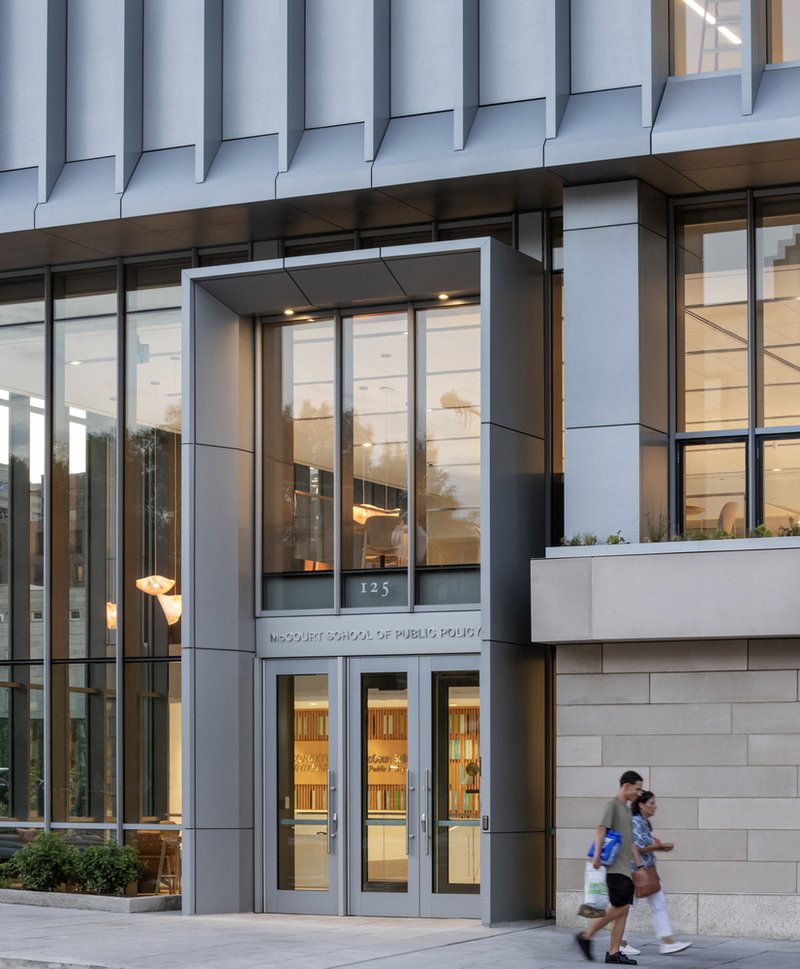
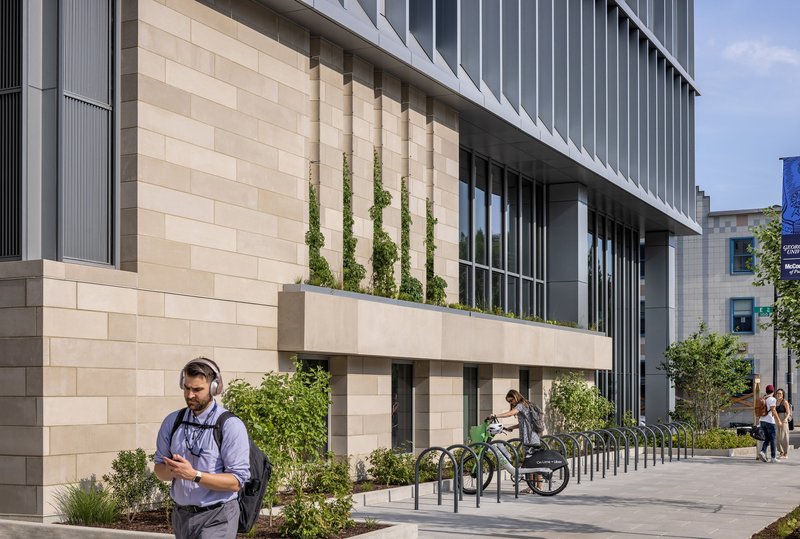
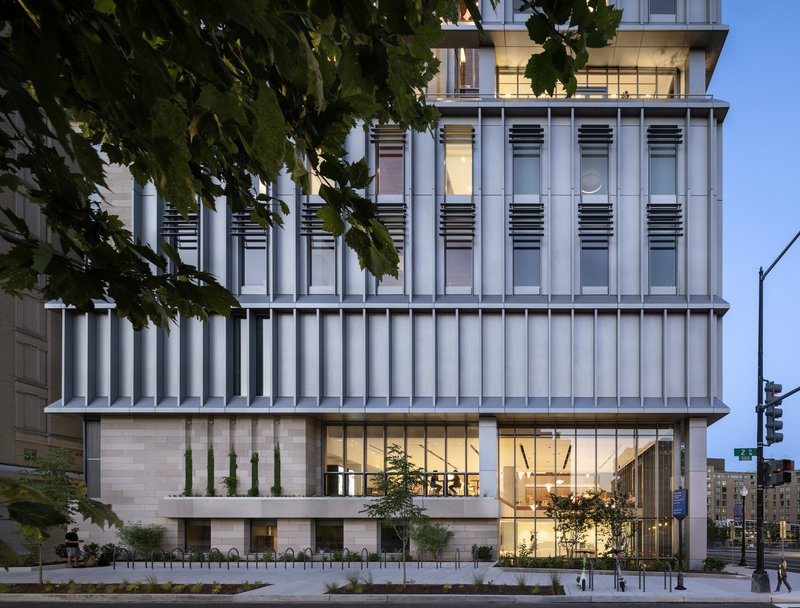
The McCourt School’s new home at 125 E St. NW seamlessly integrates into Georgetown University’s Capitol Campus, complementing the surrounding architectural landscape. A cube-like structure clad in stone, metal panels, and expansive glass curtain walls, the building mirrors the urban fabric while introducing a contemporary aesthetic. Vertical fins and brise-soleil punctuate the façade, mitigating solar exposure and optimizing thermal performance, ensuring both visual cohesion and sustainability.
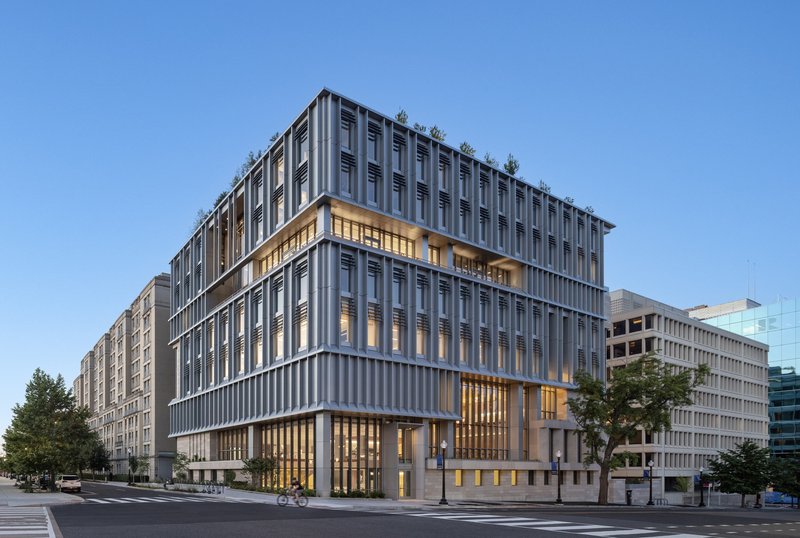
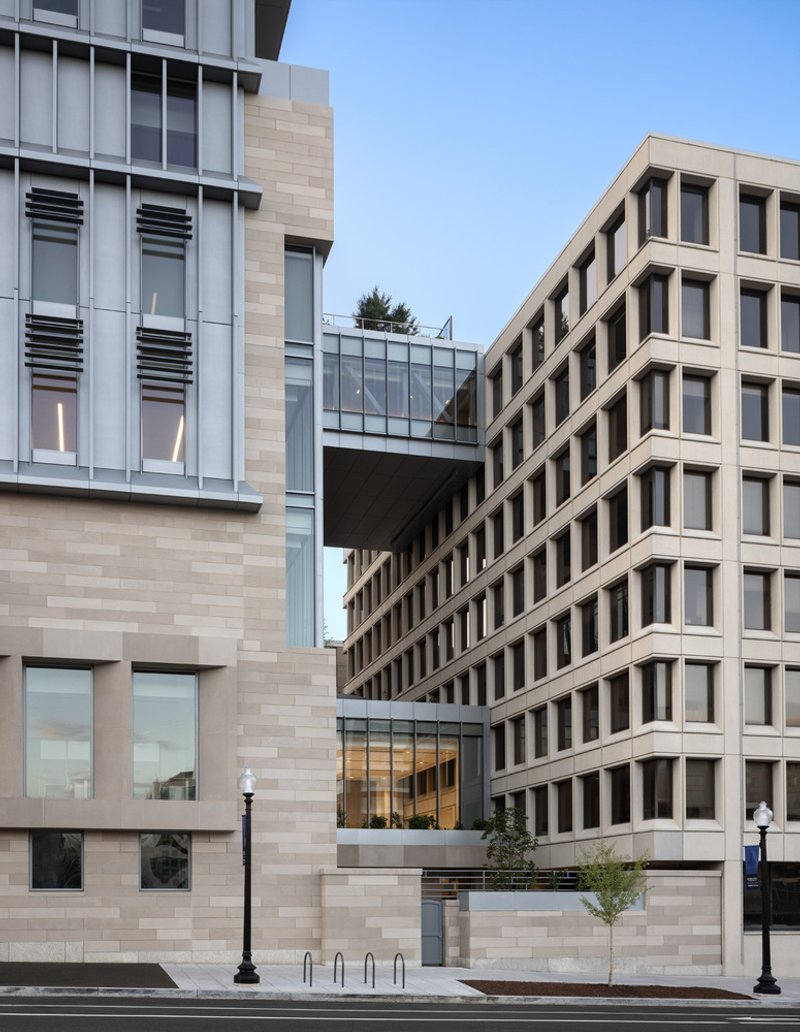
Designed with an emphasis on contextual harmony, the building aligns with neighboring structures such as 500 First Street NW, while its modern interplay of glass and stone adds a distinct architectural identity. This careful balance between tradition and innovation positions the McCourt School as a benchmark in sustainable academic architecture.
Interior Design and Community Engagement
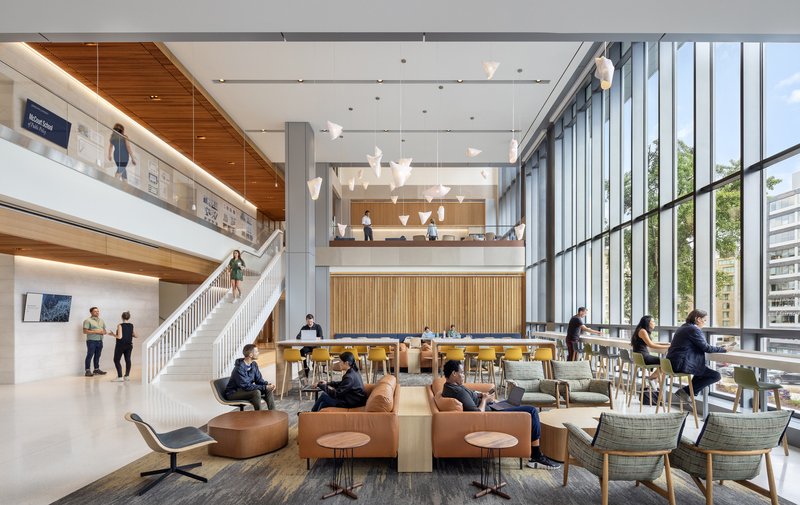
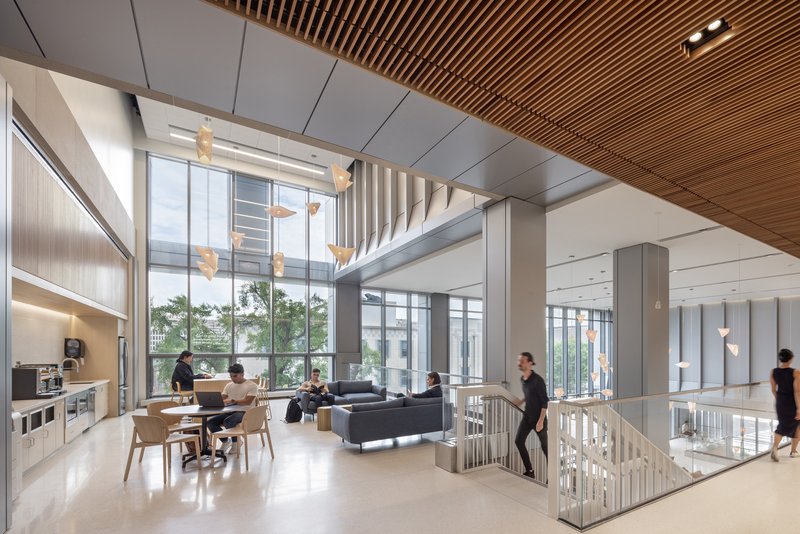
Beyond its striking exterior, the McCourt School’s interior design fosters interaction, collaboration, and academic excellence. The heart of the building is a double-height atrium, filled with natural light, which encourages social engagement and dynamic learning experiences. A prominent "traveling staircase" connects all nine levels, weaving through various spaces and encouraging spontaneous encounters among students, faculty, and visitors. This unique design strategy eliminates academic silos, promoting interdisciplinary connections and a sense of inclusivity.
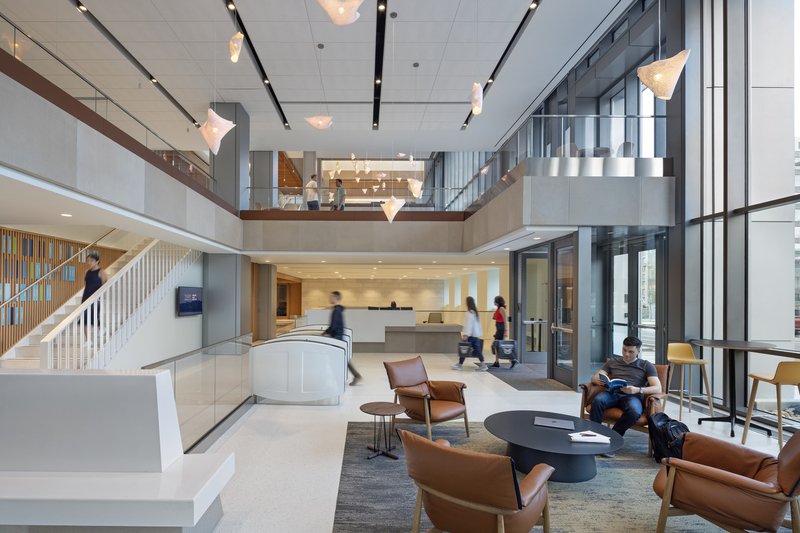
With 20 classrooms, a 400-seat auditorium equipped with broadcasting capabilities, and a 280-seat rooftop venue, the building facilitates discourse on critical national and international policy matters. These spaces serve as platforms for policymakers, researchers, and thought leaders to engage in discussions that shape the future of governance and public policy.
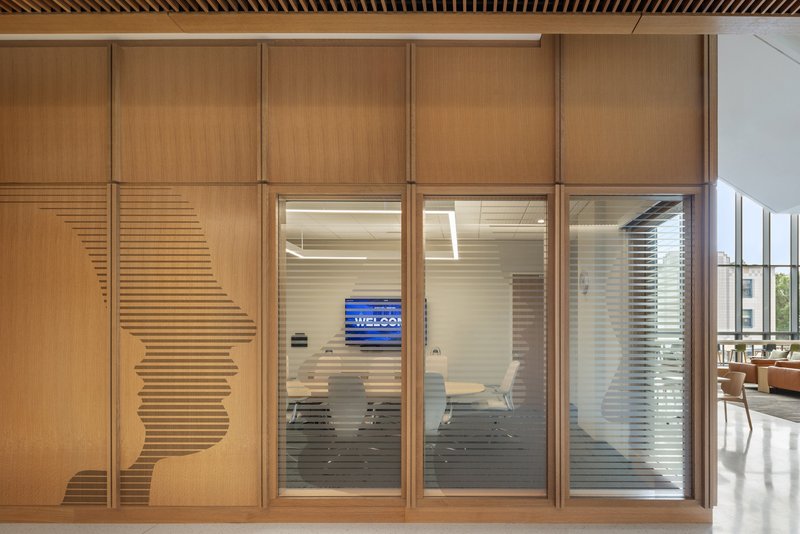
Sustainability and LEED Platinum Certification
At the core of the McCourt School’s design is a commitment to sustainability. The building is designed to achieve LEED Platinum certification, the highest standard for environmental performance in architecture. Sustainable design elements include high-performance glazing that reduces energy consumption, passive shading systems that enhance climate control, and the integration of natural materials that minimize the project’s ecological footprint.
A key feature is the Sky Garden, an expansive rooftop terrace designed in collaboration with Maya Lin Studio. This green space, adorned with elliptical pools and native plantings, serves as both a refuge for reflection and a celebration of regional ecology. The Sky Garden exemplifies the building’s broader mission—to create an environment that nurtures academic inquiry while respecting and enhancing the natural world.
Art, Technology, and Spatial Experience
The McCourt School is more than just an academic building; it is an immersive experience that combines architecture, technology, and art. Site-specific installations by renowned architect and artist Maya Lin reinforce the theme of environmental consciousness and spatial awareness. "Following the Potomac," a ceiling-mounted glass composition, captures the aerial view of the Potomac watershed, reminding visitors of their connection to the natural landscape. The "Whether Birds" installation features weather-responsive pendant lights that change color based on real-time atmospheric conditions. These interactive elements engage occupants in a sensory dialogue with their surroundings, reinforcing the building’s role as a forward-thinking academic space.
A particularly innovative aspect of the design is the integration of audio recordings from local ecosystems, played through directional speakers above the main staircase. The sounds of wetlands, forests, and rivers immerse visitors in an evolving auditory landscape, further blurring the boundaries between the built environment and nature.
Redefining the Future of Academic Spaces
The McCourt School of Public Policy stands as a transformative model of sustainable academic architecture, blending environmental responsibility, cutting-edge design, and a commitment to community engagement. By prioritizing transparency, collaboration, and sustainability, Robert A.M. Stern Architects have crafted a space that not only meets the functional needs of an academic institution but also inspires new ways of learning and interaction.
More than just a building, the McCourt School represents a shift towards a future where academic spaces serve as catalysts for change, fostering intellectual discourse, environmental stewardship, and inclusive community-building. As institutions worldwide seek to redefine their architectural strategies, this project serves as a beacon for the sustainable and adaptive campuses of tomorrow.
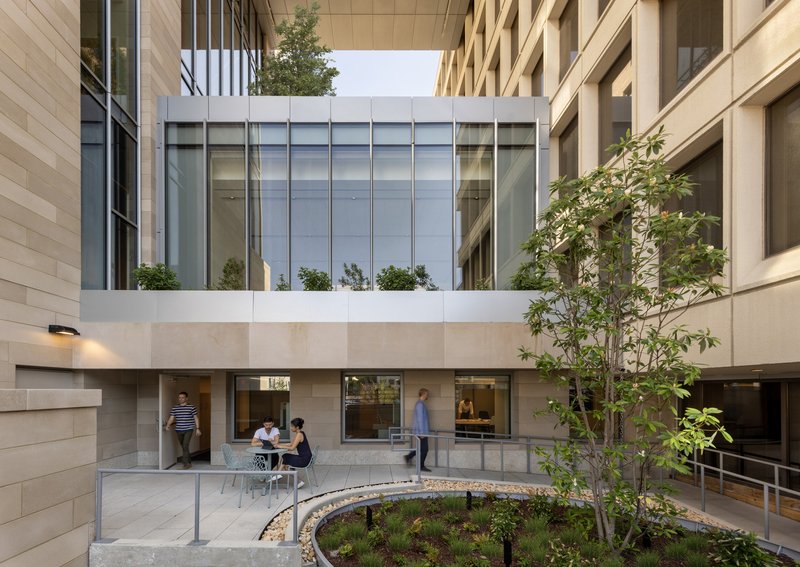
All Photographs are works of Francis Dzikowski



Popular Articles
Popular articles from the community

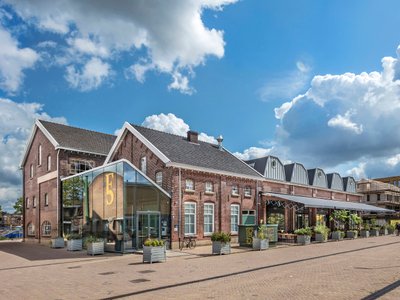
Fifth NRE Jazz Club – De Bever Architecten: Eindhoven’s Revitalized Cultural Hub
Historic gas factory transformed into Fifth NRE Jazz Club blending modern sustainability, jazz culture, dining, and heritage architecture seamlessly.
On the Brooks House by Monsoon Collective – A Contemporary Kerala Home Rooted in Tradition
Kerala home blending tradition and modernity with water-inspired design, brick architecture, courtyard planning, and sustainable rainwater harvesting strategies.
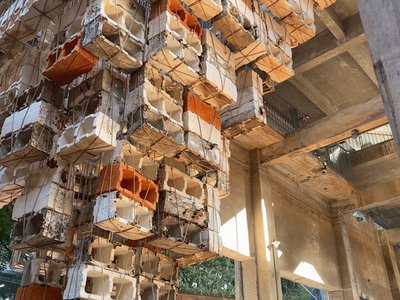
Inverted Architecture Installation by Studio Link-Arc: Exploring the Intersection of Architecture and Living Organisms
Inverted Architecture Installation by Studio Link-Arc blends mycelium, sustainability, inverted design, ecological cycles, and urban adaptive architecture in Shenzhen.


The Ken Roberts Memorial Delineation Competition (Krob)
As the most senior architectural drawing competition currently in operation anywhere in the world, it draws hundreds of entries each year, awarding the very best submissions in a series of medium-based categories.


Similar Reads
You might also enjoy these articles
The Ken Roberts Memorial Delineation Competition (Krob)
As the most senior architectural drawing competition currently in operation anywhere in the world, it draws hundreds of entries each year, awarding the very best submissions in a series of medium-based categories.


Waterfront Redevelopment and Urban Revitalization in Mumbai: Forging a New Dawn for Darukhana
A transformative waterfront redevelopment project reimagining Darukhana’s shipbreaking heritage into an inclusive urban future.

OUT-OF-MAP: A Call for Postcards on Feminist Narratives of Public Space
Rhizoma Design and Research Lab invites artists, designers, architects, researchers, and students to reflect on how feminist perspectives can reshape public space. Selected works will be exhibited in Barcelona, October 2026. Submissions open until 15 April 2026.


Documentation Work on Buddhist Wooden Temple
Architectural syncretism and cultural hybridity: A comparative study of the Buddhist temples in Chattogram Hill tracks


Explore Architecture Competitions
Discover active competitions in this discipline




The International Standard for Design Portfolios


The Global Benchmark for Architecture Dissertation Awards


The Global Benchmark for Graduation Excellence


Challenge to design public laboratory
Comments (0)
Please login or sign up to add comments
No comments yet. Be the first to comment!