
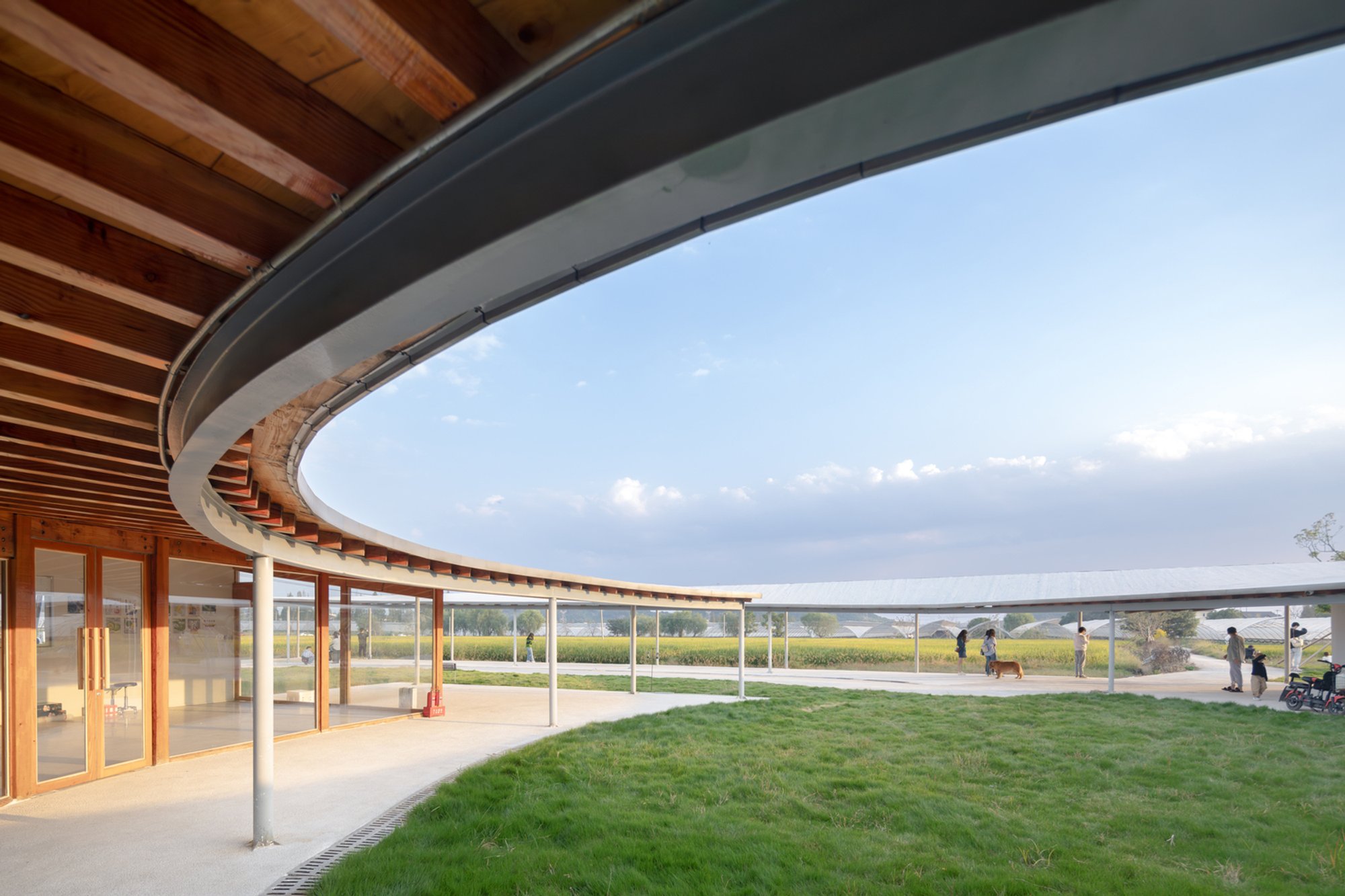
Sustainable Agritecture Design: The Agronomy Workshop by Studio Dali Architects
Studio Dali Architects’ Agronomy Workshop exemplifies sustainable agritecture design, integrating nature, community, and functionality in a seamless architectural experience.

A Harmonious Blend of Architecture and Agricultural Landscape
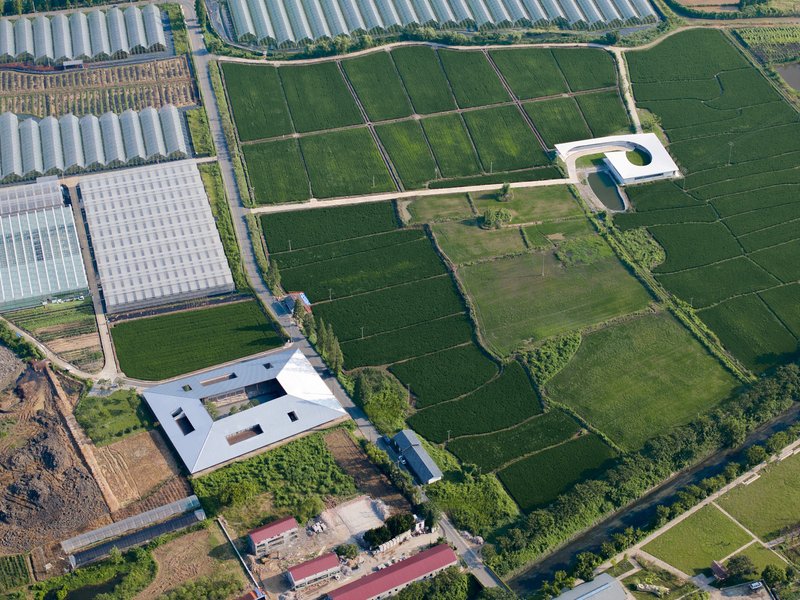
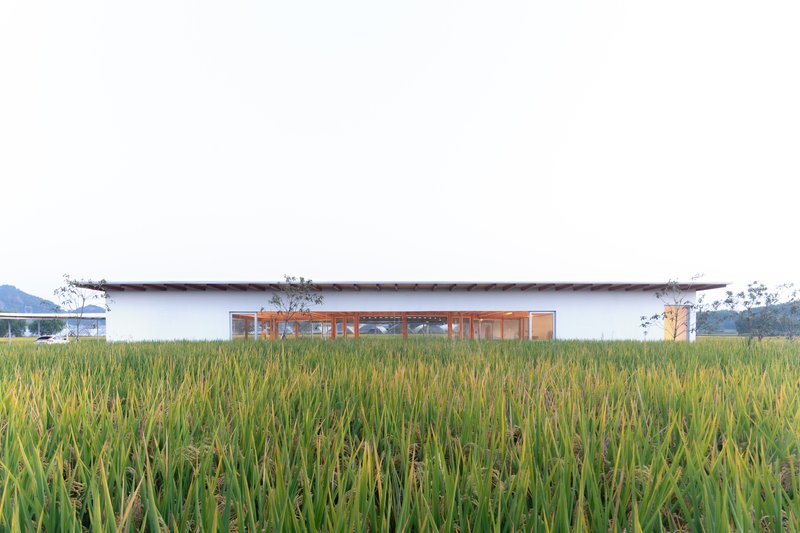
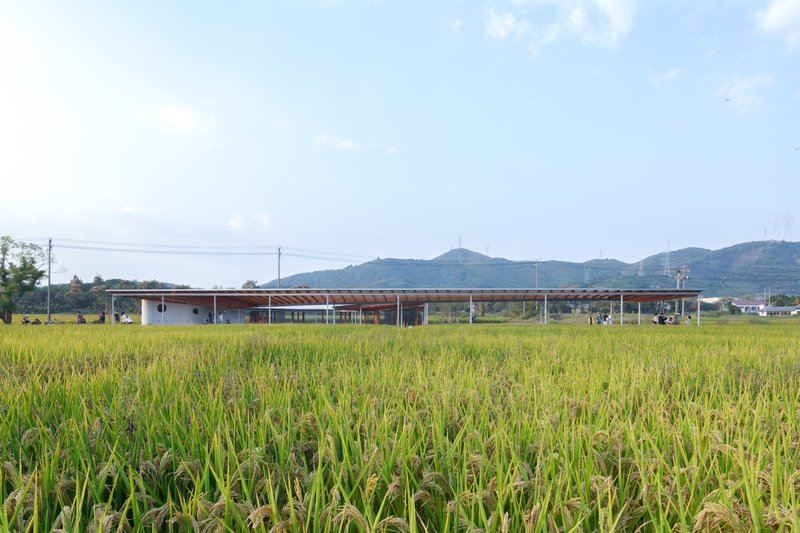
The Agronomy Workshop, designed by Studio Dali Architects, is an innovative example of sustainable agritecture design. Located in Yuhang, China, this architectural masterpiece seamlessly integrates built structures with agricultural landscapes, creating a space that serves both research and community engagement. The project embraces the complexities of its irregular plot, merging the natural terrain, farm paths, and functional architecture into a fluid and dynamic environment.
Site Context: Embracing the Landscape
A Unique Plot Defined by Field Ridges and Roads
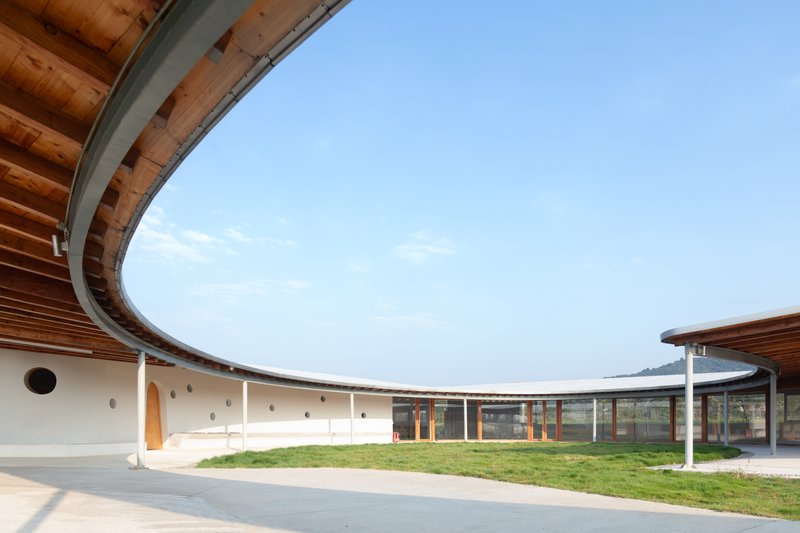
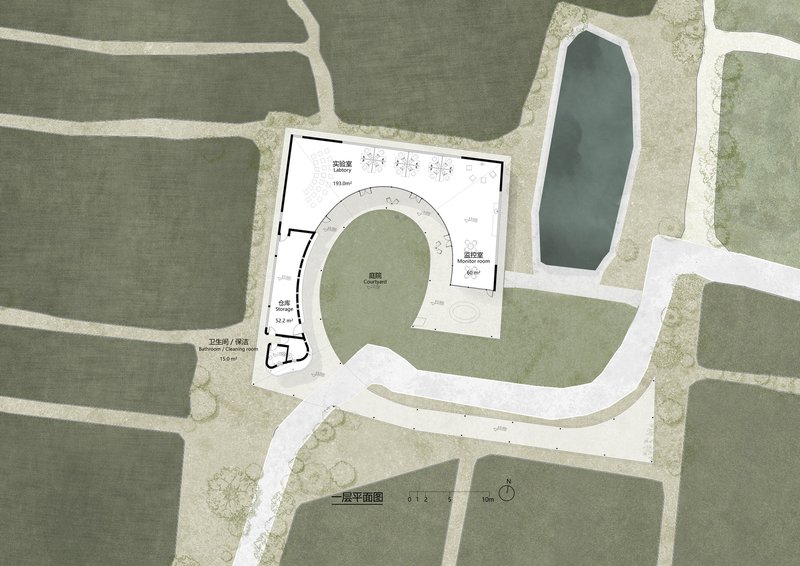
Positioned on an irregular site adjacent to a pond, the project navigates its fragmented landscape with an adaptive architectural strategy. The existing field ridges and farm roads divide the plot, creating natural boundaries that the design incorporates rather than resists. By embracing the pathways that cut through the land, the workshop becomes entangled with its surroundings, promoting a deeper connection between built and natural elements.
The Spiral Atrium: A Fluid Connection Between Indoors and Outdoors
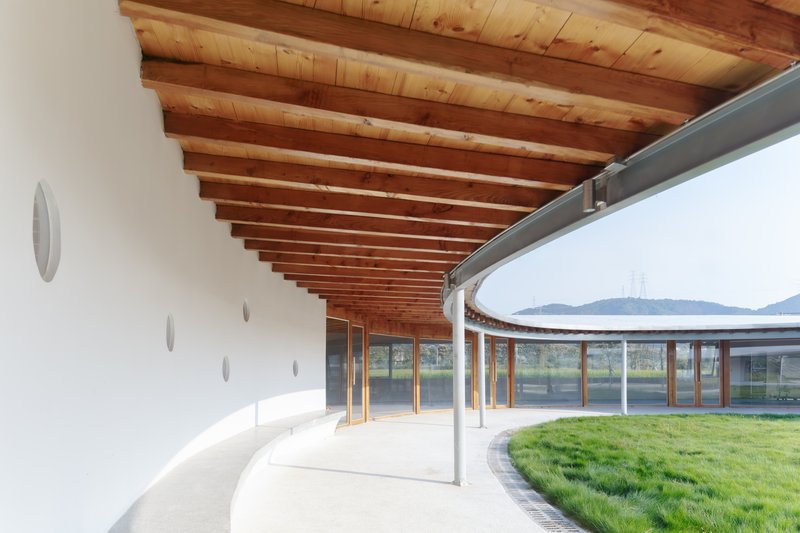
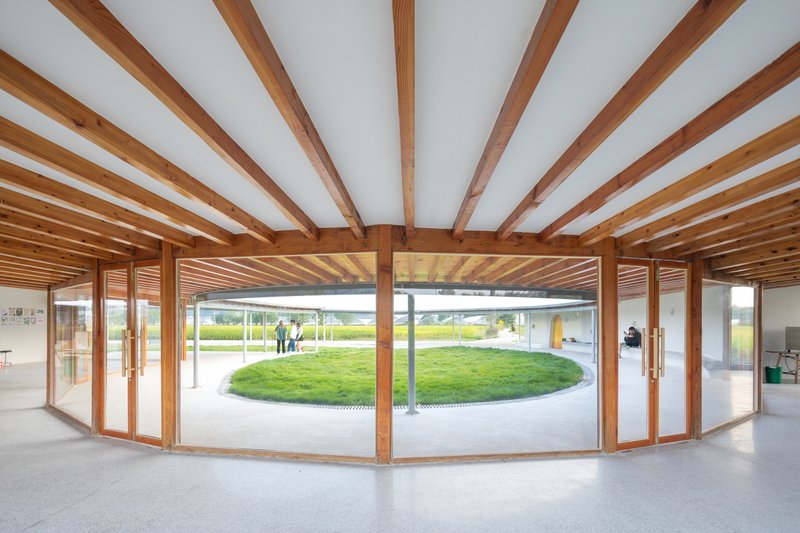
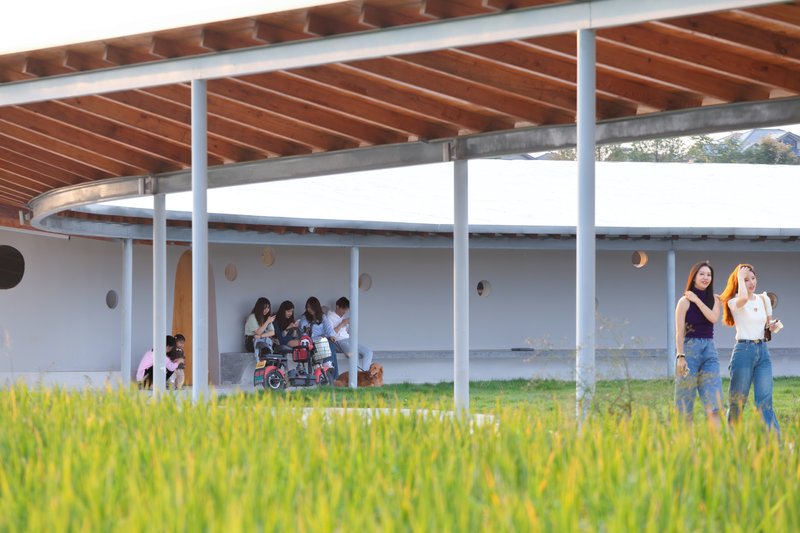
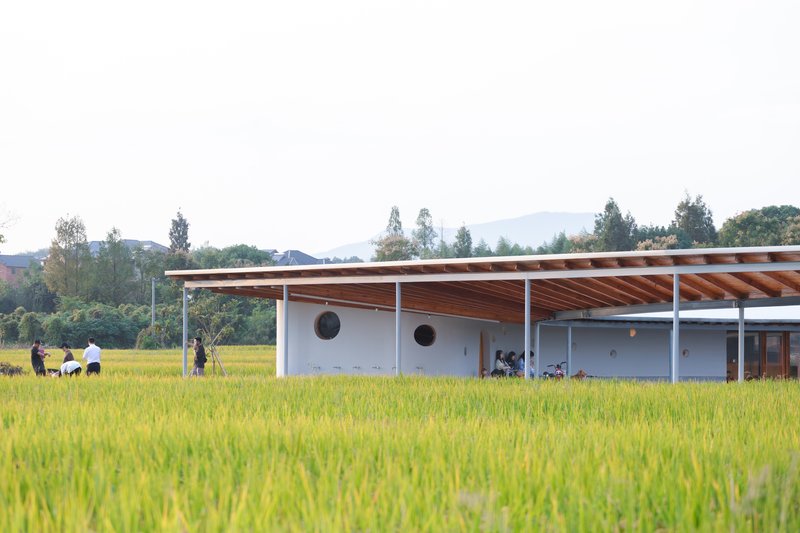
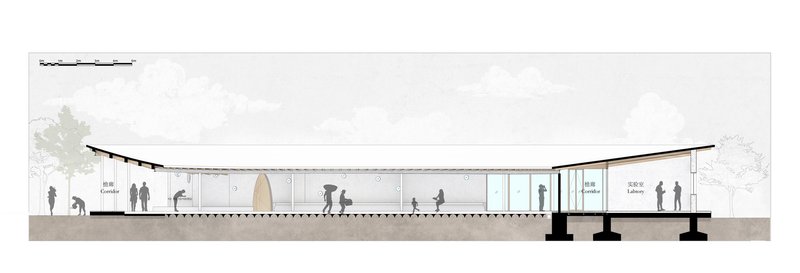
At the heart of the structure is a semi-open spiral atrium, a design move that enhances the blending of interior and exterior environments. This approach introduces natural light and air circulation, reinforcing the concept of architectural permeability. Visitors transition seamlessly between sheltered and open-air spaces, experiencing an evolving spatial dialogue that mirrors the organic curves of the surrounding landscape.
Structural Innovation: A Fusion of Steel and Wood
Hybrid Construction for Sustainability and Strength
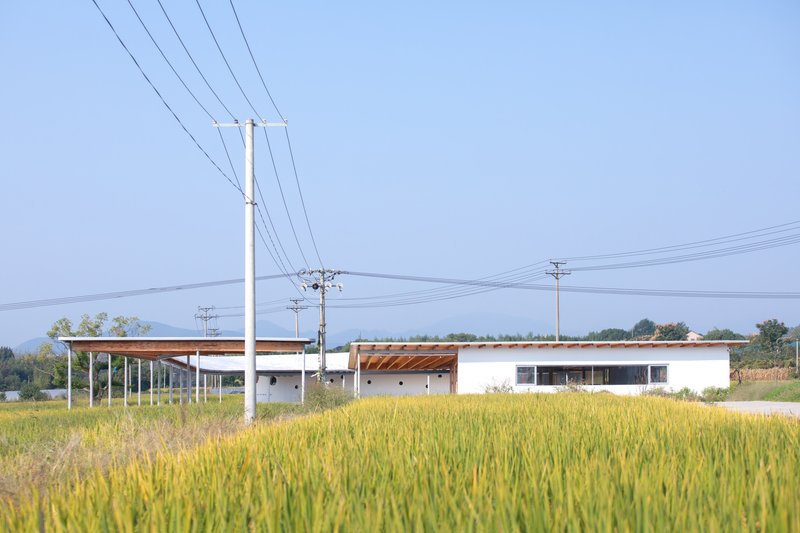
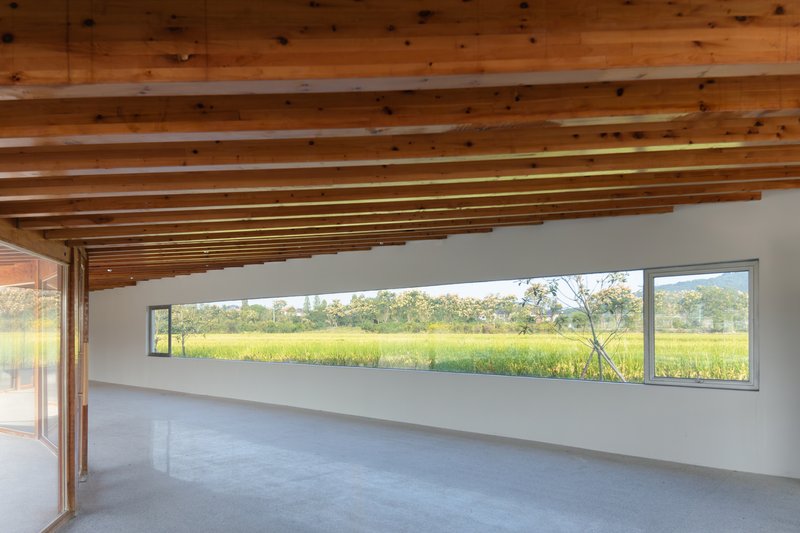
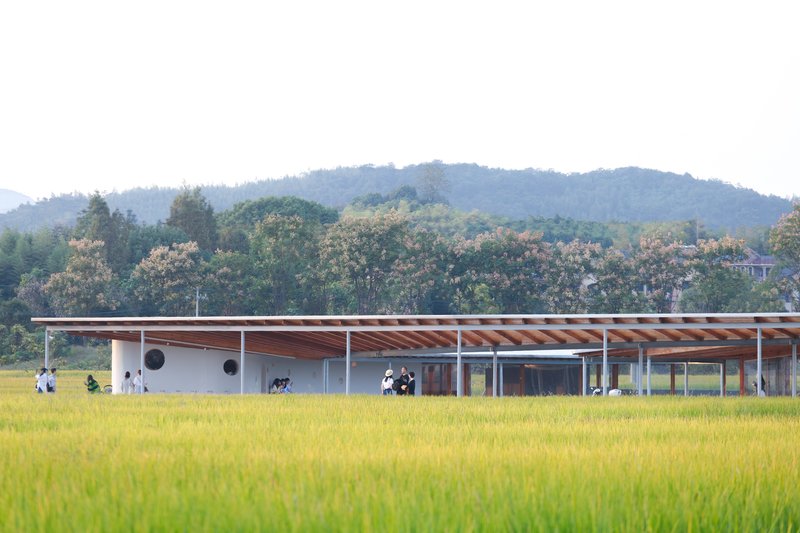
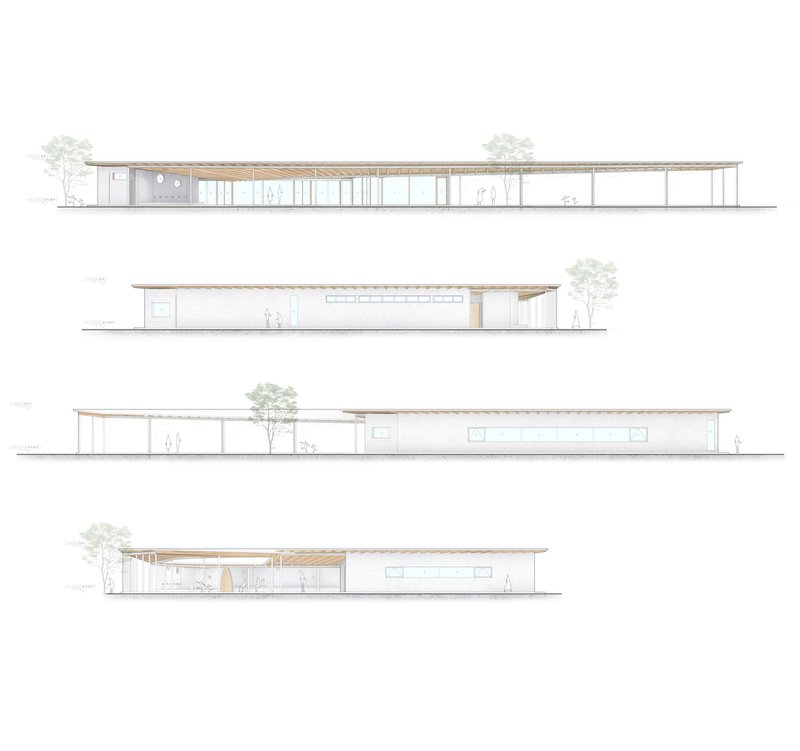
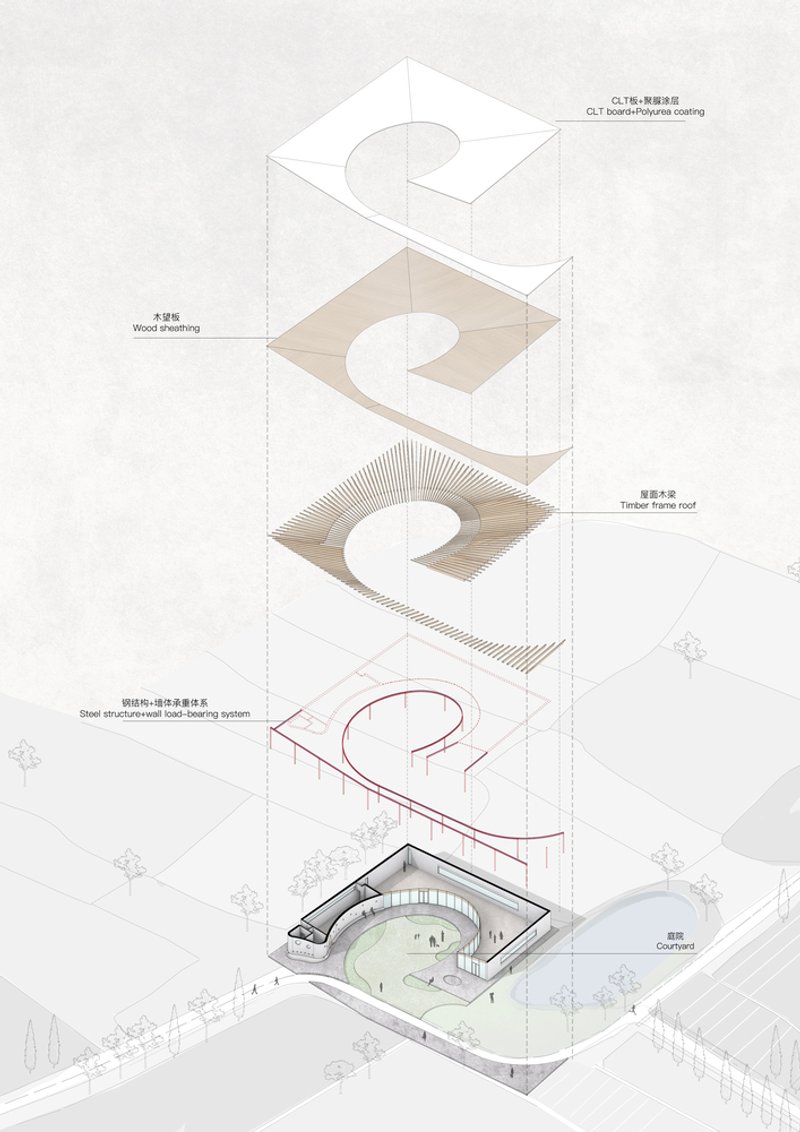
The steel-wood hybrid structure plays a crucial role in the lightweight yet durable construction of the workshop. The irregular curved sections are supported primarily by steel beams, ensuring stability while maintaining a minimal visual footprint. Meanwhile, wooden rafters form the straight sections, contributing to an aesthetic that harmonizes with the rural setting.
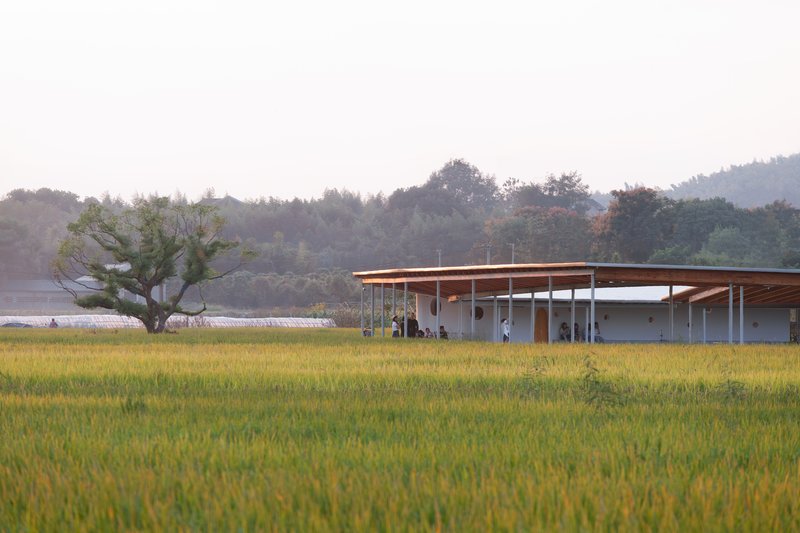
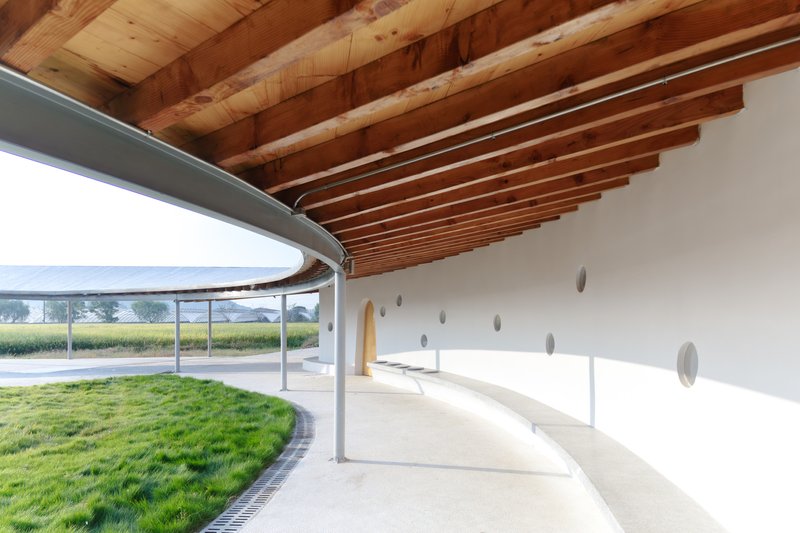
The roof structure, a key element of the design, uses butyl and polyurea coatings to enhance weather resistance while minimizing visual weight. The largest wooden rafters span 9 meters, necessitating structural refinements such as variable-section beams to ensure both efficiency and elegance. Through these design choices, the building maintains an architectural lightness that respects its agricultural context.
Thermal Efficiency Through Integrated Insulation
To enhance thermal performance, the insulation is embedded within the structural layer, allowing the wooden rafters' visual height to be uniformly reduced to 200mm. This not only improves energy efficiency but also preserves the building’s minimalist aesthetic, reinforcing its seamless integration with the landscape.
Community and Cultural Impact
A Public Space for Farmers and Residents
Beyond its primary function as an agricultural research space, the Agronomy Workshop has evolved into an important community hub. The semi-open spaces beneath the roof provide shelter and rest areas for local farmers, villagers, and visitors, demonstrating the versatility of well-designed public architecture.
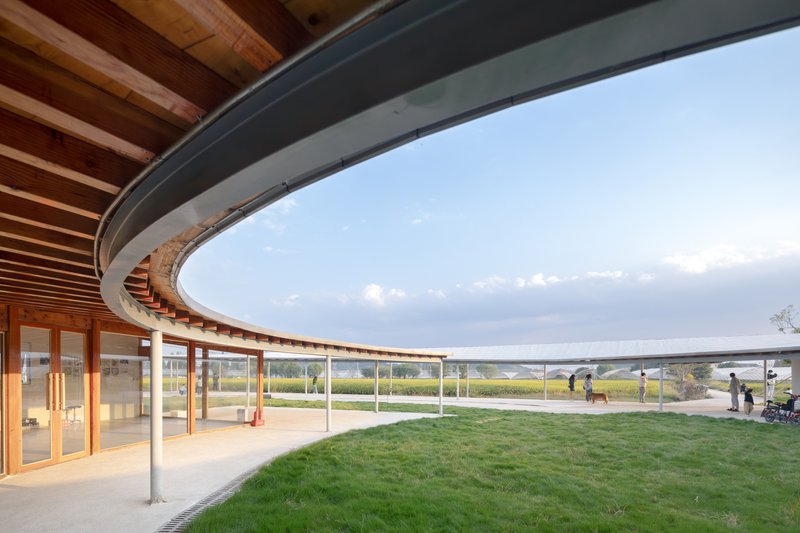
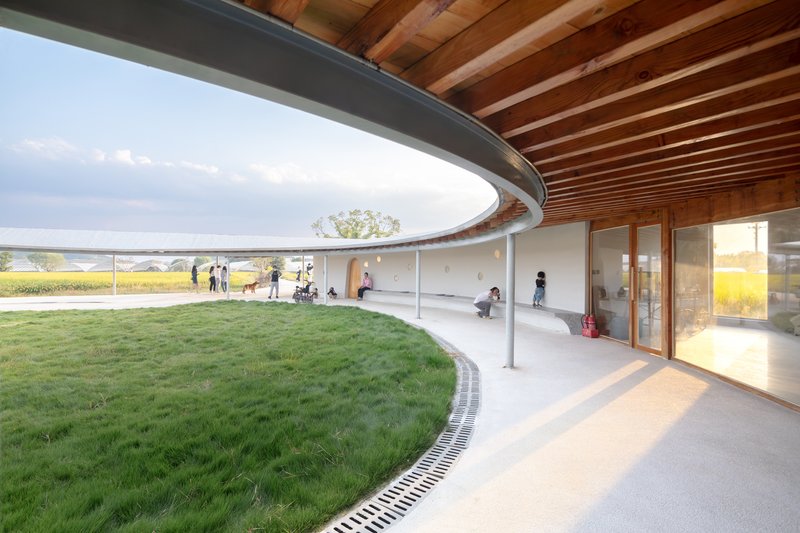
During the harvest season, workers use the space to take breaks and wash up, while during holidays, it transforms into a venue for cultural markets and events. The organic adaptability of the design ensures that the workshop remains a living, breathing part of the community, rather than a static structure.
A Vision for Future Agritecture
Redefining the Relationship Between Nature and Built Space
The Agronomy Workshop by Studio Dali Architects serves as a blueprint for sustainable agritecture design, showcasing how architecture can coexist with agricultural landscapes in a way that is both functional and aesthetically enriching. Through its harmonization of nature, structure, and community needs, this project represents a forward-thinking approach to rural architectural development.
As the demand for sustainable and context-sensitive designs continues to grow, the Agronomy Workshop stands as an inspiring example of how architecture can enhance the landscape rather than dominate it.
All Photographs are works of Arch-Exist, DONG Image




Popular Articles
Popular articles from the community

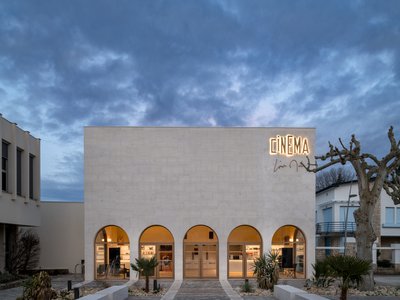
Louis Malle Cinema: A Limestone Cultural Landmark Revitalizing Community Life in Prayssac
Limestone cinema extension with public forecourt, blending heritage and modern design to create flexible cultural spaces and strengthen community interaction.
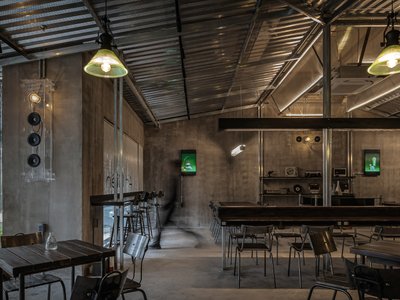
An Miên Lumière Cafe by xưởng xép, Ho Chi Minh City, Vietnam
An industrial-inspired café where layered steel and warm light create a dynamic, immersive environment shaped by reflection, depth, and perception.
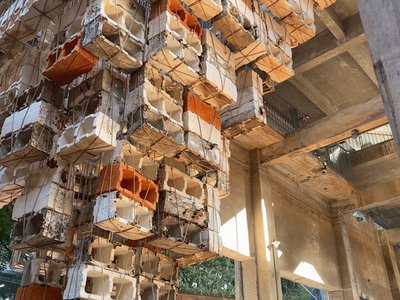
Inverted Architecture Installation by Studio Link-Arc: Exploring the Intersection of Architecture and Living Organisms
Inverted Architecture Installation by Studio Link-Arc blends mycelium, sustainability, inverted design, ecological cycles, and urban adaptive architecture in Shenzhen.
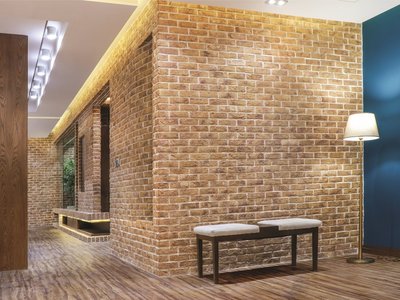
A Contemporary Take on Iranian Residential Architecture
A modern interior design in Mashhad that reinterprets brick, light, and spatial flow to create a warm, contemporary residential architecture.

Similar Reads
You might also enjoy these articles

Bamboo Housing Challenge 2026: Design Affordable, Sustainable Homes Using Bamboo
An international design competition by Bamboo U and IBUKU inviting architects and designers to reimagine affordable housing using bamboo — with the winning design built full-scale in Bali.

Computational Design & Education: Beegraphy Design Awards Introduces 7th Category (Featuring Jiyun's Innovative Approach)
Dive into Beegraphy’s 7th Design Awards category, where computational design meets education to create immersive, interactive learning tools, inspired by Jiyun’s work.

From Parametric Lighting to Urban Furniture: Join the 2nd Workshop in Beegraphy’s Computational Design Series
Dive into Cutting-Edge Design Techniques and Practical Applications with Industry Experts

Introducing Sphere by UNI: Pioneering a New Era in AEC Industry
Unlocking Global Potential with BIM and Agile Management


Explore Architecture Competitions
Discover active competitions in this discipline




The International Standard for Design Portfolios


The Global Benchmark for Architecture Dissertation Awards


The Global Benchmark for Graduation Excellence


Challenge to reimagine the Iron Throne
Comments (0)
Please login or sign up to add comments
No comments yet. Be the first to comment!