
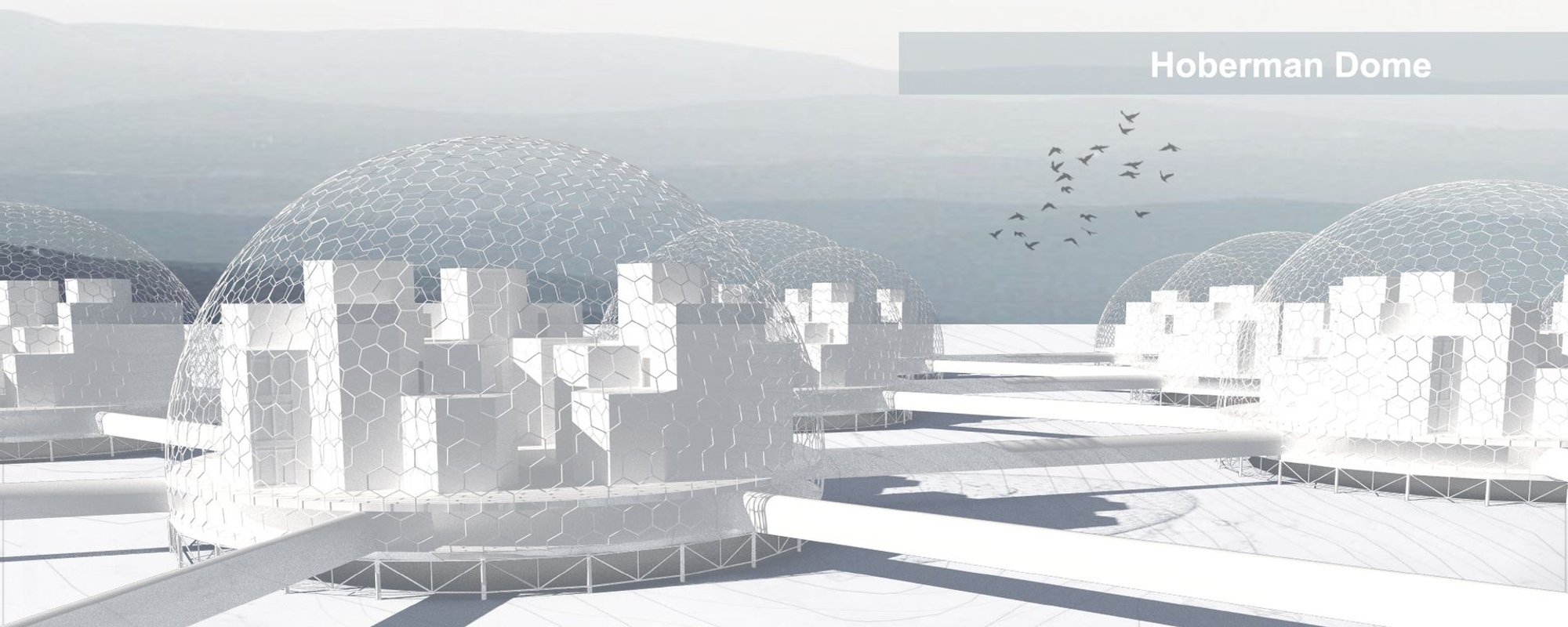
Sustainable Arctic Architecture: Building the Future in Extreme Environments
Sustainable Arctic Architecture: Resilient, Adaptive, and Designed for Extreme Environments.

Extreme Arctic Habitat: A Vision for Resilient Design
Arctic architecture faces unparalleled challenges due to extreme cold, climatic shifts, and resource limitations. The key to success in this environment lies in innovative sustainable architecture, ensuring energy efficiency, mobility, and human adaptability.
Location & Environment
The Hyperloop-integrated habitat is set to be developed on Ellesmere Island, one of the most extreme environments in the Canadian Arctic Archipelago. With polar nights lasting five months, the settlement must address low humidity and temperatures plummeting below -56°C (-70°F).
Design Requirements: Adapting to the Arctic
- Form: Structures must be aerodynamic and energy-efficient to withstand harsh conditions.
- Energy: The use of renewable energy sources is critical.
- Materials: Climate-resistant materials will be essential for longevity.
- Mobility & Adaptability: The settlement should evolve in response to climate change.
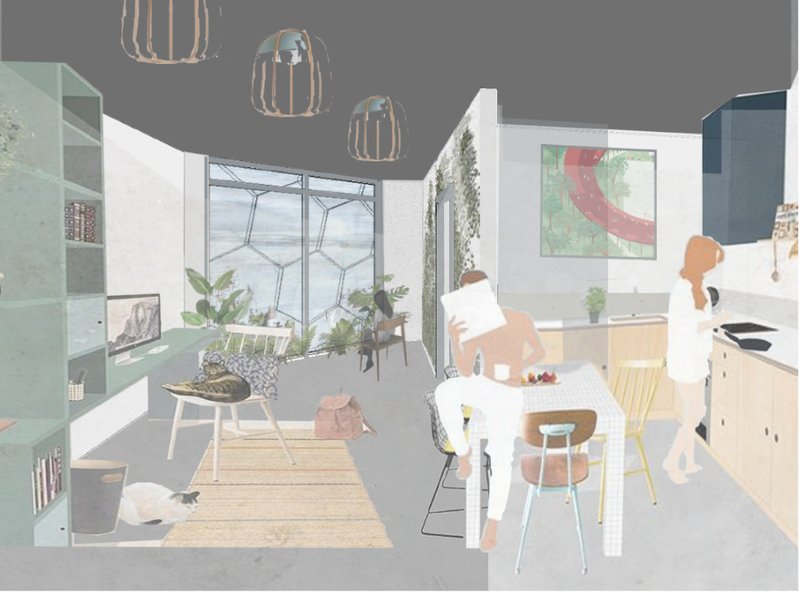
- Human Factors: Both psychological comfort and physical well-being must be prioritized.
- Nature: The habitat should be in harmony with its surroundings, minimizing environmental impact.
The Hoberman Dome: A Revolutionary Architectural Concept
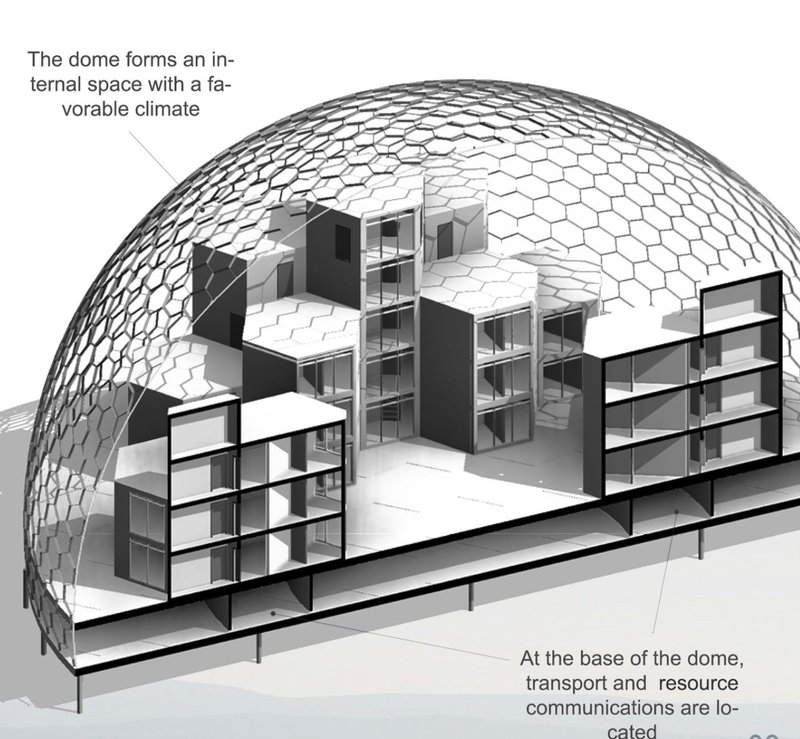
Inspired by Chuck Hoberman’s isokinetic structures, the Hoberman Dome is a dynamic, geodesic-inspired shelter capable of compressing and expanding to adapt to changing needs.
This concept is part of a shortlisted entry for the EHC - Arctic competition and was designed by Кира Матвеева. The dome’s ability to deploy rapidly and create a climate-controlled living space makes it ideal for Arctic conditions.
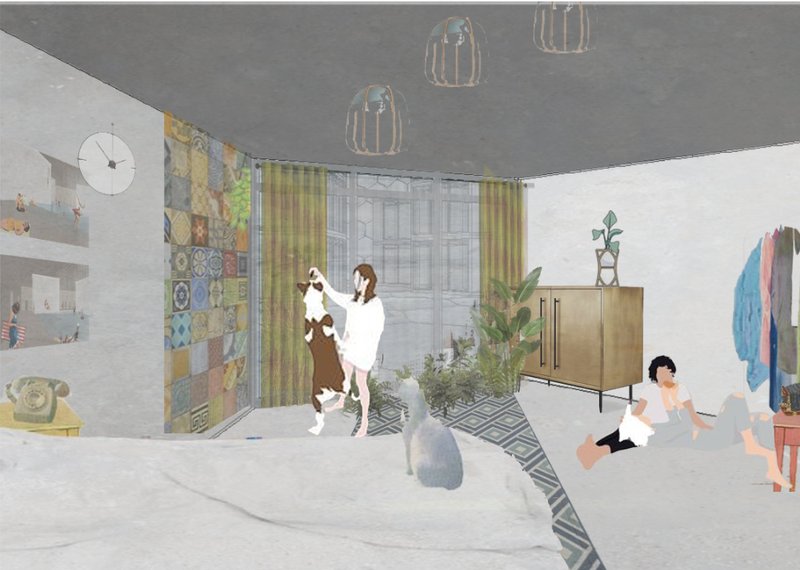
Formation of a Self-Sustaining Arctic Habitat
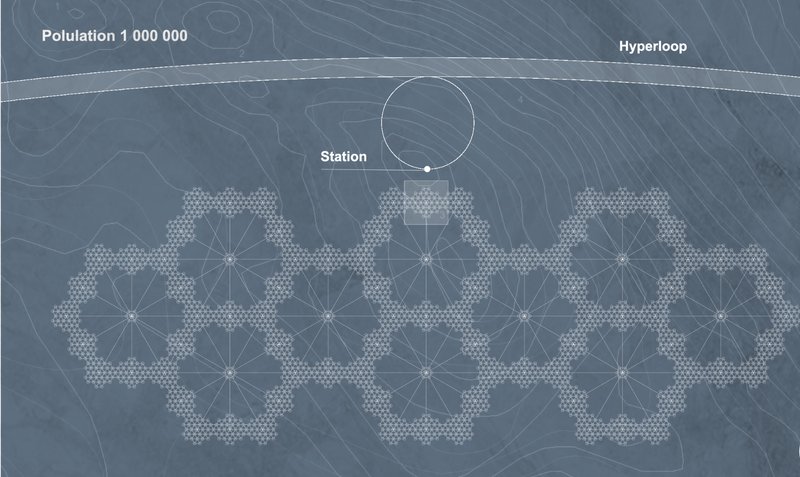
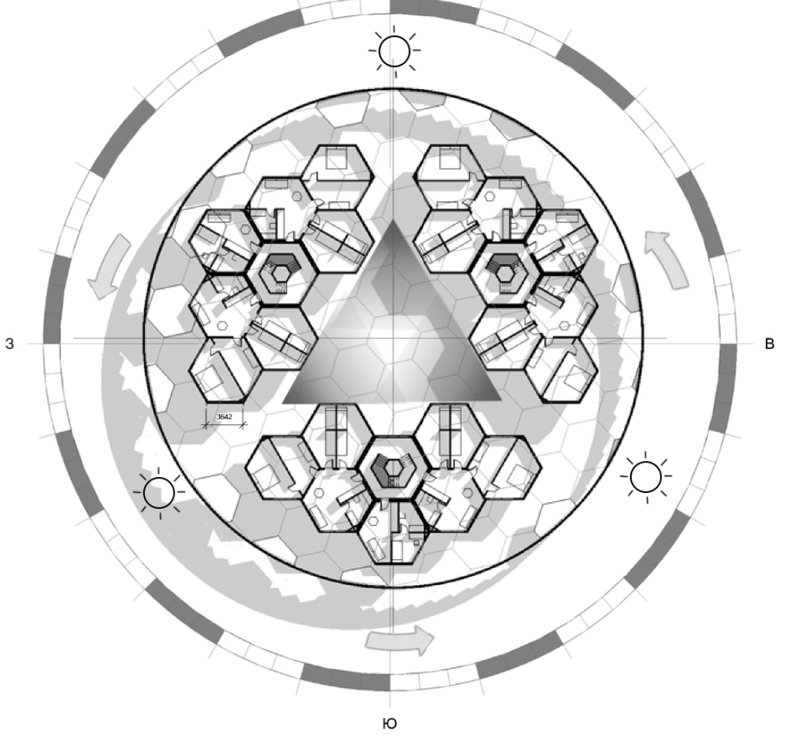
The settlement design is inspired by celestial systems, featuring a hexagonal pattern for optimized connectivity and sustainable development. The central energy module supports zoning strategies, ensuring balanced growth for living, work, and recreation.
- Connections & Transport: A robust transportation network ensures efficiency.
- Supply System: Solar, wind, and nuclear power sustain the habitat autonomously for years.
- Zoning & Expansion: Modular expansions support a growing population, from 1,000 to 1,000,000 inhabitants.
Building Stages: Deployable & Expandable Dome Structures
- Stage 1: The parental dome initiates construction, adapting to the terrain.
- Stage 2: Telescopic supports elevate the structure, allowing airflow beneath.
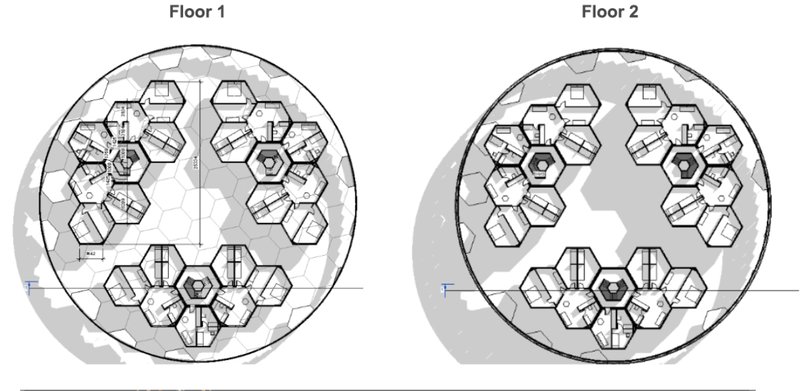
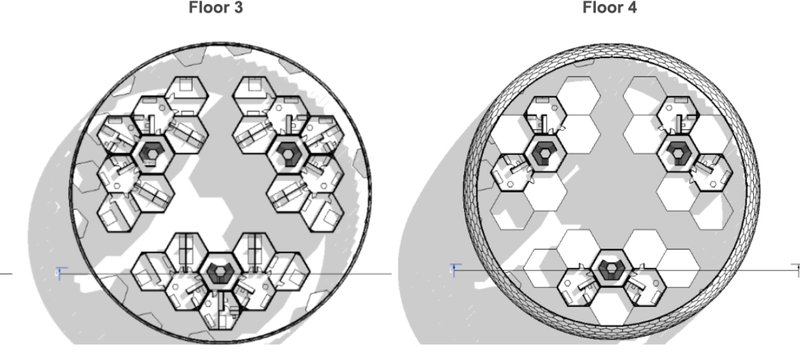
- Stage 3: Living units are deployed, forming a self-contained community.
- Stage 4: Inter-unit connections solidify the urban framework.

Smart Materials & Energy Efficiency
Constructed from ETFE hexagons, the dome optimizes insulation, reducing heat loss while utilizing infrared heating and Energy Recovery Ventilation (ERV). This ensures sustainable energy management for comfortable living conditions.
The Future of Arctic Living
With a vision to balance human innovation and environmental preservation, sustainable Arctic architecture represents the future of extreme habitat design. By integrating advanced technologies, deployable structures, and renewable energy, this concept paves the way for adaptable, climate-resilient settlements in the harshest corners of the planet.




Popular Articles
Popular articles from the community

Fifth NRE Jazz Club – De Bever Architecten: Eindhoven’s Revitalized Cultural Hub
Historic gas factory transformed into Fifth NRE Jazz Club blending modern sustainability, jazz culture, dining, and heritage architecture seamlessly.
Inverted Architecture Installation by Studio Link-Arc: Exploring the Intersection of Architecture and Living Organisms
Inverted Architecture Installation by Studio Link-Arc blends mycelium, sustainability, inverted design, ecological cycles, and urban adaptive architecture in Shenzhen.

Solar Steam: A Climate-Responsive Architecture That Redefines the Monument
A climate-responsive memorial architecture that transforms heat, decay, and time into a living system reflecting humanity’s ecological impact.
Atelier Macri Concept Store Interior Design by CASE-REAL
Atelier Macri store features a "ko" counter, walnut wood details, cork displays, blending retail, gallery, and seamless customer experiences.


Similar Reads
You might also enjoy these articles


The Ken Roberts Memorial Delineation Competition (Krob)
As the most senior architectural drawing competition currently in operation anywhere in the world, it draws hundreds of entries each year, awarding the very best submissions in a series of medium-based categories.


Waterfront Redevelopment and Urban Revitalization in Mumbai: Forging a New Dawn for Darukhana
A transformative waterfront redevelopment project reimagining Darukhana’s shipbreaking heritage into an inclusive urban future.

OUT-OF-MAP: A Call for Postcards on Feminist Narratives of Public Space
Rhizoma Design and Research Lab invites artists, designers, architects, researchers, and students to reflect on how feminist perspectives can reshape public space. Selected works will be exhibited in Barcelona, October 2026. Submissions open until 15 April 2026.


Documentation Work on Buddhist Wooden Temple
Architectural syncretism and cultural hybridity: A comparative study of the Buddhist temples in Chattogram Hill tracks






Comments (0)
Please login or sign up to add comments
No comments yet. Be the first to comment!