

Sustainable Library Architecture: Crafting Community Spaces in the Wisdom Haven Project
Wisdom Haven Library's blend of sustainable design, community integration, and modern architectural innovation.


In the age of digital proliferation, the Wisdom Haven Library emerges as a testament to the enduring significance of physical spaces in fostering knowledge, community, and sustainability. This innovative project, envisioned by Aleksandra Bartosiak, was a Shortlisted entry in the Libgen competition, heralding a new chapter in sustainable library architecture.
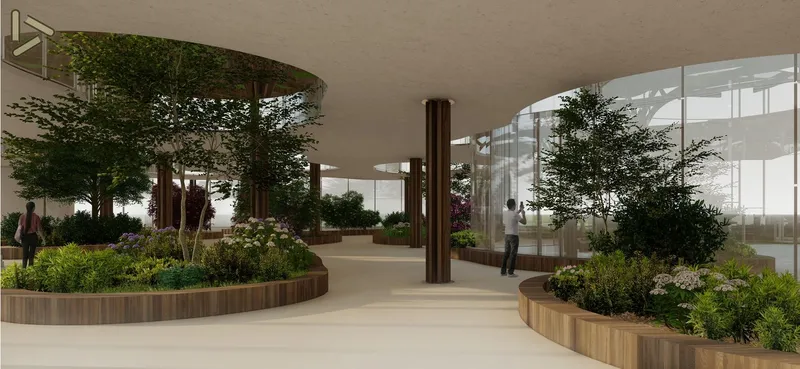
The Wisdom Haven Design Philosophy
At the heart of the Wisdom Haven Library design lies a fusion of modern architecture with the lush tapestry of Poland's indigenous flora. The library's open layout, abundant natural light, and strategically placed reading nooks do not just invite users but encourage a journey of cultural exploration. It is a sanctuary for knowledge seekers, a fertile ground for creativity, collaboration, and learning. This design philosophy aligns seamlessly with the rising trend of sustainable library architecture, where the space itself becomes a part of the learning experience.
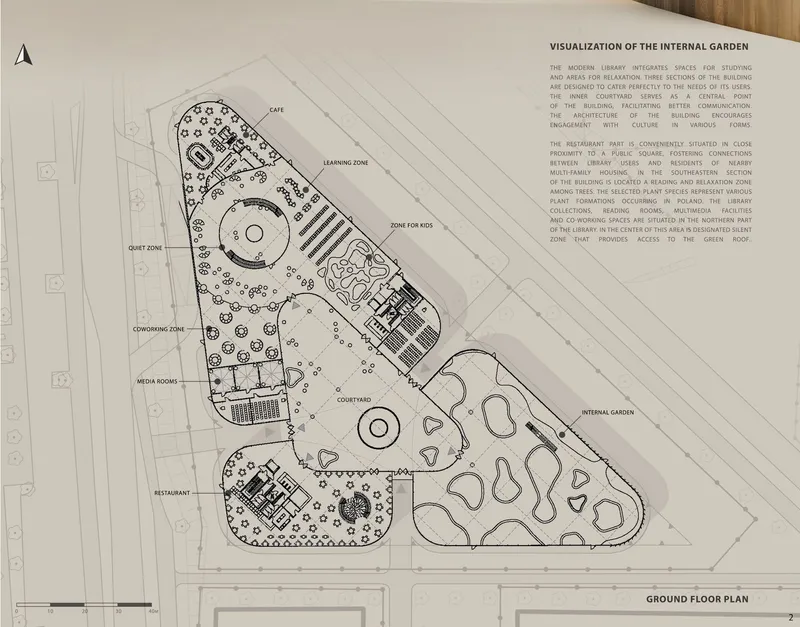
Design and Development: A Symbiosis of Function and Aesthetics
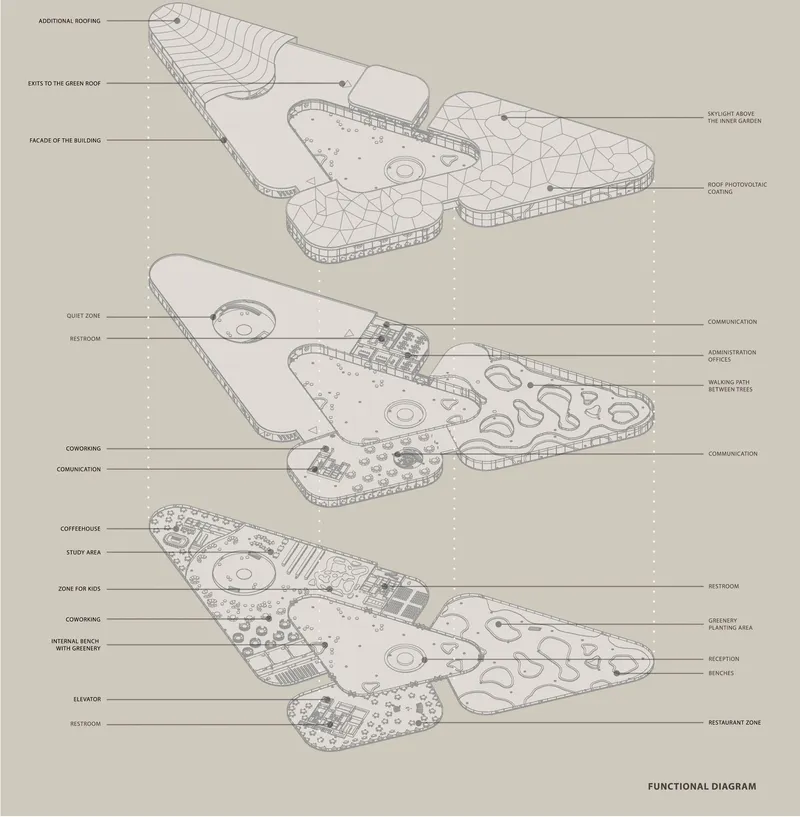
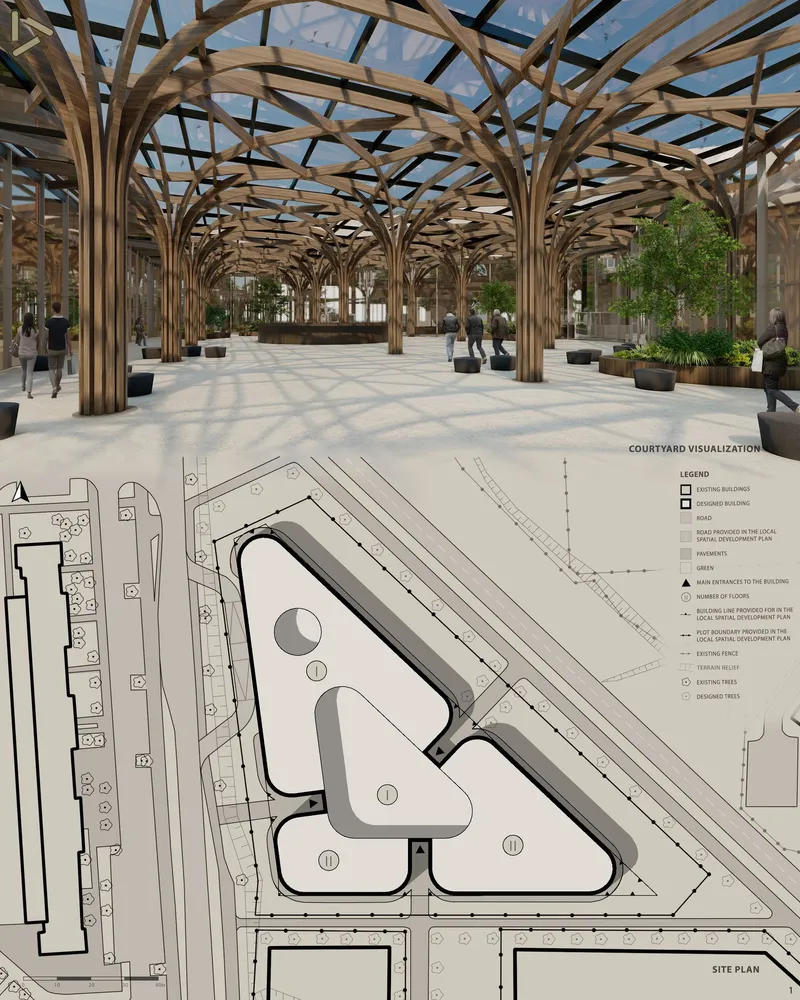
The architecture of Wisdom Haven pivots on three core areas—studying spaces, relaxation zones, and interactive community spaces—each crafted to serve the precise needs of its users. The courtyard visualization and internal garden designs, as depicted in the shared images, serve as a central axis of the building, bolstering better communication and cultural engagement. The inclusion of an internal garden introduces a tranquility seldom found in traditional library designs, yet crucial in the context of sustainable library architecture.
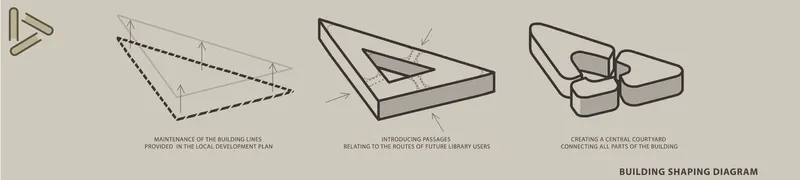
Sustainability at Its Core
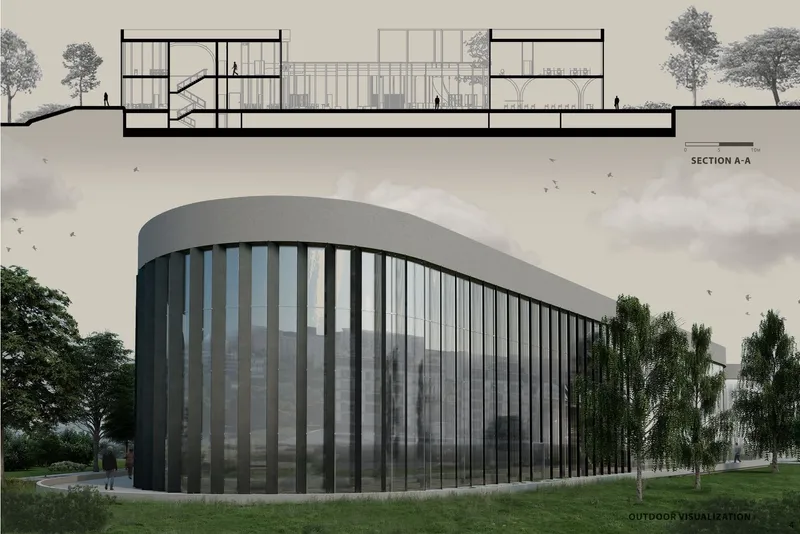
In adhering to the principles of sustainable library architecture, the design incorporates eco-friendly materials and green technologies. The building's façade and roofing are not just structural elements but part of an integrated system that includes photovoltaic coatings and natural thermal regulation. These choices exemplify a commitment to minimizing ecological impact while enhancing user comfort.
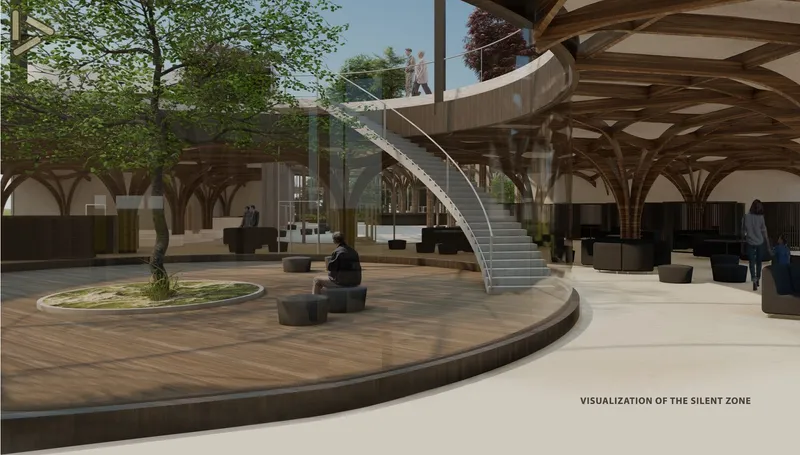
Integration with the Urban Fabric
True to the ideals of sustainable library architecture, the Wisdom Haven Library doesn't stand in isolation. Its design thoughtfully interfaces with the local development plan, connecting with public squares and integrating the transit patterns of residents. This approach emphasizes the library's role as a cornerstone of urban life, blending seamlessly with the surrounding community.
A New Epoch of Library Functionality
As sustainable library architecture garners attention, libraries like Wisdom Haven are redefining their utility. Beyond silent study zones, they encompass coworking spaces, multimedia facilities, and zones for interactive learning. This multi-faceted approach ensures that the library remains adaptable, capable of evolving with its user base over time.
The Library as a Cultural Nexus
Wisdom Haven’s architectural narrative is one of inclusivity and diversity. The visualizations shared reveal a space that is as much about reading as it is about cultural exchange. The restaurant and café are not mere amenities; they are integral to the library's ethos, inviting users and residents alike to partake in the exchange of ideas and cultural dialogue.
The Wisdom Haven Library stands as a beacon of sustainable library architecture, bridging the gap between ecological responsibility and architectural excellence. It addresses the quintessential question of modern architecture—how to create spaces that are both functional and harmonious with nature. As libraries worldwide adapt to the changing landscapes of information consumption and public interaction, projects like Wisdom Haven lead the charge, showcasing how spaces can nurture the community, culture, and sustainability.


Popular Articles
Popular articles from the community


Singing Woman: An Opera House That Performs Before the Curtain Rises
Ovidiu Cristian Pavel's conceptual opera house translates Estonia's choral identity into a sculpted waterfront landmark facing the Baltic Sea.

Aquadapt: An Underwater Habitat That Rewrites Its Rooms by the Hour
Curved modules ring the seabed while one shell shifts from breakfast room to cinema, farm and football pitch as residents' needs change.


ETEH Reworks the Shared Spaces of São Domingos School in Brazil Around Timber, Color and Hanging Plants
At São Domingos School in Brazil, 436 m² of hall, refectory and library are recast with timber joinery, a yellow and blue code and trailing greenery.

Cube Design Draws an Ecological Corridor Between Two Shenzhen Hills with the Nankai Building
Beside Shenzhen's container docks, the Nankai Building pairs stacked balconies with a climbing green screen to connect two hillsides across its height.

Similar Reads
You might also enjoy these articles

Vereda Arquitetos Renovates a 40-Square-Meter Apartment Inside Niemeyer's Copan Building
A compact unit in São Paulo's most iconic residential tower gets a material overhaul that pairs exposed concrete with bold blue Formica.

Shakur's House: Exposed Brick as an Interior Organiser in a 168 m² Mashhad Residence
Brick moves indoors in this Mashhad residence, where masonry walls, glass partitions and teal planes sequence a compact home without closing it off.

Day and Night Park: A Time-Based Urban Newsstand in Beijing
A temporary urban newsstand in Beijing blending travel, light, and reading through poetic colors, compact form, and community-focused design.

Modernist Patio Renovation in El Masnou, Barcelona by Oliver Segura Arquitectura + Cebrià Arquitectura
Modernist patio renovation blending tradition and innovation with a movable pool, leveled floors, and Catalan materials in El Masnou.

Explore Library Architecture Competitions
Discover active competitions in this discipline

Challenge to design public laboratory

Challenge to reimagine the Iron Throne

Photograph architecture without architects

Illustrate the lost glory of Angkor Wat - Render Challenge
Comments (0)
Please login or sign up to add comments
No comments yet. Be the first to comment!