

Underwater Sanctuaries: Biomimetic Shells That Filter the Sea
A layered system of curved structural ribs doubles as marine habitat and water purification infrastructure along the coastline.

What if the structure itself were the filter? Underwater Sanctuaries proposes a coastal architecture that doesn't merely sit above the ocean but actively processes it, channeling contaminated seawater through layered shell forms that clean, redirect, and release it. The project dissolves the boundary between building and ecosystem, treating architecture not as an object placed in water but as an organ of the water itself.
Designed by Melanie Torres, Yuliana Perea, and Cesar Barrera, the project was submitted to the Underwater Web competition on uni.xyz. The brief challenged designers to rethink humanity's relationship with subaquatic environments. Rather than pursuing the spectacle of deep-sea habitation, this team focused on the liminal zone where land meets sea, proposing a structure whose formal logic is inseparable from its environmental function.
Curved Ribs Rising from the Waterline


The defining visual gesture is a series of arched structural ribs that emerge from the water's surface, intersecting and overlapping like the gill plates of a massive marine organism. Seen from the exterior, these elements read as both sculptural and deeply structural. The composite elevation montage reveals the rhythmic repetition of these curved forms along the coastline, establishing a cadence that echoes wave patterns. There's a deliberate ambiguity here: the structure appears grown rather than built, its silhouette shifting against the sky depending on the viewing angle.
From Sketch to Shell: Developing the Formal Logic
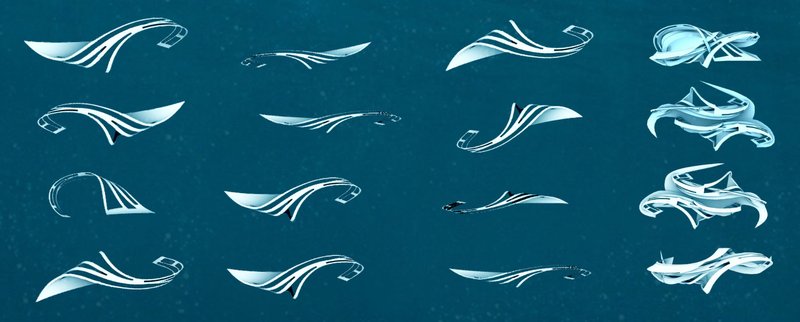

The conceptual sketches expose the team's process of formal exploration, cycling through ribbon-like folds, interlocking loops, and nested curves before arriving at the final shell typology. What emerges across the variations is a consistent interest in continuous surfaces that can enclose space while remaining permeable. The sectional drawing resolves these explorations into buildable terms: layered curved roof shells stack above a gridded walkway that extends over the water, creating a sequence of graduated enclosures. Each layer operates at a different scale, from the broad structural arcs down to the finer grid that supports human movement.
Filtration as Architecture, Not Afterthought
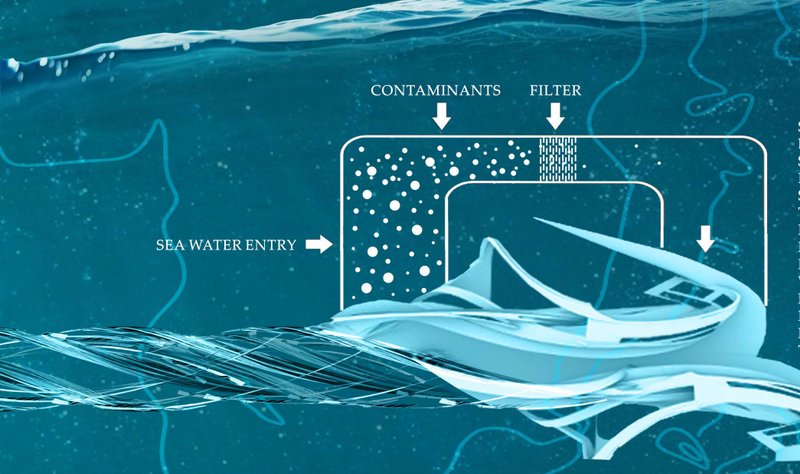
The technical diagram is where the project's ambition becomes most legible. Seawater enters at designated intake points, flows through a system of contaminant separation zones embedded within the structure's layered geometry, and exits cleaner than it arrived. The filtration isn't a mechanical system bolted onto the building; it is the building. The curved shells create pressure differentials and flow channels that move water passively through treatment stages. It's a bold claim, and the diagram, while schematic, makes a credible spatial argument for how form and environmental performance can be one and the same.
Interior Atmospheres Between Water and Light
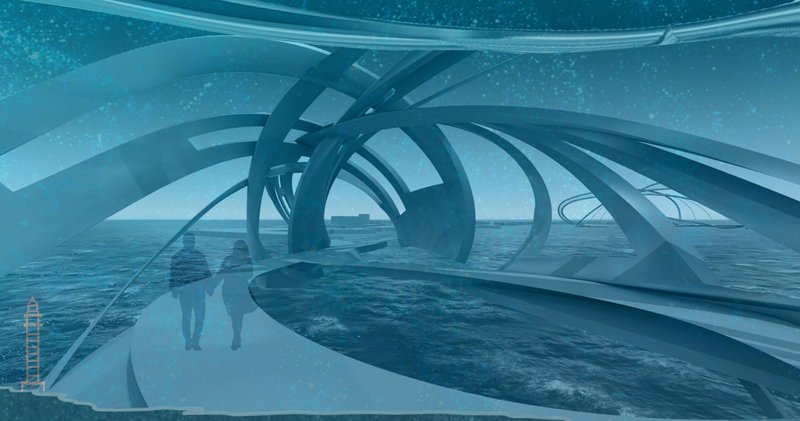
Inside, the experience shifts dramatically. Transparent structural ribs frame views down toward a circular pool at the base, with mist diffusing the light into something close to atmosphere itself. Two figures walk through this space, dwarfed by the curving geometry above them, establishing a scale that is simultaneously intimate and cathedral-like. The interior is not decorated; it is shaped. Light, water vapor, and structural rhythm produce the spatial quality without recourse to applied finishes. It's the kind of rendering that suggests the designers understand that architecture is experienced through the body, not just the eye.
Why This Project Matters
Underwater Sanctuaries sidesteps the common trap of underwater architecture competitions: the temptation to design sealed glass bubbles on the seafloor. Instead, Torres, Perea, and Barrera work at the threshold between land and ocean, proposing architecture that performs ecologically while remaining spatially compelling. The integration of water filtration into the structural shell system is not just a technical proposition; it's a design philosophy that insists form and function are not separate conversations.
The project's strength lies in its coherence. From the early ribbon sketches to the final sectional logic, every decision reinforces a single idea: that coastal infrastructure can be both restorative and architectural. In a moment when sustainability in design too often means adding solar panels to conventional buildings, this team offers something rarer. They propose that the shape of the building is the sustainability strategy. That conviction, carried consistently from concept through detail, is what makes the work worth studying.
View the Full Project
About the Designers
Designers: Melanie Torres, Yuliana Perea, Cesar Barrera
Enter a Design Competition on uni.xyz
uni.xyz runs architecture and design competitions year-round that reward proposals with spatial conviction and real site intelligence.
Project credits: underwater Sanctuaries by Melanie Torres, Yuliana Perea, Cesar Barrera Underwater Web (uni.xyz).



Popular Articles
Popular articles from the community

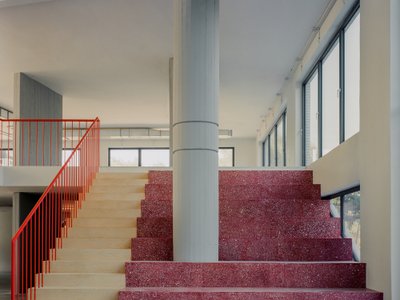
Art 1 Office Strips Athens Back to Its Bones
Neiheiser Argyros transforms a 40-year-old Athens office building into a vivid, materially rich workplace anchored by red steel, exposed concrete, and roof

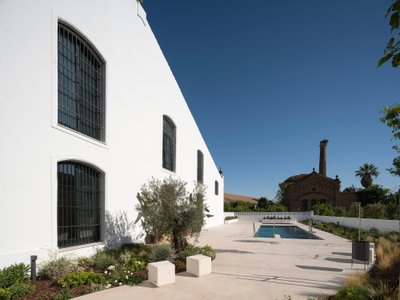
De la Riva Sherry Homes By Juan Vega Arquitectos
De la Riva Sherry Homes transform a historic winery into unique residences, blending industrial heritage, modern comfort, and community-focused courtyard living.
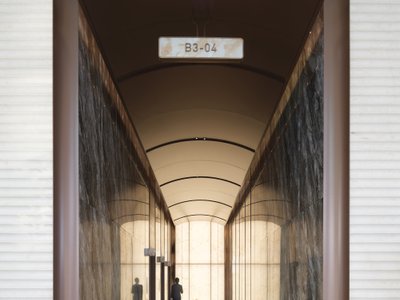
Guangzhou's Twin Towers Interiors Move Like Water
DuShe Architectural Design shapes the lobbies of a massive Guangzhou transit hub with undulating ceilings and deep geological materiality.
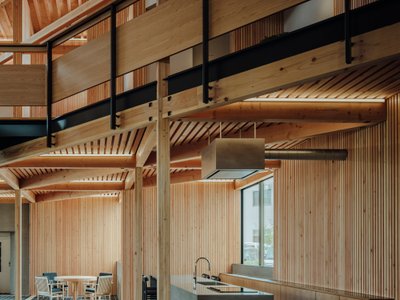
ure LLC Builds a Timber-Framed Suburban Office That Doubles as a Community Living Room in Hiroshima
KItoNOKO wraps sawtooth roofs and corrugated metal around an exposed timber frame to give a commercial district a new civic anchor.


Similar Reads
You might also enjoy these articles
Arch Aid Builds a Bamboo and Earth School in Bihar Where Government Education Failed
In one of India's poorest villages, a participatory construction process and local materials create a 230-square-meter primary school that resists floods a

Filtering Space: A Gradual Spatial Experience
From urban intensity to spatial calm.
Longbranch Residence: A Forest-Integrated Contemporary Home in Key Center, Washington
Forest-integrated Washington residence blending concrete, cedar, and meadow roof to restore landscape continuity and celebrate sustainable contemporary living.
CIFI Sales Center Park Mansion: Harmonizing Architecture with Nature
CIFI Sales Center Park Mansion in Hefei blends water-inspired design, fluid interiors, and immersive experiences, creating vibrant, calming, and sustainable residential showcase architecture.


Explore Conceptual Architecture Competitions
Discover active competitions in this discipline




The Global Benchmark for Architecture Dissertation Awards


The Global Benchmark for Graduation Excellence


Bring back Drive In's
Comments (0)
Please login or sign up to add comments
No comments yet. Be the first to comment!