
Tammela Hybrid Stadium: Finland’s First Urban Football Stadium as a Living City Block
Tammela Hybrid Stadium unites football, housing, and urban life in Tampere, redefining sustainable, mixed-use sports architecture in Finland.


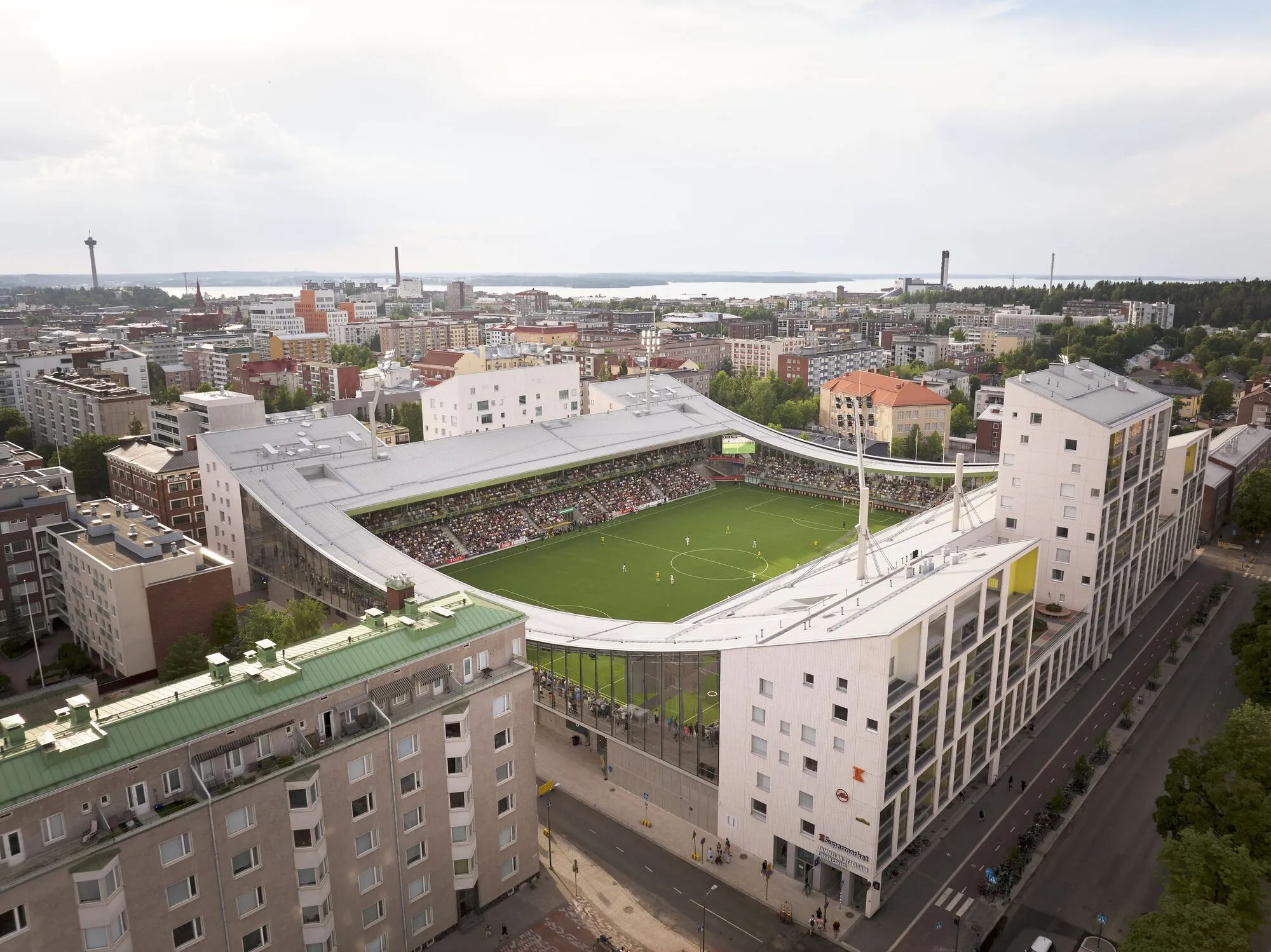
Completed in spring 2024, Tammela Hybrid Stadium represents a landmark in Finnish architecture and urban development. Designed by JKMM Architects, the project is Finland’s first hybrid football stadium, seamlessly integrating elite sports infrastructure with housing, commercial services, and public urban space. Located in the historic Tammela district of Tampere, the stadium redefines how sports architecture can contribute to dense, sustainable city centres.
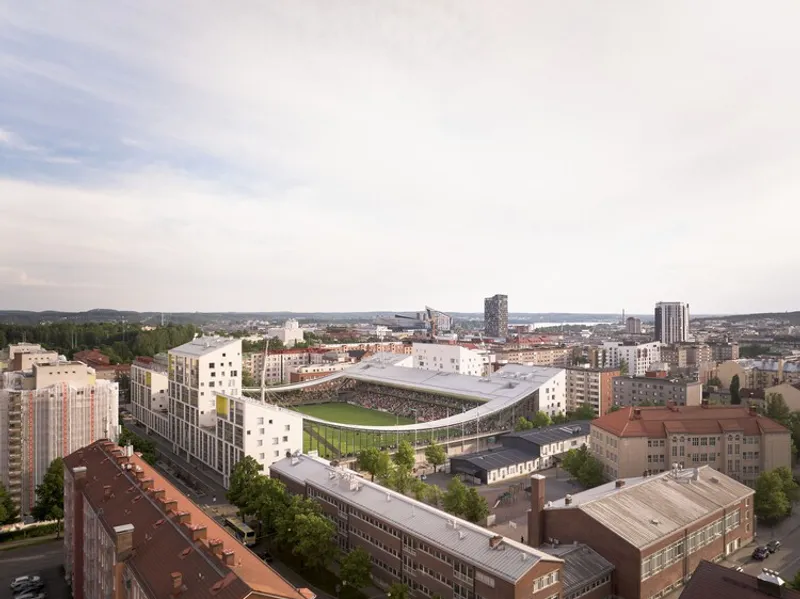
Developed through a long-term alliance model between the City of Tampere, Pohjola Rakennus, and JKMM Architects, the project was more than a decade in the making. The result is a nearly 50,000-square-metre hybrid blockthat accommodates professional football, everyday urban life, and community activity within a single architectural framework.
Football at the Heart of the City
Tammela Stadium occupies a site steeped in sporting history. The original stadium served Tampere since the early 1930s, making it one of Finland’s earliest football-specific venues. When the city sought to modernize the stadium while also densifying the surrounding neighbourhood, preserving the stadium’s traditional location became a central ambition.
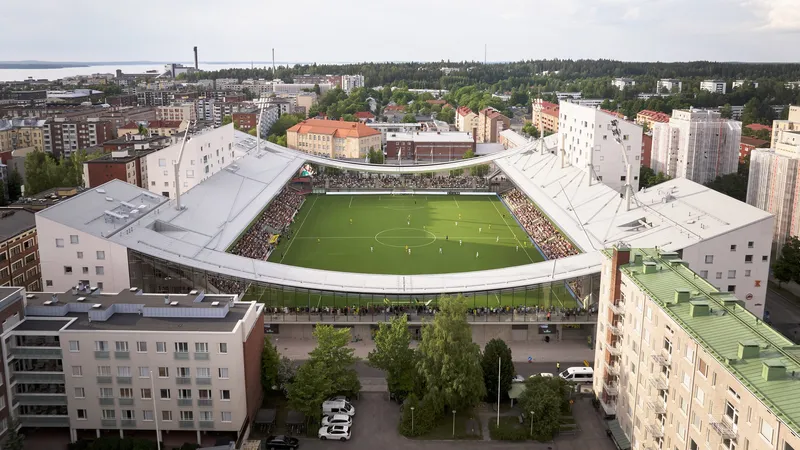
An invited architectural competition held in 2014 sought solutions to this complex challenge. JKMM’s winning proposal, titled “Hattutemppu” (Hat Trick), impressed the jury by skillfully balancing football-first design principles with demanding urban, structural, and traffic constraints. Rather than isolating the stadium as a standalone object, the proposal embedded it within a compact urban block, ensuring continuity with the existing city fabric.
A Hybrid Concept Built on Football’s Terms
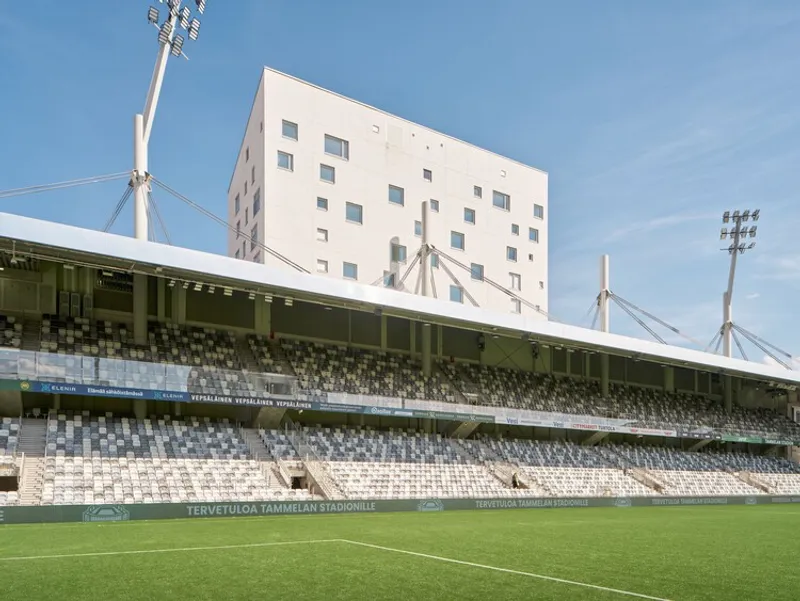
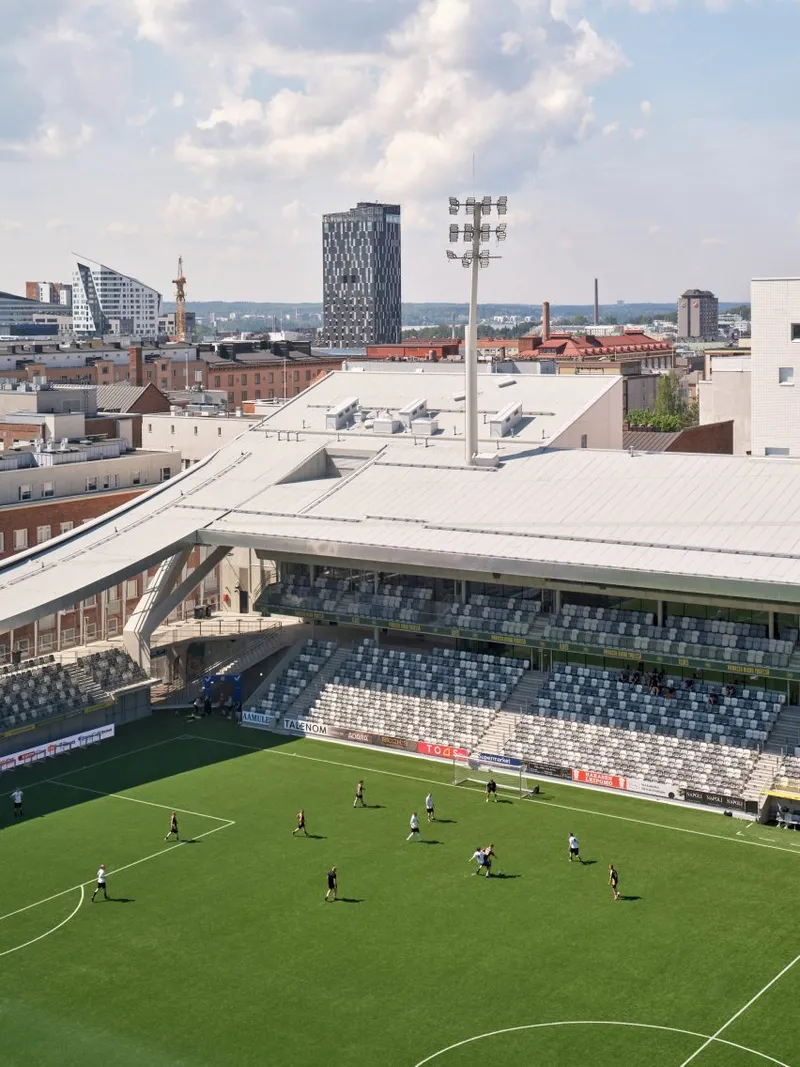
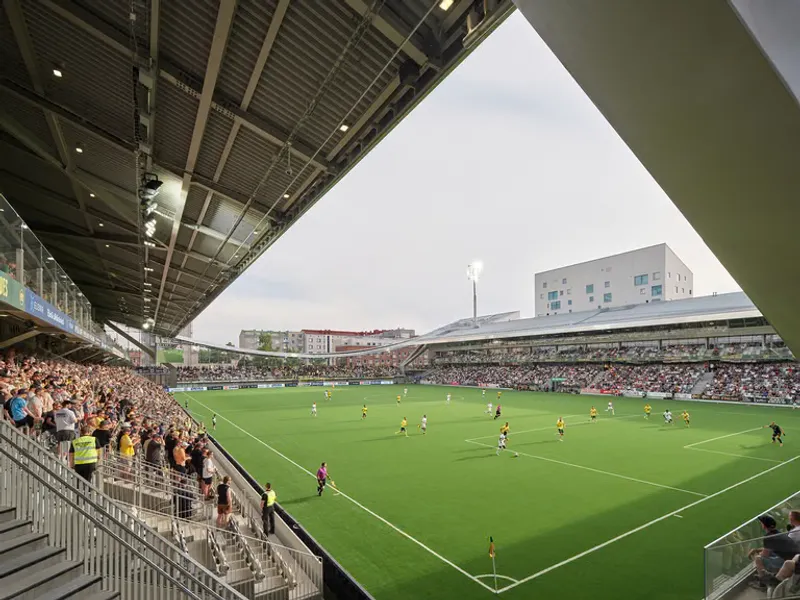
At the core of the project is a UEFA Category 4 football stadium, capable of hosting international matches, including UEFA Europa League fixtures and national team games. The stadium seats 8,000 spectators, with every seat offering unobstructed views of the pitch. For concerts and major events, the capacity expands to 15,000 people, ensuring year-round usability.
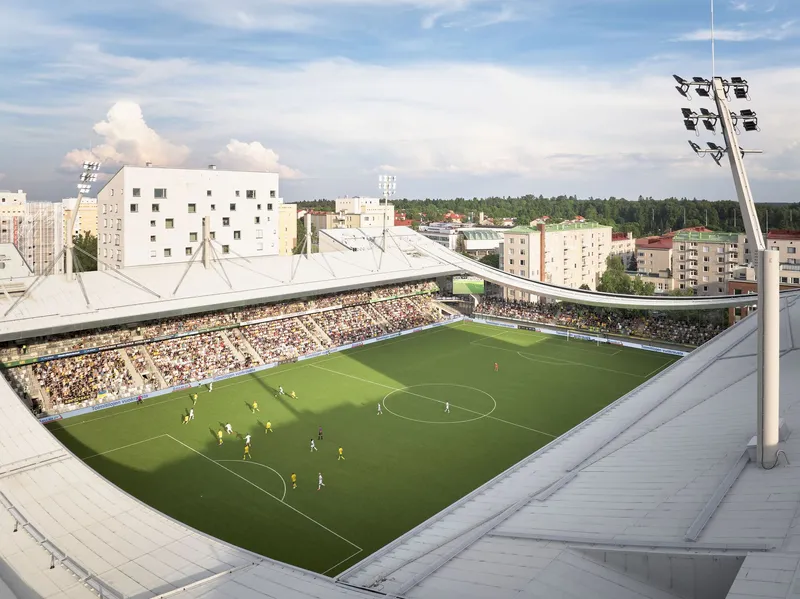
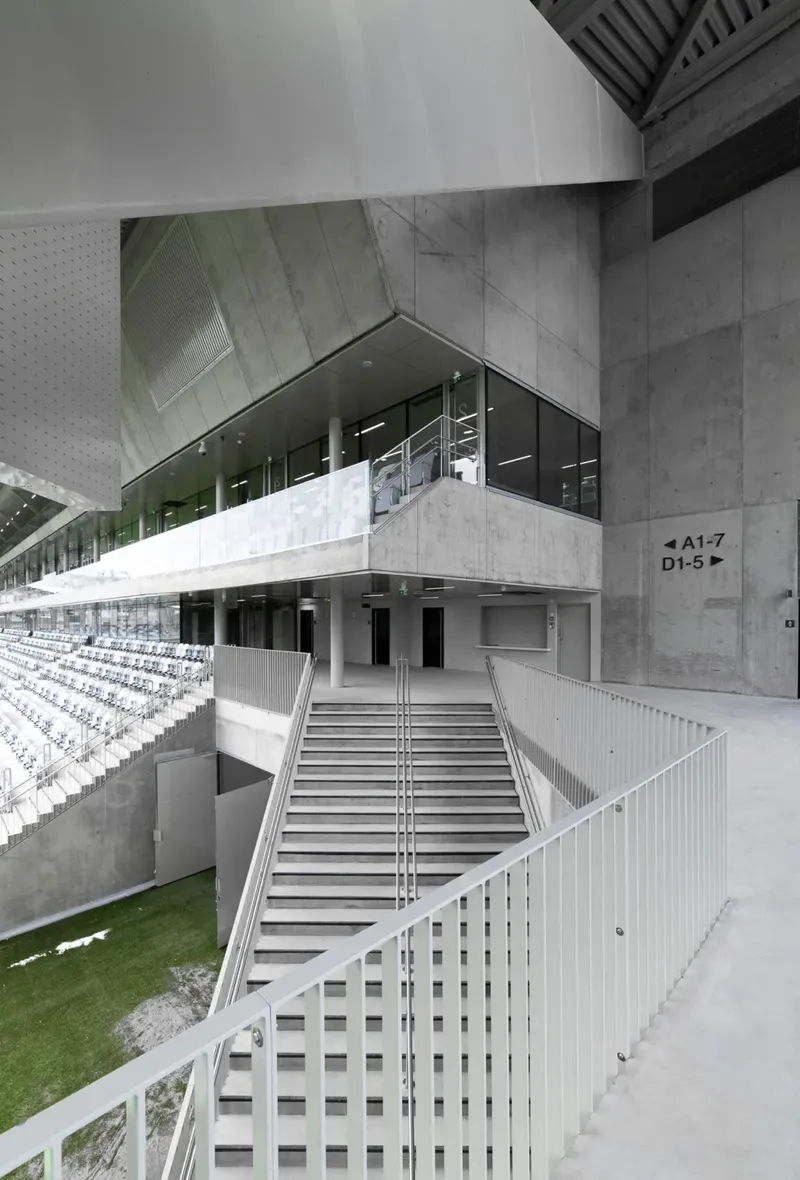
The football pitch is tightly framed, with spectator stands rising directly from the edges of the field to create an intense, atmospheric match-day experience. Glass-enclosed entrances protect the pitch from wind while maintaining strong visual connections between the stadium interior and the surrounding city.
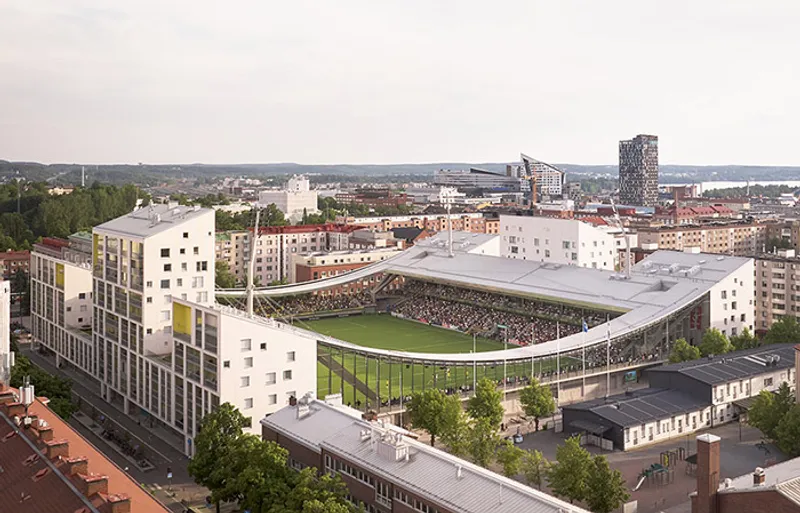
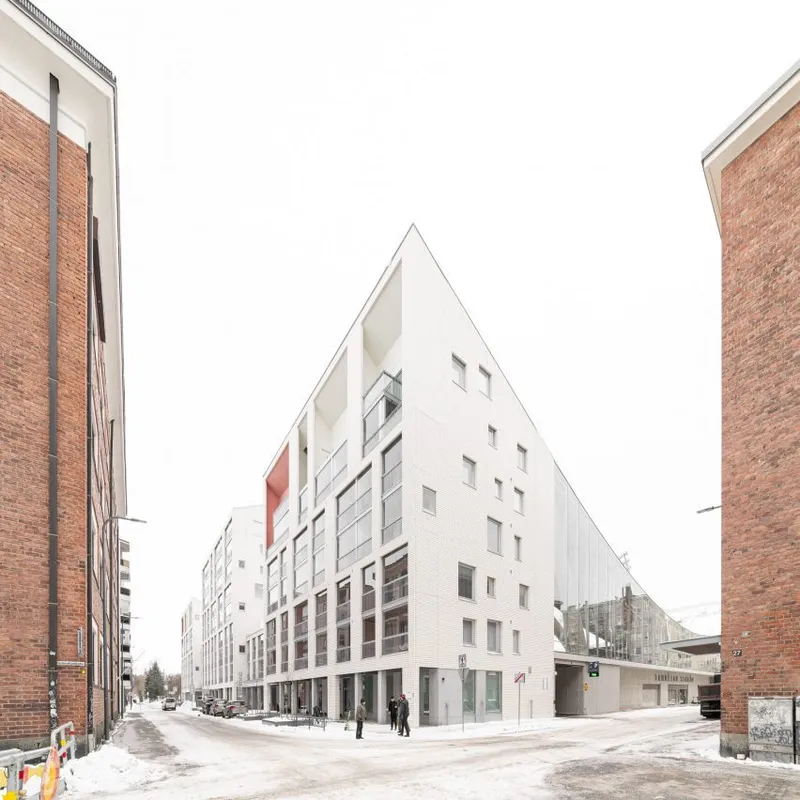
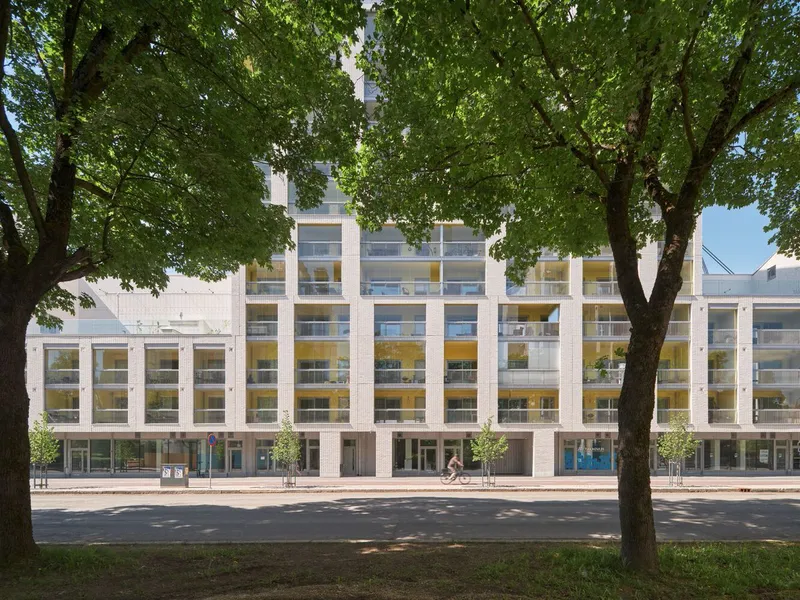
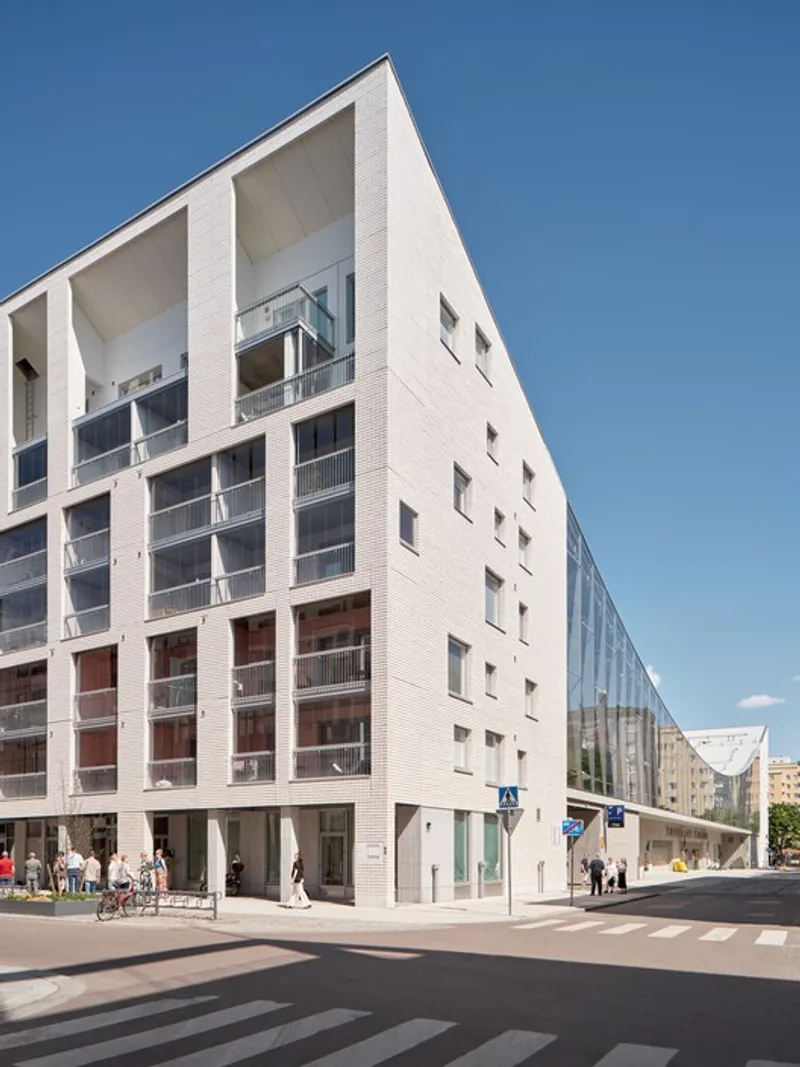
Surrounding the stadium are five residential buildings, a commercial centre, and shared parking facilities. Brick-clad housing volumes face active streets, while their elevated courtyards sit atop the hybrid block, creating layered public and private spaces above the stadium roofline.
A Roof That Unites the City Block
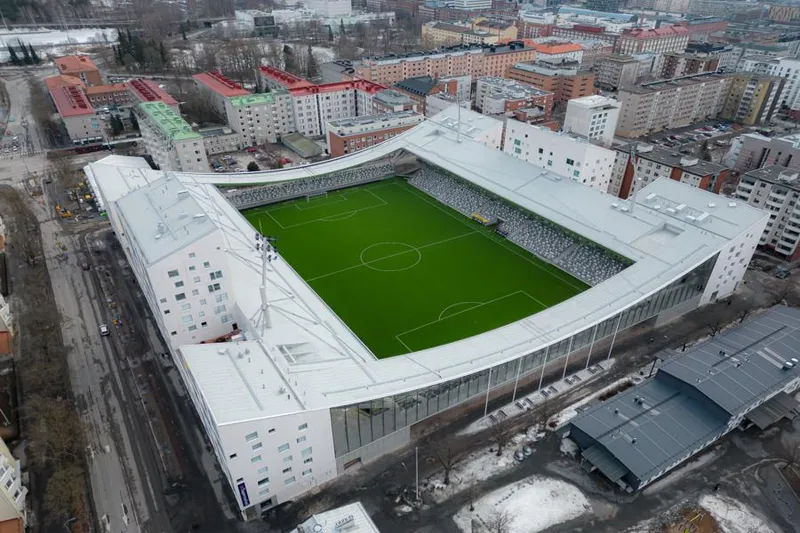
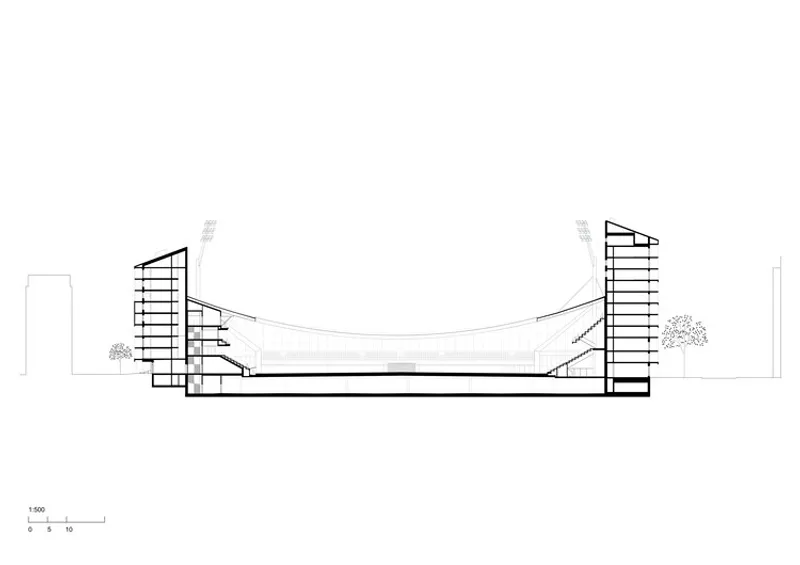
The most striking architectural feature of Tammela Hybrid Stadium is its arching roof, which spans the block from east to west. Echoing the form of suspended steel canopies, the roof visually unifies the stadium and surrounding residential buildings into a single landmark gesture.
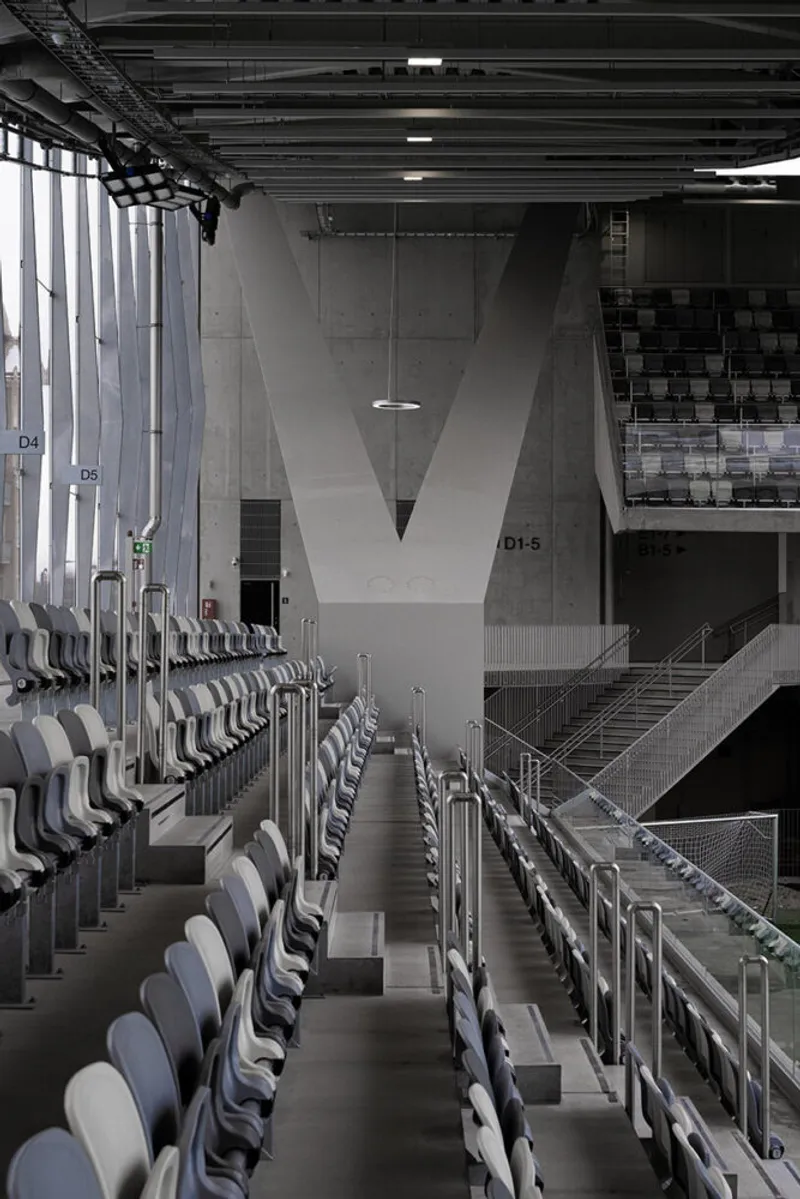
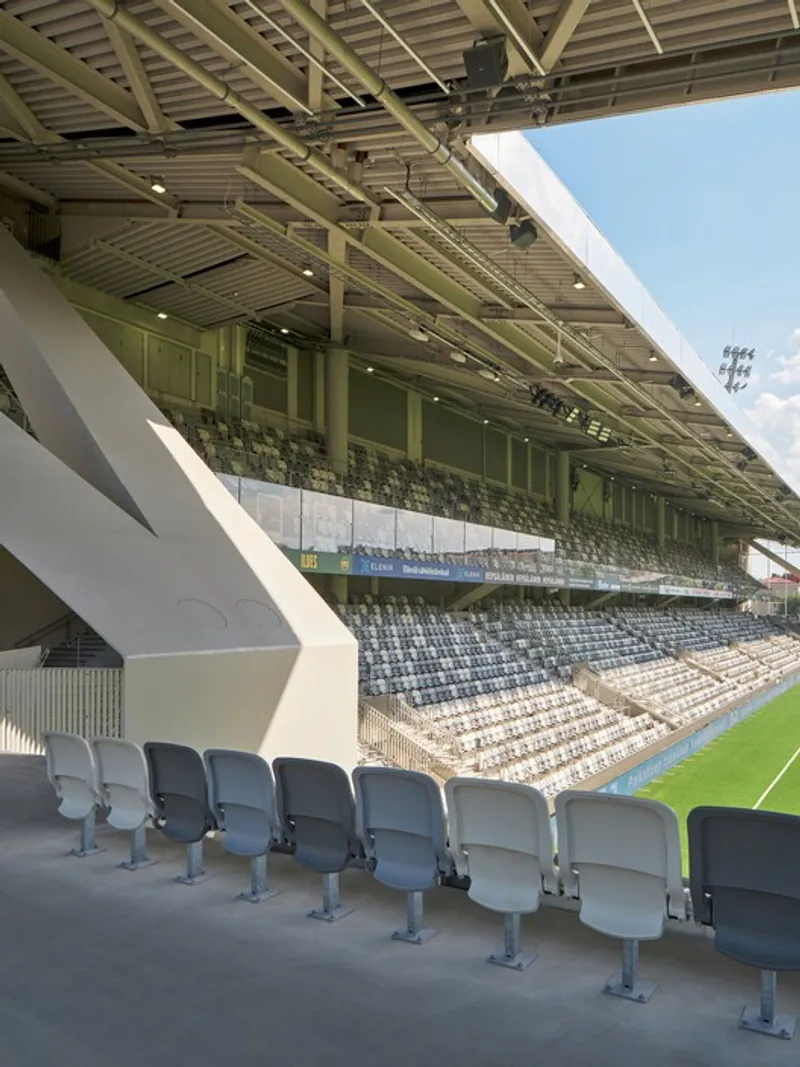
The lowest point of the arch aligns with the longitudinal axis of the football field, ensuring optimal daylight conditions. Careful placement prevents shadows from falling onto the pitch or the adjacent northern schoolyard. From a distance, the roof reads as a light, flowing line; up close, its structural expression becomes bold and tactile.
This roof is not merely symbolic—it communicates the public nature of the stadium while blending the hybrid block seamlessly into Tampere’s urban skyline.
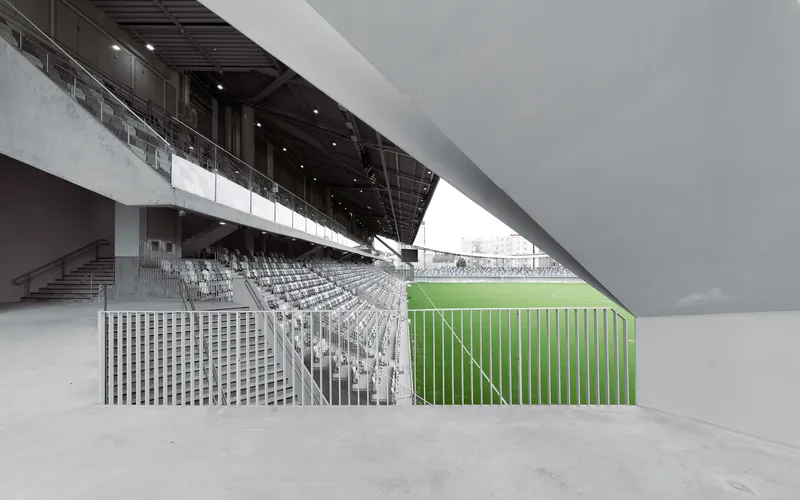
A Strategy for Sustainable Urban Densification
Tampere is widely regarded as Finland’s most attractive urban region, and the Tammela Hybrid Stadium plays a key role in strengthening the city’s vitality. Rather than demolishing existing structures, materials from the old stadium—including stands, lighting, and field components—were reused at other city sports facilities, reducing waste and embodied carbon.
The stadium’s central location allows spectators and residents to rely on public transport and existing infrastructure, minimizing car dependency. The hybrid block is connected to Tampere’s district heating and cooling network, while structural optimization reduced material use throughout the project.
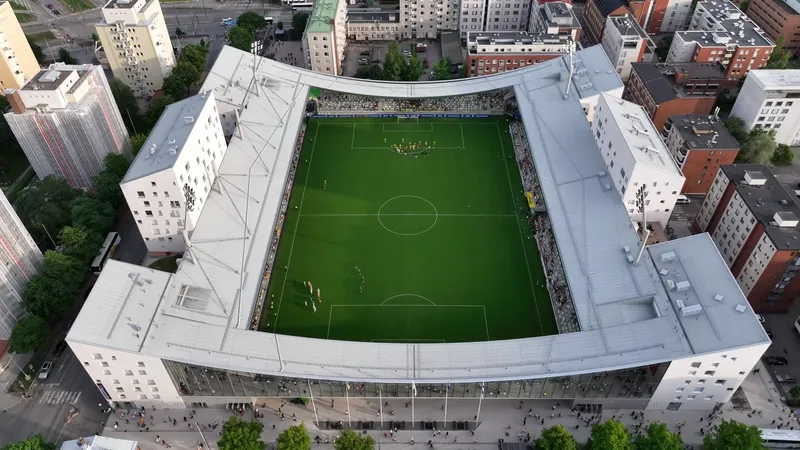
The light-coloured roof surface actively reflects sunlight and helps remove urban air pollutants, contributing to improved microclimatic conditions. By combining sports, housing, commerce, and services in one compact footprint, the project significantly shortens travel distances and maximizes land-use efficiency.
A Miniature City of Interconnected Functions
Tammela Hybrid Stadium functions as a miniature city, intricately connected to the surrounding street network. Residential buildings address park streets and open plazas on the stadium’s north and south sides, where spectators enter the block from its corners.
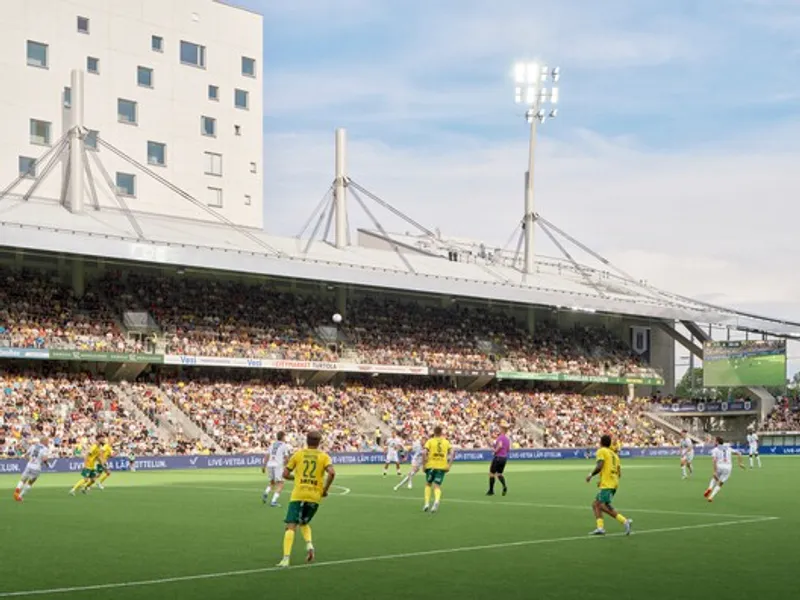
Circulation is carefully orchestrated: visiting supporters have a dedicated entrance at the northeast corner, while players, referees, VIPs, and media access the stadium from the west. Underground levels house parking, technical spaces, and residential support facilities, accessed discreetly from the south.
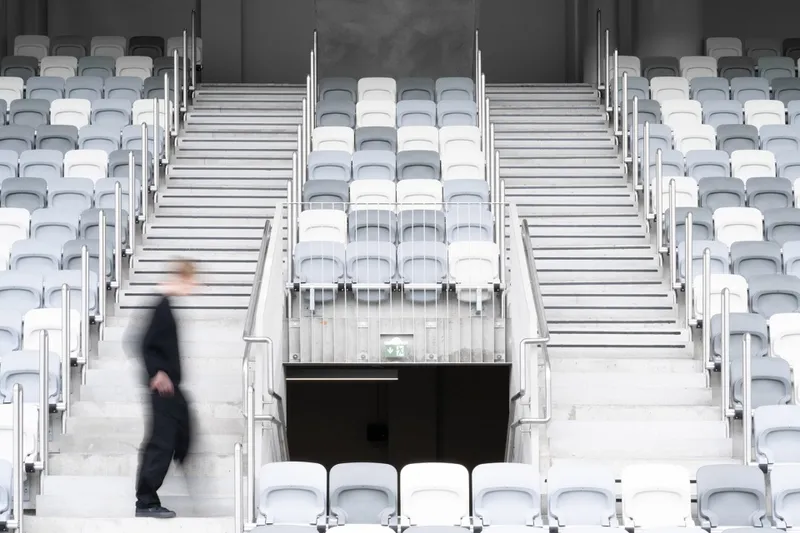
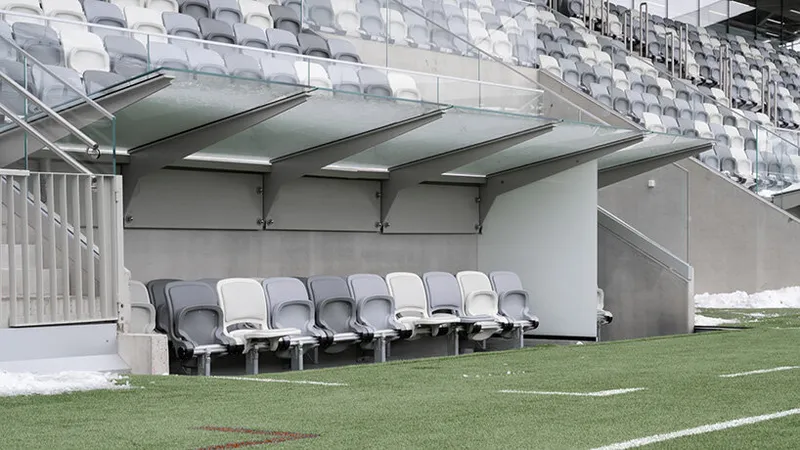
At street level, public stadium spaces wrap around the pitch on three sides, complemented by additional circulation and hospitality areas on the second level. The main stand sits on the eastern edge of the field, while restaurants, VIP lounges, and press facilities occupy the western side. Some upper-level apartments even enjoy direct views onto the pitch, an exceptional urban living experience.
Architecture, Structure, and Tectonic Expression
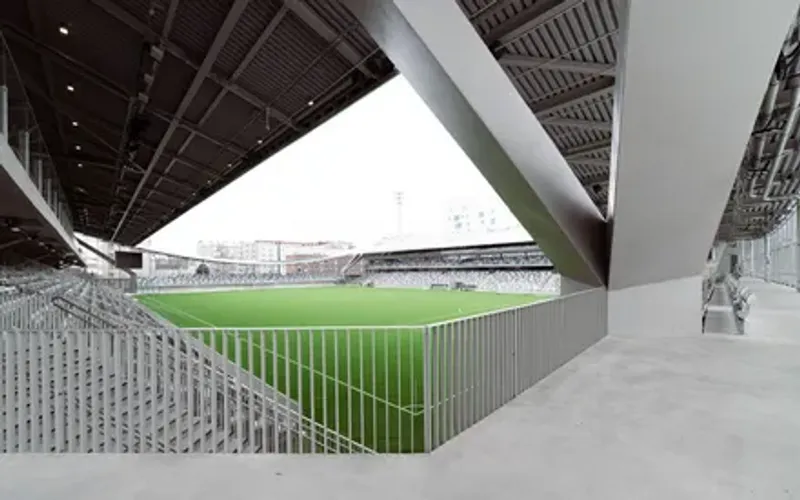
The project’s architectural language is deeply tectonic, with structure and form inseparable. Free-span stands eliminate visual obstructions, while carefully articulated joints in the steel canopies allow controlled movement. From close range, the materials feel robust and industrial; from afar, they resolve into elegant, almost poetic silhouettes.
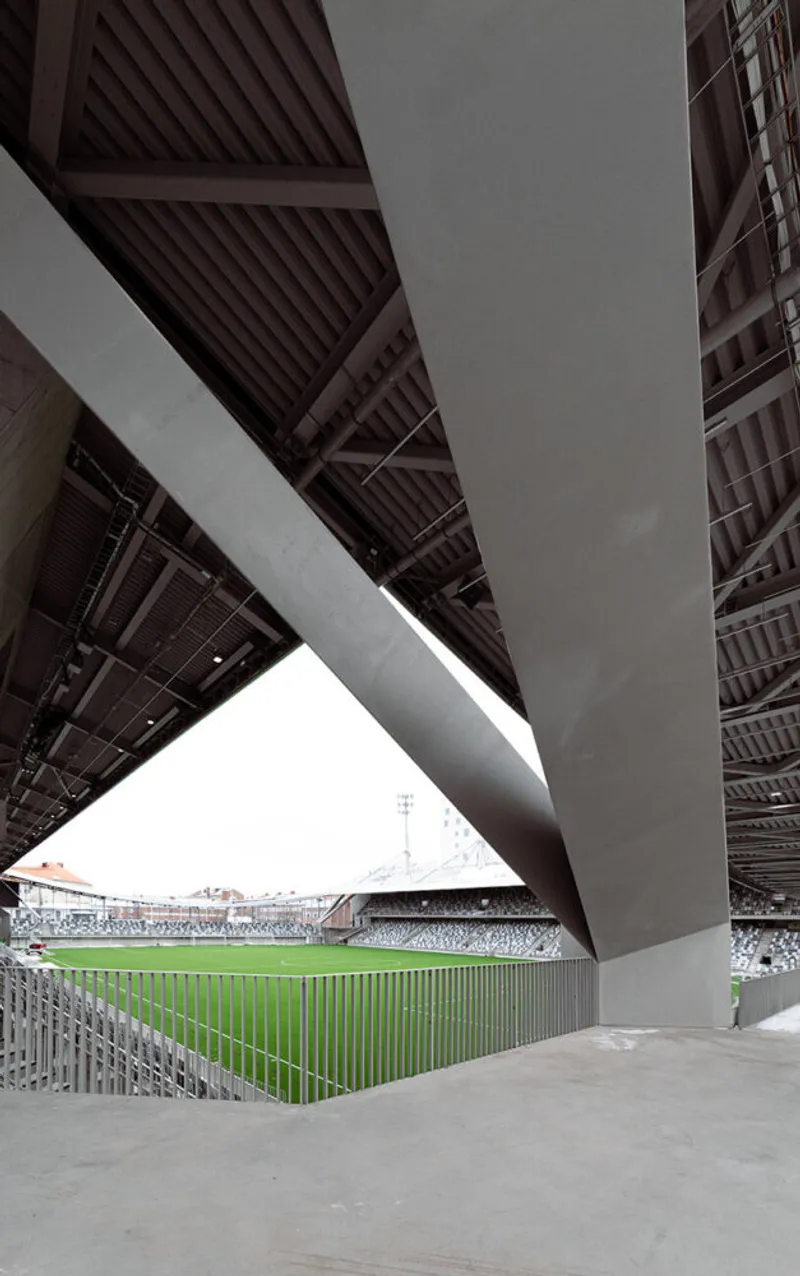
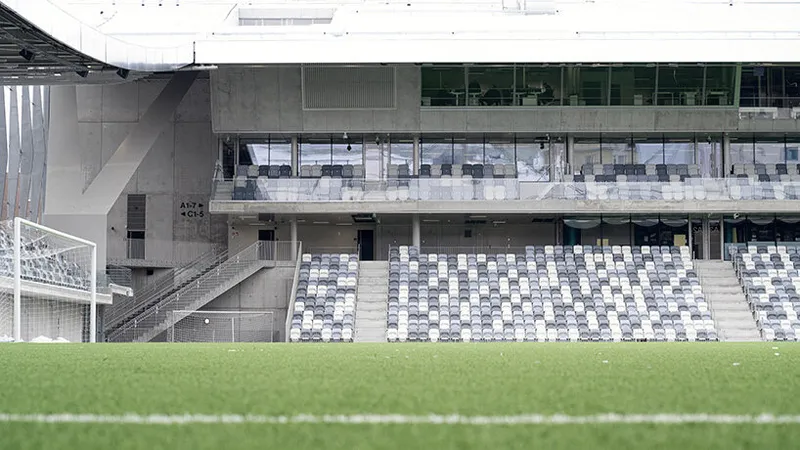
Structural solutions include steel composite columns, cast-in-situ reinforced concrete walls, and prefabricated elements. Sloped corner pillars and steel branch columns transfer canopy loads directly to the foundations, ensuring that residential buildings remain structurally independent from the stadium. This separation guarantees flexibility, longevity, and future adaptability for both programs.
Lighting plays a central role in shaping experience. A permanent light art installation, “Puolenvaihto” (Half-Time Break) by artists Tommi Grönlund and Petteri Nisunen, animates the underside of the canopies with kinetic light patterns inspired by football’s rhythm and energy.
A New Model for Sports Architecture
Tammela Hybrid Stadium is more than a football venue—it is a civic catalyst. By embedding sport within everyday urban life, the project restores football culture to the heart of the city while delivering housing, services, and public spaces that benefit residents year-round.
As a model of sustainable densification, mixed-use architecture, and football-led urbanism, the stadium sets a new benchmark not only for Finland, but for cities worldwide seeking to integrate large-scale sports infrastructure into vibrant, human-scaled neighbourhoods.
All the Photographs are works of Tuomas Uusheimo, Hannu Rytky




Popular Articles
Popular articles from the community


The Earth Pod: 3D Printed Homes for Resilient Refugee Communities
The Earth Pod reimagines refugee housing through 3D printed homes made from clay, combining resilience, self-sufficiency, and rapid shelter.

Co-Life: Senior Housing Design That Reconnects Older Adults With the City
Co-Life reimagines senior housing design through healing gardens, shared streets, workshops, and a sustainable community across generations.

The Musturak Paradise: Senior Living Architecture for a Connected Future in Temara, Morocco
The Musturak Paradise reimagines senior living architecture in Temara via private homes, social spaces, culture, community, and shared care.

Play: Fragments of Their World
Familiar architecture becomes modular playground design, creating safe spaces where displaced children can learn, connect, imagine and play.

Similar Reads
You might also enjoy these articles


Hodi-Mandai Geram
Project Function: Preservation and revitalization of the Intangible heritage and socio-spatial identity of the Hodi by Housing, Cultural Memory Center, Sacred Grove, landscape, local tourism economy


Olio Towers: A Mid-Rise for Performers That Fuses Housing, Rehearsal, and Stage
Located blocks from Houston's Theater District, this modular tower stacks living units around a central performance atrium.

Oasis: Modular Green Housing Carved into Dhaka's Urban Fabric
A shortlisted Plugin Housing entry reclaims unauthorized settlements in Dhaka with stepped concrete volumes, green roofs, and ventilation-driven design.

Black Hole: A Floating Megastructure for the Post-Physical Era
Emiliano Mazzarotto envisions a spherical, self-scaling arena where e-sports, digital hotels, and holographic stadiums replace traditional public space.


Explore Stadium Competitions
Discover active competitions in this discipline



Challenge to reimagine the Iron Throne


Photograph architecture without architects


Illustrate the lost glory of Angkor Wat - Render Challenge


Design challenge to reuse E-waste
Comments (0)
Please login or sign up to add comments
No comments yet. Be the first to comment!