
The Multifunctional Art Center Architecture at Lhozhag County Middle School: A Cultural and Educational Landmark
A multifunctional art center in Tibet blending architecture, culture, and nature, fostering education and community exchange at Lhozhag.

The Multifunctional Art Center Architecture at Lhozhag County Middle School, designed by Shenzhen Huahui Design, stands as a remarkable example of architecture deeply rooted in cultural identity and environmental harmony. Located in the Tibetan region of Shannan, China, this 6009 m² facility, completed in 2024, serves not only as an art education space but also as a vibrant cultural exchange hub for students, teachers, locals, and international visitors.
Contextual Integration with Landscape and Culture
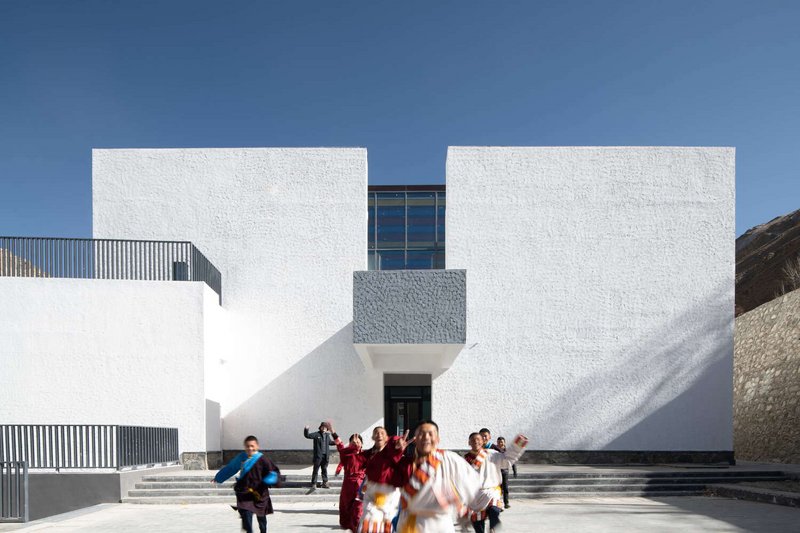
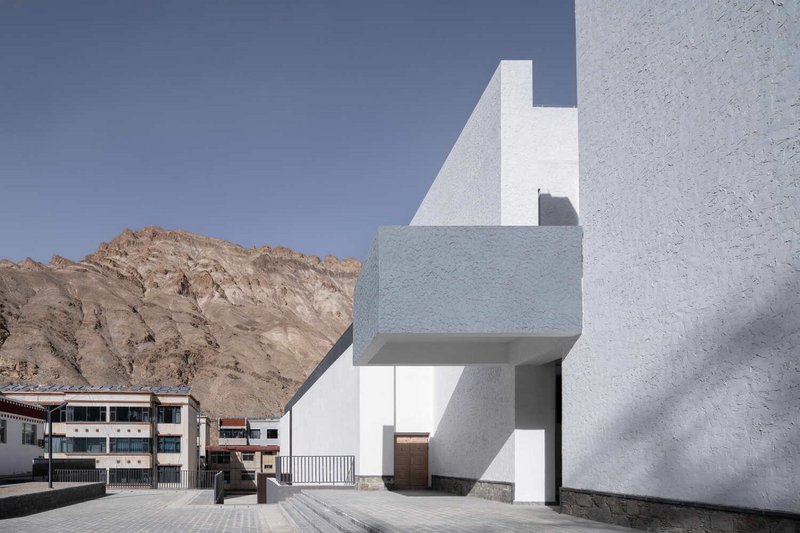
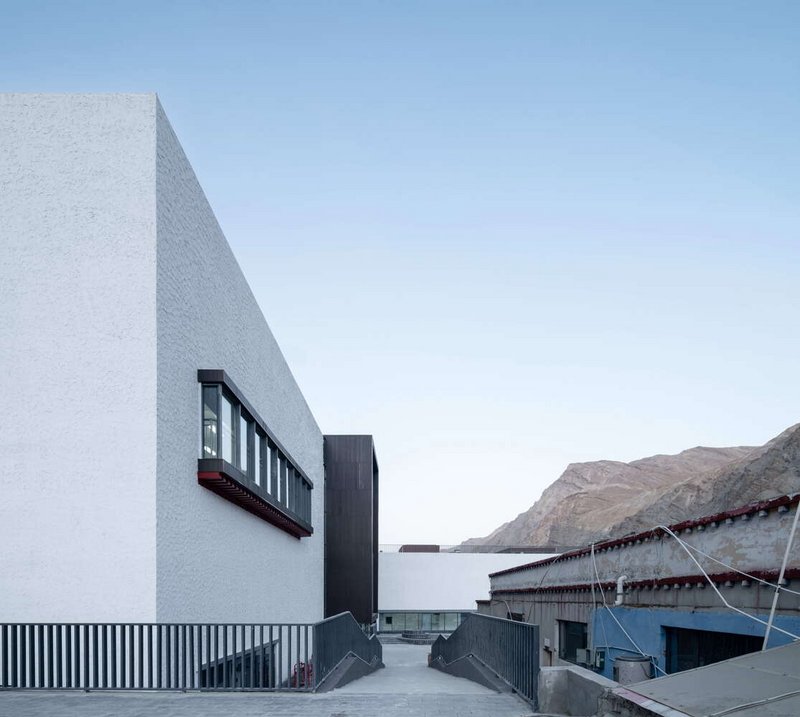
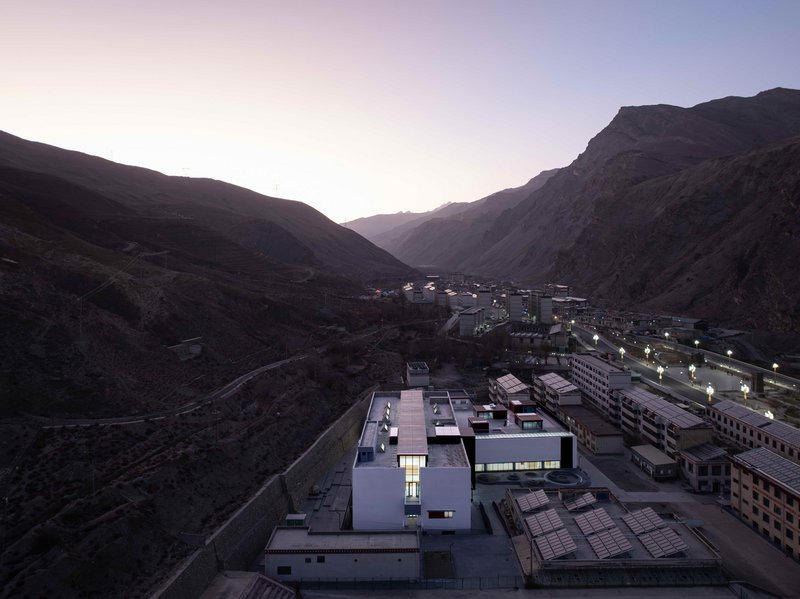
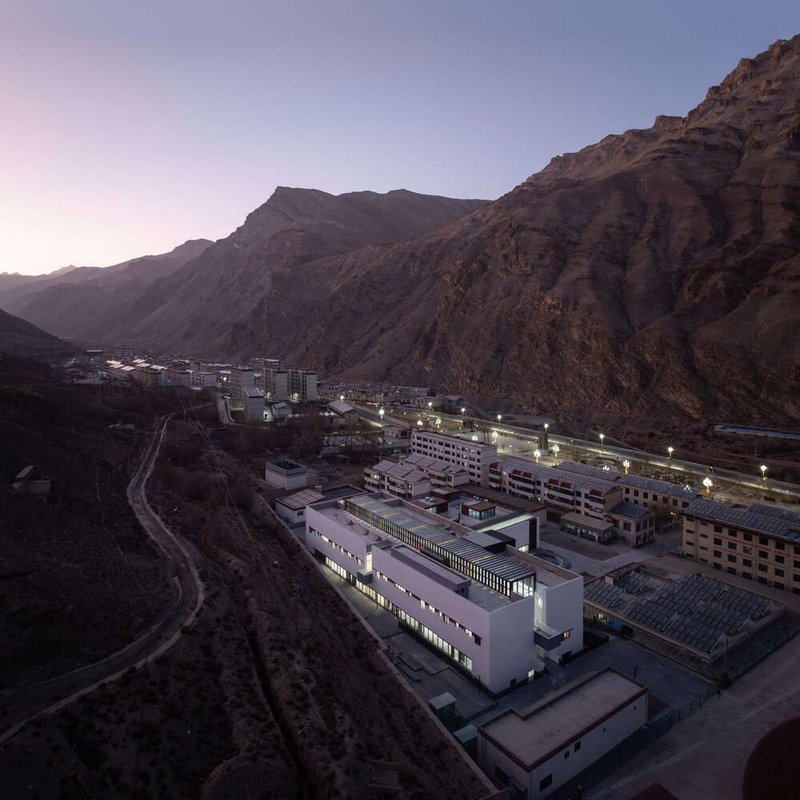
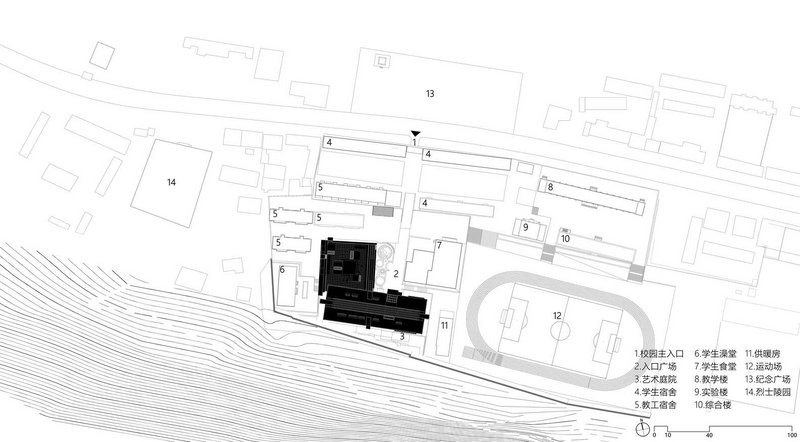
The design of the Multifunctional Art Center thoughtfully responds to the fragmented and linear layout of the existing Lhozhag Middle School campus. Positioned at the foothills of a south-facing mountain slope, the center weaves the natural elevation and surrounding landscape into its spatial arrangement, transforming the site’s limitations into unique architectural opportunities. The project creates a continuous spatial axis linking the school entrance to the memorial square and nearby Lhozhag Gorge, bridging the school with its broader urban and natural context.
Architectural Form and Spatial Configuration
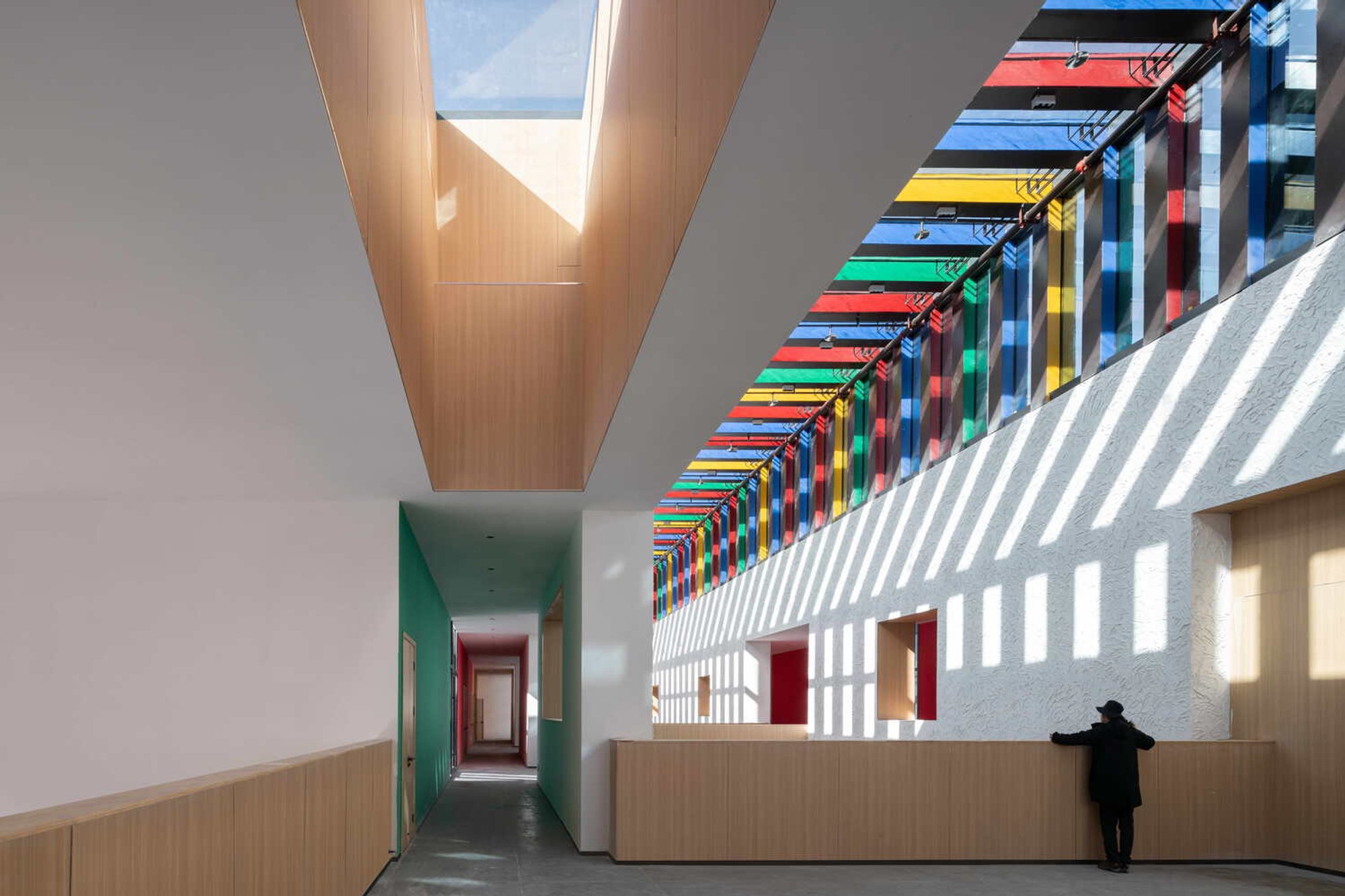
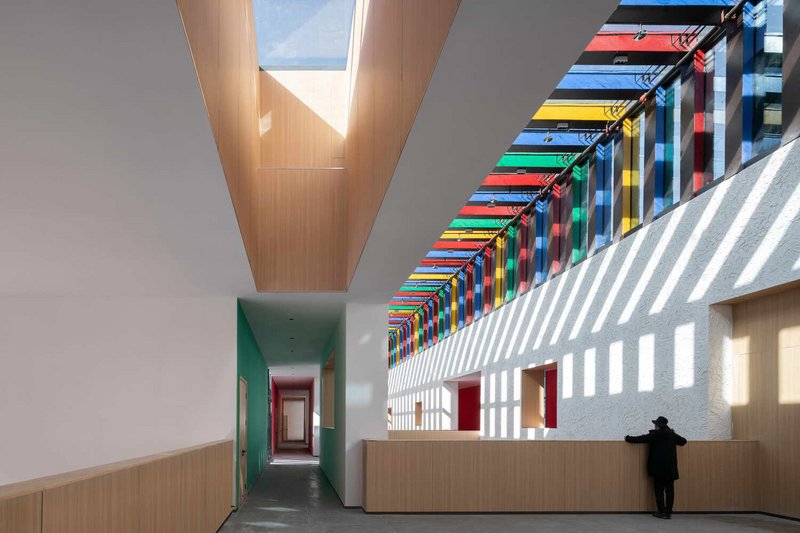
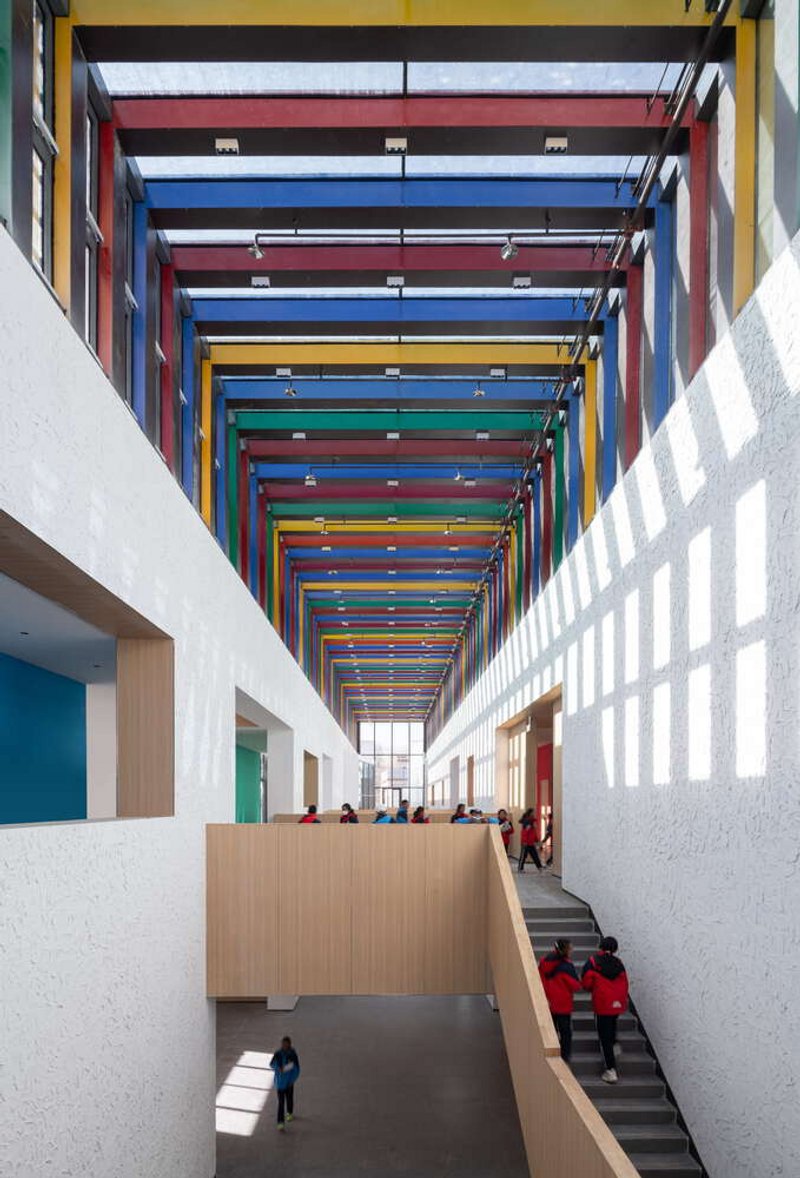
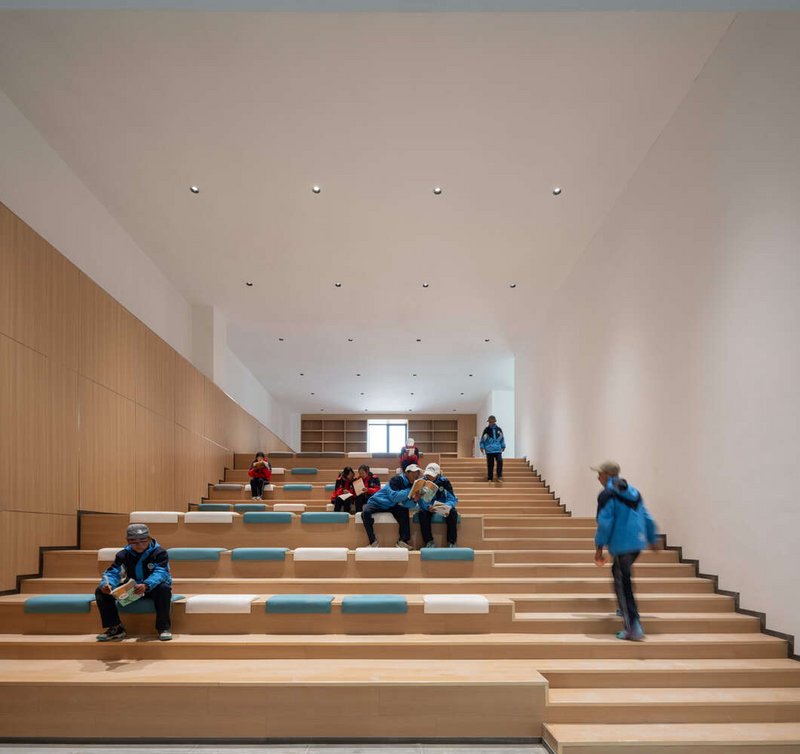
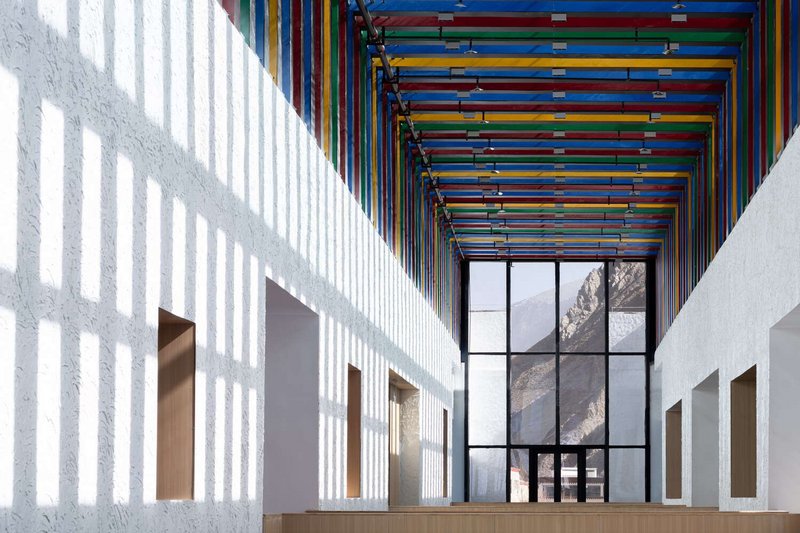
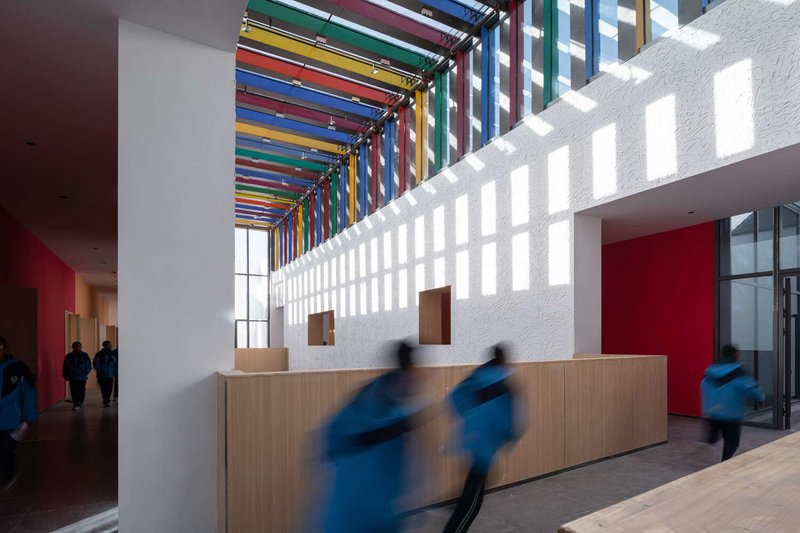
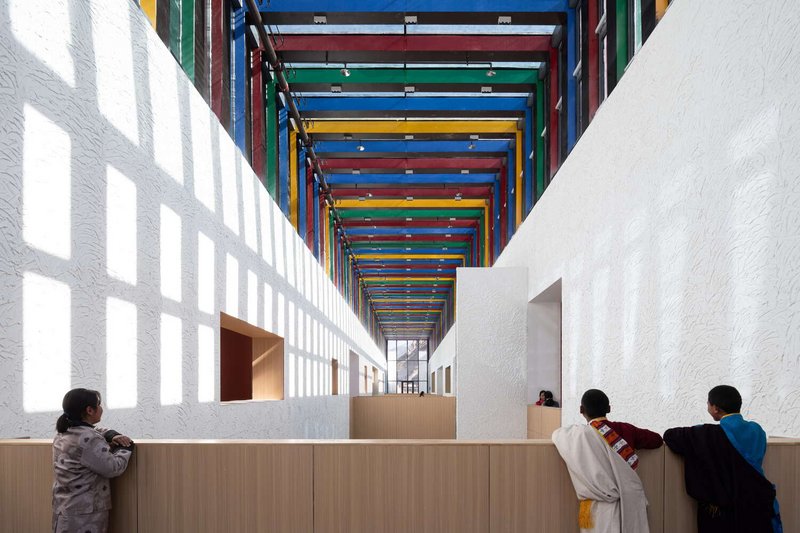
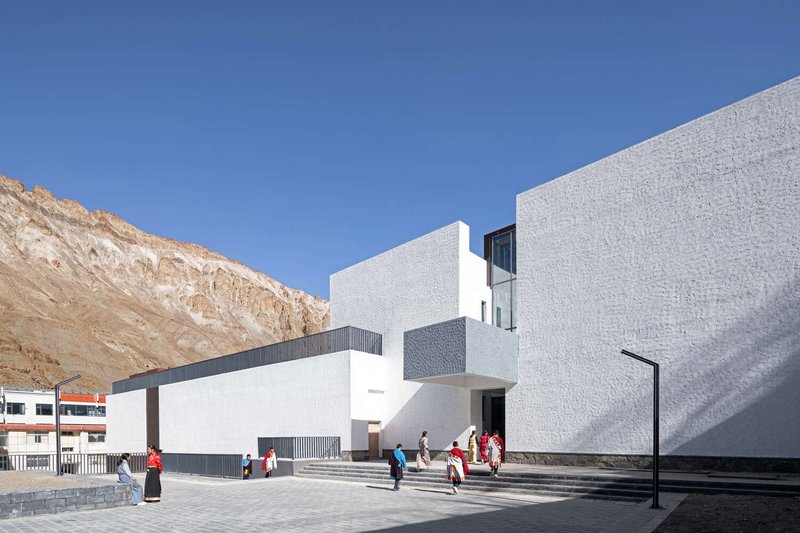
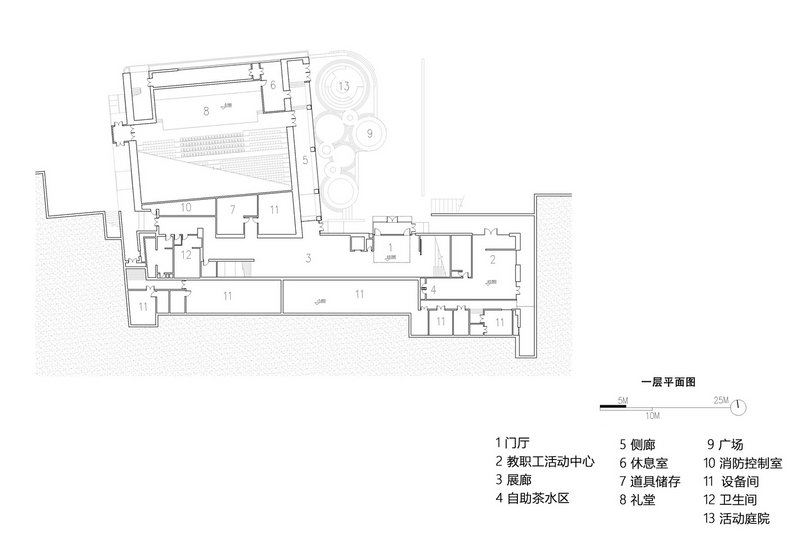
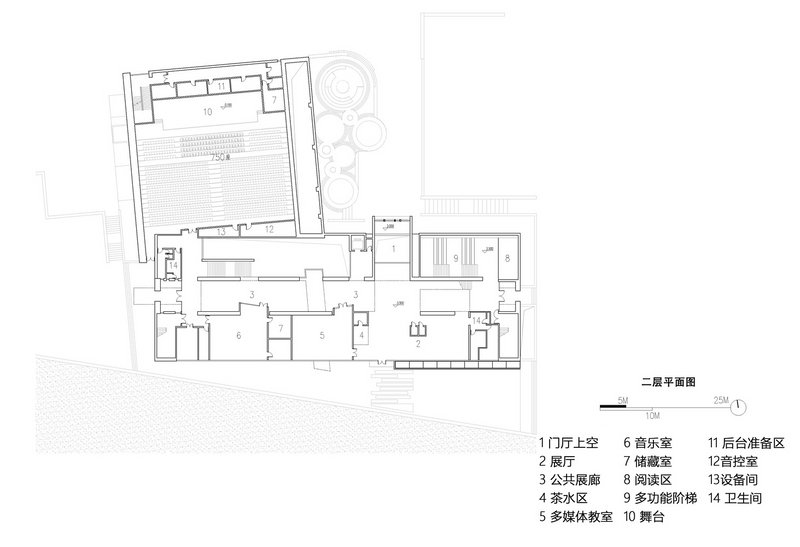
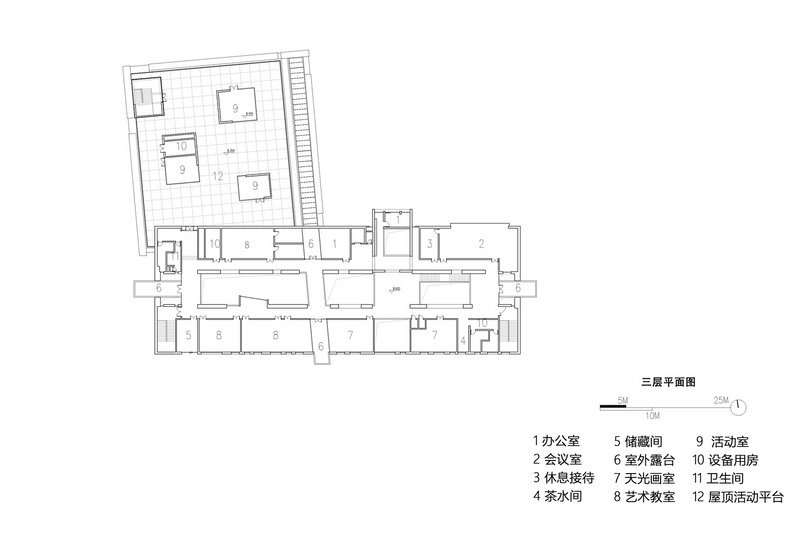
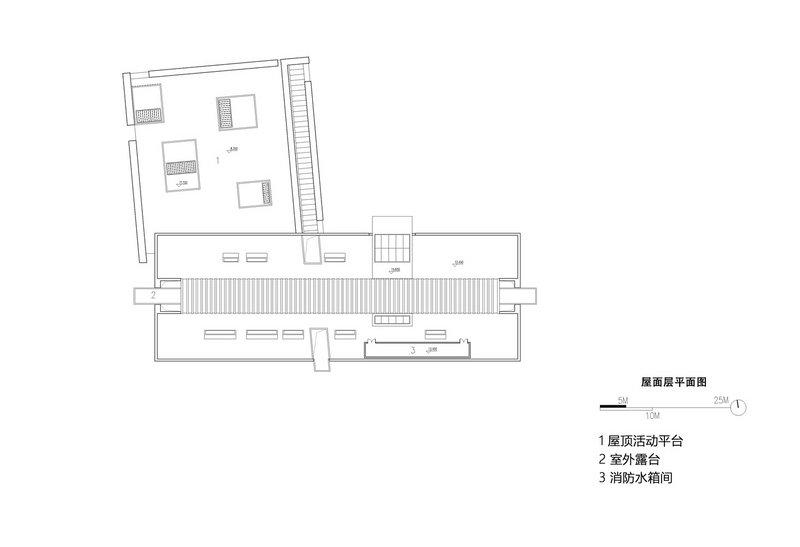
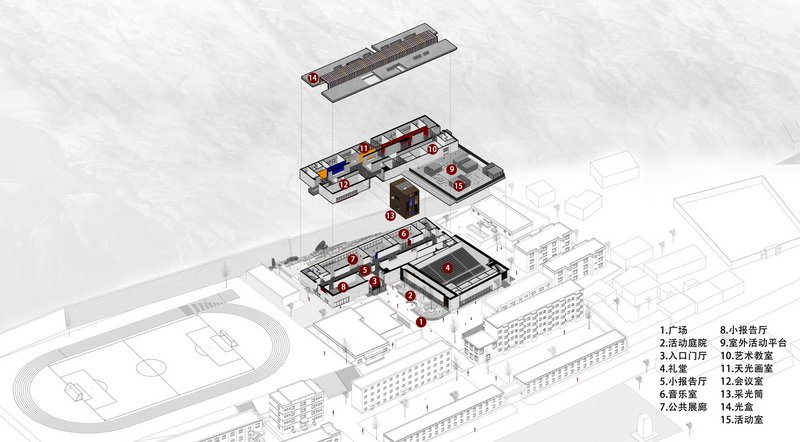
The building is composed of two primary volumes — a linear form and a cubic mass — arranged in an L-shaped layout. The linear volume features a "sandwich-like" spatial configuration with two solid masses flanking a narrow, double-height atrium that floods the interior with natural daylight. This atrium acts as the central hub for circulation, exhibitions, and gatherings, while smaller adjoining spaces house classrooms and studios.
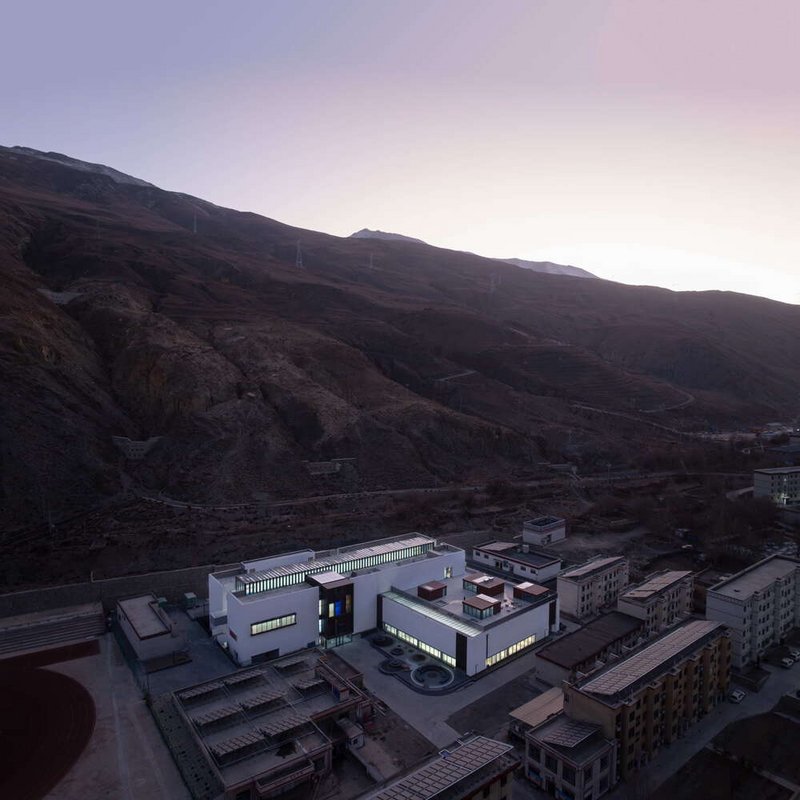
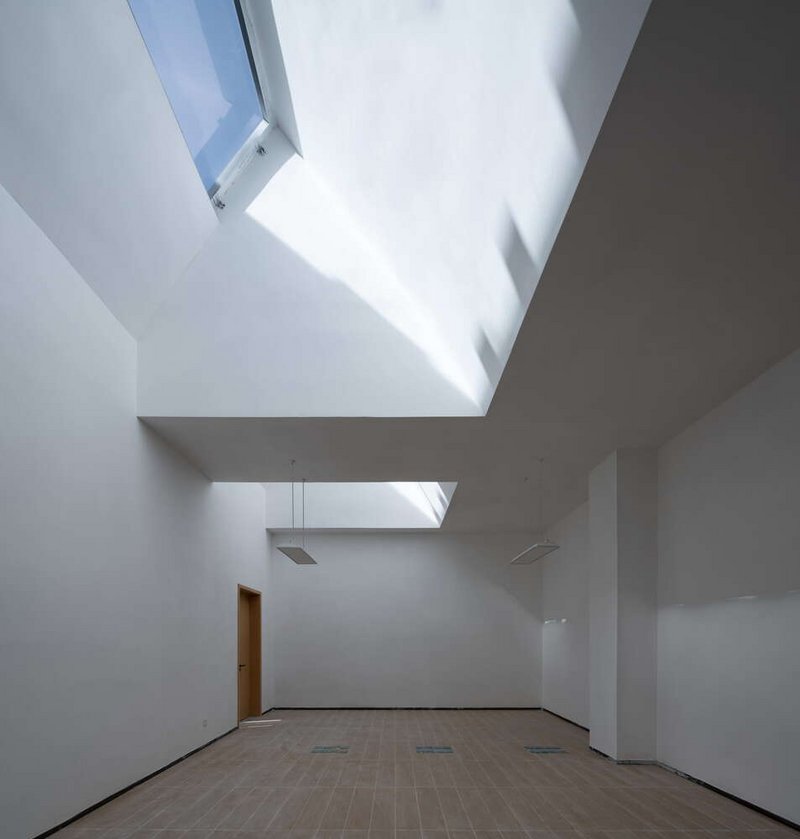
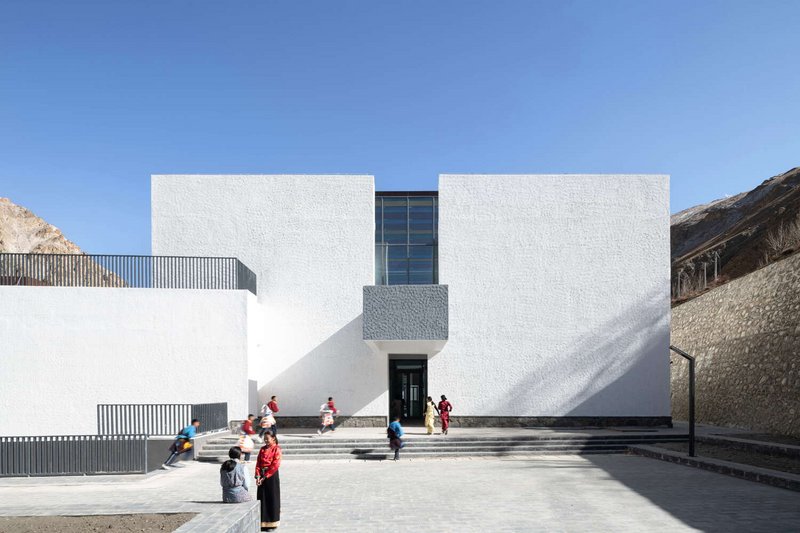
The cubic volume contains a 700-seat auditorium with skylights along its side, and its roof is designed as an accessible outdoor platform for extracurricular activities. This rooftop serves as an extension of the school’s functional space, blending indoor and outdoor experiences with playful student interaction.
Embracing Natural Light and Environmental Efficiency
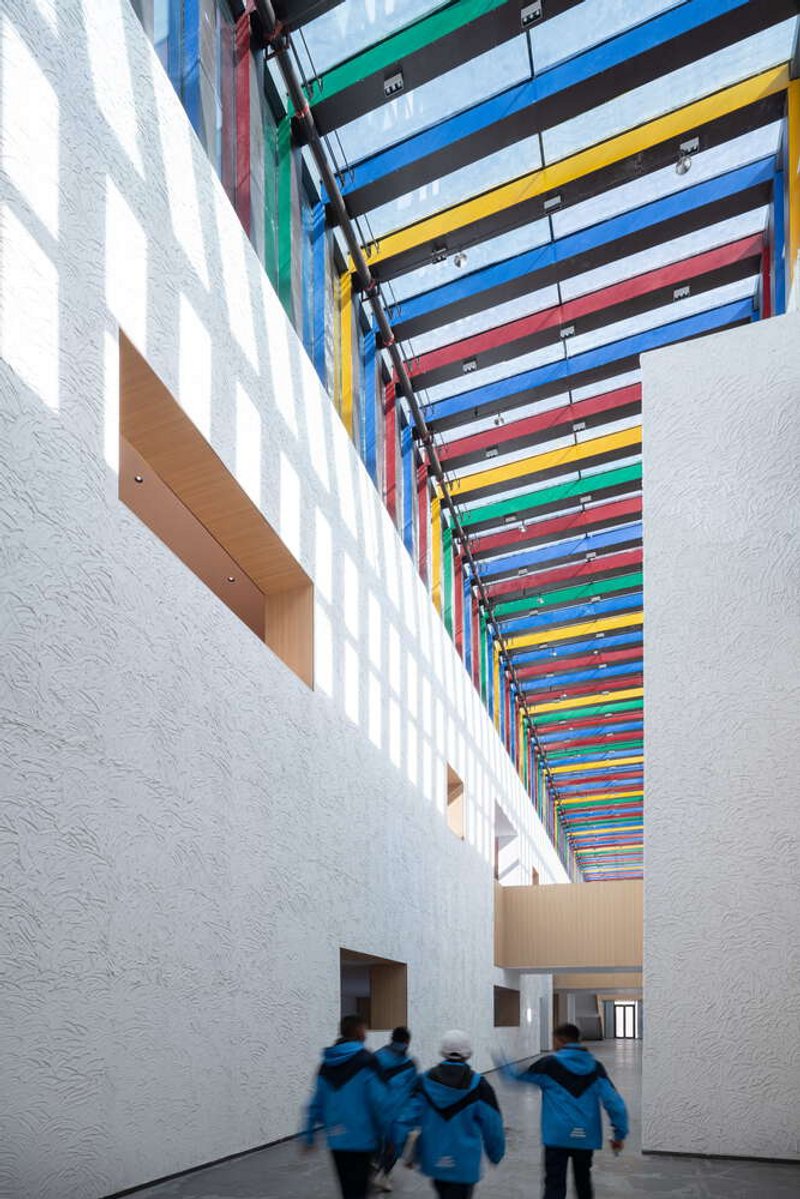
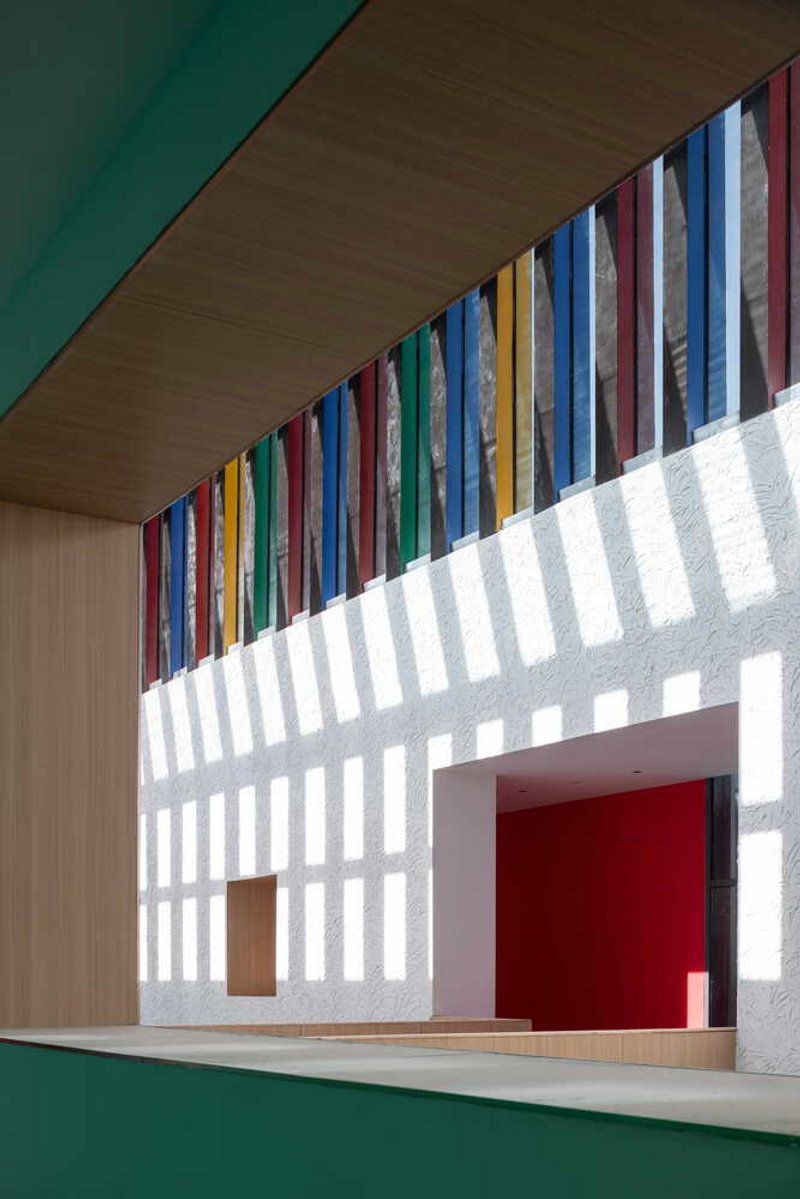
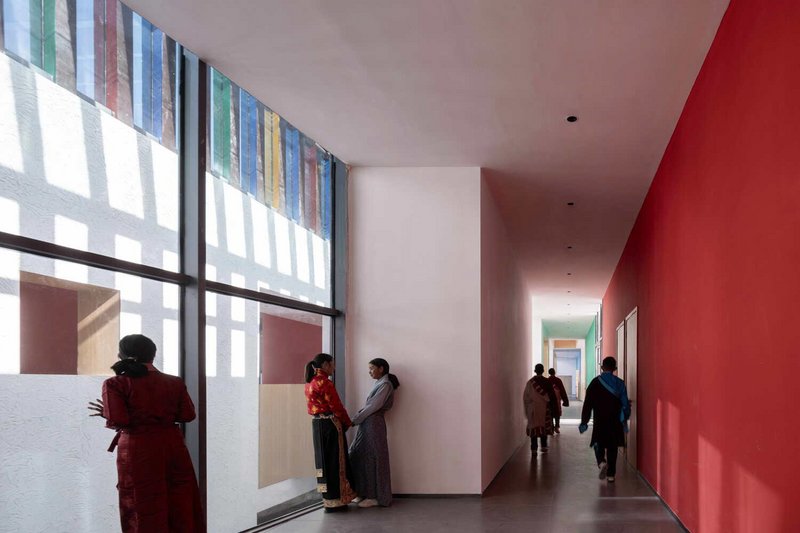
Given the site's constraints for southern daylighting, the design incorporates skylights and carefully arranged apertures to maximize solar penetration, significantly reducing heating needs during harsh winters. The abundant natural light invigorates the interior while creating dynamic visual experiences through changing shadows and reflections.
Materiality and Architectural Language
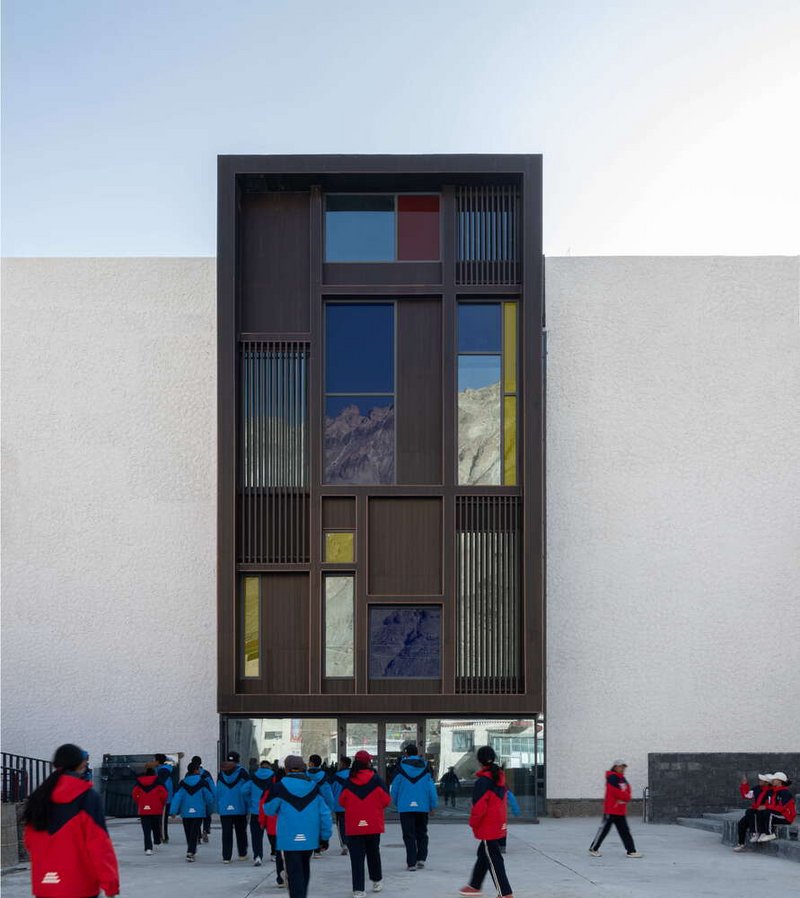
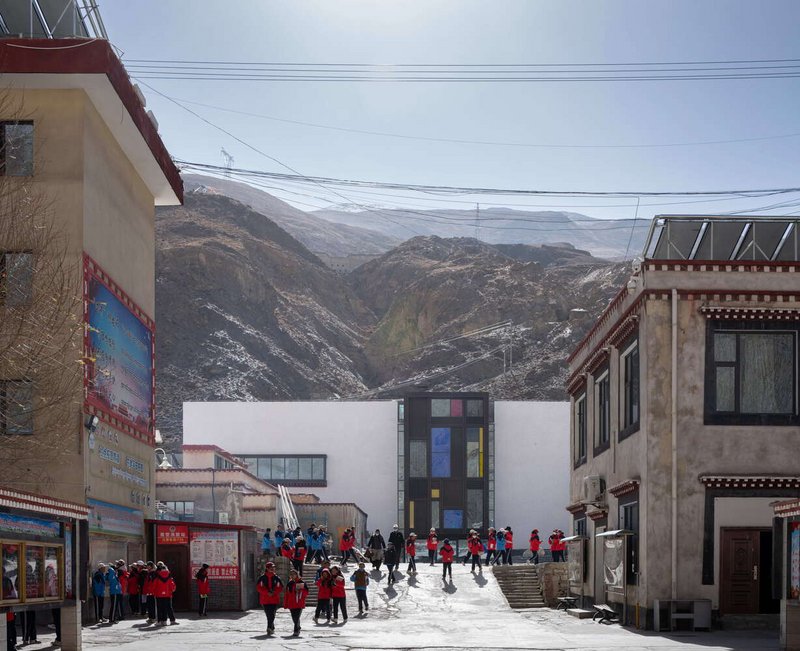
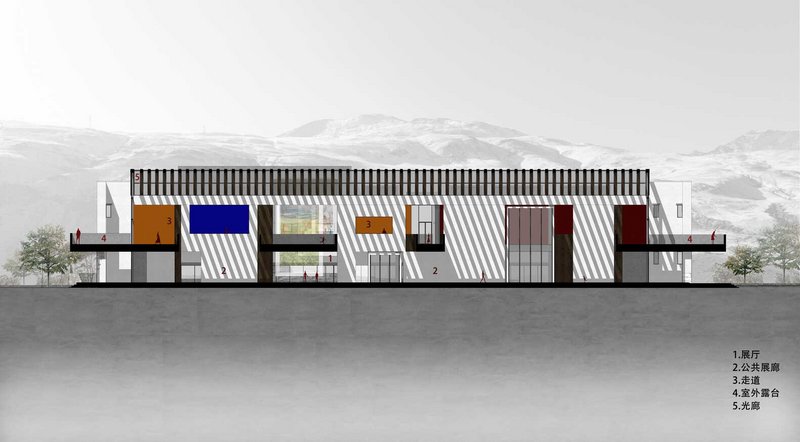
The project’s material palette draws inspiration from the raw and elemental nature of the Tibetan environment. White walls, concrete finishes, and glass facades harmonize with the natural surroundings. The entrance façade features a unique "Mondrian frame" design with mirrored glass panels reflecting the sky, mountains, and local culture, symbolizing a dialogue between tradition and modernity.
The "Canyon of Light" Atrium: Heart of the Design
At the core of the building lies the breathtaking "Canyon of Light" atrium — a 60-meter-long, 7-meter-wide, and 14-meter-high vertical void that embodies the natural canyons of Tibet. This space not only connects diverse functional areas but also frames views of the distant mountains, forging a powerful connection between the interior environment and the natural landscape. The kaleidoscopic light filtered through the atrium's openings enhances the poetic and spiritual qualities of the space.
Cultural Significance and Educational Impact
The Multifunctional Art Center symbolizes the intersection of Tibetan heritage and contemporary education. It provides a nurturing space where students can celebrate their cultural roots while engaging with modern artistic practices. The building acts as a cultural threshold, inviting dialogue and exchange between the school community and the broader public. This approach reflects the philosophy that architecture should have both "roots" and "wings," grounding users in their identity while encouraging exploration beyond.
A Harmonious Dialogue Between Architecture, Culture, and Nature
Shenzhen Huahui Design's Multifunctional Art Center Architecture masterfully balances modern architectural expression with respect for local context, climate, and cultural identity. By weaving together functional spaces, natural light, and symbolic design elements, it creates an iconic educational landmark that not only enhances Lhozhag County Middle School but also embodies the spirit of Tibetan culture and its evolving future.
All Photographs are works of Right Angle Image


Popular Articles
Popular articles from the community

Solar Steam: A Climate-Responsive Architecture That Redefines the Monument
A climate-responsive memorial architecture that transforms heat, decay, and time into a living system reflecting humanity’s ecological impact.
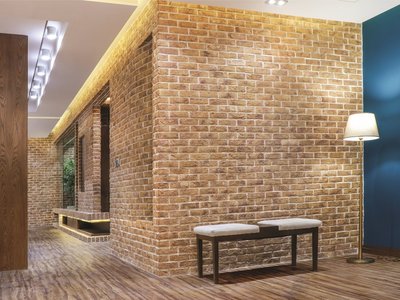
A Contemporary Take on Iranian Residential Architecture
A modern interior design in Mashhad that reinterprets brick, light, and spatial flow to create a warm, contemporary residential architecture.
Treehouse Apartment: A Warm Timber Interior Blending Craft, Play, and Contemporary Living
Warm timber apartment with integrated treehouse, combining natural materials, craftsmanship, and playful design to create a flexible, family-oriented living environment.
Inverted Architecture Installation by Studio Link-Arc: Exploring the Intersection of Architecture and Living Organisms
Inverted Architecture Installation by Studio Link-Arc blends mycelium, sustainability, inverted design, ecological cycles, and urban adaptive architecture in Shenzhen.

Similar Reads
You might also enjoy these articles

Bamboo Housing Challenge 2026: Design Affordable, Sustainable Homes Using Bamboo
An international design competition by Bamboo U and IBUKU inviting architects and designers to reimagine affordable housing using bamboo — with the winning design built full-scale in Bali.
Computational Design & Education: Beegraphy Design Awards Introduces 7th Category (Featuring Jiyun's Innovative Approach)
Dive into Beegraphy’s 7th Design Awards category, where computational design meets education to create immersive, interactive learning tools, inspired by Jiyun’s work.
From Parametric Lighting to Urban Furniture: Join the 2nd Workshop in Beegraphy’s Computational Design Series
Dive into Cutting-Edge Design Techniques and Practical Applications with Industry Experts
Introducing Sphere by UNI: Pioneering a New Era in AEC Industry
Unlocking Global Potential with BIM and Agile Management

Explore Architecture Competitions
Discover active competitions in this discipline




The International Standard for Design Portfolios


The Global Benchmark for Architecture Dissertation Awards


The Global Benchmark for Graduation Excellence


Challenge to reimagine the Iron Throne
Comments (0)
Please login or sign up to add comments
No comments yet. Be the first to comment!