
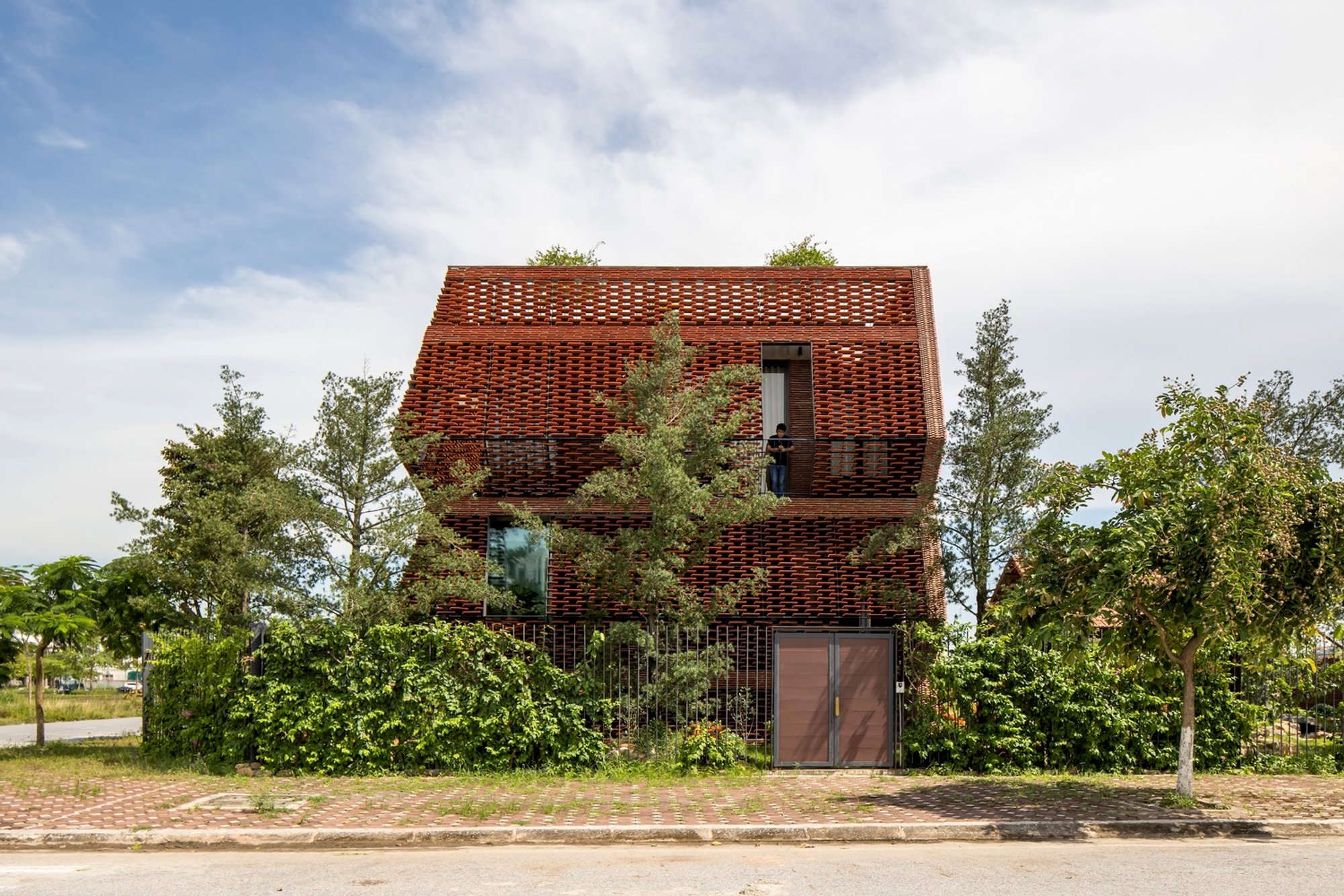
Tile Nest House by H&P Architects – A Contemporary Home Rooted in Vietnamese Tradition
Tile Nest House by H&P Architects blends traditional Vietnamese tiles, green balconies, and sustainable design, creating a porous, nature-immersed living space.

The Tile Nest House, designed by H&P Architects, is a 450 m² residential project located in Phủ Lý, Hà Nam Province, Vietnam. Completed in 2021, the home redefines traditional Vietnamese materials and spatial concepts by merging modern architecture with cultural memory, sustainability, and environmental adaptation.
Site Context and Concept Development
Building on Historical Ground
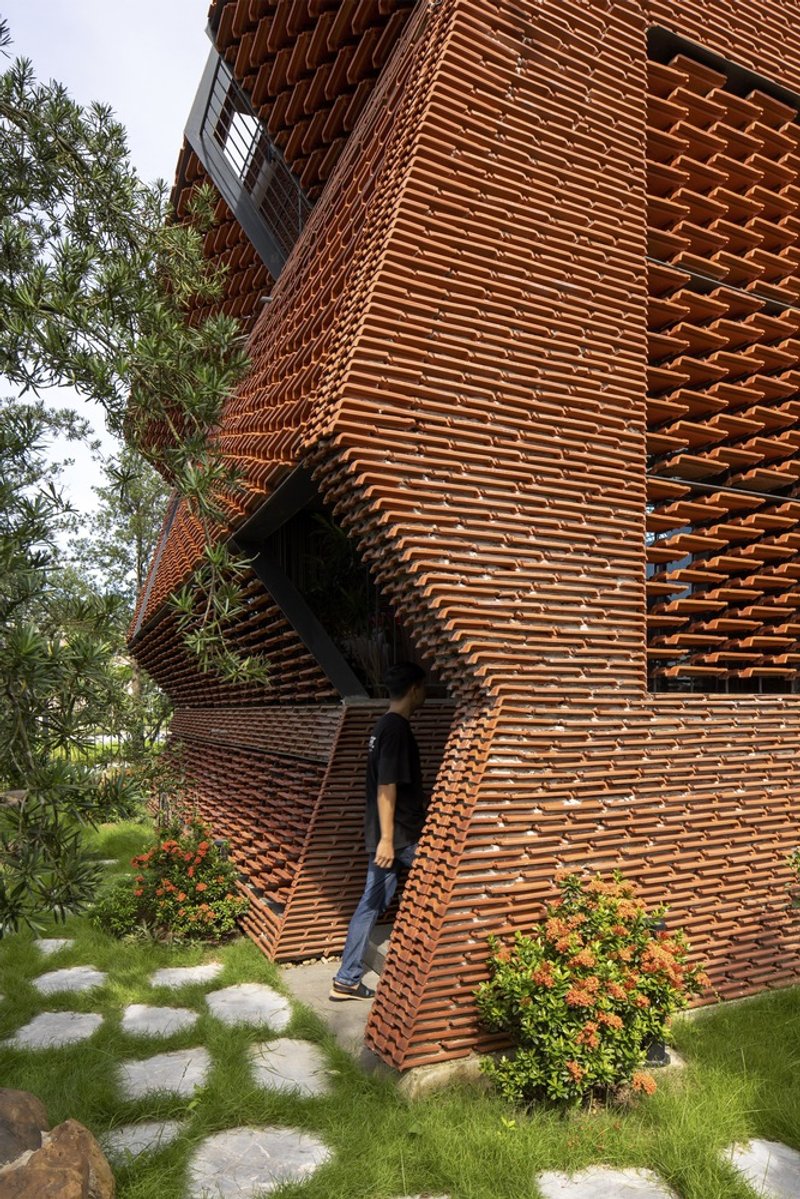
The site lies in a newly developed urban district of Phủ Lý City, near an area historically known as a cemetery. Before construction, the soil had to be excavated to ensure safe building conditions. Instead of discarding this circumstance, the architects integrated it into the design concept.
Inspiration from Pit Houses and Bird Nests
The design narrative draws from two symbolic references:
- Ancient Pit Houses – partially sunken dwellings traditionally built underground.
- Bird Nests – organic structures with multiple layers, nooks, and interwoven forms.
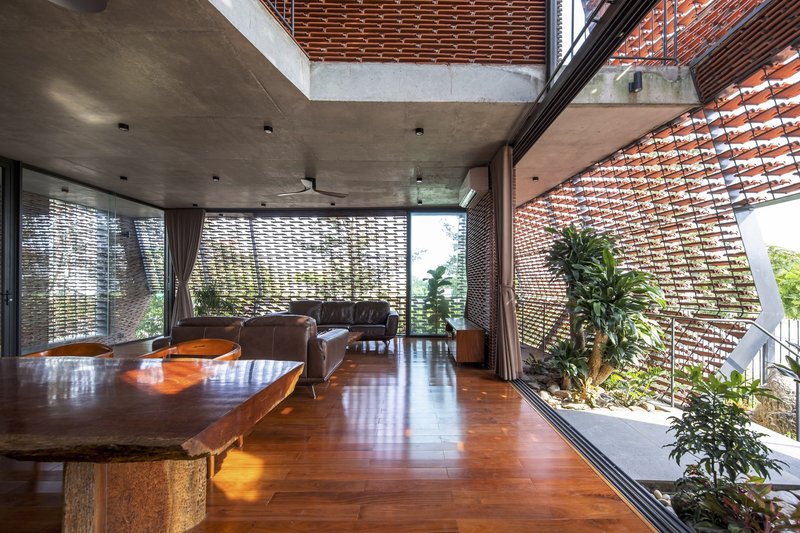
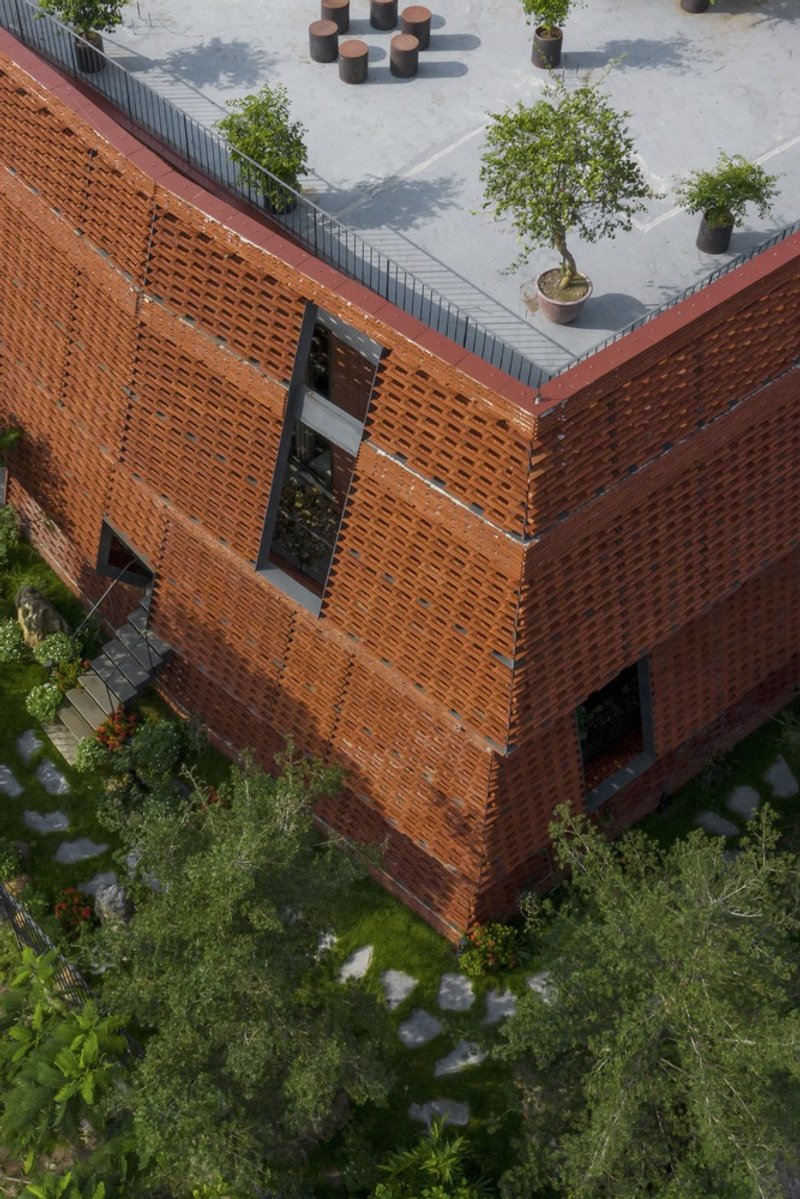
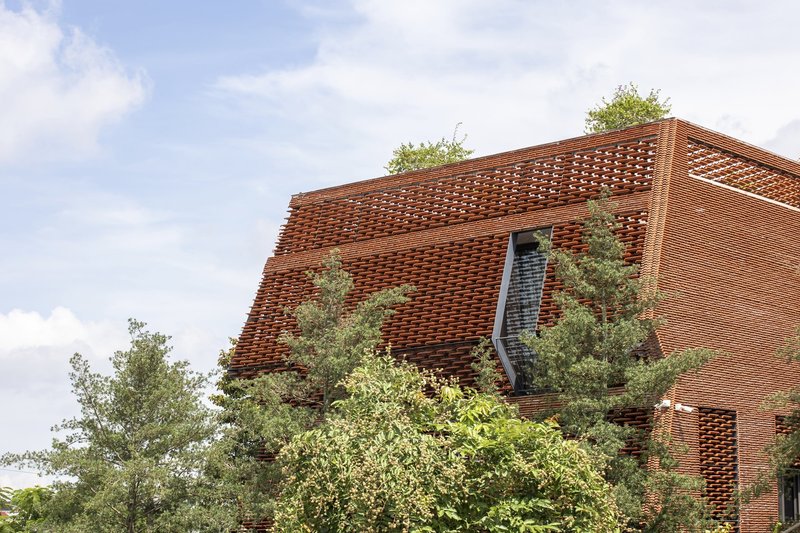
By combining these inspirations, the house achieves a corrugated architectural language, appearing porous on the outside but offering spacious, light-filled interiors within.
Architectural Design and Structure
The Tile Façade – A Floating Skin
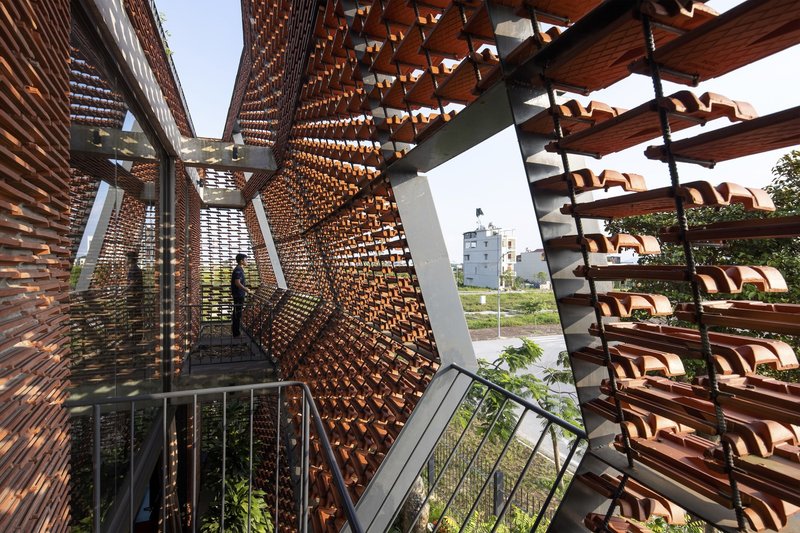
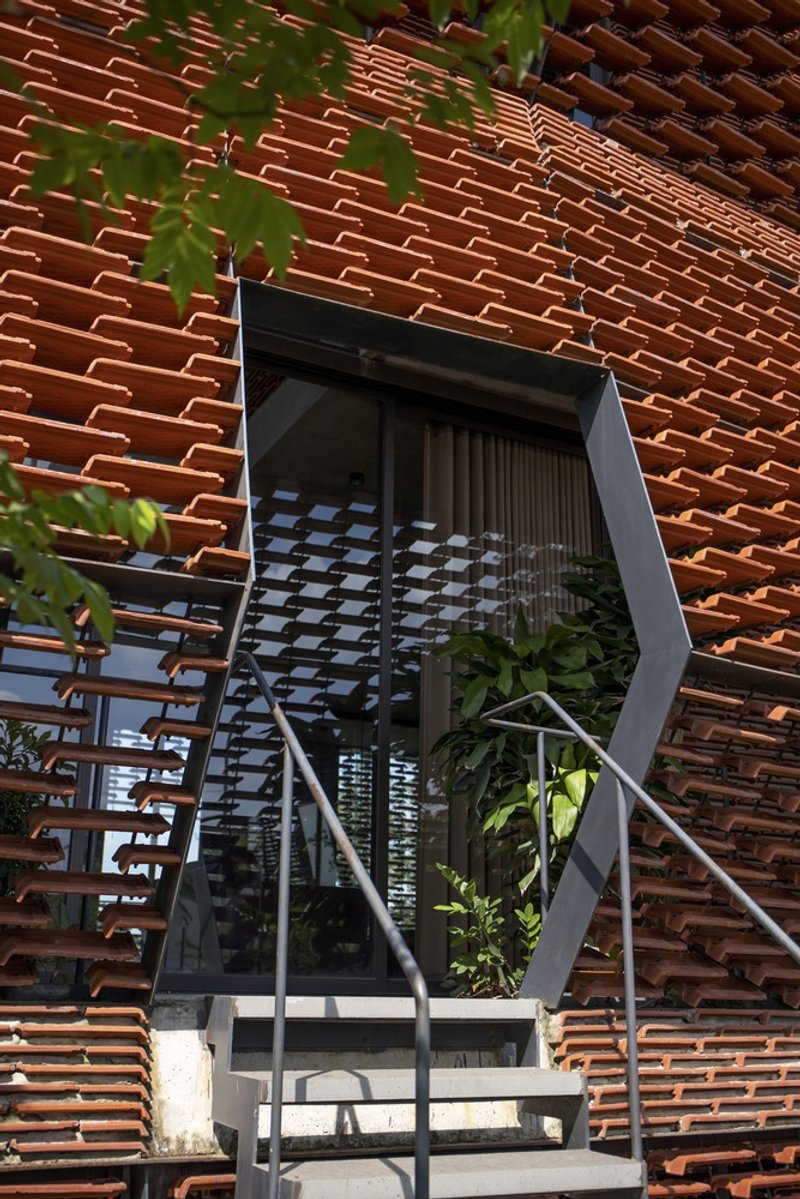
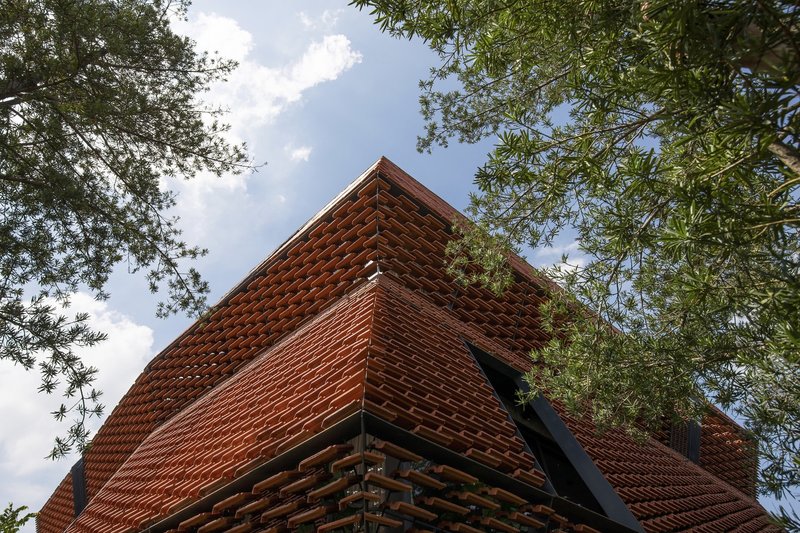
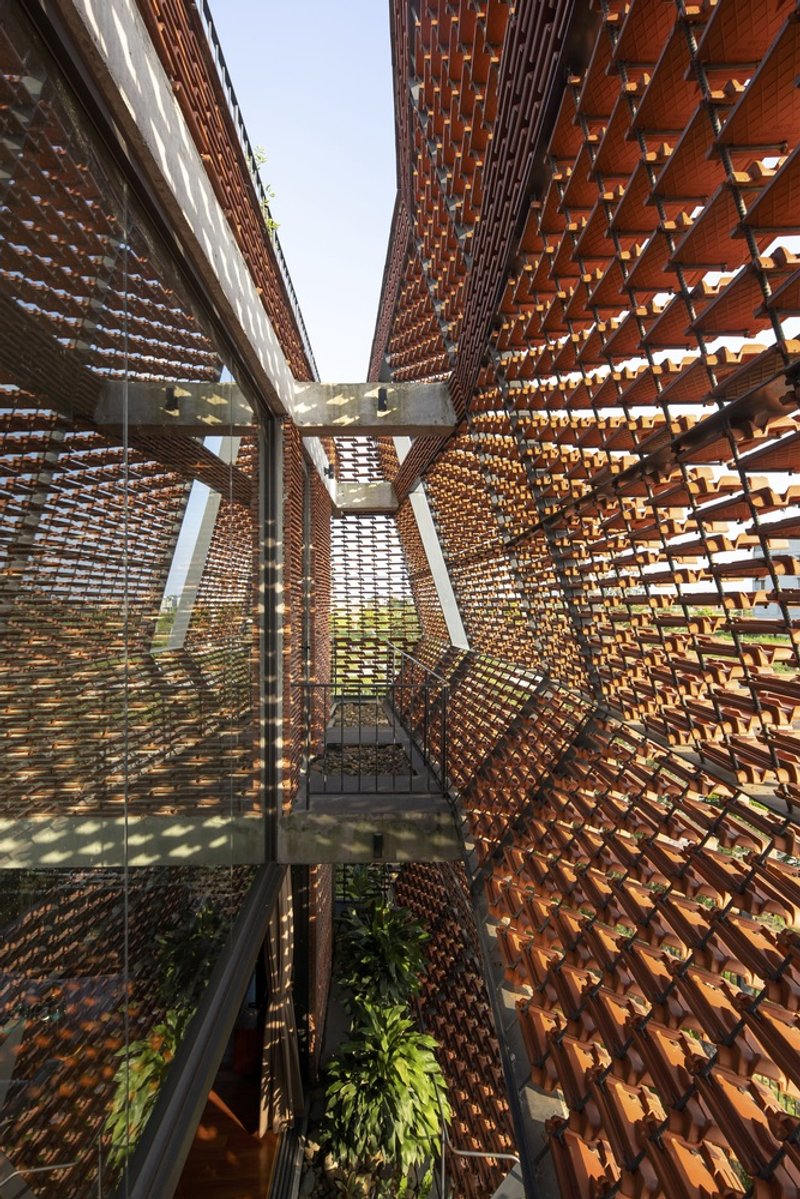
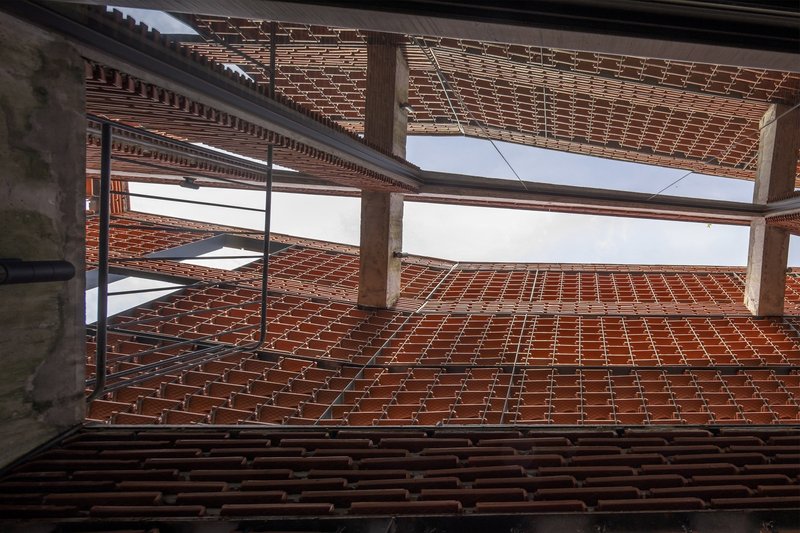
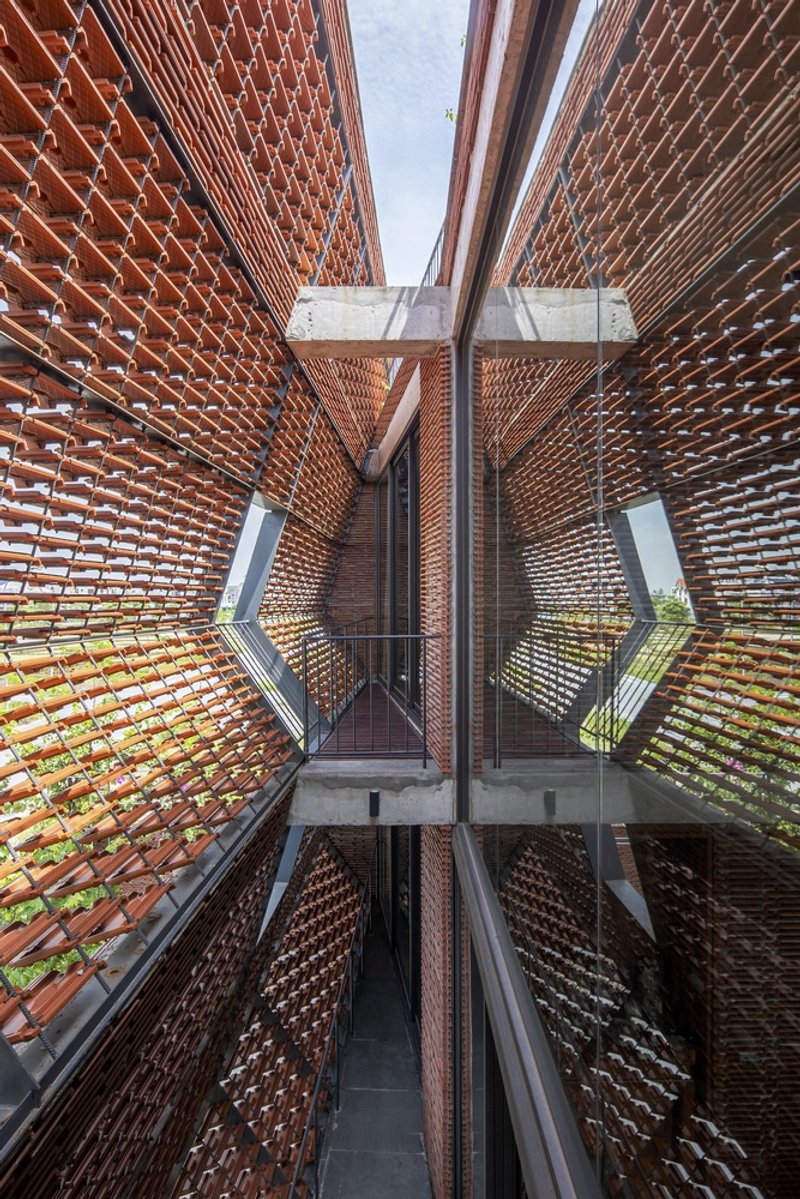
The outer shell of the house is made of thousands of terracotta tiles, arranged to resemble a hovering, layered roof system. These tiles create patterns of shade and shadow, acting both as sun protection and a ventilated skin.
Green Balconies and Microclimate Regulation
Between the tile façade and the interior walls lies a second layer of transitional balconies, filled with greenery at varying heights. These:
- Improve natural ventilation.
- Filter sunlight.
- Offer framed views of the surrounding cityscape.
- Create a refreshing microclimate, reducing energy consumption.
Materiality and Sensory Experience
Reinterpreting Traditional Vietnamese Tiles
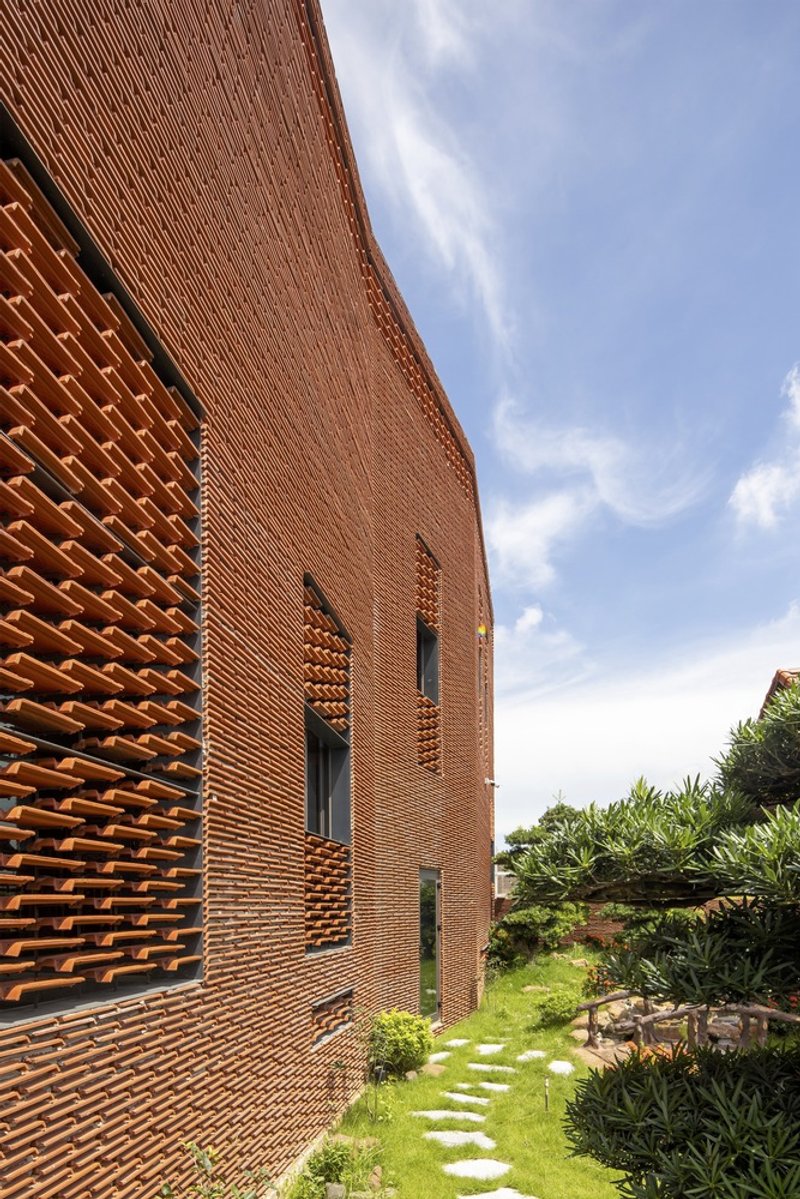
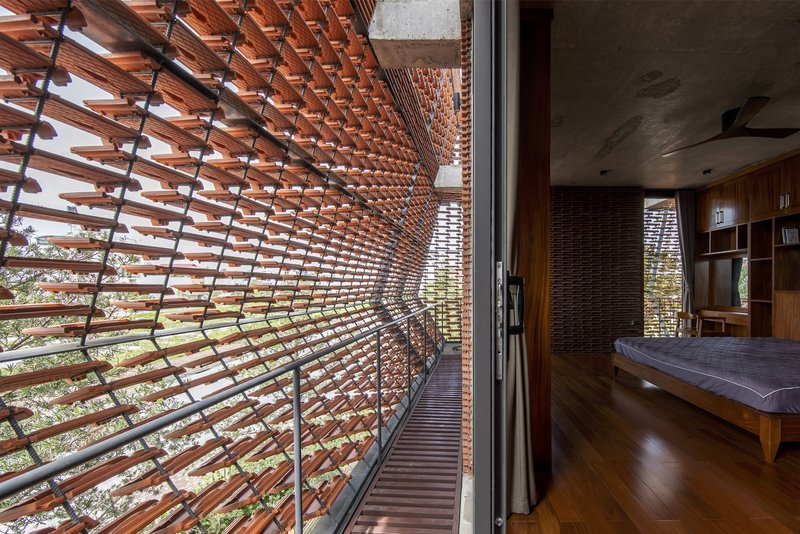
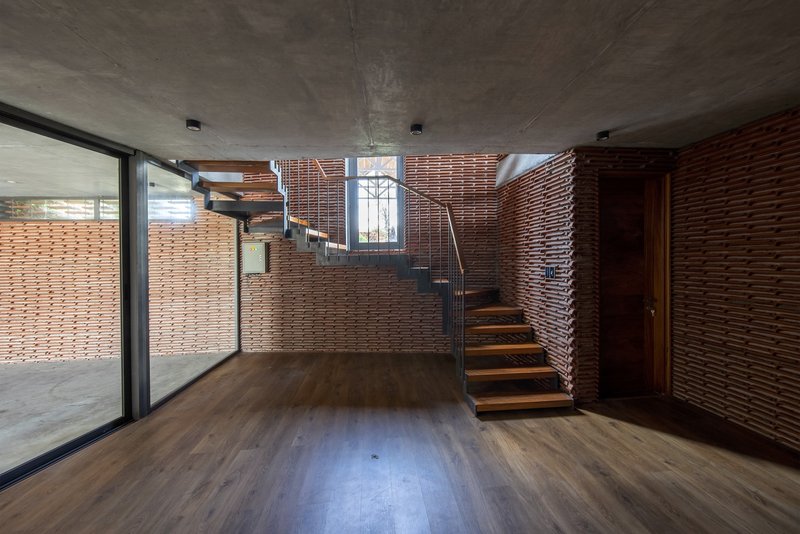
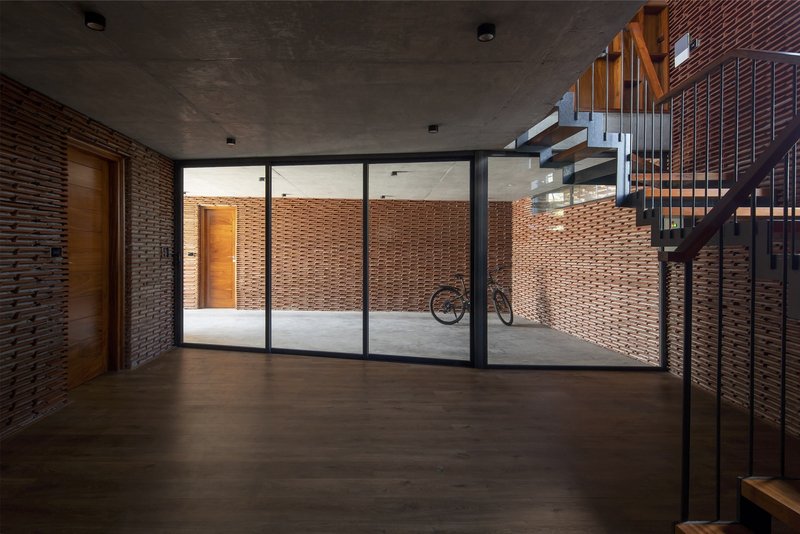
Tiles are a familiar and historic material in Vietnamese construction. At Tile Nest House, they are used in an innovative way—not just as roofing but as a semi-transparent screen.
Architecture Immersed in Nature
The tile arrangement allows residents to experience:
- Shifting sunlight patterns throughout the day.
- Breezes filtering through the porous façade.
- Floral reflections and natural scents from surrounding plants.
This creates an architecture that is multi-sensory, nature-driven, and emotionally connected to local culture.
Sustainable and Cultural Significance
The house is not only an aesthetic achievement but also a sustainable architectural response:
- Harnessing geothermal potential from the excavated site.
- Integrating passive cooling and natural ventilation.
- Using locally available, low-cost materials.
It reflects how architecture can respect tradition while innovating for the future.
The Tile Nest House by H&P Architects demonstrates how contemporary Vietnamese architecture can balance cultural memory, sustainability, and modern living. With its layered tile façade, green balconies, and immersive natural design, the project stands as a symbol of architectural experimentation deeply rooted in tradition.




Popular Articles
Popular articles from the community

Atelier Macri Concept Store Interior Design by CASE-REAL
Atelier Macri store features a "ko" counter, walnut wood details, cork displays, blending retail, gallery, and seamless customer experiences.
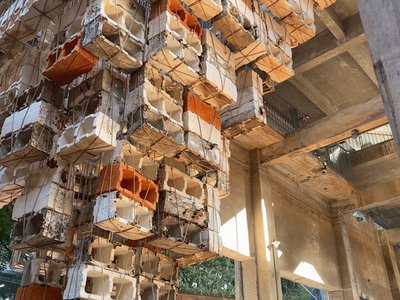
Inverted Architecture Installation by Studio Link-Arc: Exploring the Intersection of Architecture and Living Organisms
Inverted Architecture Installation by Studio Link-Arc blends mycelium, sustainability, inverted design, ecological cycles, and urban adaptive architecture in Shenzhen.
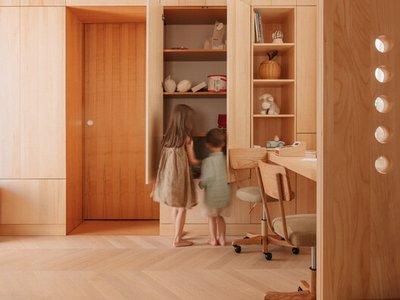
Treehouse Apartment: A Warm Timber Interior Blending Craft, Play, and Contemporary Living
Warm timber apartment with integrated treehouse, combining natural materials, craftsmanship, and playful design to create a flexible, family-oriented living environment.
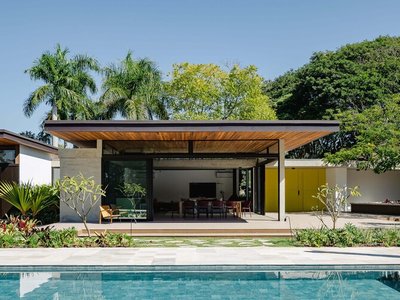
Flamboyant House by Juliana Camargo + Prumo Projetos
Modern Brazilian house integrating existing tree, pool, and volumes with glass, wood, and transitional spaces blending interior, exterior, and landscape seamlessly.


Similar Reads
You might also enjoy these articles


The Ken Roberts Memorial Delineation Competition (Krob)
As the most senior architectural drawing competition currently in operation anywhere in the world, it draws hundreds of entries each year, awarding the very best submissions in a series of medium-based categories.


Waterfront Redevelopment and Urban Revitalization in Mumbai: Forging a New Dawn for Darukhana
A transformative waterfront redevelopment project reimagining Darukhana’s shipbreaking heritage into an inclusive urban future.

OUT-OF-MAP: A Call for Postcards on Feminist Narratives of Public Space
Rhizoma Design and Research Lab invites artists, designers, architects, researchers, and students to reflect on how feminist perspectives can reshape public space. Selected works will be exhibited in Barcelona, October 2026. Submissions open until 15 April 2026.


Documentation Work on Buddhist Wooden Temple
Architectural syncretism and cultural hybridity: A comparative study of the Buddhist temples in Chattogram Hill tracks


Explore Architecture Competitions
Discover active competitions in this discipline




The International Standard for Design Portfolios


The Global Benchmark for Architecture Dissertation Awards


The Global Benchmark for Graduation Excellence


Challenge to reimagine the Iron Throne
Comments (0)
Please login or sign up to add comments
No comments yet. Be the first to comment!