
Unveiling the Dance Arts Center: A Modern Temple of Tango in Architecture
The Dance Arts Center, where architectural innovation celebrates tango in Buenos Aires' cultural spaces.


Nestled in the vibrant heart of Buenos Aires, the Dance Arts Center stands as a testament to the dynamic interplay between architecture and dance. Designed by the visionary architect Linda Priečková, this center is more than just a building; it is a tribute to the passionate spirit of tango, which originated in this very locale. By blending bold architectural forms with the fluidity of dance, the Dance Arts Center captures the essence of Buenos Aires' cultural heritage, making it a cornerstone of "architectural innovation in cultural spaces."
Architectural Concept
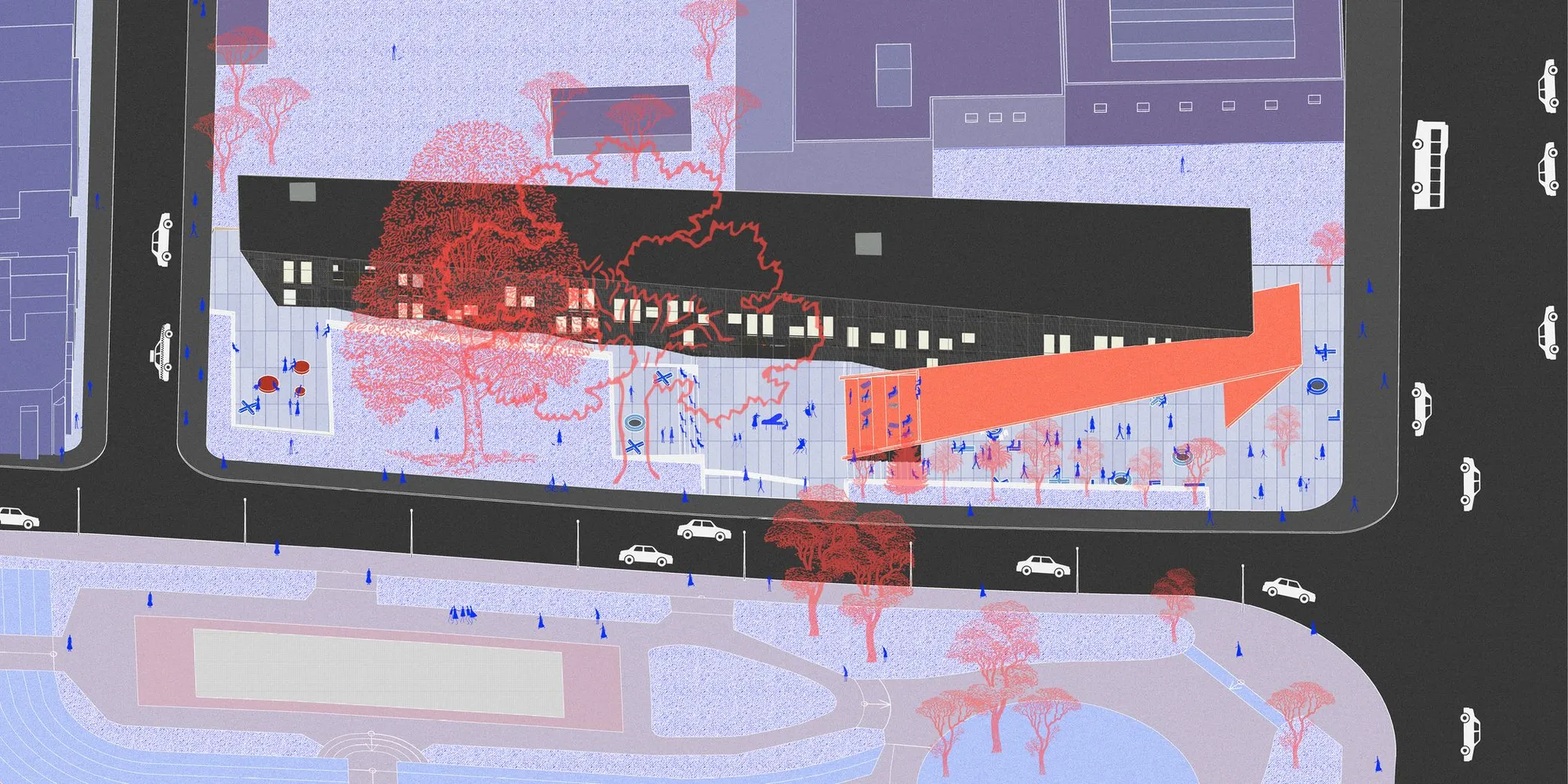
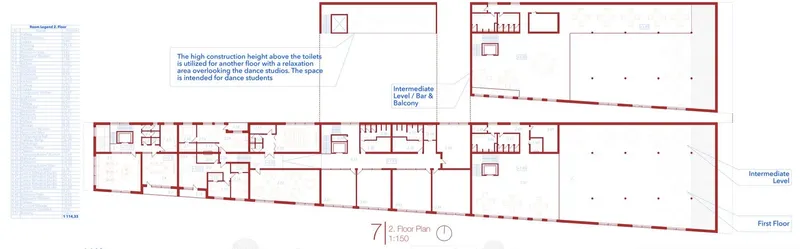
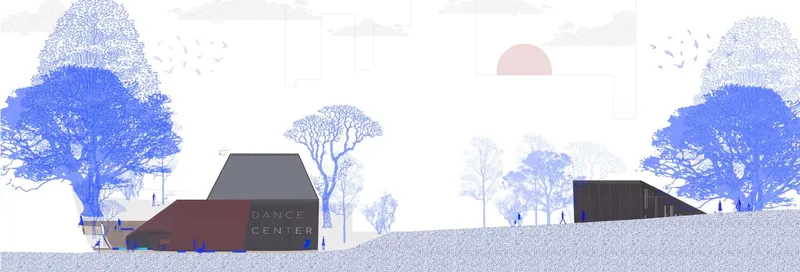
The genesis of the Dance Arts Center is deeply rooted in the history of tango, a dance known for its sharp, dramatic movements and intense emotional expressions. Linda Priečková's design philosophy was to embody these characteristics in the center's architecture. The complex features two main structures: a dominant black building that abstracts the male figure in dance, housing all internal functions, and a striking red structure that represents the female figure, animating the outdoor spaces with its vibrant color and sheltering a lively external dance floor.
Functional Design and Spatial Dynamics
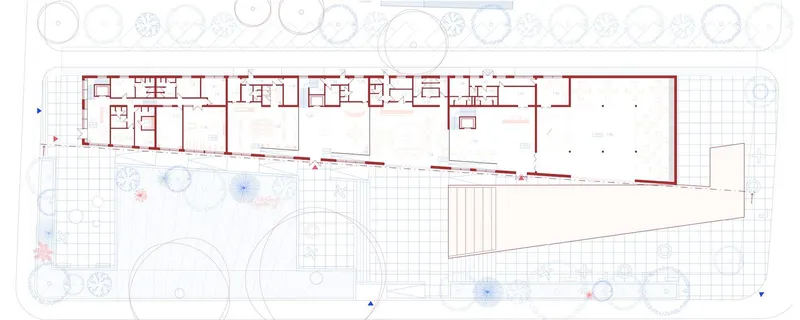
Priečková's architectural mastery is evident in the functional layout of the Dance Arts Center. The facility is comprehensive, featuring indoor and outdoor auditoriums, dance studios, and a choreographer's apartment. It also includes a café, a specialized dancewear store, a gym, and administrative offices. Each space is designed to support the arts and foster interaction among visitors, dancers, and artists alike.
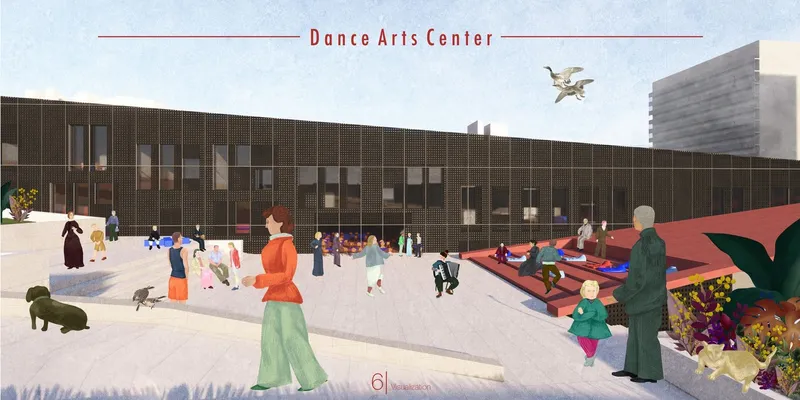
The heart of the center is the auditorium, strategically placed to engage with the bustling city life. It boasts retractable seating and a flexible design, allowing it to host everything from intimate dance performances to large cultural events. The auditorium connects seamlessly to a public square under a dramatic red roof, creating a grand entrance that captivates visitors and sets the stage for memorable performances.
Interconnectivity Through Design
Connectivity is a key theme in the Dance Arts Center, with ramps linking various functional areas, thus ensuring accessibility and smooth flow throughout the building. From the reception, a ramp leads visitors up to the café, which opens out to an outdoor dance floor, doubling its utility. Another ramp extends to the dance school reception, easing access to workshops and the multipurpose hall.
Aesthetic and Environmental Considerations
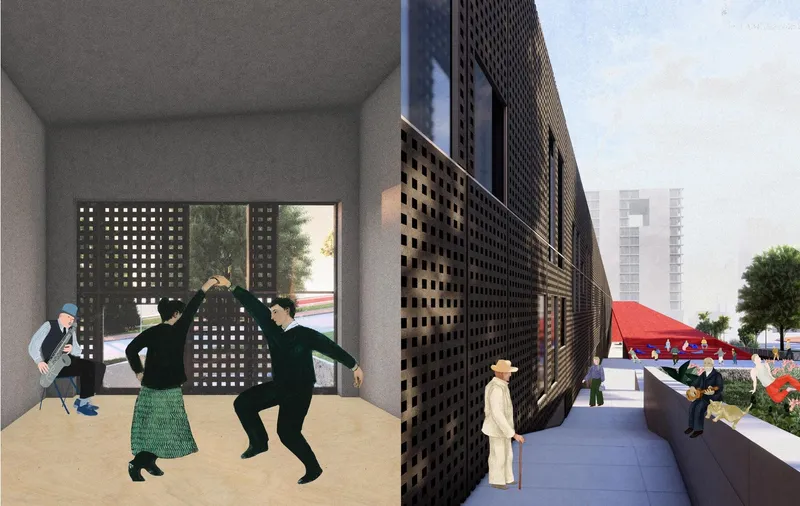
The Dance Arts Center is not only functional but also aesthetically striking. The facade features perforated panels that modulate natural light and create a playful interplay of light and shadows within the interiors, enhancing the building’s rhythmic quality reminiscent of dance sequences. These panels are also functional, opening to adjust the natural lighting and ventilation, which is crucial for both the comfort of the users and energy efficiency.
The Dance Arts Center in Buenos Aires is a prime example of how architecture can encapsulate and enhance cultural expression. It stands as a beacon of "architectural innovation in cultural spaces," attracting visitors and dancers from around the globe who come to experience the spirit of tango in a space designed to celebrate and elevate this art form. As a landmark of cultural architecture, the center not only preserves the legacy of tango but also propels it into the future, making it a pivotal point of interest in the architectural and cultural landscapes of South America.




Popular Articles
Popular articles from the community


Co-life: Sustainable Architecture for Age-Friendly Community Living
Co-life reimagines sustainable architecture for seniors through courtyards, rammed earth, shared gardens, and spaces designed for belonging.

The Earth Pod: 3D Printed Homes for Resilient Refugee Communities
The Earth Pod reimagines refugee housing through 3D printed homes made from clay, combining resilience, self-sufficiency, and rapid shelter.

Co-Life: Senior Housing Design That Reconnects Older Adults With the City
Co-Life reimagines senior housing design through healing gardens, shared streets, workshops, and a sustainable community across generations.

The Ocean Hive: Sustainable Architecture for a Self-Sufficient Civilization at Sea
The Ocean Hive imagines sustainable architecture at sea, where modular habitats, algae, wave power and ocean waste sustain a growing colony.


Similar Reads
You might also enjoy these articles

Day and Night Park: A Time-Based Urban Newsstand in Beijing
A temporary urban newsstand in Beijing blending travel, light, and reading through poetic colors, compact form, and community-focused design.

Modernist Patio Renovation in El Masnou, Barcelona by Oliver Segura Arquitectura + Cebrià Arquitectura
Modernist patio renovation blending tradition and innovation with a movable pool, leveled floors, and Catalan materials in El Masnou.

Alto Residencial Coop: Cooperative Housing Development in Santiago de Compostela by Carbajo Barrios Arquitectos
A linear cooperative housing complex blending white volumes and perforated metal façades, enhancing community living, natural light, privacy, and urban integration.
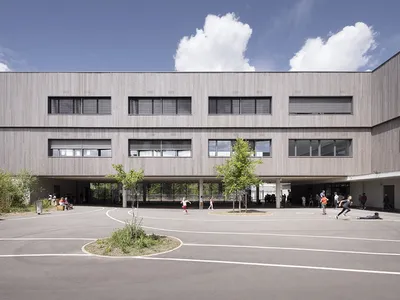
Vil Genis School by BPA ARCHITECTURE – Massy, France
Vil Genis School in Massy, France, features sustainable design, south-facing classrooms, community integration, accessible spaces, and modern educational architecture.

Explore Cultural Architecture Competitions
Discover active competitions in this discipline



Challenge to reimagine the Iron Throne


Photograph architecture without architects


Illustrate the lost glory of Angkor Wat - Render Challenge


Bring back Drive In's
Comments (0)
Please login or sign up to add comments
No comments yet. Be the first to comment!