

Vernacular Architecture in Restaurant Design: The Bodega Experience
The article explores Bodega Restaurant's design, blending vernacular architecture with bohemian elements to create a timeless, sensory dining experience.


In the world of architecture, vernacular design represents a deep connection to the cultural and natural context of a place. This design philosophy emphasizes the use of local materials, traditional craftsmanship, and designs that harmonize with their surroundings. Bodega, a restaurant in Panchkula, India, beautifully showcases the principles of vernacular architecture through its unique design approach. Crafted by Loop Design Studio, this restaurant blends the wisdom of the ages with modern bohemian aesthetics to create an immersive dining experience.

Understanding Vernacular Architecture: A Cultural Approach to Design
Vernacular architecture is characterized by its use of local, natural materials, often influenced by the climate, geography, and available resources of a region. This form of architecture is not just about function but also about the creation of spaces that resonate with the environment and the people who inhabit them. At its core, vernacular architecture strives for harmony with nature, using resources in sustainable and innovative ways.

The Bodega Restaurant: A Fusion of Vernacular and Bohemian Design
Design Concept and Vision
Bodega’s design embraces vernacular architecture, highlighting materials such as stone, wood, bamboo, and brick. The intention is clear: to create a timeless space that invokes warmth and authenticity. The design of Bodega also incorporates eclectic and whimsical elements, with sculptural art, custom lighting fixtures, and furniture pieces that add character to the space.
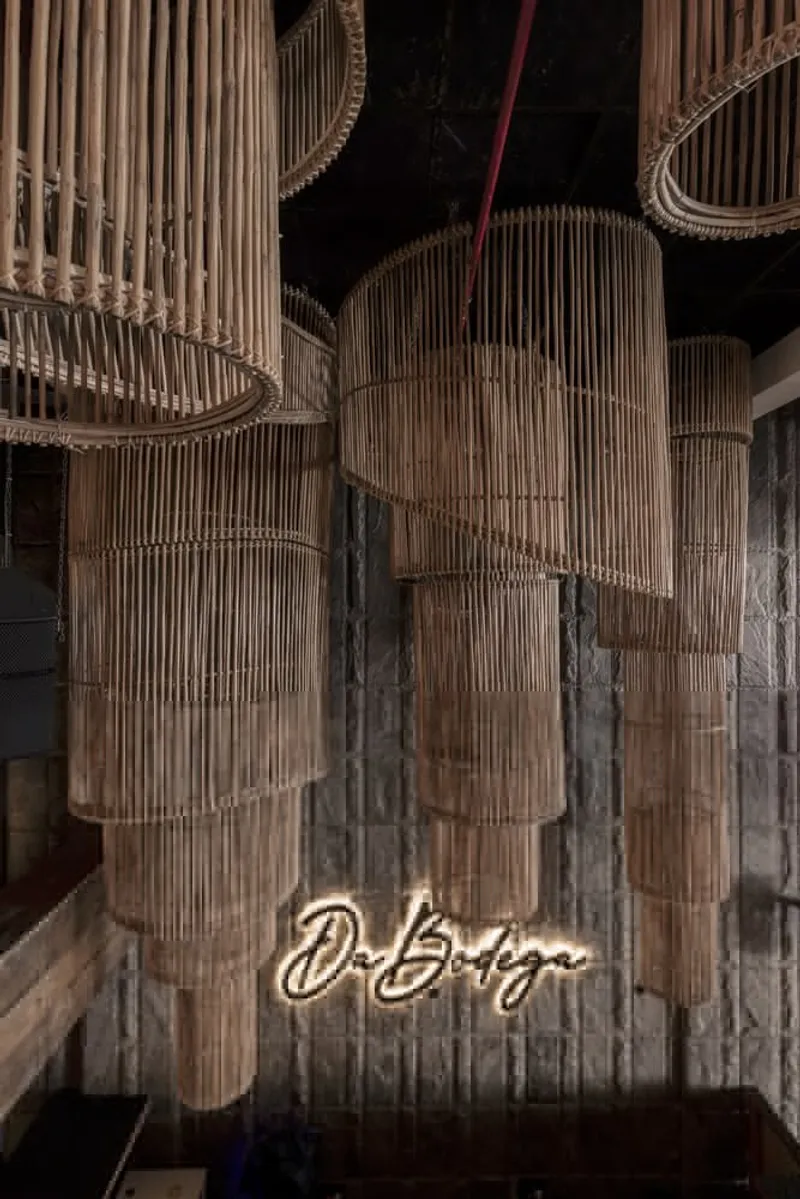
The restaurant’s open, double-height atrium is one of its most striking features. A parametric bamboo lighting installation serves as both a functional light fixture and a sculptural artwork, reimagining the idea of a traditional chandelier. This bamboo installation not only serves as a lighting source but also brings the beauty of scale into the space, transforming the perception of the restaurant’s cubic structure.
Materials: Stone, Wood, Bamboo, and Brick
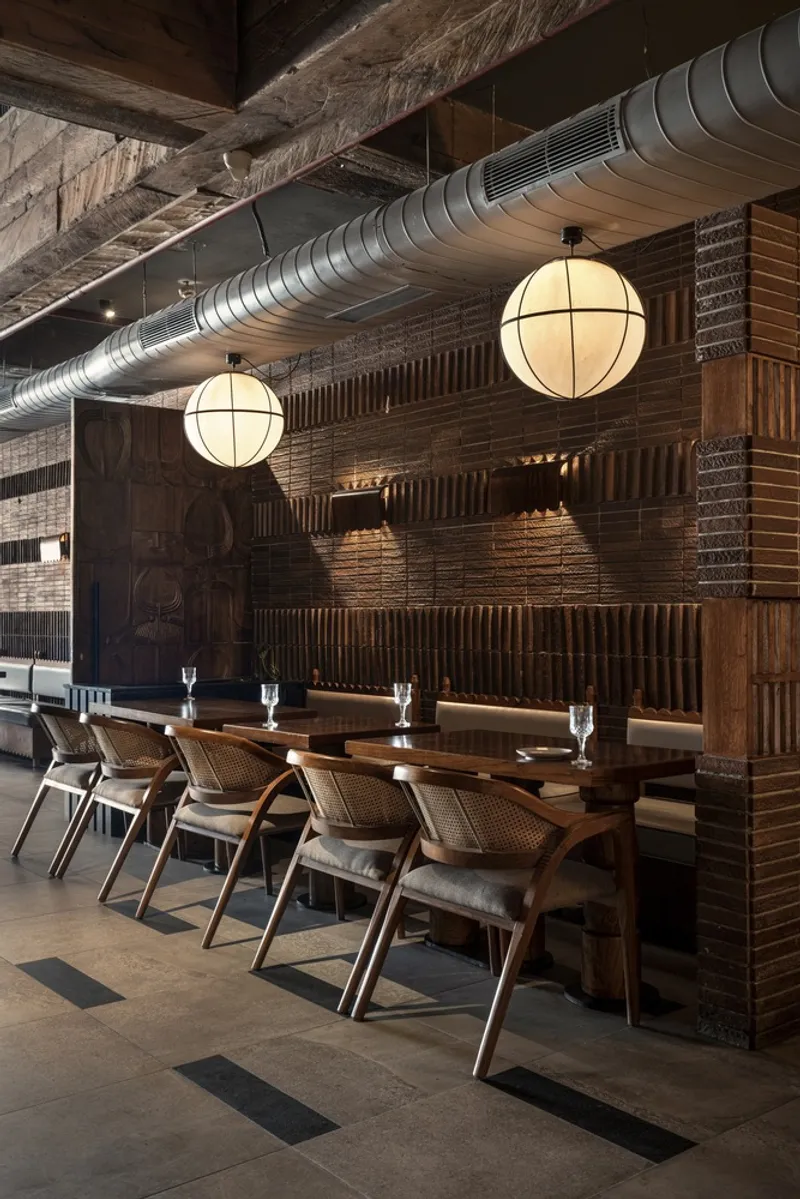
At Bodega, the use of natural materials is evident throughout the restaurant. The walls are cladded in natural grey stone, creating a bold backdrop for the space. Bamboo, a traditional and sustainable material, is prominently featured in the ceiling installations, adding a layer of warmth and texture to the design. The design also incorporates wood, with wooden slats and furniture that complement the natural materials used in the structure.

The Spatial Layout: Zones that Tell a Story
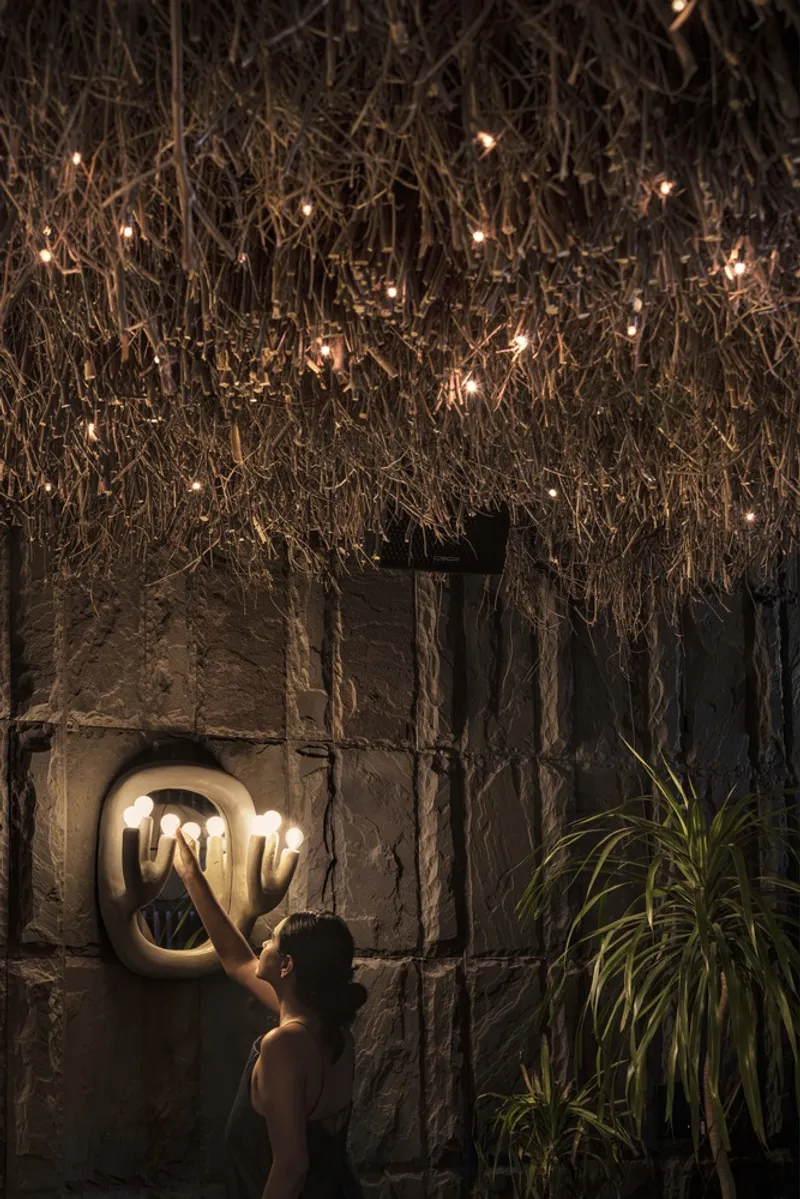
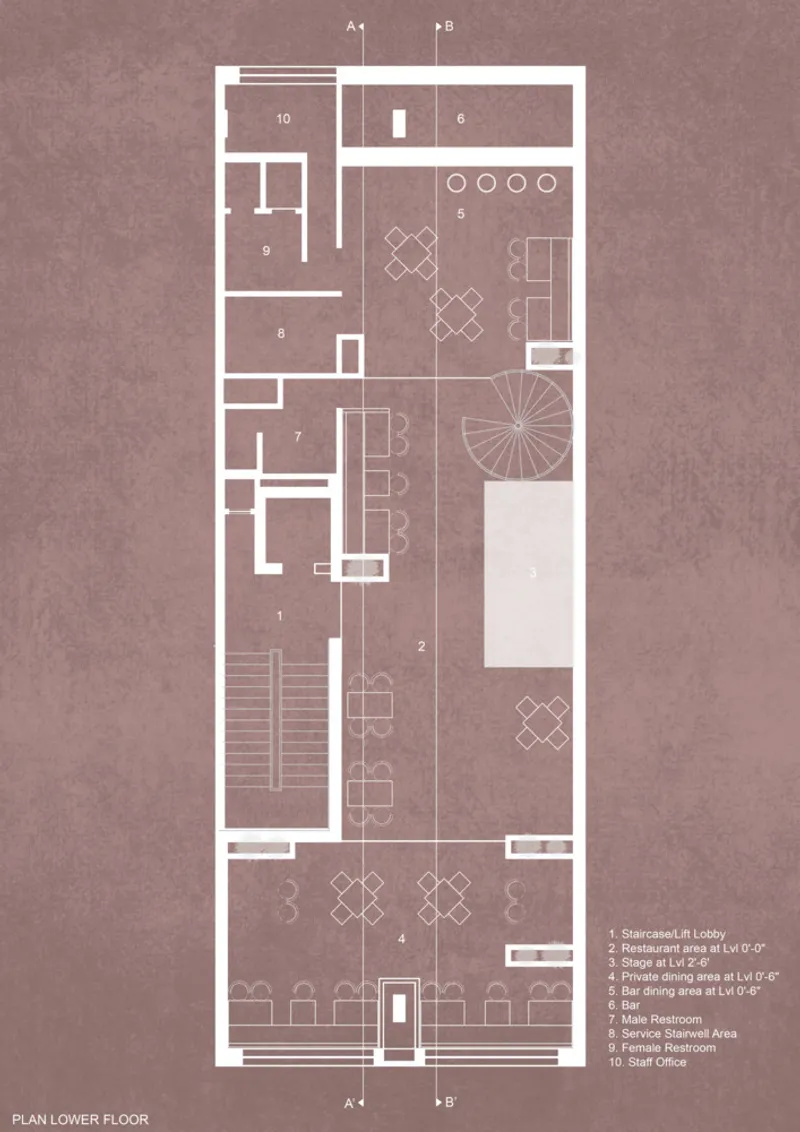
Bodega’s interior is divided into three distinct zones, each with its own atmosphere and function. The bar area, located on the left, features an undulating ceiling made from twigs, straw, and thatch, lit by incandescent bulbs that create a stark, almost otherworldly mood. This area serves as a transition point between the more relaxed seating areas and the more intimate private dining space.
The central double-height floor is the heart of the restaurant, with its expansive design offering a sense of openness and grandeur. The private dining area, on the right, is designed to offer a more intimate experience, featuring wooden slats, planters, and abstract ceiling fixtures that add a touch of eccentricity and artistic flair.

The Role of Texture and Patterns
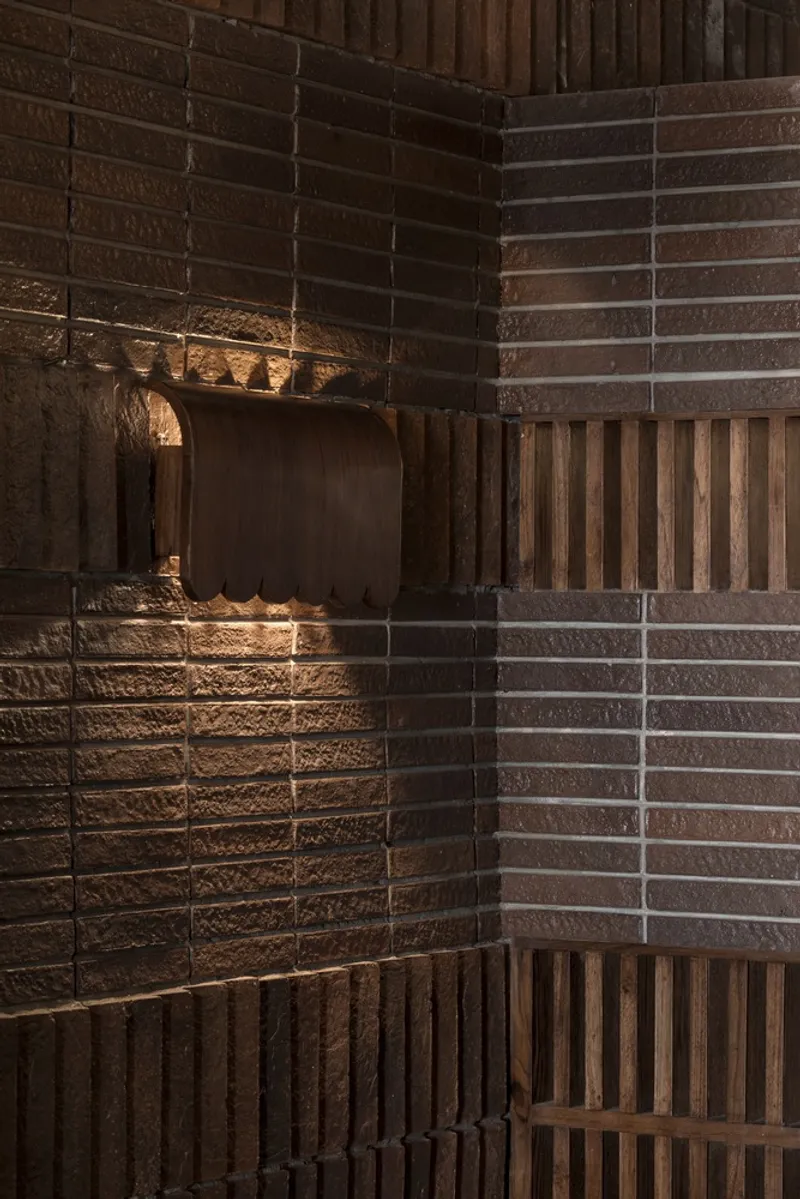
Texture plays an important role in Bodega’s design. The restaurant’s central seating area features brick laid out in varying styles, creating an interesting texture play that adds depth and visual interest. Bohemian and tribal motifs are woven into various design elements, such as the paneling and doors, reinforcing the restaurant’s eclectic atmosphere.

Lighting as a Design Element
Lighting is another crucial element in Bodega’s design. The bamboo chandelier serves as the focal point in the atrium, casting light in a dynamic and sculptural way. This lighting installation is a perfect example of how design elements can serve multiple purposes—functioning as both a source of illumination and a work of art.
The Sensory Experience
The overall goal of Bodega’s design is to provide a dining experience that stimulates all of the senses. From the tactile experience of the natural materials to the visual impact of the sculptural installations and lighting fixtures, every element of the restaurant is carefully considered to enhance the mood and curiosity of the visitors.
The Future of Vernacular Architecture in Modern Design
Bodega’s design stands as a testament to the power of vernacular architecture in modern restaurant design. By blending traditional materials with innovative design concepts, the restaurant creates a space that is both timeless and contemporary. It emphasizes the importance of connecting to the local context while incorporating new ideas to meet the needs of today’s patrons. The result is a design that not only respects the past but also looks toward the future, showing how vernacular architecture can continue to inspire and shape modern design.
By embracing the principles of vernacular architecture, Bodega has created a dining experience that goes beyond just food—it’s a sensory journey into the heart of sustainable, culturally informed design.


All the photographs are work of Purnesh Dev Nikhanj


Popular Articles
Popular articles from the community


Cube Design Draws an Ecological Corridor Between Two Shenzhen Hills with the Nankai Building
Beside Shenzhen's container docks, the Nankai Building pairs stacked balconies with a climbing green screen to connect two hillsides across its height.

Jaramillo Van Sluys Arquitectura and Urbanismo Turn a Demolished Registry Lot in Quito into an Orchard Plaza
In Quito's Centro Histórico, a 2,800 m² plaza exposes the San Agustín convent wall and redraws its lost Augustinian orchard in volcanic stone.

LT2A and OPEN Architectes Thread a Brick and Glass High School Through a Wooded Belgian Campus
In Braine-l'Alleud, a 3,000 m² wing for Collège Cardinal Mercier pairs pale brick with a glazed colonnade, deferring to a small chapel and a dense wood.

Juan García Correa, John González and Claudia Rueda Sink a Circular Amphitheater into a Manizales Engineering Building
On the La Nubia campus in Manizales, Colombia, the S1 Building folds labs and offices into a hillside of ramped lawns that double as a campus route.

Similar Reads
You might also enjoy these articles


Hodi-Mandai Geram
Project Function: Preservation and revitalization of the Intangible heritage and socio-spatial identity of the Hodi by Housing, Cultural Memory Center, Sacred Grove, landscape, local tourism economy


Olio Towers: A Mid-Rise for Performers That Fuses Housing, Rehearsal, and Stage
Located blocks from Houston's Theater District, this modular tower stacks living units around a central performance atrium.

Oasis: Modular Green Housing Carved into Dhaka's Urban Fabric
A shortlisted Plugin Housing entry reclaims unauthorized settlements in Dhaka with stepped concrete volumes, green roofs, and ventilation-driven design.

Black Hole: A Floating Megastructure for the Post-Physical Era
Emiliano Mazzarotto envisions a spherical, self-scaling arena where e-sports, digital hotels, and holographic stadiums replace traditional public space.

Explore Vernacular Architecture Competitions
Discover active competitions in this discipline

Challenge to reimagine the Iron Throne

Photograph architecture without architects

Illustrate the lost glory of Angkor Wat - Render Challenge

Design challenge to reuse E-waste
Comments (0)
Please login or sign up to add comments
No comments yet. Be the first to comment!