
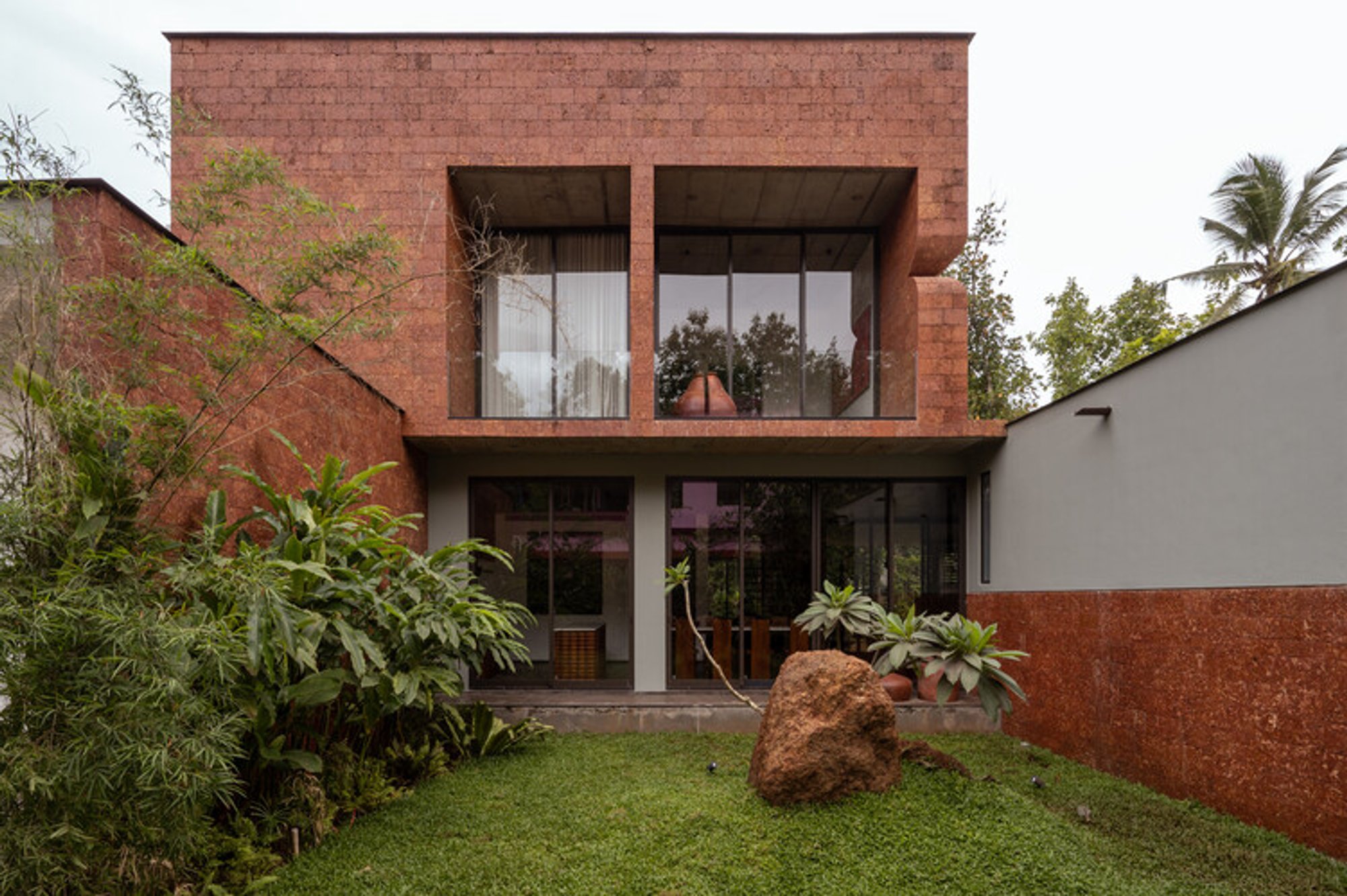
VILAKK Residence: A Contemporary Home Rooted in the Ritual, Climate, and Craft of Northern Kerala by 3dor Concepts
A contemporary Kerala residence blending temple-inspired spatial principles, laterite craftsmanship, and climate-responsive design to create a home rooted in culture and place.

Set within the rural landscape of Payyanur, Kerala, the VILAKK Residence by 3dor Concepts is an architectural narrative deeply embedded in place, memory, and ritual. Designed for Sumesh and his family, the house is not conceived as an isolated object, but as a continuation of the cultural, climatic, and spiritual fabric of northern Kerala—a region shaped by temple architecture, agrarian landscapes, and the ancient ritual art form of Theyyam.
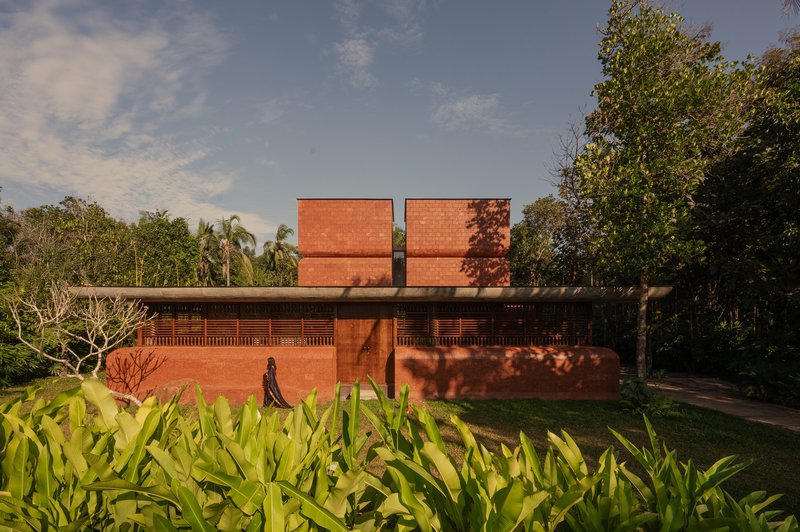
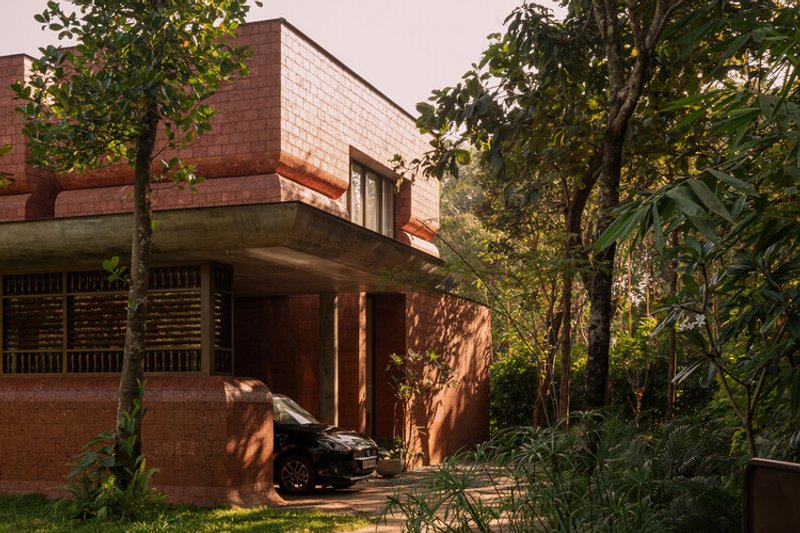
Rather than imposing a contemporary identity upon its surroundings, the residence draws meaning from them. Every architectural decision—from spatial planning to material selection—responds to the site’s cultural resonance and warm-humid climate, resulting in a home that feels timeless, grounded, and inherently belonging.
Context as Concept
Payyanur is known for its strong spiritual traditions, vernacular architecture, and proximity to paddy fields and water bodies. These landscapes are inseparable from daily life and ritual, forming a backdrop against which the house is carefully composed. For the client, a devout spiritualist, it was essential that the home reflect the symbolic richness of temple architecture without resorting to imitation or nostalgia.
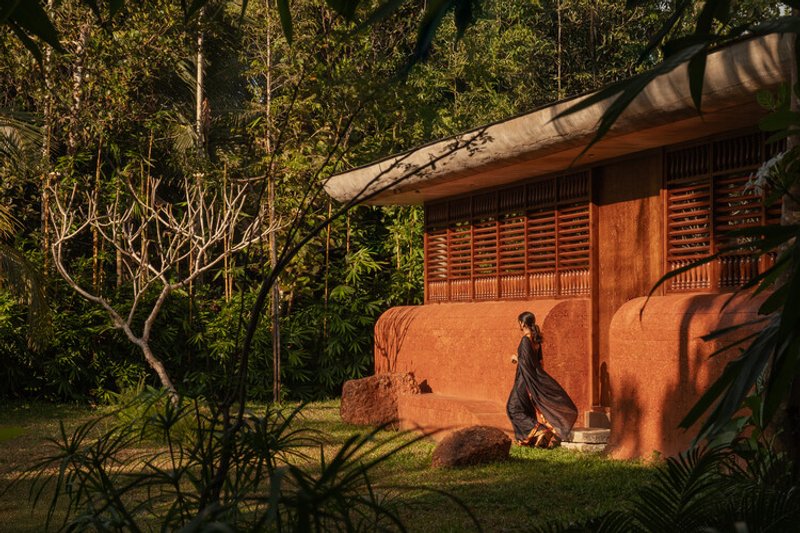
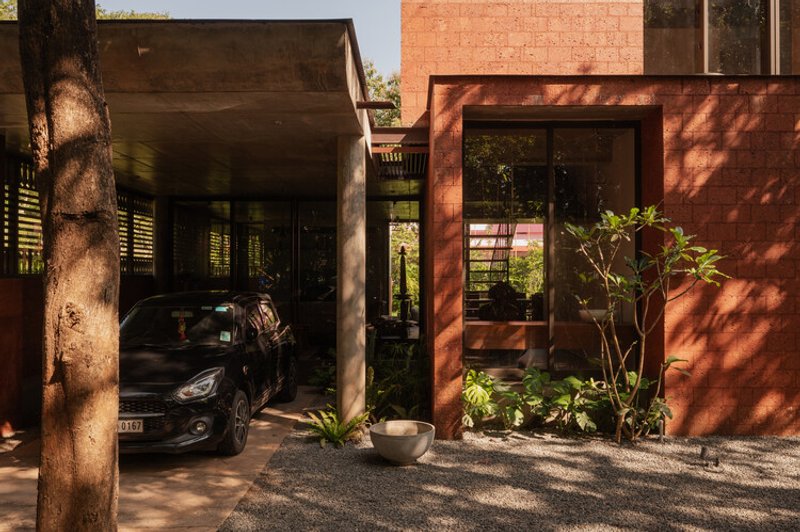
This aspiration became the core design concept: to reinterpret vernacular principles through a contemporary lens, allowing tradition to inform structure, space, and materiality rather than surface ornament alone. The architects envisioned the residence, its landscape, and its approach as a single, continuous experience—one that unfolds gradually and intuitively.
Arrival and Spatial Sequence
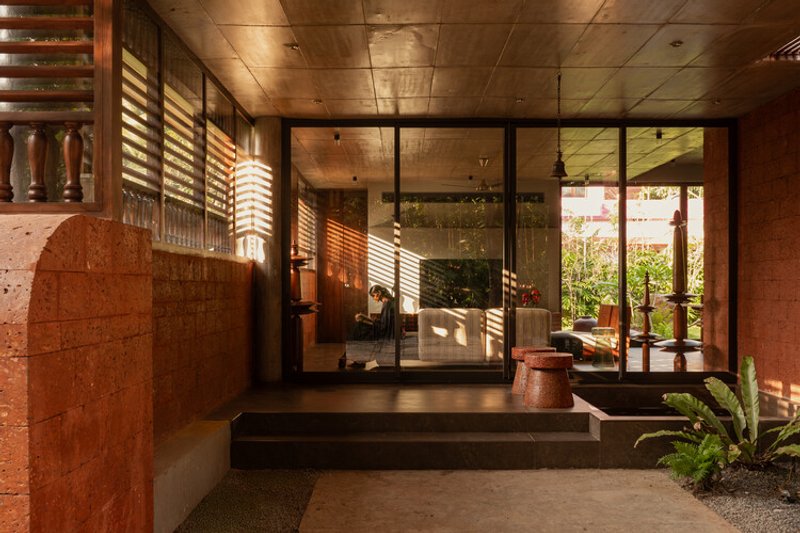
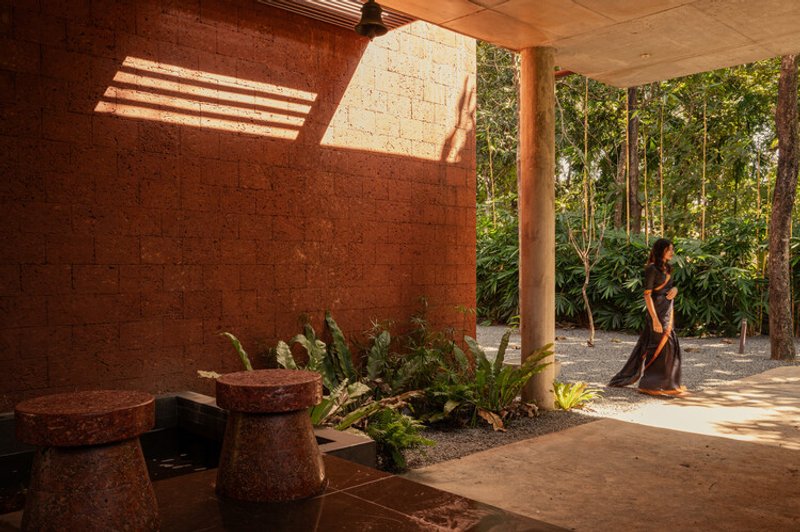
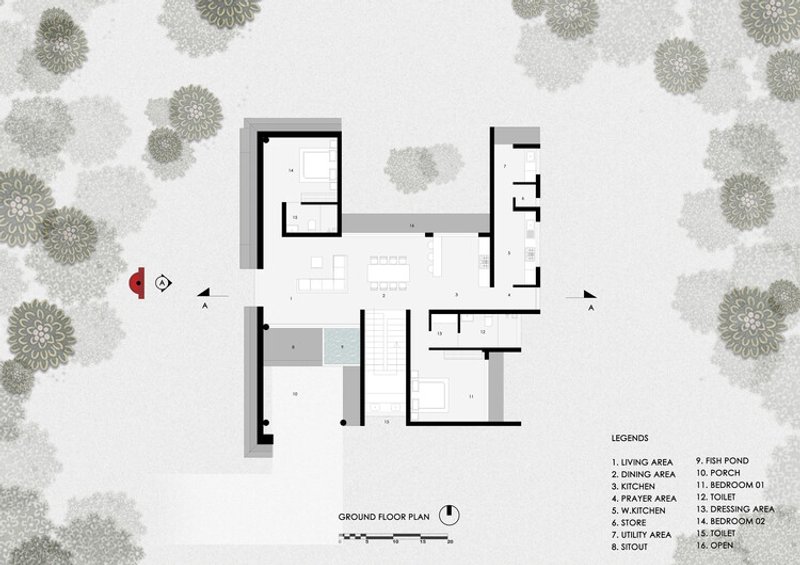
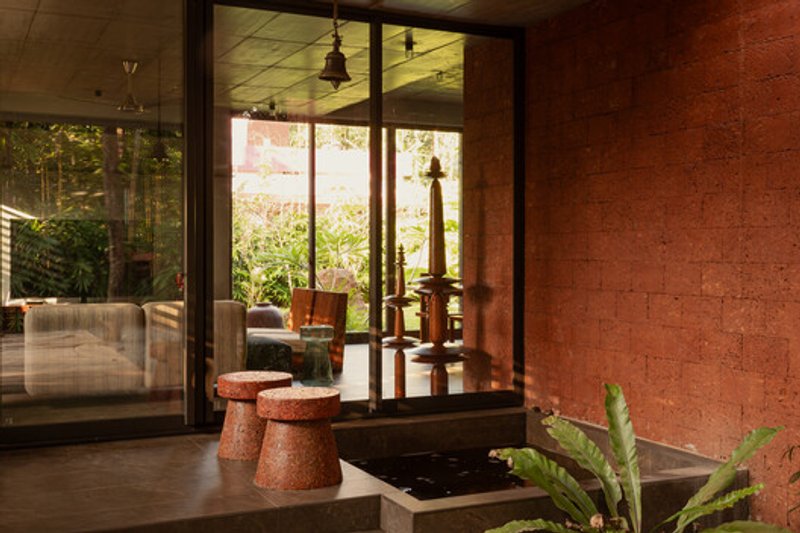
The approach to VILAKK Residence is ceremonial yet understated. A pond greets visitors at the entrance, placed rhythmically beside the sit-out, echoing the presence of water in traditional Kerala homes and temple precincts. This element not only cools the microclimate but also establishes a moment of pause and reflection before entering the house.
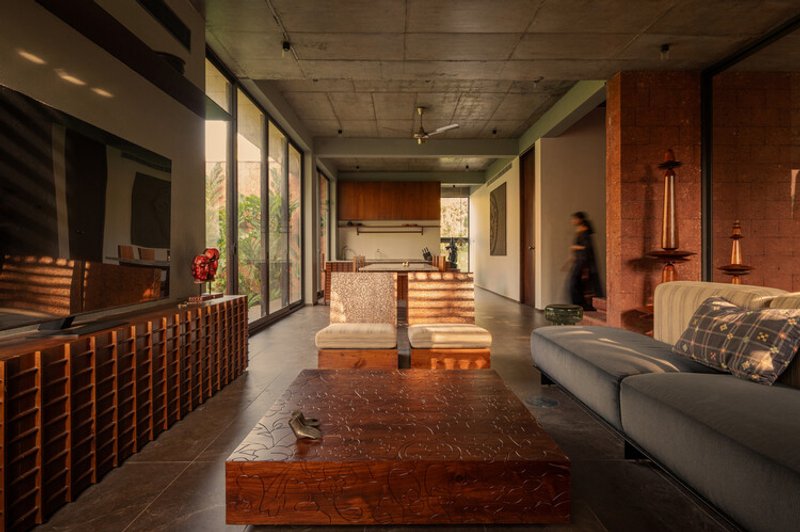
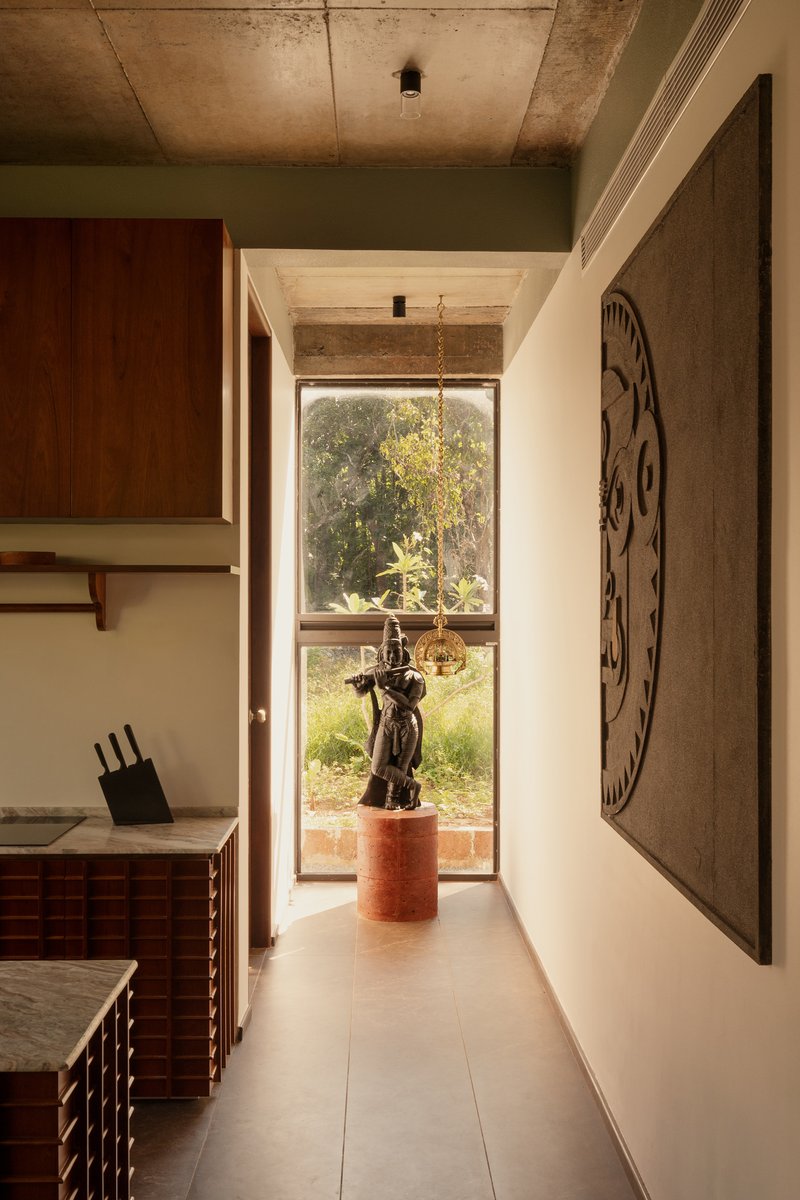
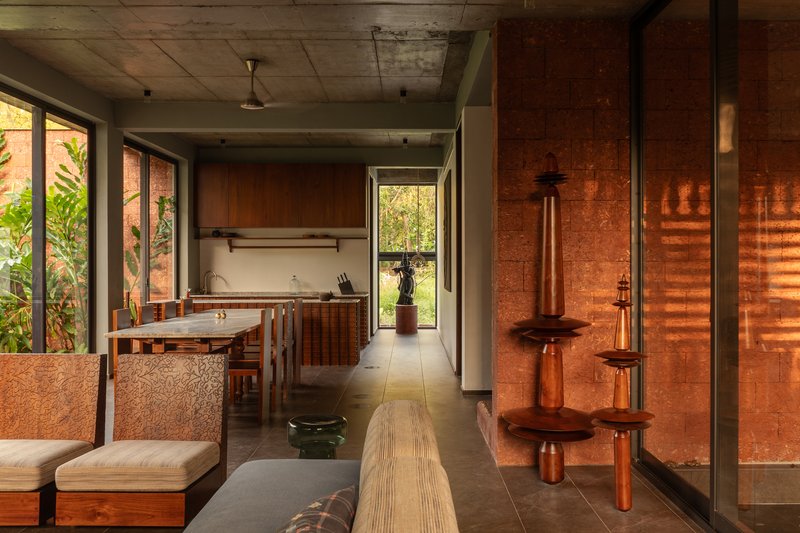
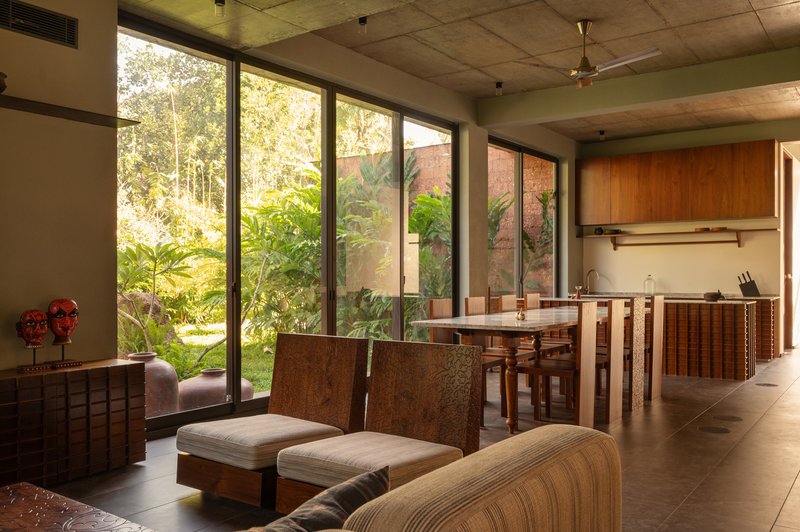
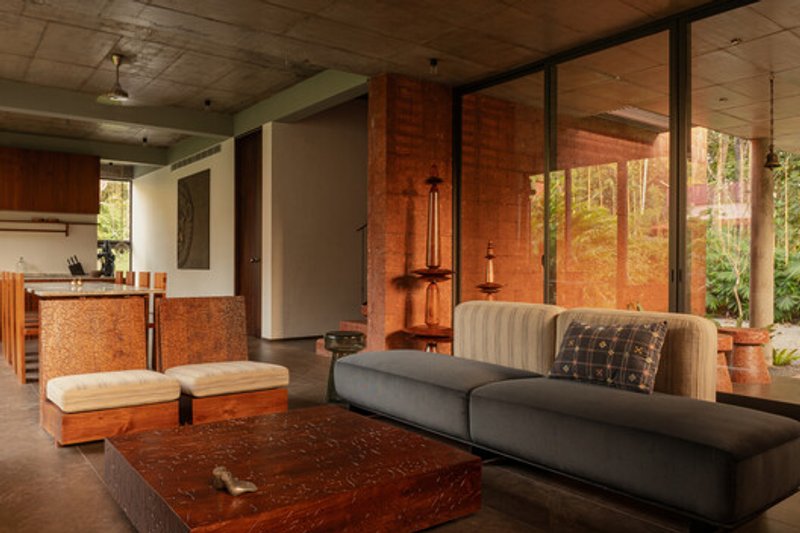
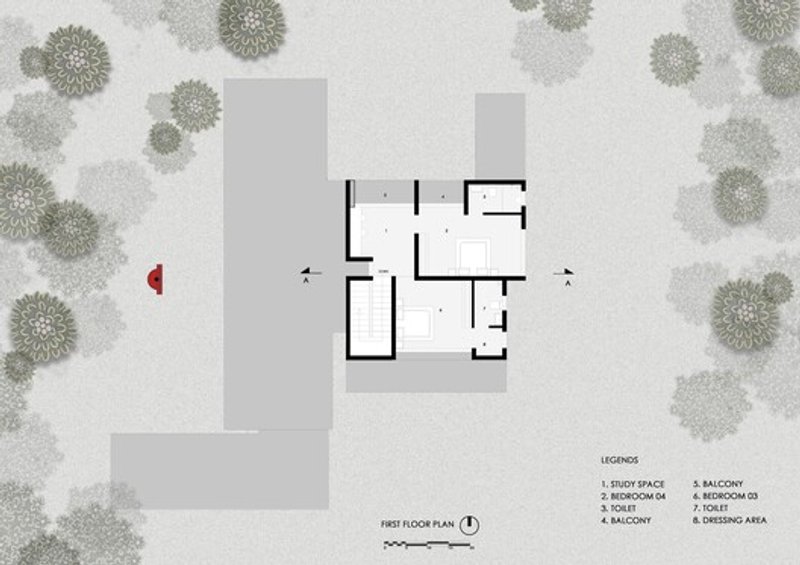
Inside, the spatial organization follows a linear open-plan layout, with living, dining, and kitchen spaces forming the public and semi-public core. These spaces are visually and physically interconnected, encouraging fluid movement and reinforcing family interaction. The openness is balanced by framed views, material transitions, and subtle thresholds that create intimacy without enclosure.
Courtyard as the Heart of the Home
At the centre of the residence lies a north-facing courtyard, functioning as the primary interaction zone. This space mediates between indoors and outdoors, allowing the house to breathe while offering a constant sensory connection to nature. Sunlight filters gently into the interiors, rain becomes an experiential element during monsoons, and prevailing winds enhance natural ventilation.
The courtyard anchors daily life, blurring boundaries between built form and landscape. Large openings surrounding this space ensure uninterrupted visual continuity while carefully controlling glare and heat. This climatic intelligence reflects centuries-old vernacular wisdom, reinterpreted through modern detailing and construction techniques.
Climate-Responsive Architecture
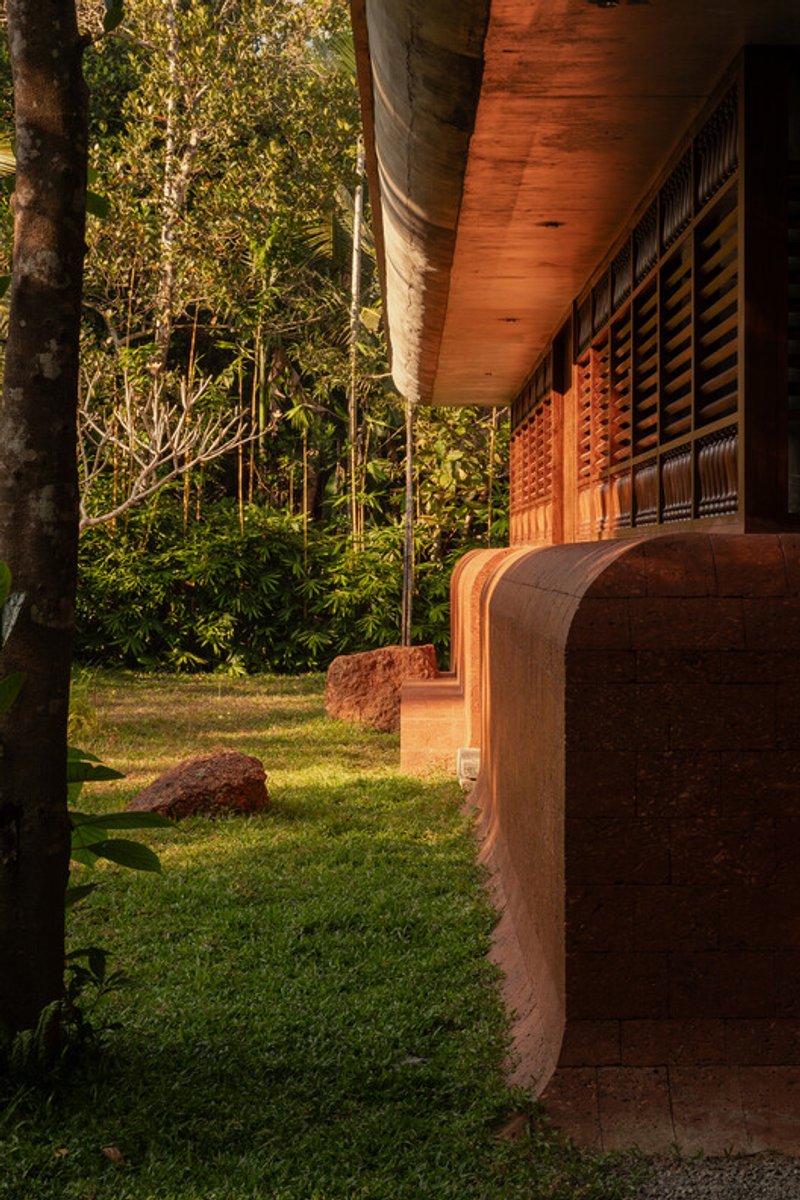
Located in a warm-humid region, the residence is shaped by passive design strategies aimed at thermal comfort and long-term sustainability. Thick laterite walls, particularly on the south-facing sides, provide insulation against heat gain while celebrating a material deeply rooted in Kerala’s architectural heritage.
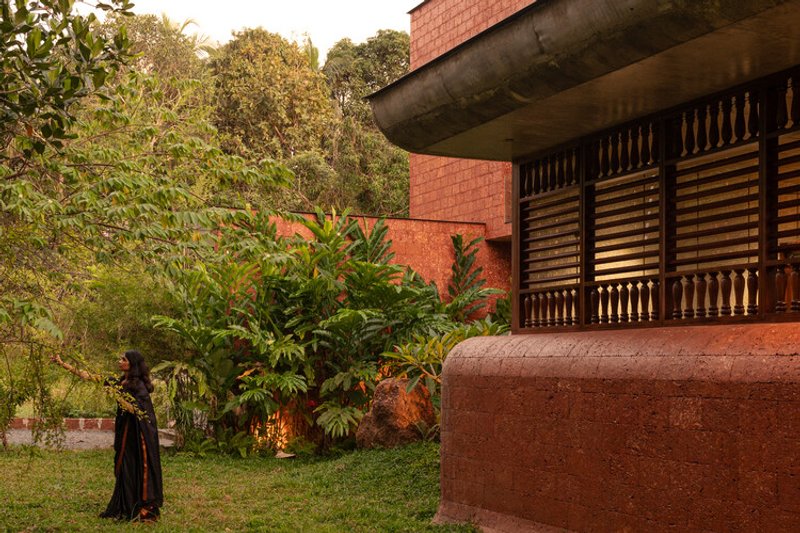
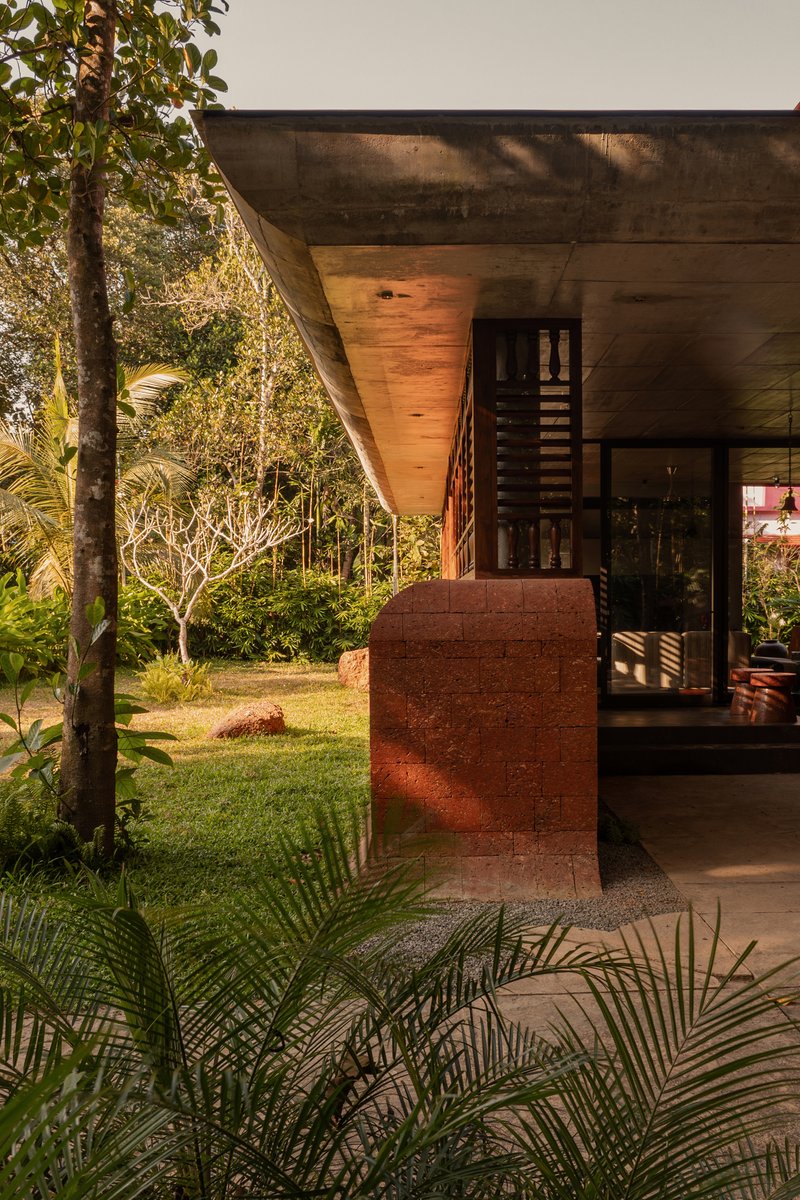
Generous roof overhangs protect walls and openings from heavy monsoon rains and harsh sunlight, while curved concrete slabs soften the mass of the structure and add a sculptural quality. These curves also allow water to flow naturally, reinforcing the building’s responsiveness to climate.
Large openings, strategically placed and shaded, maximise daylight and cross-ventilation. Rather than relying on mechanical systems, the house performs through orientation, massing, and material intelligence.
Materiality: Raw, Local, and Expressive
Material selection plays a central role in shaping the character of VILAKK Residence. The palette is intentionally restrained, focusing on locally available laterite stone, wood, and concrete. These materials are left largely exposed, allowing their inherent textures and imperfections to define the aesthetic.
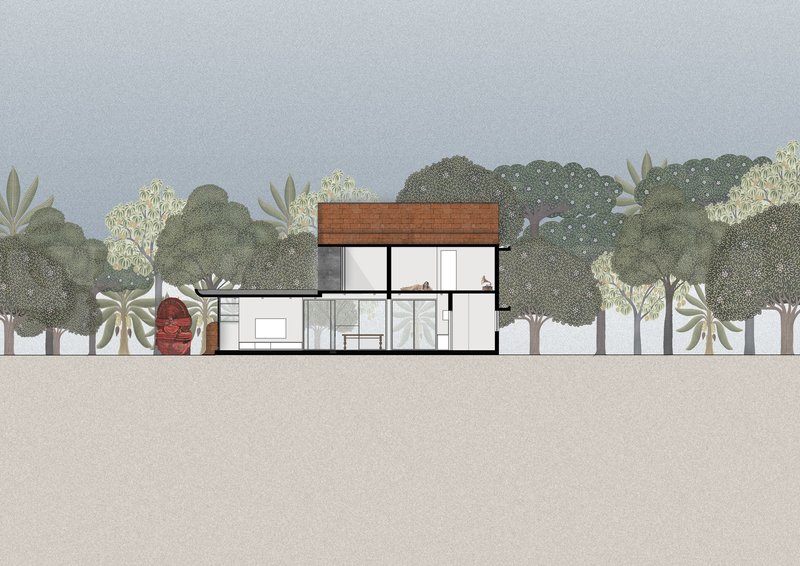
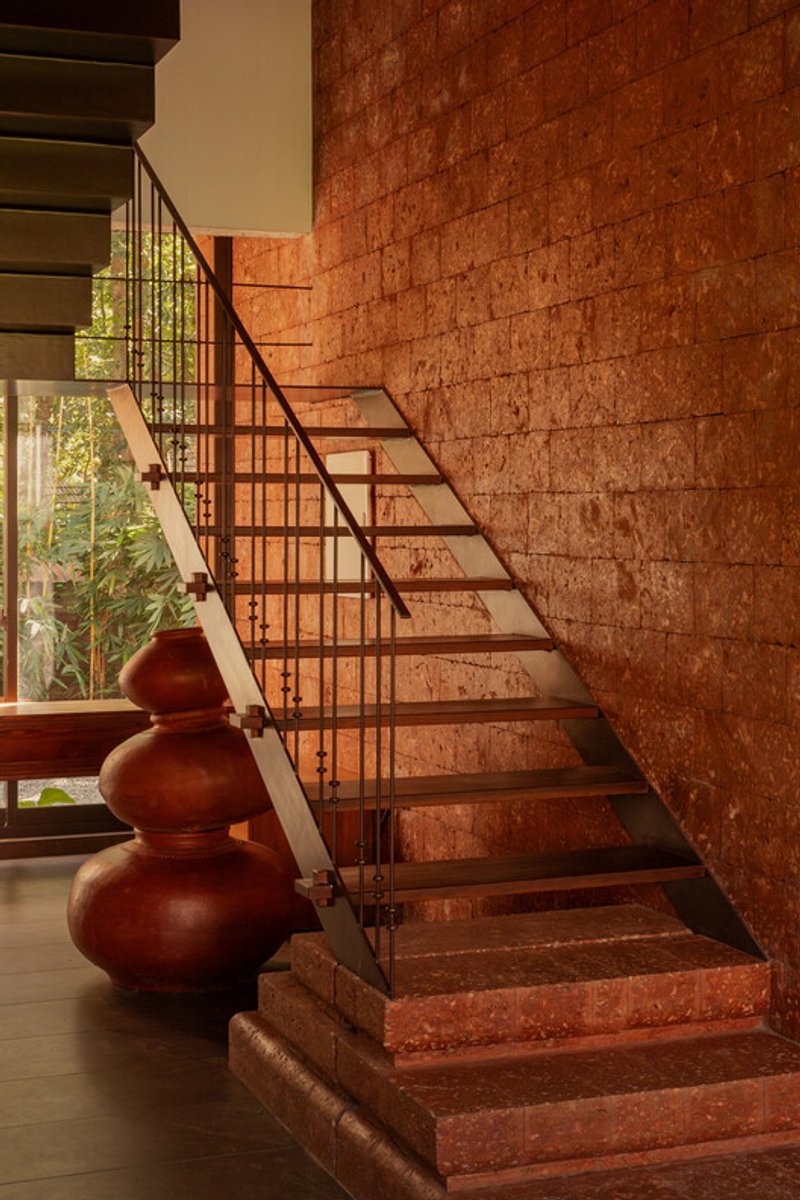
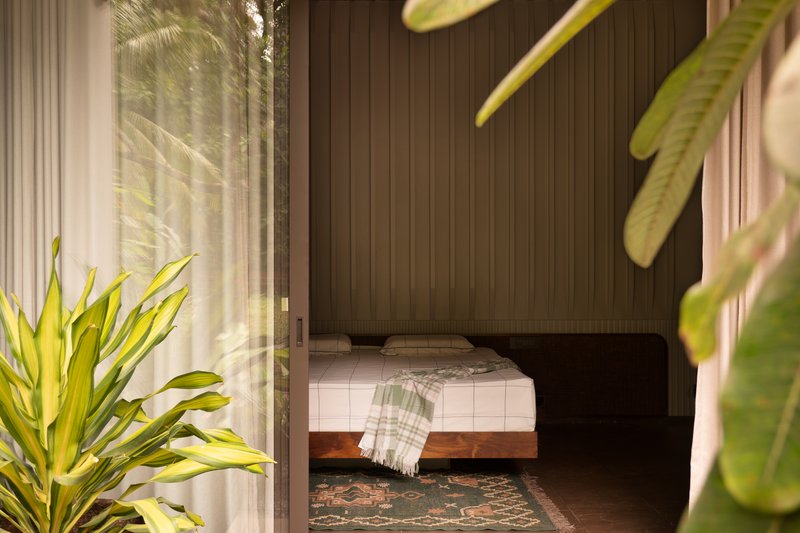
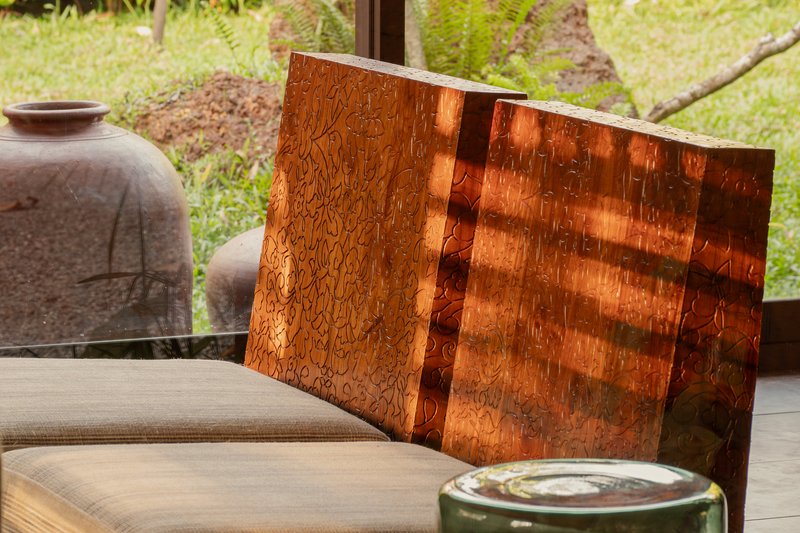
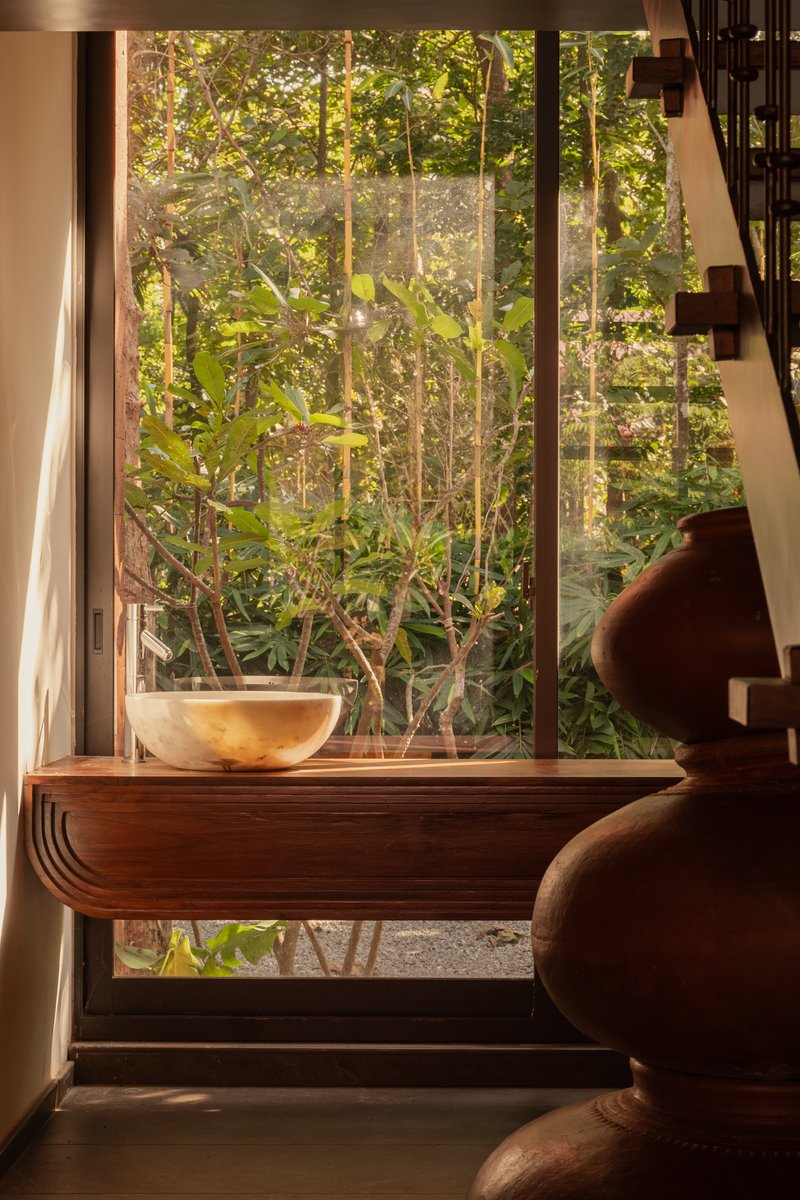
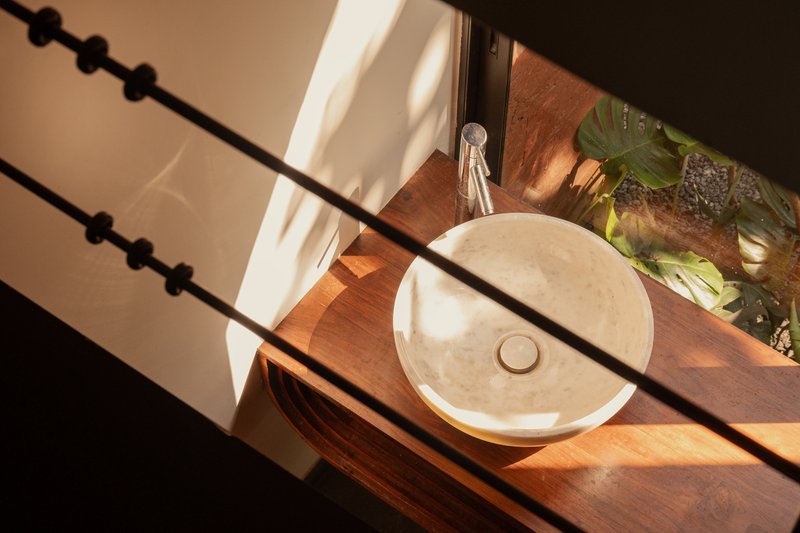
Laterite appears not only as walls but also as carved elements, with curves and softened edges that contrast with its raw solidity. Wood introduces warmth and intricacy, visible in doors, screens, ceiling beams, and staircases. Traditional craftsmanship is evident in floral grooves on wooden doors, vernacular-style screens, and carefully detailed joinery.
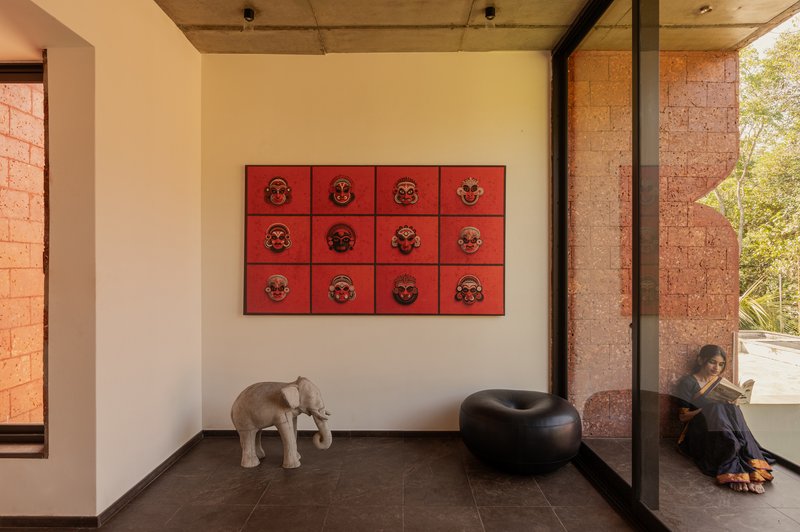
Concrete, often perceived as heavy, is treated with sensitivity—its curved slabs and cantilevers lending lightness while providing structural clarity and climatic protection.
Interiors: Minimal, Personal, and Contextual
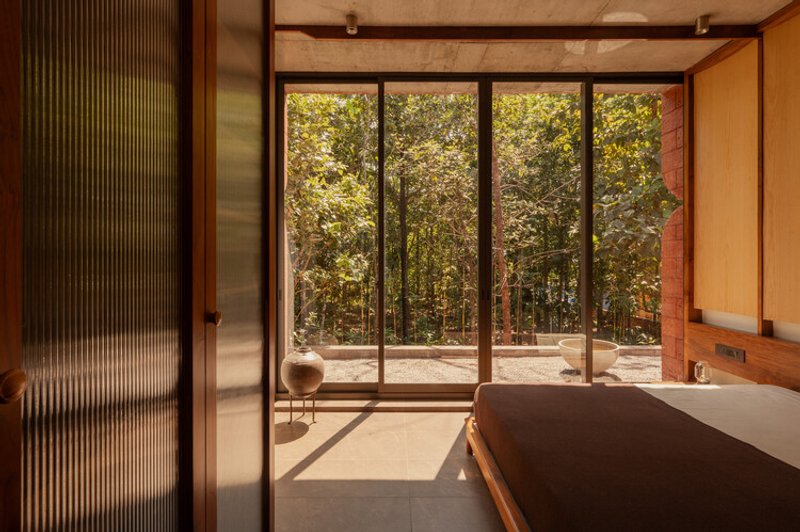
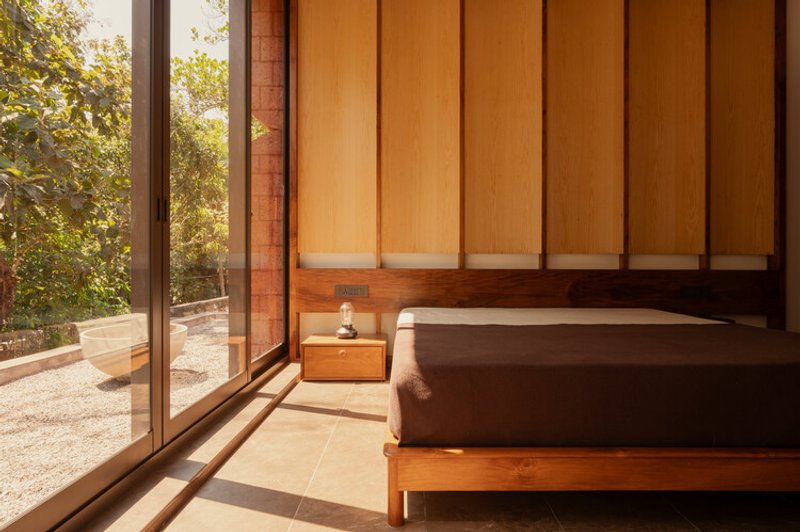
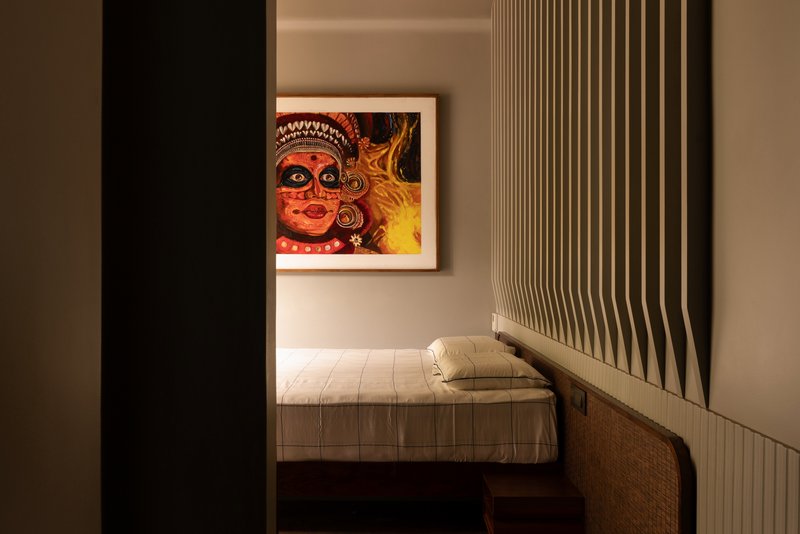
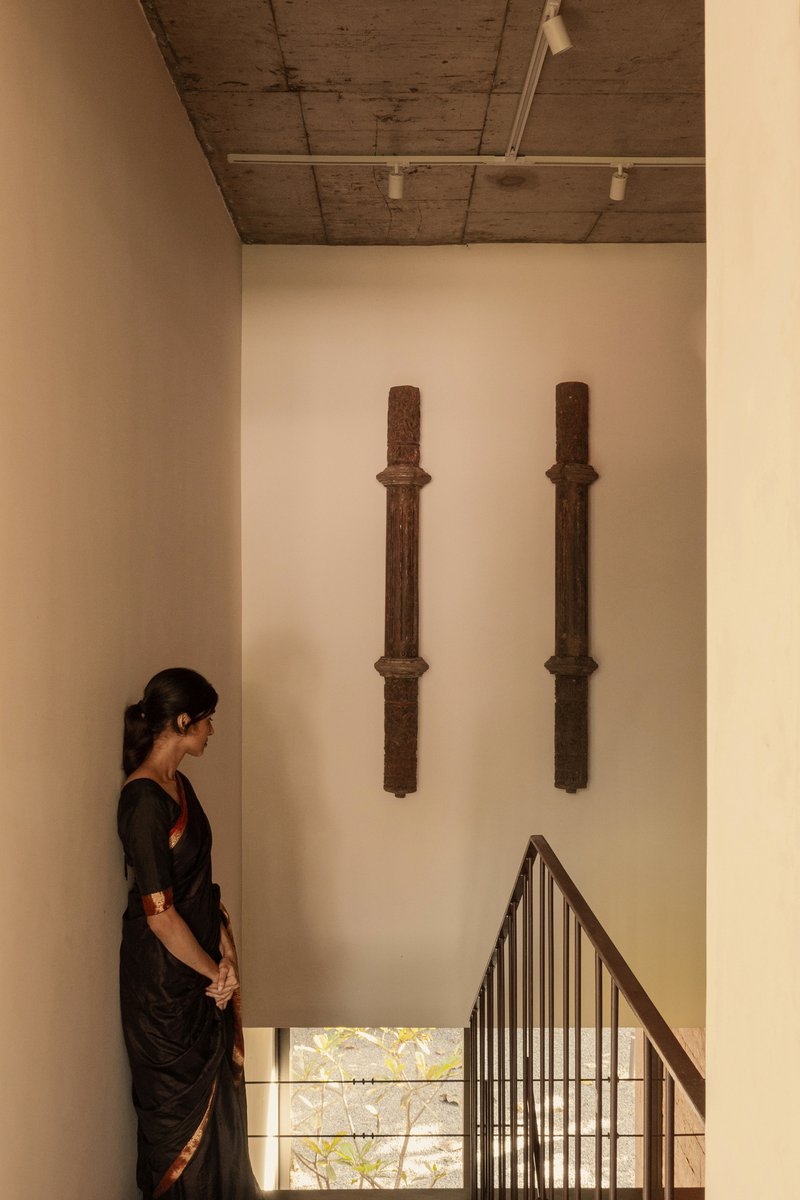
The interior spaces are minimal yet rich in character. Bedrooms are calm and restrained, each defined by a unique element—folded veneer panels, artwork inspired by Theyyam, or carefully framed views of the landscape. These personal touches reinforce the idea that modern living can coexist with cultural expression.
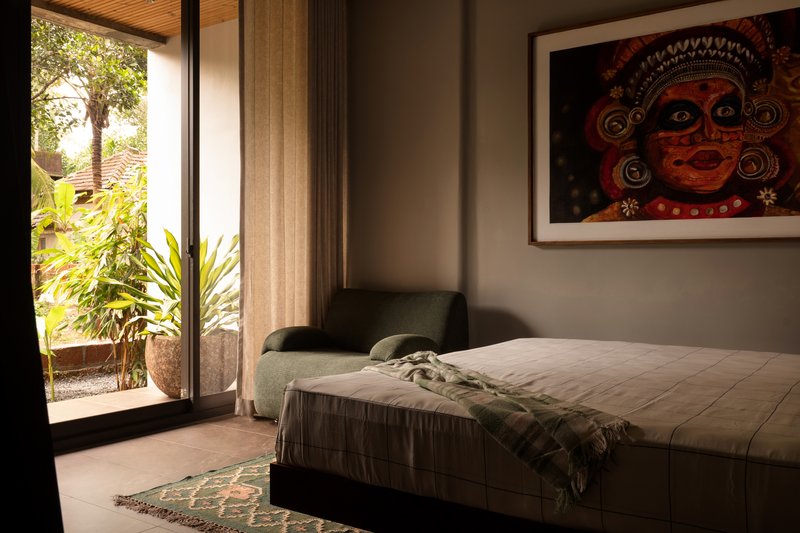
Flooring throughout the house uses raw, smooth-textured tiles that complement the material palette without drawing attention away from it. The staircase becomes a sculptural feature, with wooden treads paired with sleek metal railings, creating a balanced dialogue between tradition and modernity.
Construction and Craft
The detailing across the house reflects a deep respect for craft and process. Every junction—between stone and wood, concrete and steel—is carefully resolved. The architecture does not rely on excess but on precision and restraint, allowing materials to speak through proportion, texture, and light.
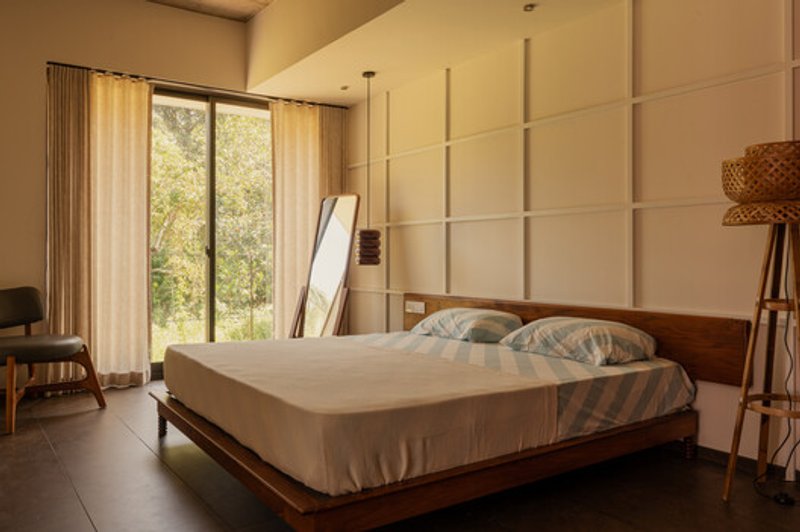
Environmental considerations extend beyond climate response to overall well-being. The house prioritises natural light, ventilation, and tactile materials, fostering a living environment that feels calm, grounded, and deeply human.
A Contemporary Vernacular
VILAKK Residence is ultimately a meditation on belonging. It demonstrates how contemporary architecture can emerge from local traditions without becoming derivative. By engaging with climate, ritual, material, and landscape, the house becomes a living extension of its context—neither frozen in the past nor disconnected from it.
In an era where rapid urbanisation often erases regional identity, this project offers an alternative path: one that looks inward, values craft, and reimagines vernacular wisdom for modern life. VILAKK Residence stands as a quiet yet powerful example of architecture rooted in place, memory, and meaning.
All the Photographs are works of Studio IKSHA



Popular Articles
Popular articles from the community

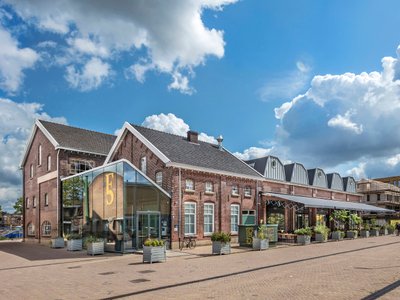
Fifth NRE Jazz Club – De Bever Architecten: Eindhoven’s Revitalized Cultural Hub
Historic gas factory transformed into Fifth NRE Jazz Club blending modern sustainability, jazz culture, dining, and heritage architecture seamlessly.

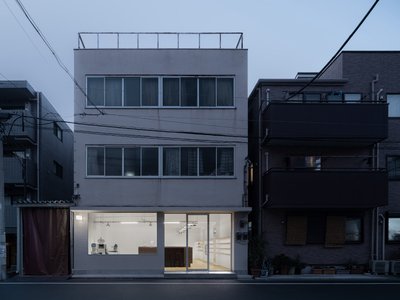
Atelier Macri Concept Store Interior Design by CASE-REAL
Atelier Macri store features a "ko" counter, walnut wood details, cork displays, blending retail, gallery, and seamless customer experiences.
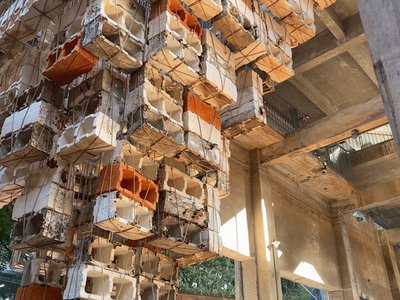
Inverted Architecture Installation by Studio Link-Arc: Exploring the Intersection of Architecture and Living Organisms
Inverted Architecture Installation by Studio Link-Arc blends mycelium, sustainability, inverted design, ecological cycles, and urban adaptive architecture in Shenzhen.


Similar Reads
You might also enjoy these articles


The Ken Roberts Memorial Delineation Competition (Krob)
As the most senior architectural drawing competition currently in operation anywhere in the world, it draws hundreds of entries each year, awarding the very best submissions in a series of medium-based categories.

Waterfront Redevelopment and Urban Revitalization in Mumbai: Forging a New Dawn for Darukhana
A transformative waterfront redevelopment project reimagining Darukhana’s shipbreaking heritage into an inclusive urban future.
OUT-OF-MAP: A Call for Postcards on Feminist Narratives of Public Space
Rhizoma Design and Research Lab invites artists, designers, architects, researchers, and students to reflect on how feminist perspectives can reshape public space. Selected works will be exhibited in Barcelona, October 2026. Submissions open until 15 April 2026.

Documentation Work on Buddhist Wooden Temple
Architectural syncretism and cultural hybridity: A comparative study of the Buddhist temples in Chattogram Hill tracks

Explore Architecture Competitions
Discover active competitions in this discipline




The International Standard for Design Portfolios


The Global Benchmark for Architecture Dissertation Awards


The Global Benchmark for Graduation Excellence


Challenge to reimagine the Iron Throne
Comments (0)
Please login or sign up to add comments
No comments yet. Be the first to comment!