
Villa T in Amagi-Kogen by Florian Busch Architects: A Minimalist Retreat Immersed in Nature
A minimalist mountain retreat in Japan by Florian Busch Architects, seamlessly blending concrete architecture with misty forests and panoramic natural views.

A Mountain Refuge Rooted in Simplicity
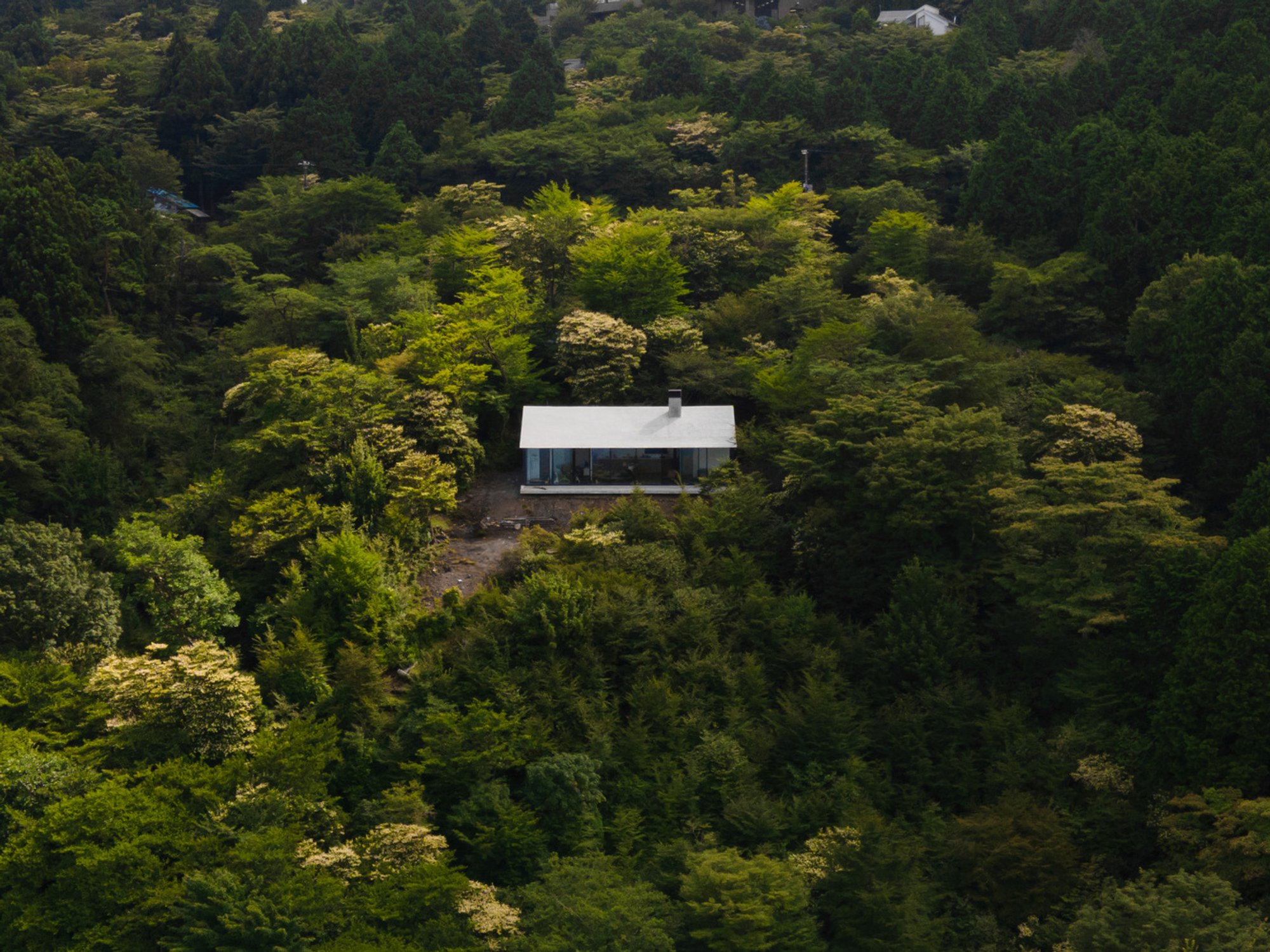
Nestled in the mist-covered forests of Japan’s Amagi Highlands, Villa T by Florian Busch Architects redefines the notion of a mountain retreat. Located nearly 900 meters above sea level on the Izu Peninsula, this 91-square-meter residence embraces the fluid boundary between architecture and landscape, blending minimalist precision with the untamed beauty of its surroundings.
The project began far from its final location — in Tokyo — where a client, living in a small apartment, dreamt of an escape within reach of the city. What started as a search for a small plot in Kamakura evolved into the discovery of a vast 6,000-square-meter mountainside site in Amagi-Kogen, three hours from Tokyo. What the site lacked in proximity, it compensated for in serenity and scale — a setting where architecture could quietly merge with nature.
From Site Search to Sanctuary
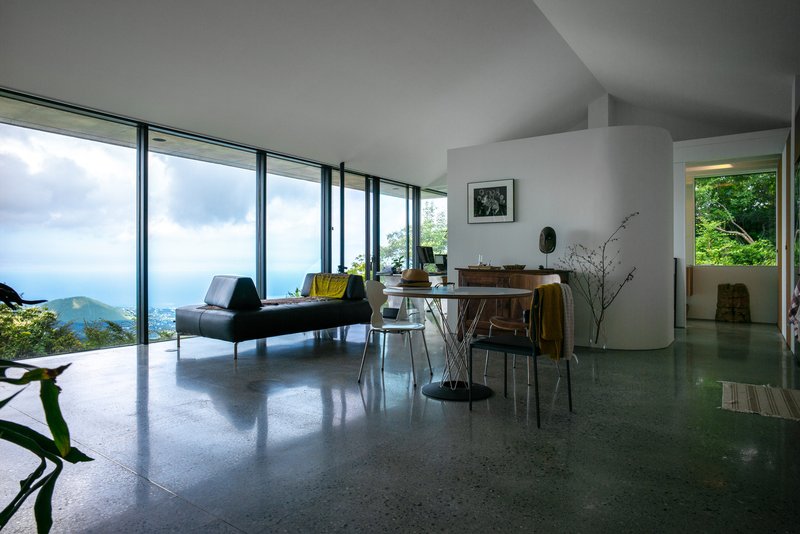
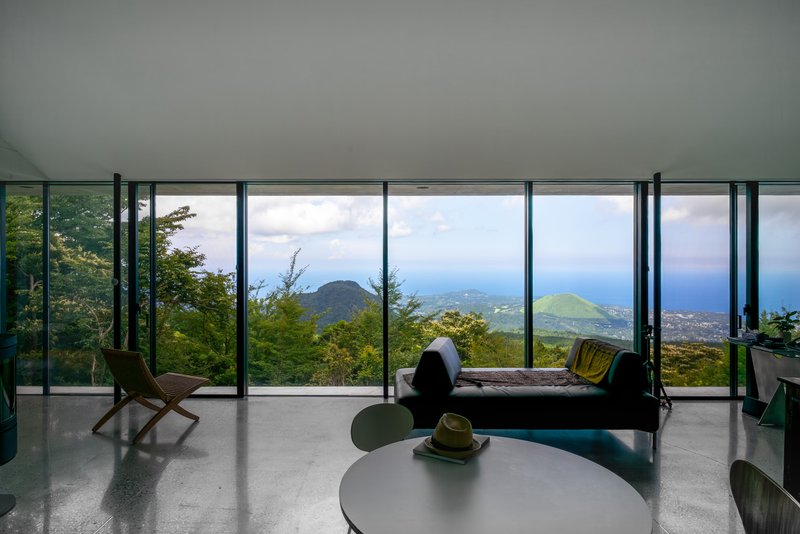
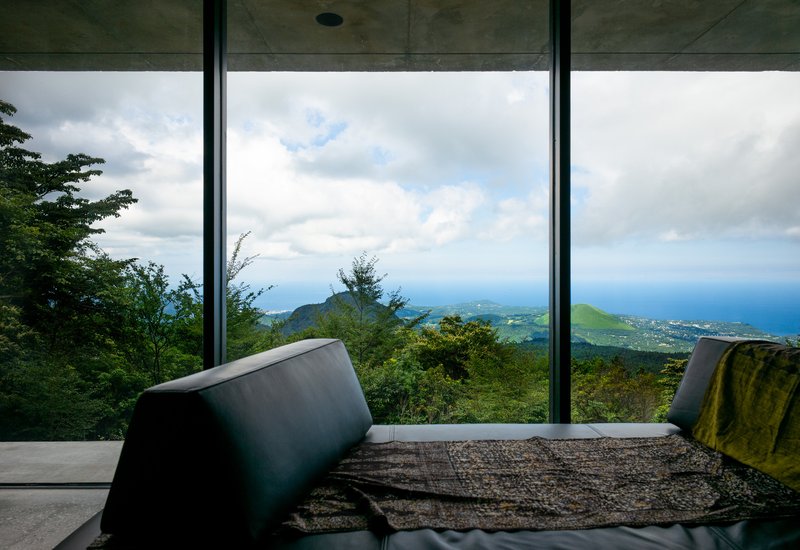
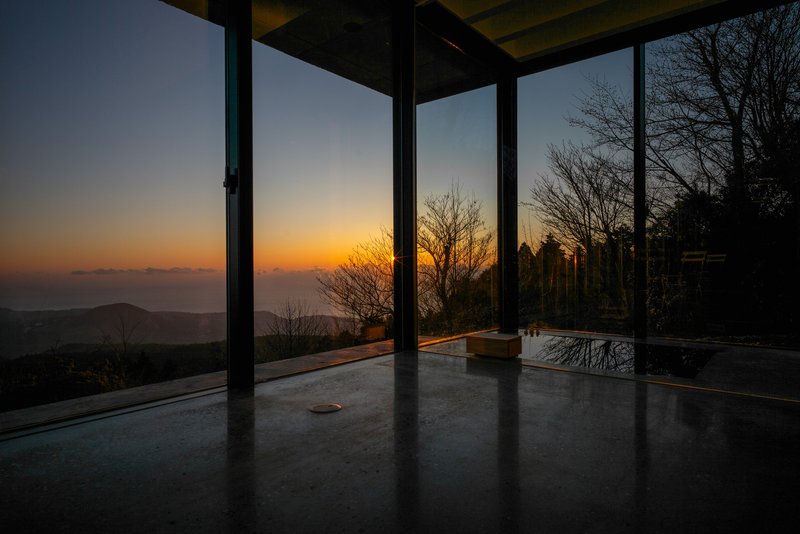
When architect Florian Busch first set foot on the steep site, the experience was transformative. The terrain opened into a breathtaking 120-degree panorama, revealing the twin peaks of Mount Yahazu and Mount Omuro, with distant glimpses of the Pacific Ocean and Kanto Plain shimmering through the haze. Yet, the site’s beauty was mercurial — one visit bathed in sunlight and sweeping views, the next wrapped in thick fog, erasing the landscape entirely.
This constant shift between visibility and obscurity, light and mist, became the conceptual foundation for the project. The villa would be a space that absorbs the atmosphere — a dwelling that exists as much in the landscape as it does against it.
Living “Inside the Outside”
The client, an art collector with a Spartan sensibility, desired not a house filled with objects, but a space defined by its relationship to nature. His vision was to “live inside the outside” — to experience the forest, wind, and changing light from within a structure that both shelters and exposes.
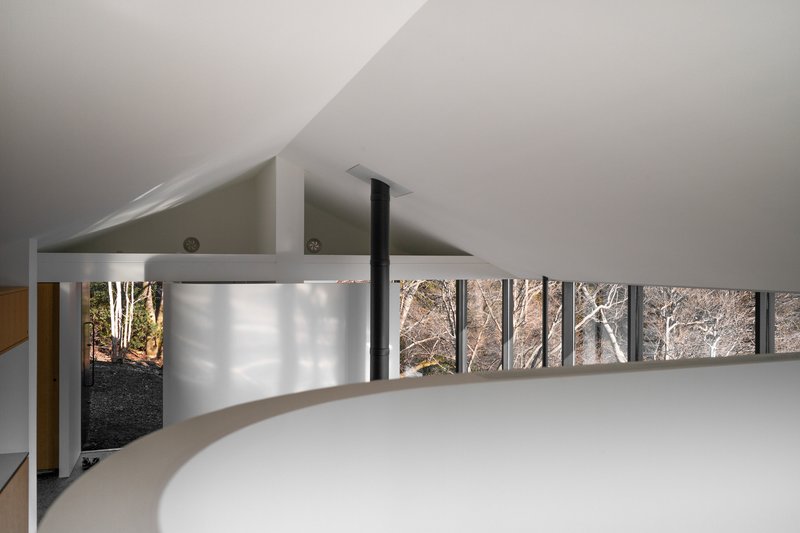
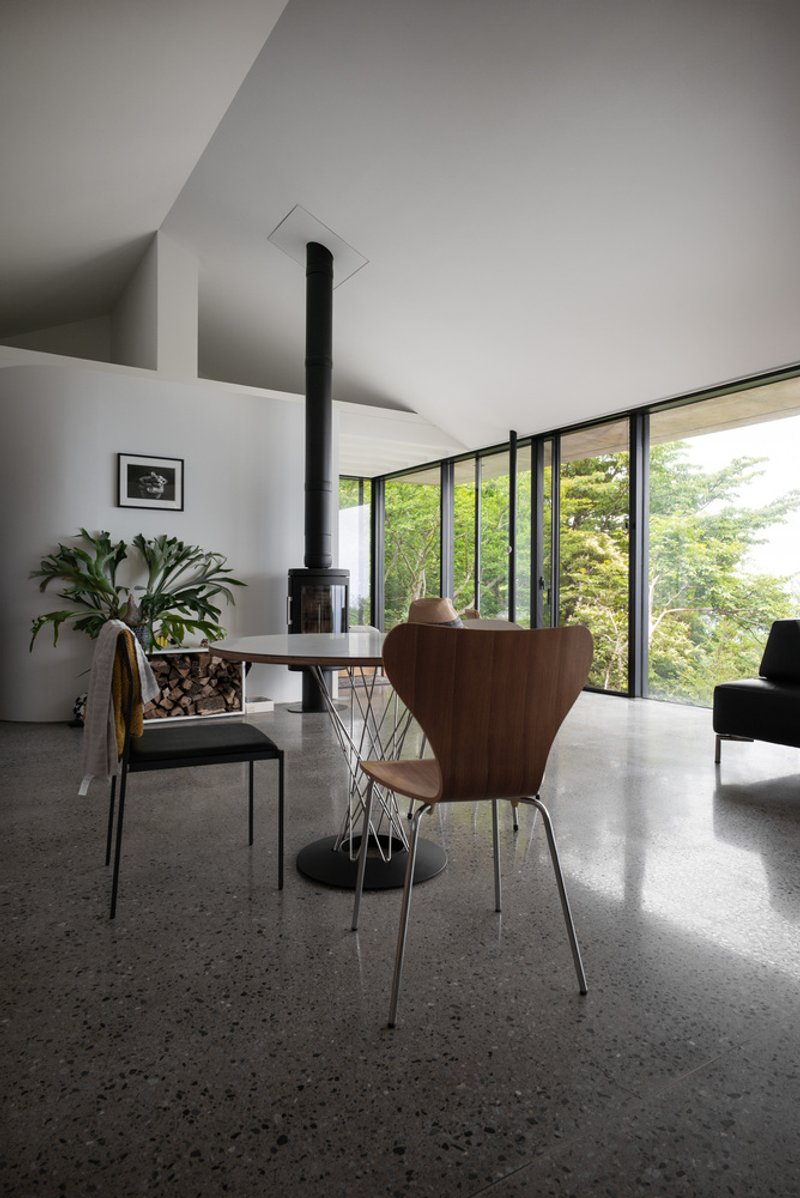
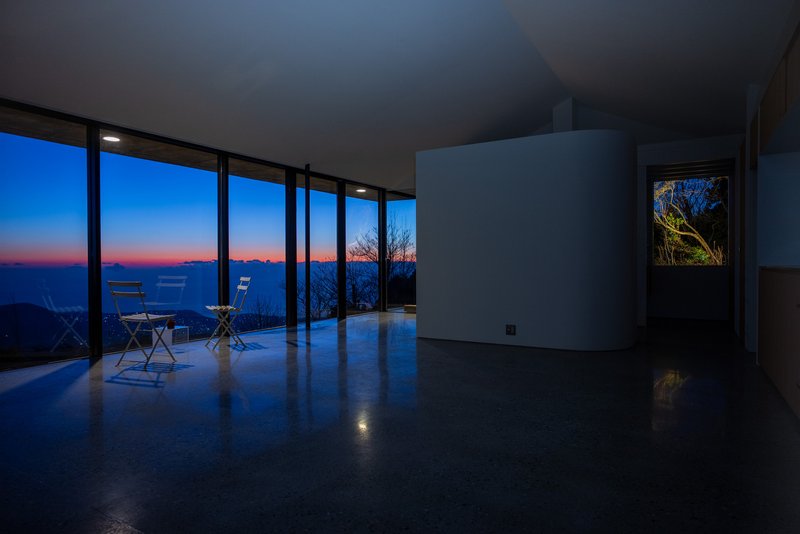
In response, the architects conceived the villa as a fluid, continuous space embedded in nature, rather than a composition of isolated rooms. The design encourages movement and openness, erasing the divide between interior and exterior. Walls flow softly through the interior, never touching the ceiling, creating a sense of weightless enclosure beneath the expansive roof.
The Rock-Roof Hybrid
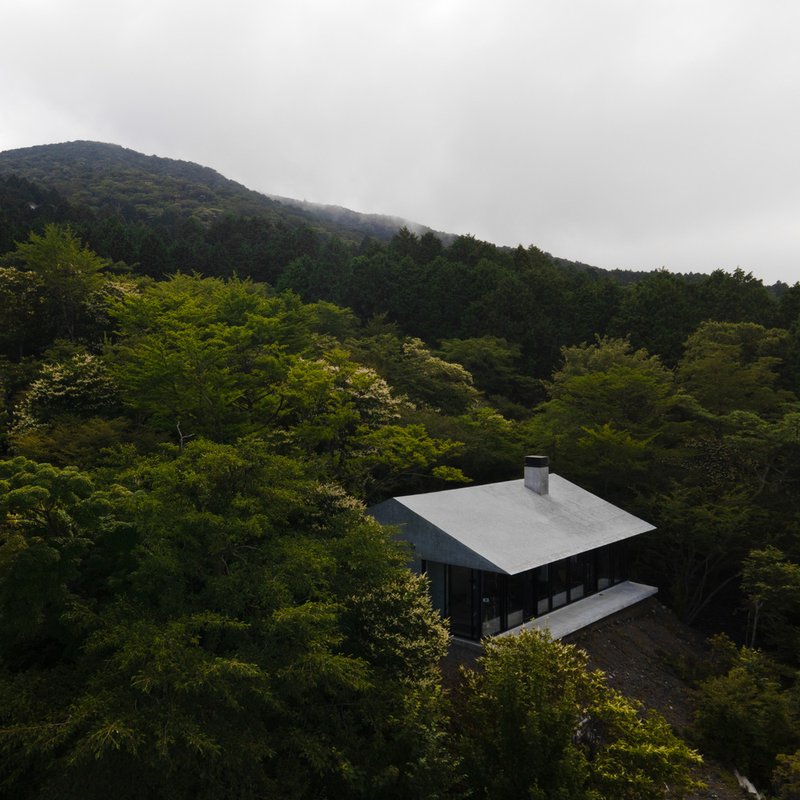
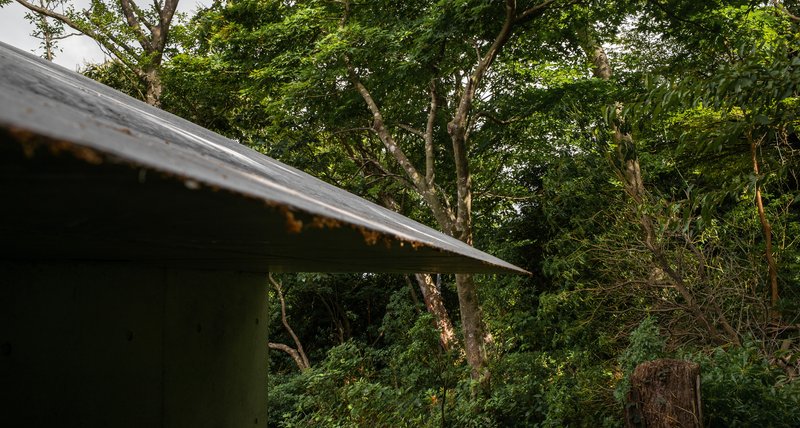
The architectural concept — described by Florian Busch as a “rock-roof hybrid” — imagines a home as if carved from the mountain itself. The roof, simultaneously grounded and sculptural, follows both local regulations for a pitched form and the site’s natural slope. From afar, it appears as a stone fragment emerging from the hillside; up close, its chiseled geometry and concrete texture create an earthy dialogue with the surrounding rock and vegetation.
Walking down the forest path, glimpses of the roof surface emerge through the trees — a deliberate act of revelation. The structure, mostly hidden from the access road, unfolds gradually as one descends, until its full form becomes visible: a minimalist volume that seems at once ancient and contemporary, natural and manmade.
A Play of Light, Mist, and Material
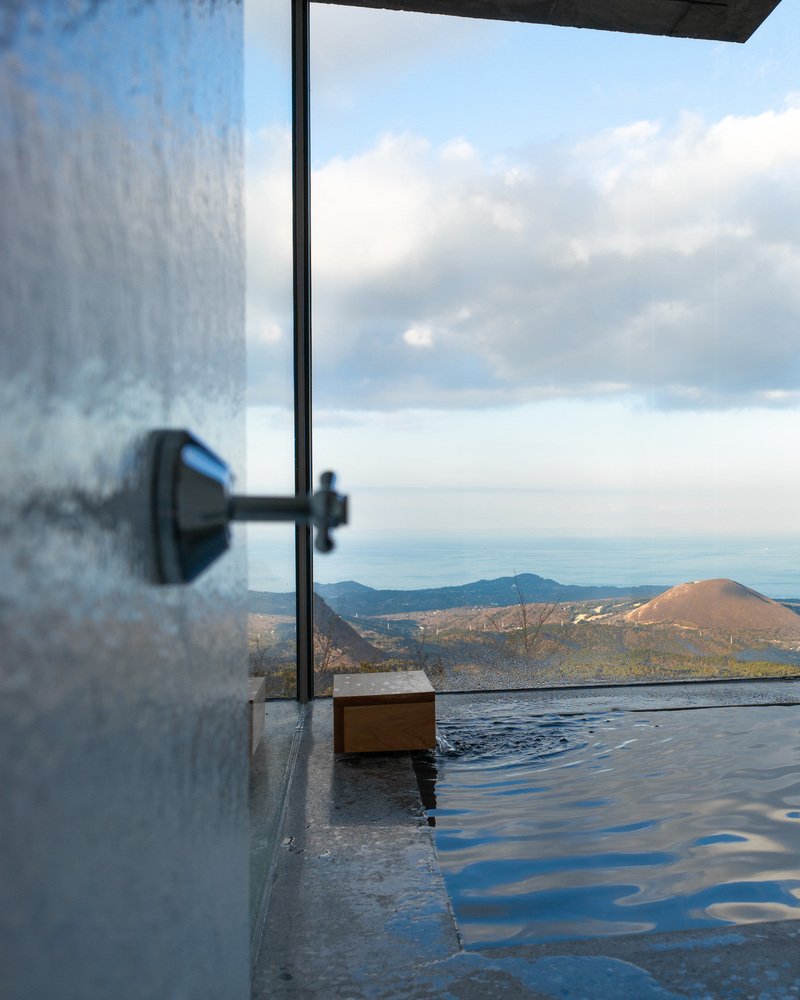
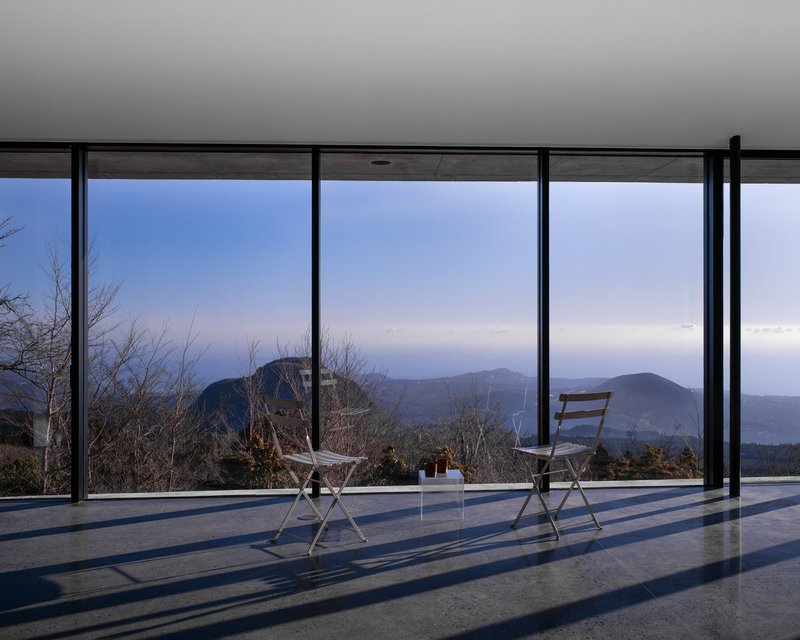
Inside, the atmosphere shifts dramatically. The interior is entirely white, a carved-out void contrasting the stony exterior. Daylight filters through large glass openings, casting moving shadows from the trees outside. When the fog rolls in, the space becomes ethereal, its boundaries dissolving into the mist.
This dynamic interplay between light, weather, and texture defines the experience of Villa T — a poetic meditation on impermanence and perception. Rather than dominating the site, the architecture invites nature to perform its quiet transformations within and around it.
Architecture as Landscape
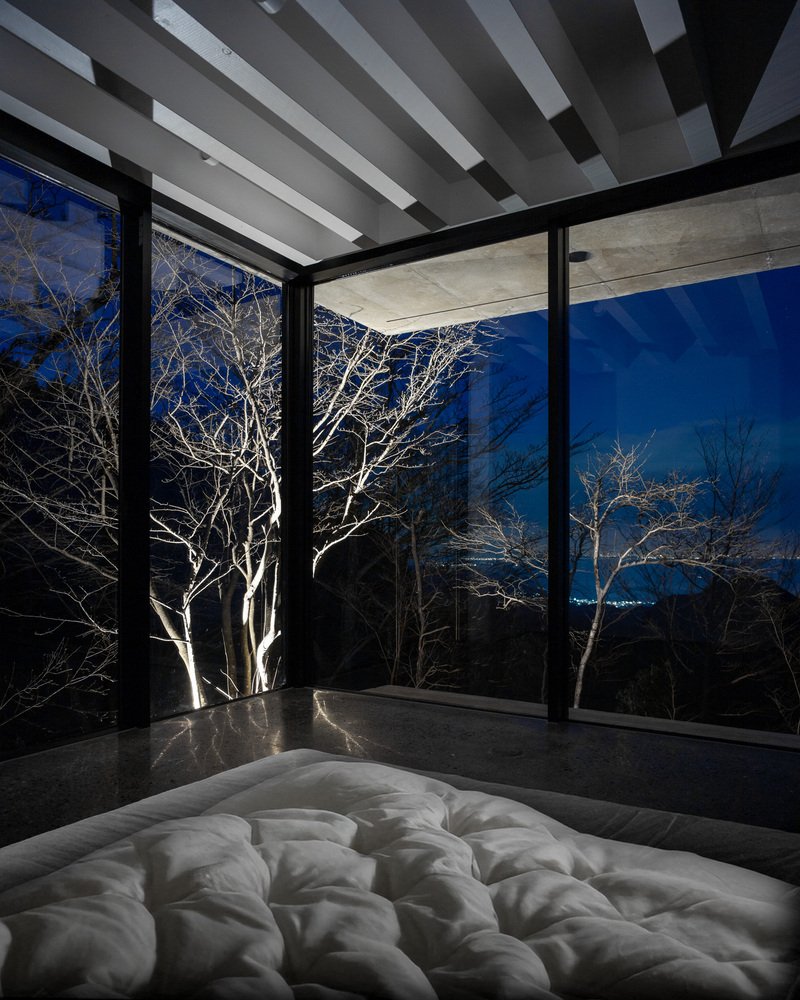
Villa T is not a conventional house; it is an experiment in how architecture can become landscape. Its solid yet porous form evokes the geological character of the mountain, while its openness allows the elements — rain, fog, wind, and sunlight — to shape the daily rhythm of life.
By balancing minimalism with raw material expression, Florian Busch Architects create a dwelling that is less about function and more about feeling — an architectural refuge that celebrates solitude, silence, and the ever-changing mountain atmosphere.



Popular Articles
Popular articles from the community

Atelier Macri Concept Store Interior Design by CASE-REAL
Atelier Macri store features a "ko" counter, walnut wood details, cork displays, blending retail, gallery, and seamless customer experiences.

Solar Steam: A Climate-Responsive Architecture That Redefines the Monument
A climate-responsive memorial architecture that transforms heat, decay, and time into a living system reflecting humanity’s ecological impact.
Split House: A Compact Urban Home Blending Privacy, Light, and Flexible Living in Japan
Compact Japanese home featuring DOMA space, flexible café potential, passive lighting, privacy zoning, and sustainable urban living design.


The Ken Roberts Memorial Delineation Competition (Krob)
As the most senior architectural drawing competition currently in operation anywhere in the world, it draws hundreds of entries each year, awarding the very best submissions in a series of medium-based categories.


Similar Reads
You might also enjoy these articles
The Ken Roberts Memorial Delineation Competition (Krob)
As the most senior architectural drawing competition currently in operation anywhere in the world, it draws hundreds of entries each year, awarding the very best submissions in a series of medium-based categories.


Waterfront Redevelopment and Urban Revitalization in Mumbai: Forging a New Dawn for Darukhana
A transformative waterfront redevelopment project reimagining Darukhana’s shipbreaking heritage into an inclusive urban future.

OUT-OF-MAP: A Call for Postcards on Feminist Narratives of Public Space
Rhizoma Design and Research Lab invites artists, designers, architects, researchers, and students to reflect on how feminist perspectives can reshape public space. Selected works will be exhibited in Barcelona, October 2026. Submissions open until 15 April 2026.


Documentation Work on Buddhist Wooden Temple
Architectural syncretism and cultural hybridity: A comparative study of the Buddhist temples in Chattogram Hill tracks


Explore Architecture Competitions
Discover active competitions in this discipline




The International Standard for Design Portfolios


The Global Benchmark for Architecture Dissertation Awards


The Global Benchmark for Graduation Excellence


Challenge to reimagine the Iron Throne
Comments (0)
Please login or sign up to add comments
No comments yet. Be the first to comment!