
Yellow River National Museum Building and Park: Green Roof Museum Architecture by gmp Architects
gmp Architects’ Yellow River National Museum in Zhengzhou unites parkland, green roof promenades, stone facade relief, and river history in immersive form.

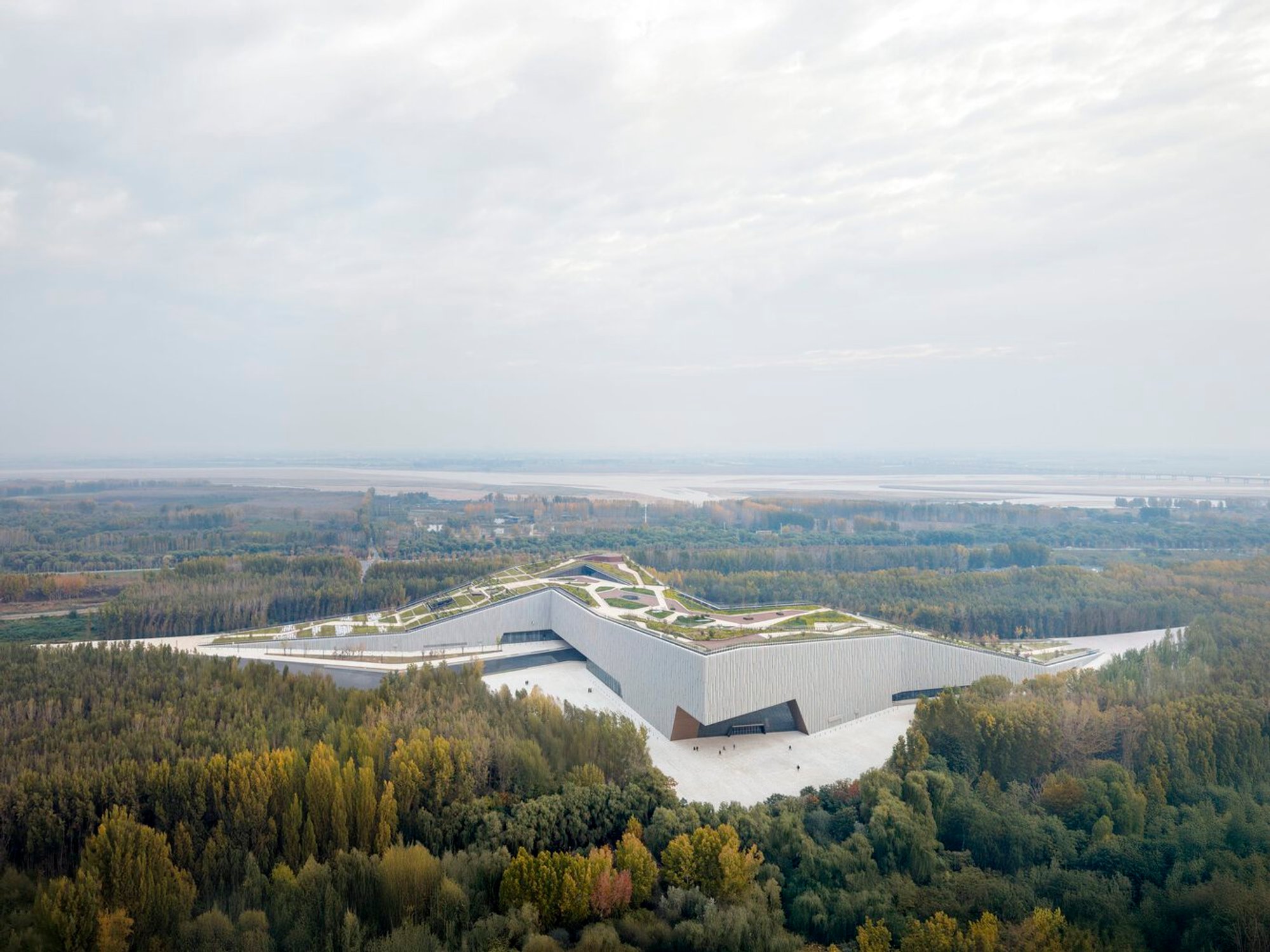
The Yellow River National Museum Building and Park in Zhengzhou by gmp Architects is a landmark study in green roof museum architecture that fuses cultural narrative, landscape infrastructure, and public space into one continuous experience. Conceived as the centerpiece of the Yellow River National Cultural Park, the 140,300 square meter complex interprets the 5,000‑kilometer course of China’s legendary river through topographic form, material expression, and layered visitor journeys that flow between interior exhibition and open landscape.
Cultural and Geographic Context
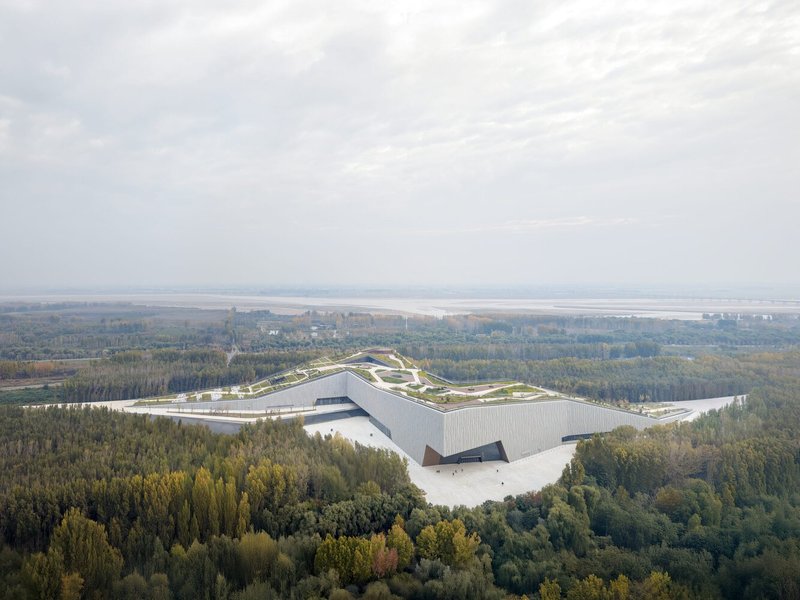
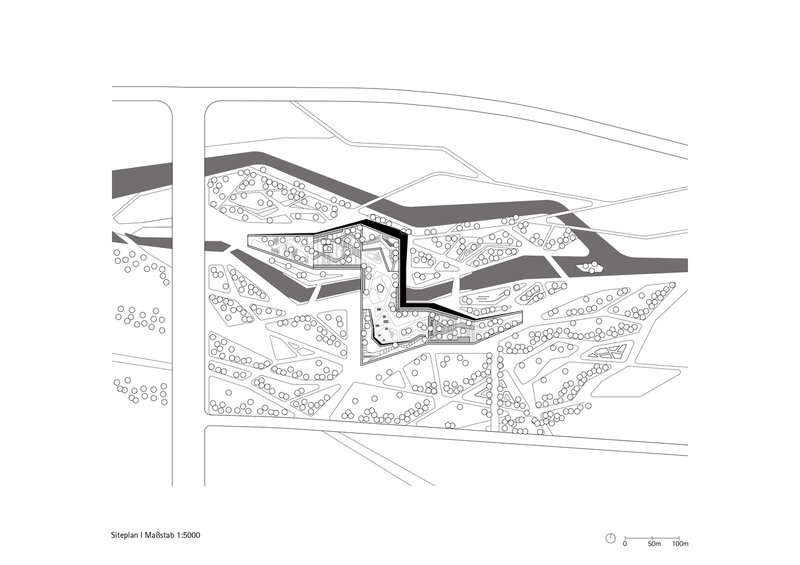
Often called the cradle of Chinese civilization, the Yellow River has shaped millennia of settlement, agriculture, mythology, and statecraft. Positioning the national museum on the city’s northern edge, near the river corridor, allows architecture to operate as a bridge between urban Zhengzhou to the south and riparian landscapes to the north. Rather than a freestanding object, the building is embedded in rolling earthworks that recall meanders, flood terraces, and carved banks, situating memory and ecology in the same spatial field.
Museum as Park Continuum
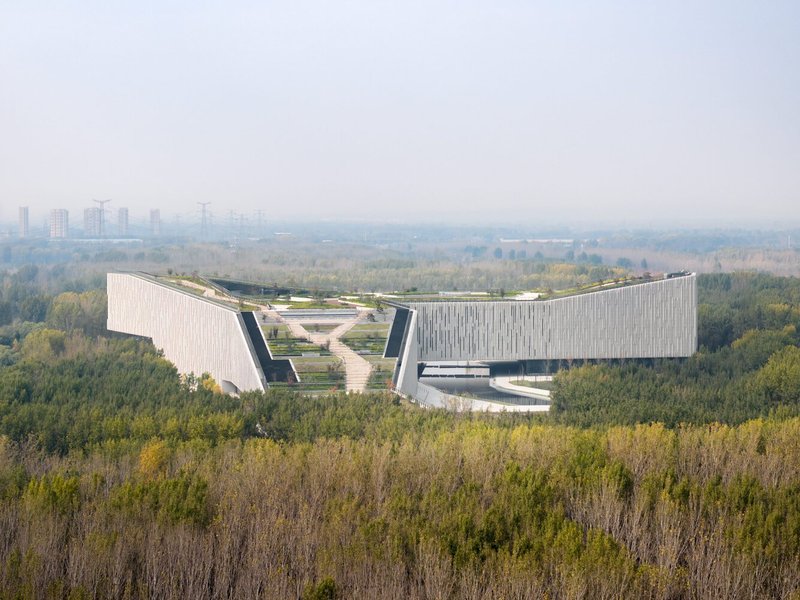
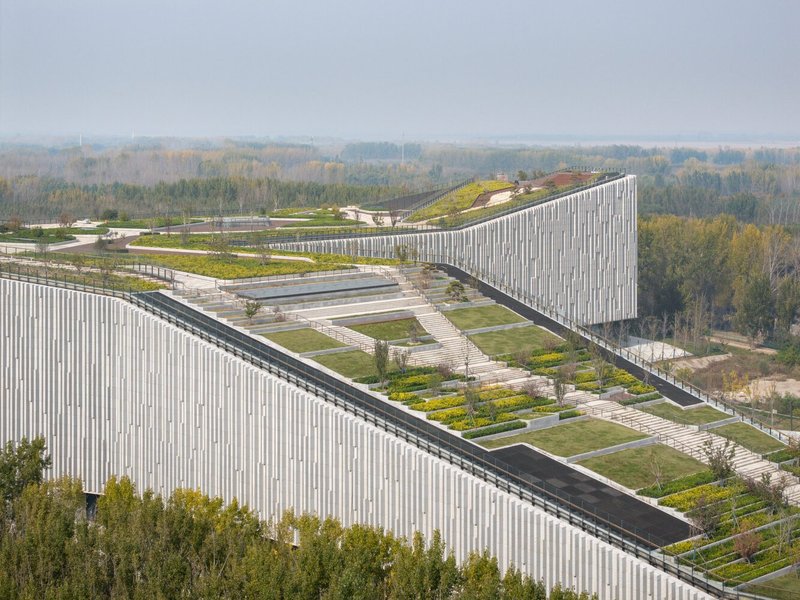
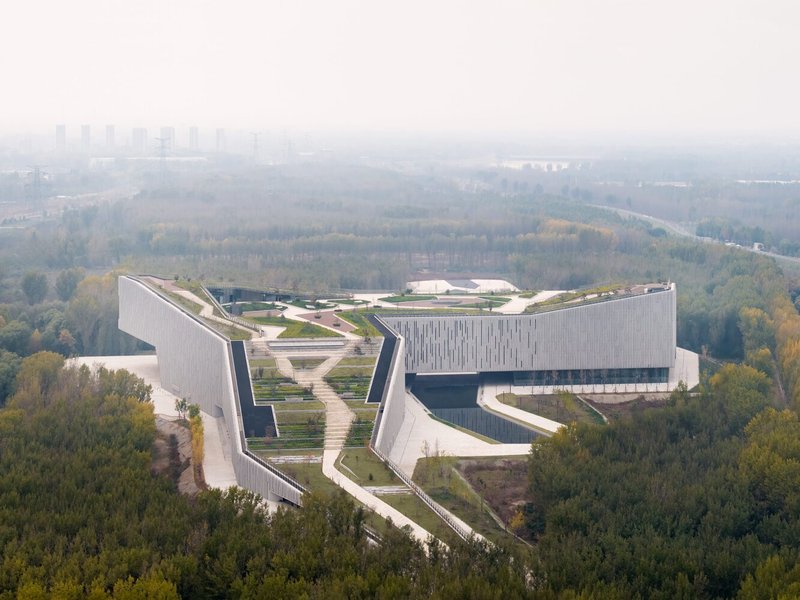
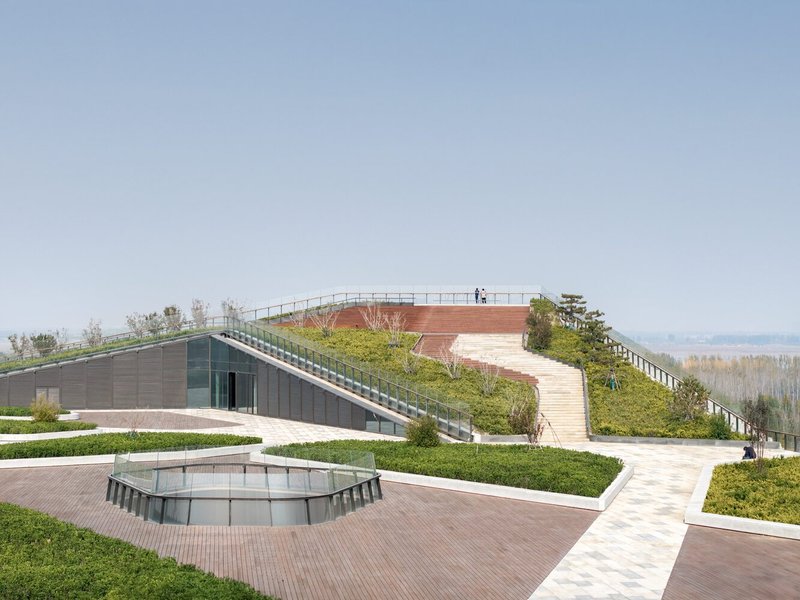
A defining move in this green roof museum architecture is the decision to extend the public park up and over the museum. The building’s sculpted green roof rises from grade in long, walkable slopes that stitch fragmented green areas into a connected parkland. Visitors can ascend landscaped paths lined with native plant communities that interpret characteristic Yellow River ecologies. Picnic clearings, an open‑air theater, and outdoor interpretive stations punctuate the ascent, transforming the roof into an inhabitable cultural landscape rather than a mere environmental surface.
Observation Deck and Territorial Views
At the roof’s high point a forty‑meter observation platform offers panoramic dual orientation: northward to the river landscapes that inspired the museum and southward across the expanding city of Zhengzhou. This elevated prospect reinforces the project’s mediating role between nature and civilization, allowing visitors to read the river’s historic reach against the scale of contemporary urban development.
Bridging Water and Sculpting Space
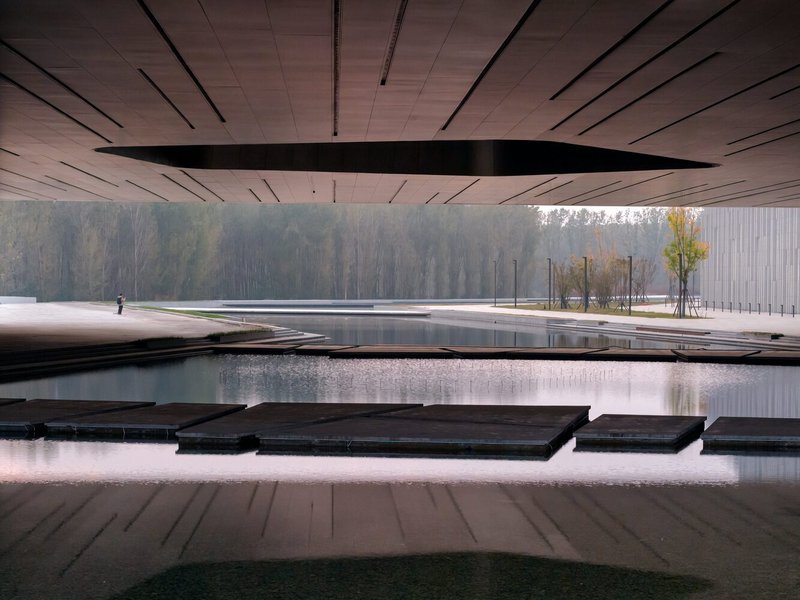
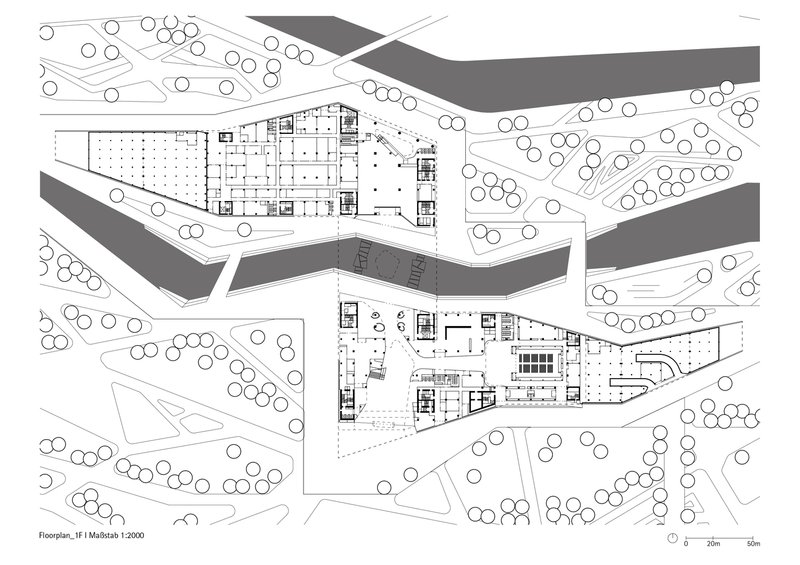
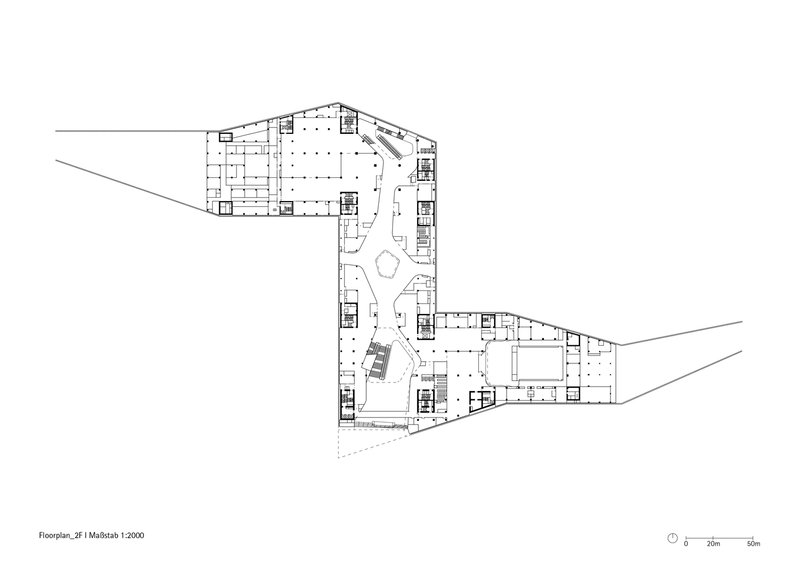
The museum’s polygonal volume bends and dips as it spans a watercourse within the park, literalizing the theme of bridging land and water. At the crossing, a sculptural atrium forms the luminous heart of the building. Daylight pours through this vertical void, and the space can be theatrically animated by a cascading interior water curtain that reconnects visitors to the hydrologic story unfolding outside.
Facade as Geological River Wall
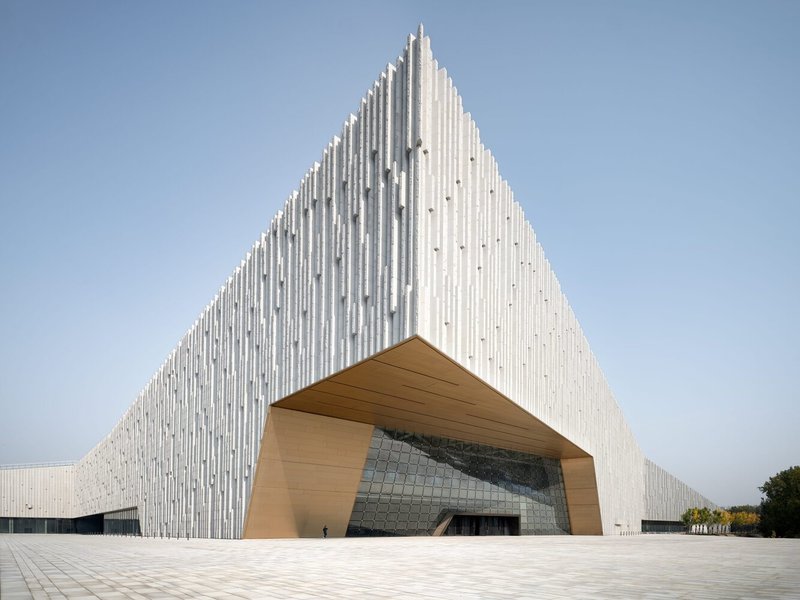
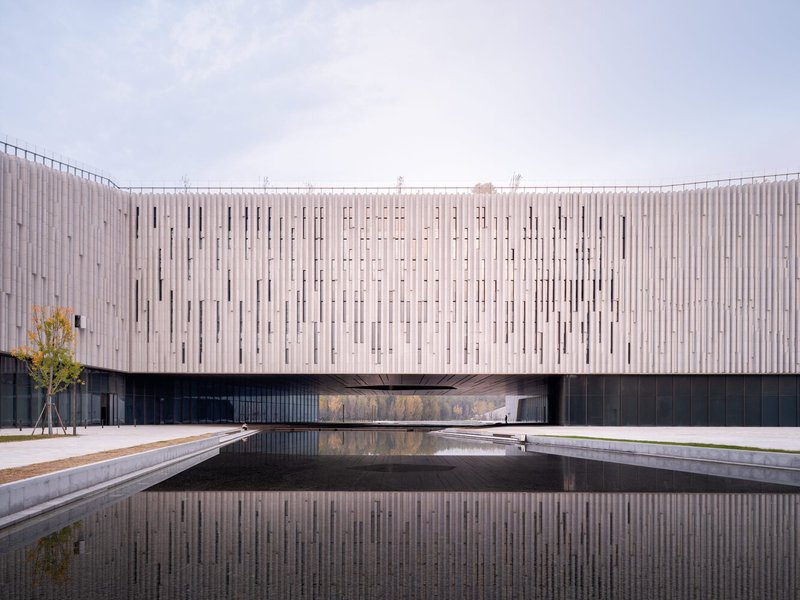
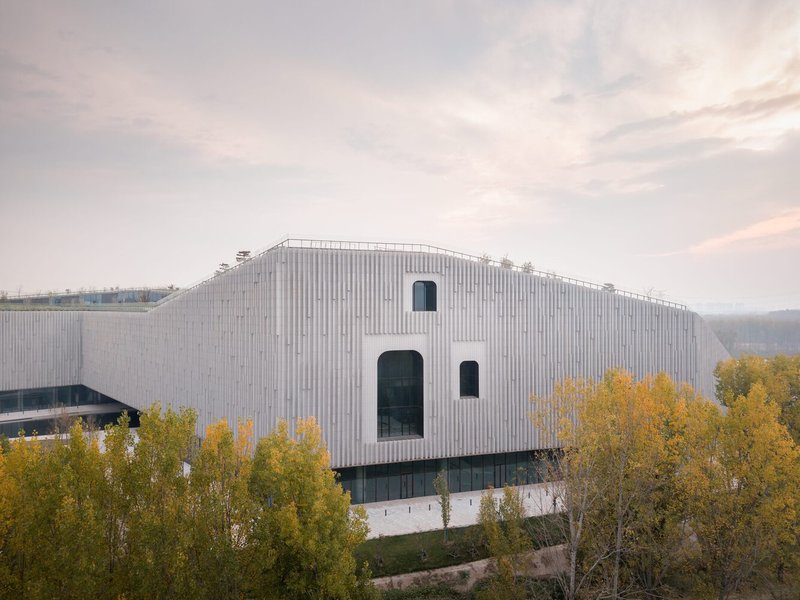
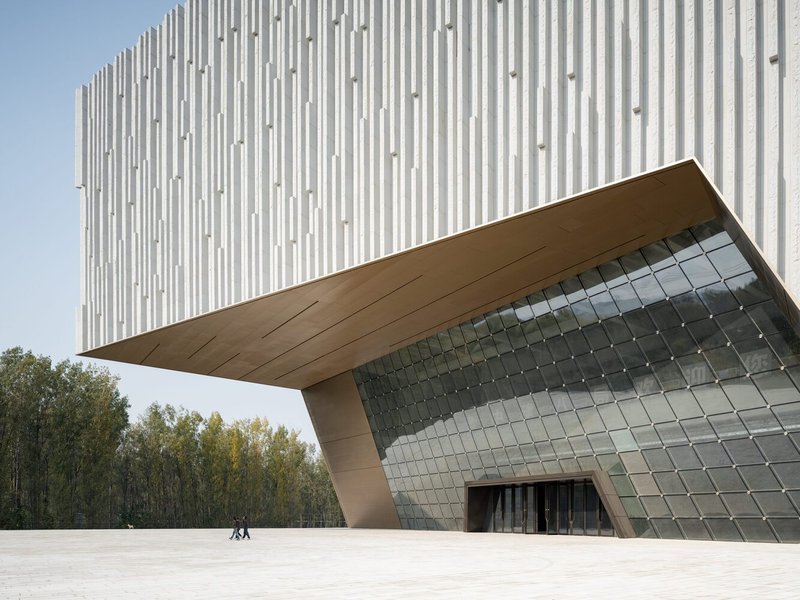
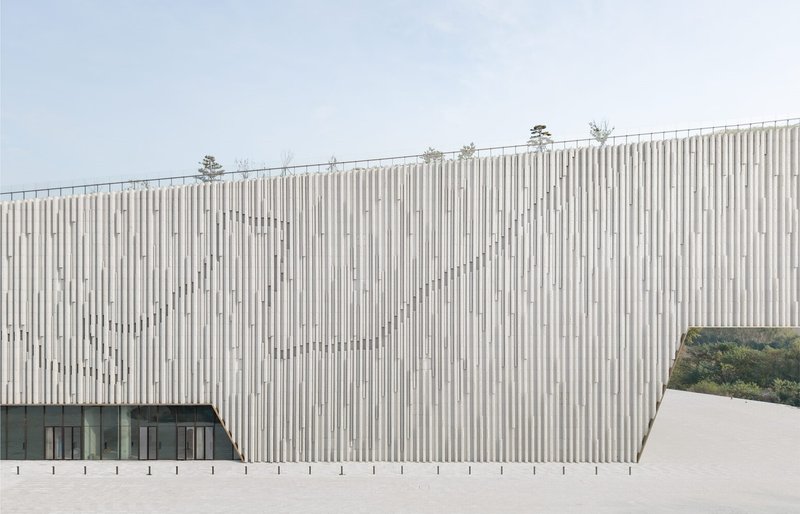
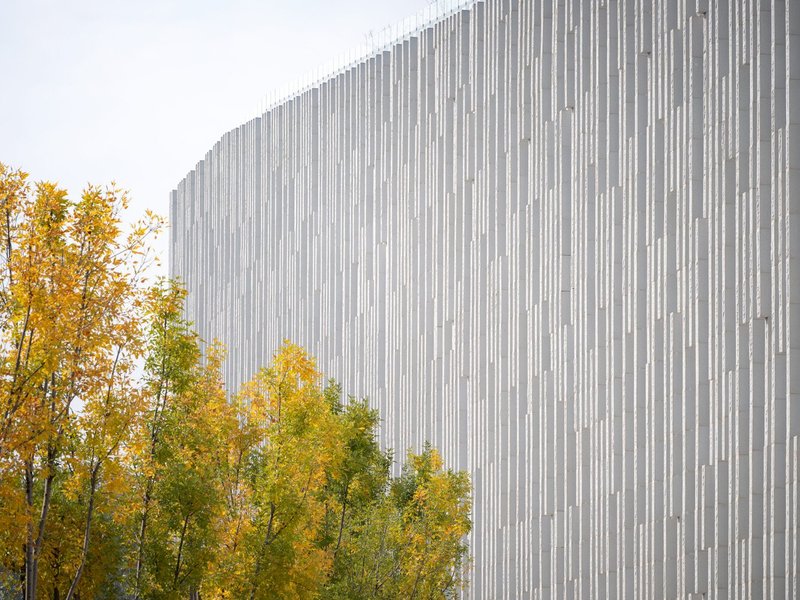
Clad in a curtain wall system of natural stone prefabricated in modular relief panels, the exterior envelope reads like stratified riverbank geology. Vertical rhythms and sculpted shadows echo erosional textures, while controlled openings differentiate program. Slender vertical slots admit daylight to public circulation without compromising curatorial light control in galleries. The north facade opens in three grand apertures that reference the Yellow River region’s traditional yaodong cave dwellings, framing long landscape views and anchoring the museum’s cultural symbolism in an immediately legible form.
Threshold and Entry Experience
Under the structure’s tallest southern rise, the main entrance is carved as a deep glazed incision. Brass cladding in yellow earth tones lines the cut and extends overhead, its subtle shimmer recalling alluvial sediments. Inside, curved walls shaped like eroded rock strata and softly reflective ceilings lead visitors toward orientation areas and the atrium beyond. This carved entry sequence compresses scale before releasing visitors into the expansive narrative spaces of the museum and park.
Interior Spatial Strategy
The building’s interior organizes exhibition zones, educational suites, event spaces, and public amenities around the central atrium spine. Gallery enclosures remain largely light‑tight to protect sensitive material, while interstitial public corridors borrow daylight from vertical fissures in the facade. Material continuity between stone, metal, and earth finishes reinforces the notion that one is moving through carved terrain as much as through constructed rooms, aligning interior atmosphere with the landscape choreography outside.
Landscape Interpretation on the Roof
The planted roof is curated as a didactic field guide to riverine ecologies. Zones of native grasses, riparian shrubs, and regional tree species unfold along winding paths, each representing different geomorphologic conditions found along the Yellow River’s vast watershed. Seating terraces and outdoor exhibits embed interpretation directly within the planting, encouraging slow, exploratory engagement that complements the more artifact‑driven storytelling inside.
Modular Construction and Performance
Prefabricated stone facade units accelerate assembly across the museum’s large surface area while ensuring consistent relief articulation. Modularization improves quality control, reduces onsite waste, and allows patterned repetition that reads at landscape scale. The green roof contributes thermal buffering, stormwater attenuation, and biodiversity support, while the building’s partially earth‑sheltered profile reduces apparent mass within the park setting.
Lighting and Atmosphere
Working with Conceptlicht, the design team calibrated exterior and interior lighting to heighten the building’s sculptural relief and nocturnal presence. Subtle grazing light across the stone verticals accentuates their river‑like striations after dark, while warm tones at the entrance glow like sediment lit from within. Inside, controlled luminous contrasts guide movement from immersive multimedia galleries to reflective public overlooks.
Architecture as Cultural Landscape
Yellow River National Museum Building and Park demonstrates how green roof museum architecture can move beyond symbolic form to become an experiential terrain that teaches through movement, material, and view. By merging park infrastructure, cultural interpretation, and environmental performance, gmp Architects create a civic destination that invites citizens to walk the river’s story, inhabit its topographies, and contemplate the enduring relationship between landscape systems and human culture.
In Zhengzhou, the Yellow River National Museum transforms a cultural brief into an inhabitable landscape continuum. Its green roof trajectories, carved brass entry, stratified stone facade, and river‑bridging atrium weave the geological, ecological, and civilizational narratives of the Yellow River into a single architectural promenade. As cities worldwide seek to integrate large cultural institutions within public green space, this project stands as a compelling model of landscape‑driven museum design at territorial scale.
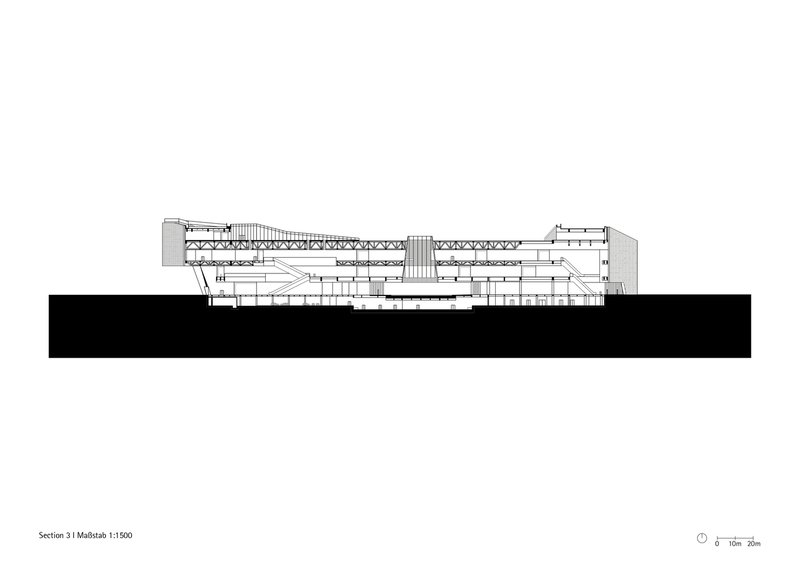
All the photographs are works of Marcus Bredt



Popular Articles
Popular articles from the community


Inverted Architecture Installation by Studio Link-Arc: Exploring the Intersection of Architecture and Living Organisms
Inverted Architecture Installation by Studio Link-Arc blends mycelium, sustainability, inverted design, ecological cycles, and urban adaptive architecture in Shenzhen.
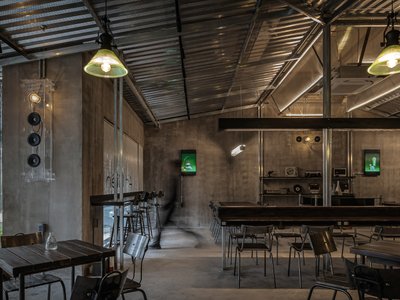
An Miên Lumière Cafe by xưởng xép, Ho Chi Minh City, Vietnam
An industrial-inspired café where layered steel and warm light create a dynamic, immersive environment shaped by reflection, depth, and perception.
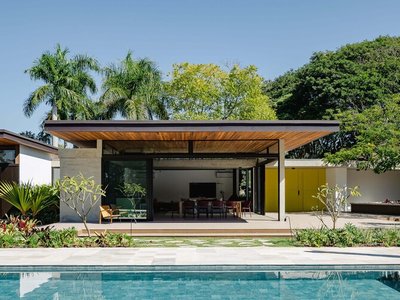
Flamboyant House by Juliana Camargo + Prumo Projetos
Modern Brazilian house integrating existing tree, pool, and volumes with glass, wood, and transitional spaces blending interior, exterior, and landscape seamlessly.
On the Brooks House by Monsoon Collective – A Contemporary Kerala Home Rooted in Tradition
Kerala home blending tradition and modernity with water-inspired design, brick architecture, courtyard planning, and sustainable rainwater harvesting strategies.


Similar Reads
You might also enjoy these articles

Bamboo Housing Challenge 2026: Design Affordable, Sustainable Homes Using Bamboo
An international design competition by Bamboo U and IBUKU inviting architects and designers to reimagine affordable housing using bamboo — with the winning design built full-scale in Bali.

Computational Design & Education: Beegraphy Design Awards Introduces 7th Category (Featuring Jiyun's Innovative Approach)
Dive into Beegraphy’s 7th Design Awards category, where computational design meets education to create immersive, interactive learning tools, inspired by Jiyun’s work.
From Parametric Lighting to Urban Furniture: Join the 2nd Workshop in Beegraphy’s Computational Design Series
Dive into Cutting-Edge Design Techniques and Practical Applications with Industry Experts

Introducing Sphere by UNI: Pioneering a New Era in AEC Industry
Unlocking Global Potential with BIM and Agile Management
Explore Architecture Competitions
Discover active competitions in this discipline




The International Standard for Design Portfolios


The Global Benchmark for Architecture Dissertation Awards


The Global Benchmark for Graduation Excellence


Challenge to reimagine the Iron Throne
Comments (0)
Please login or sign up to add comments
No comments yet. Be the first to comment!