

A Calligraphic Sanctuary: Long-Cyuan Elementary School Library by Studio In2
Calligraphy-inspired library blends tradition and modernity with oak shelving, modular displays, and serene reading spaces for children.


A Century-Old Legacy Reimagined Through Spatial Poetry
Located in Taiwan, Long-Cyuan Elementary School stands as a proud centennial institution, widely recognized for its commitment to the art of calligraphy. In a thoughtful renovation led by Studio In2, the school’s library has been transformed into a serene, immersive space that bridges traditional Chinese culture with contemporary spatial design.
This 390-square-meter library is not just a place for books—it's a cultural artifact. Drawing inspiration from calligraphy’s expressive movement, the architects shaped a narrative around the two guiding principles: “meaning” and “quietness.”
Design Concept: Inspired by Calligraphy and the Spirit of Stillness
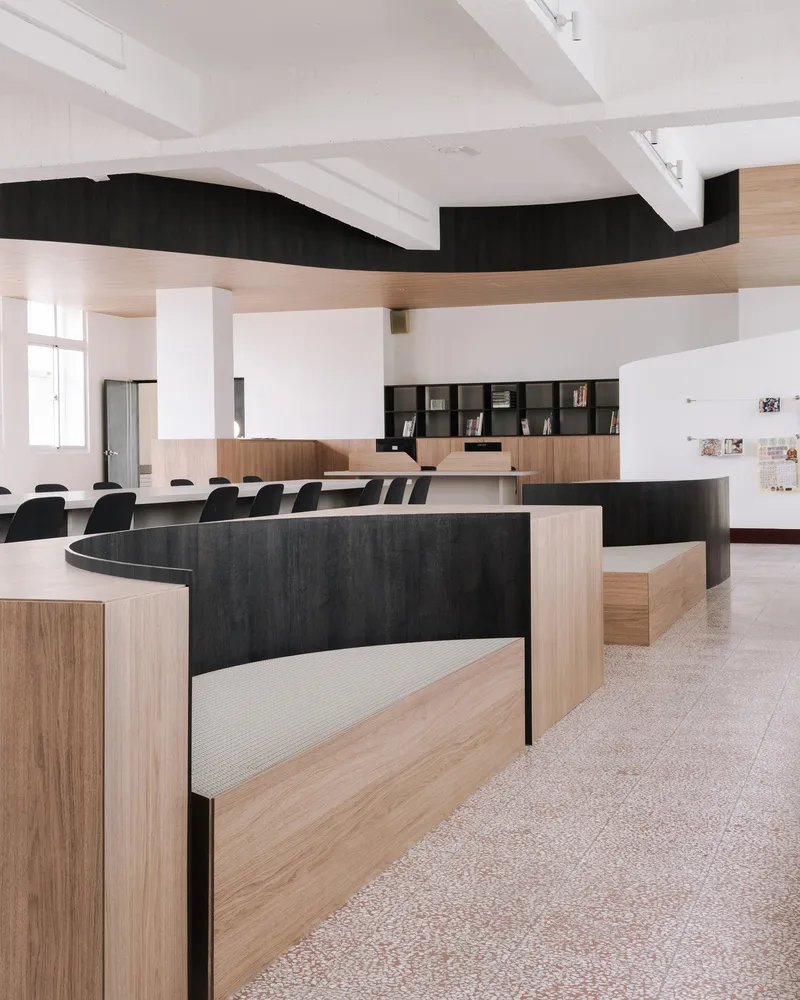
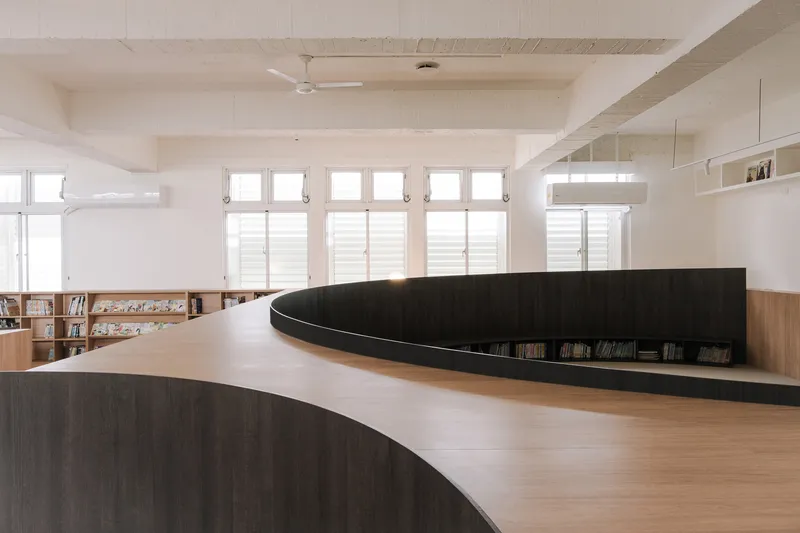
The architectural language of the library centers on a poetic reinterpretation of cursive script. Referencing the calligraphic saying, "A character should be written in one stroke; even when it is not, the lineage should not be broken," the space manifests as an unbroken flow—an intentional stroke that guides visitors from entrance to end.
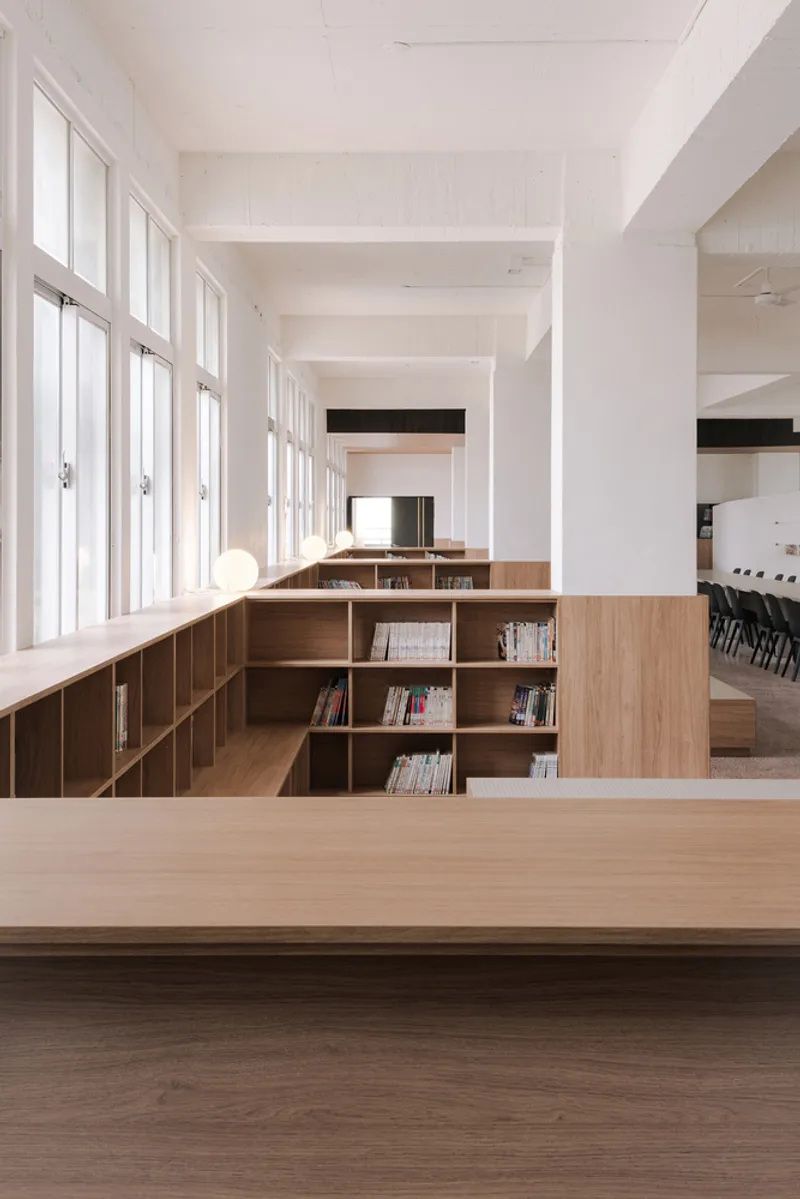
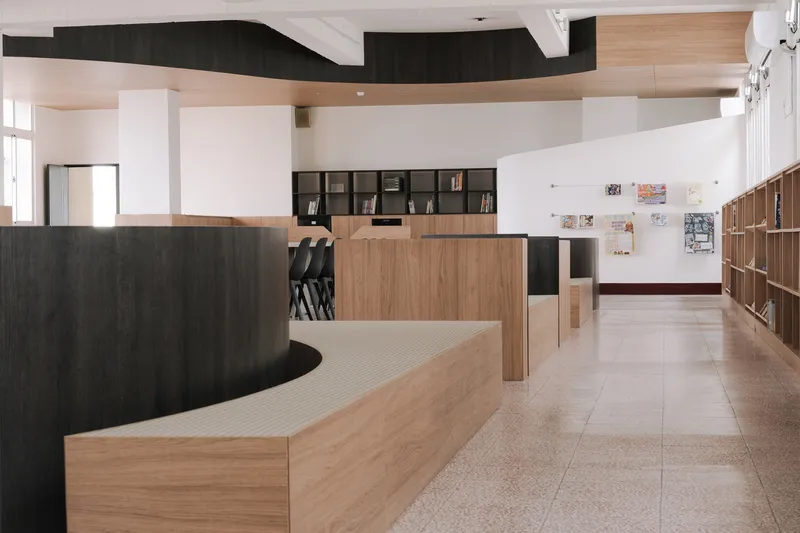
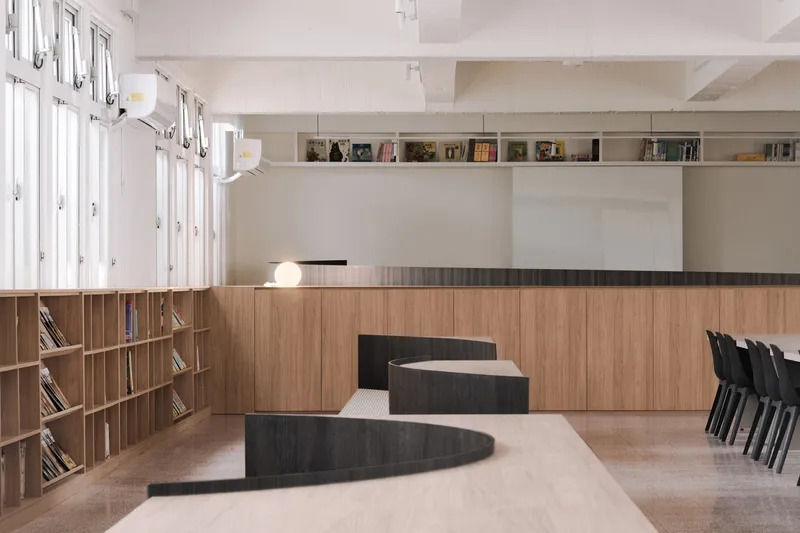
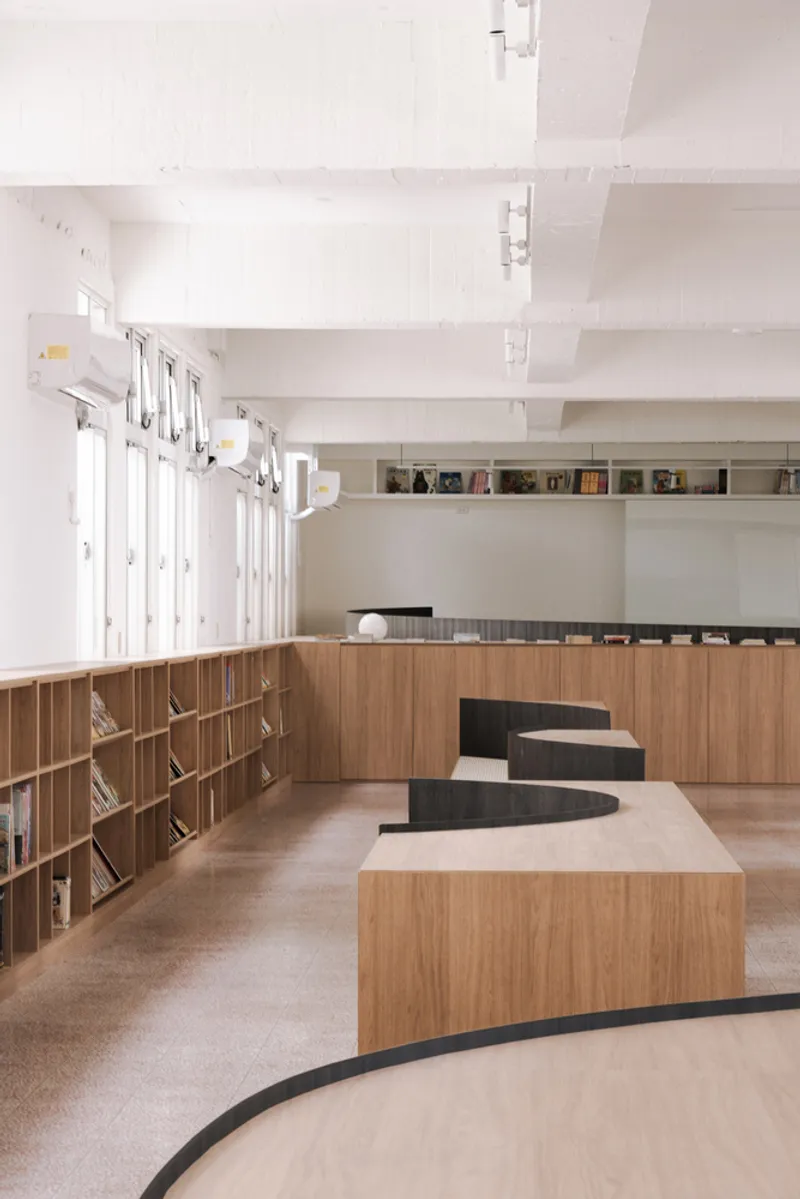
The interiors embody minimalist composition and rhythm, with clean-cut geometries and fixed patterns forming a quiet, contemplative atmosphere. A 115 cm horizontal plane runs throughout the space, delineating two zones:
- Below: Child-accessible oak wood shelving integrated into the architecture.
- Above: Stark white sculptural elements that float like hovering ink strokes.
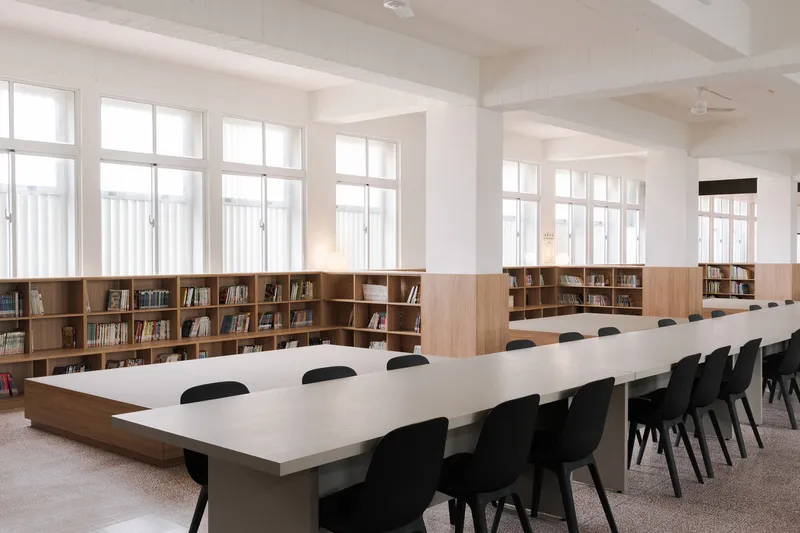
The contrast between wood tones, white volumes, and preserved red terrazzo flooring sets a calm and elegant tone, resonating with the quietness embedded in calligraphic practice.
Flexible Reading Zones: Fostering Exploration and Engagement
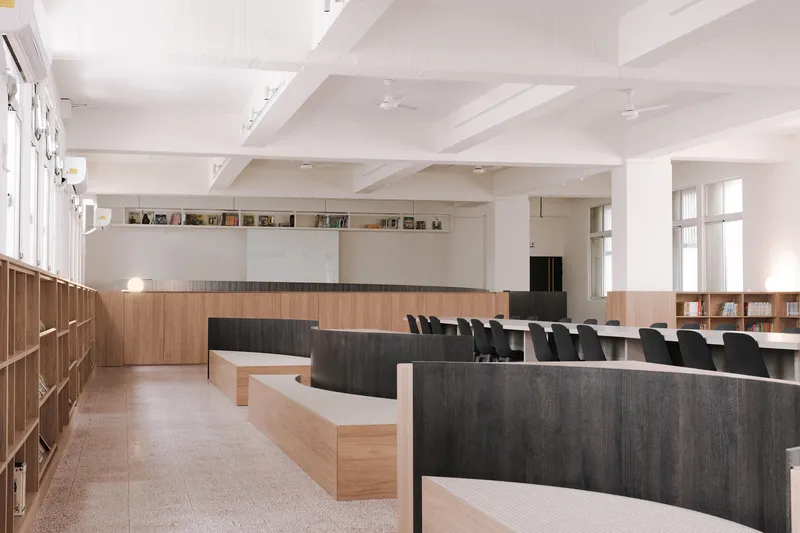
Studio In2’s design prioritizes child-centric functionality while maintaining spatial clarity. A central desk-and-chair area is complemented by informal seating along the edges and within hidden corners, enabling spontaneous reading experiences. Children can simply pick a book and settle in—no assigned seats, no rigidity.
Toward the rear of the space, a multipurpose stage accommodates storytelling, group activities, and school performances, seamlessly integrated into the overall flow—like another brushstroke in a larger composition.
Calligraphy as Display: The Eight Principles of Yong in Spatial Form
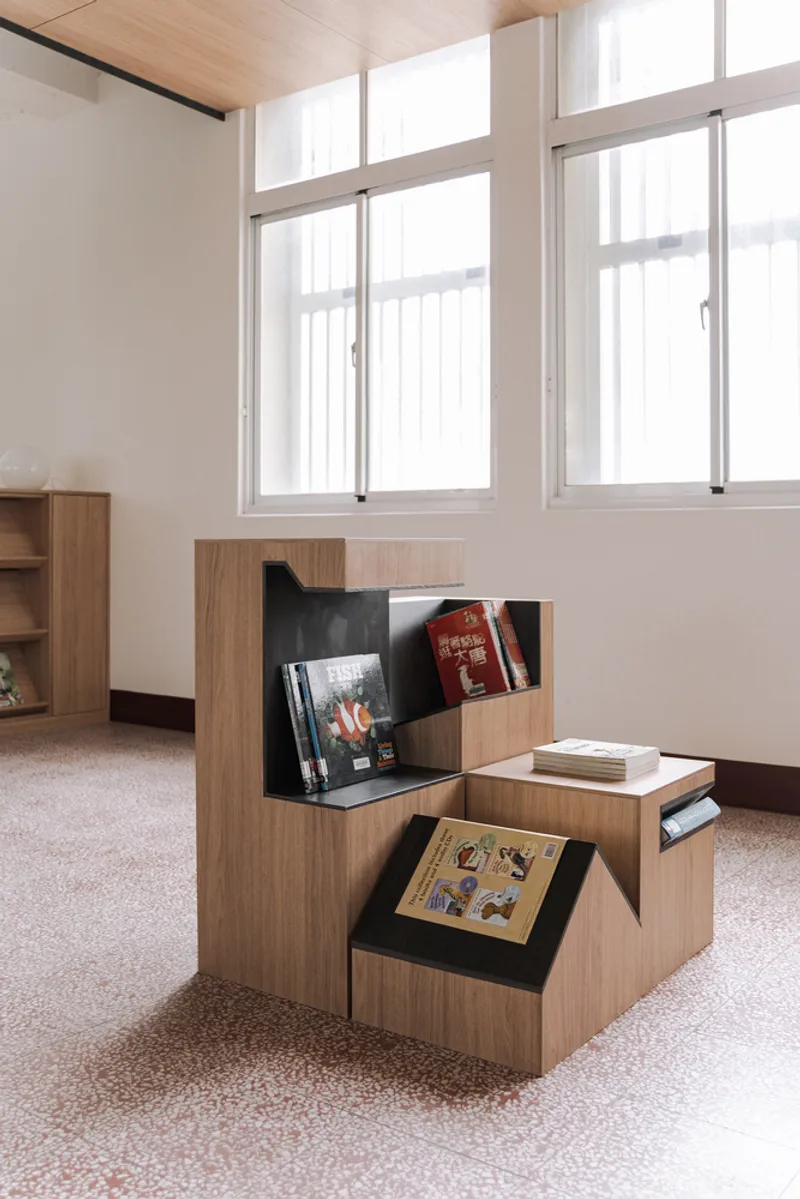
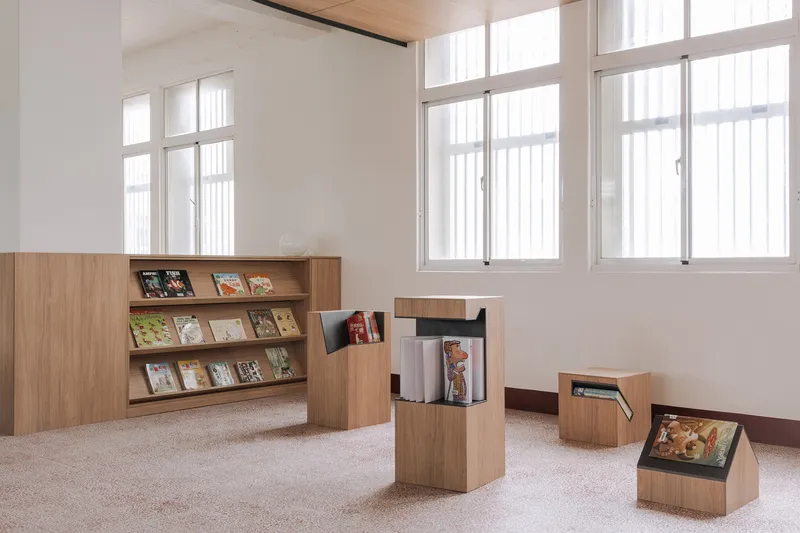
The design subtly embeds the Eight Principles of Yong—fundamental strokes used in Chinese calligraphy—into modular book displays. These elements appear as sculptural installations or standalone objects, allowing books to be displayed in various orientations, heights, and groupings. When placed together, they echo the rhythm of calligraphy. When set apart, they guide movement and create a sense of narrative passage.
This display strategy adds an artistic and pedagogical dimension, inviting both students and visitors to interact with books in unexpected ways.
Material Palette: A Dialogue Between Past and Present
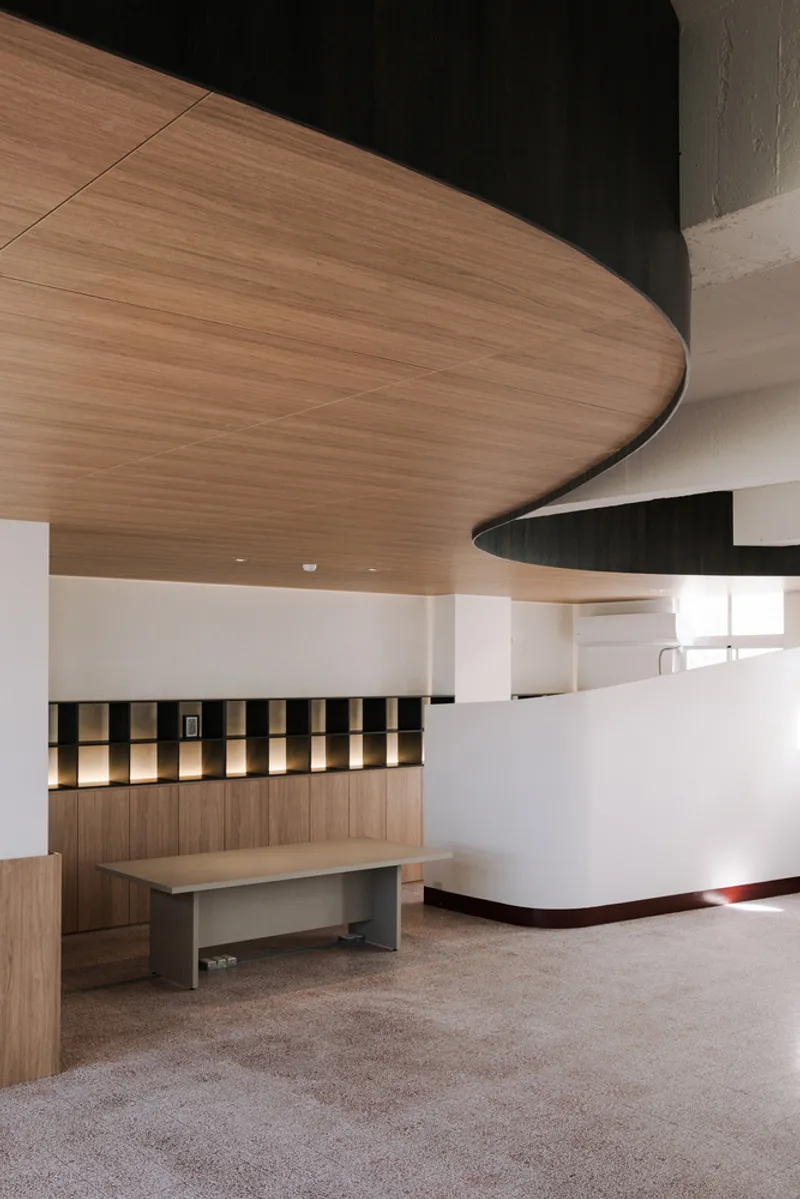
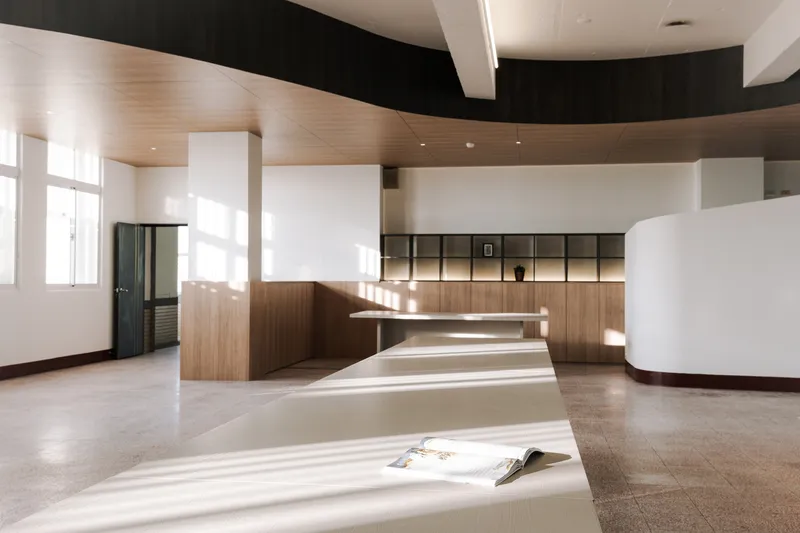
Respecting the school’s historical context, the architects preserved the original red terrazzo flooring and exposed the raw ceiling slab by removing the previous dropped ceiling. This gesture reveals the building’s structure while bringing height and openness to the space.
Natural oak wood was chosen for warmth and tactility, paired with black accents that reflect traditional ink, anchoring the space in both history and material honesty. This blend of old and new, solid and fluid allows the library to serve not only as a functional space but also as a quiet emblem of cultural memory.
A Library That Writes Its Own Story
Through Studio In2’s sensitive intervention, the Long-Cyuan Elementary School Library becomes more than a repository of books—it is a spatial calligraphy of movement, memory, and meaning. It nurtures reading, reflection, and creativity, giving students an environment that feels both timeless and profoundly contemporary.


Popular Articles
Popular articles from the community


GROUP A Strips a 1969 Rotterdam Harbor Headquarters to Its Frame and Wraps It in Timber Louvers
In Rotterdam's M4H harbor district, Ferro Offices reuses a 1969 frame, adds one timber storey and reaches BREEAM-NL Outstanding.

Cube Design Draws an Ecological Corridor Between Two Shenzhen Hills with the Nankai Building
Beside Shenzhen's container docks, the Nankai Building pairs stacked balconies with a climbing green screen to connect two hillsides across its height.

Juan García Correa, John González and Claudia Rueda Sink a Circular Amphitheater into a Manizales Engineering Building
On the La Nubia campus in Manizales, Colombia, the S1 Building folds labs and offices into a hillside of ramped lawns that double as a campus route.

longwave studio Reorganizes a 112 m² Tainan Apartment Around the Daily Routines of a Family and Two Cats
In Tainan, Taiwan, birch plywood, rust-red furniture and a freestanding plaster wall link arrival, storage, work and family life in one apartment.

Similar Reads
You might also enjoy these articles


Hodi-Mandai Geram
Project Function: Preservation and revitalization of the Intangible heritage and socio-spatial identity of the Hodi by Housing, Cultural Memory Center, Sacred Grove, landscape, local tourism economy


Olio Towers: A Mid-Rise for Performers That Fuses Housing, Rehearsal, and Stage
Located blocks from Houston's Theater District, this modular tower stacks living units around a central performance atrium.

Oasis: Modular Green Housing Carved into Dhaka's Urban Fabric
A shortlisted Plugin Housing entry reclaims unauthorized settlements in Dhaka with stepped concrete volumes, green roofs, and ventilation-driven design.

Black Hole: A Floating Megastructure for the Post-Physical Era
Emiliano Mazzarotto envisions a spherical, self-scaling arena where e-sports, digital hotels, and holographic stadiums replace traditional public space.

Explore Educational Building Competitions
Discover active competitions in this discipline

Challenge to design public laboratory

Challenge to reimagine the Iron Throne

Photograph architecture without architects

Illustrate the lost glory of Angkor Wat - Render Challenge
Comments (0)
Please login or sign up to add comments
No comments yet. Be the first to comment!