

A Market of Vibrant Buffer by Studio D’Arkwave
A multifunctional “Park + Market” in Kunming by Studio D’Arkwave transforms a traditional marketplace into a vibrant, flexible community space.


Revitalizing Urban-Rural Interfaces through a Dual-Purpose Marketplace in Kunming, China
In the rolling highlands of Anning, on the outskirts of Kunming, China, Studio D’Arkwave has reimagined a traditional Jiezi—the local term for an open-air street market—into a dynamic public infrastructure that adapts to time and activity. Titled “A Market of Vibrant Buffer,” this 1,434-square-meter project explores how architecture can mediate between commerce, community, and landscape, extending the social life of the market beyond its daily operating hours.
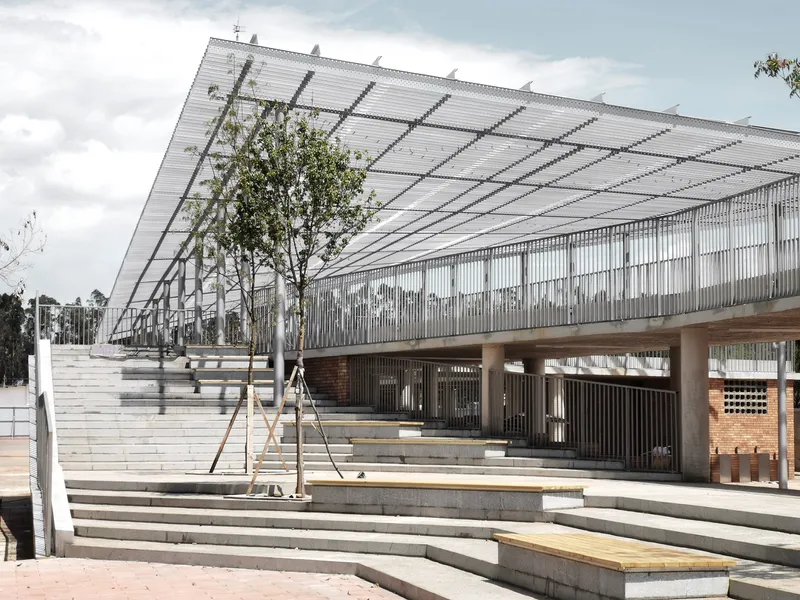
Concept: The Dual Life of a Space — “Park + Market”
Traditionally, Jiezi markets operate for only half a day, remaining inactive afterward. Recognizing this underutilization, Studio D’Arkwave introduced the concept of “Park + Market”, transforming the site into a temporal space that alternates between bustling trade and serene recreation.
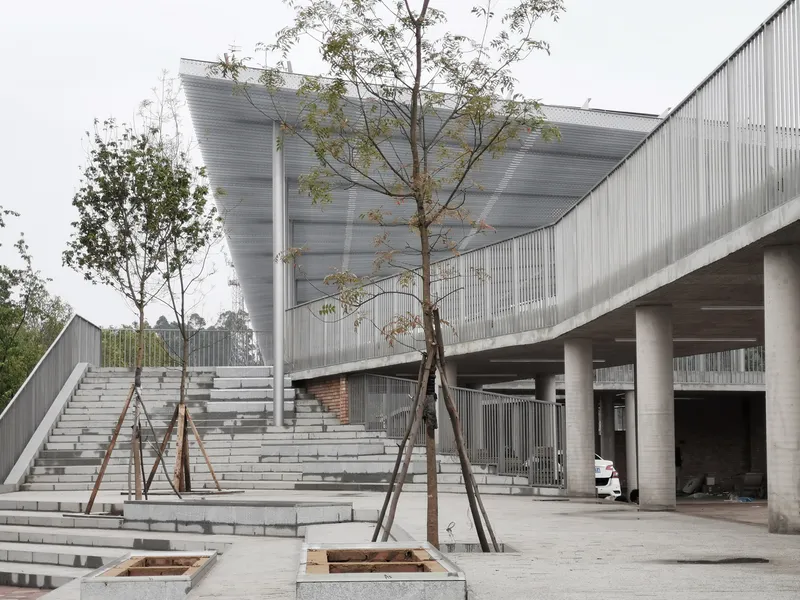
During the morning hours, the market thrives with vibrant exchanges of goods and conversations. By afternoon, when trade ceases, the same ground seamlessly transitions into a public park—a place for leisure, walking, and children’s play. This time-sharing spatial model not only maximizes land efficiency but also fosters community interaction, bridging urban residents and rural villagers through shared civic space.
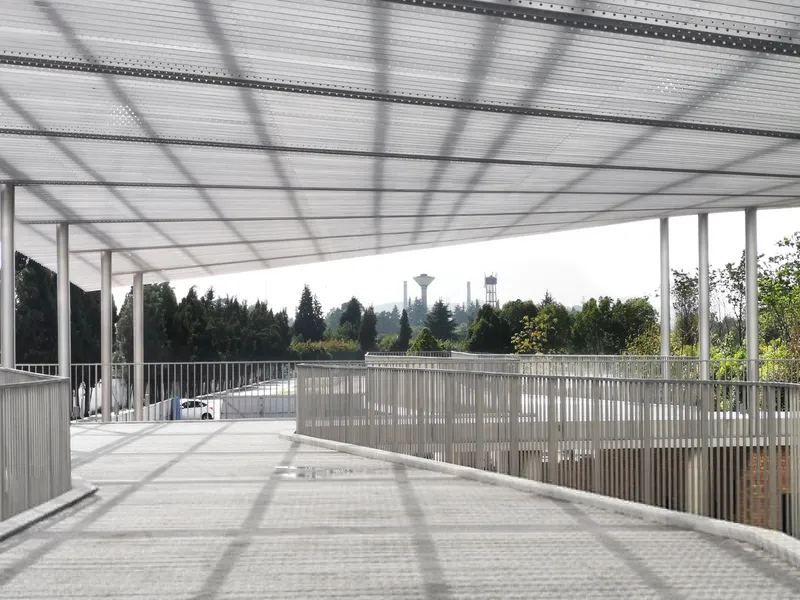
Spatial Organization and Design Strategy
The spatial structure follows a 3-meter modular grid, ensuring flexibility and clarity in stall organization. This simple yet rational geometry allows easy transformation between market setups and open park configurations.
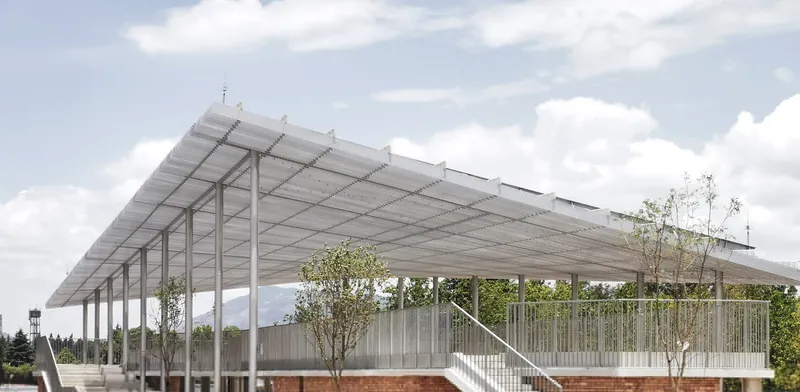
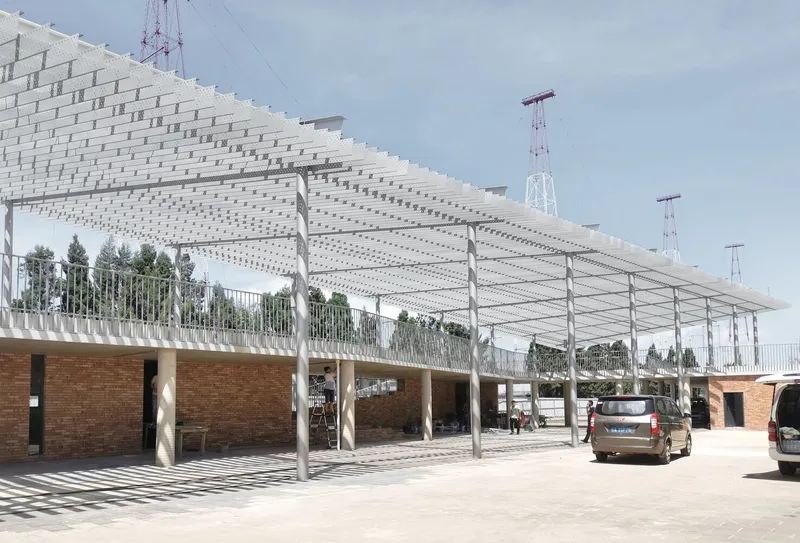
The ground level houses the main market functions, including vendor stalls, service offices, and exhibition spaces that celebrate local crafts and culture. Above, the roof transforms into a stepped park—a public terrace that encourages lingering, viewing, and social interaction.
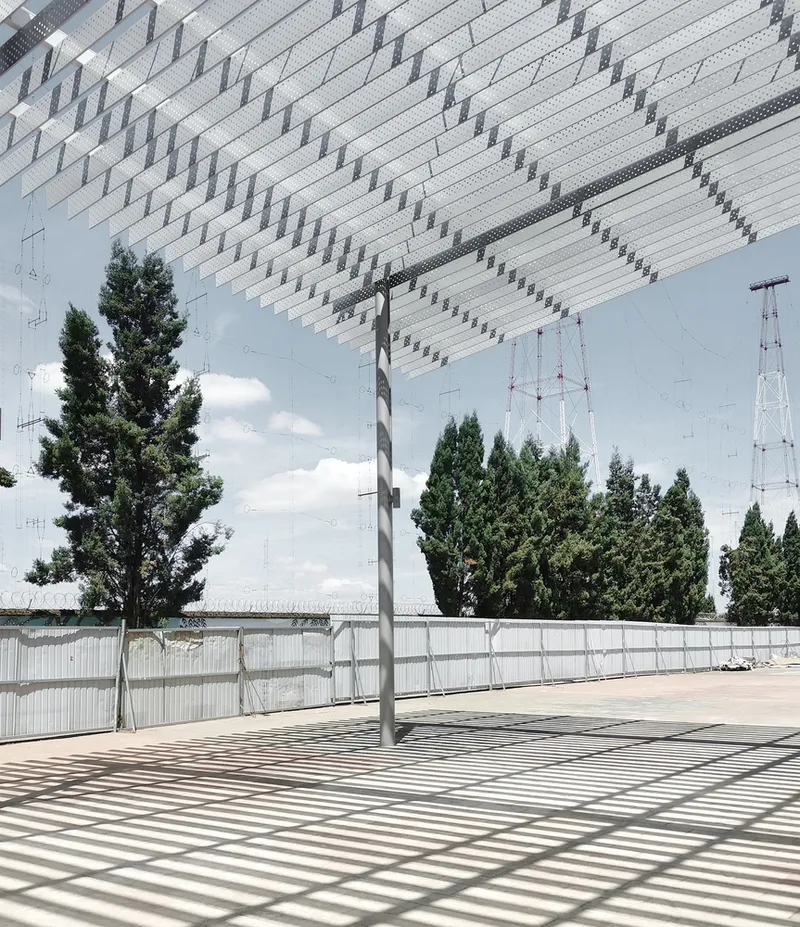
Architectural Expression: A Continuous Platform
At the heart of the design is a continuous architectural platform that physically and visually connects the market below and the park above. This dual-level arrangement enhances circulation, allowing vendors, visitors, and passersby to navigate the space intuitively.
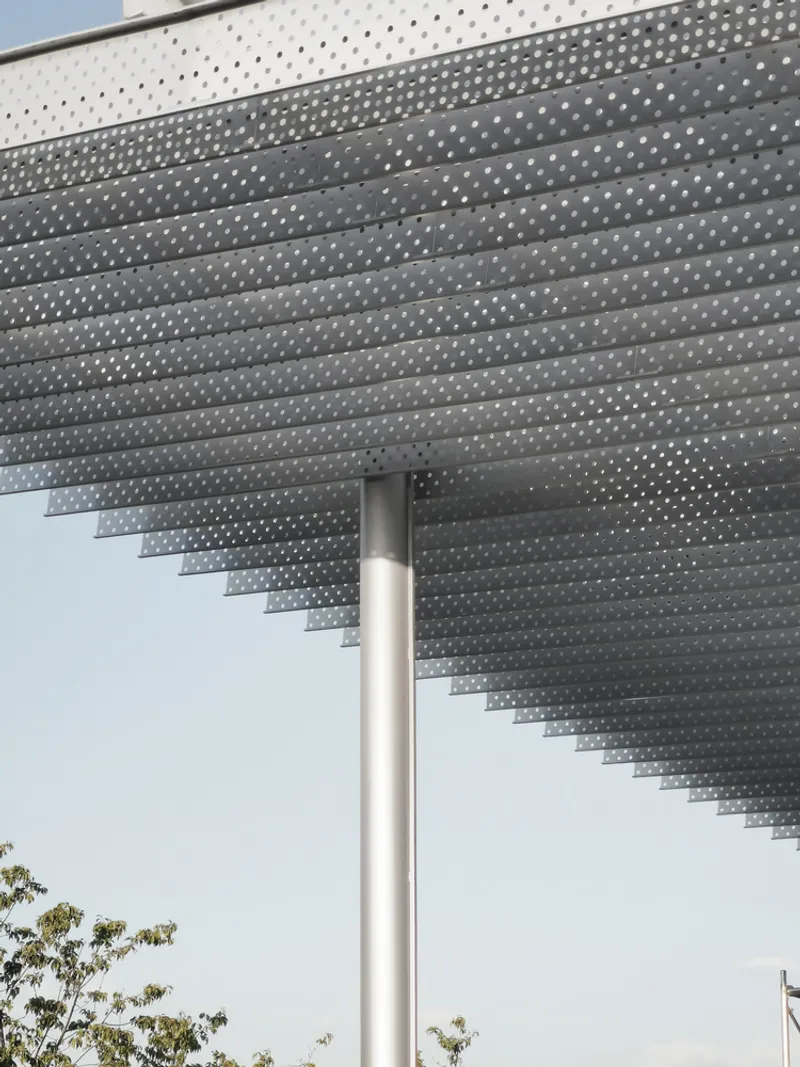
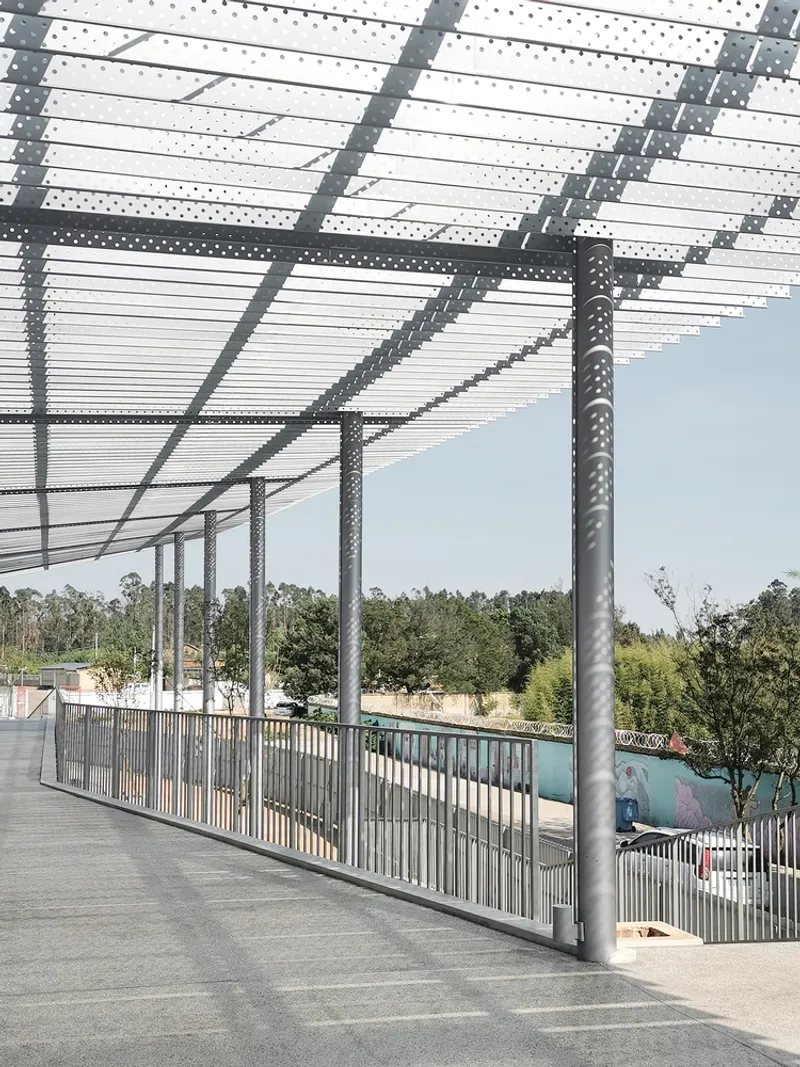
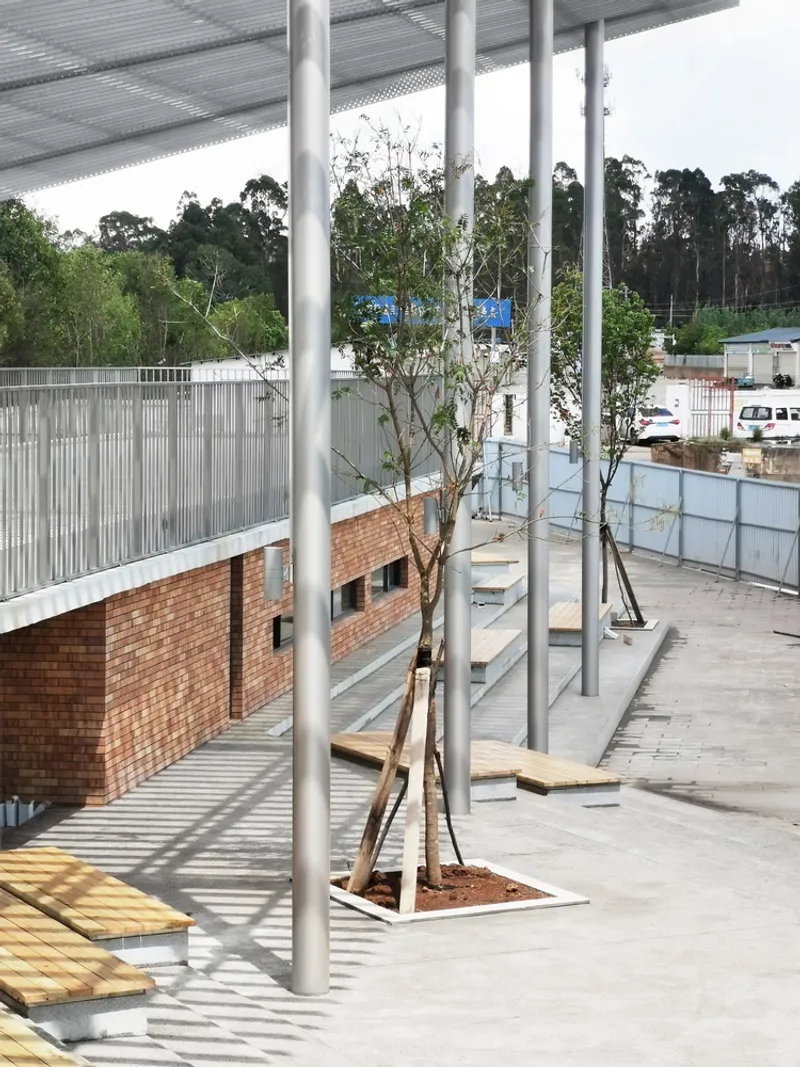
The roof canopy, crafted from perforated steel panels, stretches across the entire complex as a unifying spatial and climatic element. Its double-curved form and rhythmic column rows establish a distinctive architectural identity while providing natural shading, filtered light, and ventilation.
Materiality and Climate Responsiveness
Studio D’Arkwave prioritized simplicity, durability, and climate responsiveness in material selection. The perforated metal roof system controls daylight through variable hole densities—reducing glare and heat gain while maintaining a comfortable luminous environment.
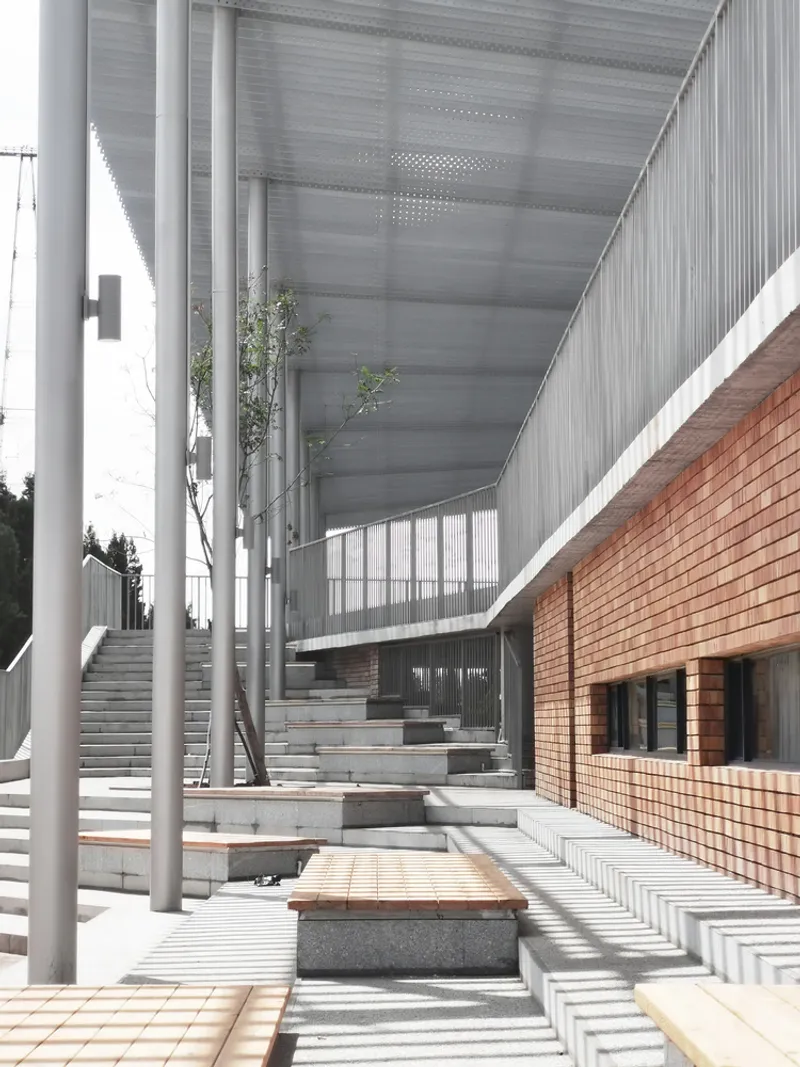
The brick volumes beneath the platform add textural warmth and visual grounding, referencing vernacular construction methods common in Yunnan’s rural settlements. Combined with metal and concrete elements, the material palette achieves a balance between robustness and lightness, enabling easy maintenance and long-term adaptability.
Landscape Integration and Human Comfort
The design carefully considers the user experience and environmental quality. The roof terrace and flanking staircases create visual and physical connections to the surrounding landscape. Trees planted around the periphery provide natural shade and soft boundaries, transforming the market into a social landscape rather than a mere commercial zone.
Benches and shaded waiting zones enhance comfort for visitors, while open edges invite spontaneous gatherings and informal performances. The project’s minimal yet inclusive design ensures accessibility for people of all ages, promoting a sense of shared ownership and continuity within the local community.
Cultural Context: Between Urbanity and Rurality
Positioned at the urban-rural threshold, A Market of Vibrant Buffer encapsulates a critical architectural dialogue—how spaces can evolve to accommodate shifting social patterns and temporal rhythms. By fusing the everyday pragmatism of trade with the collective spirit of public leisure, Studio D’Arkwave has created a “vibrant buffer” that celebrates coexistence and adaptability.
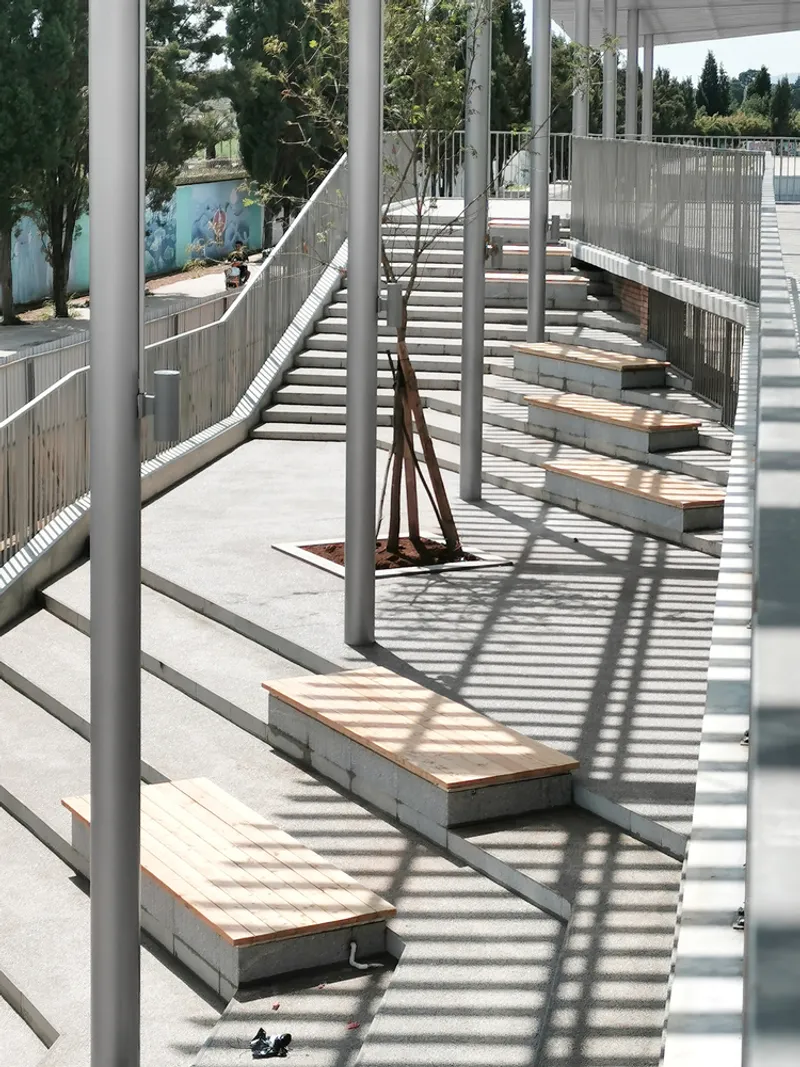
This project demonstrates how architecture can extend the life of public spaces by embracing flexibility, modesty, and participation. It is not a monument, but a living framework—responsive to weather, time, and human activity.
Through the innovative “Park + Market” model, Studio D’Arkwave has crafted a civic architecture that is functional, ecological, and culturally resonant. The project revitalizes a traditional market typology by layering community, commerce, and recreation into one adaptable environment—an inspiring blueprint for sustainable urban regeneration in emerging cities.
All photographs are works ofStudio D'Arkwave


Popular Articles
Popular articles from the community


Opera on the Sea: Driftwood Logic Shapes a Timber Opera House on Estonia's Coast
Trevor Orgill's opera house translates the entangled drift of floating timber into a civic building where wood, water, and music converge.

Cloaked Colonization: A Mobile Underwater Habitat That Moves Like a Fish
Micah Abaya's shortlisted EHC Pacific entry reimagines ocean settlement as a dispersed network of self-sustaining architectural organisms.
Tsunami Convergenics: Turning Catastrophic Ocean Forces into Underwater Housing Infrastructure
A speculative underwater settlement off the coast of Onagawa, Japan, treats tsunamis and typhoons as energy sources rather than threats.

Singing Woman: Contemporary Architecture Inspired by Estonia’s Voice and the Sea
Singing Woman turns Estonia’s song culture into flowing opera house architecture, blending public life, landscape, sea, and national memory.

Similar Reads
You might also enjoy these articles


Hodi-Mandai Geram
Project Function: Preservation and revitalization of the Intangible heritage and socio-spatial identity of the Hodi by Housing, Cultural Memory Center, Sacred Grove, landscape, local tourism economy


Olio Towers: A Mid-Rise for Performers That Fuses Housing, Rehearsal, and Stage
Located blocks from Houston's Theater District, this modular tower stacks living units around a central performance atrium.

Oasis: Modular Green Housing Carved into Dhaka's Urban Fabric
A shortlisted Plugin Housing entry reclaims unauthorized settlements in Dhaka with stepped concrete volumes, green roofs, and ventilation-driven design.

Black Hole: A Floating Megastructure for the Post-Physical Era
Emiliano Mazzarotto envisions a spherical, self-scaling arena where e-sports, digital hotels, and holographic stadiums replace traditional public space.

Explore Open Air Market Competitions
Discover active competitions in this discipline

Challenge to reimagine the Iron Throne

Photograph architecture without architects

Illustrate the lost glory of Angkor Wat - Render Challenge

Design challenge to reuse E-waste
Comments (0)
Please login or sign up to add comments
No comments yet. Be the first to comment!