
A-new-usual Business
Re-imagining Central Business Districts after the Pandemic

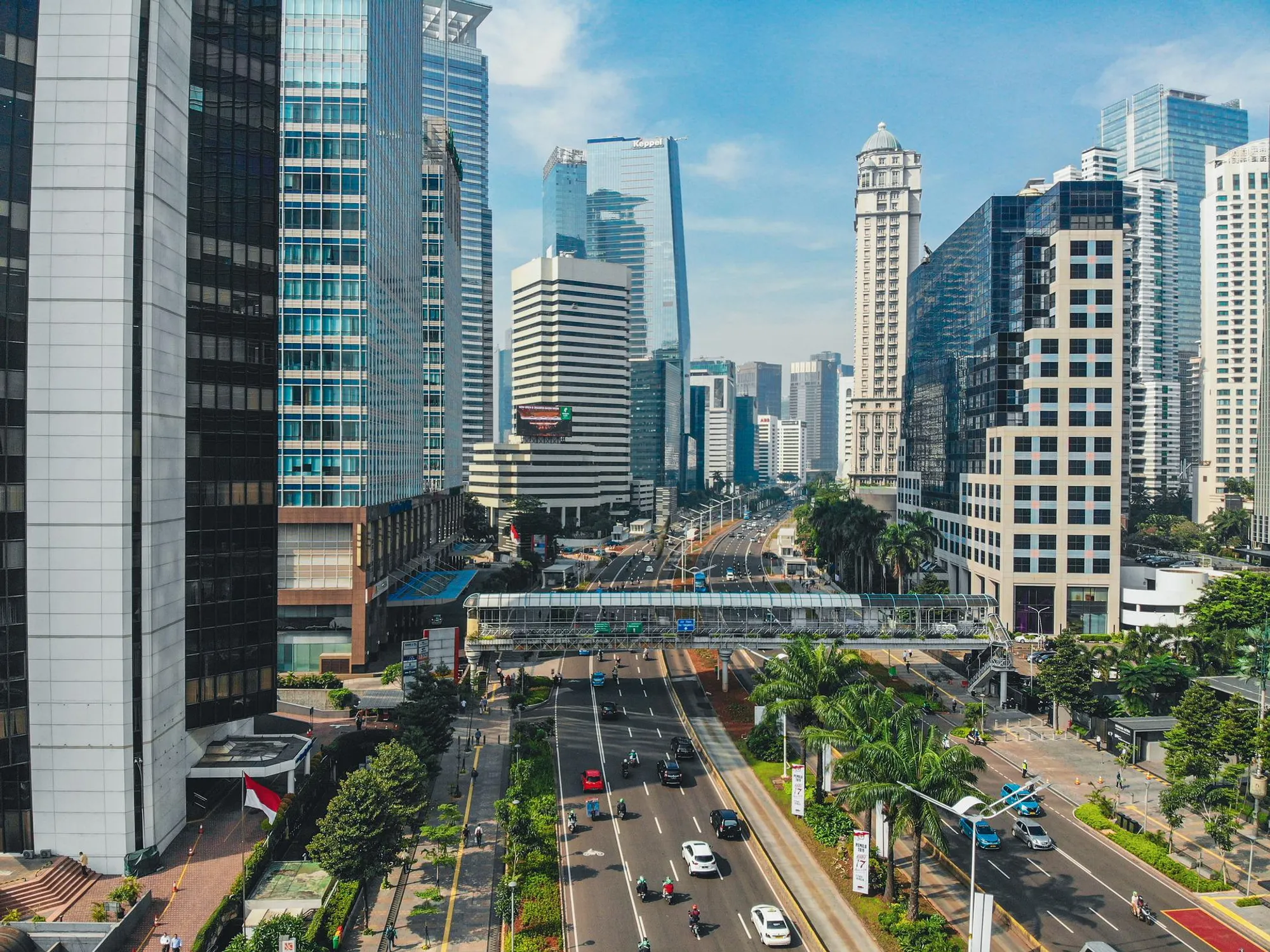
CBD – Central Business Districts are traditionally those parts of a city where the main business and commerce takes place. Identified by tapering sky scrapers, congested transport ways, busy forces of work in place, constant flux of people, and numerous transactions of activities, the CBD exists as the most bustling place in any city. While it may house the most vibrant and flourishing businesses of local and global level, it almost mimics an organism which grows, evolves and transforms to meet the financial needs of the city. The economic disposition of a city is characterized by its CBD, and thus tends to drive the growth of the city down the financial route. This calls for people from all the parts of the city itself as well as providing opportunities to people from the rural and non-metro areas, and creating an influx of jobs and provisions for people from all walks of life.
But what exactly happens when an ever-growing organism that houses more than 4.5 million people has to shut down completely because of the entry of an intruder? What changes does the ever-evolving and ever-growing face of the city go through when a pandemic hits? What happens to the spaces of the business district when people have to start staying in their own homes or are displaced because of the floating virus? What becomes of the space that is now slowly gearing up to house the changed mental attitudes of people from all walks of life? How do the shifts of the people’s mindset collaborate with a static built structure?
The invasion of the COVID-19 virus into the existence of the ever moving vibrancy of the city life brought an unforeseen halt to the lives of all people. While the most underprivileged faced the harshest wrath of the virus from all perspectives, the privileged were burdened with the changes that they had to adjust within their environments. The business districts were instantaneously turned into empty lots gathering dust. While it is human nature to adapt, adjust and retain what has been or what will come, it took quite a significant time to gather what was and what will be. The ever transforming nature of the CBD was yet to reach a better potential while it was on stand-by. Yet, this wouldn’t have been the first time the CBD was struck with changes and had to gain what it had lost. If one has to see, we can always look back to what these spaces evolved from and how far they had come. What emerged as a market square on market days to trade produce and goods between buyers and sellers in the heart of the cities, these market squares eventually took fixed places within these cities. Inviting retailers, wholesalers, consumers and on-lookers, the city centers were gradually turning into places of commerce while the rest of the city gradually grew out. The influx of people, their motivations to travel to these centers to acquire the needful, fulfill their basic call for what they survive for, and also to feel the vibrant space of the bustling market area- this was what the city thrived for back then and even later.
The onset of industrial revolution resulted in a copy-cat style of office space where workers were required to do repetitive work of the same nature just as one would on a production line. Since the workers were relied on for, initially, manual labor and eventually mass production, the spaces required for the nature of these jobs were always a product of standardized values. The work culture demanded strict office hours with stricter working principles and quantifiable work at the end of the shift. The spaces evolved from factory-line inspired offices to cubicles, and eventually to open-plan offices for collaboration and co-working, because of the dynamic nature of what was now being called work. In a span of 50 years, technological advancements had completely transfigured the work culture of the office spaces. Since the work now called for more collaboration, co-working, team-working and brainstorming, the spaces required for these works had changed to accommodate these requirements. The typical office worker did not need to spend fixed working hours doing tedious work, but now was more valued for the skill, talent, creative thoughts and varied nature of work they provided. This in turn created a demand by the office worker for a better lifestyle, where not only work was of prime importance, but their own family-life, standard of living, home-spaces, physical and mental health had an equal urgency.
While flexibility integrated with connection between colleagues now shaped these spaces and attracted people for their talent and skill, the incentives it offered were robust. The offices located in the heart of the cities changed in form throughout the years by piling open floor spaces on top of each other, expanding vertically, inclining towards dense population, housing varied activities other than offices and sequentially transmuting the business district and its outlook. The business district were now not only centers of trade, commerce and business but had now taken to serve themselves as recreation centers with the inclusion of malls, plazas, stadiums and museums. While the growth of these centers gave the impression of having an unstoppable character, the COVID-19 pandemic hit and brought a halt to all the activities it housed.
The instantaneous interruption that the pandemic brought with its daily glooming news for people of all walks of life, compelled people to isolate themselves and yet fight for their survival. The pandemic resulted in a kind of work culture that was previously gaining tract but was now imposed for almost everyone. The work space for a majority of the workforce had drastically shifted from assigned desks at the office to leisure spaces of the home. It was now commonplace to work remotely from the capacity of one’s home and it had become incredibly evident how the work that was being done had evolved over time for everyone involved. The slow emergence out of the pandemic heightened fears about social interaction, yet at the same time made it clear how a knowledge economy works on team collaboration, flexible working hours, progress over product, connection between stakeholders, intrinsic value of work, a mix range of activities, work from anywhere model and a deep value for human life and interactions.
Out of the lessons that were learned during and through the pandemic, it had become evident how adaptable humans were. And it was explicit how the business district was now evolving from Central Business District to a new form where social interaction, greater well-being and factors other than the economic value were being considered. The cities and especially the business district were metamorphosing to fit the needs of the ever-growing requirements of the workers. Ideas like the 15-minute city popularized by Paris mayor Anne Hidalgo encourage planners and designers to accommodate needs of the population to fit into a 15-minute walk within a neighborhood. With the advent of pedestrian and bicycle lanes, and the onset of awareness of climate change and environmental issues, sustainable and eco-friendly methods, materials and strategies are being used. The change in attitudes definitely call for a decentralization of the previous centralized pattern of the city center as business districts. But while all this can be implemented to create new areas, existing spaces within the central business district call for a paradigm shift to accommodate the progressing needs of the previously isolated workers.
The spaces that were previously used to perform certain tasks have emerged out of the pandemic to house spaces of varied interests based on the materialization of new activities. What were previously used for strict business, commerce and trade districts, can now shape up to house a whole lifestyle of an individual. Since work is not limited to only the four walls of the cubicle or the office, and can now be performed just from home, the workers need other incentives to be a part of these previous economic powerhouses. A type of change which makes space for a way of living- including cafes : to work and collaborate, restaurants : to eat, meet and discuss, gyms : to promote a healthier lifestyle, lounges, breakout-spaces, focus-spaces, adaptable rooms : to house collaborative and co-working requirements. The new CBD might look like the same old city centers, but the movement, energy, and performance will all change to for a newer face.
Since the spaces now call for more collaborative spaces within the same buildings, a network and connection of flexibility through verticality can be attained. Different spaces meeting through verticality and separated through floor spaces, while at the same time providing recreational, green, and fitness reliefs throughout can be achieved. The urban pattern as a whole will change as an organism does, but the greatest change the central business district is its adaptation towards gearing up to become ‘Social Business Districts’.


Popular Articles
Popular articles from the community


Co-life: Sustainable Architecture for Age-Friendly Community Living
Co-life reimagines sustainable architecture for seniors through courtyards, rammed earth, shared gardens, and spaces designed for belonging.

The Ocean Hive: Sustainable Architecture for a Self-Sufficient Civilization at Sea
The Ocean Hive imagines sustainable architecture at sea, where modular habitats, algae, wave power and ocean waste sustain a growing colony.

The Earth Pod: 3D Printed Homes for Resilient Refugee Communities
The Earth Pod reimagines refugee housing through 3D printed homes made from clay, combining resilience, self-sufficiency, and rapid shelter.

Play: Fragments of Their World
Familiar architecture becomes modular playground design, creating safe spaces where displaced children can learn, connect, imagine and play.

Similar Reads
You might also enjoy these articles

Day and Night Park: A Time-Based Urban Newsstand in Beijing
A temporary urban newsstand in Beijing blending travel, light, and reading through poetic colors, compact form, and community-focused design.

Modernist Patio Renovation in El Masnou, Barcelona by Oliver Segura Arquitectura + Cebrià Arquitectura
Modernist patio renovation blending tradition and innovation with a movable pool, leveled floors, and Catalan materials in El Masnou.

Alto Residencial Coop: Cooperative Housing Development in Santiago de Compostela by Carbajo Barrios Arquitectos
A linear cooperative housing complex blending white volumes and perforated metal façades, enhancing community living, natural light, privacy, and urban integration.
Vil Genis School by BPA ARCHITECTURE – Massy, France
Vil Genis School in Massy, France, features sustainable design, south-facing classrooms, community integration, accessible spaces, and modern educational architecture.





Comments (0)
Please login or sign up to add comments
No comments yet. Be the first to comment!