

Abastos Market Renovation by Studio Metamorphosis Tomelloso, Spain
Adaptive reuse transforms Abastos Market into a vibrant cultural and commercial hub, blending historic architecture with modern community-centered design.


Revitalizing Urban Heritage: A Contemporary Cultural Hub
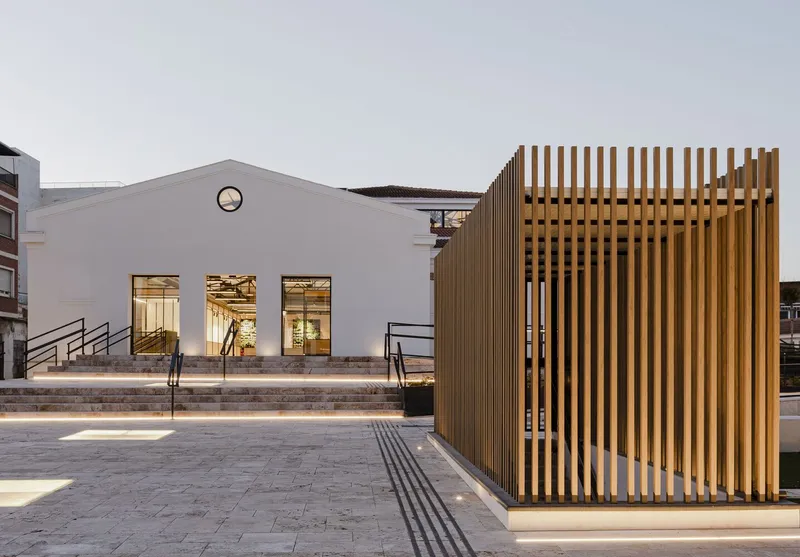
Studio Metamorphosis has transformed the historic Abastos Market in the heart of Tomelloso, Spain, into a vibrant socio-cultural space that reactivates the city’s public life. The project goes beyond a simple market renovation—it is a contemporary reinterpretation of a traditional commercial building, now serving as a multi-use hub that blends gastronomy, community, and culture.
This adaptive reuse project reimagines the original 20th-century structure as a versatile civic center. Through careful architectural intervention, it now supports a variety of cultural events, commercial activities, and gastronomic experiences, encouraging social interaction and urban .
Blending Past and Future Through Architectural Metamorphosis
The central design challenge was to create a new functional identity for a building initially conceived solely for commerce. The architects addressed this by integrating flexible market stalls, cultural zones, and public gathering spaces, all while respecting the original industrial character of the structure.
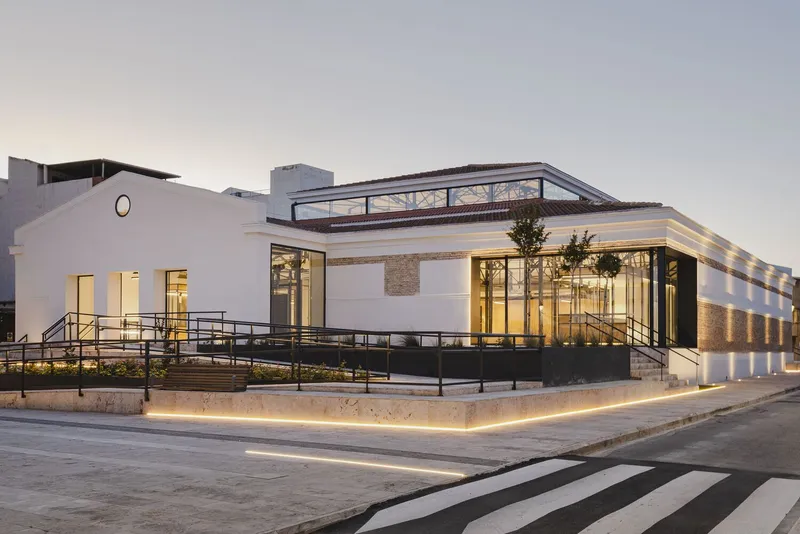
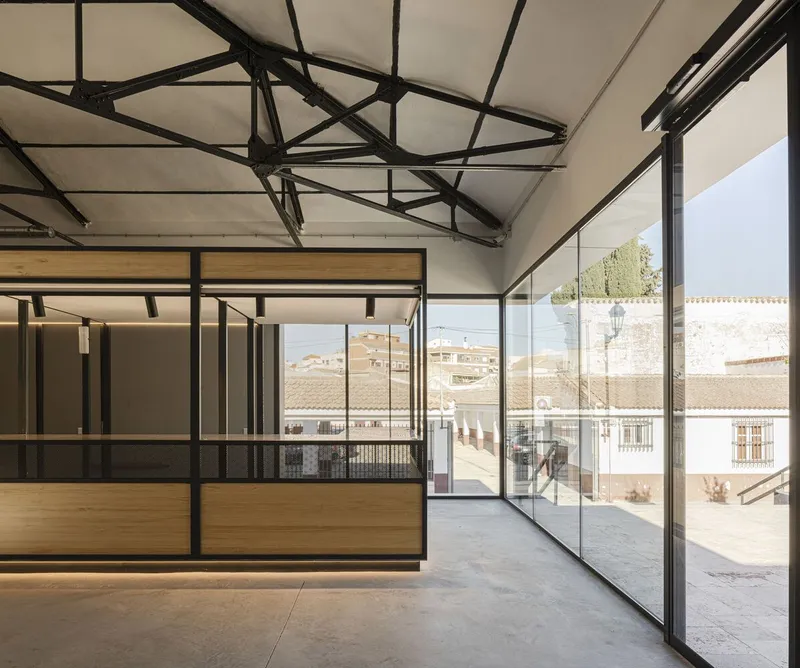
A key intervention involved solving the disconnect between the market’s interior and the adjacent public square. Studio Metamorphosis achieved this by introducing gently sloping platforms and ramps, crafted in locally sourced Almagro stone. This enhanced the building’s accessibility and fostered seamless indoor-outdoor connectivity, visually and physically anchoring the market to the urban fabric.
Interior Reprogramming and Spatial Reordering
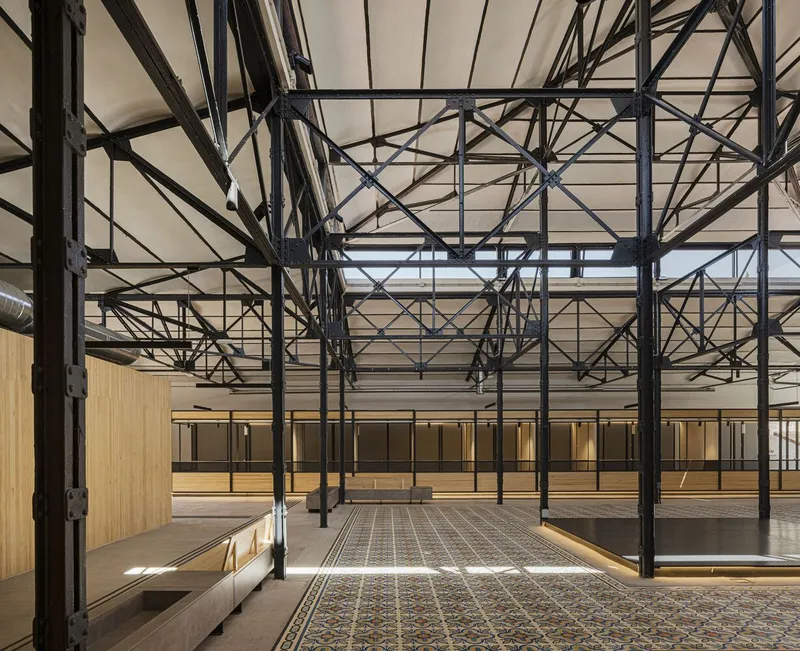
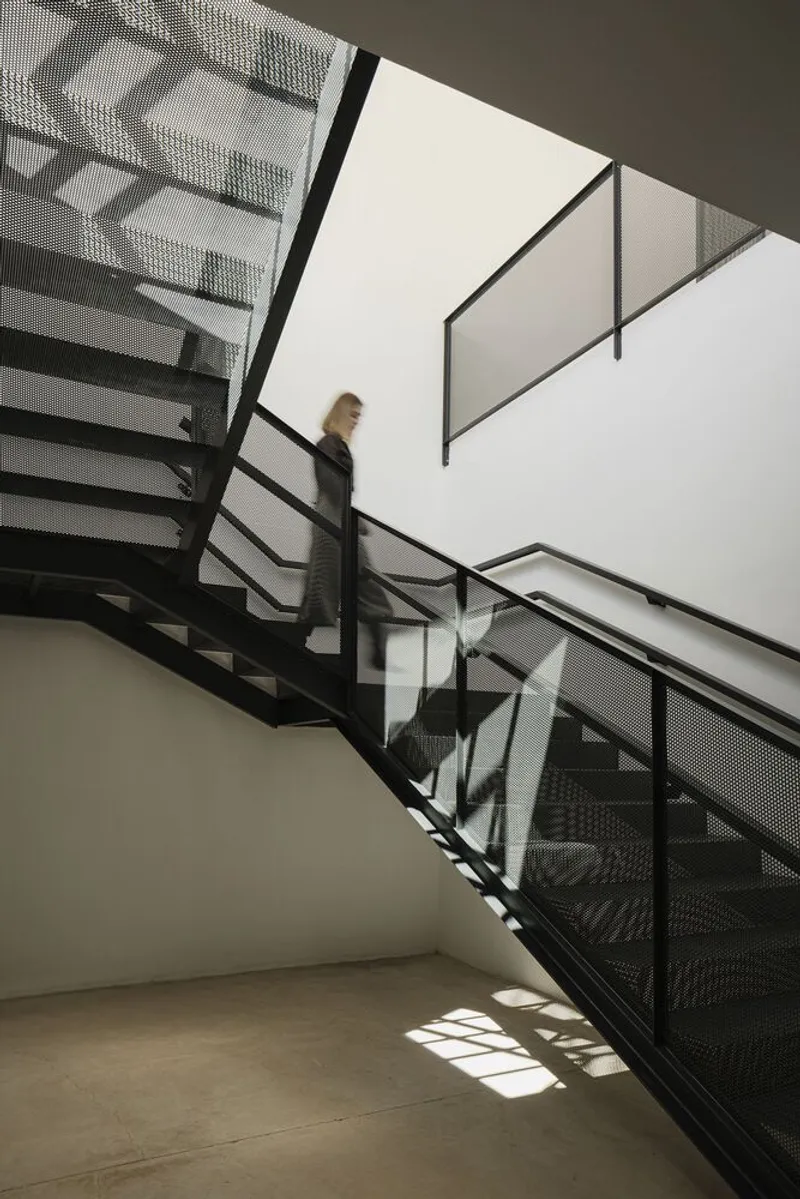
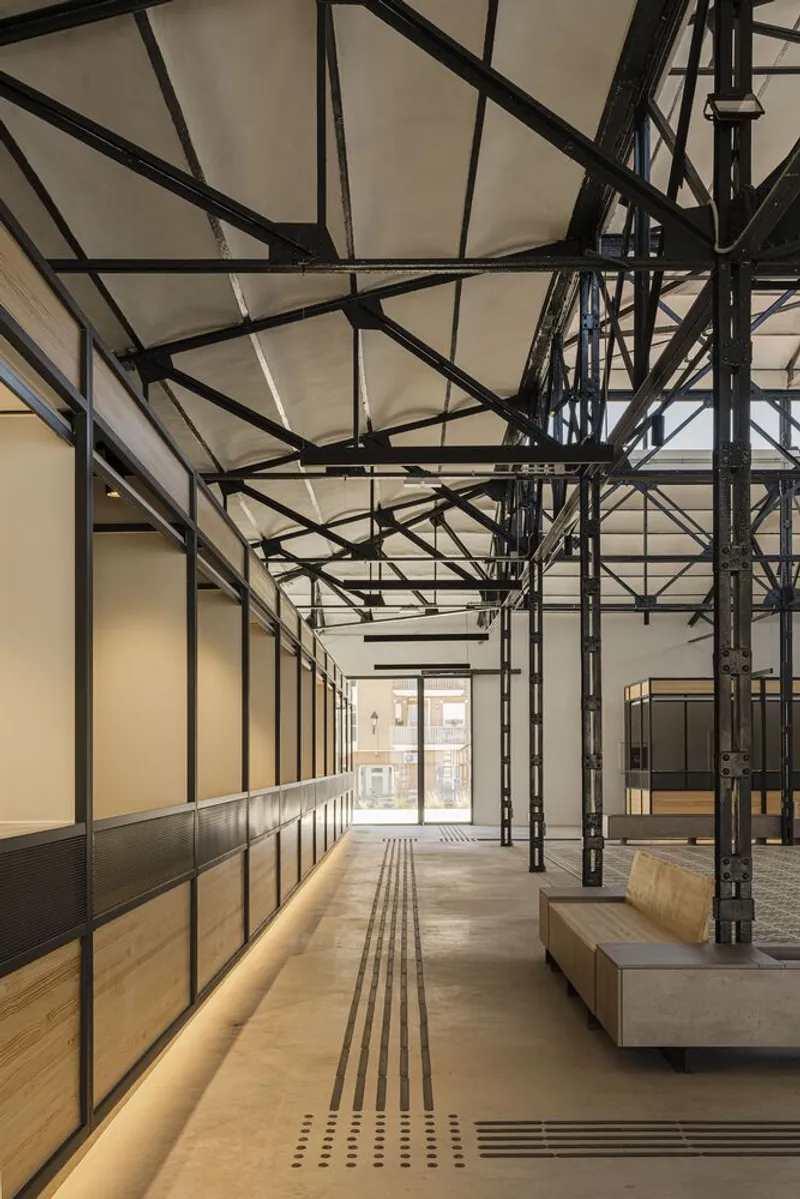
Inside, the transformation emphasizes spatial hierarchy and visual continuity. Market stalls are arranged along the perimeter, opening up the central nave—crowned by the highest roof span—as the dynamic heart of the project. Natural light filters in through a translucent glass enclosure beneath the floating industrial roof, casting dramatic shadows and reinforcing a sense of openness.
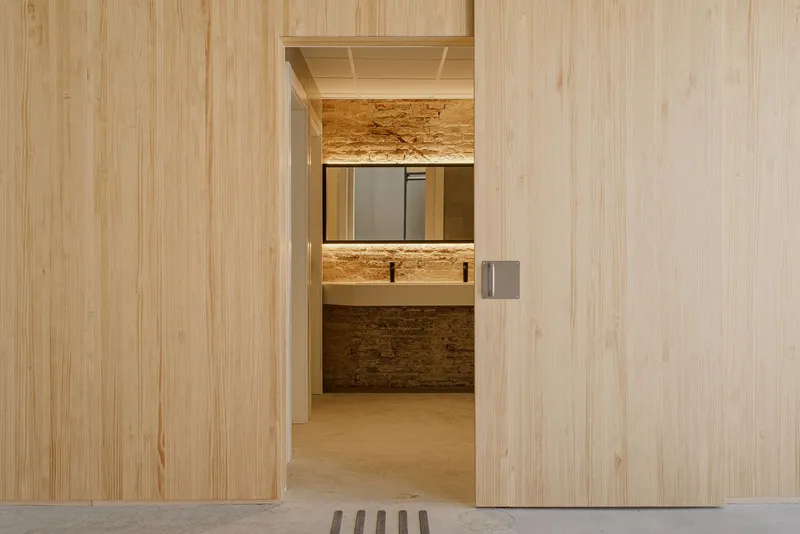
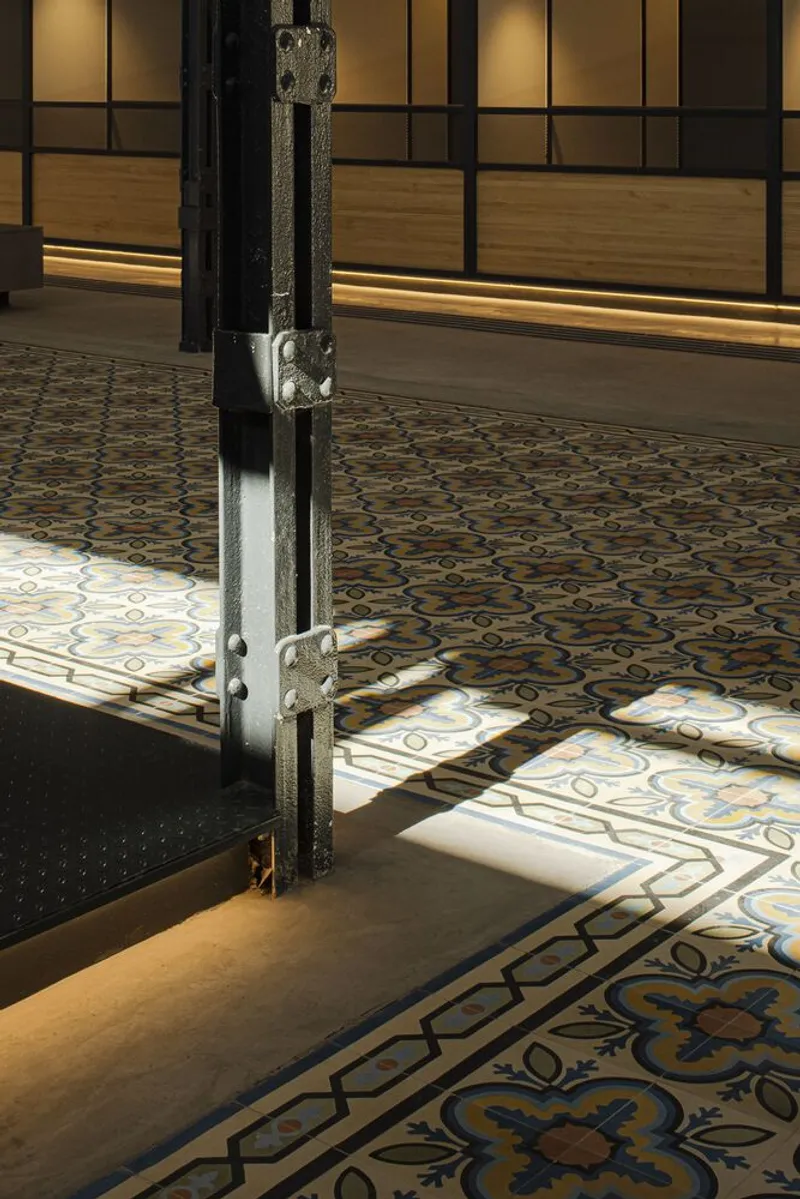
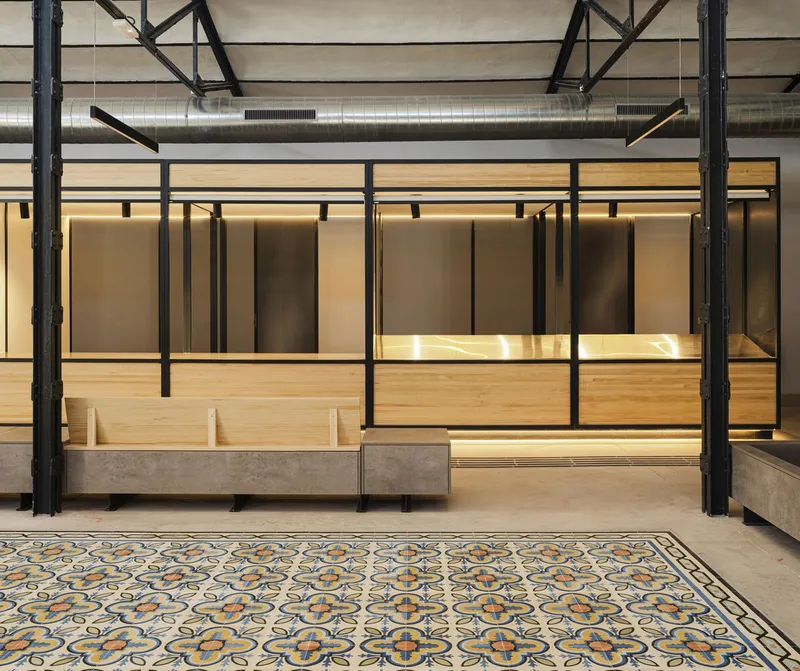
The central space is further accentuated by a vivid hydraulic tile mosaic, creating a visual "carpet" that signals gathering and exchange. The stalls themselves—27 in total—are crafted from metal frameworks with warm pinewood finishes, designed for modular adaptability based on user needs, from food vendors and artisans to cultural associations.
Importantly, stall heights are deliberately kept below the original truss line, preserving uninterrupted views of the historic steel roof structure and enhancing the sense of volume and cohesion.
Sustainable Restoration and Material Authenticity
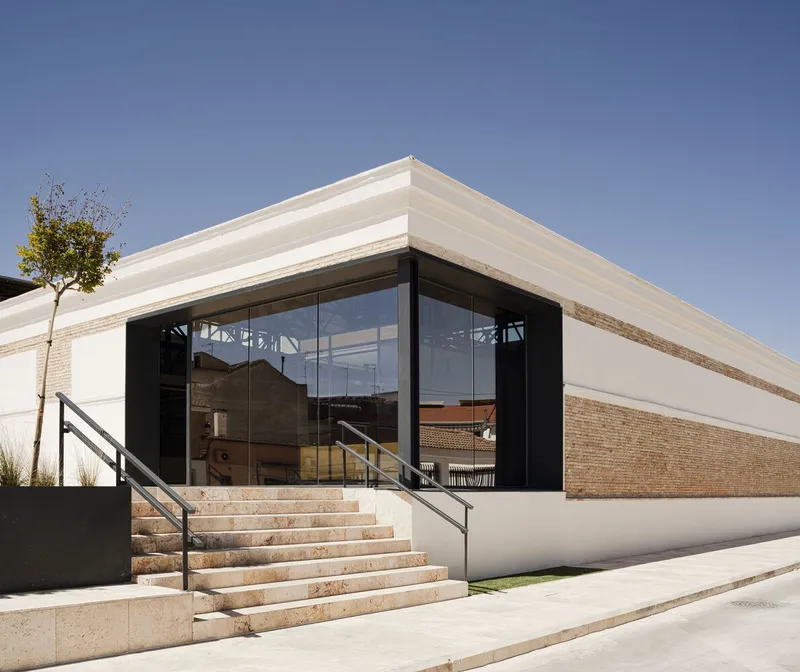
The rehabilitated brick facades retain their historical identity while incorporating modern energy-efficient strategies. Internal insulation enhances thermal performance, and lime plaster—traditional to the Manchegan region—was used on the plinth and façade finishes, ensuring both breathability and contextual integrity.
The renovation exemplifies how architecture can bridge eras, elevating heritage through contemporary design thinking. Abastos Market is no longer just a place for commerce—it is a communal platform for cultural expression and civic engagement.
All Photographs are works of David Zarzoso


Popular Articles
Popular articles from the community


Temporary Home for Dogs: A Reversed Zoo Rethinks Animal Shelter Architecture
In Bucharest, a sinuous corridor and freed landscape flip the logic of containment, designing a shelter that works to make itself unnecessary.

The Amber Palace Opera: A Geological Fiction Surfaces on Tallinn's Baltic Waterfront
Pierre Brillard reimagines a Baltic legend as a public landscape, opera house, and waterfront promenade rooted in Tallinn's coastal identity.

Opera on the Sea: Driftwood Logic Shapes a Timber Opera House on Estonia's Coast
Trevor Orgill's opera house translates the entangled drift of floating timber into a civic building where wood, water, and music converge.

Singing Woman: An Opera House That Performs Before the Curtain Rises
Ovidiu Cristian Pavel's conceptual opera house translates Estonia's choral identity into a sculpted waterfront landmark facing the Baltic Sea.

Similar Reads
You might also enjoy these articles


Hodi-Mandai Geram
Project Function: Preservation and revitalization of the Intangible heritage and socio-spatial identity of the Hodi by Housing, Cultural Memory Center, Sacred Grove, landscape, local tourism economy


Olio Towers: A Mid-Rise for Performers That Fuses Housing, Rehearsal, and Stage
Located blocks from Houston's Theater District, this modular tower stacks living units around a central performance atrium.

Oasis: Modular Green Housing Carved into Dhaka's Urban Fabric
A shortlisted Plugin Housing entry reclaims unauthorized settlements in Dhaka with stepped concrete volumes, green roofs, and ventilation-driven design.

Black Hole: A Floating Megastructure for the Post-Physical Era
Emiliano Mazzarotto envisions a spherical, self-scaling arena where e-sports, digital hotels, and holographic stadiums replace traditional public space.

Explore Open Air Market Competitions
Discover active competitions in this discipline

Challenge to reimagine the Iron Throne

Photograph architecture without architects

Illustrate the lost glory of Angkor Wat - Render Challenge

Design challenge to reuse E-waste
Comments (0)
Please login or sign up to add comments
No comments yet. Be the first to comment!