

ABC Studio Wraps 20 Senior Housing Units in Glazed Balconies on Nancy's Haut-du-Lièvre Plateau
A concrete social housing block in Maxéville, France, gives every senior resident a glassed-in outdoor room with panoramic views.


The Haut-du-Lièvre plateau in Maxéville, just outside Nancy, carries a particular weight in French housing history. Bernard Zehrfuss built what was once the longest residential block in Europe here in the 1960s, a monument to postwar ambition and its consequences. Decades of urban renewal have tried to stitch the neighborhood back together, and ABC Studio's new 20-unit building for seniors is one of the latest stitches: modest in program, precise in execution, and quietly stubborn about giving its residents something better than the minimum.
What makes this project worth examining is the balcony. Not as a decorative gesture or a planning checkbox, but as the primary architectural idea. ABC Studio stacks glazed winter gardens on the building's main facade, creating a transparent thermal buffer that doubles as a living room extension. For elderly residents who may spend more time at home than most, the difference between a railing and an enclosed, sun-filled room overlooking treetops is not trivial. It is the entire argument.
A Dual-Faced Building
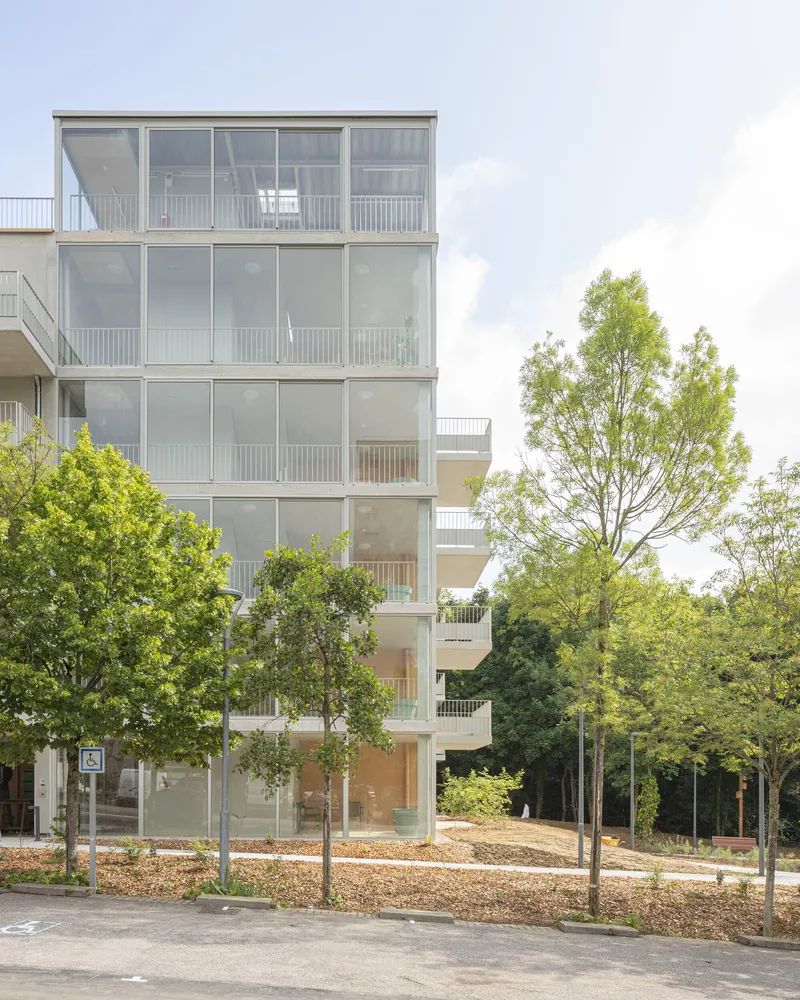
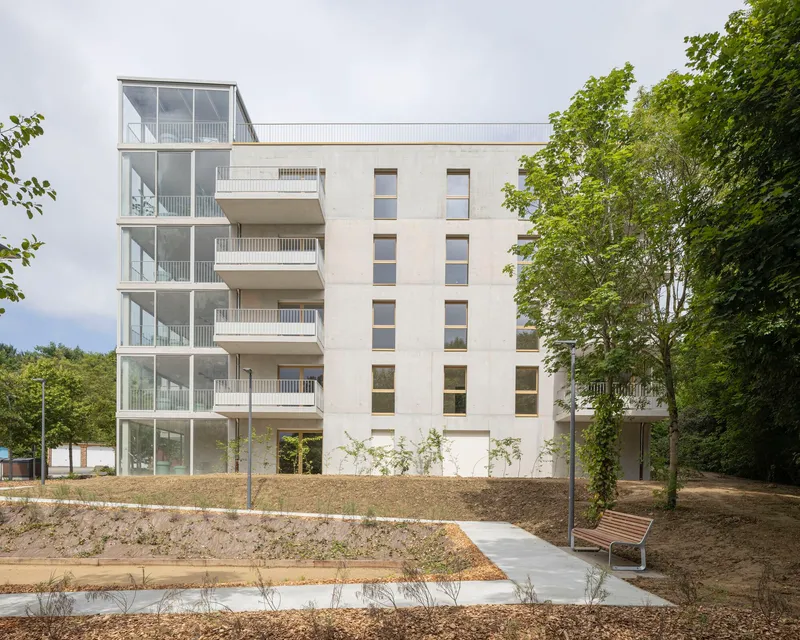
The building reads as two distinct volumes composed together. One face is a rendered, punched-window block, quiet and conventional, the kind of facade that settles into a neighborhood without raising its voice. The other is the glazed balcony tower, a stack of transparent boxes framed in white metal that catches light and broadcasts the life inside. The contrast is deliberate. It allows the building to address the street and the courtyard differently, presenting a more civic face to the public realm while opening up generously to the south and the landscape beyond.
Newly planted trees soften the courtyard, and the building's trapezoidal footprint responds to the geometry of its plot rather than imposing a grid. The massing is compact but not cramped, rising six stories to hold its own against the scale of the plateau's existing housing stock.
The Glazed Balcony as Primary Space
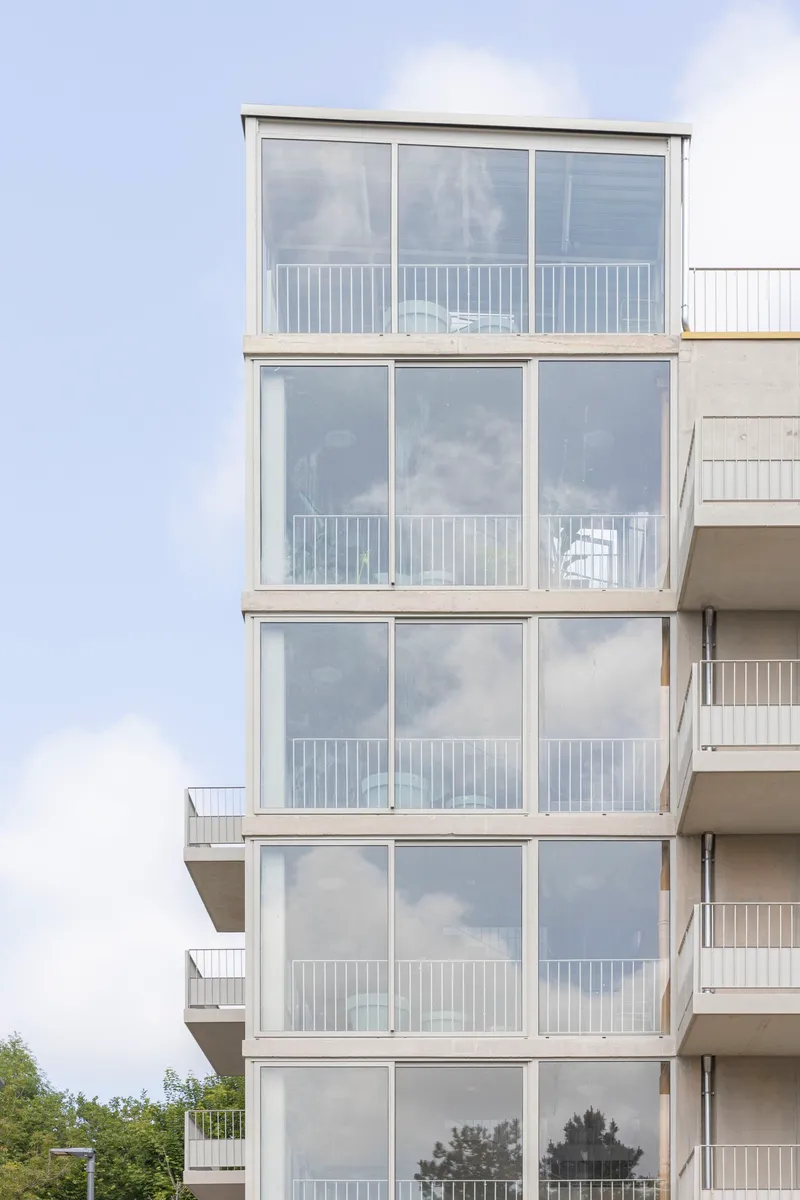
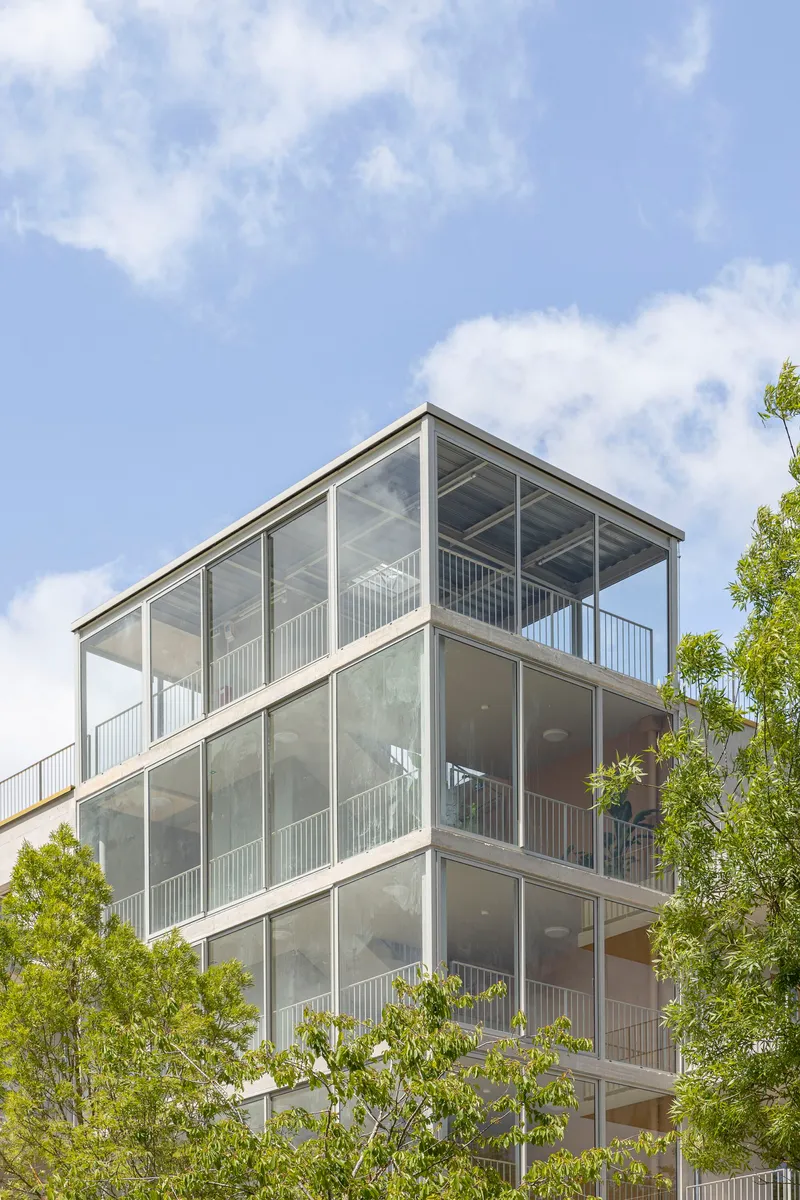
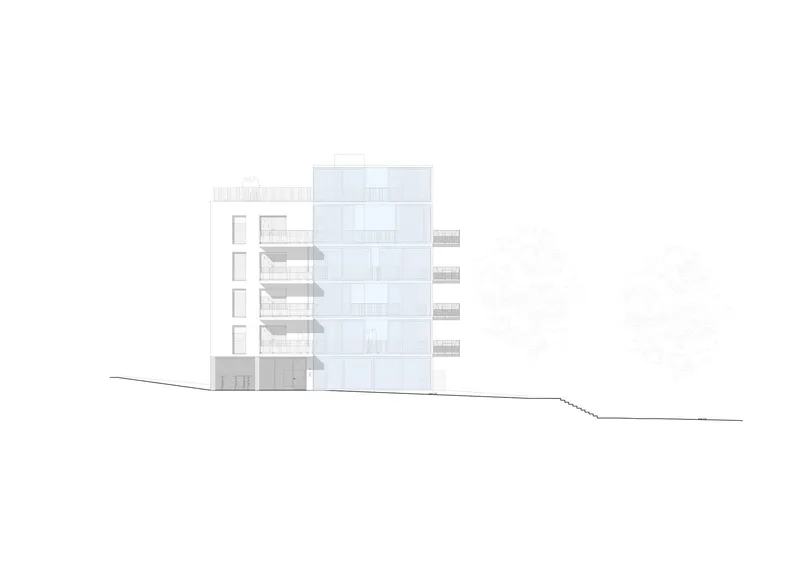
Seen from outside, the balcony stack has a strong vertical rhythm: white metal railings, floor-to-ceiling glass panels, and exposed concrete ceiling slabs that read as horizontal datums through the transparency. There is no attempt to hide the structure. The slabs project slightly, casting thin shadows that change through the day. The effect is orderly without being rigid, a kind of structured lightness that makes the building appear larger and more open than its footprint would suggest.
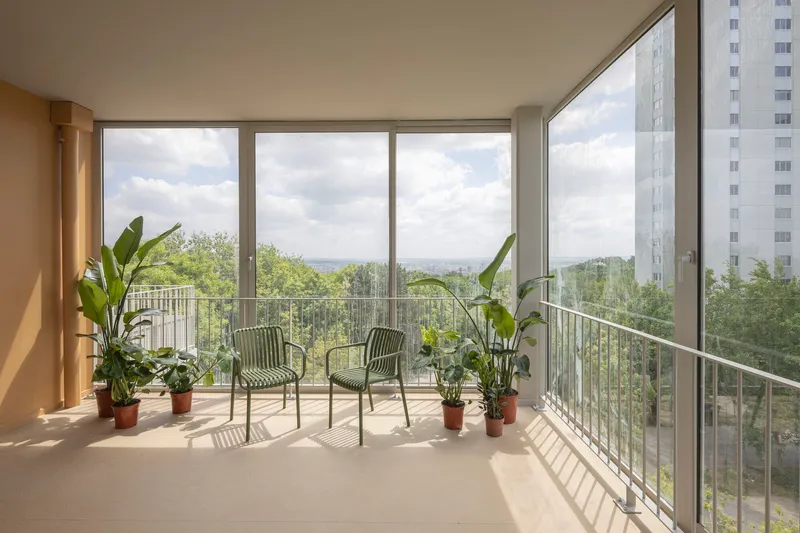
From inside, the payoff is immediate. The enclosed balcony in image three tells the whole story: two chairs, a few potted plants, and a panorama of green treetops extending to the horizon. The glass walls wrap the corner, eliminating the sense of being caged behind a railing. For a senior living alone, this room is not a balcony. It is the most important room in the apartment, a place to sit with the weather visible but the wind kept out, warm enough to use for most of the year.
Interior Clarity
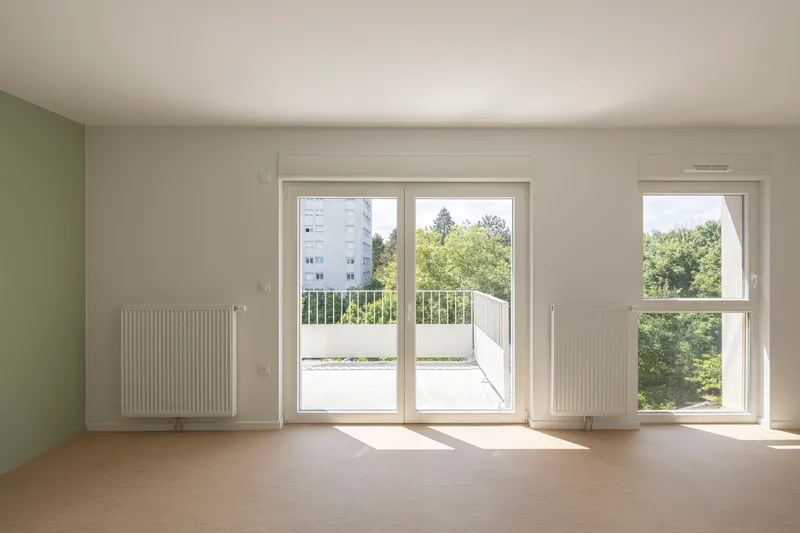
Inside the units, the approach is spare and functional. Pale wood floors, white walls, wall-mounted radiators, and sliding doors to the exterior balconies define a neutral canvas that lets daylight do the work. The sliding door detail is worth noting for senior housing: no threshold to trip over, no swing radius to negotiate with a walker. These are small decisions that accumulate into genuine accessibility.
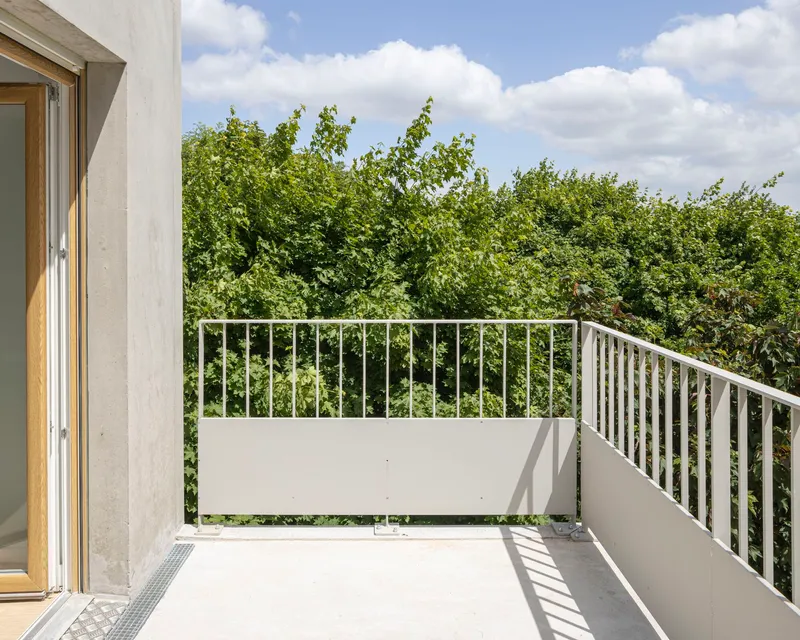
The open balconies on the building's secondary face, visible in image six, offer a different character. Metal railings frame views into dense foliage, creating a more conventional outdoor terrace experience. The distinction between the enclosed winter garden and the open balcony gives residents two kinds of outdoor relationship, one protected and one exposed, within the same compact unit.
Landscape and Horizon
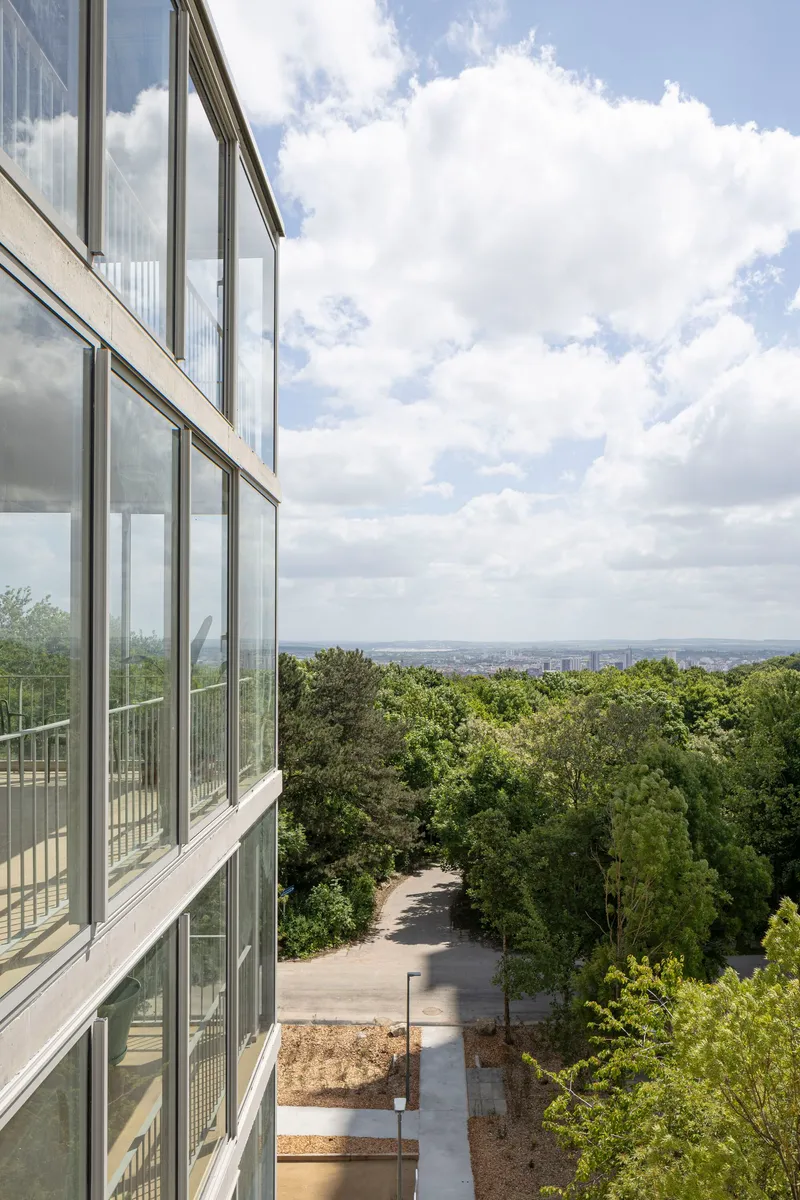
The plateau's topography gives the building something that no amount of design can manufacture: a horizon. From the upper floors, the glazed facade looks out over terraced landscape that falls away toward the distance. ABC Studio's decision to orient the transparent face toward this view was not accidental. The Haut-du-Lièvre plateau sits high enough above the Meurthe valley to offer genuine panoramic reach, and the building captures it without any drama, just glass pointed in the right direction.
The landscape design, developed with Les Jardiniers Nomades Paysagistes, introduces young trees and planted terraces that will mature over the next decade. The courtyard is sized to feel communal without being exposed, a gathering space scaled for twenty households rather than a public plaza.
Plans and Drawings
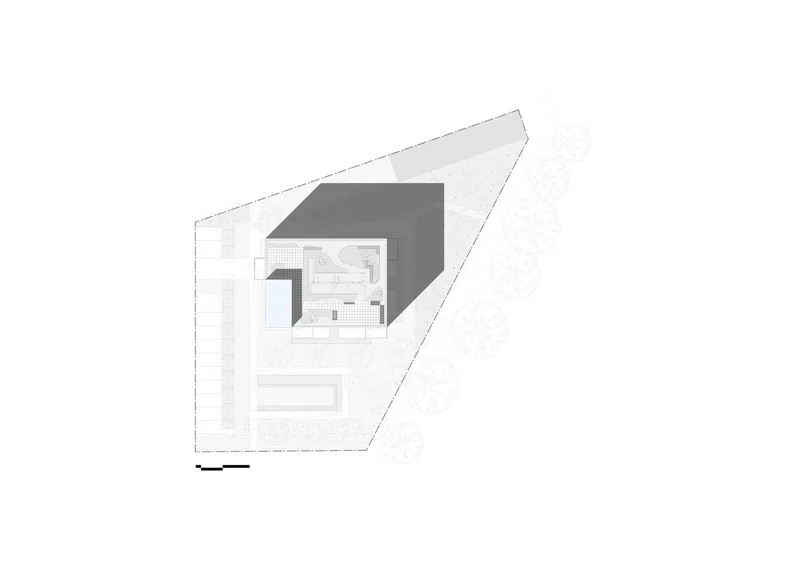
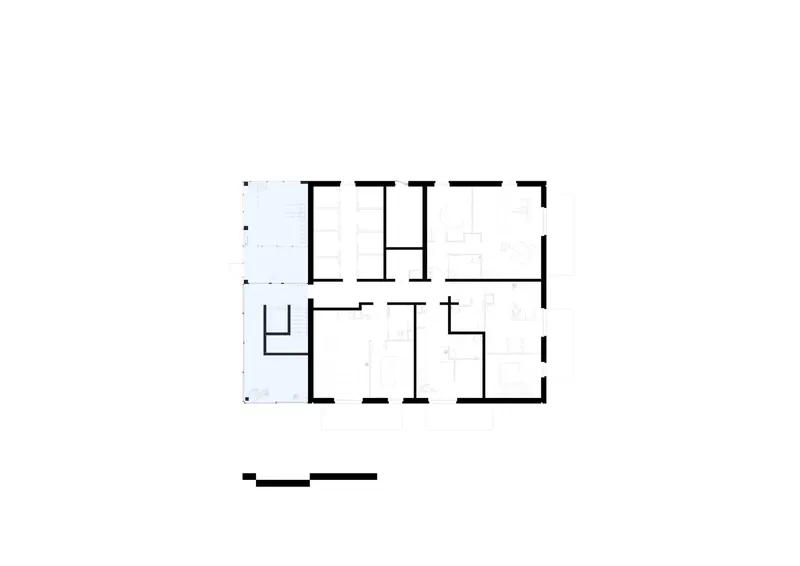

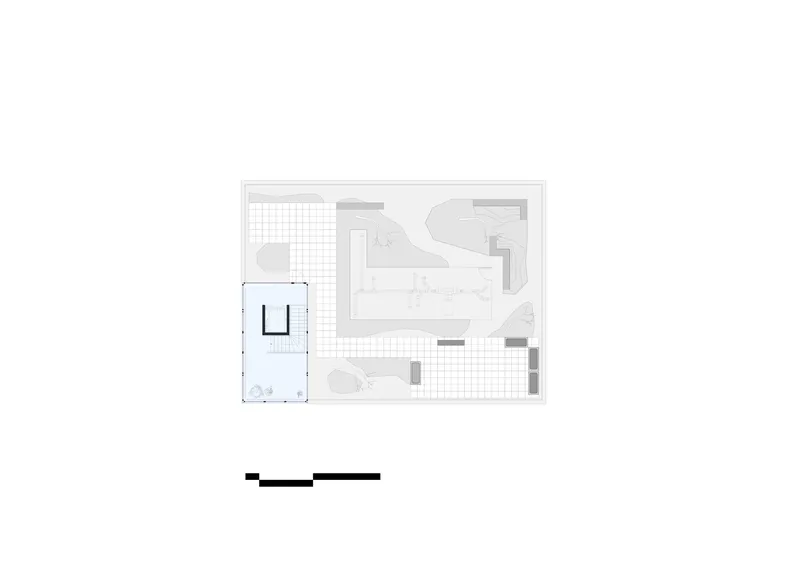
The axonometric site plan reveals the trapezoidal plot and the building's deliberate off-axis placement, creating usable outdoor space on multiple sides rather than centering the mass. The floor plans show a straightforward corridor-loaded arrangement with units distributed around a central circulation core, a layout that keeps common hallways short and gives every apartment at least two orientations.
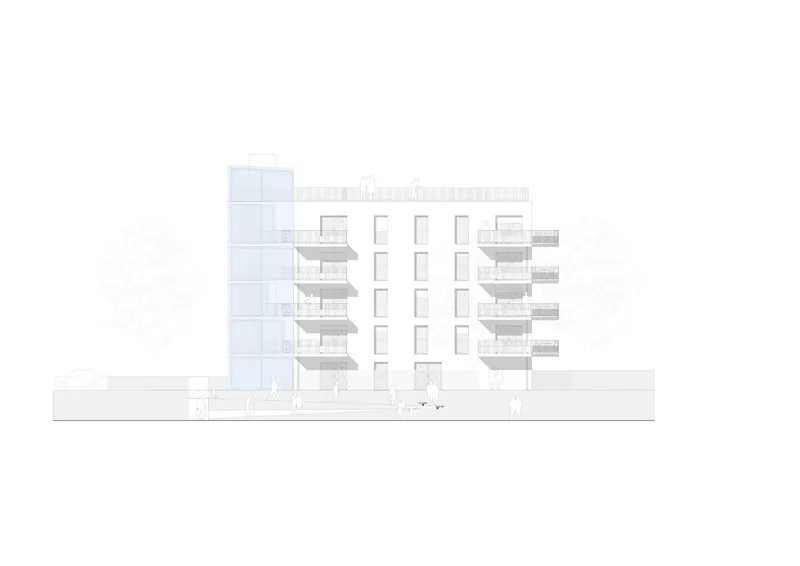
The ground floor plan is particularly interesting, with gridded exterior spaces suggesting covered or semi-enclosed zones at street level. The two elevation drawings confirm the building's split personality: one face dominated by the projecting glazed balconies stepping up with the terrain, the other showing the taller rendered volume with its rhythmic punched openings. The section through the sloping site makes clear how the building engages grade, tucking parking or service spaces into the hill while keeping the residential floors elevated above the landscape.
Why This Project Matters
Social housing for seniors rarely generates headlines, and that silence is part of the problem. Buildings like this one tend to be evaluated on cost per square meter and checkbox compliance with accessibility codes. ABC Studio's contribution at Haut-du-Lièvre is to insist that the quality of daily life, the act of sitting in a warm, light-filled room and watching the sky change, is not a luxury to be engineered out of the budget. The glazed balcony is a simple idea, but defending it through procurement, cost planning, and construction takes conviction.
The project also matters for its site. Haut-du-Lièvre has been the subject of regeneration efforts for decades, and new buildings here carry the burden of past failures. By building something modest in scale but generous in experience, ABC Studio avoids the twin traps of grand gesture and minimum compliance. Twenty households on a plateau with a view, each with a room made of light. That is enough.
Nancy Social Housing by ABC Studio, Maxéville, France. Completed 2025. 20 social housing units for seniors. Landscape by Les Jardiniers Nomades Paysagistes. Acoustics by Venathec Acoustique. Photography by Cyrille Lallement and ABC Studio.
About the Studio
Share Your Own Work on uni.xyz
If projects like this are the kind of work you want to make, uni.xyz is a place to publish your own, find collaborators, and enter design competitions.


Popular Articles
Popular articles from the community


Extended Shell: Retrofitting Kolkata's Balconies as Living Urban Thresholds
A modular retrofit system recovers the social and environmental intelligence of Kolkata's historic verandas for contemporary Park Street residents.

Tsunami Convergenics: Turning Catastrophic Ocean Forces into Underwater Housing Infrastructure
A speculative underwater settlement off the coast of Onagawa, Japan, treats tsunamis and typhoons as energy sources rather than threats.

Singing Woman: Contemporary Architecture Inspired by Estonia’s Voice and the Sea
Singing Woman turns Estonia’s song culture into flowing opera house architecture, blending public life, landscape, sea, and national memory.
Faces of the Soviet Avant-Garde: Turning Moscow's Street Names into an Open-Air Museum
A network of sculptural installations across a Moscow residential district transforms forgotten architect names into spatial encounters with cultural memor

Similar Reads
You might also enjoy these articles

Bao Huynh Watercolor Atelier: A Serene Art Retreat in Hội An
Bao Huynh Watercolor Atelier in Hội An blends multifunctional art spaces, sustainable design, local materials, and family-friendly living in a serene environment.

Atelier Macri Concept Store Interior Design by CASE-REAL
Atelier Macri store features a "ko" counter, walnut wood details, cork displays, blending retail, gallery, and seamless customer experiences.

Manuel Vargas Izquierdo Stadium and High-Performance Sports Center: Architectural Excellence in Jalpa de Méndez
The Manuel Vargas Izquierdo Stadium blends sustainable design, inclusive sports facilities, and cultural-inspired architecture, revitalizing Jalpa de Méndez’s public spaces.

KAKR Buluh Awar Hall: Revitalizing Community and Ecology Through Bamboo Architecture
Community built bamboo hall revitalizes Buluh Awar village, empowering youth, restoring ecology, celebrating vernacular craftsmanship through sustainable architecture and culture.

Comments (0)
Please login or sign up to add comments
No comments yet. Be the first to comment!